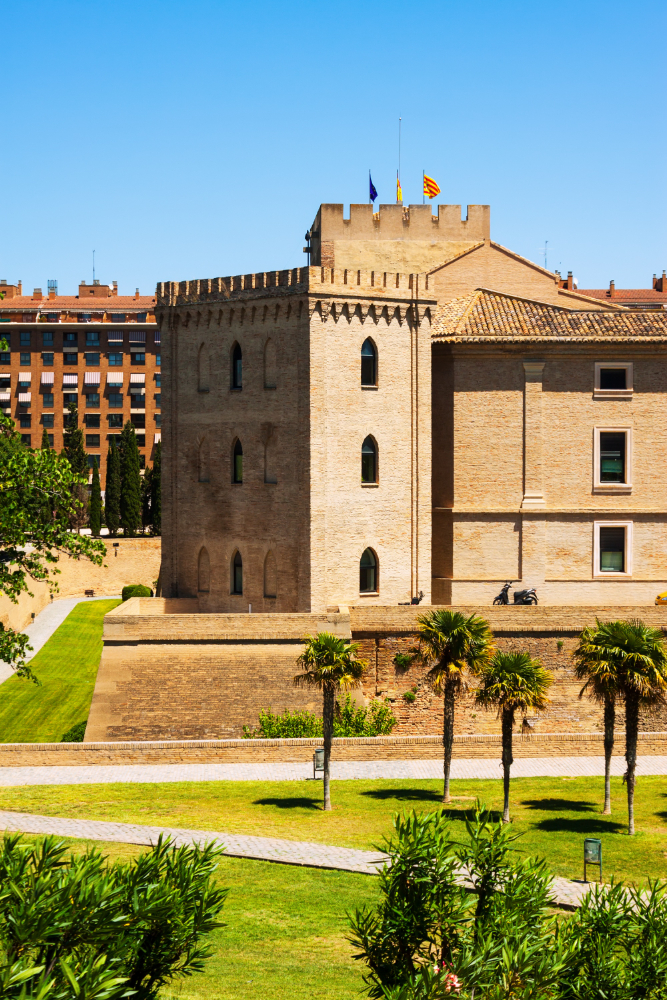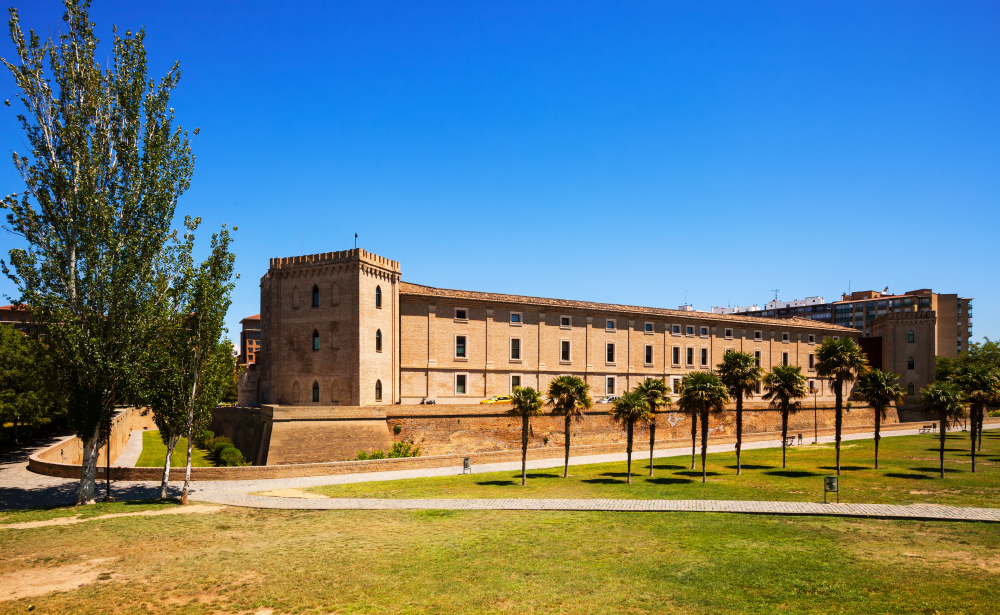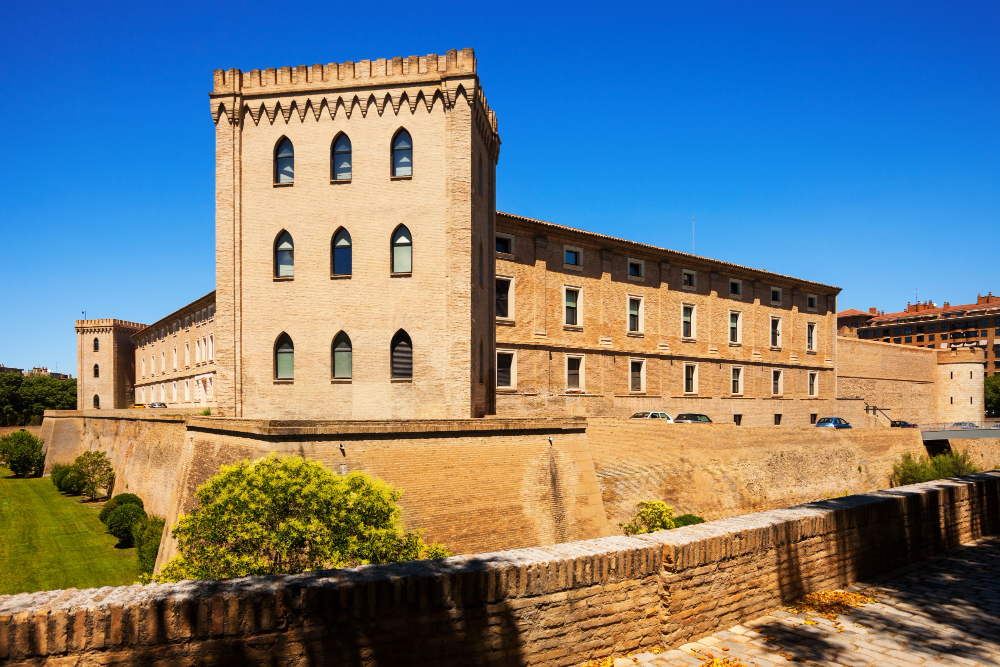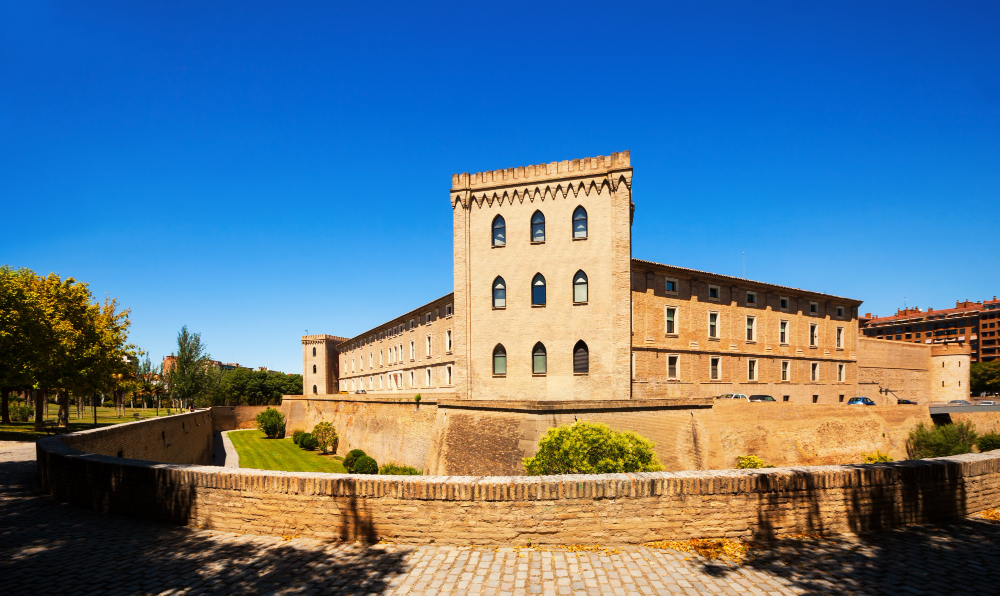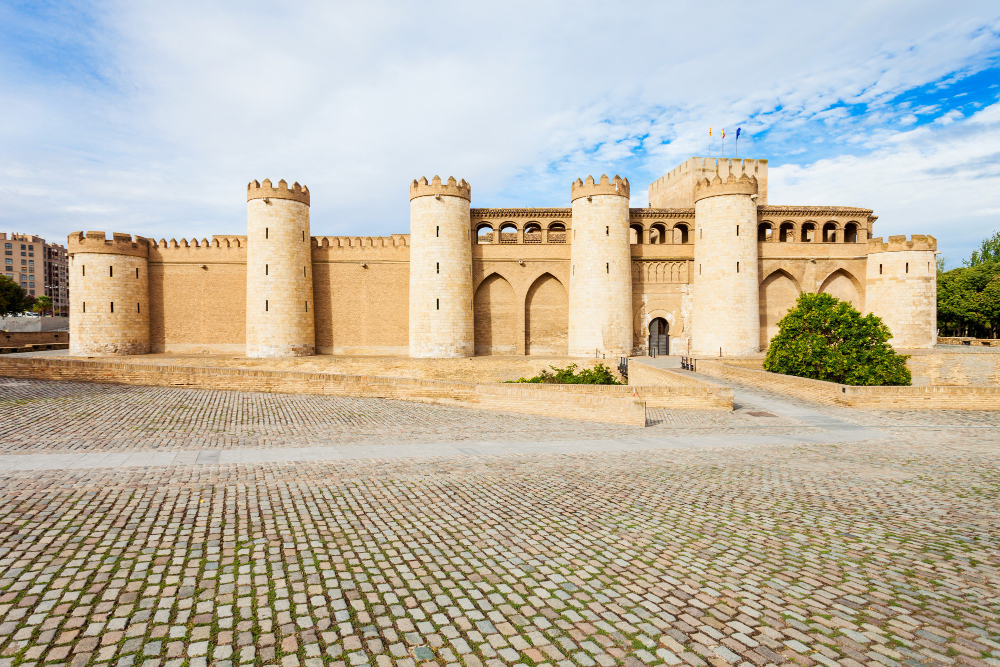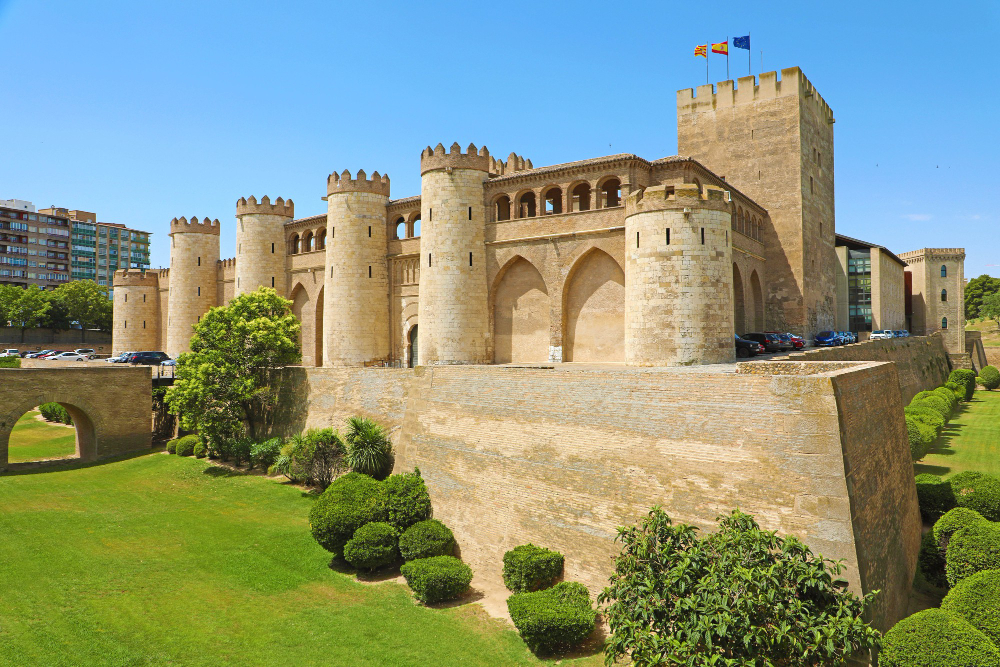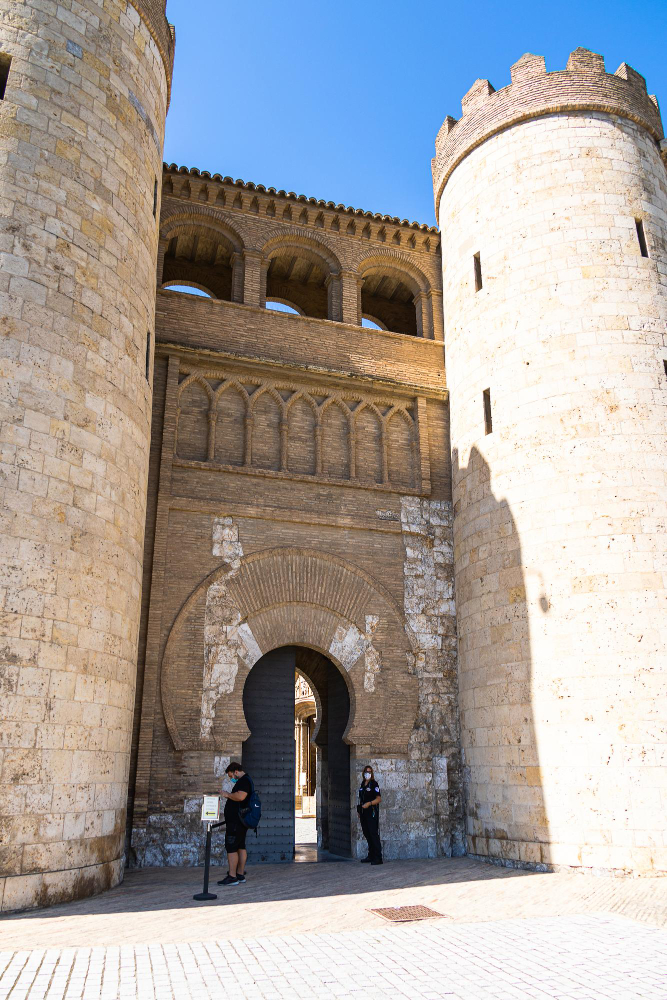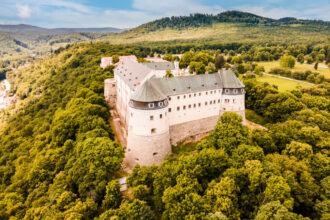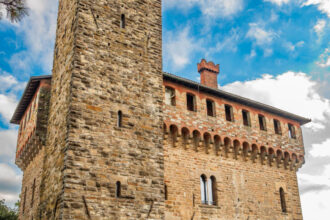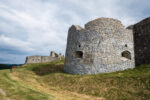

In the vibrant heart of Zaragoza stands the majestic Aljafería, a testament to Spain’s turbulent history and cultural diversity. This medieval palace, whose origins date back to the 11th century, tells not only of the splendor of Islamic Spain but also of the political intrigues, artistic achievements, and architectural masterpieces that have shaped it over the centuries.
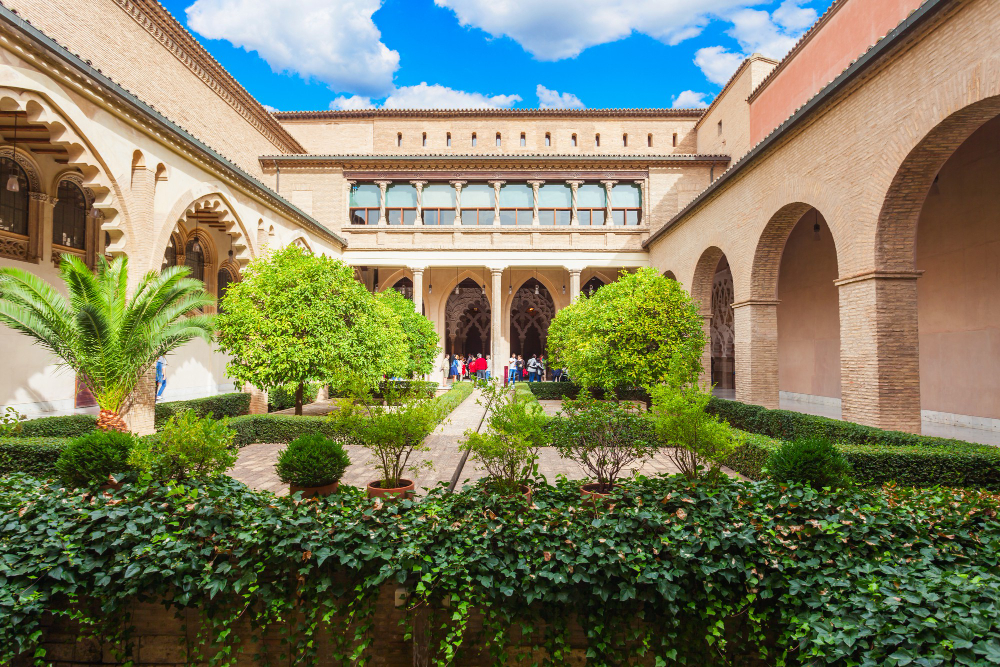
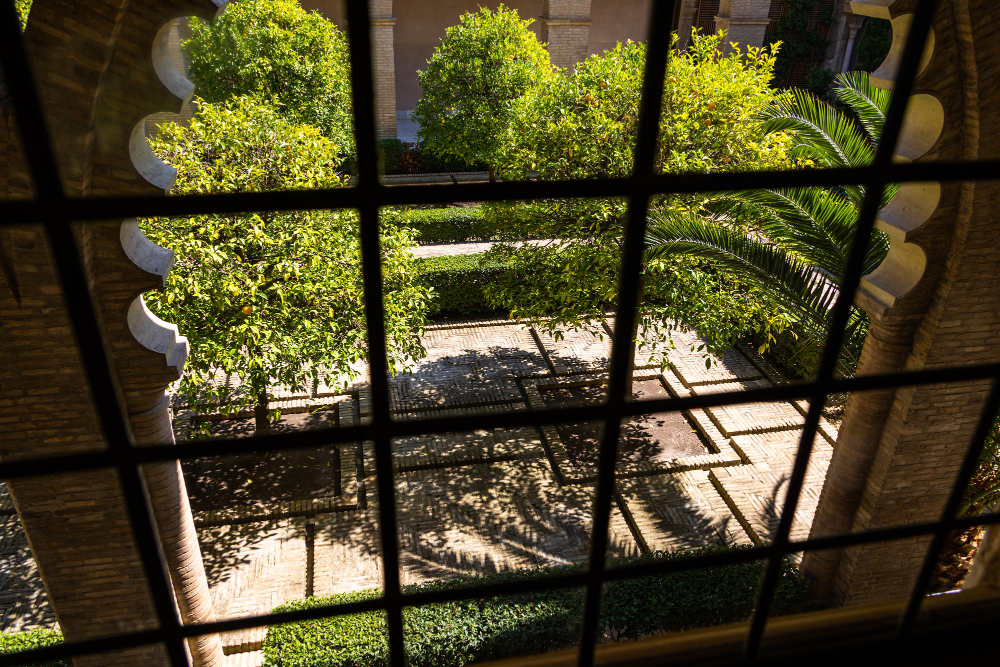
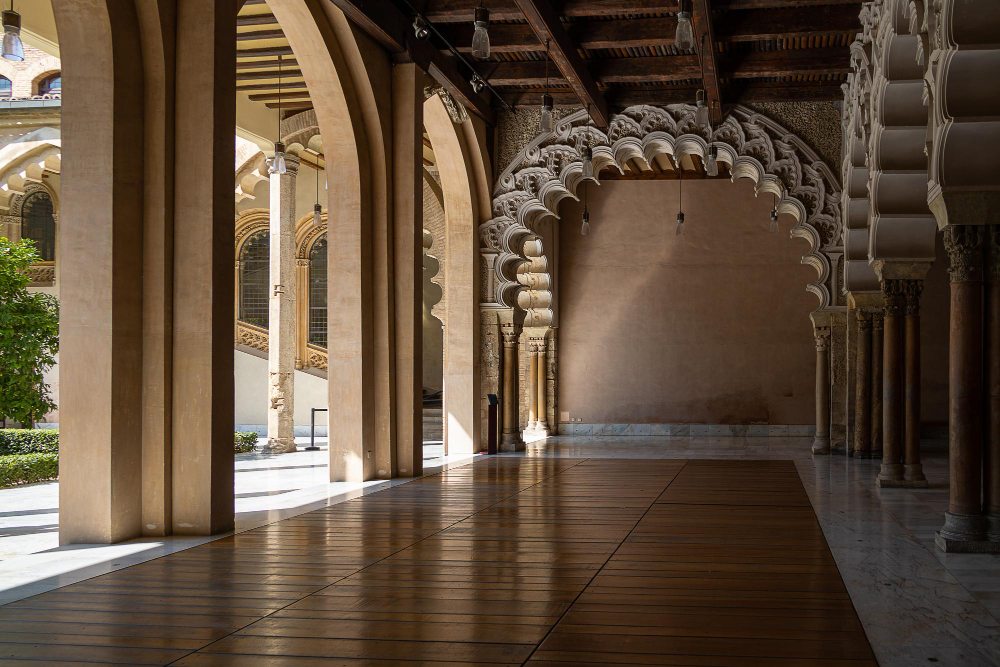
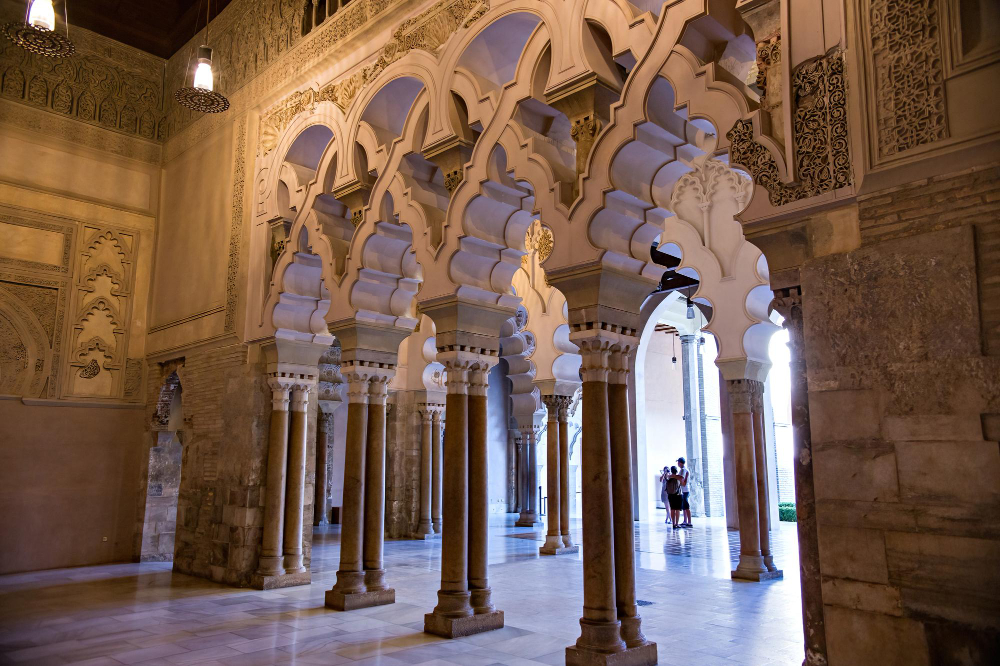
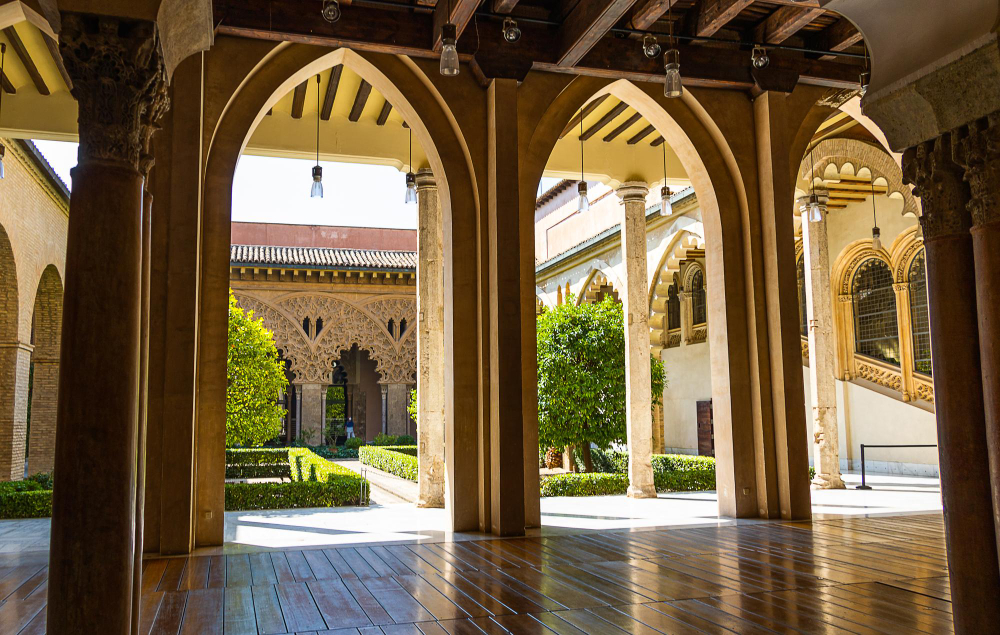
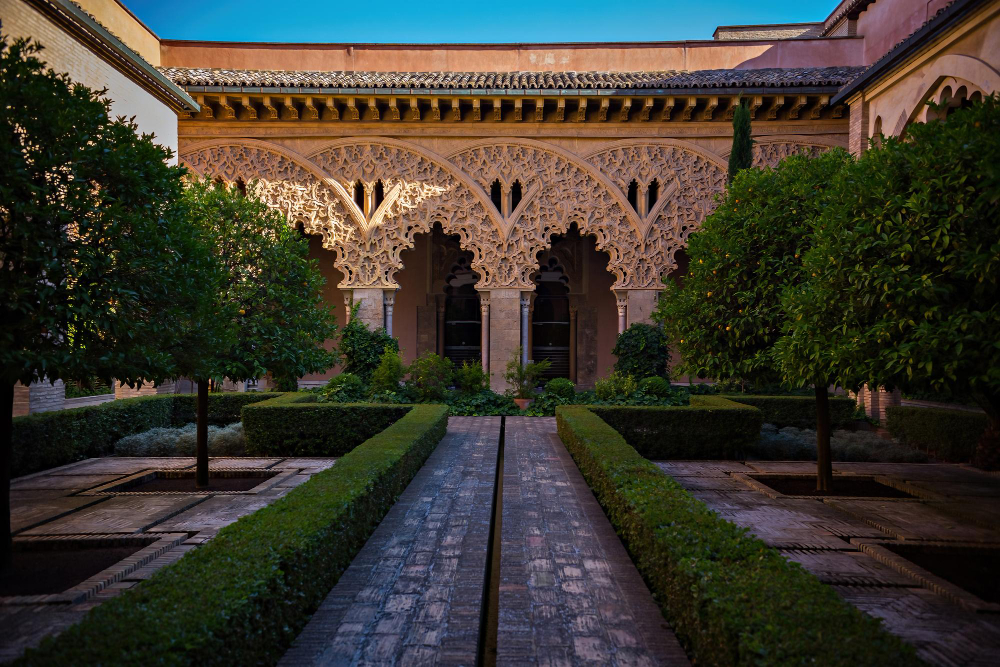
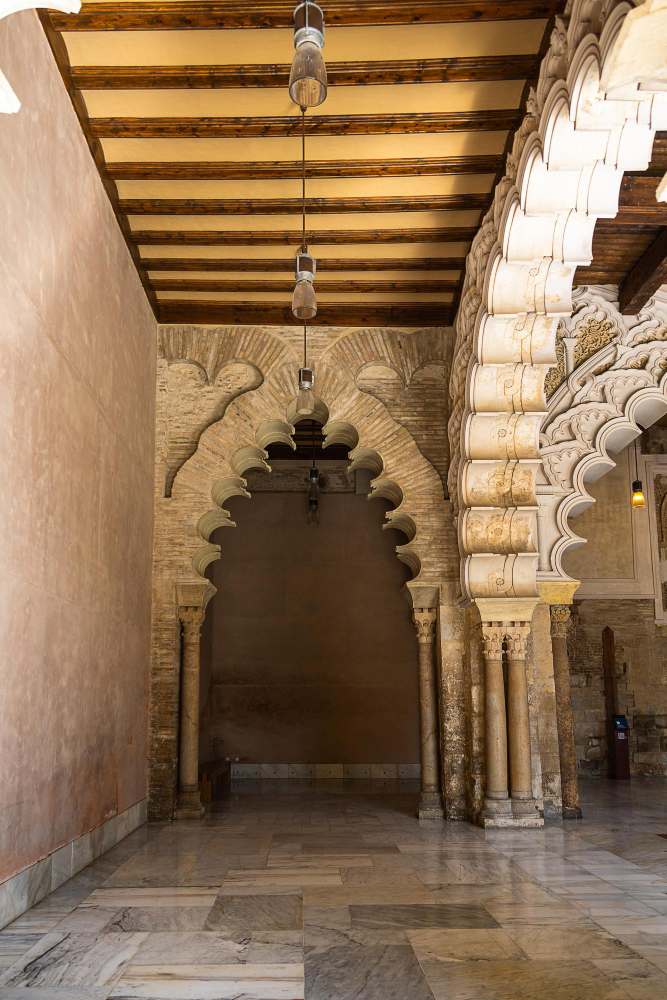
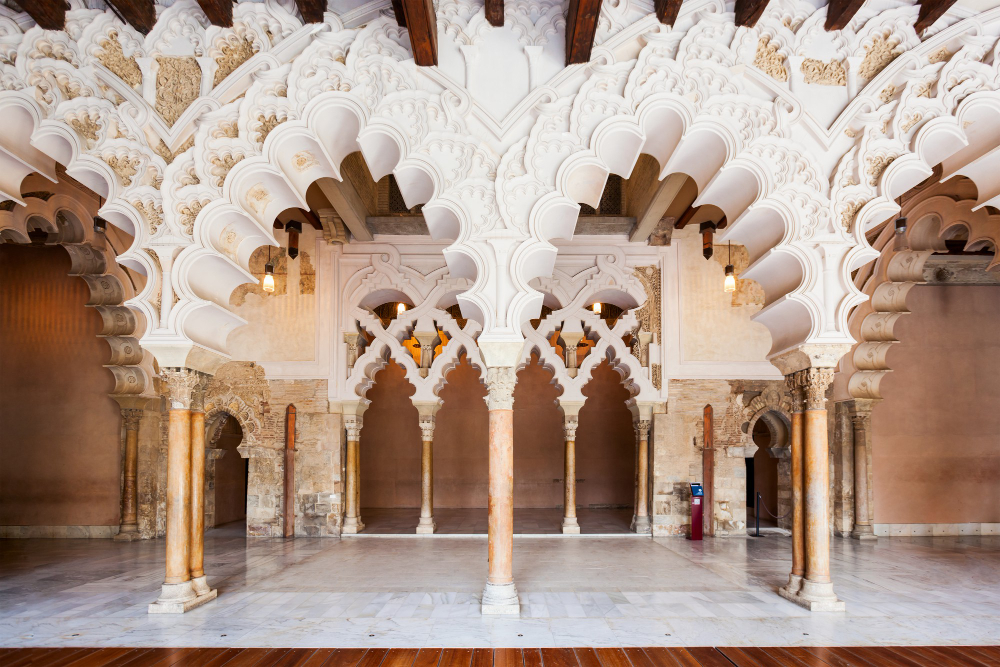
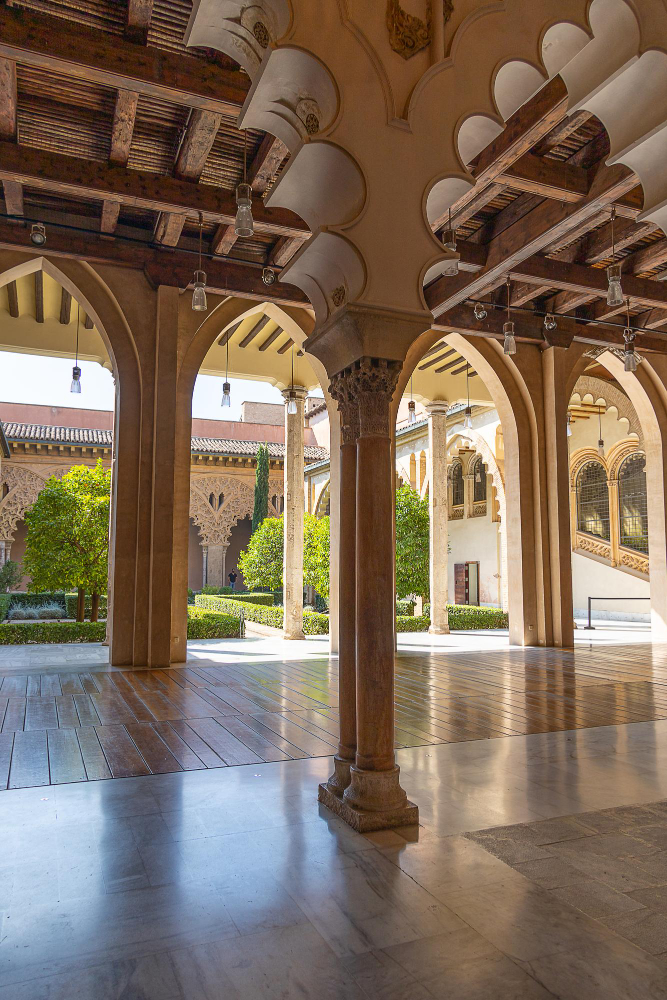
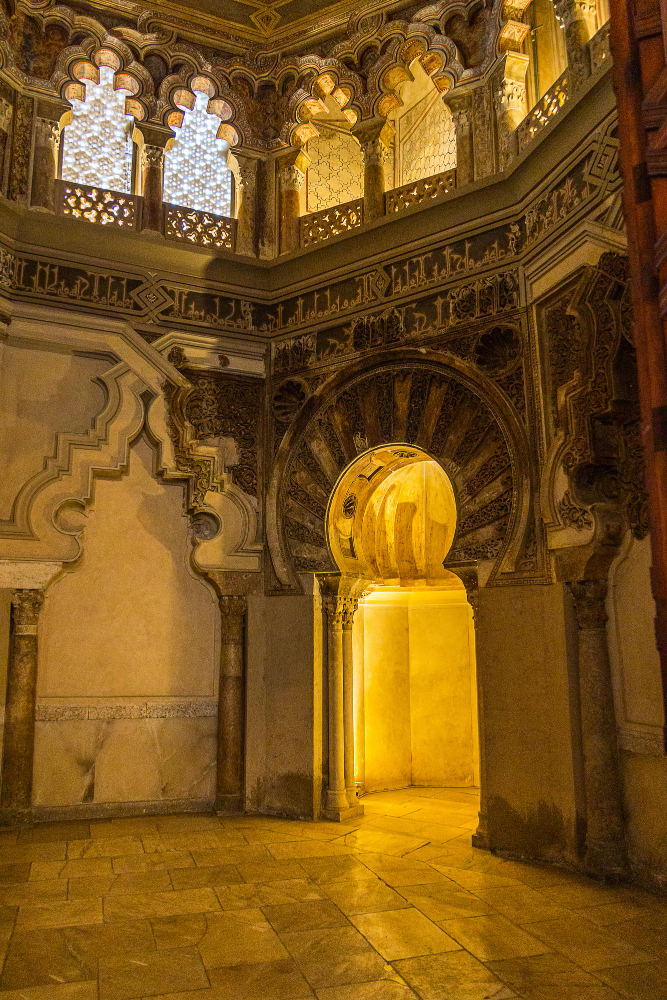
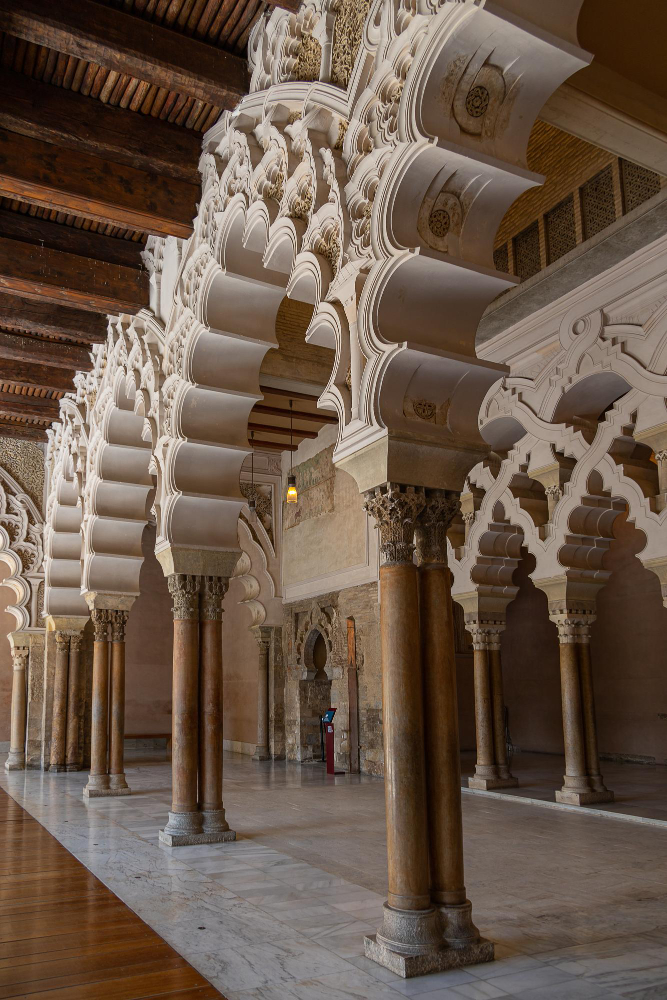
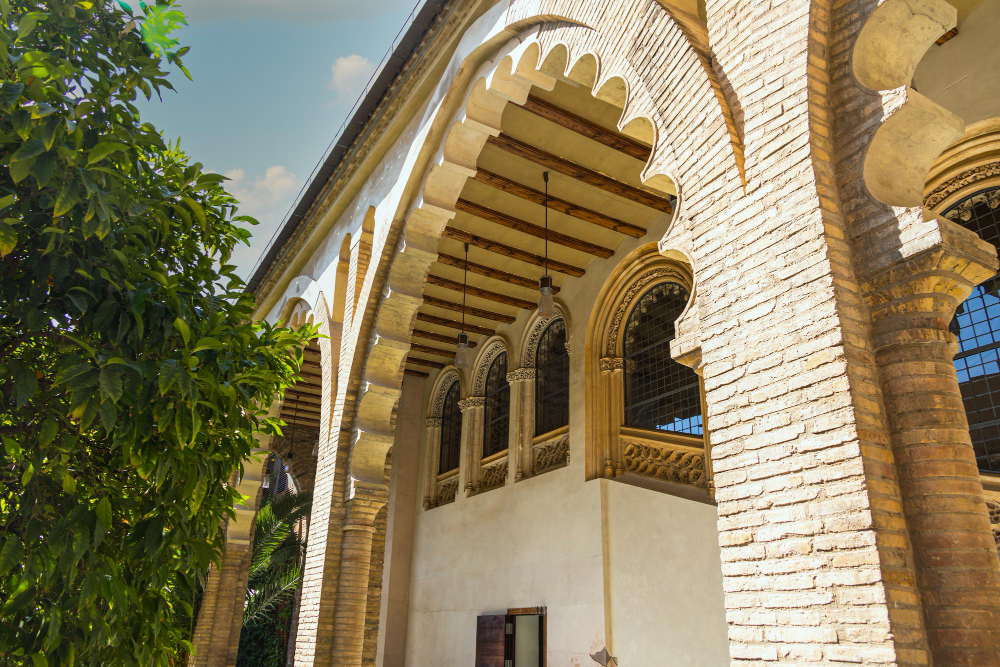
The Splendor of the Taifa Period – Originally built during the era of the Muslim Taifa kingdoms, the Aljafería was an expression of the power and wealth of the Banu Hud dynasty. Under Abu Jaffar Al-Muqtadir, the palace became known as “Qasr al-Surur” (Palace of Joy) and served as the residence of the ruler of Zaragoza. The architecture reflects the spiritual and cultural heyday that characterized al-Andalus. A highlight of this aesthetic are the characteristic mixtilinear arches and the ornate arabesques, which would later influence both Almoravid and Nasrid art. The palace’s central floor plan was modeled after the 8th-century desert castles of Syria and Jordan, such as Qasr al-Hayr al-Sharqi. Like these structures, the Aljafería also featured a square floor plan with an inner courtyard and delicate water basins, which served not only as decoration but also as a symbolic representation of harmony. The centerpiece is the “Golden Hall” (“Maylis al-Dahab”), a space once reserved for diplomatic receptions and royal ceremonies.
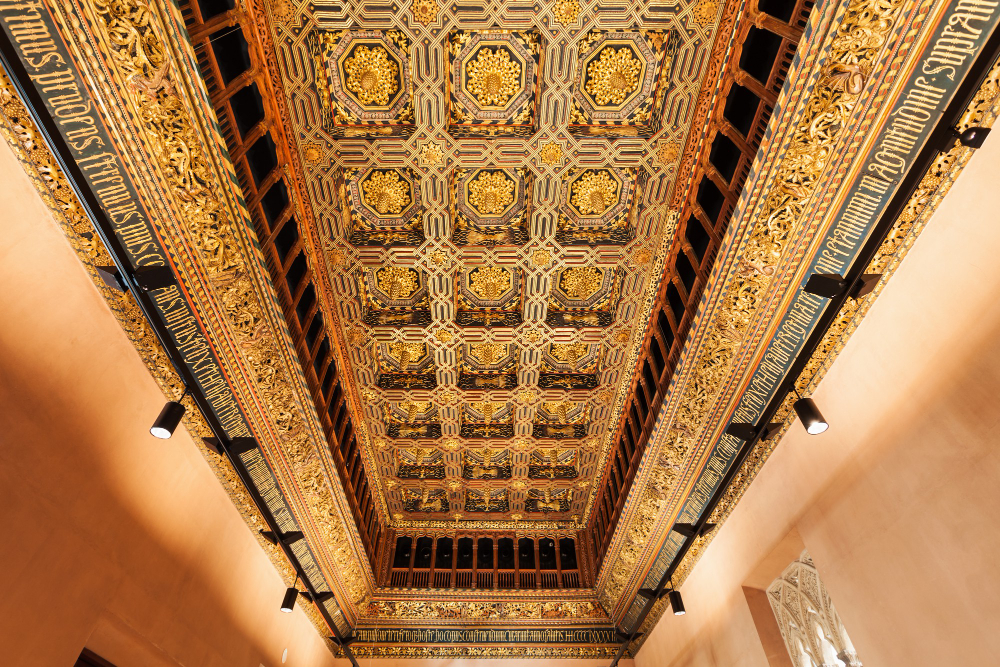
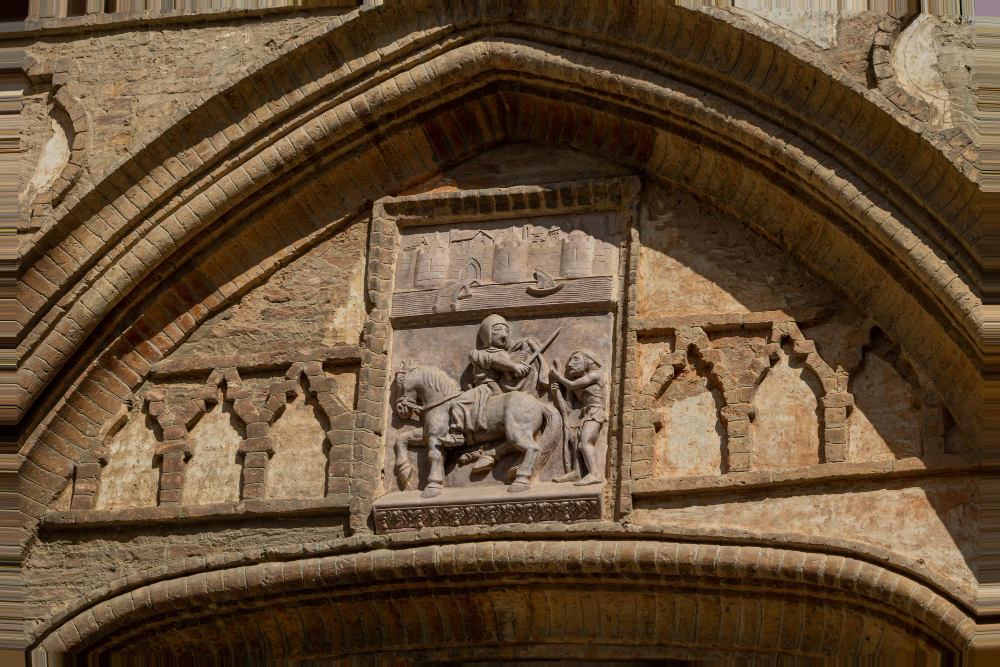
From Islamic Residence to Christian Royal Seat – With the Reconquista in 1118, a new chapter began for the Aljafería. Alfonso I of Aragon conquered Zaragoza and converted the palace into a residence for the Christian kings. During the reign of Peter IV, “the Solemn,” significant expansions were carried out. He created additional rooms, including the Chapel of San Martín, which still defines parts of the western building today. Later, in 1492, the Catholic Monarchs Ferdinand and Isabella undertook extensive renovations. They sought to transform the Aljafería into a dignified residence that showcased both their power and their cultural heritage. The magnificent Mudéjar ceilings, adorned with golden stars and geometric patterns and symbolically representing the universe and the cosmic order, date from this period. In addition, a new throne room was built, whose imposing design captivates with its ornate wooden structures and delicate details. Particularly noteworthy is the inscription that praises the glory of the Catholic Monarchs and commemorates the events of 1492, when Granada, the last Muslim stronghold in Spain, fell.
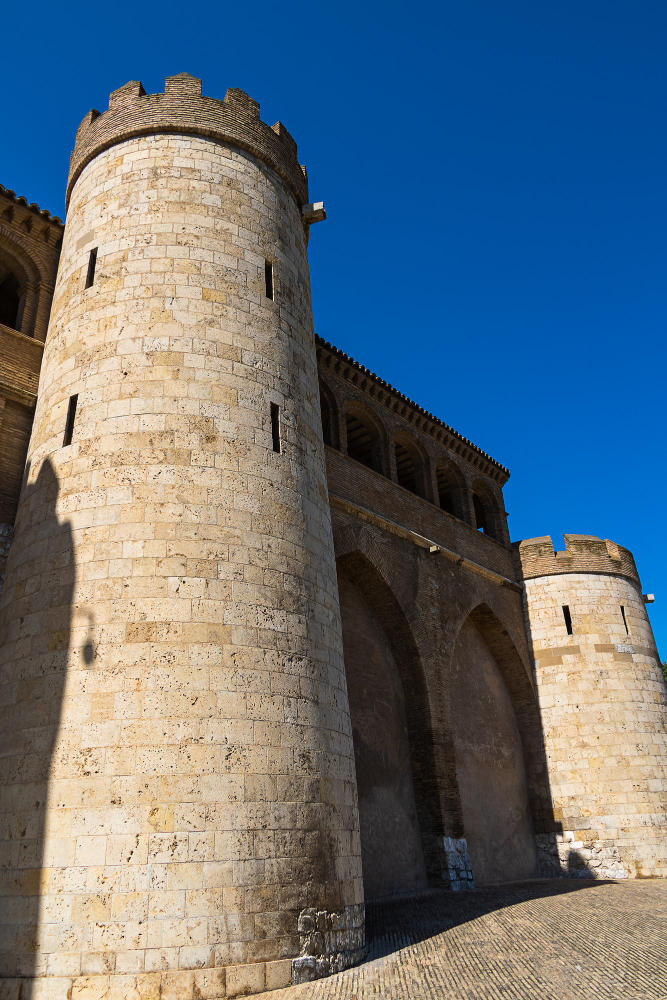
The Dark Side of the Aljafería – Despite its splendor and grandeur, however, the Aljafería also harbors dark chapters in its history. The Troubadour Tower, the oldest part of the palace, originally served as a military defense structure and later as a prison. In the 15th century, the tower became part of the Spanish Inquisition and housed countless prisoners whose fates are immortalized within its walls. Numerous graffiti left by the inmates bear witness to despair and hopelessness, but also to the human ability to leave traces and tell stories even under extreme conditions.
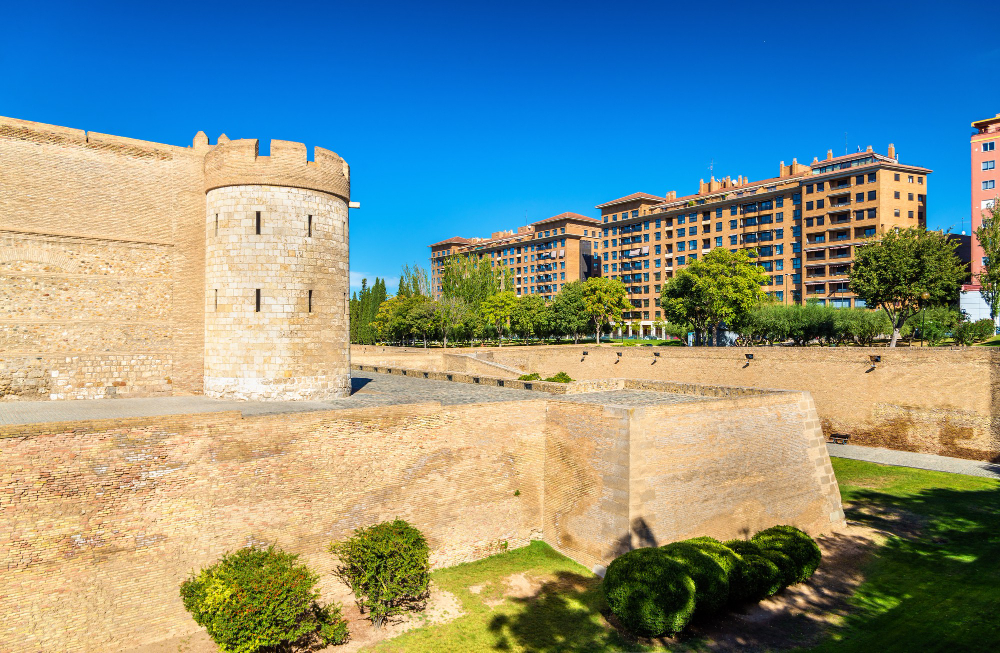
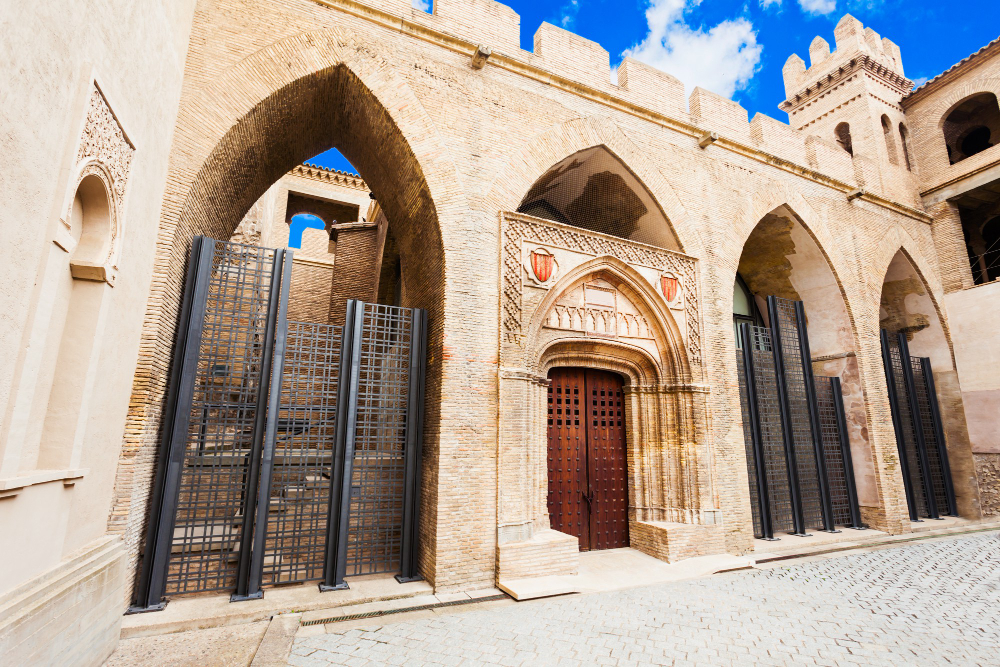
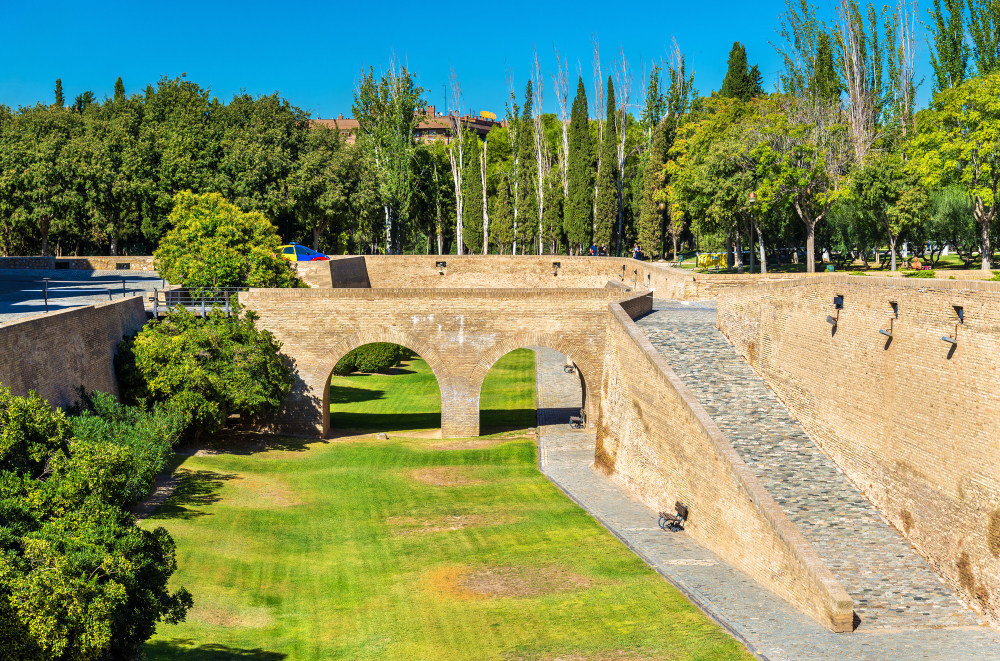
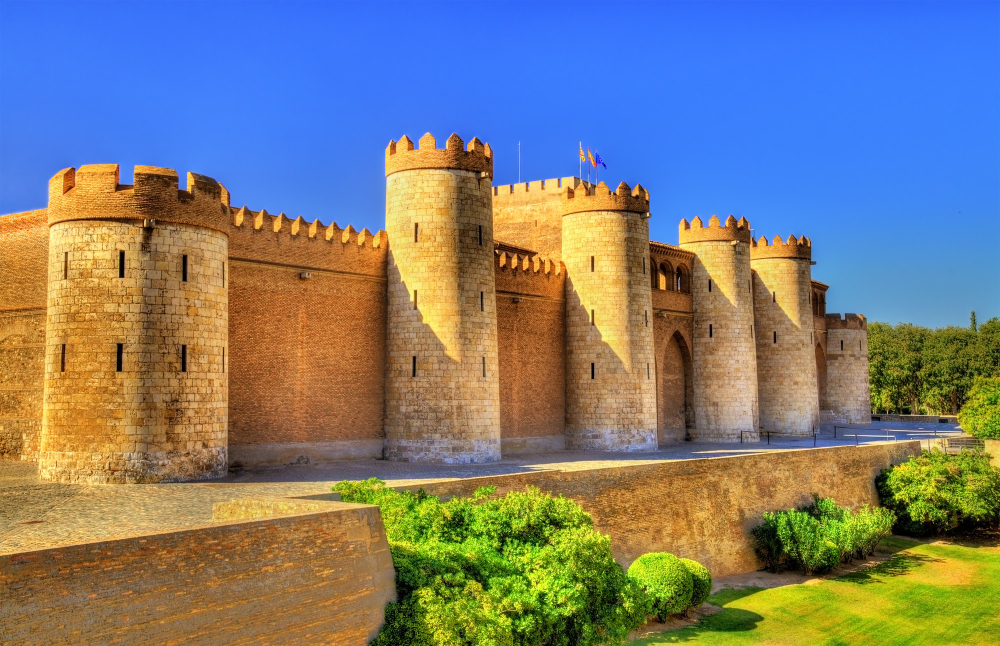
The Renaissance and the Military Conversion – Following the political unrest of the 16th century and the rise of the Habsburgs, the Aljafería was converted into a strategic military stronghold. The Italian engineer Tibúrcio Spannocchi designed a massive defensive system with bastions, drawbridges, and a wide moat to secure the palace against uprisings and enemy attacks. This conversion had a lasting impact on the Aljafería’s architectural structure and gave it a martial appearance that persisted into the 18th century. The pragmatic spirit of the 18th century was also reflected in the repurposing of the Aljafería, when it was finally converted into a barracks under King Charles III. Functionality and simplicity replaced the artistic refinement of earlier eras. It was not until the mid-20th century that a comprehensive restoration began under the direction of architect Francisco Íñiguez to restore the palace’s original beauty.
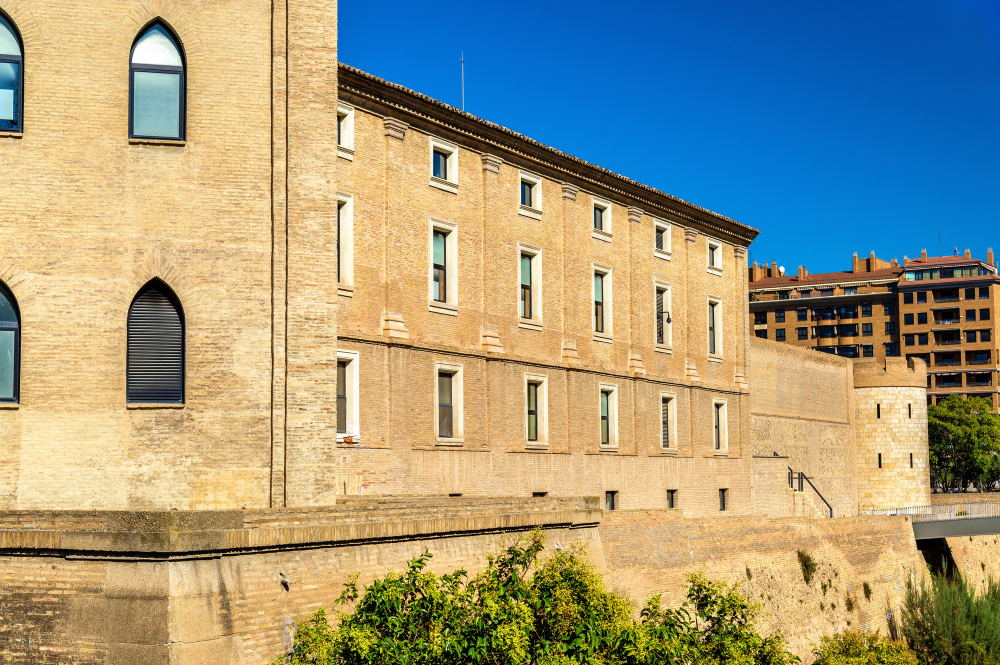
A New Role: The Parliament of Aragon – With the introduction of autonomy in Spain, the Aljafería gained new significance. Since 1984, it has been the seat of the Cortes de Aragón, the regional parliament of the Autonomous Community. This transformation illustrates how historic buildings can evolve by adapting to the needs of modern societies without losing their history.
Myths and Legends Surrounding the Aljafería – Numerous myths and legends surround the Aljafería. In particular, the Troubadour Tower inspired the writer Antonio García Gutiérrez to pen his drama “El Trovador,” which later served as the basis for Giuseppe Verdi’s famous opera “Il Trovatore.” The tower symbolizes the connection between romantic longing and historical truths—a place where fantasy and reality merge. Another myth holds that the Golden Hall is haunted by the spirit of an Arab prince who is said to have once lived in the Aljafería. His soul is said to wander restlessly, as a tragic love story is said to have haunted him throughout his life until his death. Such stories lend the palace a mystical aura that attracts visitors from all over the world.
The Aljafería is more than just an architectural masterpiece—it is a living testament to the cultural blending, artistic exchange, and political power struggles that have shaped Spain over the centuries. From its beginnings as a Muslim palace, through its time as a Christian residence, to its current role as the seat of the regional parliament, the Aljafería remains a fascinating place steeped in history, myths, and legends.
For visitors, it is not only a historical monument but also a source of inspiration. The Aljafería shows us how architectural monuments not only preserve knowledge of the past but also offer an opportunity to celebrate human creativity and cultural exchange. Those who walk through its halls immerse themselves in a piece of living history and feel the magical connection between past, present, and future.