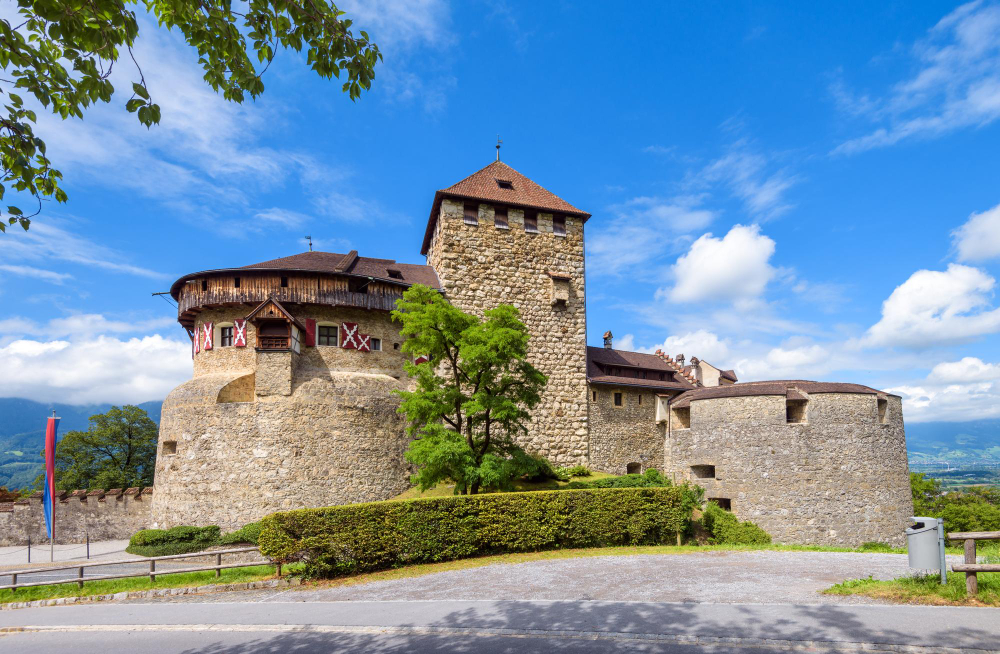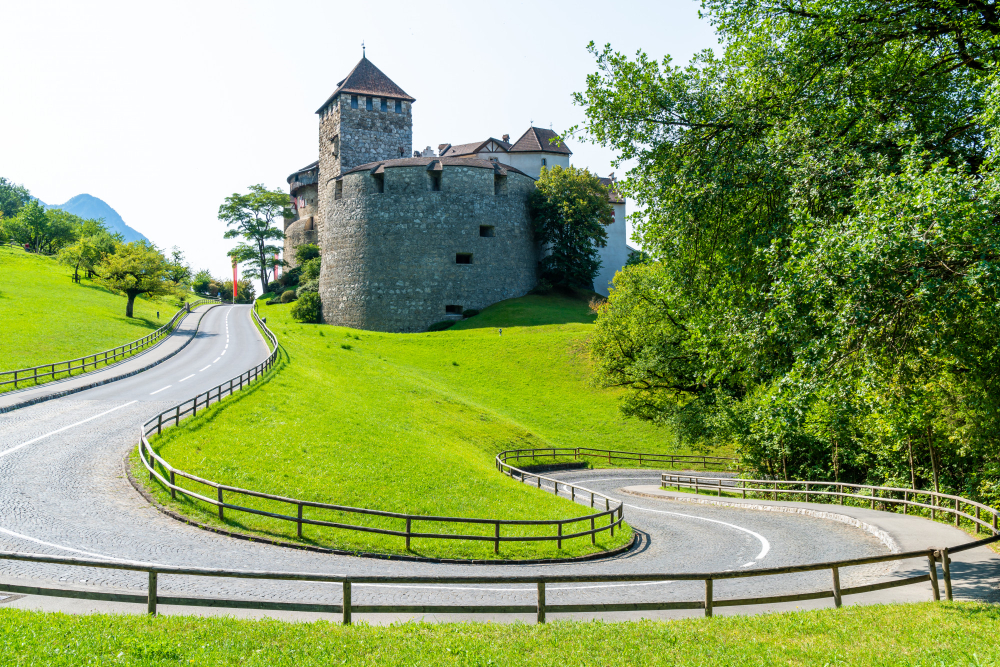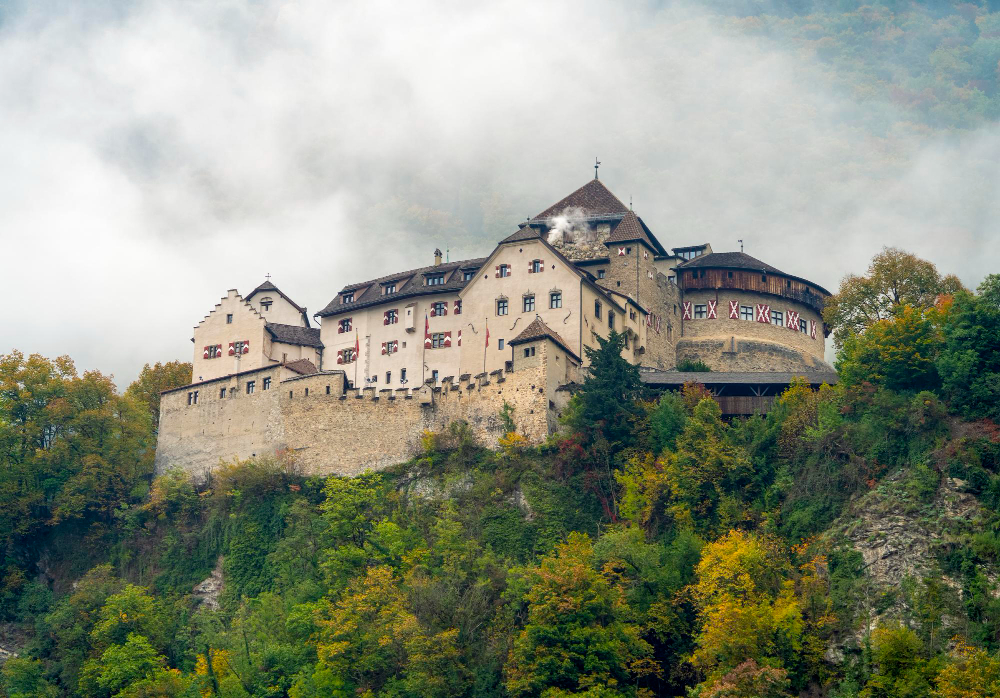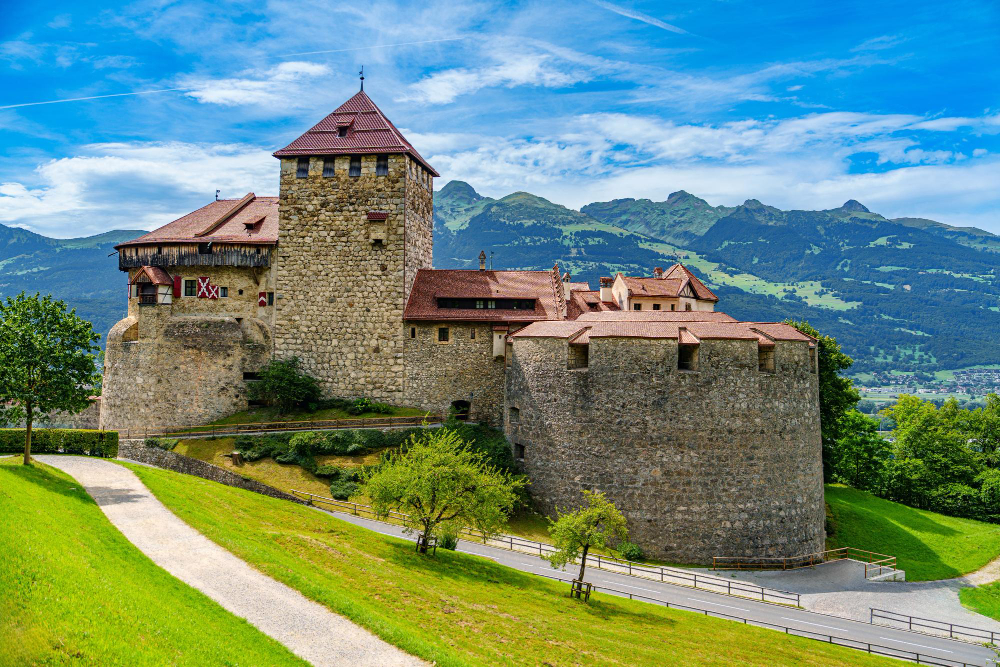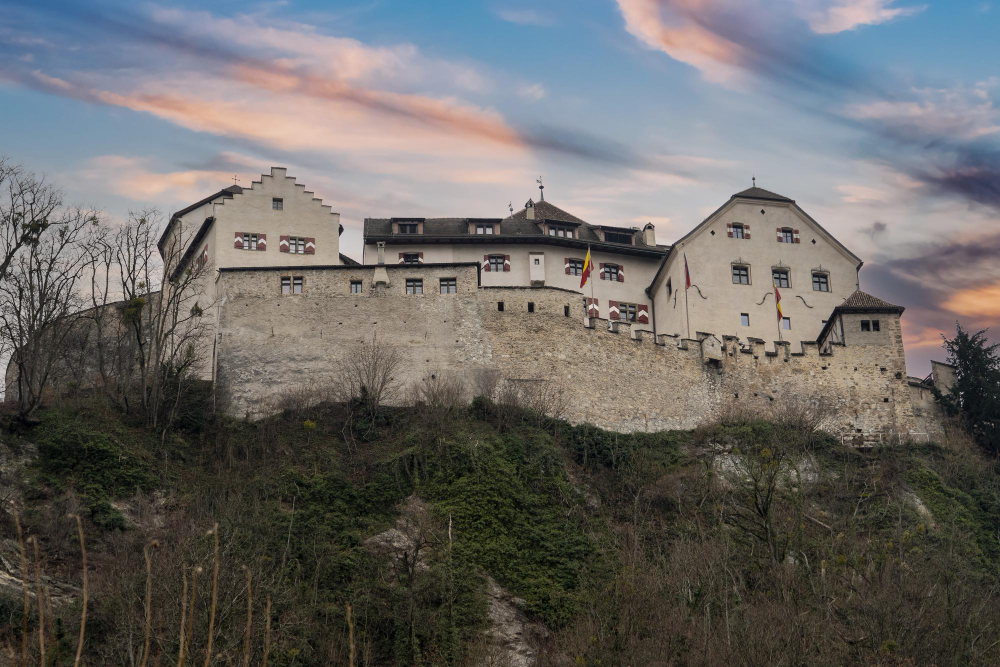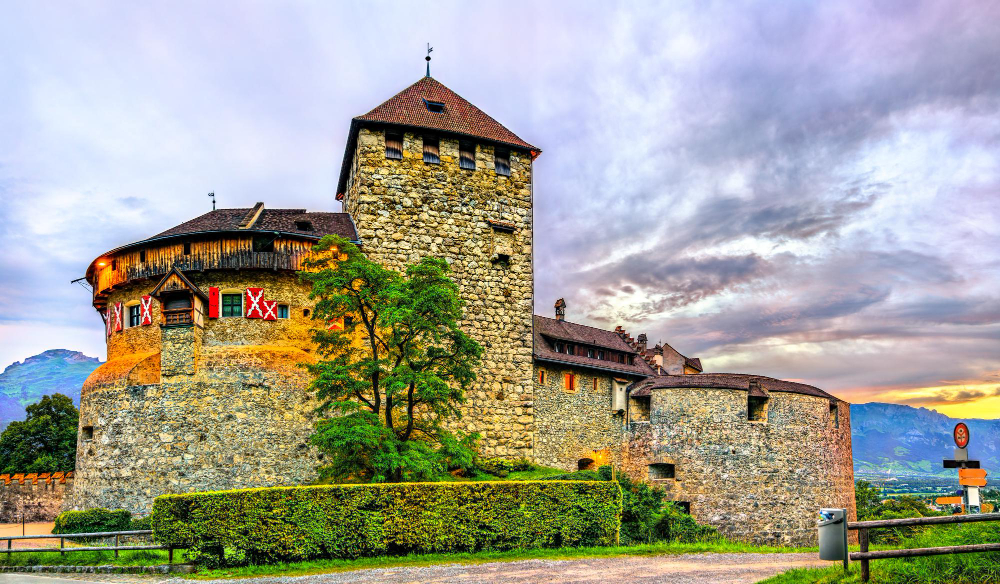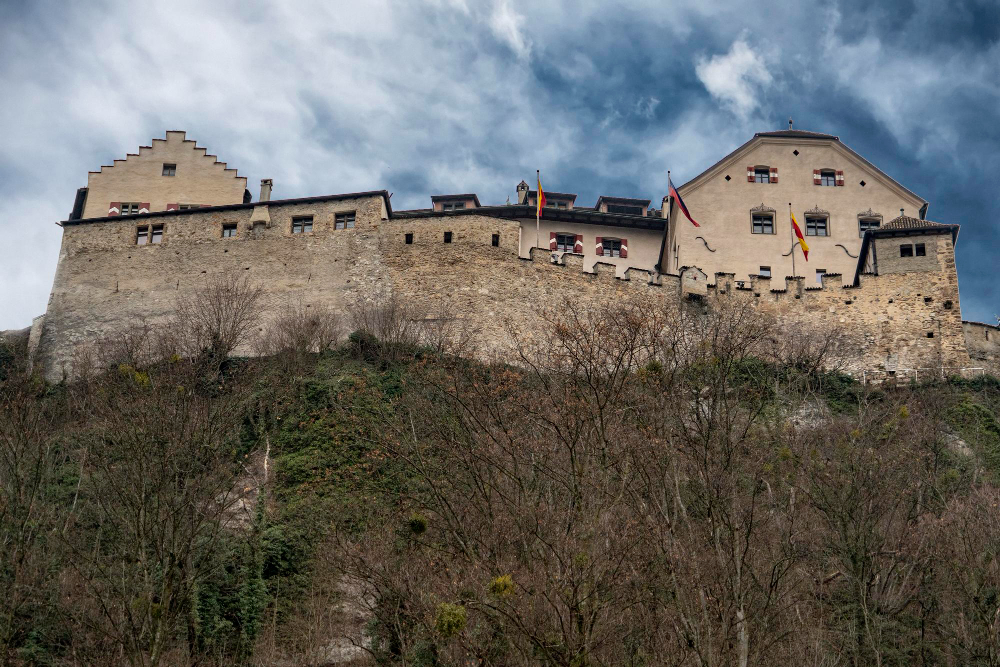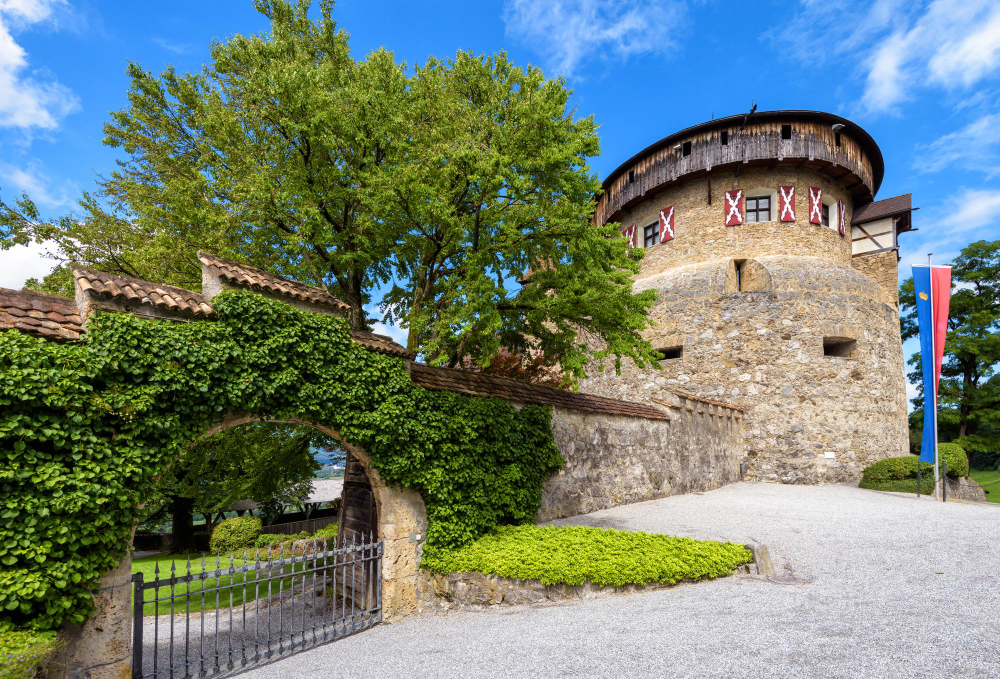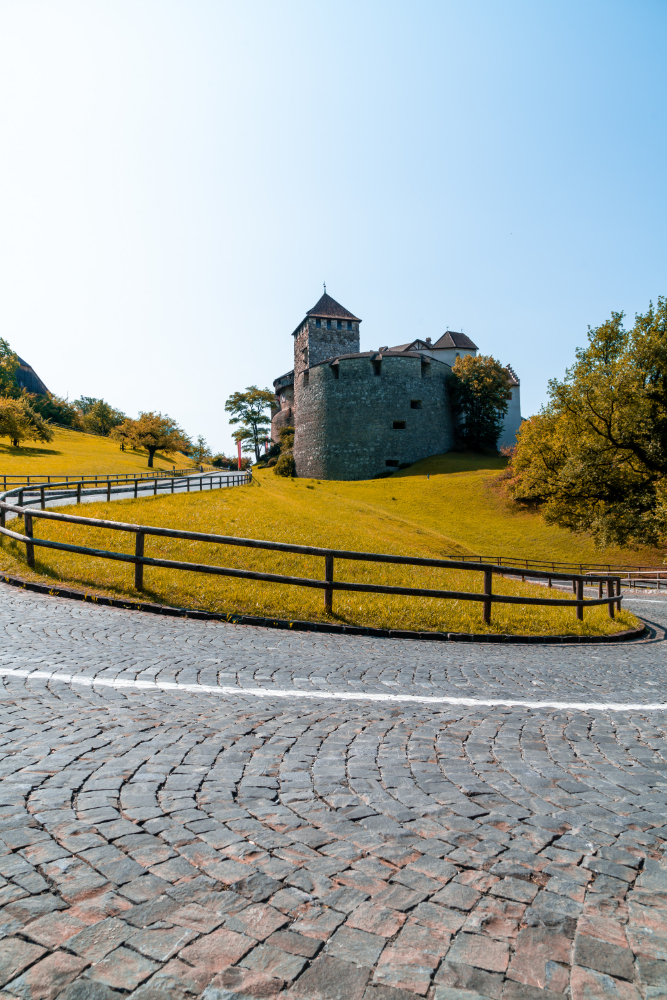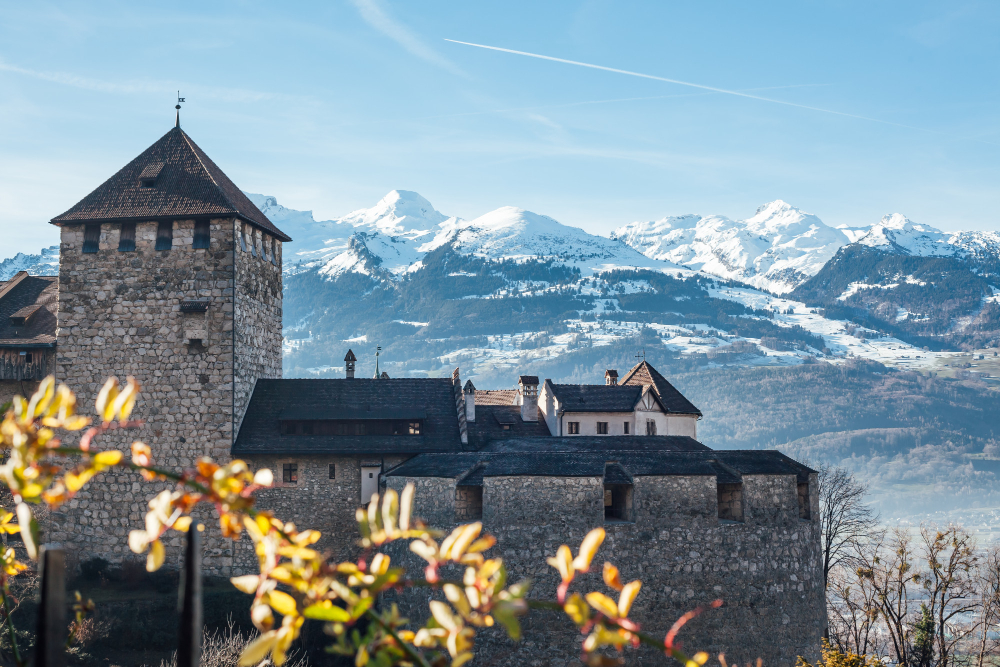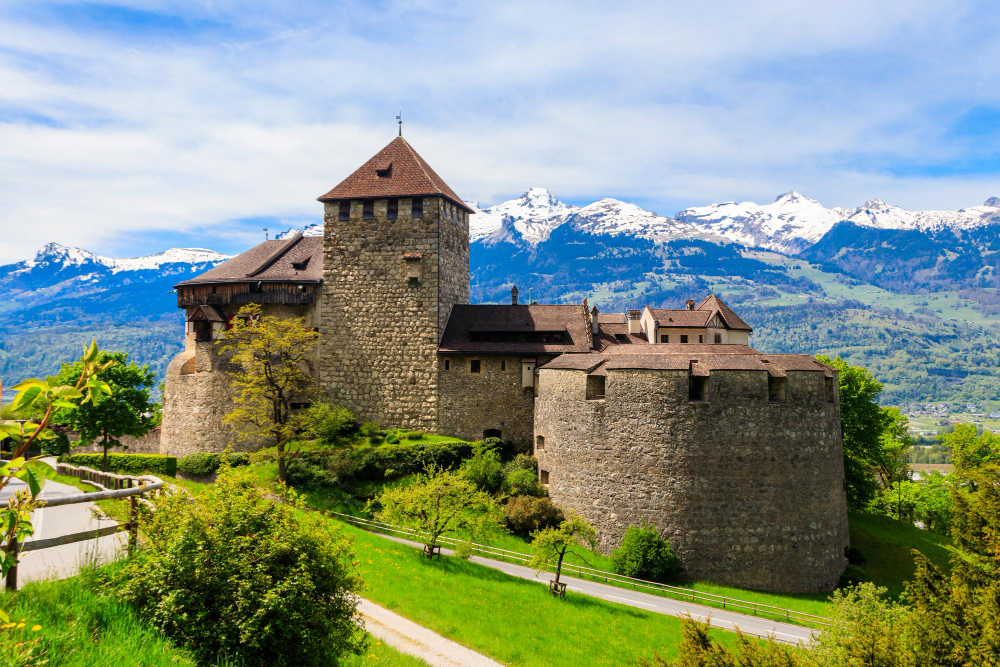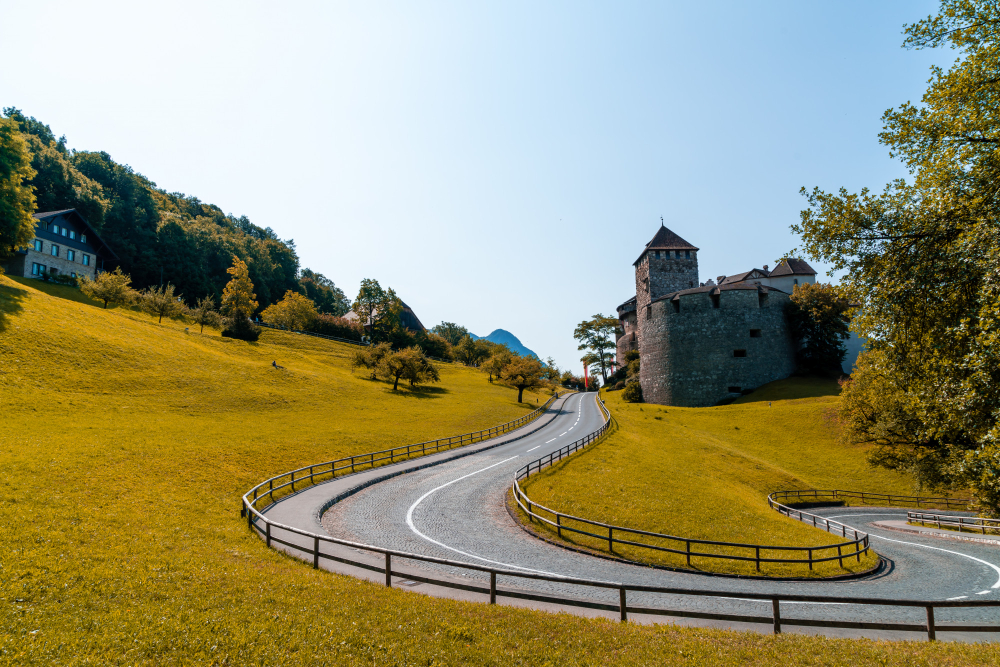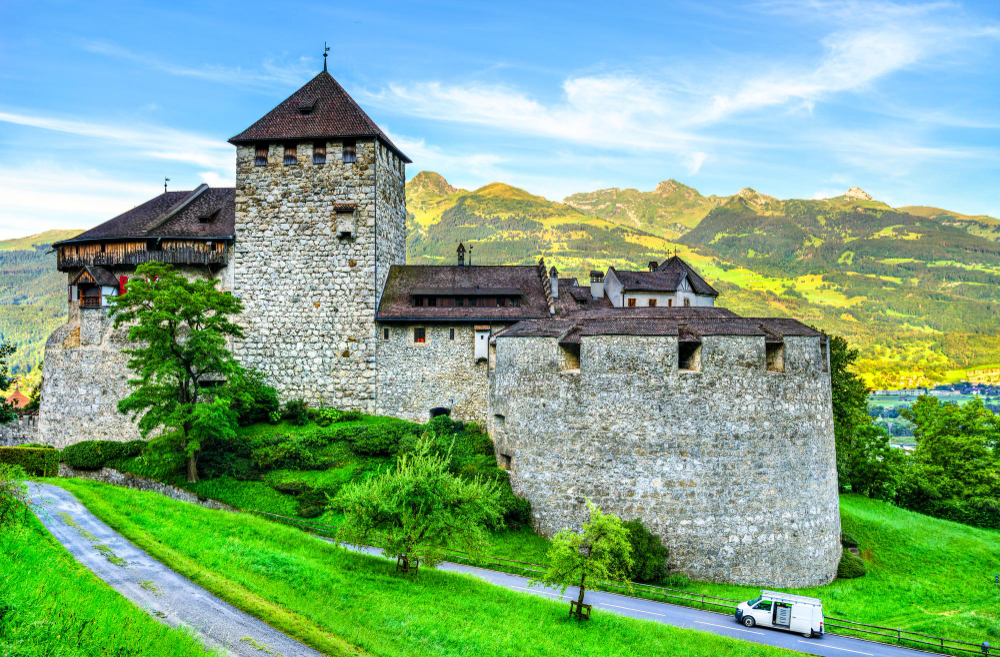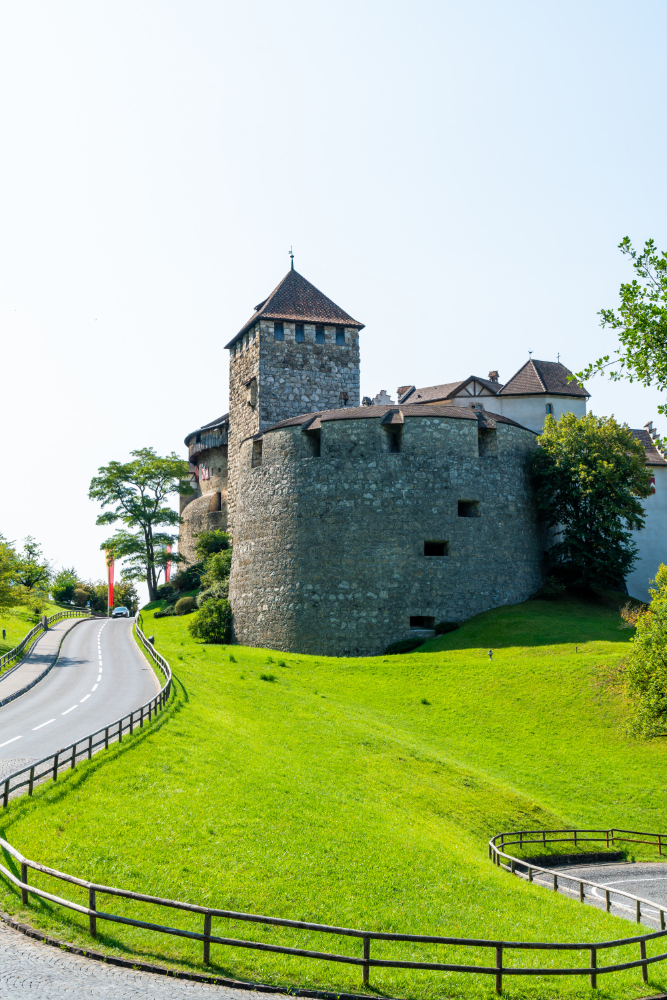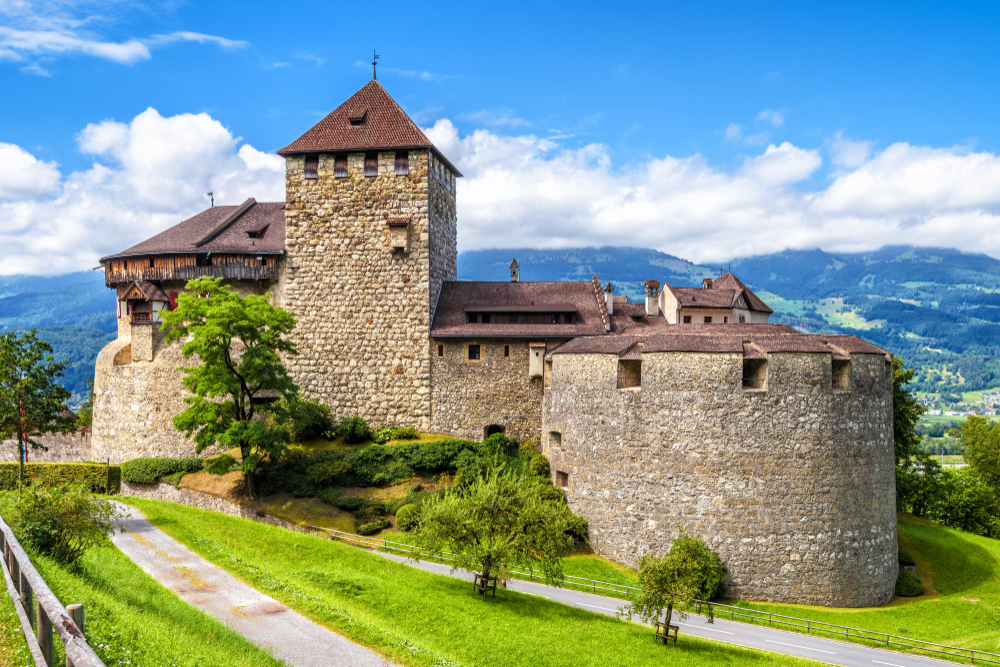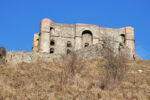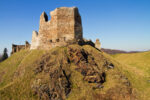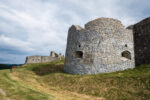

Perched high on a picturesque hill, Vaduz Castle stands as an imposing landmark of the Principality of Liechtenstein. This majestic structure is not only the official residence of the princely family, but also a symbol of the eventful history and culture of this small Alpine nation. Behind the castle’s mighty walls, however, lie not only historical facts but also countless legends and stories that have been passed down through the centuries.
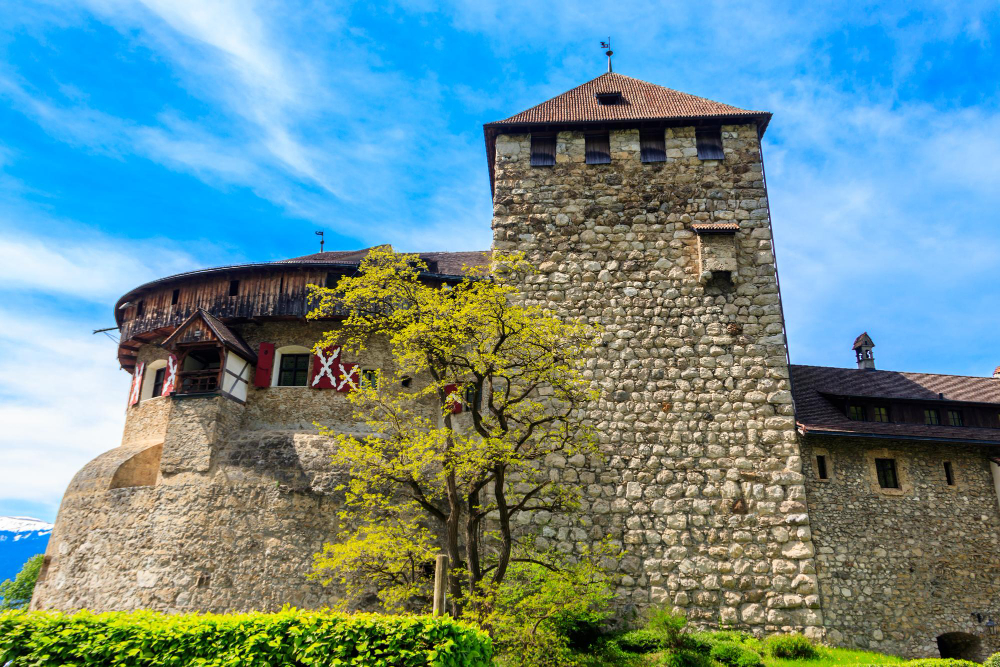
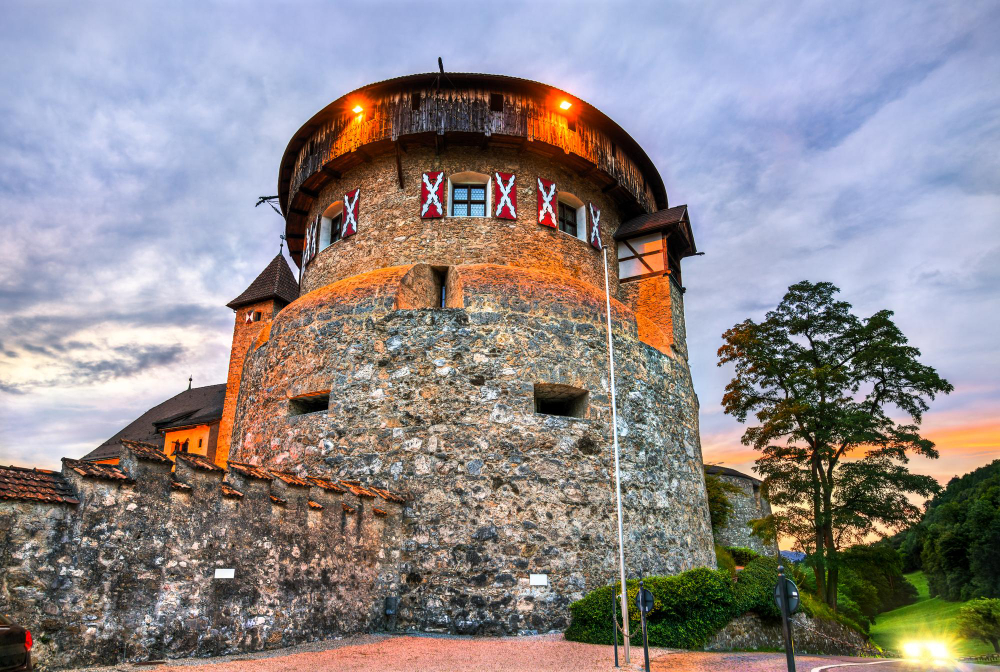
The Beginnings: A Castle from a Bygone Era – The origins of Vaduz Castle date back to the 12th century, when the first parts of the building were likely constructed by the Counts of Werdenberg-Sargans. Particularly striking from this period is the so-called keep, the castle’s central defensive tower. With its impressively thick walls—up to four meters thick on the ground floor—it offered protection against attackers and stands as a testament to the architectural craftsmanship of the Middle Ages. The original entrance door was once located high up on the courtyard side of the tower, eleven meters above the ground. From here, the castle’s inhabitants had a strategically superb view over the Vaduz Valley. The castle chapel, dedicated to Saint Anne, also likely dates back to the Middle Ages. The main altar, whose late-Gothic design bears the hallmarks of its era, is an impressive testament to the religious traditions and artistic skills of that time. But the peaceful years were not to last long: During the Swabian War in 1499, the castle fell victim to the flames when it was burned down by the troops of the Swiss Confederation.
Reconstruction and Expansion: From the Middle Ages to Modern Times – After its destruction, Vaduz Castle was expanded and restored several times. Of particular significance are the works of Count Kaspar von Hohenems in the first half of the 17th century, who had the western part of the castle expanded. These expansions gave the castle its characteristic appearance, which has been preserved to this day. But it was not until the Liechtenstein princely family acquired the County of Vaduz that the building assumed its special role in the country’s history. In 1712, the Liechtenstein family acquired the castle, having already purchased the neighboring Schellenberg estate in 1699. Emperor Charles VI united these two territories and elevated them to an independent principality, which has borne the name Liechtenstein ever since. The castle became the central symbol of this newly founded principality and developed into a political and cultural hub of the region.
The Passage of Time: Restorations and Modern Use – Over the centuries, Vaduz Castle underwent several phases of restoration and adaptation. Of particular significance were the extensive renovation works carried out between 1904 and 1920 under the reign of Prince Johann II. These works not only ensured the stability of the structure but also introduced modern elements into the castle’s design without compromising its historical character. In the early 1930s, Prince Franz Josef II had further extensions built and used the castle as the residence of the princely family. In early 1938, Vaduz Castle officially became the seat of the princely family, who still live there today. Due to its current function as a family residence, the castle is not open to the public. Nevertheless, it attracts numerous tourists every year who admire the imposing structure from the outside and are inspired by its medieval atmosphere.
Legends and Secrets: The Castle as a Place of Myths – It is not only historical facts that make Vaduz Castle special. In addition to its architectural and cultural value, many legends and myths surround its ancient walls. One of the best-known stories tells of a hidden secret passage that supposedly leads from the castle down into the valley. This tunnel is said to have served as an escape route for the residents in times of war. Although historians have not yet been able to confirm this theory, it persists in the tales of the locals and sparks the imagination of many visitors. Another legend tells of a ghost that roams the halls of the castle and is said to warn the inhabitants of impending danger. Some even claim to have seen the ghost or heard strange noises, especially in the quiet hours of the night. Whether the stories are true or not remains uncertain—yet they help to maintain the castle’s mystical aura.
A Look into the Future: Vaduz Castle as a Symbol of Liechtenstein – Today, Vaduz Castle stands not only for the past of the Principality of Liechtenstein, but also for its present and future. It symbolizes the independence and sovereign strength of one of Europe’s smallest countries. The fact that the princely family continues to reside in the castle underscores the close connection between tradition and modernity that makes Liechtenstein so unique. For tourists, the castle remains a major attraction, even though it can only be viewed from the outside. Guided hikes to the castle are particularly popular, allowing visitors not only to learn more about the building’s history but also to enjoy the breathtaking view of the valley. In the evening, when the castle is bathed in warm light, it looks almost like a fairytale castle and attracts admirers from all over the world.
A Living Piece of History – Vaduz Castle is far more than just an old building on a hill. It is a living piece of history, rich in tradition, legends, and modern significance. Its walls tell stories of wars, reconstruction, and the development of a principality that, despite its small size, has a great story to tell. Whether you believe in the myths or not—Vaduz Castle remains a place that harmoniously blends the past and the present.
For lovers of history and architecture, as well as for anyone who simply wants to feel the magic of a medieval castle, Vaduz Castle is a must-see. And who knows—perhaps a stroll around the castle will reveal a hint of the secrets this ancient residence still holds.