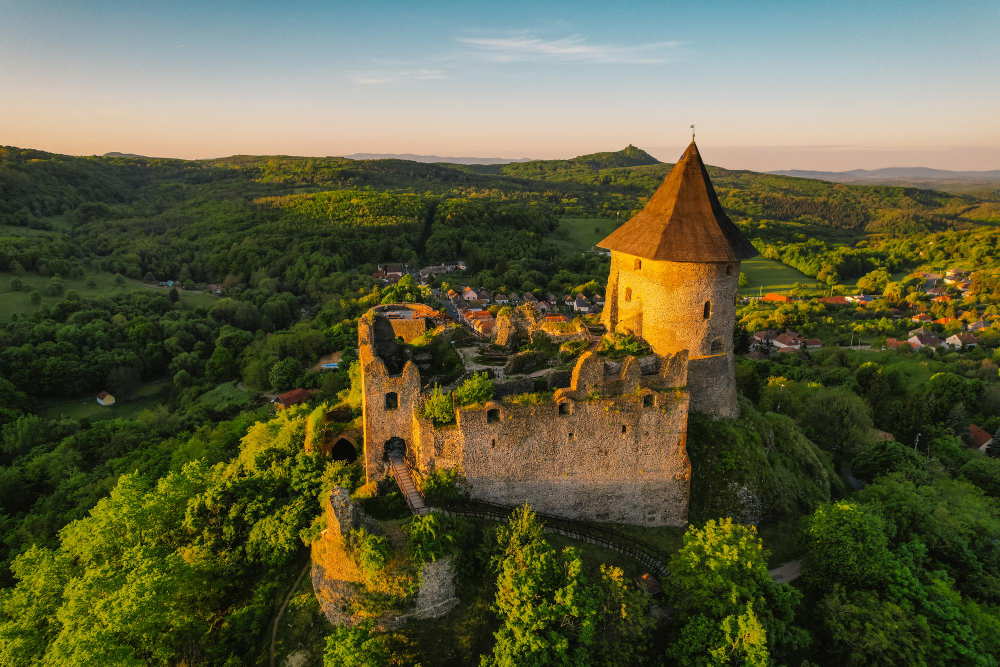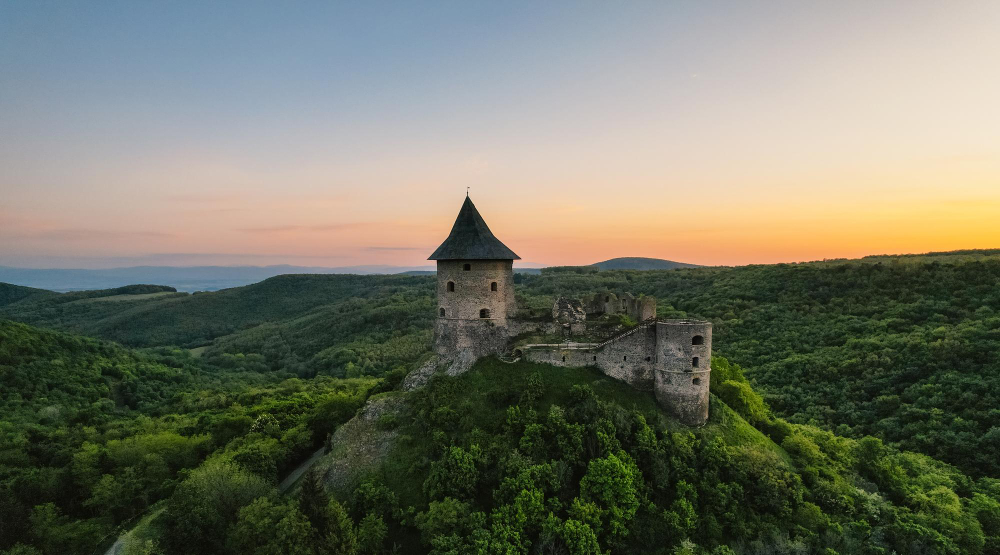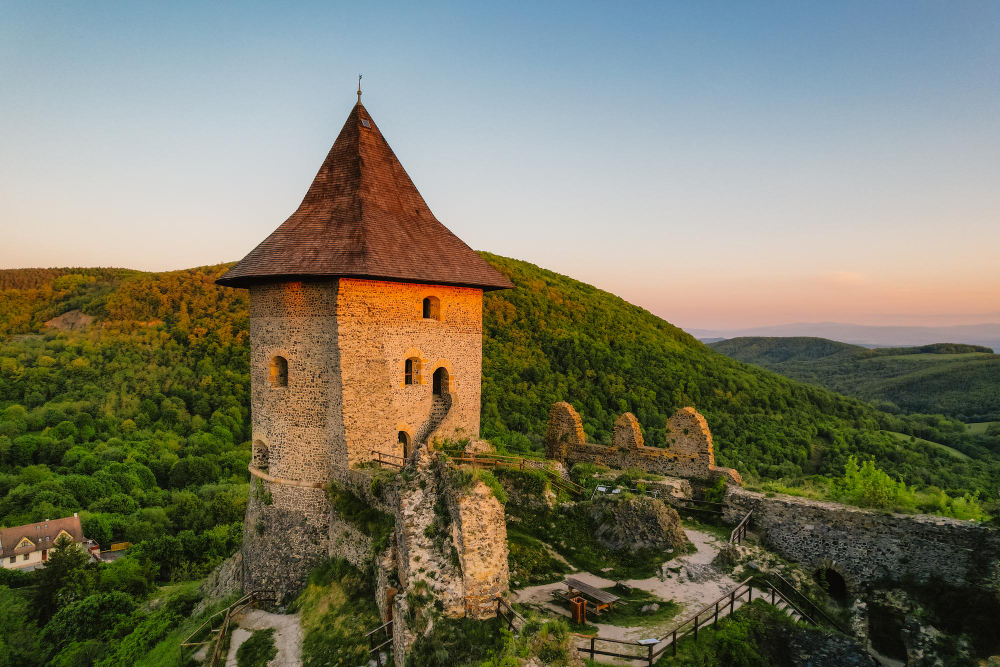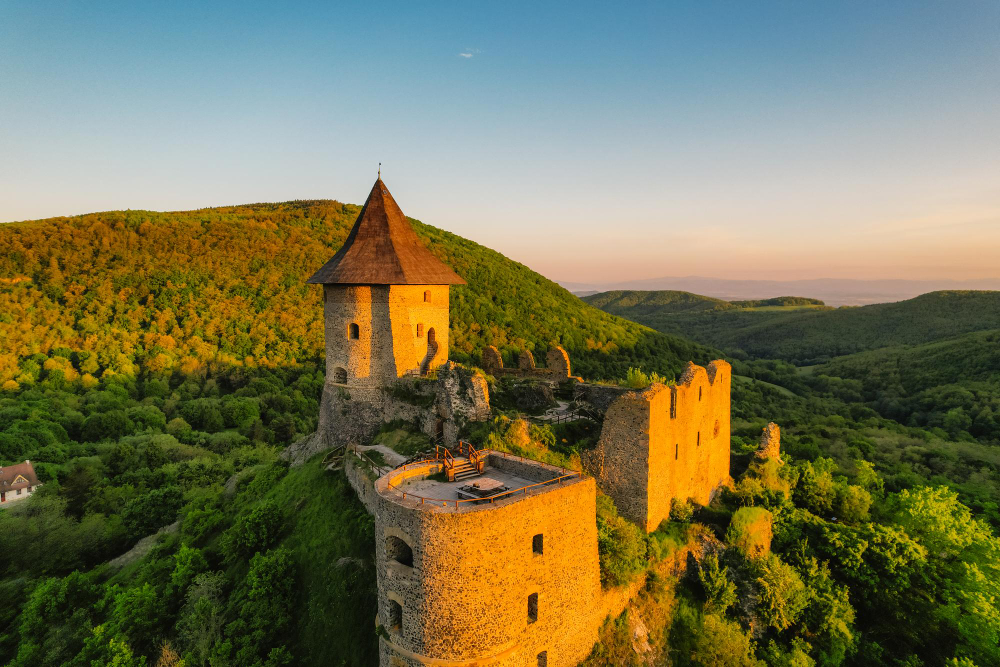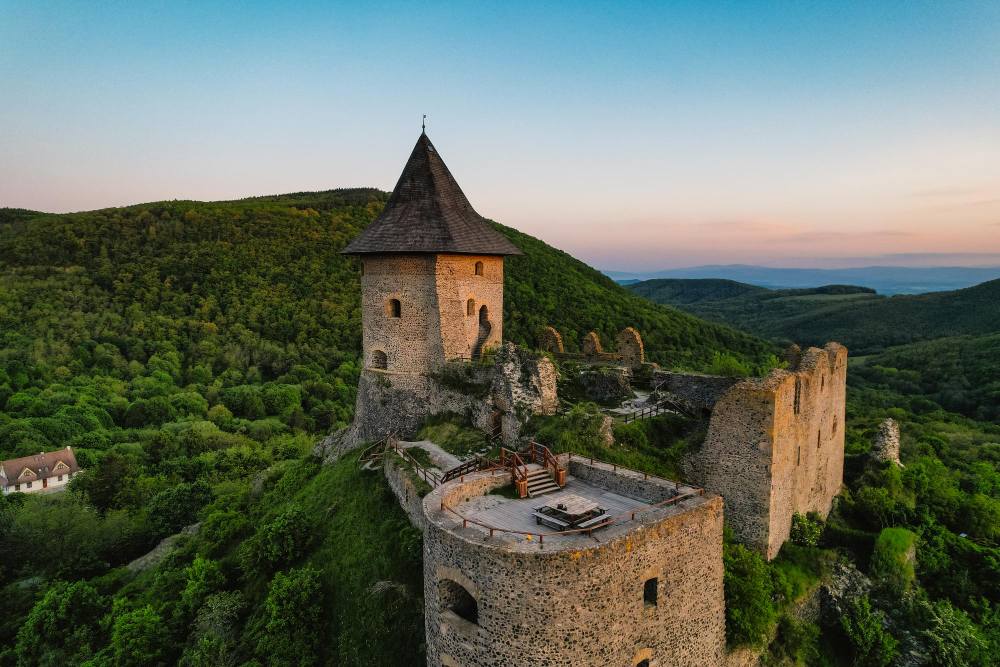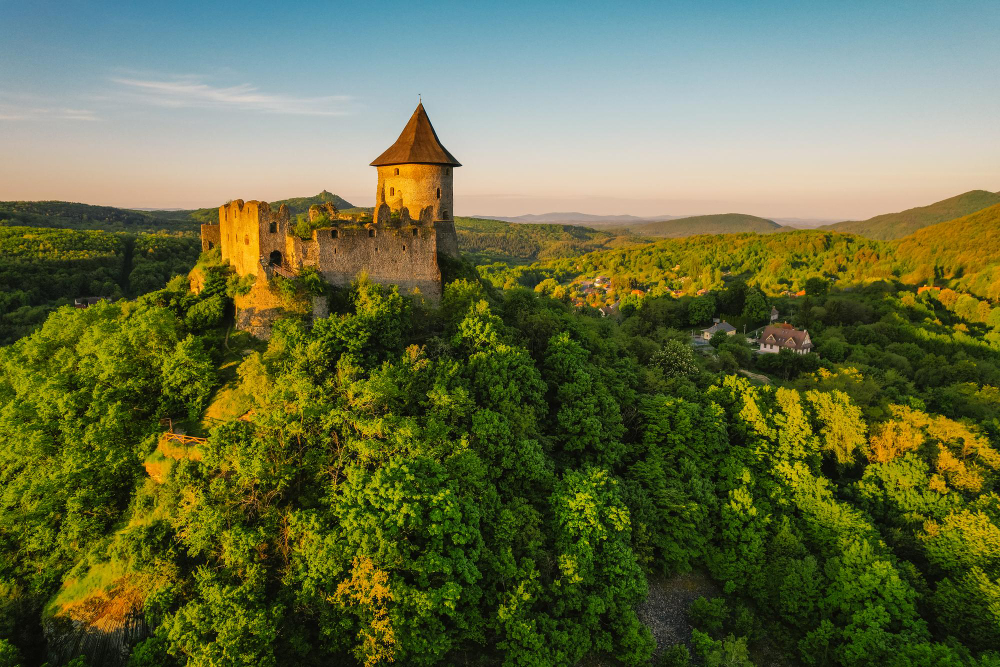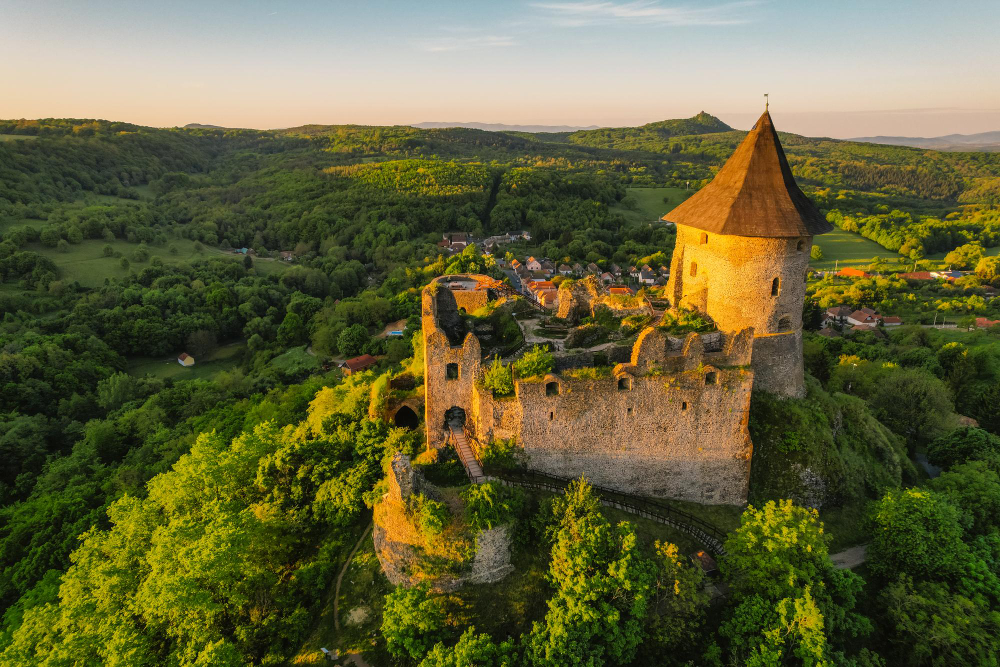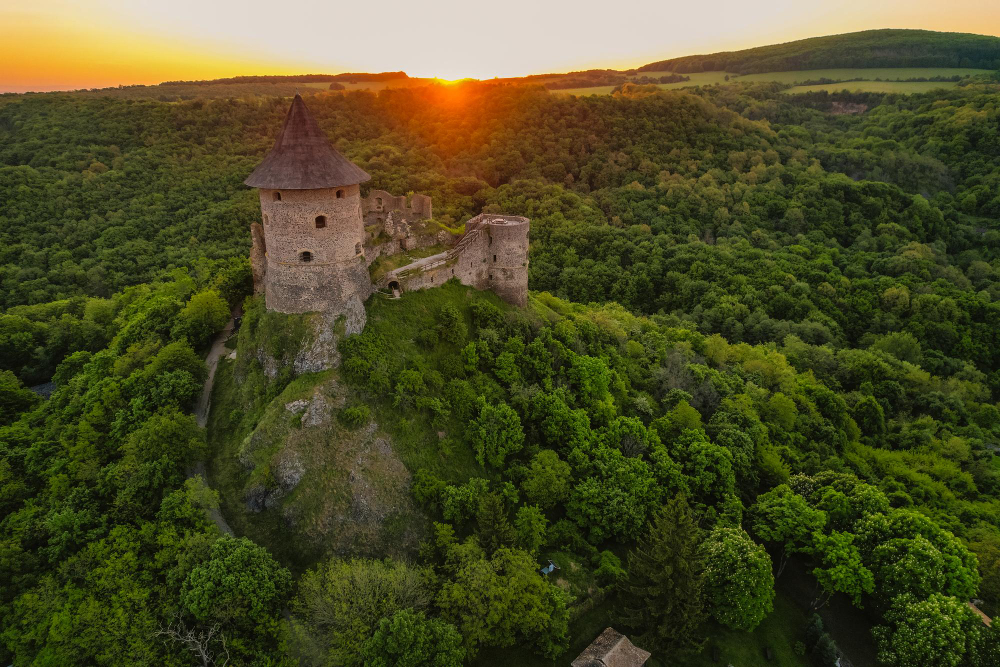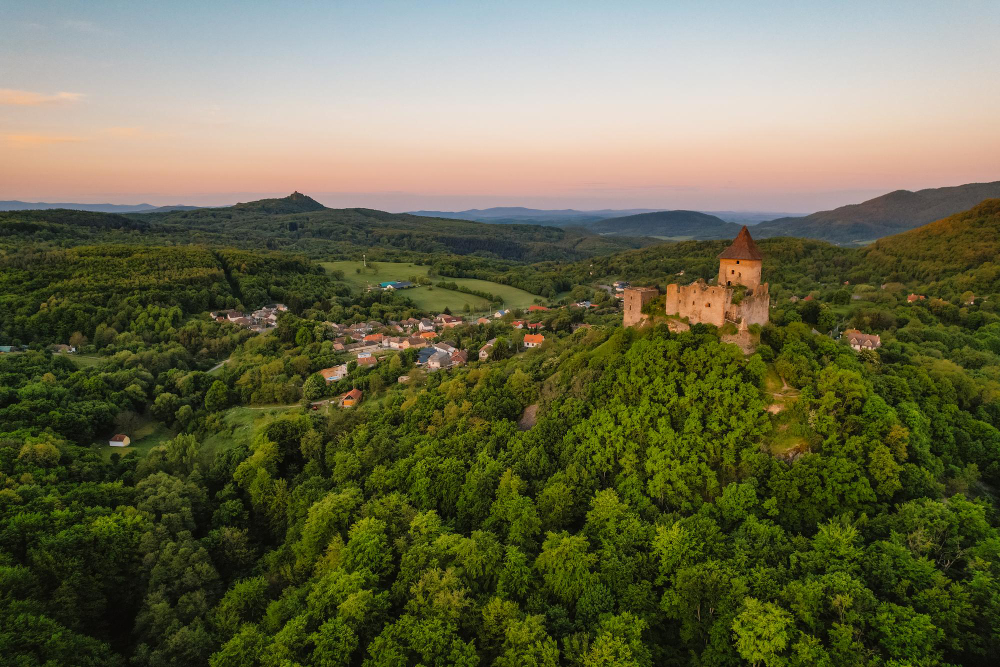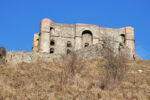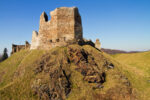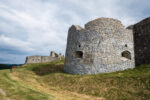

Šomoška Castle, a picturesque ruin in southern Slovakia, stands majestically atop a basalt hill on the Slovak-Hungarian border. Although it bears the name of the nearby Hungarian village of Somoskő, it lies just a few metres across the border on Slovak soil. Surrounded by the rolling hills of the Cerová vrchovina, the castle is not only an architectural gem but also a testament to centuries past, marked by conflict, intrigue and tragedy. Its origins date back to the late 13th century, when Europe was swept by a wave of fortification following the devastating Mongol invasions.
The Beginnings: Construction and First Owners – The castle was probably built around 1291 at the behest of a man named Illés from the Kacsics family. This noble family was known for erecting several castles in the Nógrád region. Šomoška held strategic value and quickly became one of the most important fortresses in the area. Yet shortly after its completion, it found itself in turbulent times: the Kacsics allied themselves with the powerful oligarch Matthias Csák, a feudal lord who fought against the central authority of the Hungarian king. These tensions meant that the castle became the scene of numerous conflicts until King Charles I gained the upper hand in 1323. He stripped the rebellious Kacsics of control over Šomoška and handed it over to his loyal supporter Tamás Szécsényi. During the period under the Szécsényi family, the castle developed into a centre of social life in the region. However, economic difficulties placed the noble family in a precarious position. Time and again, the castle had to serve as collateral until it eventually passed into the hands of other noble families, including the Lossonczys, who played an important role in its later history.
The Turks and the Sieges – The fall of Buda in 1541 and the expansion of the Ottoman Empire cast a long shadow over Hungary and the neighbouring territories. Šomoška Castle suddenly became a border fortress, situated in the midst of a zone threatened by Turkish attacks. As the last male heir of the Lossonczy family, István fell defending Temesvár, so his daughter Anna inherited the castle. Yet shortly afterwards, Šomoška found itself in immediate danger. Despite several Turkish attacks, the castle was successfully defended for 22 years. Its strategic location and the determination of its garrison prevented a swift conquest. In 1576, however, the Turks under the Bey of Fülek achieved a coup: the castle garrison fled without a fight, and Šomoška became part of the Ottoman domain. This situation did not last long, however, as Hungarian troops were able to recapture the fortress in 1593. Following this recapture, Anna Lossonczy died, and the castle passed into the possession of the Forgách family.
Battles, Resistance and Decline – Although Šomoška had been liberated from the Turks, the 17th century brought no peace. Numerous uprisings against the Habsburgs under leaders such as Stephan Bocskay and Gabriel Bethlen repeatedly led to the castle being briefly captured by rebels. A constant back-and-forth between imperial and rebel forces made it clear that Šomoška continued to play a key role in the region. The castle was expanded and fortified several times during this period. Particularly noteworthy is the construction of a cannon bastion and a double wall at the Gothic gate, reflecting the growing need for defensive techniques. Nevertheless, Šomoška suffered from a crucial weakness: a lack of water. This weakness made prolonged sieges extremely difficult. At the beginning of the 18th century, the castle suffered a final severe blow. During the uprising led by Francis II Rákóczi, it changed hands once more, but after the suppression of the uprising, it finally lost its strategic importance. A royal decree ordered its demolition, but only partial destruction took place. In 1826, a lightning strike sealed the castle’s final decline; from then on, it served merely as a source of building materials for the surrounding villages.
The ‘Stone Waterfall’ – Nature Meets Architecture – Šomoška Castle is not only a historical monument but also a natural wonder. The basalt hill on which it was built is famous for the so-called ‘stone waterfall’. This geological phenomenon consists of hexagonal basalt columns that resemble veiled streams of water and give the impression of a frozen waterfall. This unique sight attracts numerous visitors every year and has led to the area around the castle being declared a nature reserve. The use of local basalt as a building material gave the castle itself a distinctive character and highlights the close connection between architecture and nature in this region. Even today, visitors can experience the charm of this symbiosis as they explore the castle ruins.
Recent history and significance for tourism – After centuries of decay, the castle was partially renovated in the 1970s, laying the foundation for its current role as a tourist attraction. Despite its location on the border between Slovakia and Hungary, it has taken on a unifying role between the two countries. The area surrounding the castle is characterised by cultural exchange and a shared history, which becomes tangible within the historic walls of Šomoška. The castle’s shifting allegiance to various states – first Hungary, then Czechoslovakia, and briefly Hungary again during the Second World War – makes it a symbol of the region’s political upheavals. Today it belongs definitively to Slovakia, yet remains a popular destination for Hungarian and Slovak visitors alike.
Legends and Myths – Like many historic castles, Šomoška is shrouded in legend. One of the best-known stories concerns a secret tunnel leading from the castle to nearby Salgó. This tunnel is said to have once served as an escape route for the castle’s inhabitants – yet it has never been found. Whether this legend is truth or fiction remains uncertain, but it adds to the castle’s air of mystery. Another story tells of a hidden treasure that the Turks are said to have left behind when they abandoned the castle. To this day, treasure hunters search for clues to this legendary find, yet so far every search has proved fruitless. Such legends bring the stories surrounding Šomoška to life and make it a fascinating place for history lovers and adventurers alike.
One castle, many stories – The history of Šomoška Castle is a blend of architecture, war, nature and mythology. It stands not only as a testament to the fortifications of bygone eras, but also to the region’s ability to constantly reinvent itself. Visitors to the castle experience a journey through history and immerse themselves in a world full of legends and natural beauty. Šomoška remains an impressive testament to medieval architecture and an important part of Slovakia’s cultural heritage – a place that not only preserves the past but also tells stories that capture the imagination.