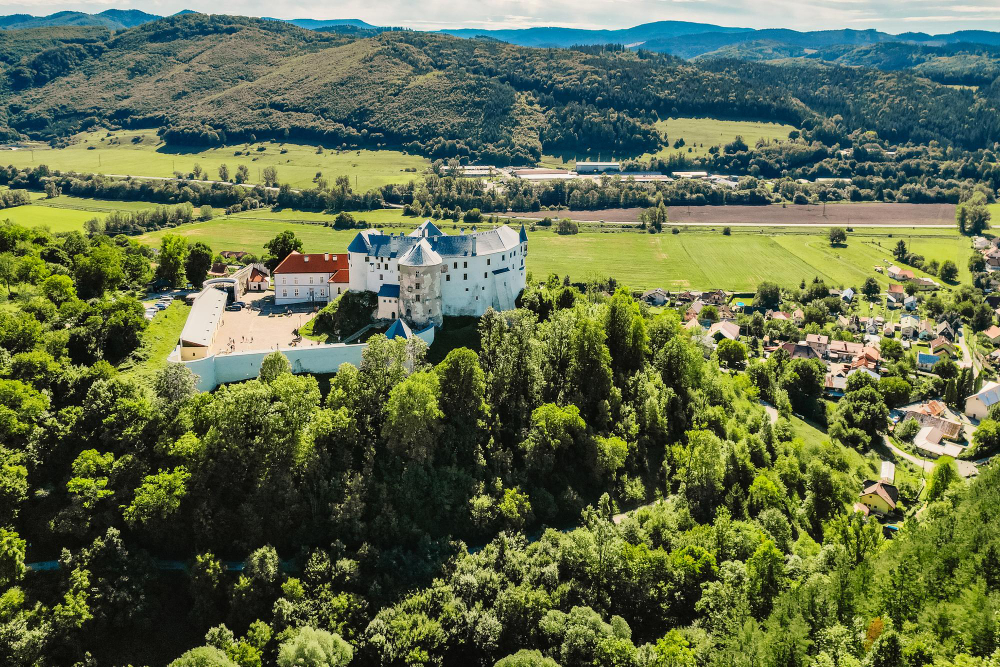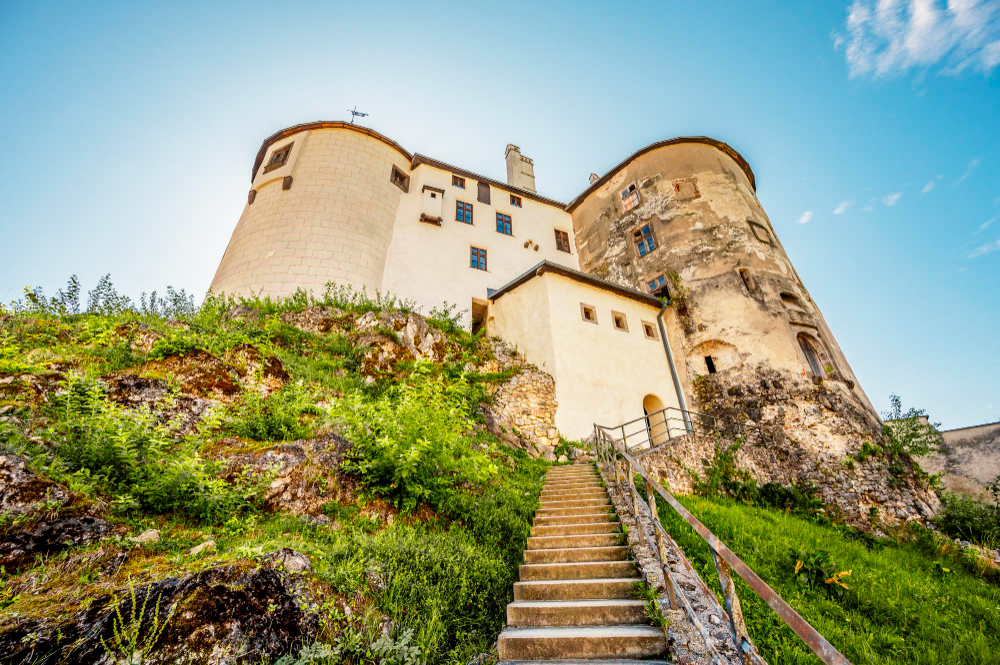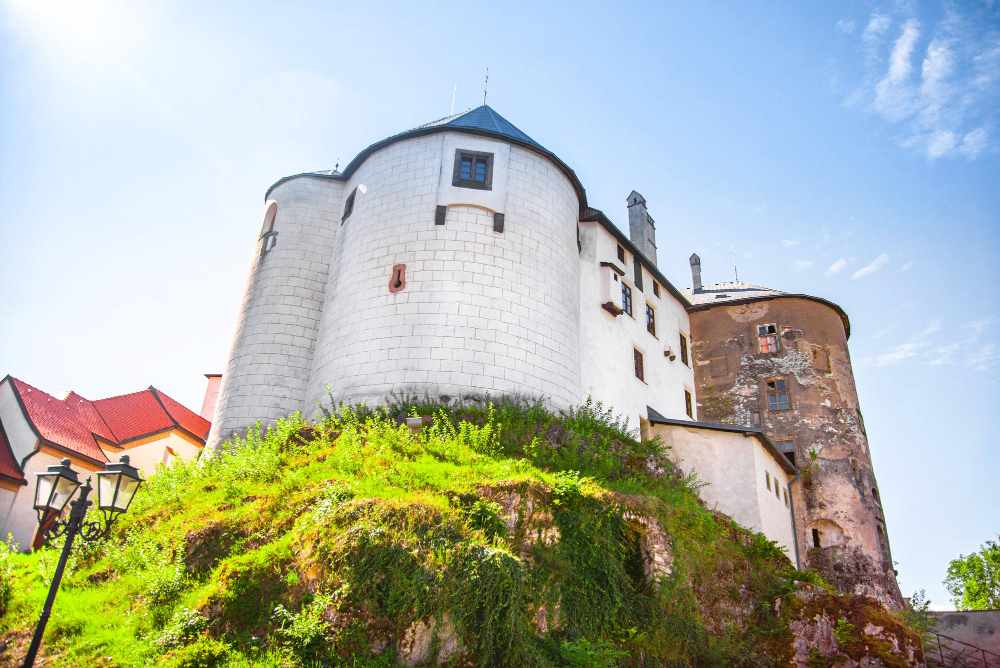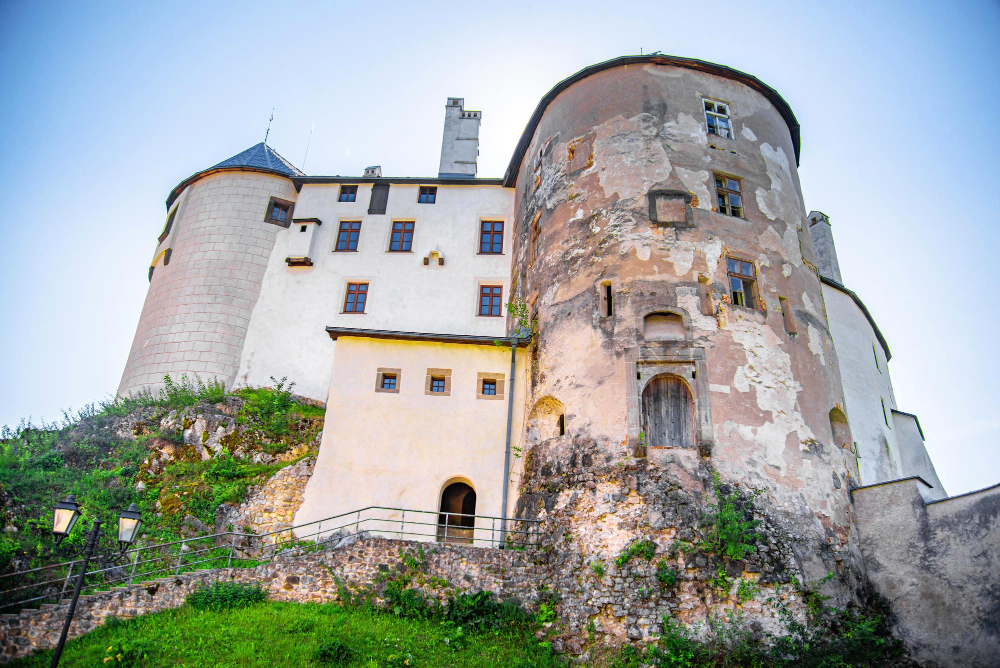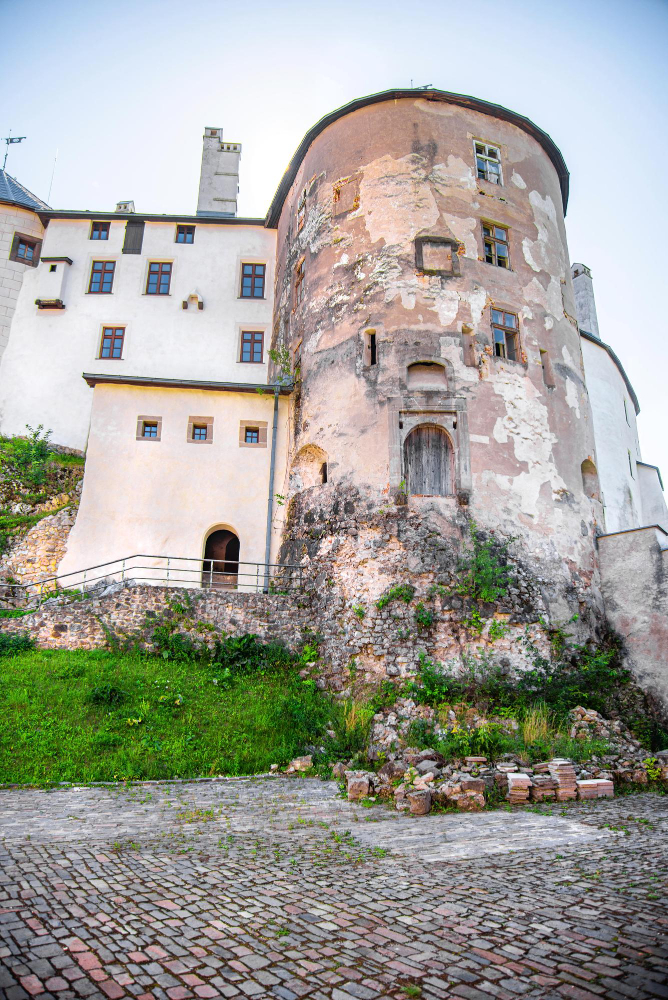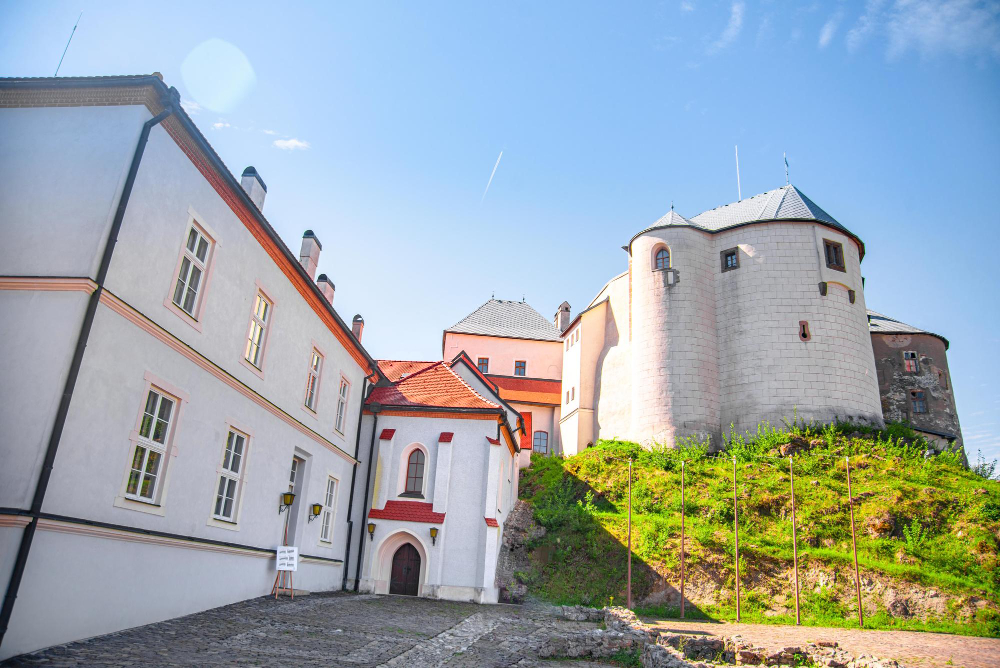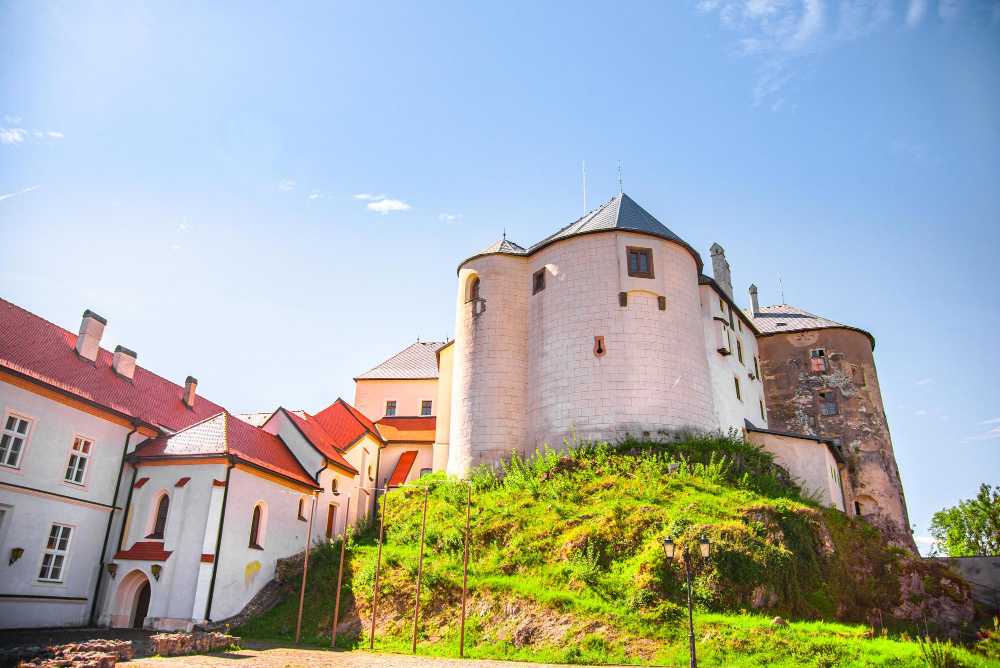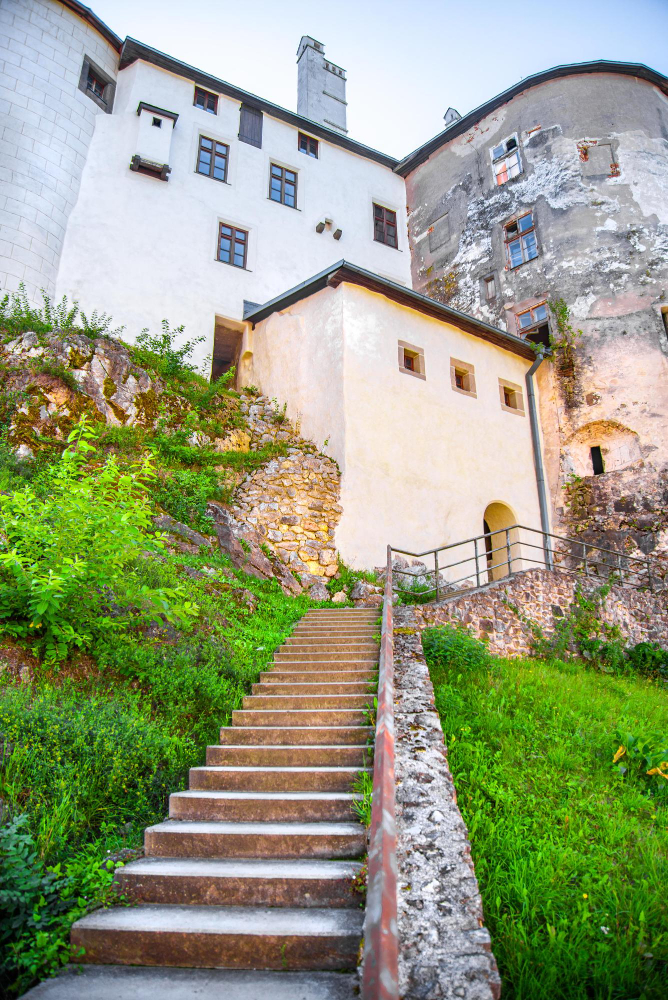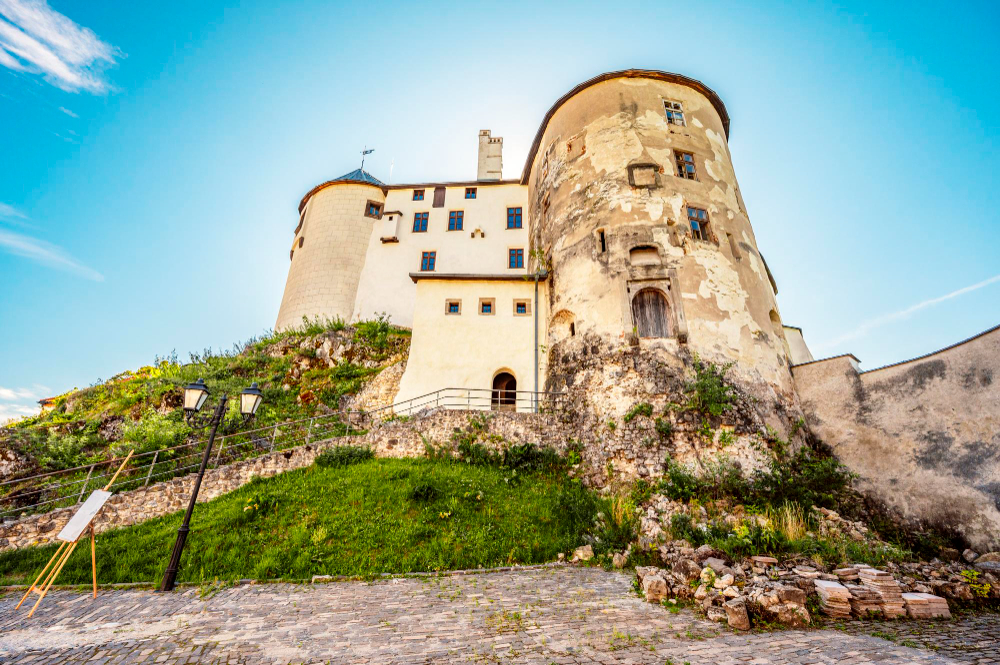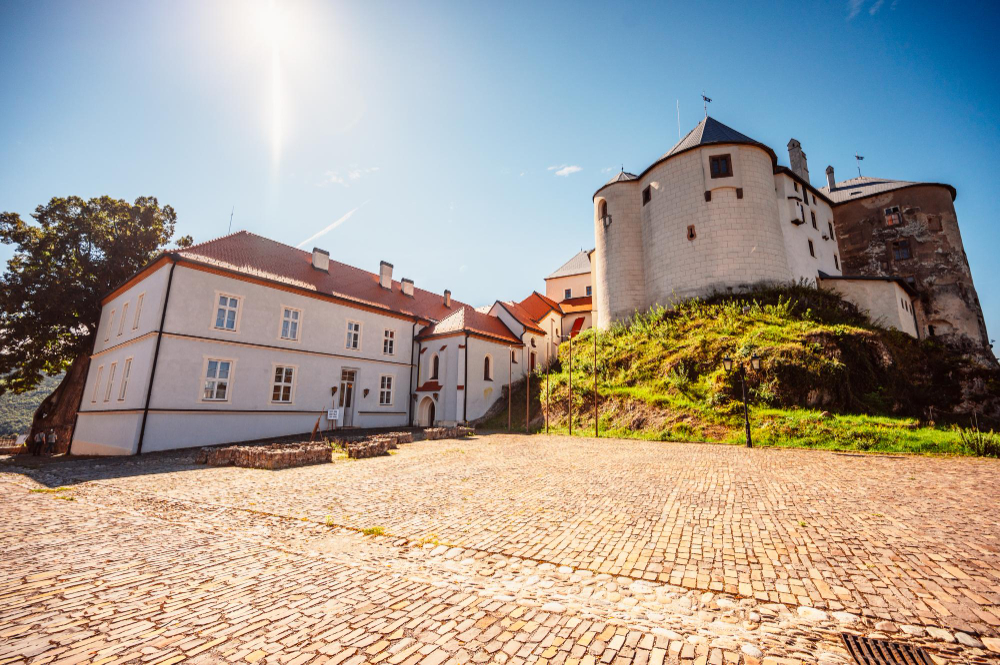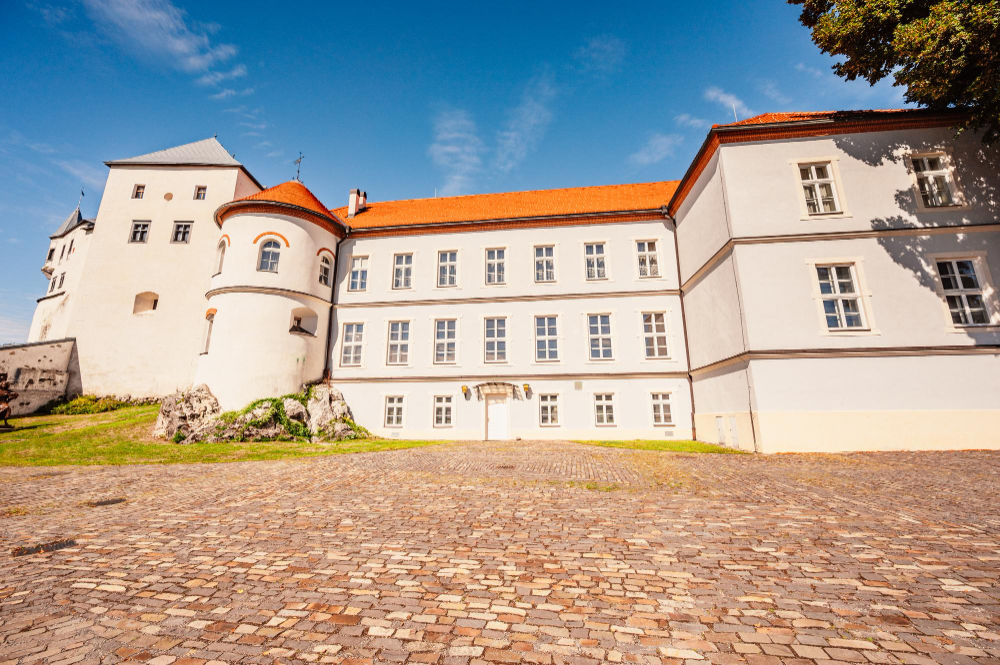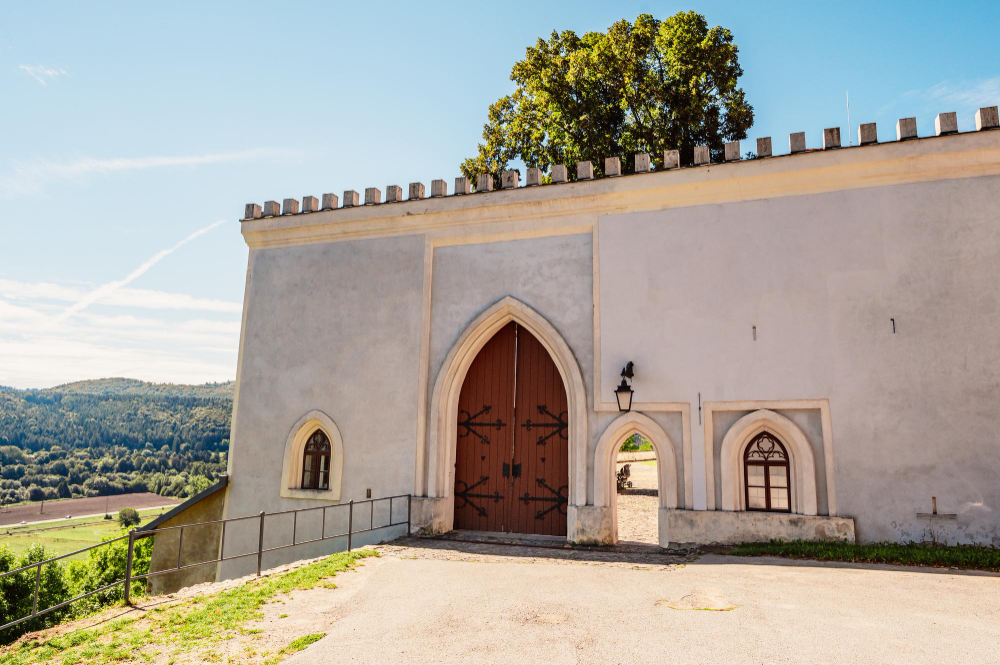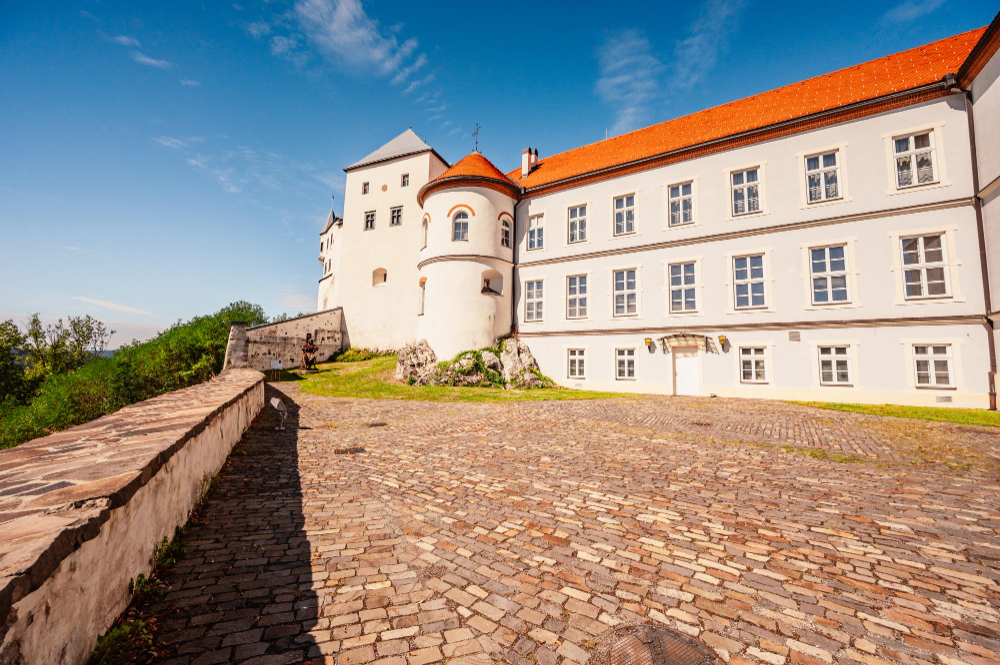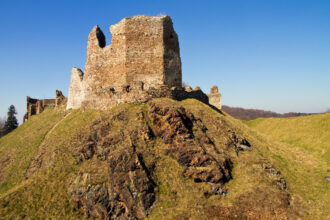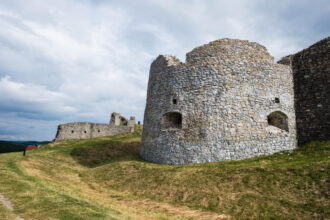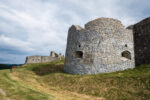

In the heart of Slovakia, majestically perched above the small village of Slovenská Ľupča and surrounded by the lush green landscape of the Upper Hron Valley, stands Ľupča Castle (Slovak: Ľupčiansky hrad). Its stone walls and towers are silent witnesses to an eventful history filled with uprisings, intrigues, and myths. Located just ten kilometers east of the city of Banská Bystrica, this historic site captivates visitors with its fascinating past. But what truly lies behind the castle’s stone facades? This exciting journey takes us through centuries of ups and downs—and perhaps a few secrets as well.
Origins from the Time of the Mongol Invasion – The roots of Ľupča Castle date back to the 13th century. The fortress was built during the reign of Hungarian King Béla IV, and its first written mention dates from 1250 under the name “Liptza.” The complex was built against the backdrop of the dramatic events following the devastating Mongol invasion of 1241–42, which reduced large parts of the Kingdom of Hungary to rubble and ashes. Béla IV recognized that strong fortresses were necessary to withstand future threats—and thus Ľupča Castle was born. Just a few years later, in 1255, the name of the complex appeared in a document regarding the founding of the town of Neusohl (today Banská Bystrica). The description “nova villa Bystriciensis prope Lipche” illustrates how closely the castle’s history is linked to the development of the region. Throughout the Middle Ages, it remained royal property, even though power struggles and local conflicts occasionally disrupted this rule. In particular, Matthias Csák, a headstrong magnate, ignored the royal claims and laid claim to the castle himself—a typical example of the turbulent era of the Hungarian petty kingdoms.
Royal Hunting Trips and Catastrophic Earthquakes – Over the centuries, the castle became a popular retreat for kings; Charles Robert of Anjou and Louis the Great, in particular, stayed here during their hunting trips. But it wasn’t just royal visits that left their mark. A massive earthquake in 1443 severely damaged the complex, and it took years before the castle could be rebuilt and expanded. However, the danger was far from over: in the mid-15th century, Hussite raids became a new threat, and the inhabitants had to prepare for attacks once again.
Power Struggles and Intrigue: The Castle’s Changing Owners – In 1490, the castle came under the control of the Dóczy noble family, who were notorious for their arbitrary treatment of mining towns and the lower nobility. This behavior ultimately led to the confiscation of the complex in 1531, after which the Chamber of Neusohl took over its administration. Under the lease of a wealthy citizen of Kremnica, Paul Rubigall, the fortress underwent a new phase of expansion. Rubigall was responding to the ever-present threat from the Ottomans, who had occupied large parts of Hungary. After his death, the Polish nobleman Gaszpar Tribel took over the castle. The 17th century, marked by constant uprisings against the Habsburgs, brought renewed unrest to the region. Rebels led by Emmerich Thököly captured the castle and held it for a time. Through marriage, the fortress later came into the possession of Franz Wesselényi, the Hungarian Palatine, and his famous wife Mária Széchy, who was known as the “Venus of Murán.” However, political intrigues led to the castle being confiscated after Wesselényi was suspected of acting against the Habsburgs as part of the Magnate Conspiracy.
Decline and Transformation – A New Purpose – With the start of the 18th century, the fortress began its slow decline. In 1703, it was captured by the troops of Franz II Rákóczi, but returned to royal ownership four years later. Its strategic importance waned, and instead, the castle served as a prison during the 18th century. The administration moved to more comfortable country estates, and the former fortress was increasingly left to its own devices. A turning point came in 1848 with the end of serfdom—the castle was converted into a social institution in 1873 and housed an orphanage as well as a school. During World War II, it served as an internment camp for prisoners of war, and even after the war ended, the complex fulfilled numerous functions: from the headquarters of the Socialist Youth Union to the regional office for cultural heritage in the 1990s, its uses were diverse.
Modern Times and New Splendor – The year 2002 brought a significant change for Ľupča Castle when the company Železiarne Podbrezová, a. s. acquired the complex. With great dedication, the company carried out extensive renovations, and today the castle shines in new splendor. It is now a cultural center for events such as weddings, concerts, and historical tours. During the summer months of July and August, it is open to visitors almost daily; outside of this season, tours are available by appointment only.
A Living Legend: The Korvínova Linden Tree – In addition to stories of kings, nobles, and wars, Ľupča Castle also holds botanical wonders. On the grounds stands an impressive large-leaved linden tree, estimated to be a stately 700 years old. This venerable linden tree bears the name “Korvínova lipa” and is not only a natural monument but also a symbol of the resilience and endurance of this historic site.
Historic Walls Full of Life – Ľupča Castle is more than just an architectural legacy; it is a living testament to the history and culture of Slovakia. Its walls have withstood the horrors of earthquakes, wars, and political intrigues; they have sheltered kings and commoners alike, and today it serves as a place of encounter and cultural exchange. Visitors to the castle embark on a journey through time that goes far beyond mere historical facts. Perhaps you will hear the whispers of times long past in the wind whistling through the ancient walls—or discover something magical in the venerable Korvínova linden tree, which connects us to the fascinating past. Ľupča Castle is not just a monument, but a living legend waiting to be explored by curious souls.