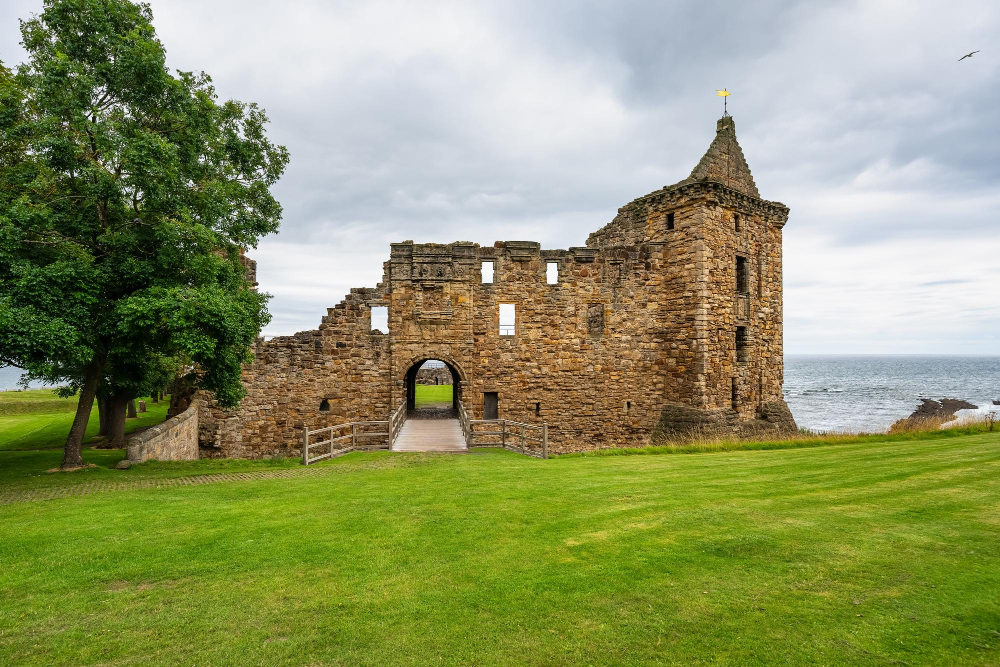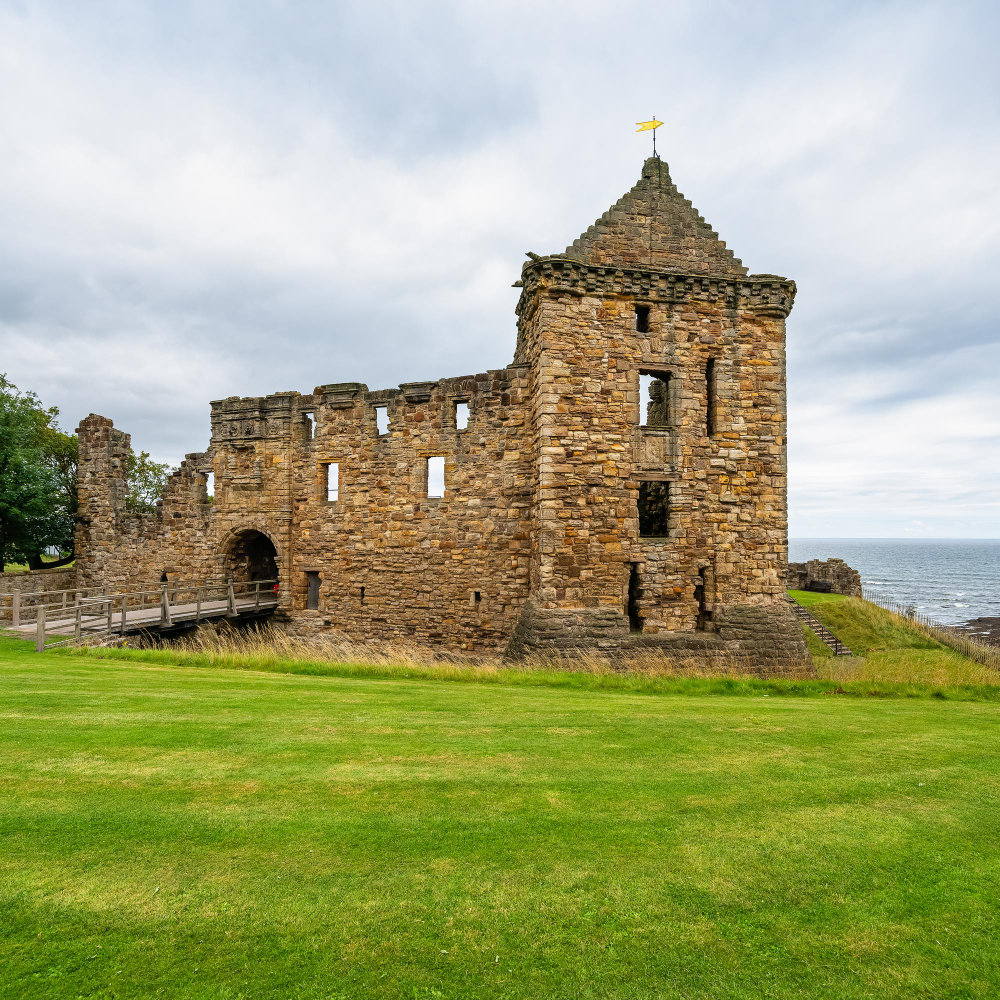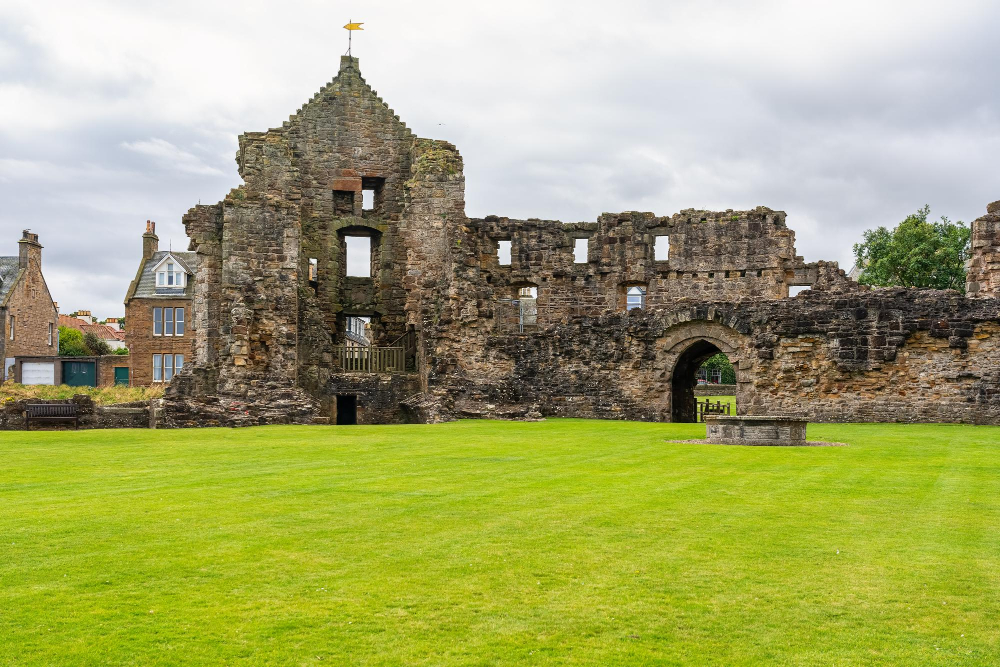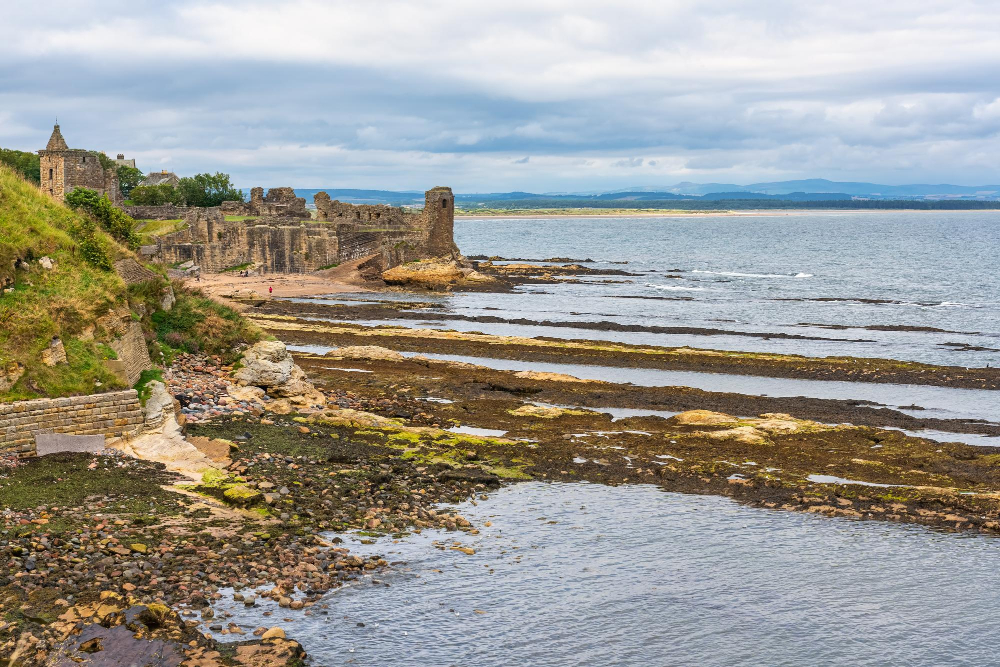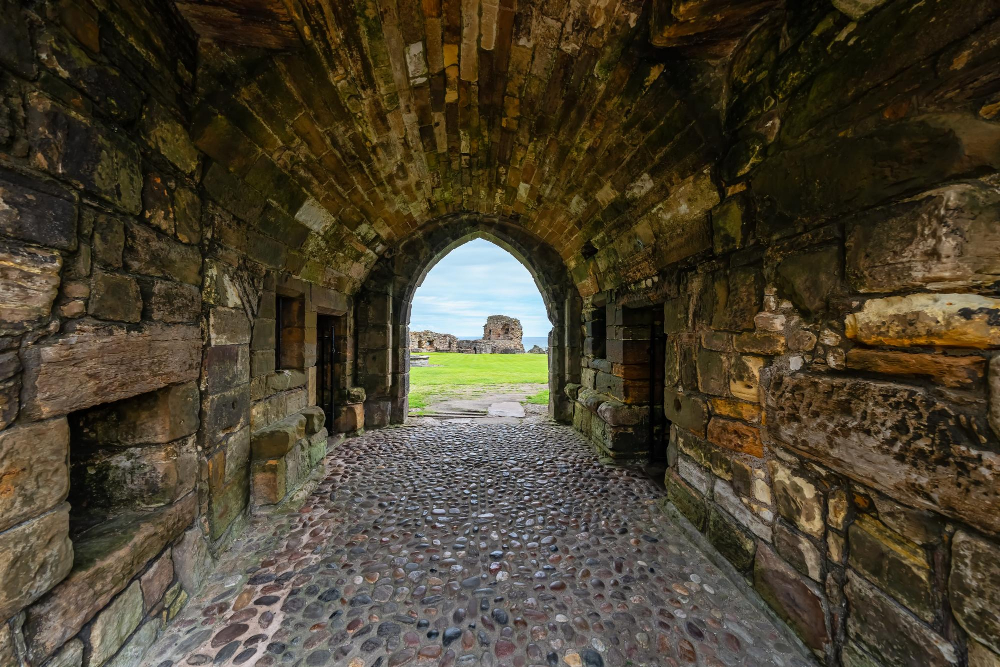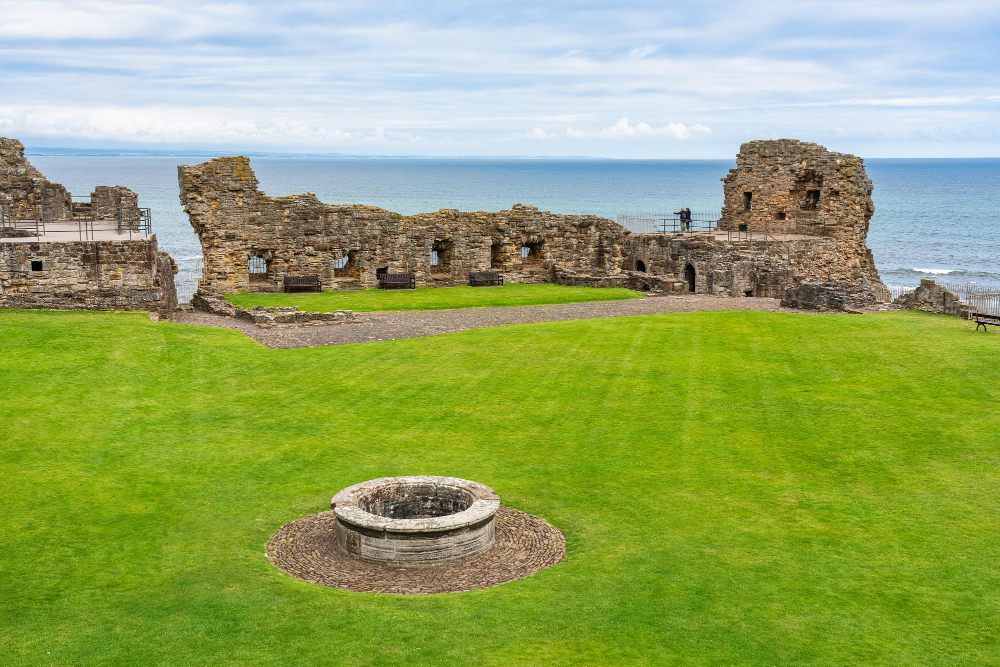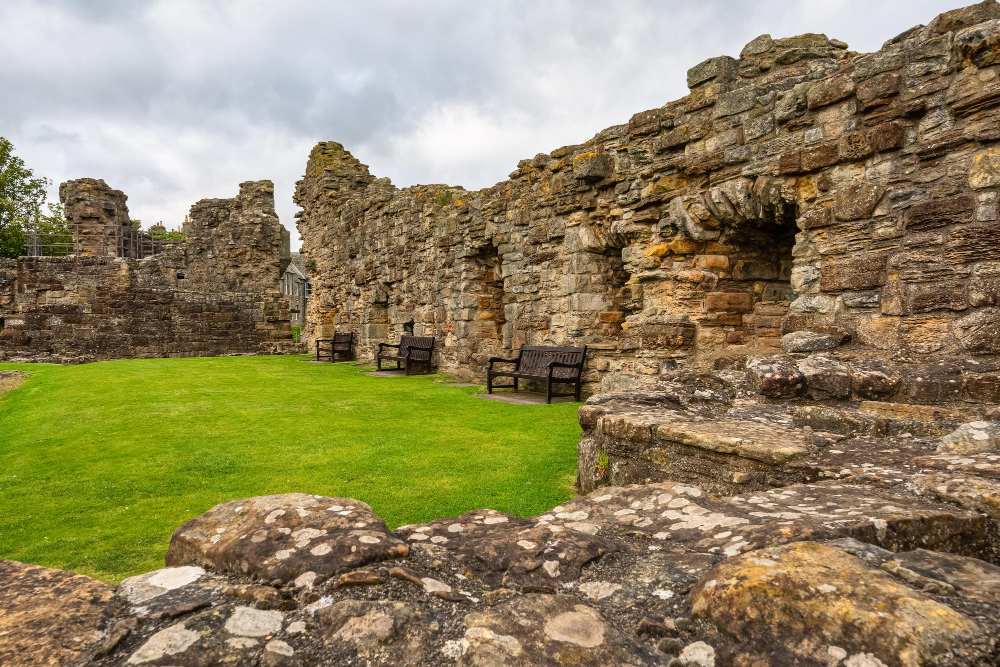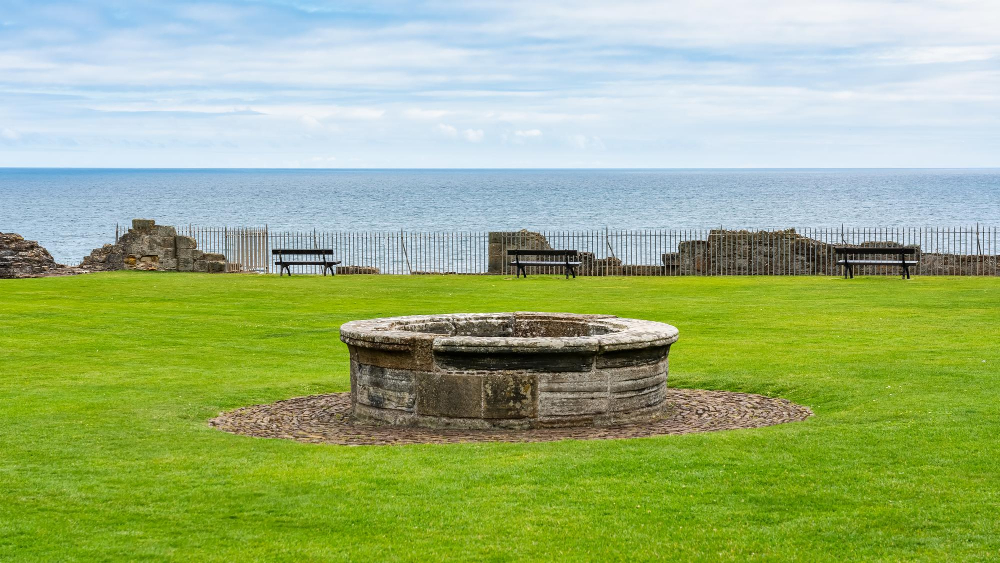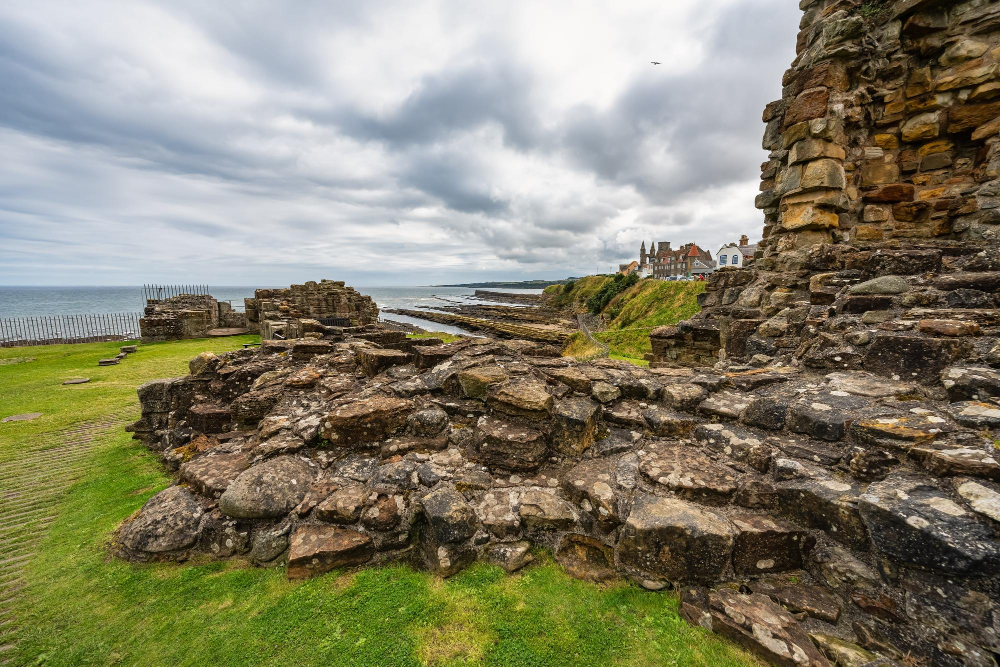

Perched high on a rocky outcrop on the coast of Fife, St Andrews Castle boasts a history dating back to the 12th century. Once a symbol of power and prosperity, it was a place where kings resided and served as Scotland’s religious centre. Today, the castle’s walls stand as a silent reminder of centuries of political upheaval, bloody sieges and religious conflict. The ruins tell stories that are both fascinating and spine-chilling – a true testament to Scotland’s turbulent history.
The Beginnings: A Seat of Ecclesiastical Influence – The history of St Andrews Castle begins in the time of Bishop Roger (1189–1202), a son of the Earl of Leicester. Even then, the castle was an important site for the powerful bishops of St Andrews, who resided here whilst the town served as the spiritual centre of Scotland. In Latin documents, the archbishops of St Andrews referred to the castle as their palace, calling it ‘apud Palatium nostrum’. The castle’s location – right by the sea on a rocky headland overlooking the sandy beach of Castle Sands – made it not only impressive but also strategically valuable. However, this geographical position was later to prove both a blessing and a curse, as it made the castle both a target and a fortress in numerous conflicts.
Destruction and Reconstruction: The Turmoil of the Wars of Independence – During the Scottish Wars of Independence (1296–1328), St Andrews Castle was destroyed and rebuilt several times. It changed hands between the Scots and the English, often suffering severe damage in the process. Following the conquest of Berwick by Edward I of England in 1296, the castle fell into English hands before being recaptured by the Scots in 1314 after the legendary Battle of Bannockburn. Bishop William Lamberton, a loyal supporter of King Robert the Bruce, subsequently began restoring the complex. However, the English managed to recapture the castle and significantly strengthen its defences. Sir Andrew Moray, Regent of Scotland, finally brought the castle back under Scottish control after a three-week siege. To prevent the English from using it as a fortress again, the Scots decided in 1337 to completely destroy the castle. It was not until around 1400 that Bishop Walter Trail began reconstruction, and his work forms the basis for the ruin’s present appearance. Trail himself died within the castle walls in 1401, meaning the site also has a personal connection to this eminent clergyman.
A royal refuge and the grim chapter of the dungeons – Over the centuries, the castle has been home to numerous prominent figures, including James I of Scotland, who was brought up there under the care of Bishop Henry Wardlaw. It was Wardlaw who founded the University of St Andrews in 1410, which today ranks among the world’s most prestigious universities. Yet the castle was not only a place of learning and power, but also a dreaded prison. Particularly notorious was the so-called ‘Bottle Dungeon’, a small, gloomy pit hewn directly out of the rock. This cold, stifling dungeon was the final resting place for many prisoners. It is reported that even prominent figures such as Duke David Stuart of Rothesay and Murdoch Stewart, the second Duke of Albany, were imprisoned there under inhumane conditions.
The Storm of the Reformation: Betrayal, Murder and a Deadly Conflict – A particularly dark chapter in the castle’s history unfolded during the Scottish Reformation. The castle became the scene of religious persecution and dramatic clashes between Catholic and Protestant factions. Of particular significance was the period under Cardinal David Beaton, who was known for his harsh measures against Protestants. The reformer John Knox later wrote that ‘many children of God’ were imprisoned in the castle. In 1546, Beaton had the Protestant preacher George Wishart imprisoned in the castle and subsequently publicly executed in the castle square – an act that further exacerbated tensions between the religious factions. Shortly afterwards, Beaton himself fell victim to a violent assassination. A group of Wishart’s followers stormed the castle, overpowered the guards and murdered the cardinal. His body was symbolically hung from a window of the castle to publicise the deed. After the Protestants had taken the castle, the Scottish regent James Hamilton declared the fortress the target of a long siege. During this siege, impressive tunnels – both attack and counter-mines – were dug, which can still be visited today. Finally, a French army under the command of the engineer Leone Strozzi launched a devastating attack on the fortress with heavy artillery, rendering the castle untenable within a matter of hours.
The Decline of a Mighty Fortress – Following the Protestants’ defeat, the ruins of the castle were rebuilt by Archbishop John Hamilton. But times had changed. With the decline of Catholic influence and the final abolition of the diocese by William of Orange in 1689, the castle lost all purpose. It fell into increasing disrepair until it was eventually used as a quarry in the 17th century to repair structures such as St Andrews Pier. Today, only fragments of the once-mighty fortress remain – parts of the south wall, the kitchen tower and the infamous ‘Bottle Dungeon’. Yet these ruins are more than mere remnants of a bygone era. They tell tales of power, betrayal and religious wars. The tunnels dug during the siege offer a fascinating insight into the site’s war-torn past. Thanks to the efforts of Historic Environment Scotland, which maintains the site as a historic monument, visitors can explore these relics today.
A place steeped in history and mystery – St Andrews Castle is more than a collection of ruins – it is a living testament to Scottish history, a place where legends became reality and the ghosts of the past can still be felt. From archbishops’ palaces and royal residences to gloomy dungeons and bloody sieges – the walls of this castle tell a truly unique story. Anyone who has the opportunity to visit this historic site should prepare for a journey through time and discover the fascinating secrets of St Andrews Castle.