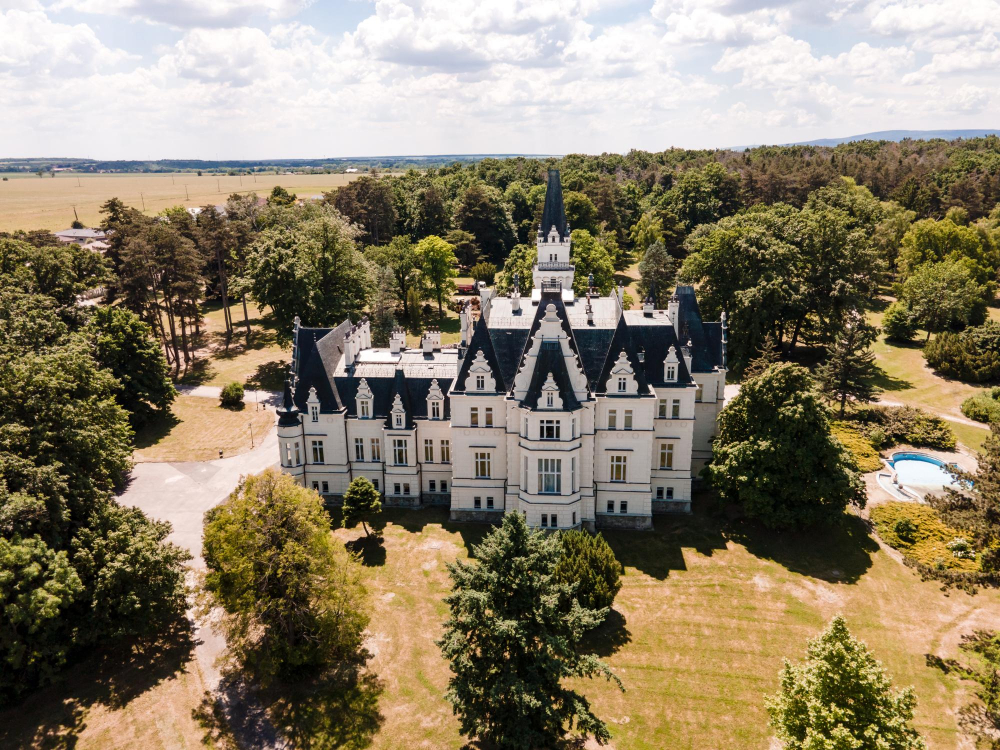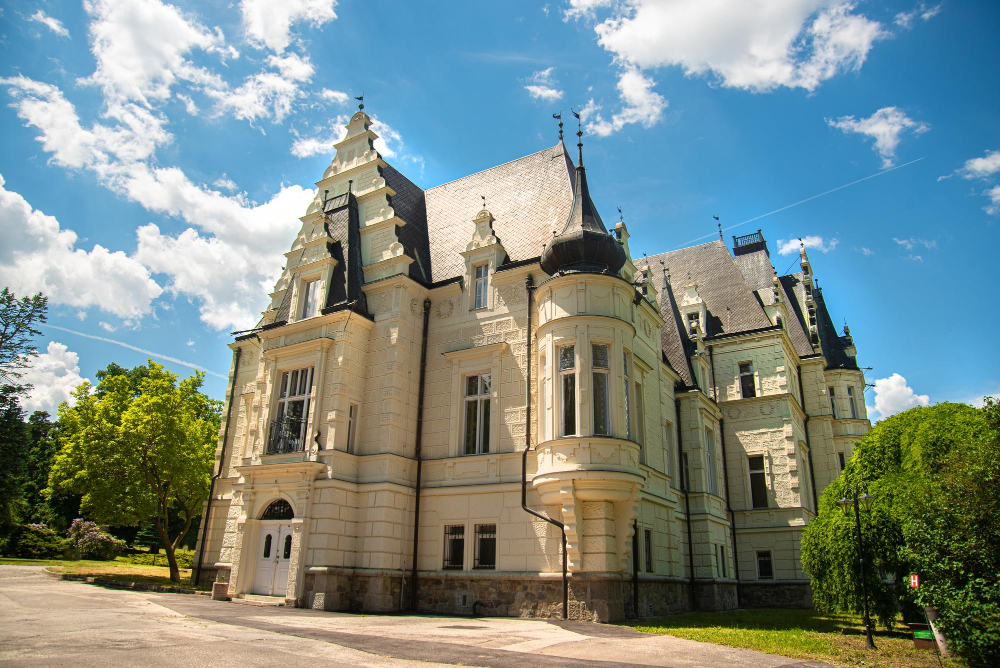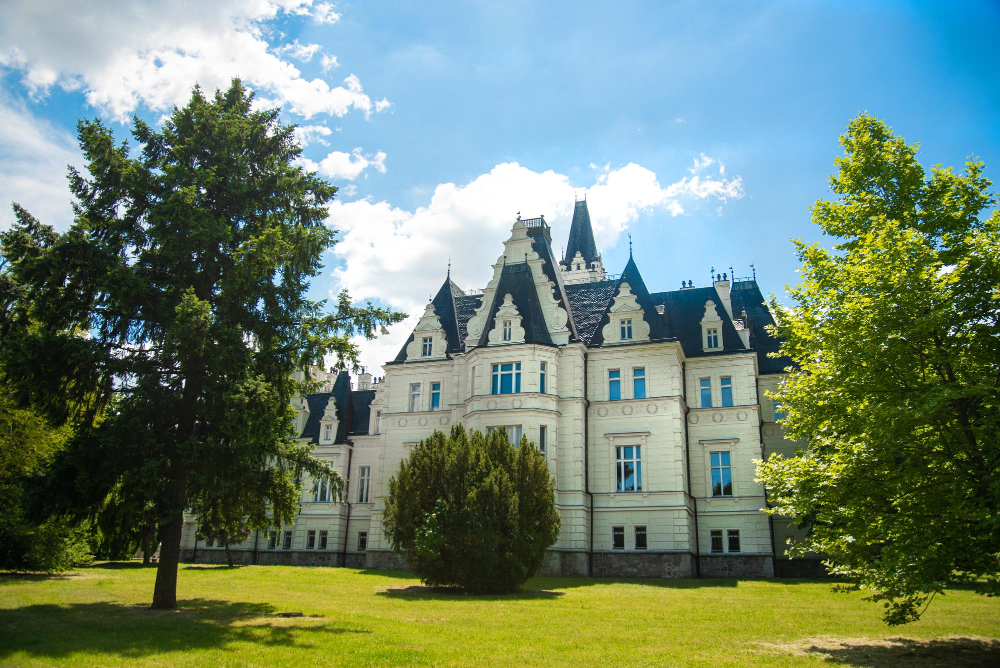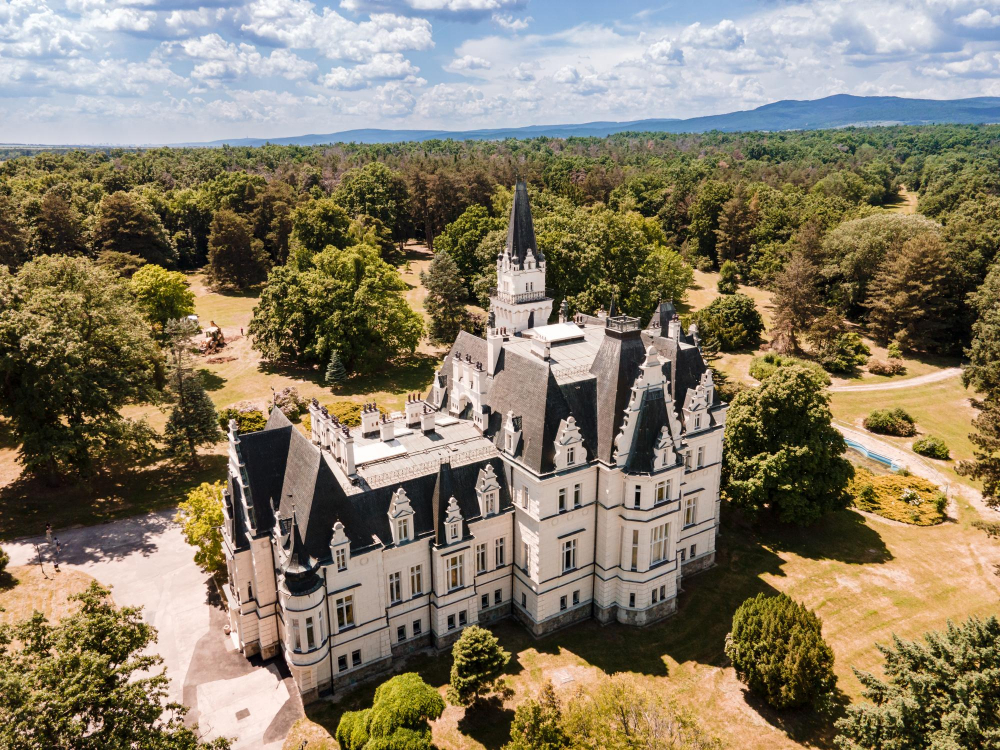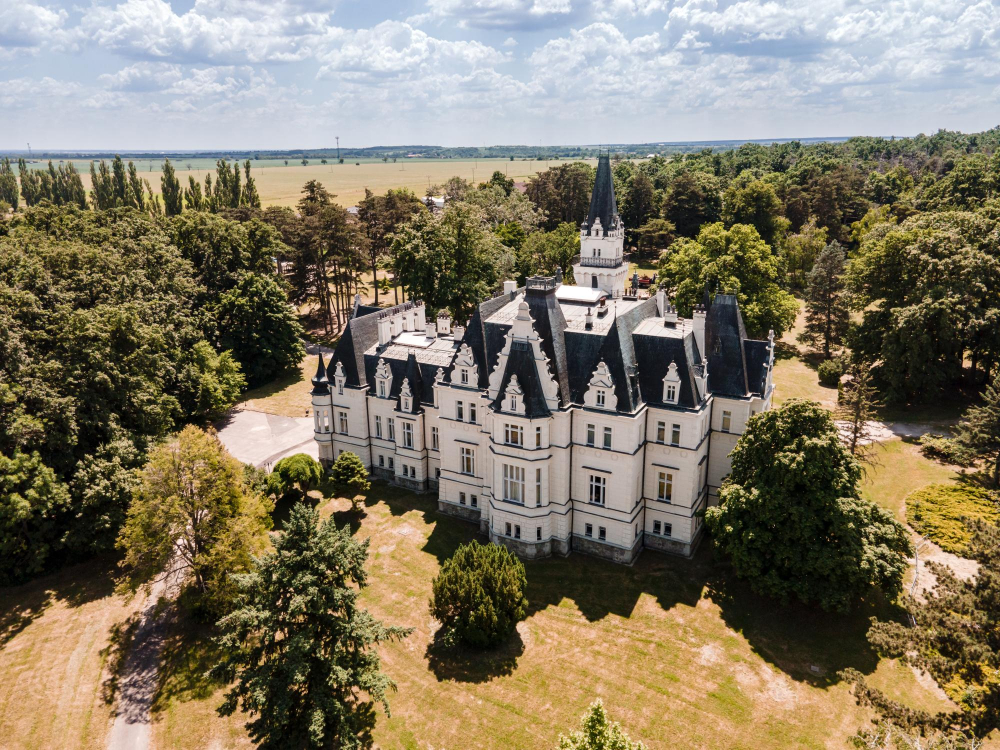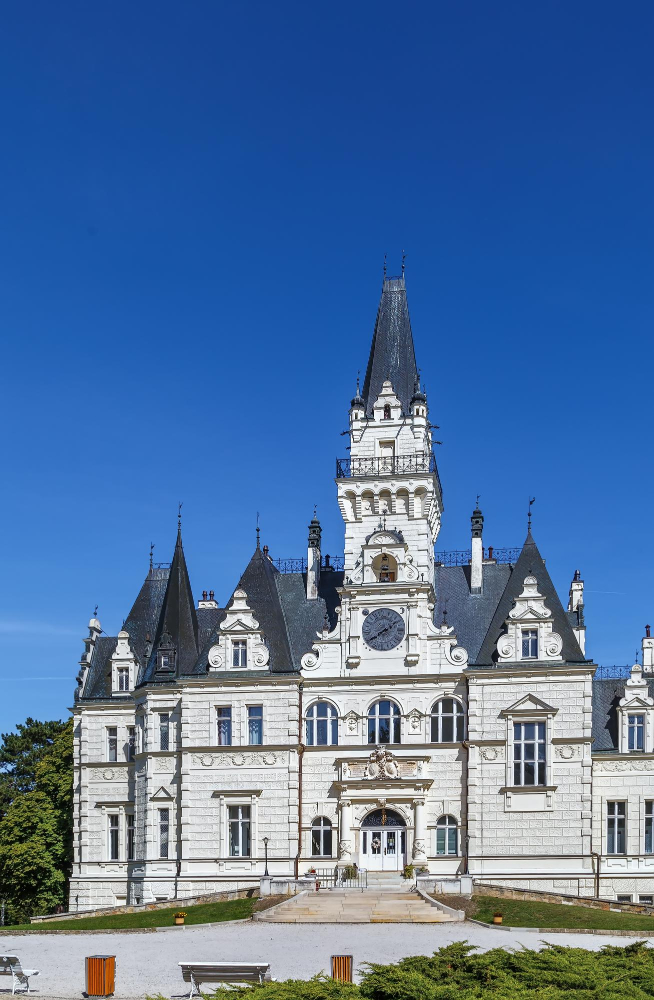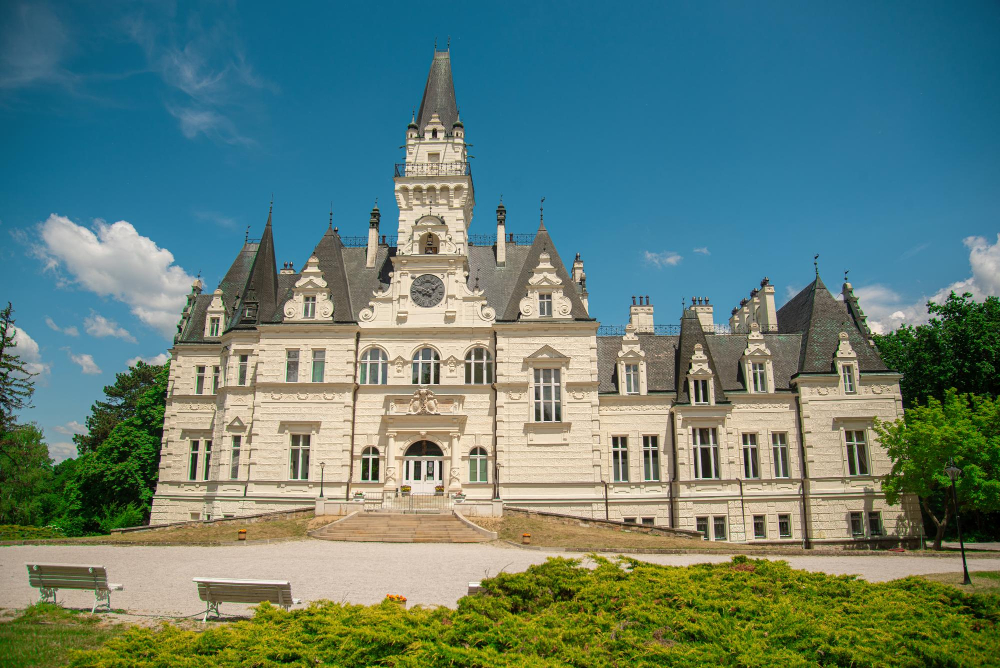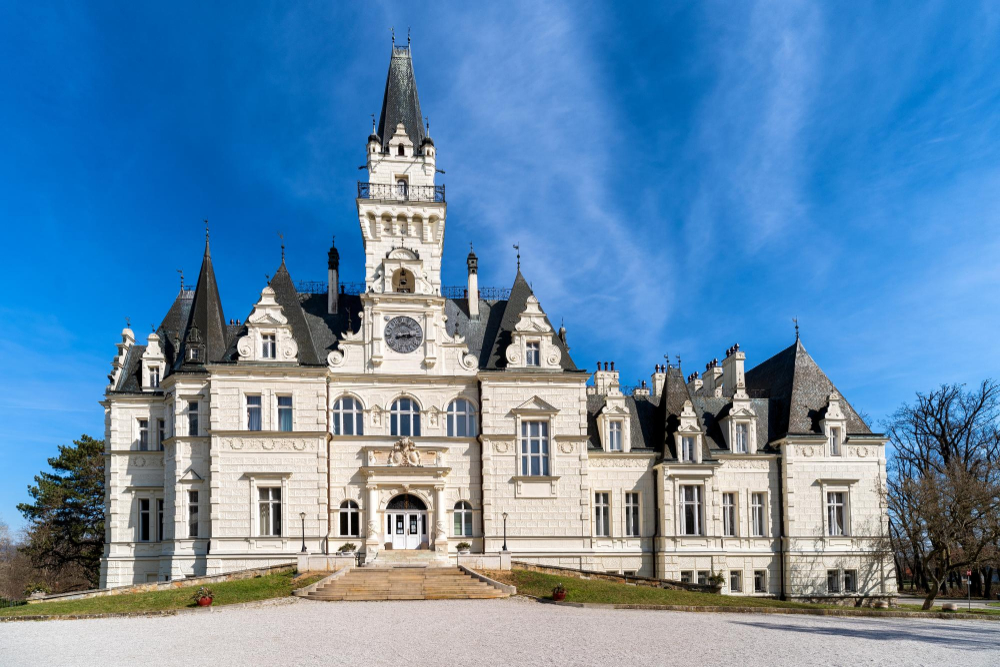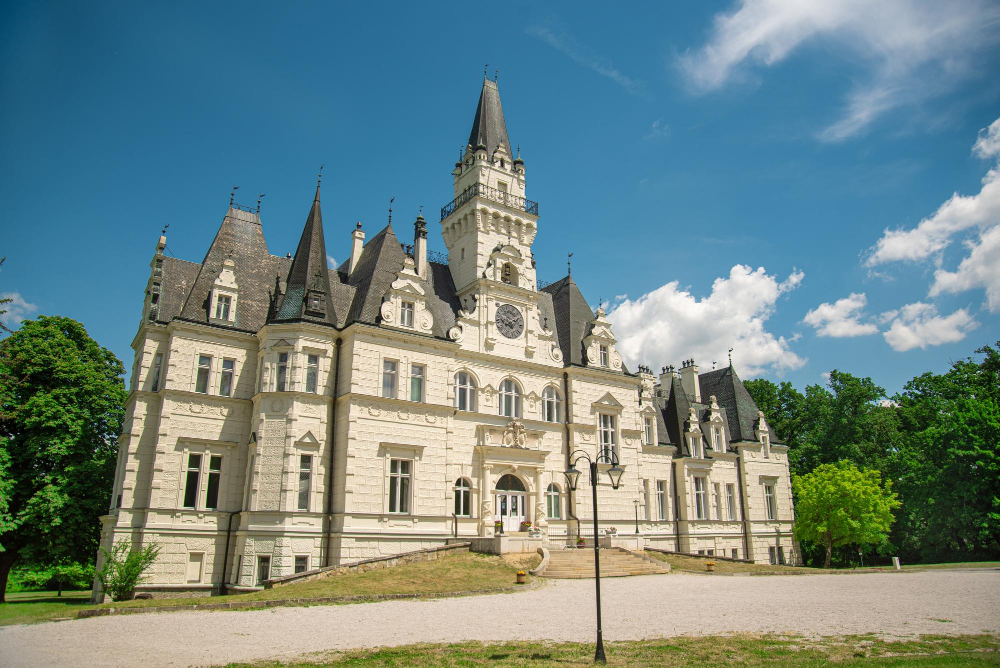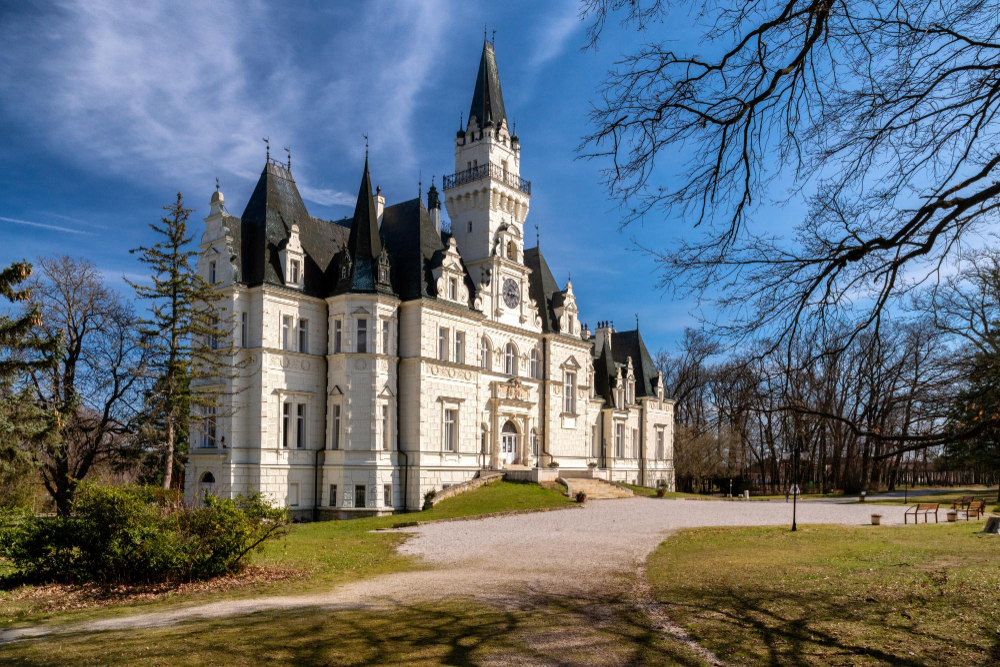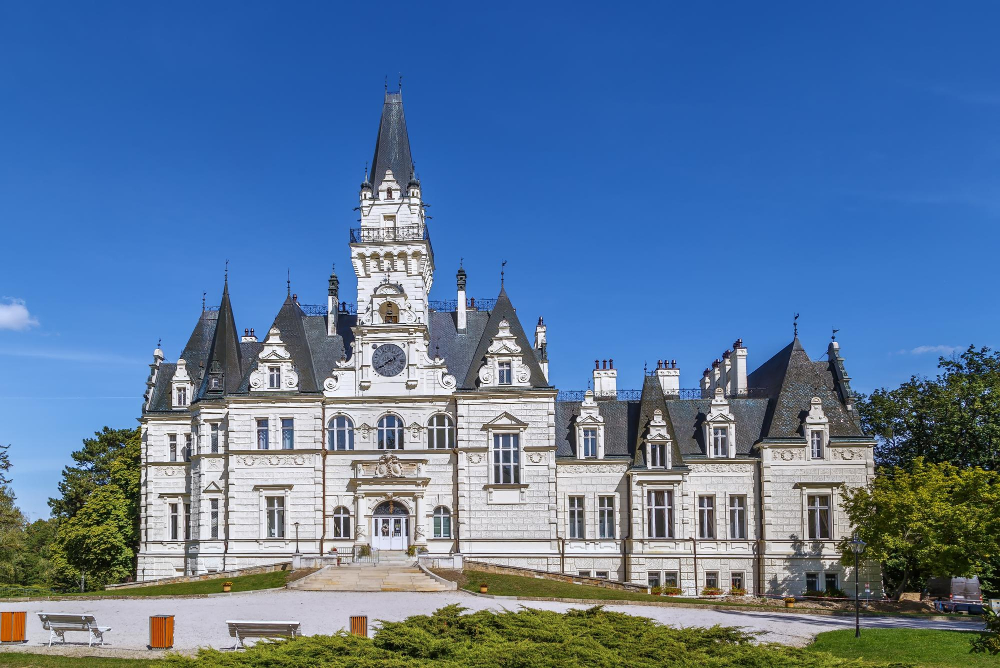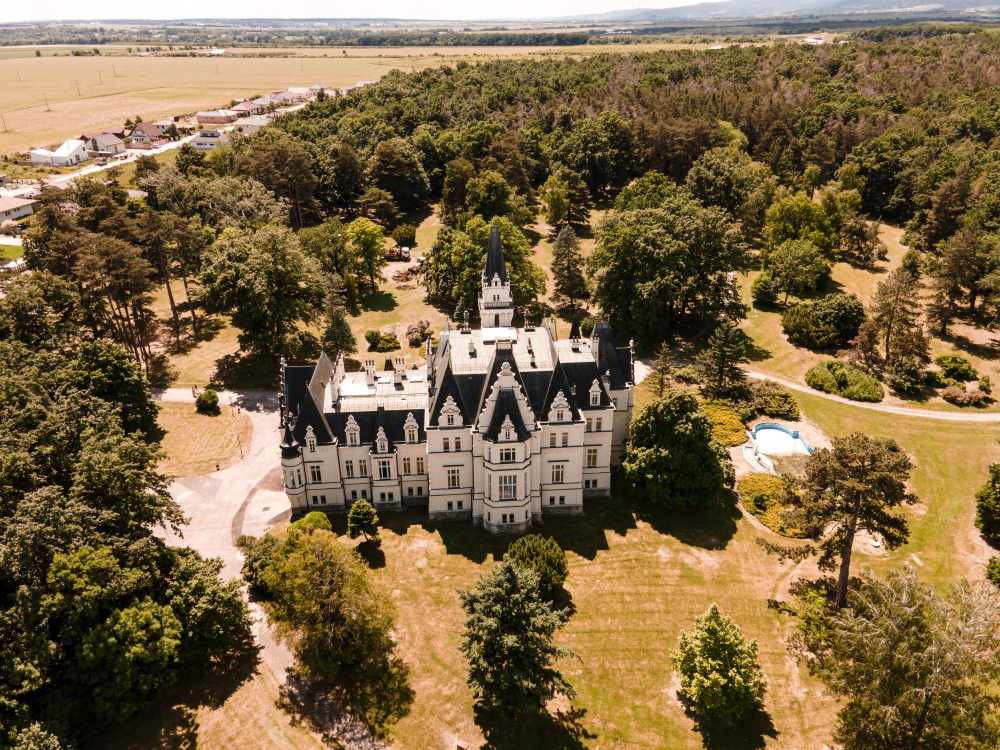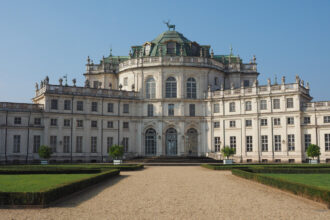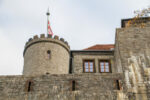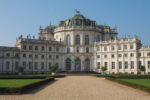

Budmerice Castle, also known as Pálffy Castle, is an architectural gem nestled amidst the picturesque landscape of the Trnava Hills. The majestic residence in the small village of Budmerice, surrounded by a late 19th-century English-style park, captivates visitors with its romantic appearance and eventful history. Yet behind its magnificent walls lie not only impressive architectural details, but also tales of hunting adventures, nobility and political upheavals.
The creation of a dream castle – The castle was built in 1889 by the noble Pálffy family as a hunting lodge. It was constructed in the pseudo-Romantic style, inspired by the elegant Renaissance castles along the Loire in France. The Pálffy family, who ruled the Červený Kameň region at the time, wanted not only to create a luxurious retreat but also to express their connection to hunting culture. Ján Pálffy, a passionate hunter, was particularly drawn to the area’s unspoilt nature. In fact, the castle is not far from a former pheasantry – an area once used for breeding pheasants. Even today, walkers can spot the remains of the old fence that once surrounded the pheasantry. An equally interesting anecdote in the castle’s history is the statue of Our Lady of Lourdes. Ján Pálffy personally commissioned this religious figure and had it erected in a contemplative spot – just a few metres from the castle grounds, on a forest path leading to Červený Kameň Castle. This statue was not only a symbol of faith but also a kind of patron saint for the surrounding area.
The inscription that tells of love – Above the main entrance to the castle is an artistically designed portal featuring a special detail: the family coat of arms of Ján Pálffy and his wife Elsa von Schlippenbach. Both were central figures in the castle’s history. Next to the coat of arms is a Latin inscription that refers directly to their wedding and commemorates the year the castle was built. The text reads: “ANNO. DOMINI- -MDCCCLXXXIX. // QUO. NUPTIAS. RITE- CELEBRAVERUNT. COMES // JOANNES. PÁLFFY. – AB ERDÖD. JUNIOR. AC. // ELSA. COMITISSA. – SCHLIPPENBACH. EXSTRUCTUM // CURANTE. FRAN A NEUMANN, ARCHITECTORE.” This poetically worded dedication offers an insight into the romantic and personal significance of the building for its builders.
The End of an Era – The history of Budmerický Castle changed dramatically in 1945. Following the end of the Second World War and the emigration of its last owner, Count Pavol Pálffy, the estate was confiscated by the Czechoslovak government. This marked the end of the Pálffy family’s ownership, whilst the castle was given a new purpose from that point onwards. Over the years, it was used as a cultural venue and eventually attained the status of a national monument, listed in the Central Register of Monuments of Slovakia.
A Place of Art and Literature – In the second half of the 20th century, the castle began to serve a new purpose. The Slovak Ministry of Culture took over the estate and transformed it into a centre for art and creativity. At times, the castle served as a residence for writers and artists who sought inspiration here and created their works. The peaceful surroundings and the historic charm of the building made it an ideal retreat for creative minds. The connection to culture endured for decades. Until recently, the castle was open to the public, and visitors could stroll through the historic halls, admire the impressive architecture and learn more about the history of the Pálffy family.
Recent developments – However, the castle’s recent history has caused concern among many people. In August 2024, the Slovak Ministry of Culture announced the termination of its partnership with the local company that operated the castle and closed its doors to the public. Some viewed this step as necessary to better preserve the property, whilst others regard it as a loss to the region’s cultural and tourist landscape. Exactly what the future holds for the castle remains to be seen. What is certain, however, is that Budmerický Castle continues to play a significant role in Slovakia’s history and culture. With its rich past, legendary details and distinctive architecture, it remains a gem worth preserving.
Secrets and Legends – Like any historic building, Budmerický Castle also harbours its secrets and legends. One of the most popular stories concerns a hidden tunnel that is said to connect the castle with the nearby Červený Kameň Castle. Although there is no concrete evidence for this claim, it captures the imagination of historians and visitors alike. Such legends help to preserve the mystical aura of the place and make it fascinating for many people. The English park surrounding the castle also tells its own stories. It was once the scene of hunts, strolls by the nobility and even political discussions. Today, it invites visitors to enjoy peaceful moments of relaxation and reflection, with every corner of the park steeped in the past.
A castle that tells stories – Budmerický Castle is far more than just a historic building – it is a living testament to the past, a place of inspiration and a symbol of Slovakia’s complex history. From the glorious days of the Pálffy family through the turbulent years of the 20th century to its current role as a cultural heritage site, the castle remains a significant part of Slovak identity. Its majestic appearance, fascinating legends and rich history make it a destination that enchants every visitor and touches the hearts of those who wish to hear its stories.