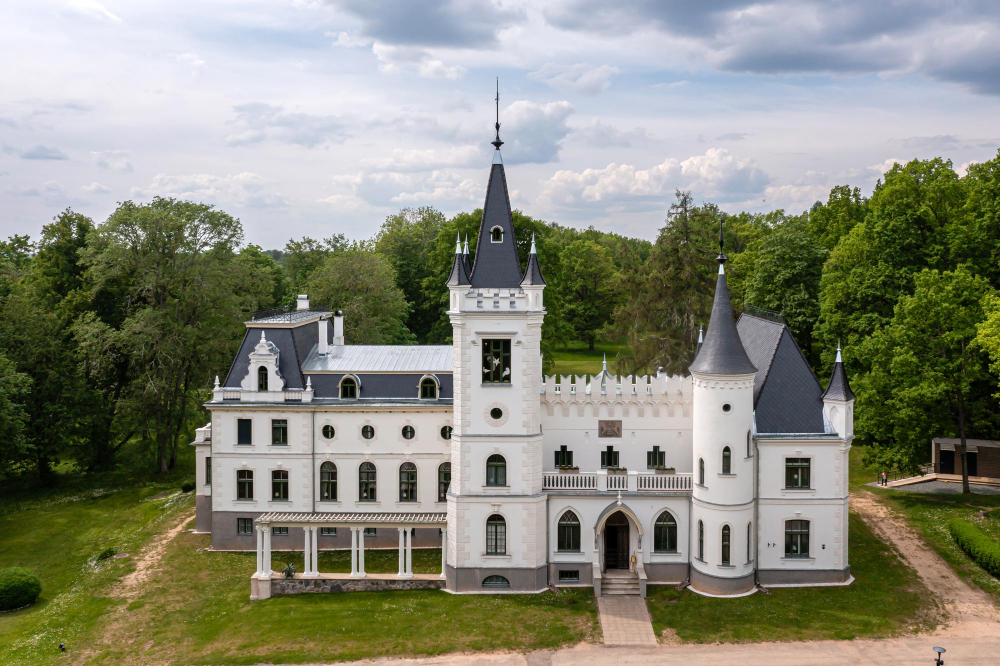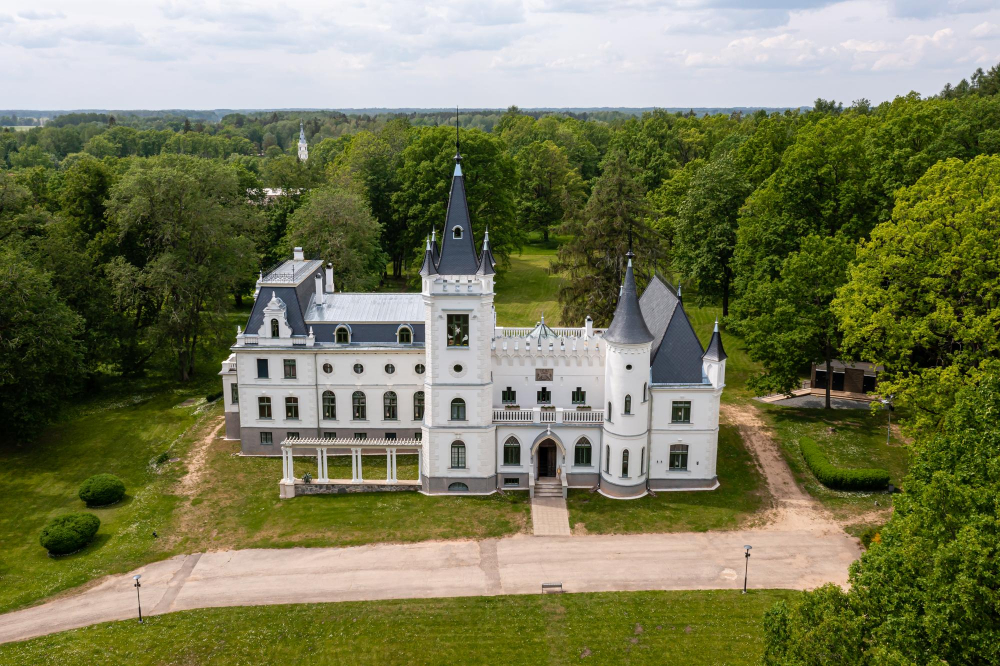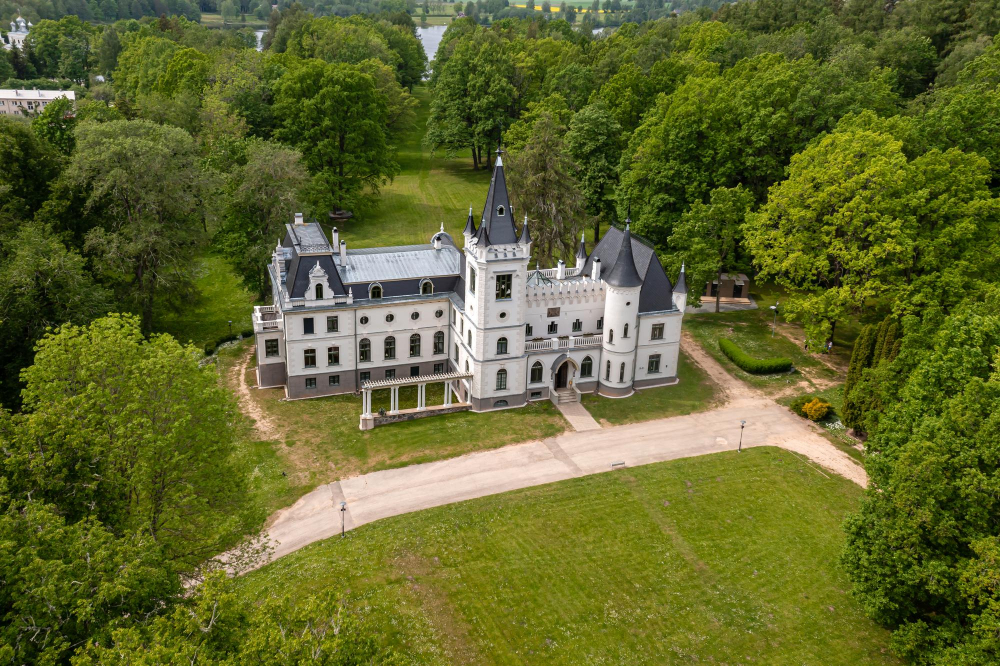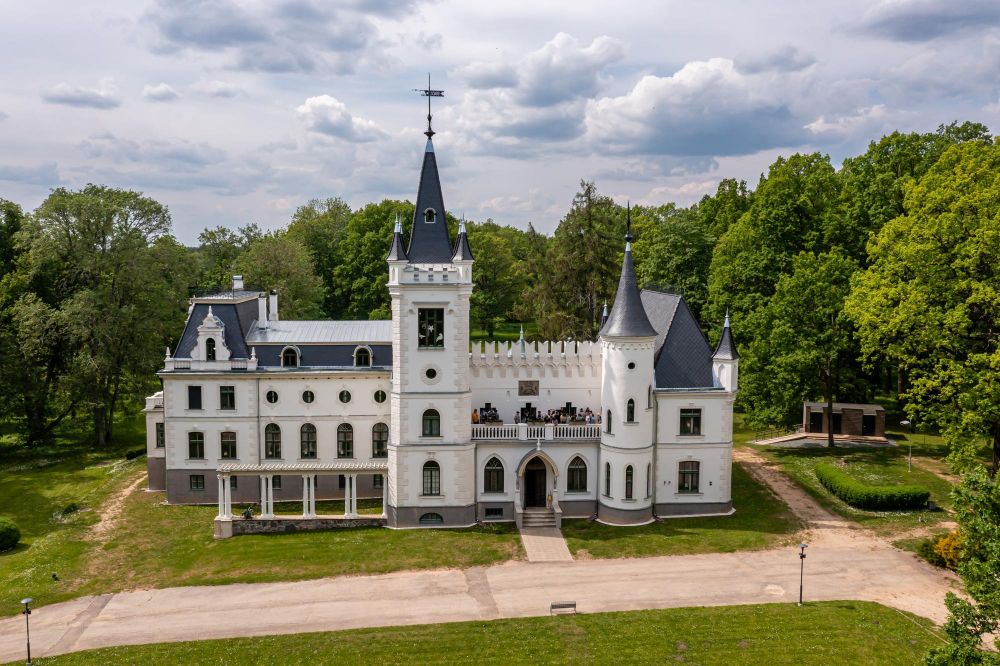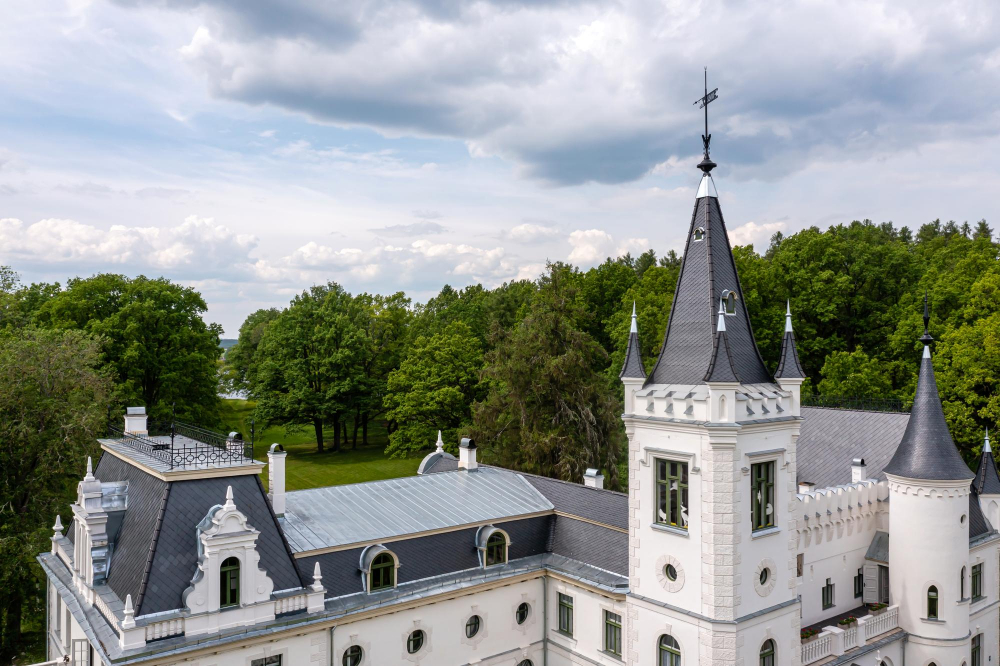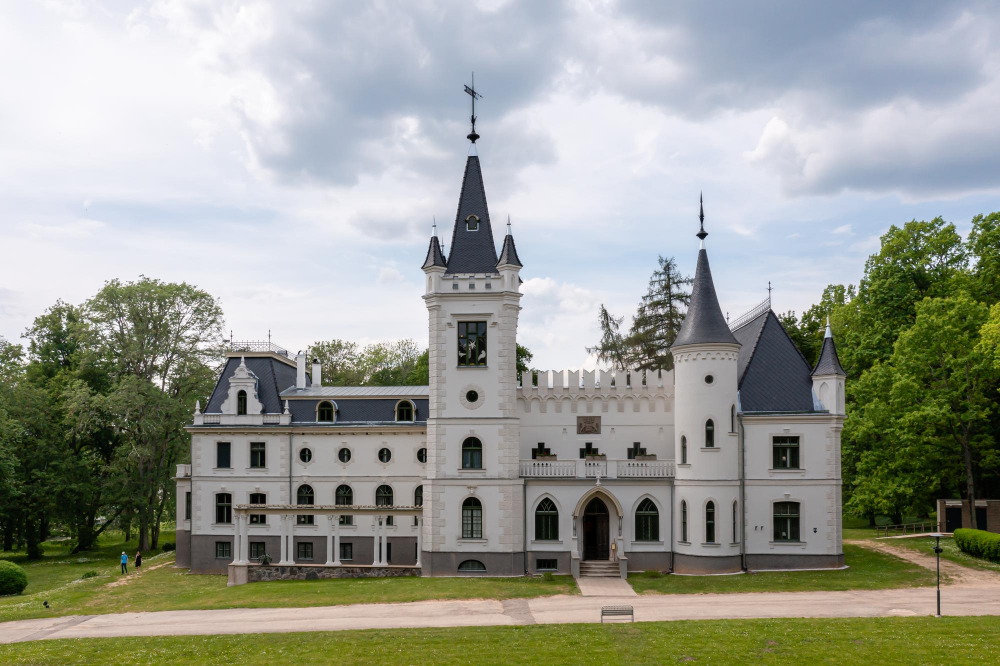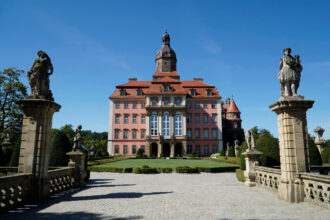

Stāmeriena Castle, known by its Latvian name “Stāmerienas muižas pils” and in German as “Schloss Stomersee,” is a historic masterpiece that impresses with its architecture and eventful past. Deeply rooted in the Latvian region of Vidzeme, near Gulbene, and surrounded by picturesque countryside, this castle offers a fascinating blend of history, legends, and cultural treasures. From its construction in the 19th century to the present day, the building tells a story full of twists and turns—from aristocratic splendor to revolutionary decline and modern revival.
The Beginnings: A Castle for the Nobility – Between 1835 and 1843, Johann Gottlieb von Wolff, a respected landowner, had the castle built in the historicist style. The von Wolff family enjoyed high standing and played a significant role in the region. For many years, the castle served not only as a stately residence but also as the center of the noble family’s social life. The architecture was influenced by European styles, and the estate blended perfectly into the idyllic surroundings. Johann Gottlieb von Wolff left his descendants a legacy that consisted not only of wealth but also of a sense of responsibility toward the community.
A Turning Point: Destruction by Uprisings – The first major turning point in the castle’s history occurred during the Russian Revolution of 1905. During this period of social and political unrest, the castle burned to the ground—an event that deeply shook both the owners and the local population. But Baron Boris von Wolff, a direct descendant of the original owners, was not deterred. In 1908, he began rebuilding the castle and gave it a new look. For the restoration, Baron Boris chose a style that differed significantly from the original architecture. The castle was redesigned in the French Neo-Renaissance style, becoming an architectural gem of that era. The opulent design, characterized by elaborate ornamentation and elegant lines, garnered admiration far beyond Latvia’s borders.
The Fate of the Nobility: Love, Loss, and Literature – Another chapter in the castle’s history began in the 1930s, when the aristocratic von Wolff family returned to the spotlight. Alexandra von Wolff-Stomersee, a direct descendant of the castle’s builders, played a key role in this. The castle was the setting for her turbulent life story, which was marked not only by aristocratic traditions but also by romantic and literary tensions. Alexandra first married Andrei Pilar von Pilchau. Her first husband, whose homosexuality caused a stir in the conservative society of the time, lived in the castle for a while before the marriage broke down. But Alexandra soon found new love in the Sicilian writer Giuseppe Tomasi di Lampedusa, who rose to fame through his world-renowned novel The Leopard. Together they spent several years in Stāmeriena, where Tomasi drew inspiration from the picturesque surroundings. The connection between the castle and literature remains a fascinating aspect of its history to this day.
From Nobility to Soviet Pragmatism – The political changes in Latvia following the declaration of independence led to drastic expropriations as a result of agrarian reform. Yet Stāmeriena Castle was one of the few estates that was not nationalized. The von Wolff family retained ownership until World War II, when the course of history once again dramatically altered people’s lives. After the war, the castle was put to a completely new use. It initially served as a technical school for agriculture and later as the administrative building of a state-run agricultural enterprise (sovkhoz). This period stood in sharp contrast to the castle’s earlier glorious decades. The opulent rooms were put to utilitarian use, and many historical details fell into oblivion.
From Decay to Renaissance – After the end of the Soviet era, the castle stood empty for a long time and fell into visible disrepair. It was not until the late 1990s that hope for a revival began to take root. In 1998, it passed into private ownership, and an ambitious restoration initiative began. With great dedication, both the building and the surrounding landscape park were restored. This work was no easy task, as decades of decay had taken their toll. But today, the castle shines once again in new splendor and is open to visitors. The interior of the castle bears witness to its glorious past. Elegant halls, magnificent staircases, and ornate wall decorations offer a glimpse into the life of the nobility. The landscaped park surrounding the castle is an ideal place for walks and invites visitors to enjoy nature and the peaceful atmosphere.
Legends and Secrets: A Castle Full of Stories – Like any old building, Stāmeriena Castle also harbors its secrets and legends. It is said that the ghosts of former residents still wander through the halls. Particularly popular is the story of Alexandra von Wolff-Stomersee, whose tragic love story continues to fascinate many people. Some claim that the ghost of Giuseppe Tomasi di Lampedusa can sometimes be seen strolling through the library, clutching his manuscript tightly. Such tales lend the castle a mystical aura and make it a special destination for curious visitors.
A Jewel of Latvia’s Cultural Landscape – Today, Stāmeriena Castle is more than just an architectural monument. It is a symbol of Latvia’s turbulent history and a testament to the resilience of its people. Every era has left its mark, transforming the castle into a living museum. Whether as the residence of a noble family, a place of literary inspiration, or a center for agricultural education—the castle’s walls have heard and preserved many stories. Through its comprehensive restoration, the castle has taken on new significance. Today, it attracts tourists from all over the world who wish to discover not only the beauty of the building but also the stories and legends hidden within its rooms. This glimpse into the past makes it possible to shape the future of this cultural treasure and preserve it as a living monument for future generations.
A Place That Unites Past and Present – Stāmeriena Castle is not only an architectural masterpiece but also a place where history and stories converge. Its eventful past, marked by aristocratic splendor, political upheavals, and literary inspiration, makes it a unique cultural monument in Latvia. As you stroll through the castle’s halls and gardens, you can feel the breath of history and the quiet memory of all those who lived and worked here. A visit is well worth it—not only for history lovers, but for anyone who wants to be enchanted by the magic of times gone by.