
Scotland is renowned for its majestic landscapes, its mystical tales and its centuries-old castles. Among them is Dunvegan Castle, situated on the Isle of Skye and serving as the seat of the MacLeod clan. This historic fortress looks back on an impressive past interwoven with myths and legends. Its walls tell not only of the changes over the centuries, but also of magical artefacts and unforgettable personalities. But what makes Dunvegan Castle so unique? Let’s delve into the fascinating history of this place.
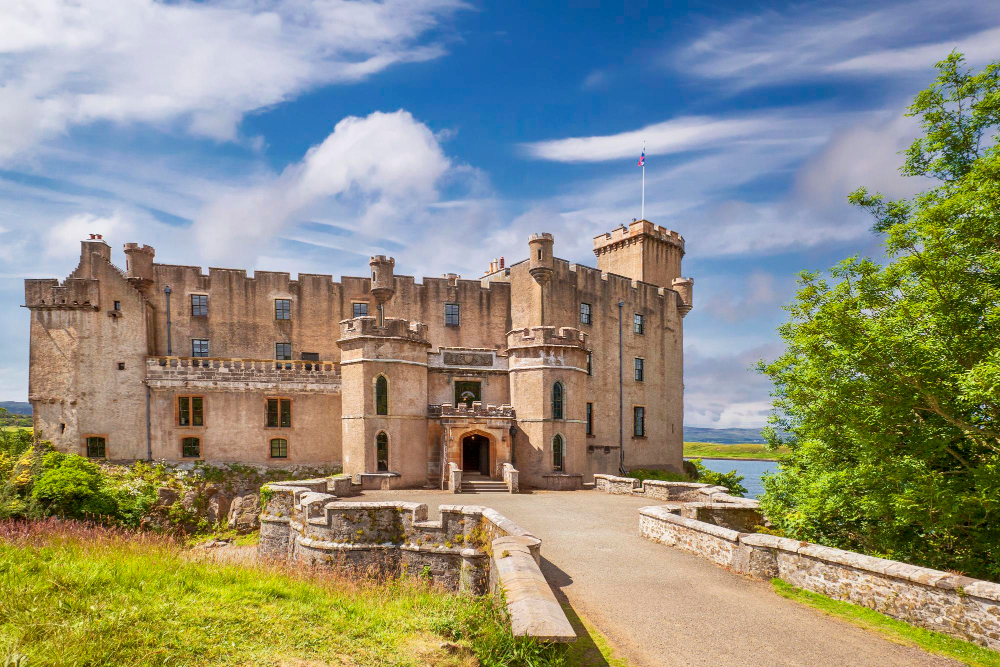
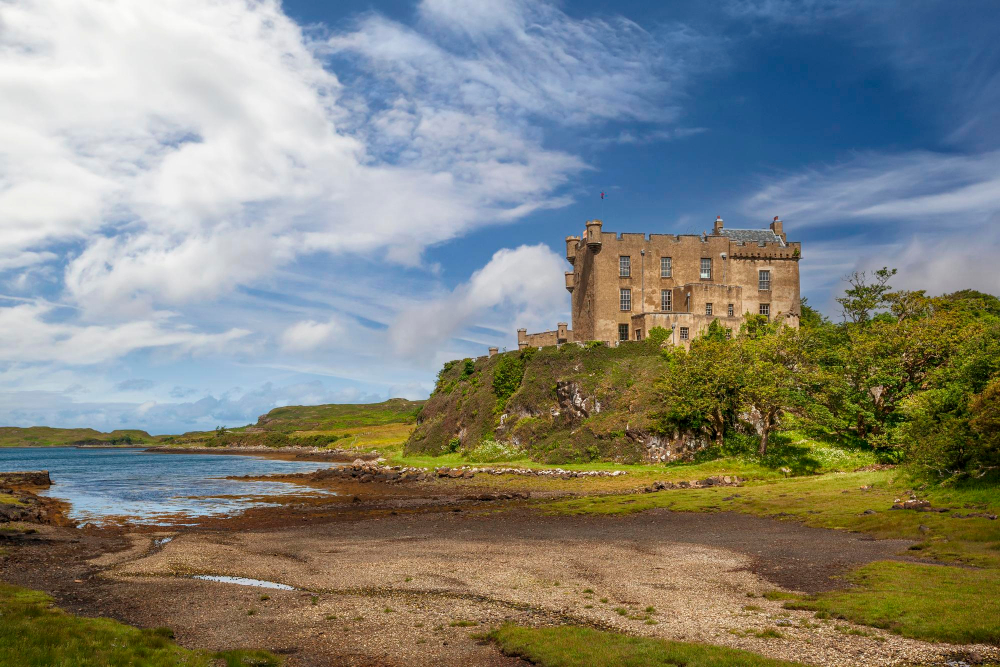
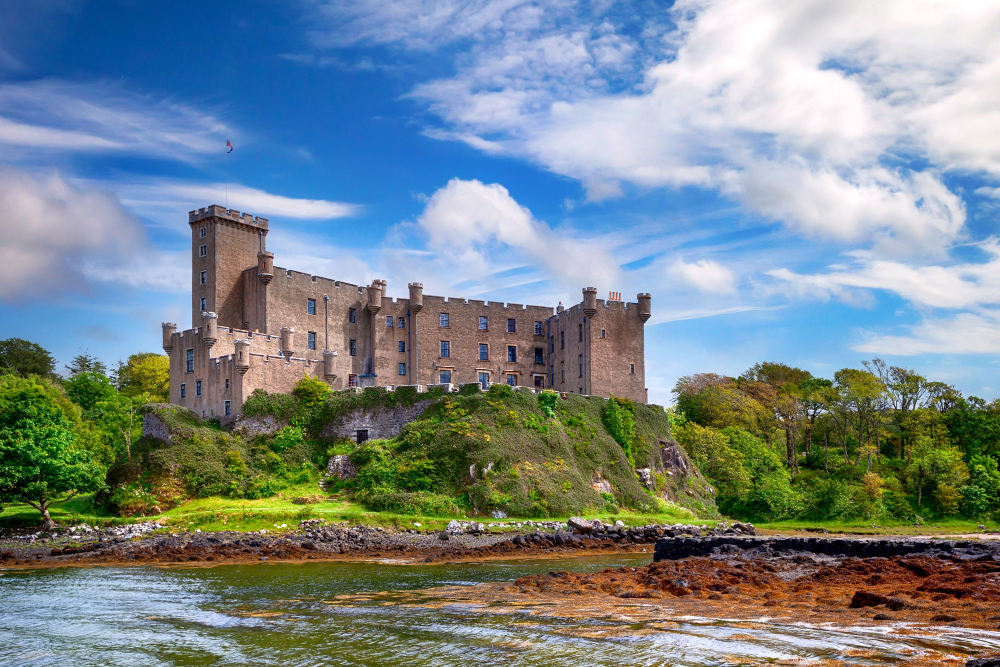
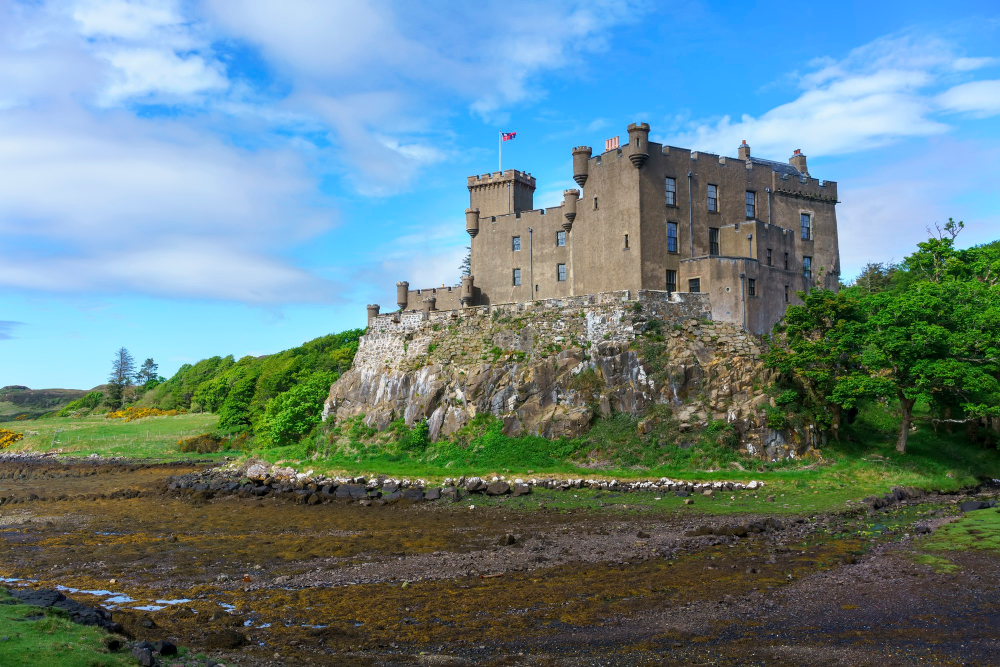
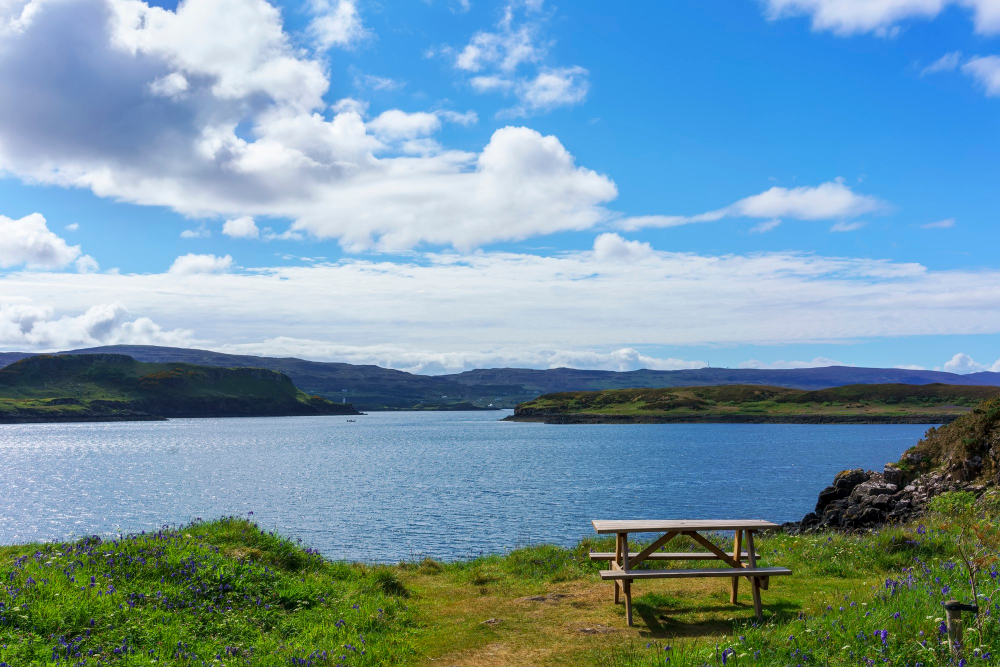
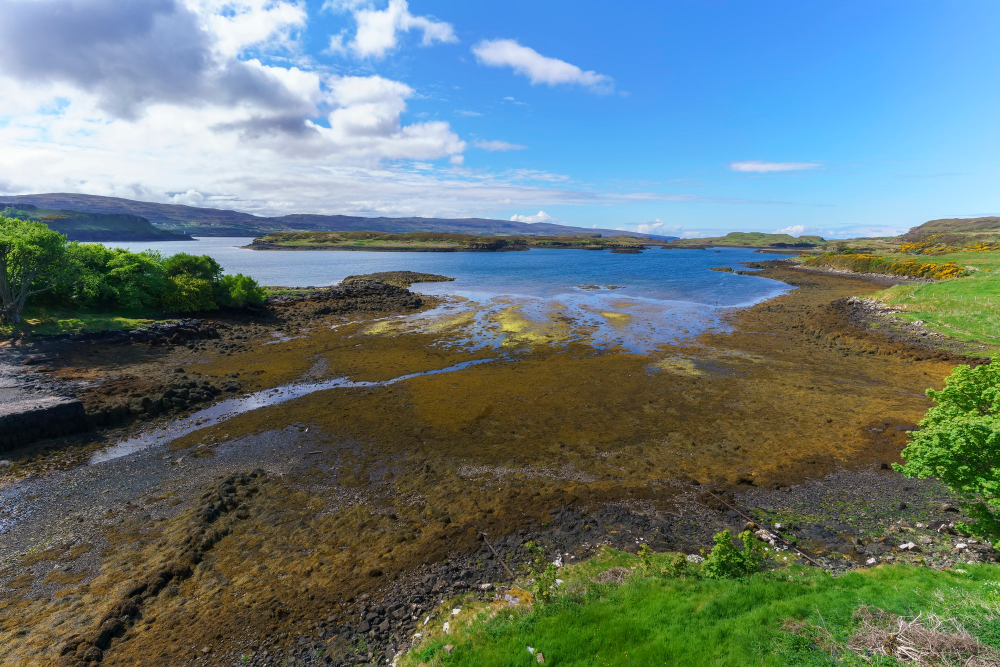
The origins of a fortress: The beginnings of Dunvegan Castle – Dunvegan Castle (Caisteal Dhùn Bheagain), situated about 1.6 kilometres north of the small village of Dunvegan on the Isle of Skye, stands on a rocky plateau rising some 15 metres above sea level. Its location offers spectacular views across the sea and Loch Dunvegan, characterised by the rugged beauty of the Scottish coastline. Historical evidence suggests that this strategically favourable site was used as a fortified settlement from an early stage, long before construction work began in the 13th century. Initially, the fortress was little more than a simple, walled enclosure, serving mainly to protect the inhabitants from attack. Over the years, however, the castle developed into an imposing structure. The core of today’s Dunvegan Castle was built in the late 14th century, including a four-storey tower that reflects the style of other contemporary castles such as Kisimul Castle or Caisteal Maol. Over time, the building underwent changes: new sections were added, old parts were modernised, and finally, in the 19th century, the castle was redesigned in a romanticised, medieval style – a style that remains visible to this day.
The mysterious ‘Fairy Flag’ and magical tales – No description of Dunvegan Castle would be complete without mentioning the famous ‘Fairy Flag’. This enigmatic artefact, closely intertwined with the history of the MacLeod clan, is at the heart of many myths and legends. The ‘Fairy Flag’ is said to possess supernatural powers and is believed to be able to aid the clan in times of need. According to one of the most popular stories, the flag was given to the MacLeods by a fairy queen. She promised that this magical banner could be used three times to save the clan from impending doom – after which, however, its power would be exhausted. Historians and mythologists have attempted to explain the origins of the Fairy Flag. Some believe it originated in the Middle East and may have come into the MacLeods’ possession during the Crusades. Others see it as evidence of the clan’s deep connection to Celtic mythology and its tales of fairy creatures who magically aided humans in times of difficulty. One of the most famous events associated with the Fairy Flag is said to have taken place during a battle: the MacLeod clan was outnumbered, but when the flag was raised, the warriors are said to have suddenly become tireless and combative, enabling them to defeat their opponents. This legend lives on to this day and lends the Fairy Flag an almost mystical aura.
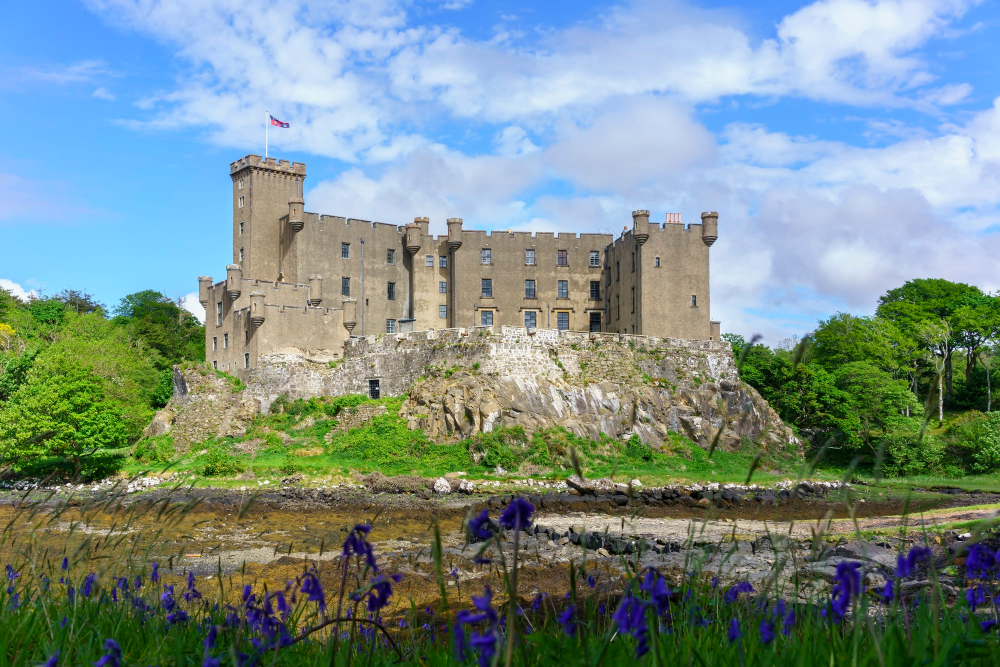
The Construction and Development of the Castle – The architectural development of Dunvegan Castle impressively illustrates how Scottish castles changed over the centuries for practical and aesthetic reasons. In 1500, Alasdair Crotach, the eighth chieftain of the MacLeods, added a new tower that became known as the ‘Fairy Tower’ – a name that may well have been inspired by the mythical tales surrounding the Fairy Flag. In the 17th century, the clan continued to expand the castle. Ruairidh Mòr, the clan chieftain at the time, had magnificent living quarters built to reflect his family’s status. The castle underwent numerous architectural changes and at times lost its original military purpose in favour of ceremonial functions. The old tower, which once formed the heart of the castle, stood empty for a long time until later clan chieftains in the 18th and 19th centuries began to incorporate it into the alterations and unify the castle’s appearance. It was particularly in the 19th century that Dunvegan Castle took on its present form. The so-called ‘baronial’ elements – battlements, bay windows and stone ornamentation – were added to give the castle a romantic medieval appearance. This redesign coincided with a period when many Scottish noble families deliberately gave their residences a ‘historic’ look to emphasise their long family tradition.
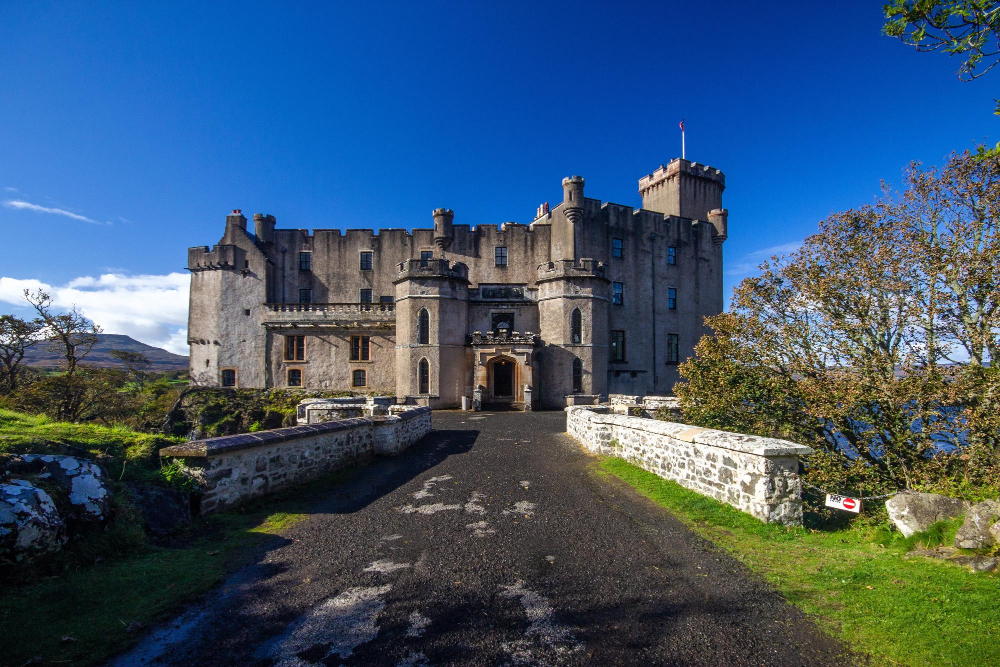
Secrets of the site: Natural defences – A key feature of Dunvegan Castle is its location on a massive rock overlooking the eastern shore of Loch Dunvegan. In earlier centuries, this elevated position not only offered protection from enemy attacks but also provided an excellent vantage point over the surrounding area. On the landward side of the castle, there is also a natural moat, parts of which were fortified to keep out intruders. Access to the castle was traditionally difficult, but over the centuries new bridges and roads were built to facilitate access. Today, visitors reach the castle via a picturesque access road and a historic entrance bridge, which is also part of the recent renovations.
Dunvegan Castle today: A living link to the past – Today’s Dunvegan Castle is not only a testament to Scotland’s eventful history, but also a living symbol of the traditions of the MacLeod clan. As the seat of the clan chieftain, the castle attracts thousands of visitors from all over the world every year, who are captivated by its architecture, spectacular surroundings and legendary treasures. The Fairy Flag, antique weapons, paintings and historic furniture are among the highlights of the exhibition on display in the castle. Furthermore, the gardens of Dunvegan Castle are another highlight. They were laid out with just as much care and love as the castle itself and offer an enchanting blend of wild beauty and orderly design. The waterfall garden and the coastal path are particularly popular with visitors.
Magic and history combined – Dunvegan Castle is more than just a historic castle – it is a place where stories, myths and Scottish traditions merge into a fascinating whole. From the Fairy Flag to the architectural masterpieces, from its strategically remarkable location to its role as a clan seat – every corner of the castle tells its own story. Visitors to Dunvegan Castle do not merely enter a building, but immerse themselves in a world where the boundaries between reality and myth become blurred. Thus, Dunvegan Castle remains an essential destination for anyone wishing to experience Scottish history and the magic of this country at first hand.