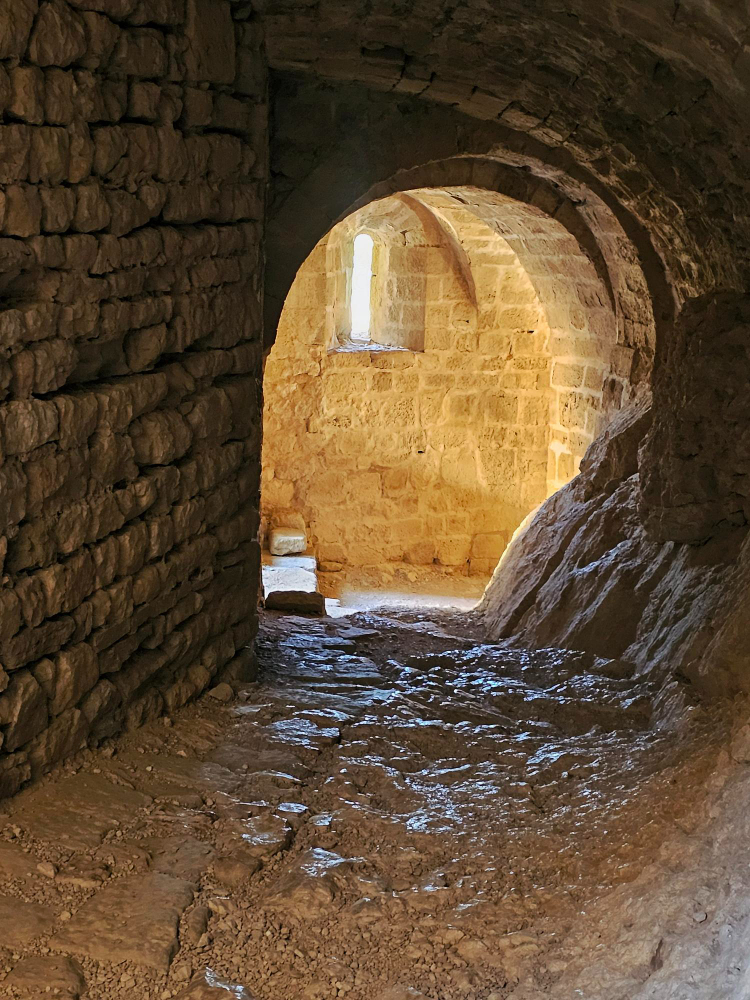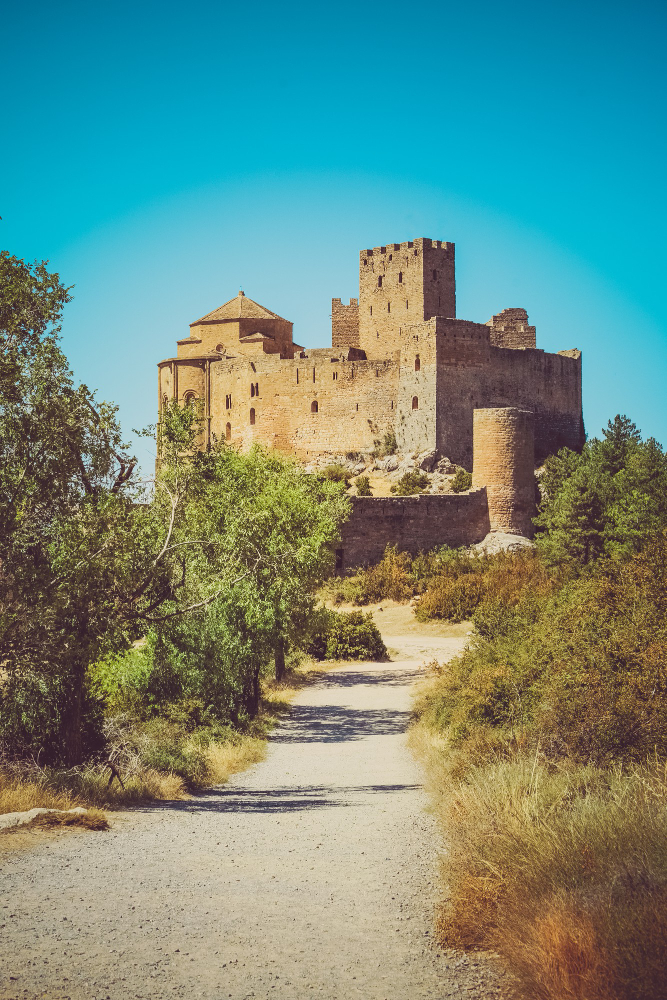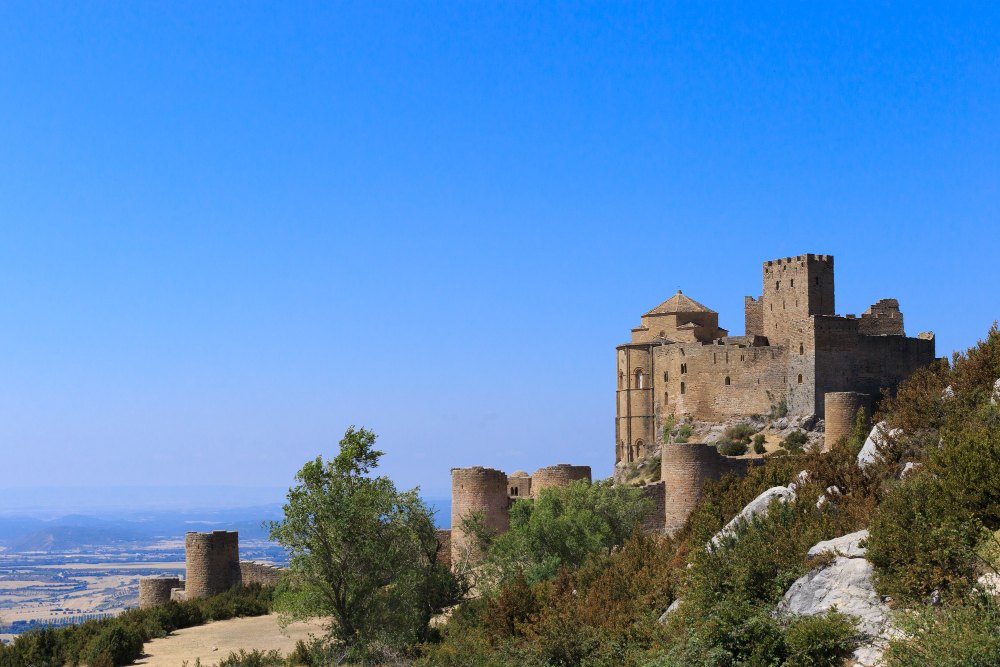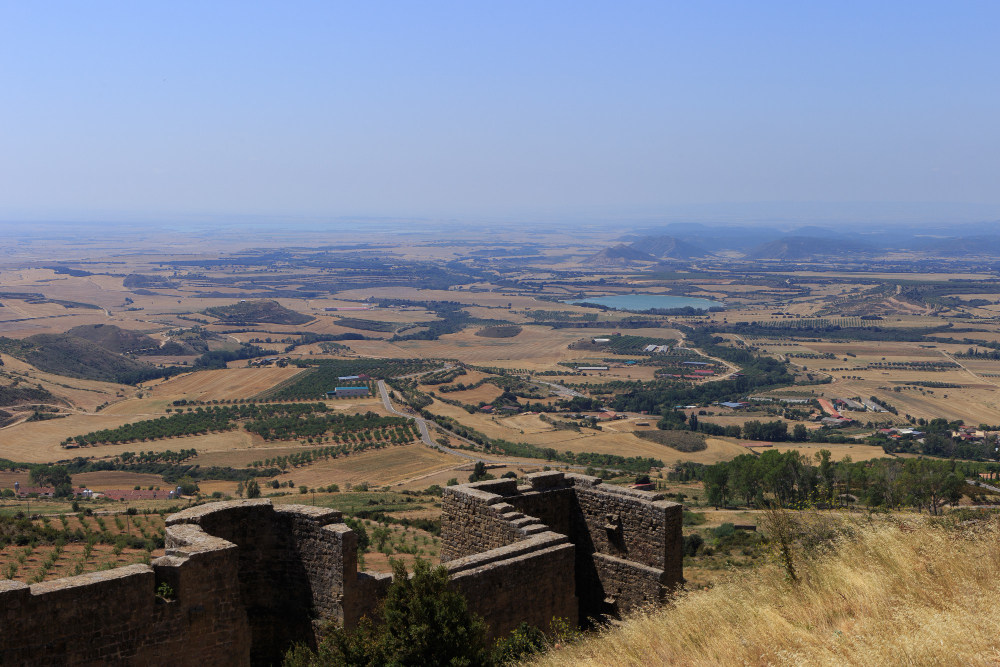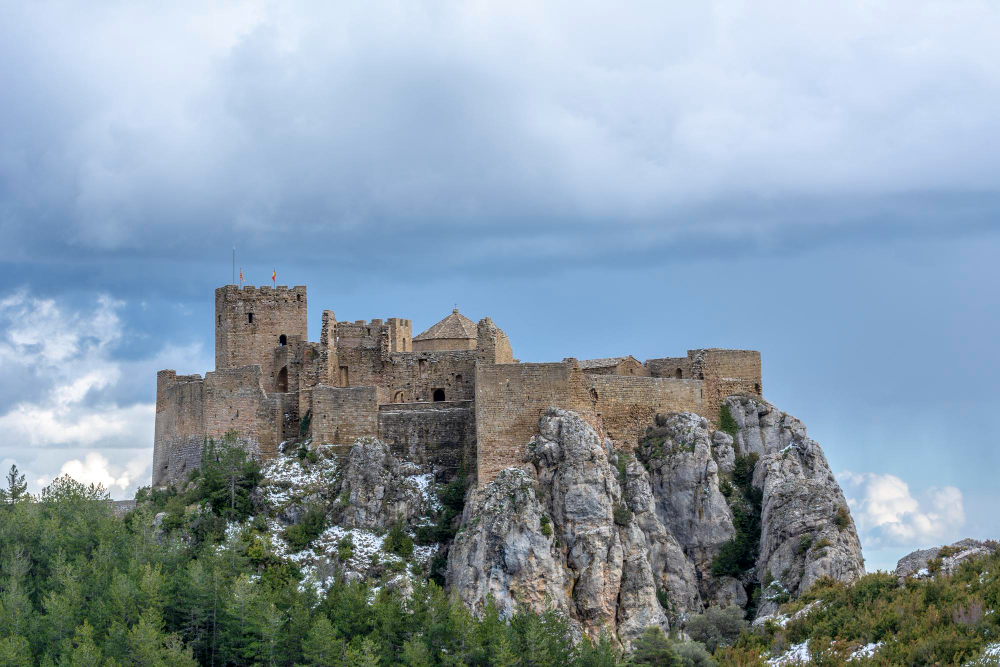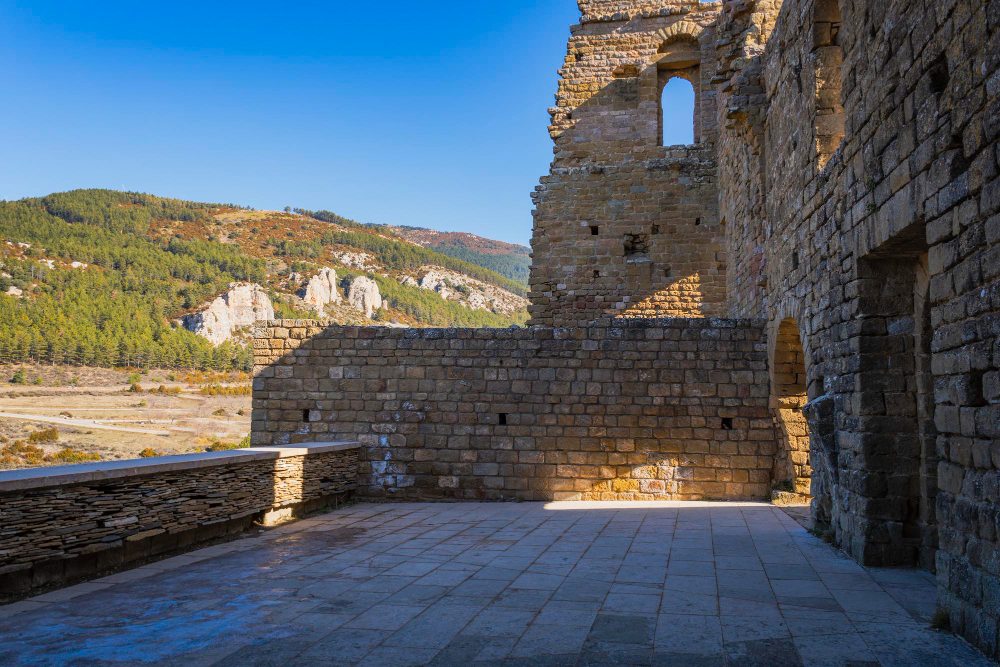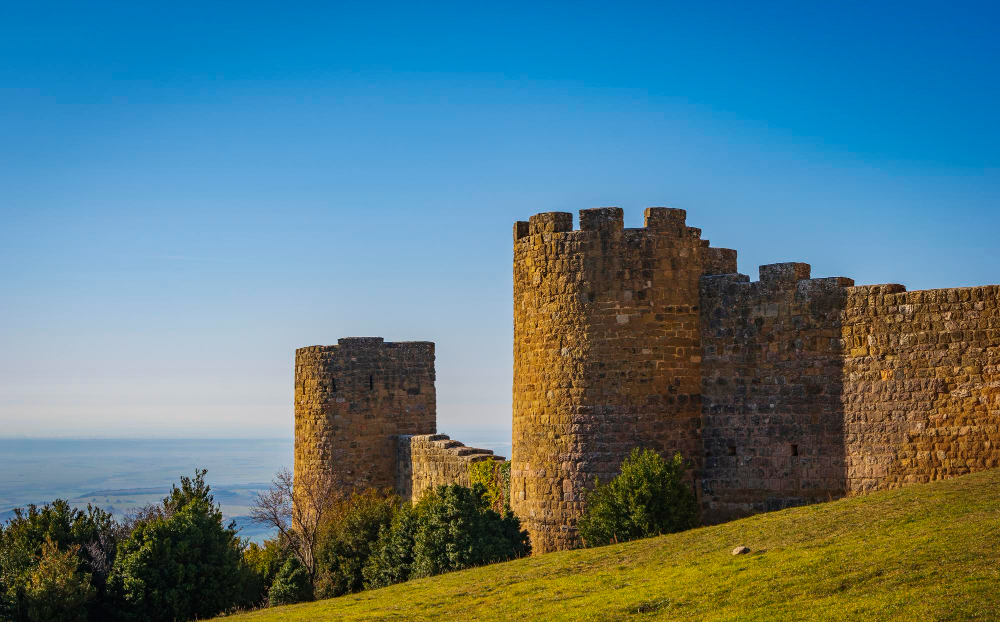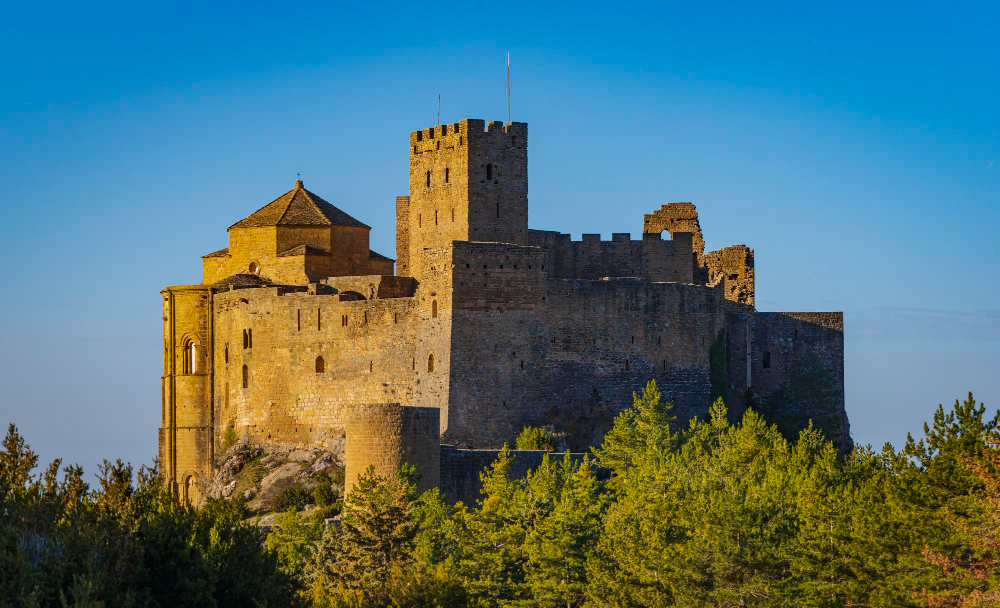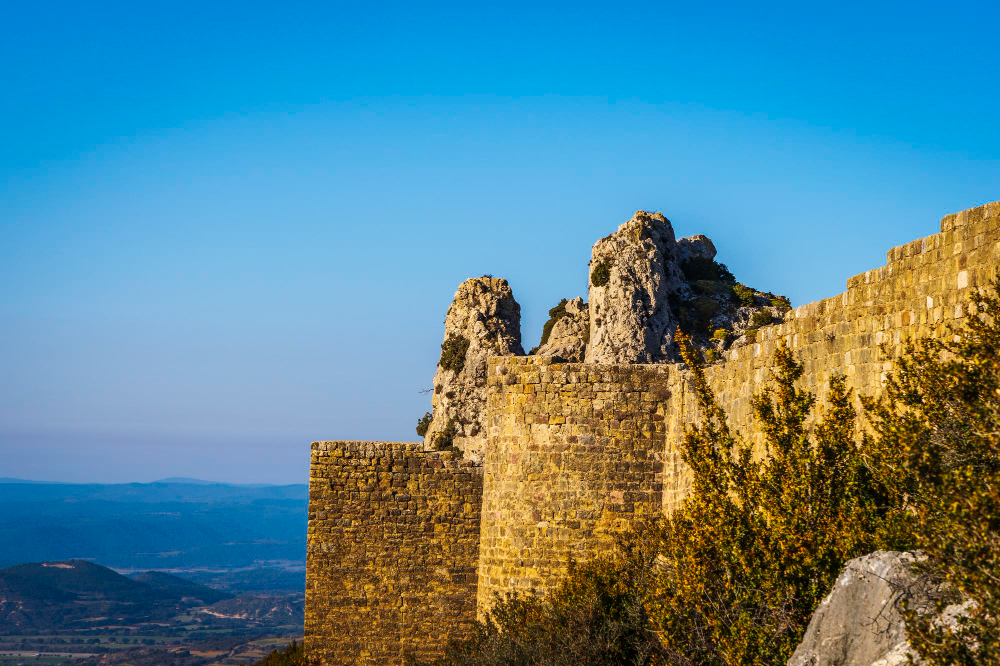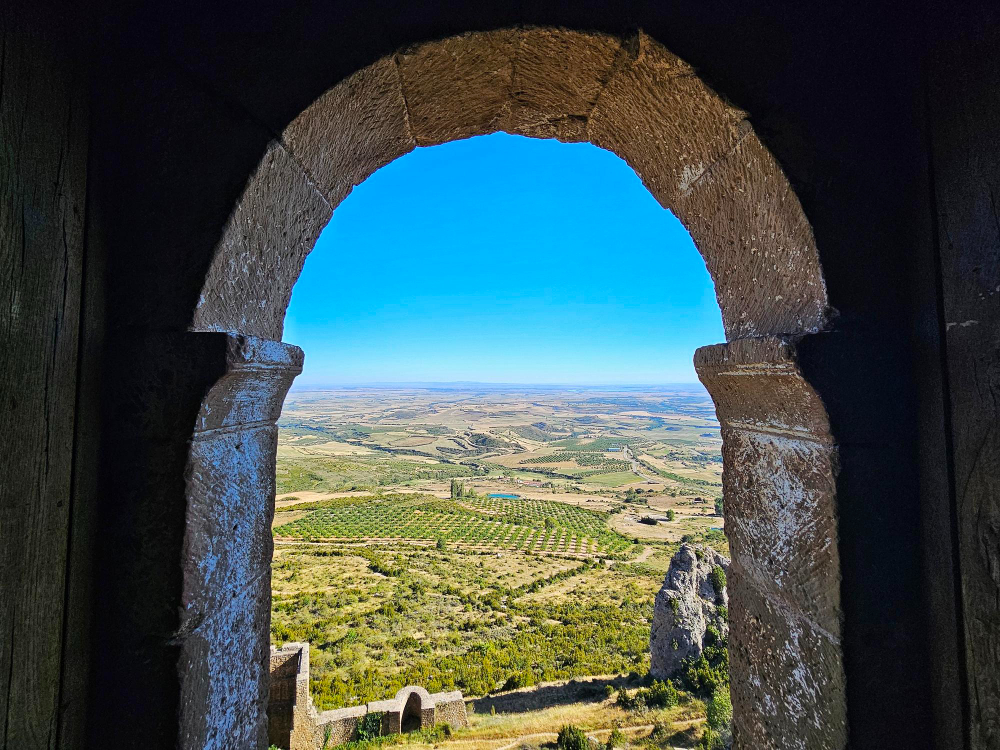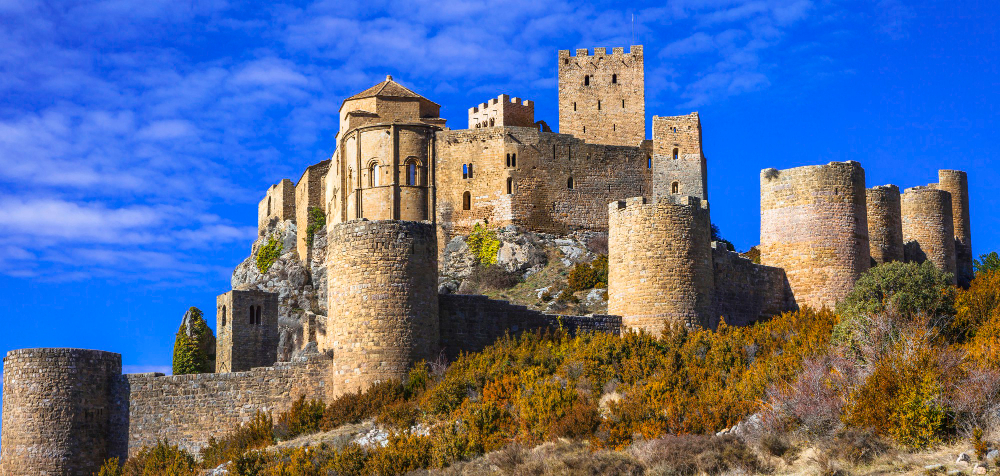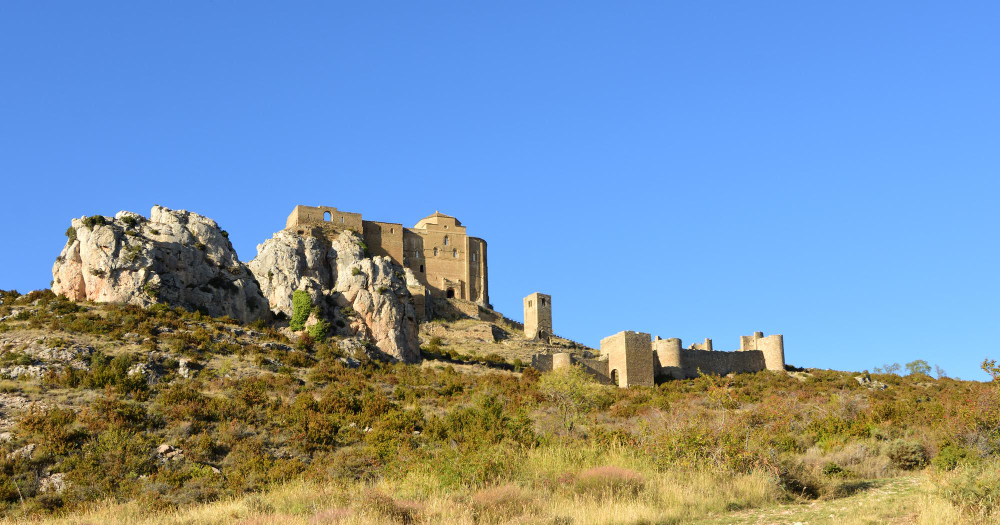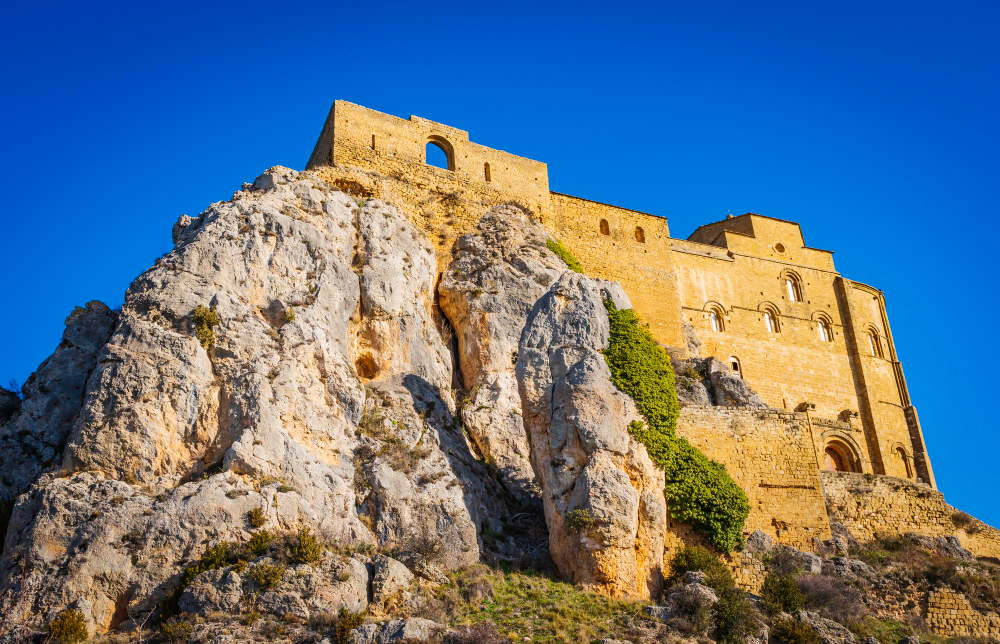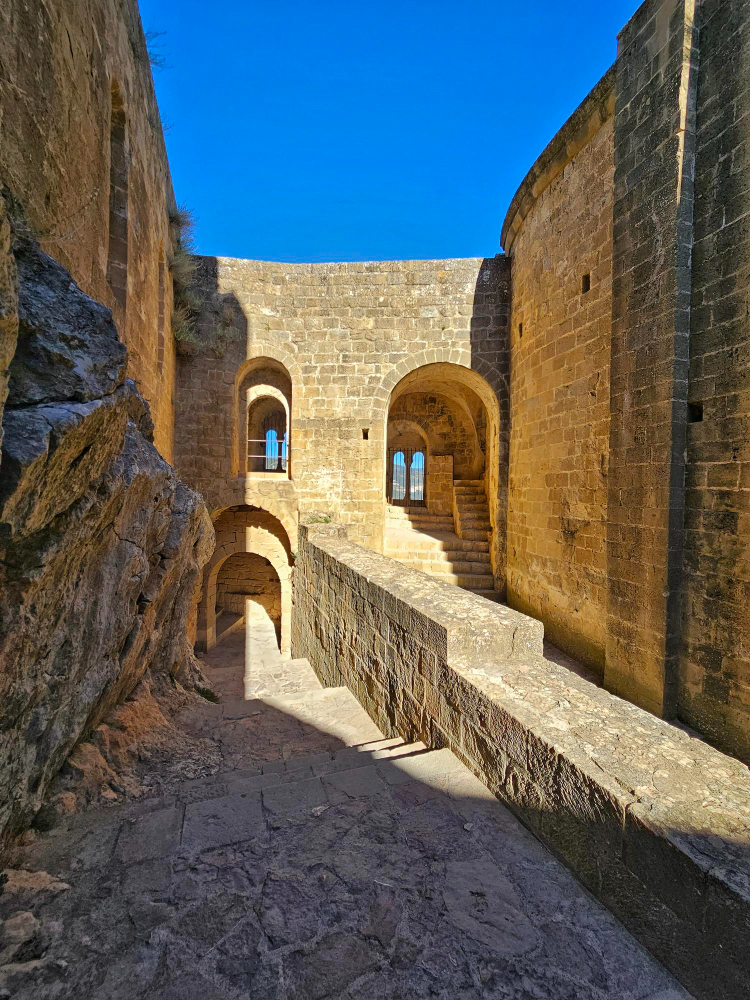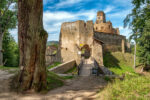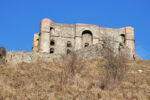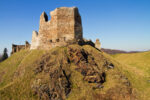

Loarre Castle, which stands majestically on a rocky outcrop overlooking the Aragonese countryside, is far more than just a building – it is a living testament to history. Nestled in the province of Huesca near the town of the same name, this Romanesque fortress tells a fascinating story, shaped by power, faith and centuries of alterations. Yet it is not only its history that makes it so special, but also the legends that surround this ancient stone sentinel.
A Glimpse into the Past: The Strategic Importance of Loarre – The castle’s origins date back to the 11th century, when the region was a fiercely contested borderland between Christian and Muslim territories. King Sancho III, also known as Sancho el Mayor, began construction of the fortress around the year 1020. His aim was clear: to recapture the surrounding areas from Islamic rule and secure the border. Loarre was not only a military fortress but also a symbol of the expansion of the Christian kingdoms. Following this significant reconquest, the castle’s strategic importance continued to grow, particularly under King Sancho Ramírez, who transformed Loarre into a religious centre in 1073. He established a community of Augustinian canons there and used the fortress as a base for preparing his military campaigns, including the decisive conquest of Huesca in 1094. This period was also marked by one of the most significant architectural transformations in the castle’s history. Between 1073 and 1097, the complex was extended, taking into account both its military and ecclesiastical functions. However, the political landscape was changing rapidly. King Peter I, the successor to Sancho Ramírez, marked a turning point for Loarre by donating the castle’s lands to the newly founded royal monastery of Montearagón. Nevertheless, the construction and furnishing work continued, lasting well into the 12th century and giving the fortress its characteristic Romanesque style.
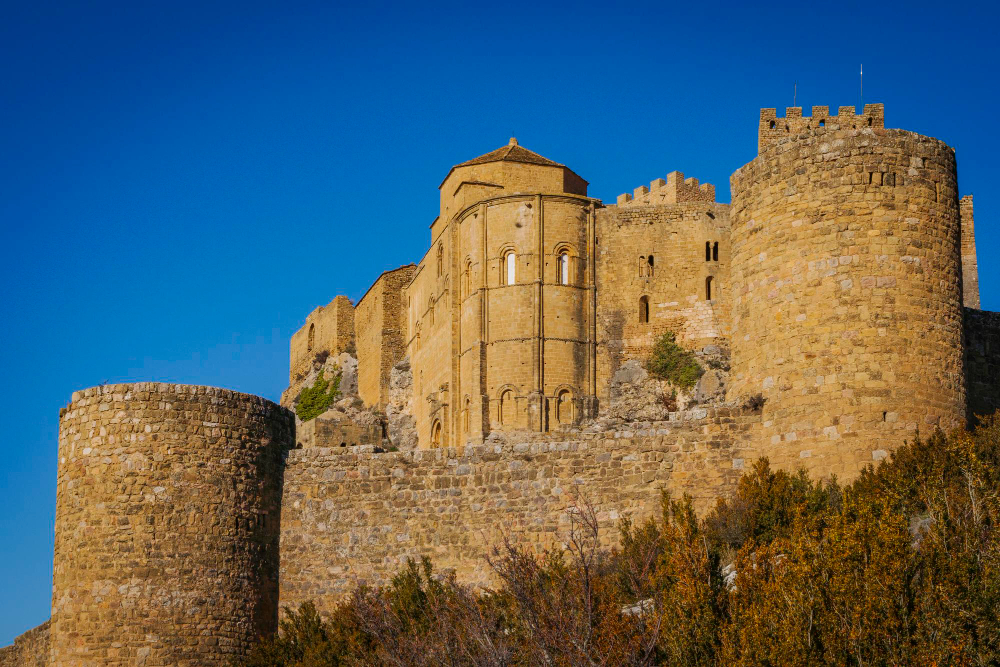
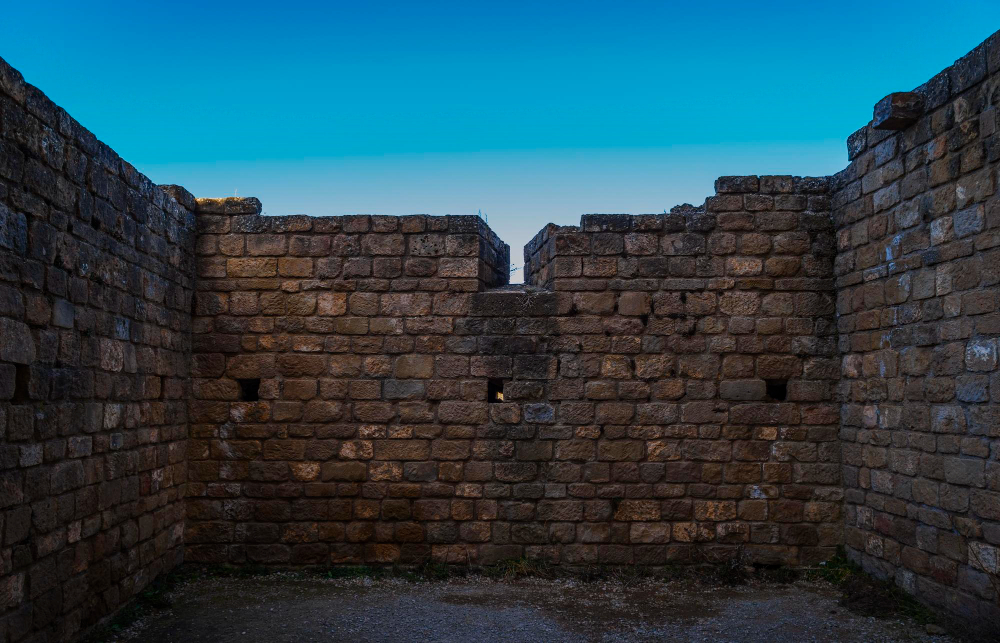
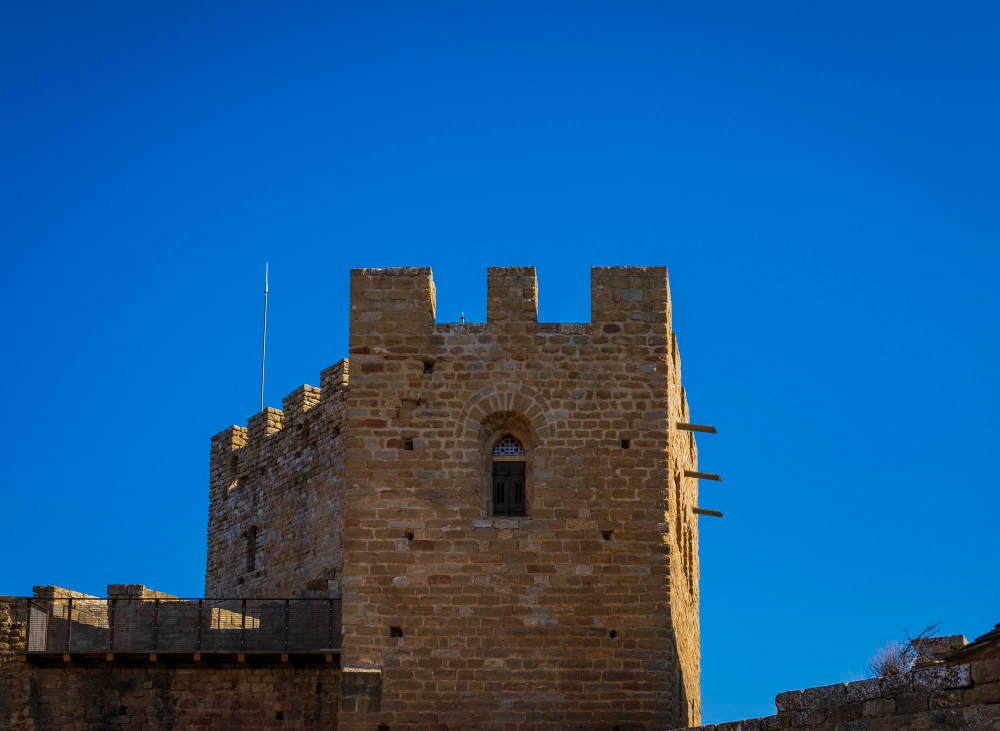
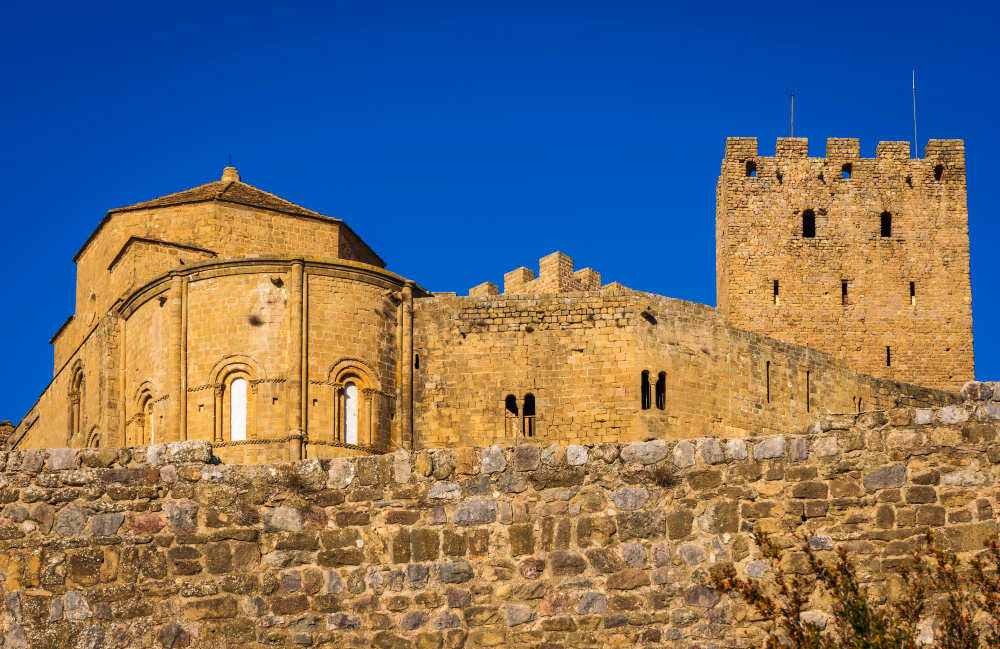
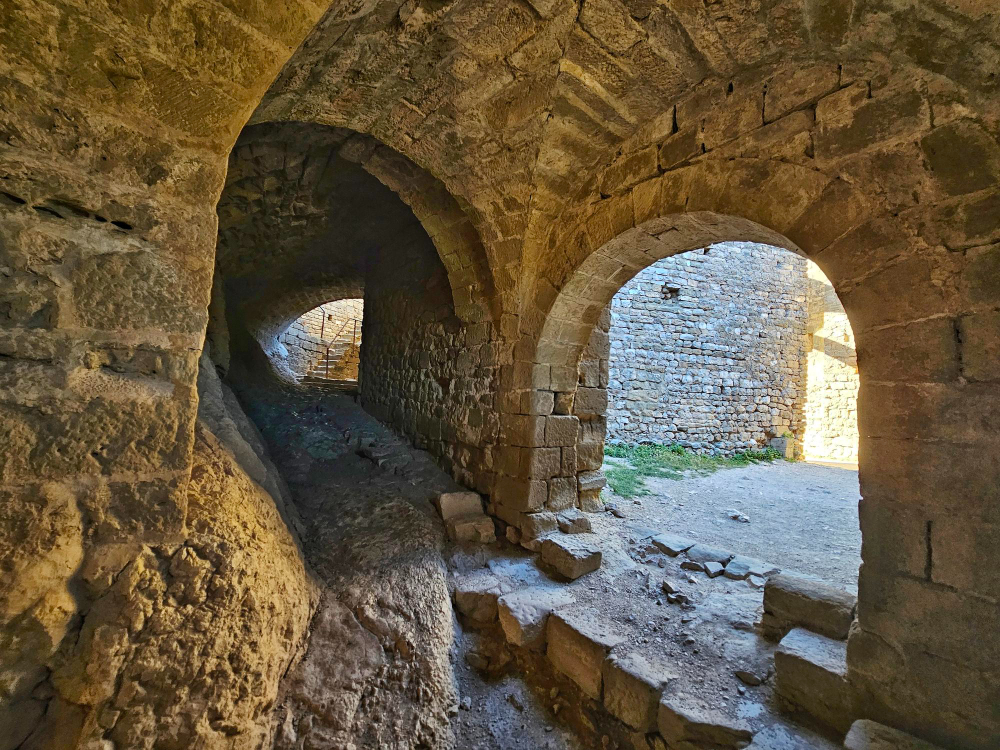
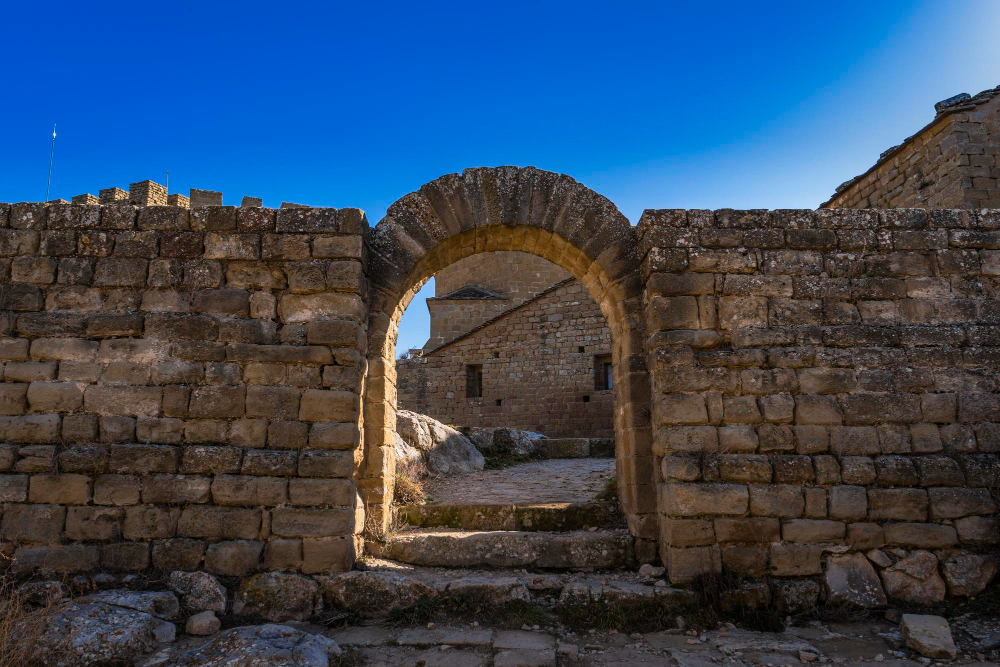
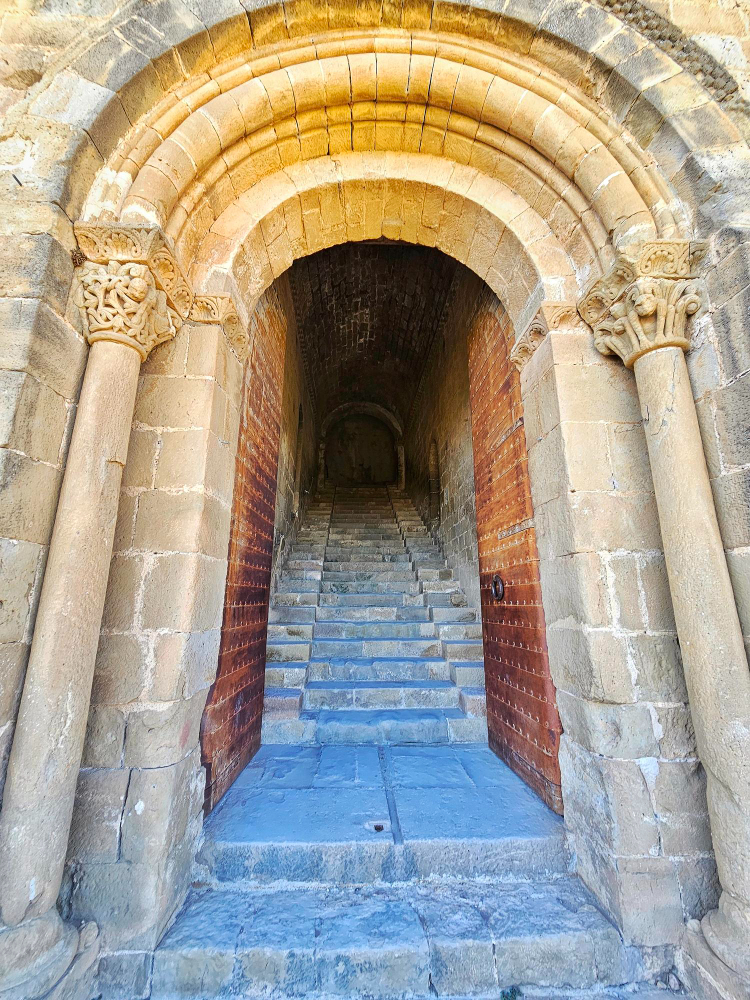
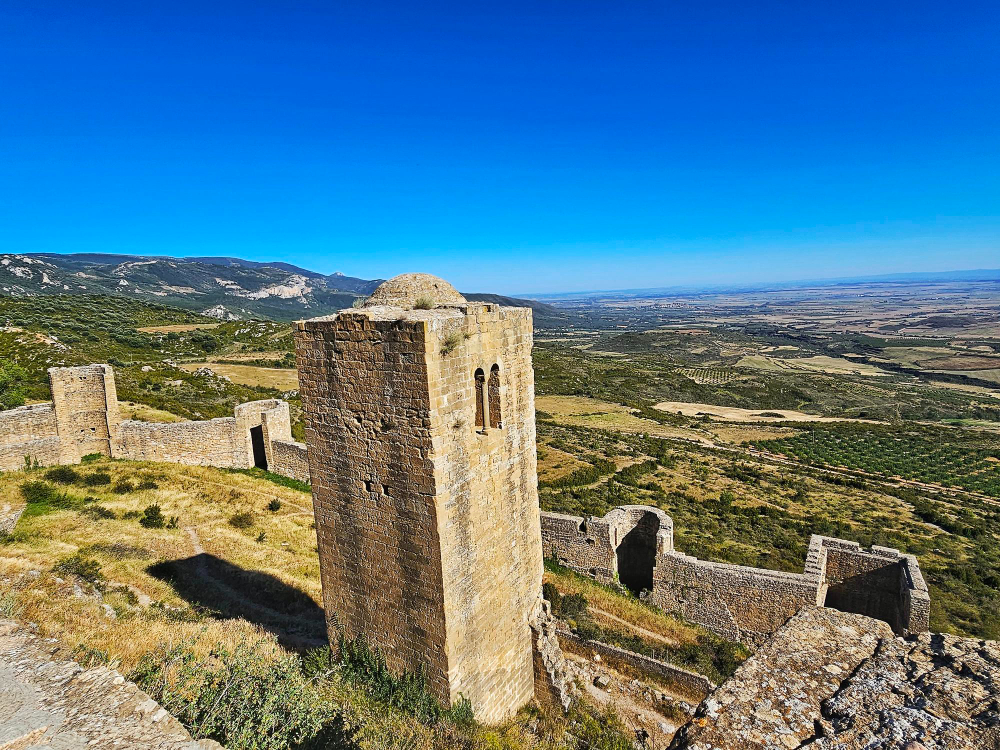
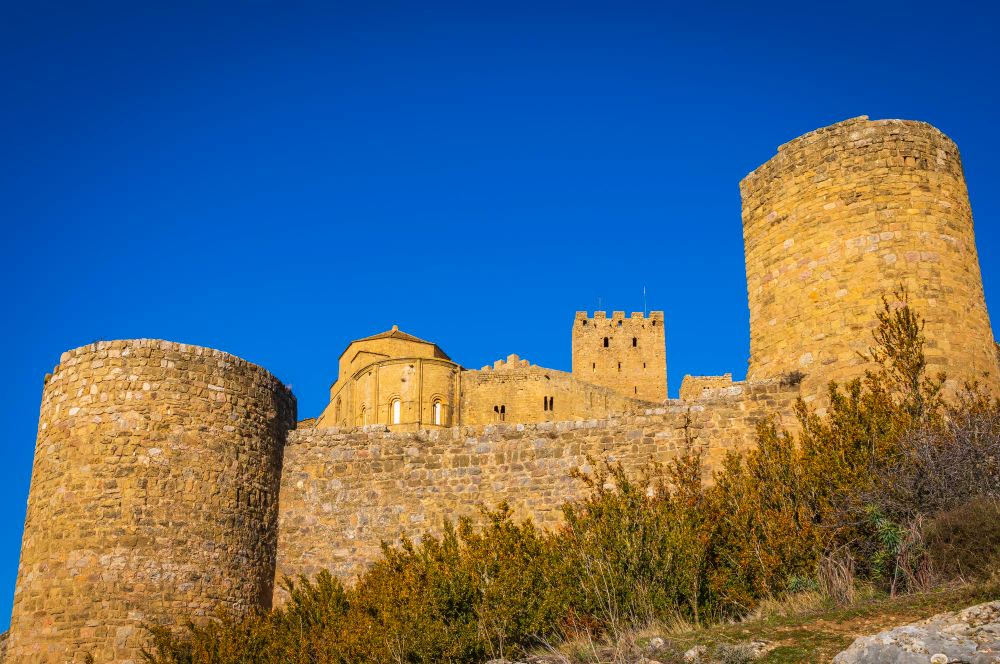
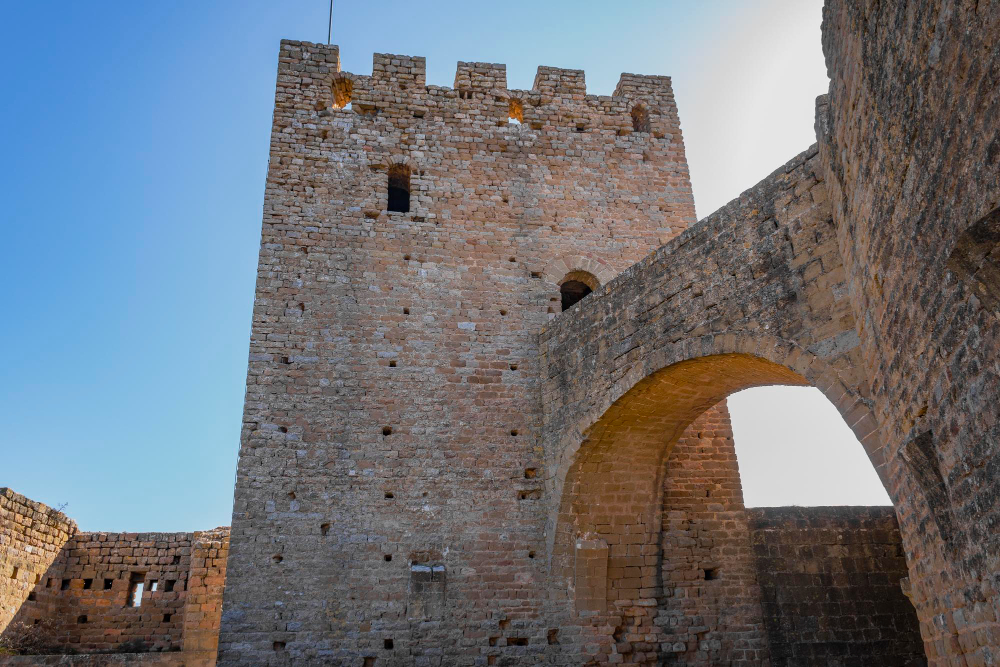
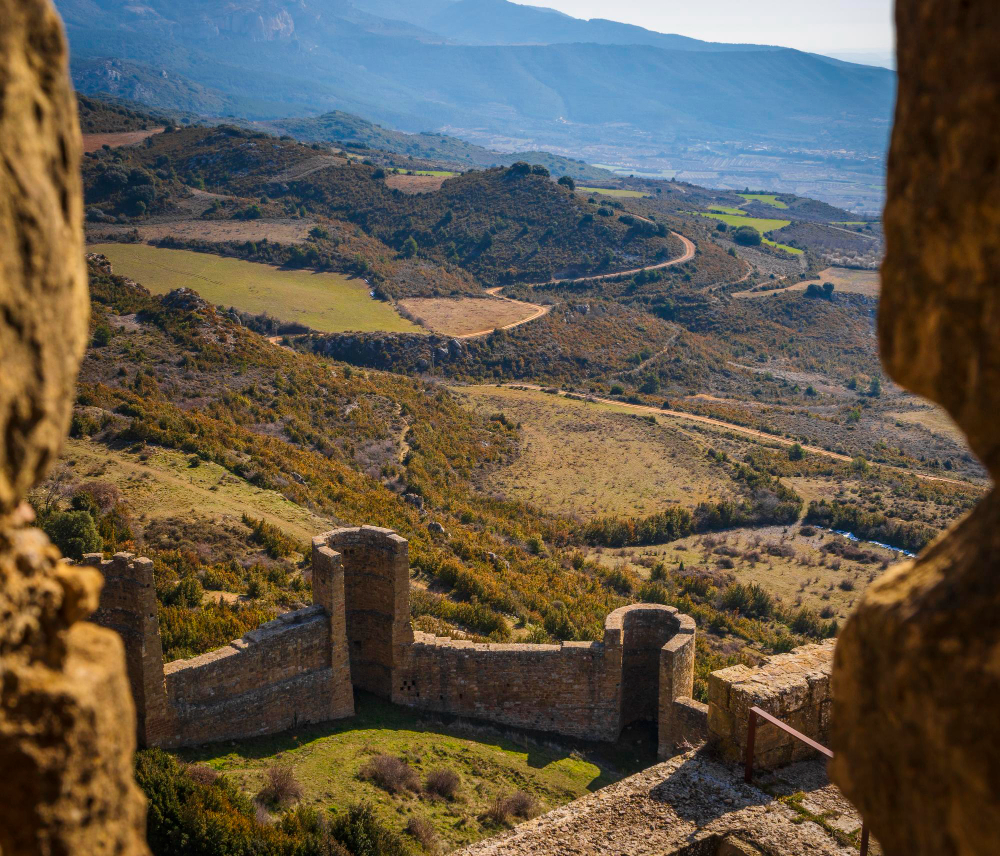
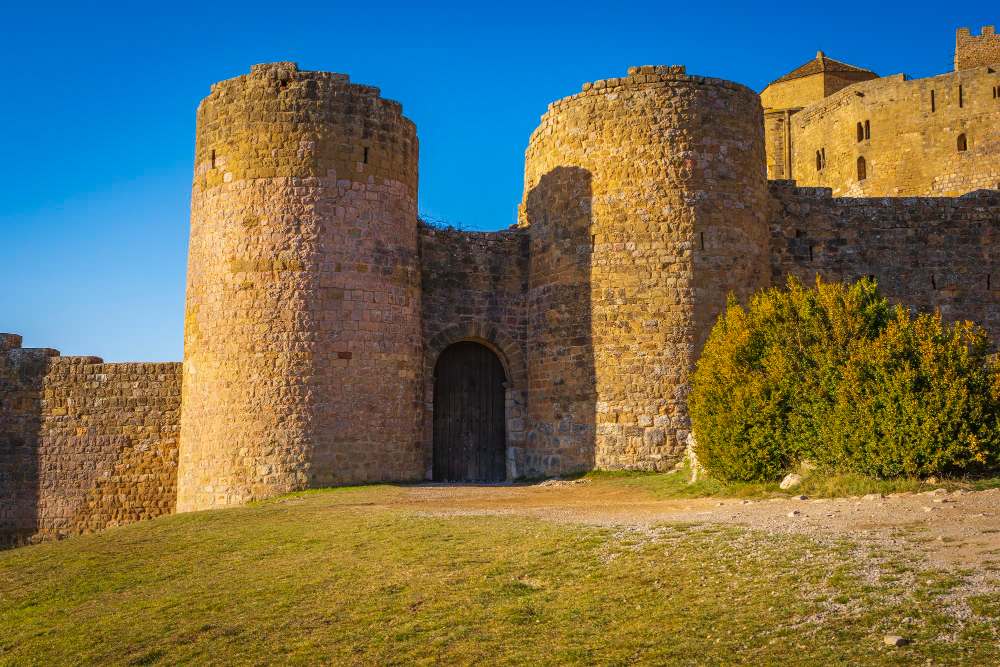
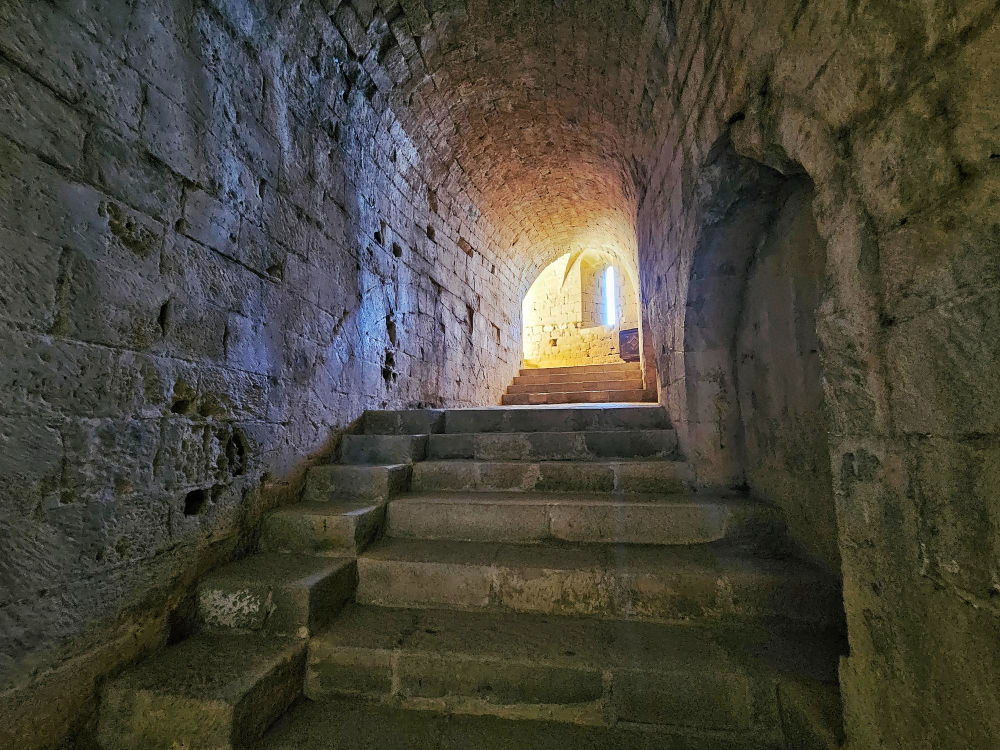
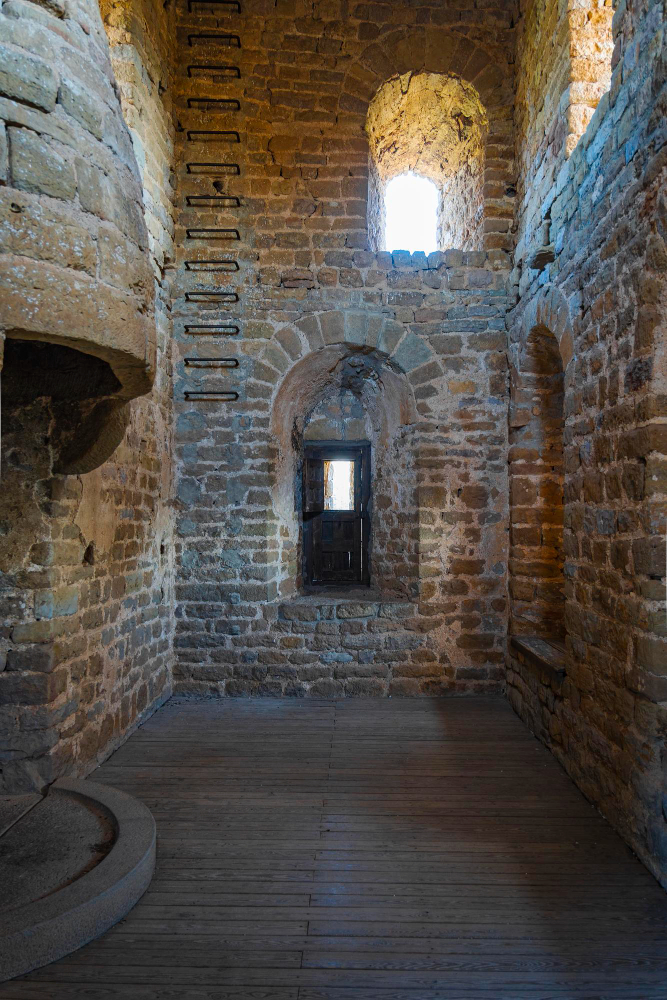
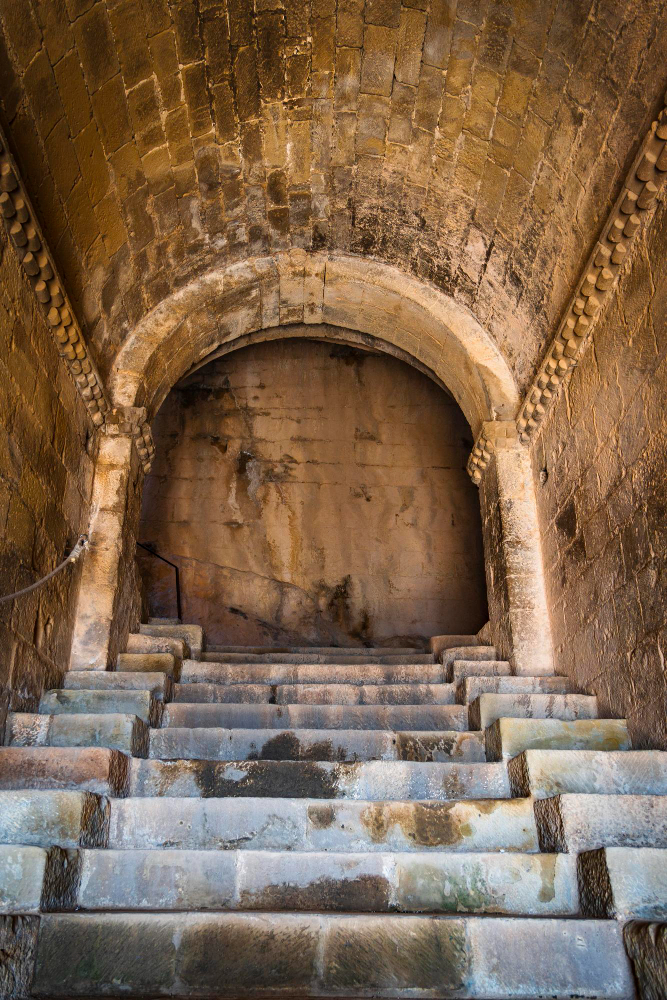
An architectural masterpiece: the influence of landscape and time – Although Loarre was originally conceived as a purely military complex, over the centuries the castle developed a complex structure that took into account both the nature of the terrain and the needs of its inhabitants. It was impossible to erect a single, unified building, as the rugged, rocky terrain prevented the creation of a coherent structure. Instead, a cluster of buildings emerged, protected by so-called curtain walls. The first phase of construction was comparatively modest: two towers and a chapel within the walls marked the beginnings of the fortress. Towards the end of the 11th century, a second chapel was added, built outside the immediate protective zones. Both chapels are in the classical Romanesque style characteristic of that era. Particularly noteworthy are two towers that have survived to this day: the keep, visible from afar and also known as the ‘Torre del Homenaje’, and the ‘Torre de la Reina’, the ‘Queen’s Tower’. The keep was originally situated in an isolated spot in front of the main fortifications and was connected to them via a wooden bridge. The tower comprised five storeys and a vaulted cellar. The ‘Torre de la Reina’, on the other hand, is renowned for its ornate double-arched windows, whose architectural design is attributed to both Lombard and Mozarabic influences. Its trapezoidal capitals and columns with pronounced curvature lend it a unique aesthetic. The Chapel of Santa María de Valverde, another highlight of the complex, consists of a single nave with a semicircular apse and a stone barrel vault. Originally, it had a wooden roof, but this was replaced by a sturdy vaulted ceiling towards the end of the 11th century. Later extensions in the 13th or 14th century led to the construction of the outer curtain walls and their eight watchtowers – an impressive sight that further enhanced the castle’s fortified appearance. Over the centuries, numerous restoration works have been carried out, including a major project in 1913 and a comprehensive renovation in the 1970s. This work saved many dilapidated walls and towers from complete ruin.
Myths and Legends: The Mysterious Aura of Loarre – Like any ancient fortress, Loarre harbours its own legends and secrets. One of the best-known stories concerns a hidden treasure said to lie deep within the castle. It is said that the castle’s first Christian inhabitants buried valuable artefacts beneath the stone slabs of the Santa María de Valverde chapel – including a golden chalice that has never been found to this day. Equally fascinating is the legend of the queen who was allegedly held captive in the ‘Torre de la Reina’. The tower’s name dates back to a fateful time when a noblewoman, imprisoned for political reasons, gazed out over the landscape from this tower and longed for freedom. Even today, visitors are said to be able to hear the whisper of her voice as dusk falls over the castle. Its proximity to the Pyrenees and the rugged, dramatic surroundings also contribute to Loarre’s mystical atmosphere. Hikers report having seen strange shadows and heard noises from the deep forests surrounding the castle, which is partly attributed to the influence of ancient legends about ghosts and the restless souls of times gone by.
Film and pop culture: Loarre on the big screen – Loarre is not only a historical gem, but also a star of the film world. The castle served as a filming location for the epic Hollywood film Kingdom of Heaven, thereby showcasing its majestic architecture to millions of viewers worldwide. In the film, Loarre symbolised a realm full of conflict, passion and heroism – a fitting image for its rich history.
A monument of timeless significance – Loarre Castle is an architectural and historical masterpiece that has stood the test of time, offering insights into both the strategic interests of medieval Spain and the cultural development of that era. Its walls tell tales of kings and wars, of faith and hope – and of the tireless work required to preserve these memories. For travellers, historians and lovers of mystical places, it remains an unmissable destination. Its beauty and mystery help to bridge the gap between the past and the present. Anyone who finds their way to Loarre embarks on a journey through time – into a world full of myths, history and legends.