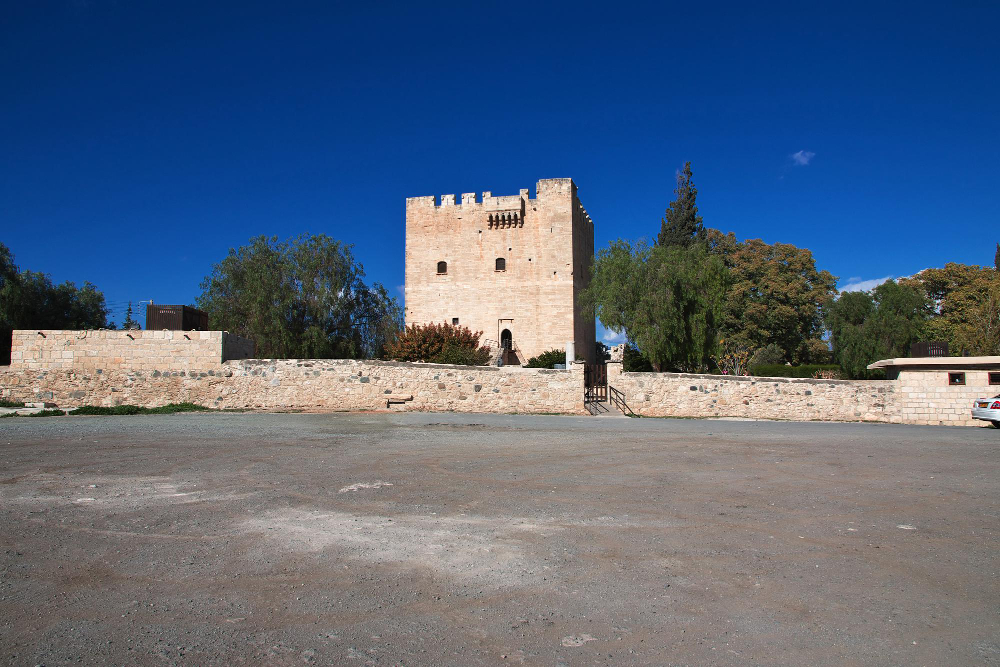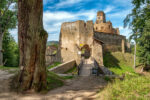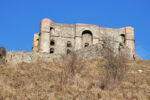

Nestled in the quiet village of Kolossi, just 14 kilometers west of Limassol on the sun-drenched island of Cyprus, lies a medieval fortress steeped in stories of wars, rivalries, and sweet indulgences. Kolossi Castle, once a stronghold of the Crusaders and a center of sugar production, offers visitors a gateway to another era—a time when empires clashed, kings raised their glasses in celebration, and ancient crafts flourished. This historic landmark continues to capture the imagination of tourists and historians alike, not least because of the fascinating stories woven into its centuries-old stones.
The Strategic Importance of Kolossi Castle – When King Hugo I of Cyprus ceded Kolossi to the Knights of the Order of St. John of Jerusalem (the Knights Hospitaller) in 1210, he cemented the region’s role as a crucial military stronghold. Strategically located near the southern coast yet far enough inland to avoid naval attacks, Kolossi offered protection from invaders while also serving as a trading hub. The fertile soil surrounding the castle was ideal for growing sugarcane, a lucrative crop in the Middle Ages that Cyprus exported far and wide. Sugar production was not merely a matter of satisfying Europe’s growing appetite for sweets; it was an economic engine that financed the activities of the Knights Hospitaller. Large sugar-processing facilities were integrated into the Kolossi complex, transforming it into both an industrial complex and a defensive fortress. The profits generated by this enterprise not only served to maintain the castle but also contributed to the broader cause of the Crusaders—a testament to how closely economics and warfare were intertwined during this era.
Rivalry Among the Crusader Orders – The history of Kolossi Castle is anything but peaceful. In 1306, the fortress became entangled in the web of political intrigues and factional disputes that plagued the Kingdom of Cyprus. The Knights Templar, then a rival order to the Knights Hospitaller, seized control of Kolossi in a move that many describe as a bold act of rebellion. Their occupation, however, was short-lived, as the Order of the Knights Templar was dissolved by Pope Clement V in 1313 on charges of heresy and corruption. The Knights Hospitaller regained the castle, reaffirmed their rule over Kolossi, and continued their activities under less contentious circumstances. Despite these conflicts, Kolossi remained a prized jewel in the Crusaders’ network of fortifications—a testament to its enduring strategic importance. As an impregnable fortress, it served both as a deterrent to potential attackers and as a symbol of the Knights of St. John’s strength.
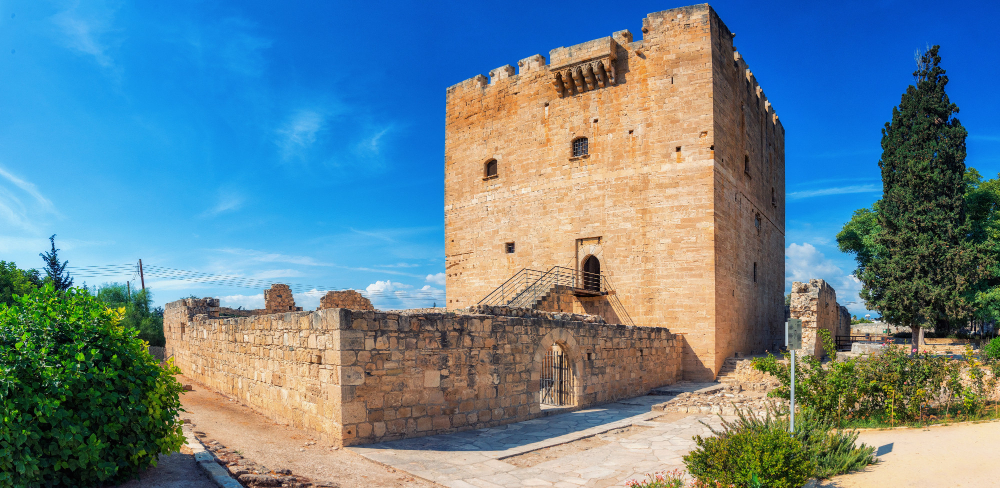
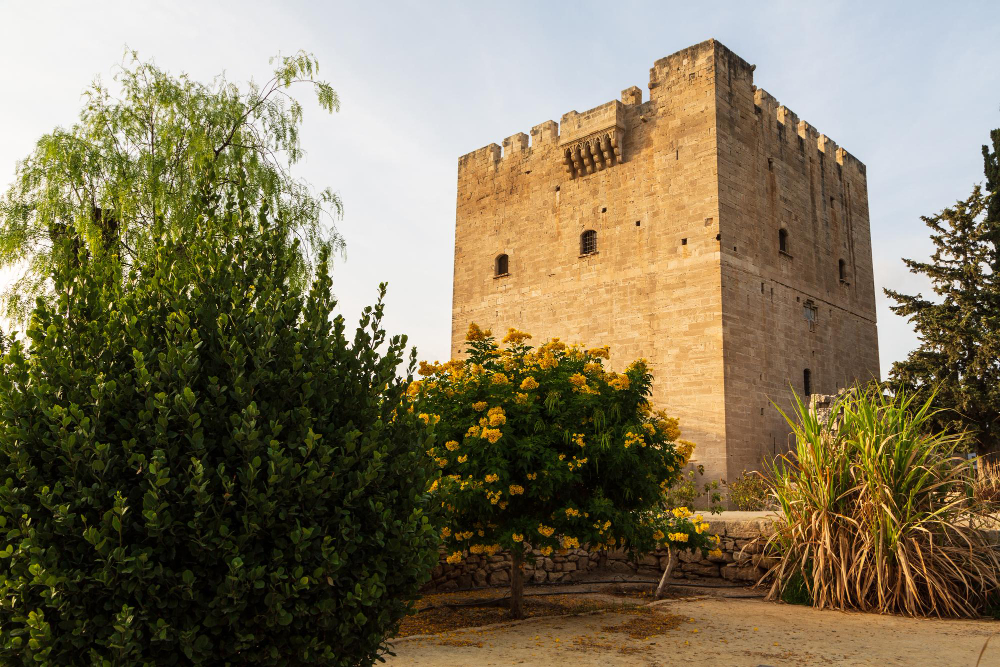
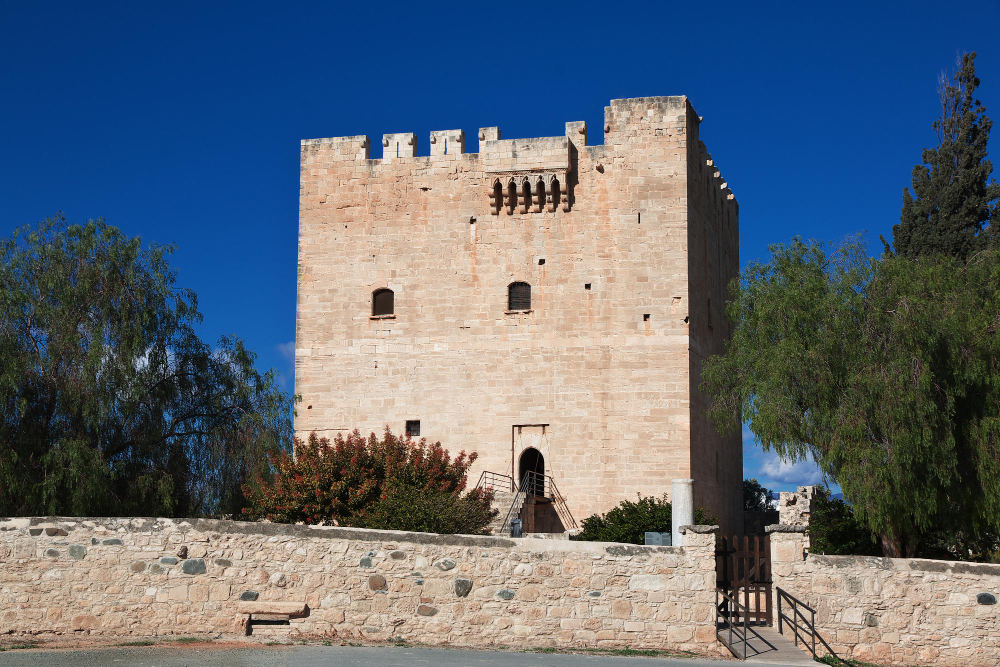
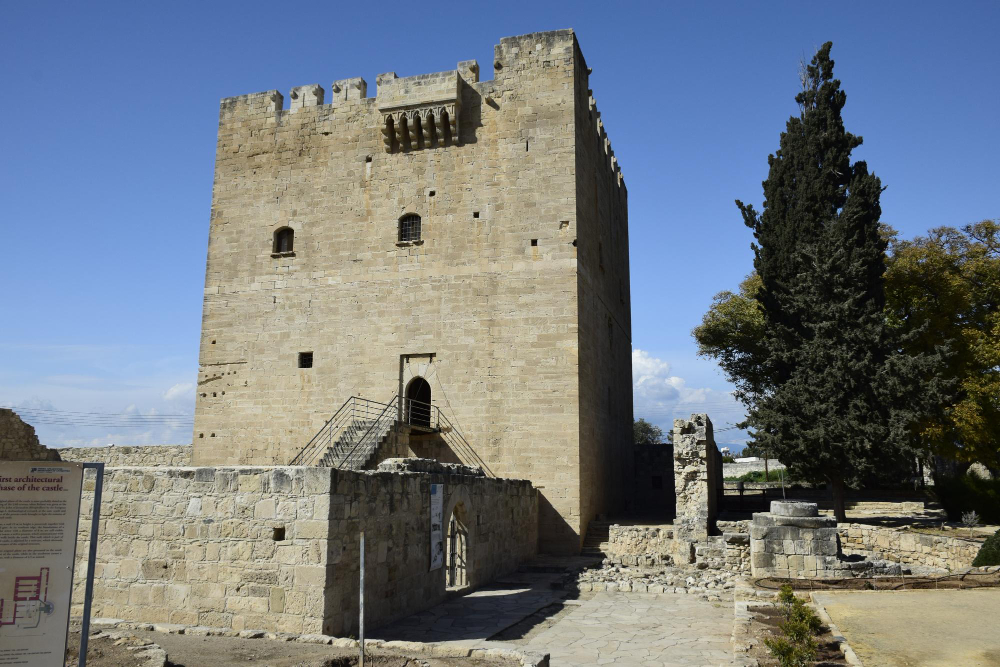
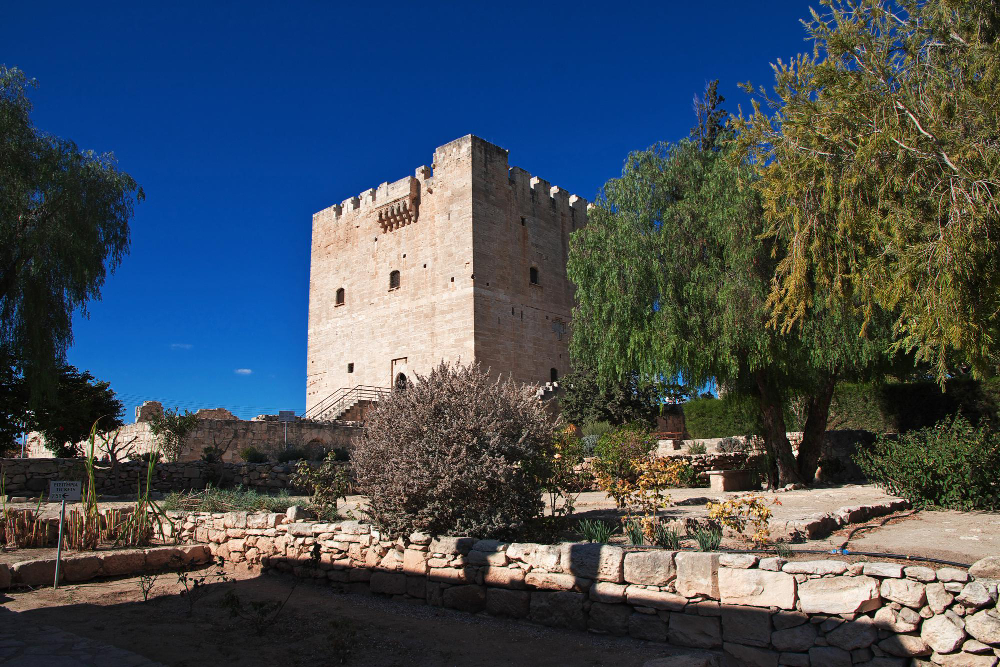
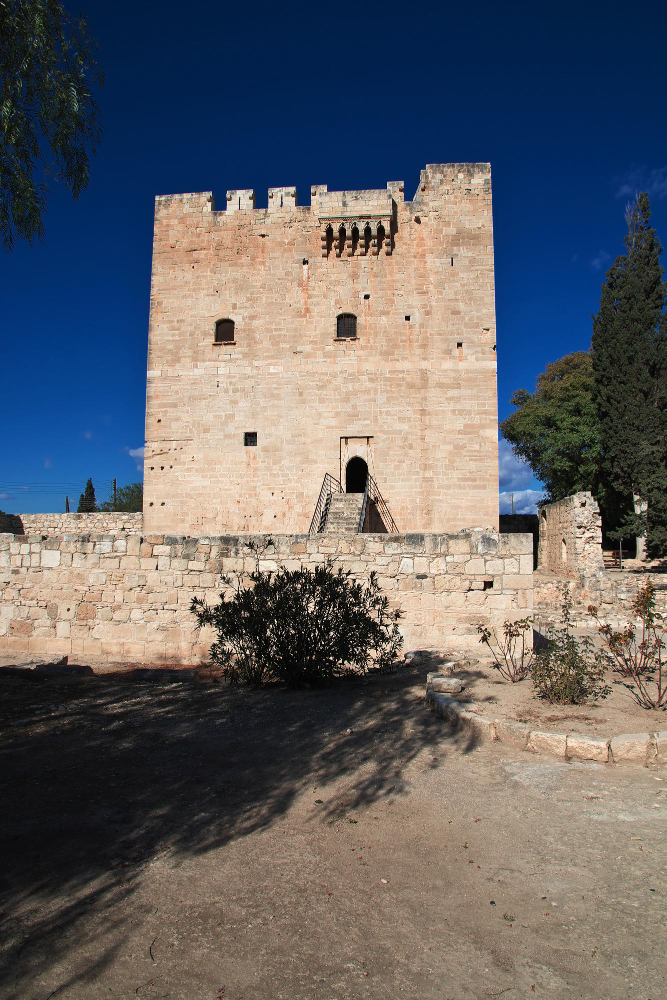
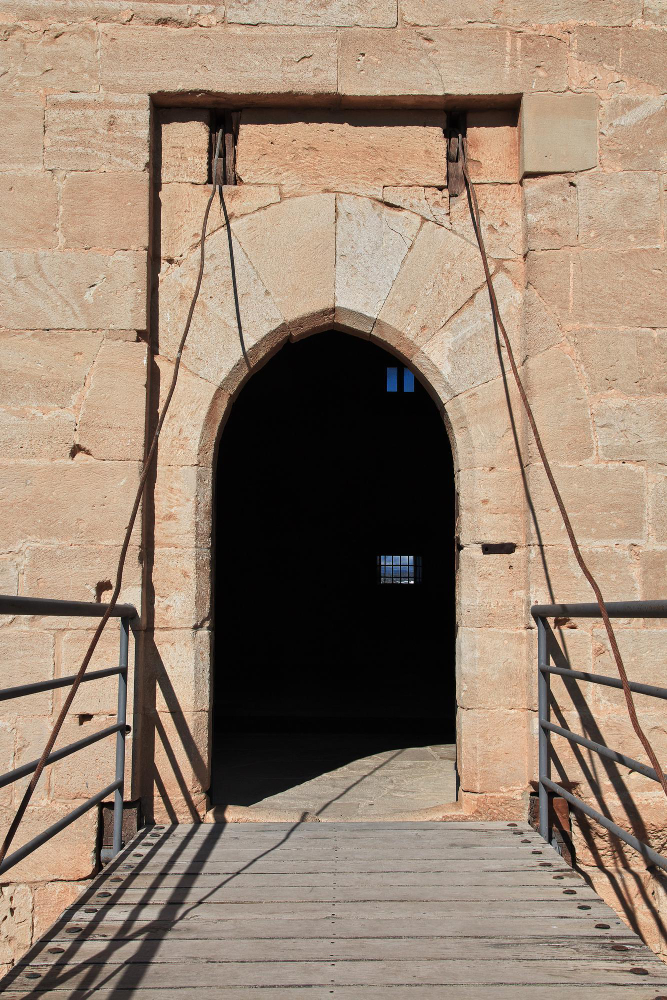
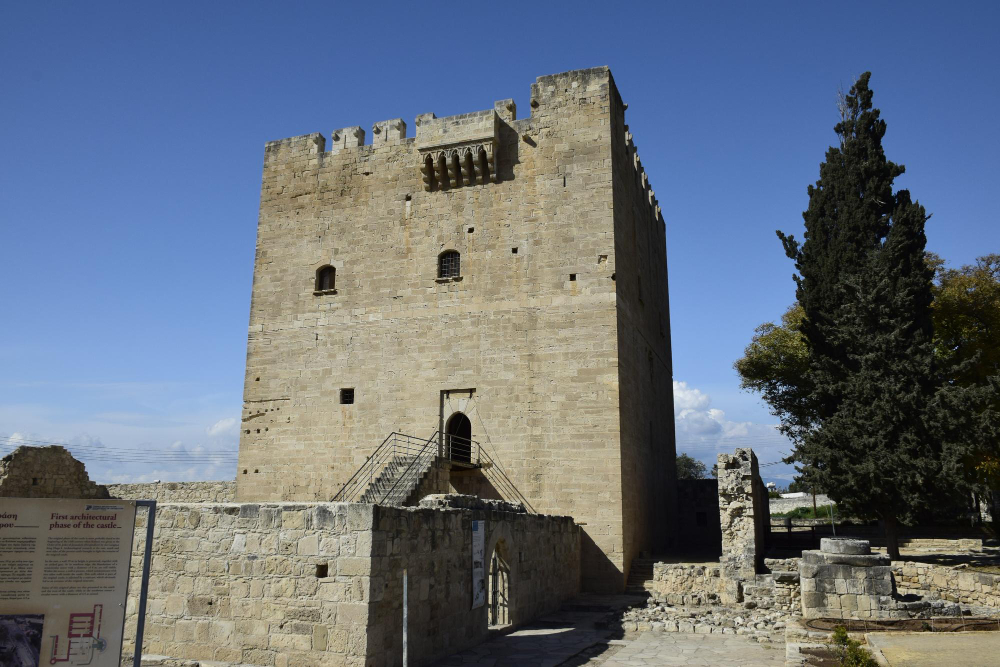
The Keep of Kolossi: Architecture and Legacy – The castle as it stands today was built in 1454 under the direction of Louis de Magnac, the Commander of Kolossi. His coat of arms, carved into the castle walls, reminds visitors of his legacy and his commitment to fortifying the region against external threats. Built primarily of limestone, the castle commands an imposing presence despite its modest dimensions. The square keep, with a base measuring 17 by 17 meters, extends over three stories—a compact yet imposing structure designed to withstand sieges. The interior reveals the functional design of medieval defensive architecture. Narrow spiral staircases lead upward to rooms that once served as storage areas, meeting rooms, and sleeping quarters. The roof offers a panoramic view of the surrounding landscape—a vantage point that was once crucial for spotting approaching enemies. Adjacent to the keep is a rectangular inner courtyard or forecourt measuring 30 by 40 meters, which once housed stables, workshops, and other essential facilities necessary to support a small garrison. Although the castle may not rival other famous castles in Europe in terms of size, Kolossi is nonetheless remarkable for its versatility. It served not only as a defensive structure but also evolved into a center of production and trade that enriched the local economy and ensured regional prosperity.
A Sweet Legacy: Sugar and Wine – Kolossi Castle is also known for its “sweet” contributions to Cypriot culture and history, particularly through the production of sugar and Commandaria wine. The sugar processed within its walls was highly sought after in medieval Europe, where it was considered an exotic luxury. Historical accounts suggest that Kolossi’s sugarcane plantations were among the most productive on the island and played a significant role in establishing Cyprus’s reputation as a supplier of high-quality goods. However, it is the wine from this region that has secured Kolossi a place in culinary history. Commandaria, possibly the oldest wine with its own name still in production, owes much of its fame to the Knights Templar, who produced and exported it on a large scale during their time in Kolossi. In fact, the wine’s name is derived from the “Grand Commandery” that the Knights Templar established in the castle. Sweet and full-bodied in flavor, Commandaria became a favorite of the nobility and the royal family. According to legend, Richard the Lionheart himself is said to have referred to Commandaria as “the wine of kings and the king of wines” at his wedding banquet with Berengaria of Navarre in nearby Limassol in 1191. This tribute cemented the wine’s reputation throughout Europe and ensured its continued production for millennia. To this day, Commandaria remains synonymous with Kolossi—a liquid embodiment of the castle’s living history.
Legends and Myths: Romance and War – Kolossi Castle is more than just a historical structure; it is a treasure trove of captivating legends. Among its most famous stories is that of Richard the Lionheart, whose marriage to Berengaria in Limassol marked a unique episode in the history of the Crusaders. The ceremony, which took place during the Third Crusade, was marked by romance and conflict; according to reports, Richard stopped in Limassol on his way to the Holy Land to get married against the backdrop of military campaigns. Another remarkable myth revolves around the Knights of St. John themselves. According to tradition, Kolossi served as a meeting place for secret council sessions where war strategies were devised and alliances negotiated. Rumors of hidden chambers and clandestine gatherings still fascinate visitors today and fuel speculation about the secrets concealed behind the castle walls. Even the rivalry between the Knights of St. John and the Knights Templar lends itself to dramatic retellings. The political intrigues and eventual downfall of the Knights Templar evoke images of betrayal and ambition, enriching Kolossi’s historical narrative with episodes worthy of an epic tale.
Kolossi Today: A Gateway to the Past – Today, Kolossi Castle stands proudly amidst the Cypriot countryside, inviting travelers to immerse themselves in its historic past. Thanks to its relatively intact condition, it ranks among the best-preserved medieval castles on the island and offers a tangible connection to the era of the Crusaders. Visitors can explore its stone corridors, marvel at the traces of history carved into the walls, and imagine the lives of those who once walked through its halls. Beyond its architectural charm, the castle serves as a cultural landmark that reminds locals and tourists alike of Cyprus’s role as a crossroads of civilizations. Kolossi embodies the island’s unique blend of Eastern and Western influences, shaped by centuries of conquest, trade, and tradition.
Kolossi Castle is more than a medieval fortress—it is a living testament to the resilience of the human spirit and the enduring power of history. From its beginnings as a Crusader stronghold to its role as a center of industry and wine production, the castle has witnessed centuries of triumphs and trials. It has weathered political rivalries, economic upheavals, and the passage of time, and today stands as a symbol of Cyprus’s rich heritage. Whether you’re drawn to its architectural beauty, fascinated by stories of knights and kings, or simply want to enjoy a sip of Commandaria wine while gazing at the ancient walls—Kolossi Castle promises an unforgettable journey into the heart of the Middle Ages. For anyone strolling through its grounds, the echoes of history will surely linger long after they’ve left this remarkable monument.