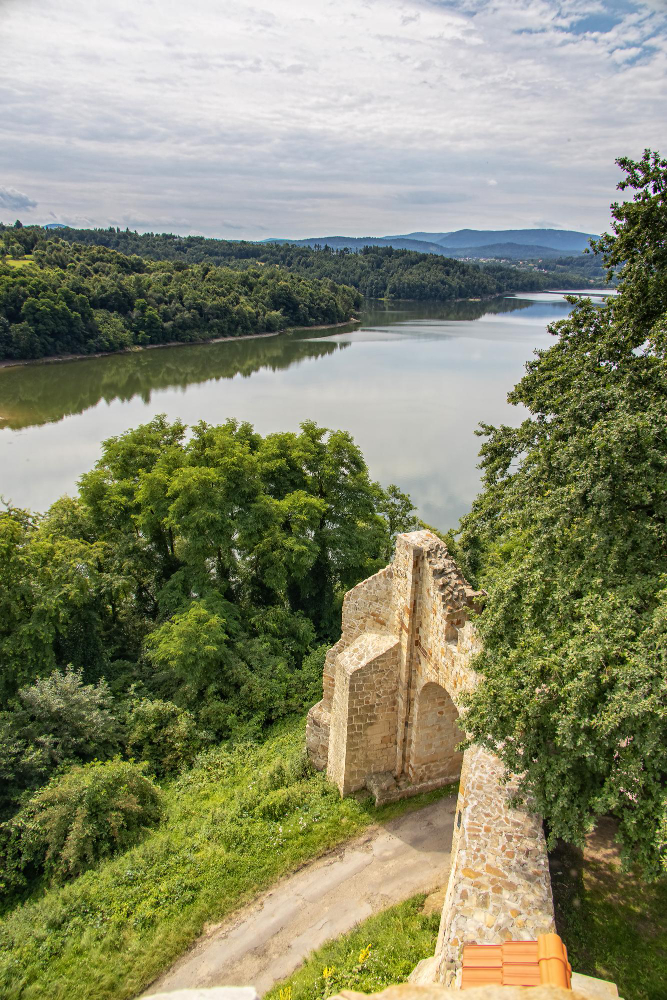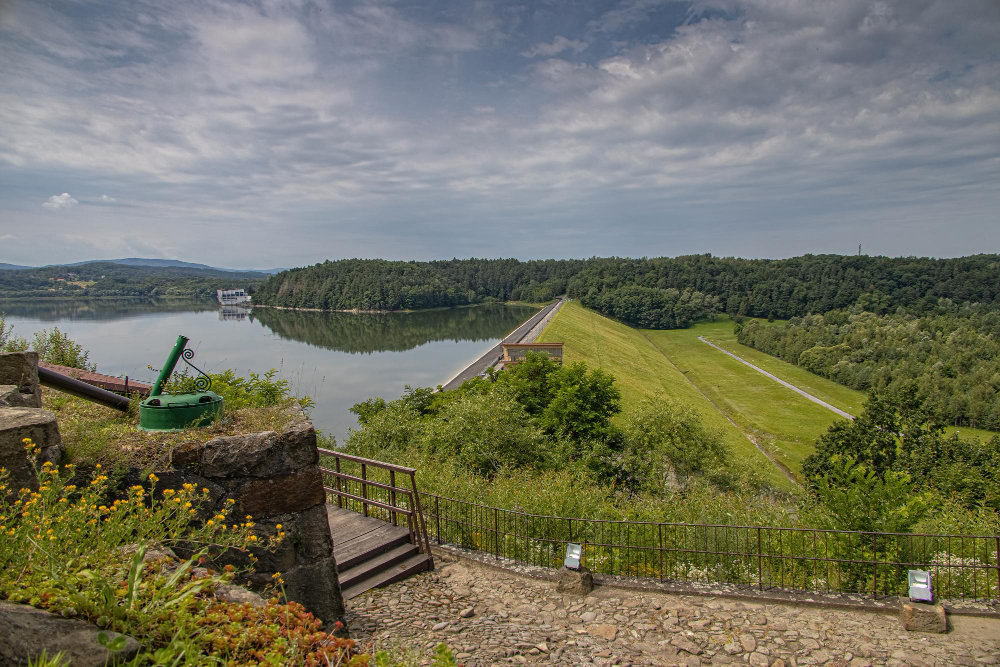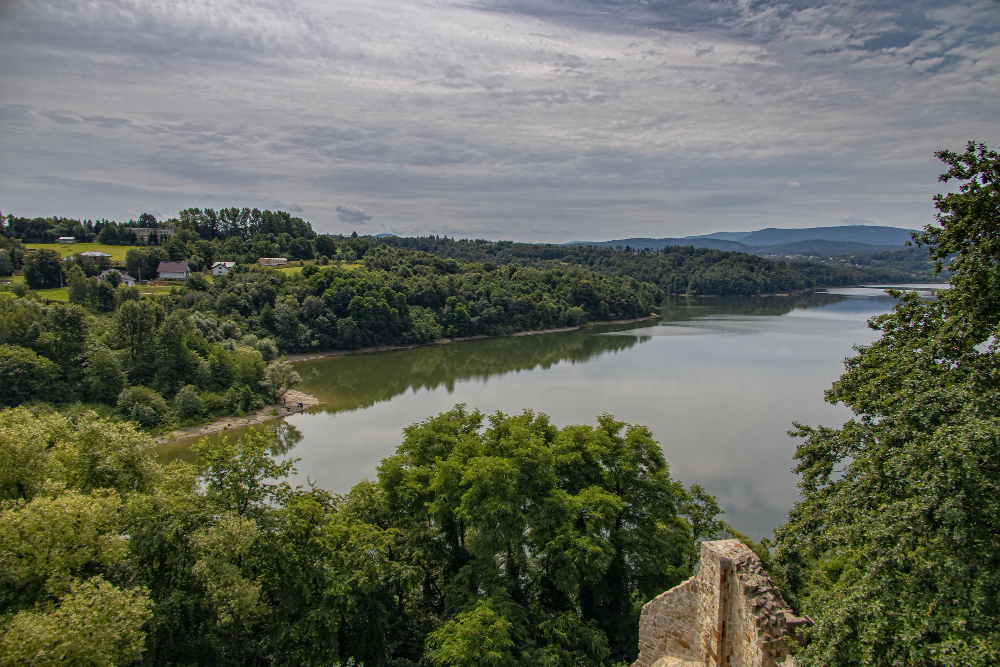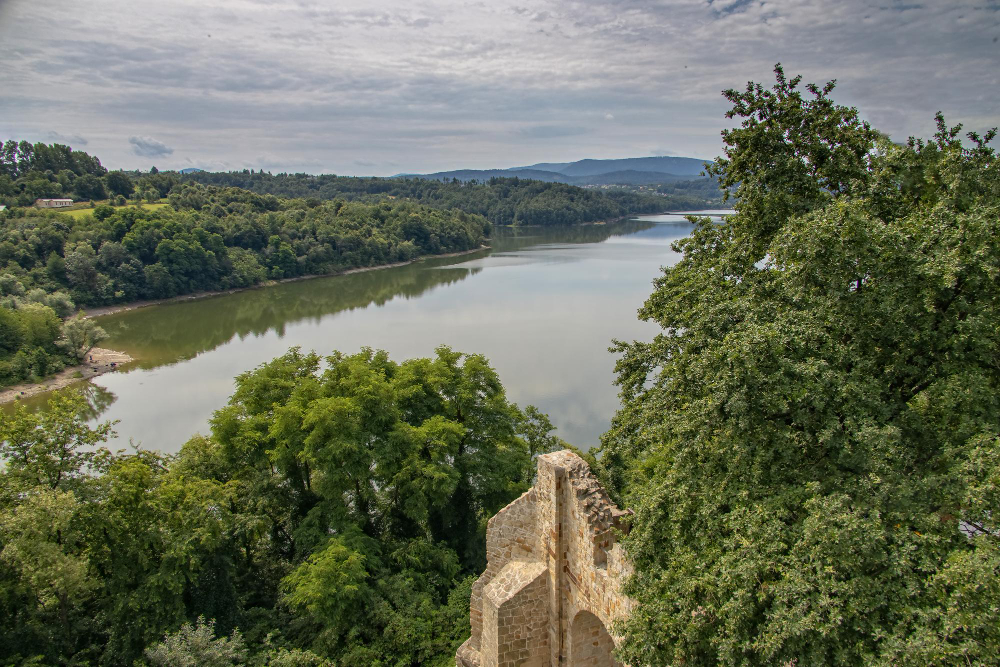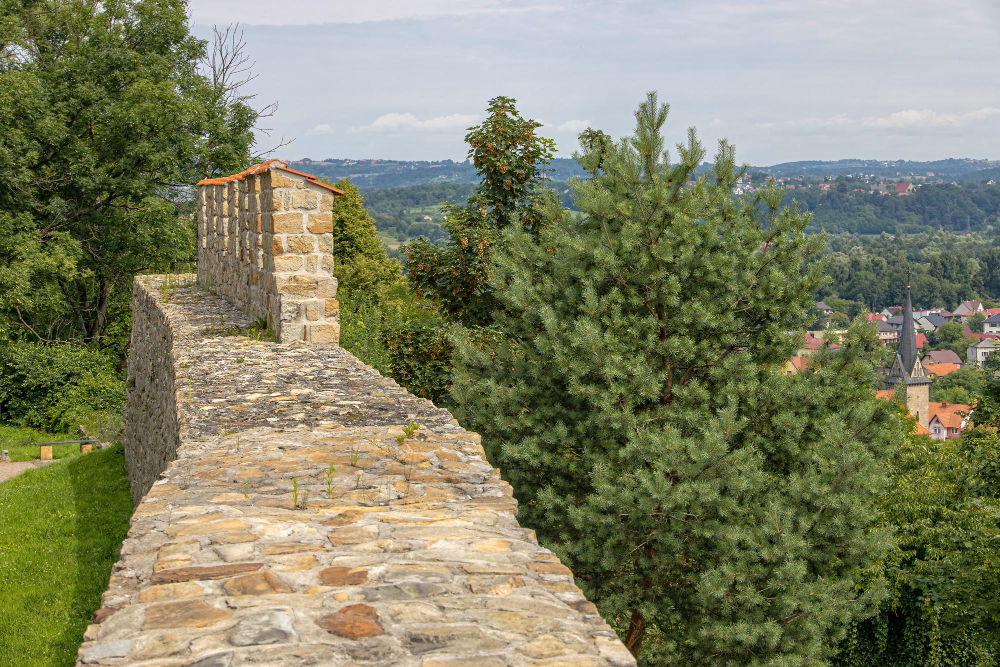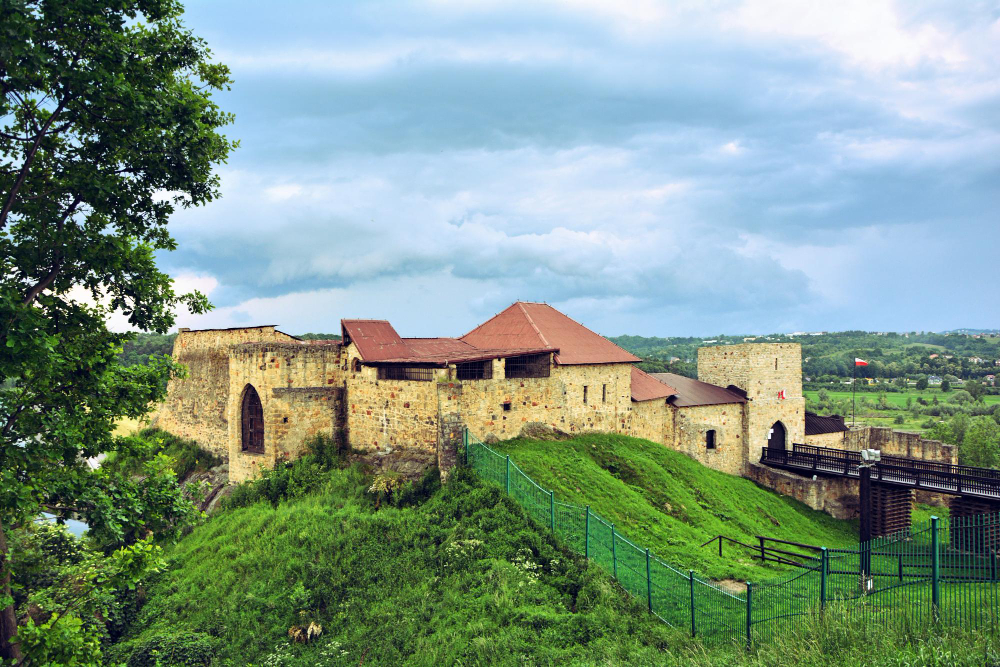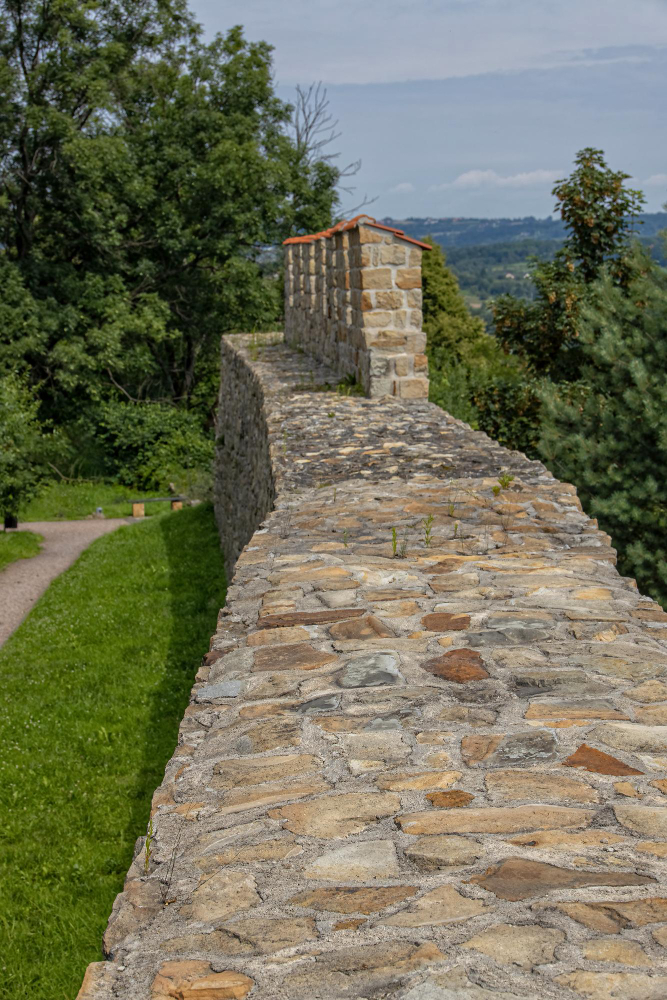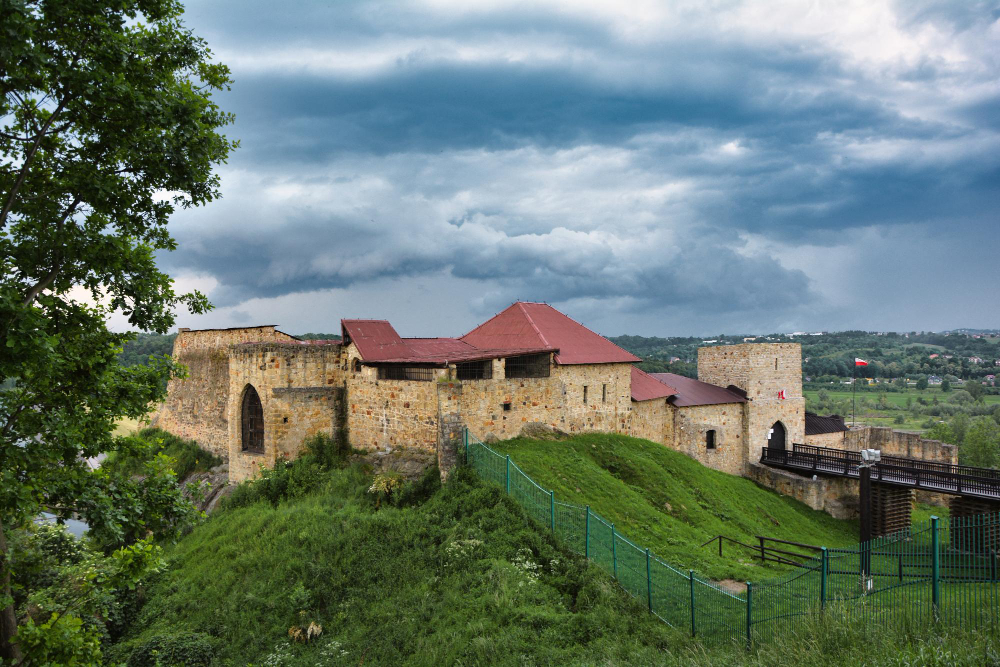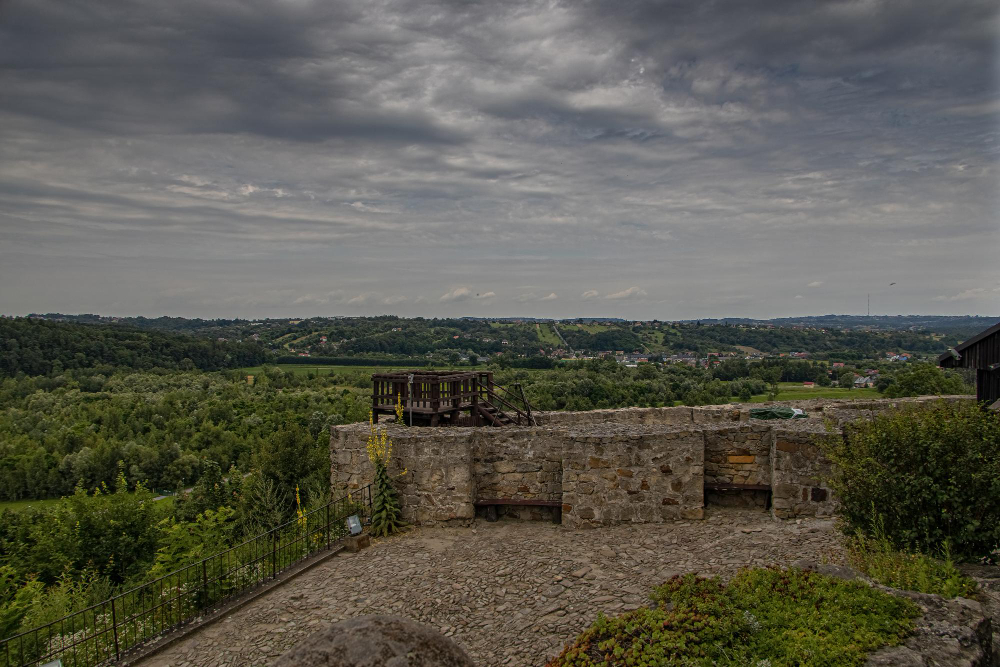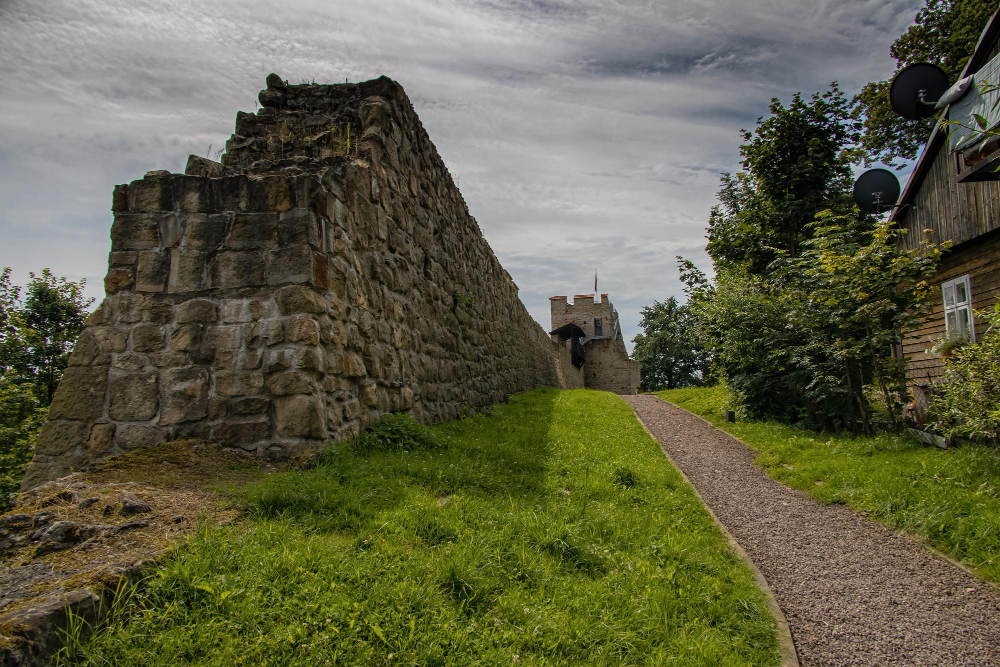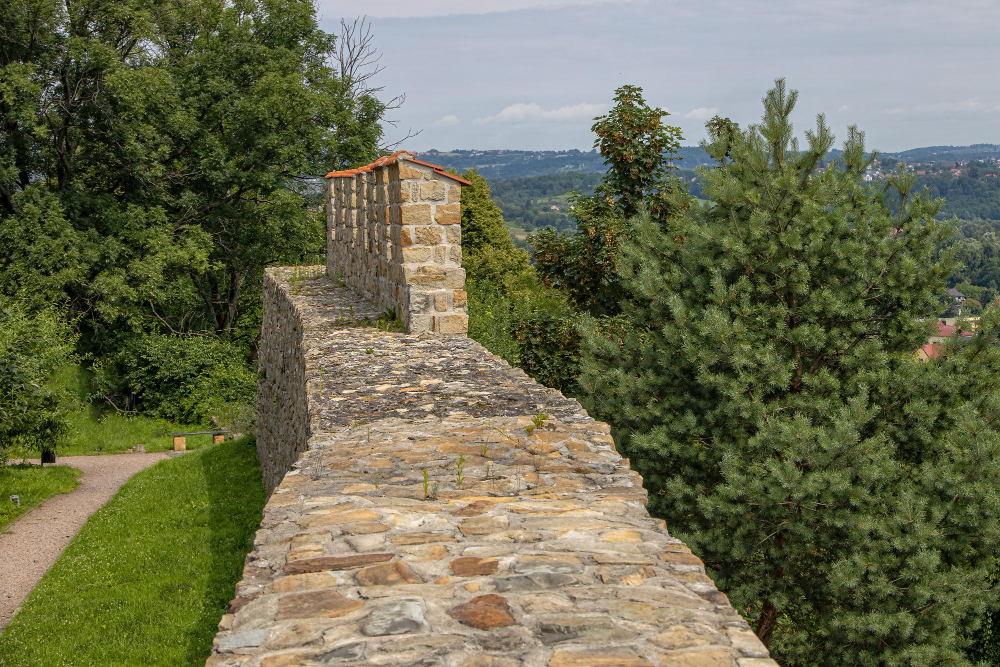

Dobczyce Castle (Polish: Zamek w Dobczycach) stands majestically overlooking the River Raba and Lake Dobczyckie in the picturesque Polish countryside. Nestled between the Pogórze Wielickie and Pogórze Wiśnickie mountain ranges, which form part of the Beskids, it tells the fascinating story of a royal seat that played a significant role in Polish history for centuries. With its stone walls, which harbour countless tales of glory and destruction, this castle is a window into a bygone era, shaped by kings, wars and cultural change.
The mysterious origins of the castle – To this day, the exact date of Dobczyce Castle’s construction remains a mystery. Historians suspect that construction began before the 14th century, but evidence of this is scarce. The first indirect references date from 1311, when Władysław I Ellenlang issued a legal decree in Dobczyce against the citizens of Kraków during the Kraków Uprising. This decree suggests that Dobczyce may have been home to a royal seat at that time. However, it was not until 1359/1362 that the castle’s existence was confirmed in writing, when it was under the administration of Nikolaus Wirsing the Elder and later his son Nikolaus Wirsing the Younger, who controlled it on behalf of King Casimir the Great.
Royal influence and the heyday – In 1379, the castle returned to direct royal ownership. This marked the beginning of its heyday. Particularly under the reign of King Władysław II Jagiełło, the fortress played a strategically and politically significant role. In 1390, Jagiełło enfeoffed Klemens z Moskorzowa with the castle and spent time there himself, together with his wife Hedwig of Anjou. The presence of monarchs at the castle not only lent it prestige but also made it a centre of courtly life. Another interesting episode in the castle’s history is its function as an educational centre for the royal sons of Casimir IV – Andrew and Elizabeth of Habsburg – in the 15th century. The famous Polish chronicler Jan Długosz, author of numerous historical works, is said to have taught the princes here. As a result, the castle became significant not only politically, but also culturally and in terms of education. In the late 16th century, under Stanisław Lubomirski, the castle was finally transformed into a magnificent Renaissance palace. The architecture of this period was characterised by elegance and a wealth of detail, which was also reflected in the castle’s redesign. Lubomirski had the buildings extended and modernised, elevating the castle to one of the most splendid aristocratic residences in Poland.
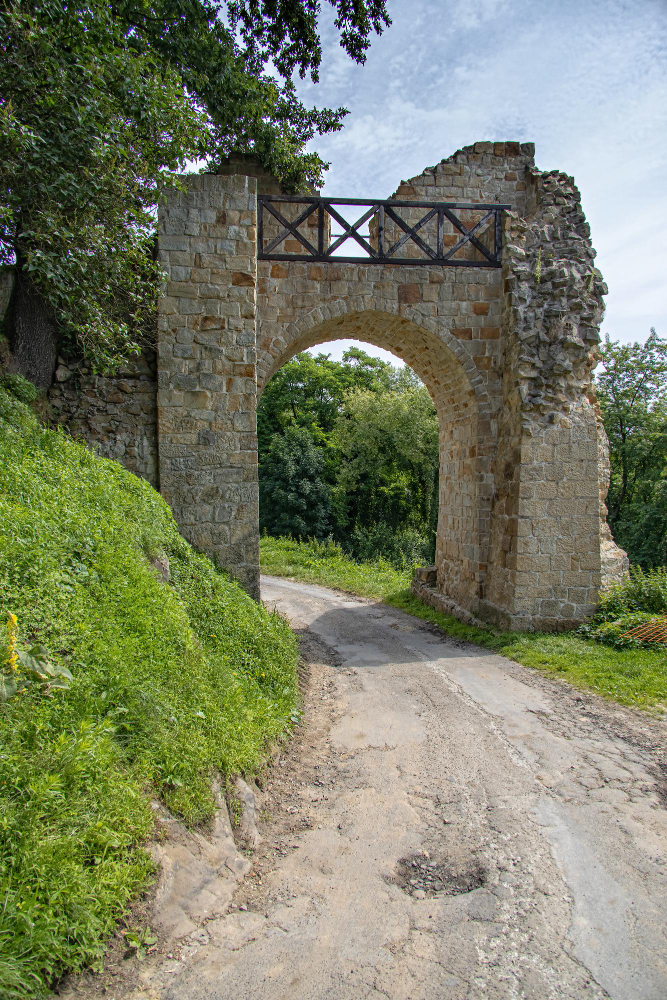
War, Fire and Destruction – Yet no fortress is spared the horrors of war, and fate did not spare Dobczyce Castle either. In 1702, the complex was severely damaged by Swedish troops during the Great Northern War. The Swedes’ brutal actions left deep scars on the castle’s structure. As if that were not enough, a devastating fire in 1735 destroyed further parts of the complex. Following the disasters of the 18th century, the castle’s importance began to wane. The local population also contributed to its decline: in the 19th century, farmers used the ruins as a quarry, resulting in the irretrievable loss of many of the original architectural details. The once magnificent castle was now little more than a shadow of its former grandeur.
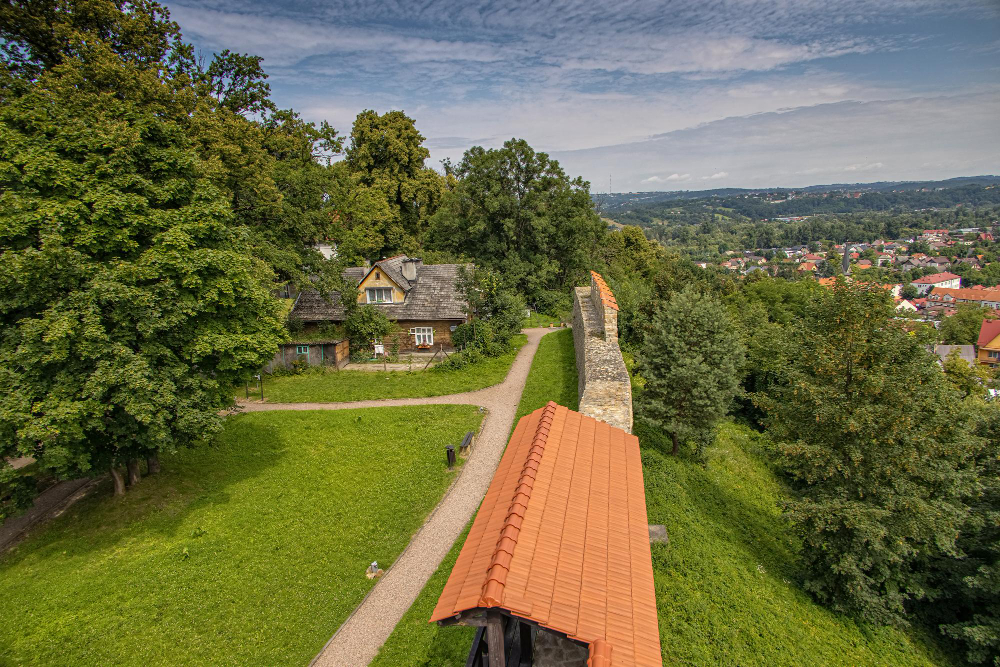
Rescue and Reconstruction – It was not until 1901 that a process of rescue and restoration began, initiated by historians and archaeologists who recognised the castle’s cultural significance. The restored section still contained many elements of the original structure, which were carefully reconstructed to preserve its authenticity. A further chapter in its revival took place from 1960 onwards, when extensive archaeological work was carried out. These excavations brought to light valuable insights into the castle’s history and helped to secure its ruins. Today, Dobczyce Castle houses a museum that transports visitors into the fascinating world of the Middle Ages. From historical artefacts to detailed reconstructions of the way of life of that era, the museum offers a comprehensive insight into the region’s history.
Legends and myths surrounding the castle – Like many historic sites, Dobczyce Castle is shrouded in numerous legends and myths. One story particularly worth telling concerns an underground tunnel that is said to have run from the castle to the neighbouring church in Dobczyce. It is rumoured that this tunnel once served as an escape route for the castle’s inhabitants when enemy armies were at the gates. Although no concrete evidence of the tunnel’s existence has been found, the legend continues to capture the imagination of archaeologists and visitors alike. Another mystery concerns the ghost of a young woman who is said to haunt the castle. Rumour has it that she was a lady-in-waiting who tragically took her own life following an unfulfilled love affair. Since then, her ghost is said to wander the castle’s halls at night, in search of her lost happiness.
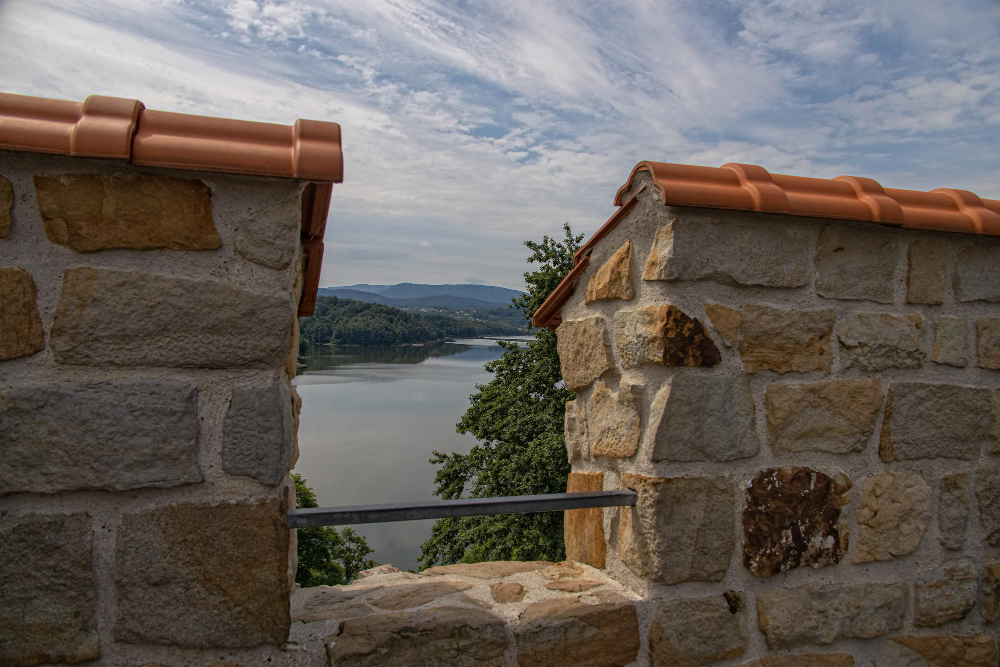
The Significance of Dobczyce Castle Today Today, Dobczyce Castle is not only a place steeped in history but also a vibrant part of the region’s culture and tourism. The combination of historic architecture, breathtaking natural surroundings and fascinating stories attracts thousands of visitors every year. In particular, the view from the castle hill over Lake Dobczyckie is an unforgettable experience that captures the beauty of the surrounding area. Furthermore, the regular events, including medieval markets, historical re-enactments and concerts, play an important role in establishing the castle as a cultural centre. For families, history enthusiasts and nature lovers alike, the castle offers a rich programme and a unique atmosphere.
Sources and further information – In addition to insights from historical documents that describe the castle’s development in detail, further information can be gleaned from academic works and cultural archives. A particularly recommended approach is to visit official websites and regional museums, as well as to consult literature on Polish history and Renaissance architecture. Dobczyce Castle remains a fascinating testament to Polish history, reflecting the complex relationship between power, culture and war. It not only tells of times gone by, but also inspires visitors to discover the stories behind the stones and to keep the legends alive.
Dobczyce Castle is more than just a monument; it is a living reminder of Poland’s eventful history. Its walls, marked by centuries of use and destruction, tell tales of kings, wars and cultural flourishing. Today, the castle stands as a symbol of the resilience and beauty of a region that has preserved its identity despite all challenges. A visit to this historic site is a journey into the past – and an inspiring glimpse into the history that continues to shape us to this day.