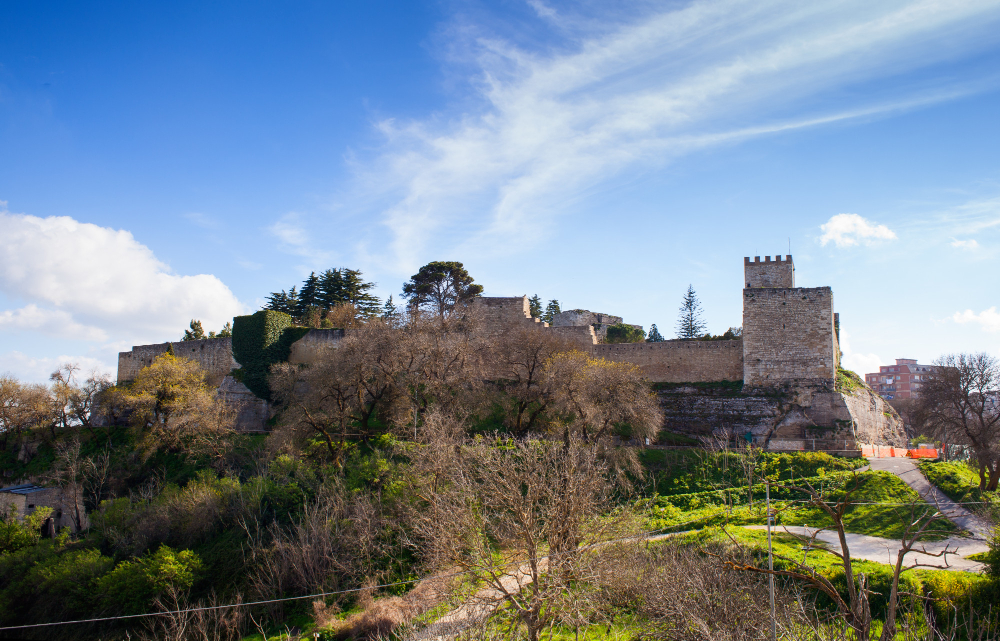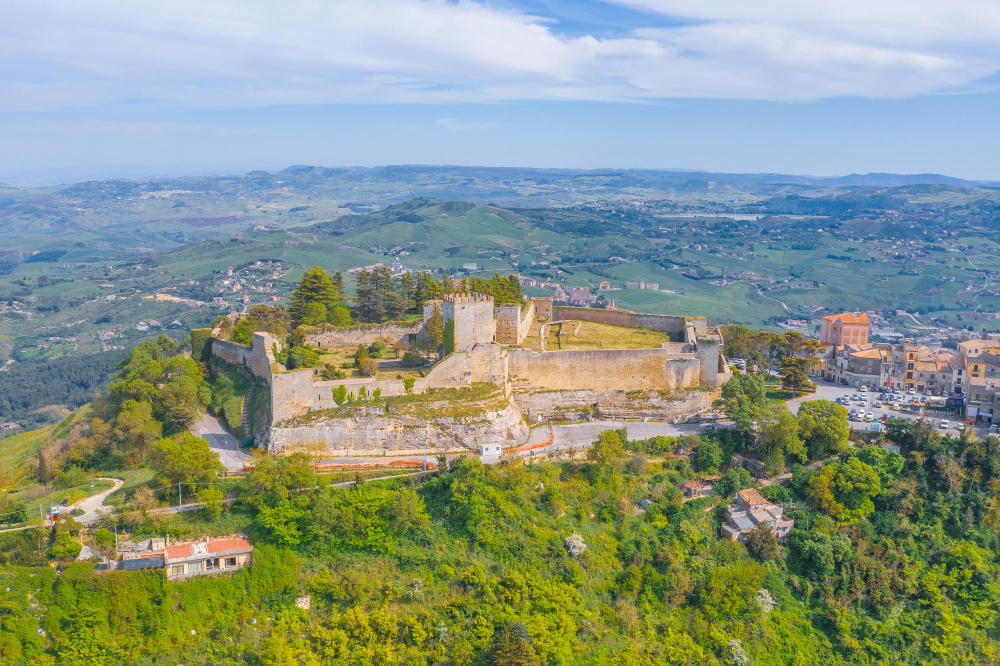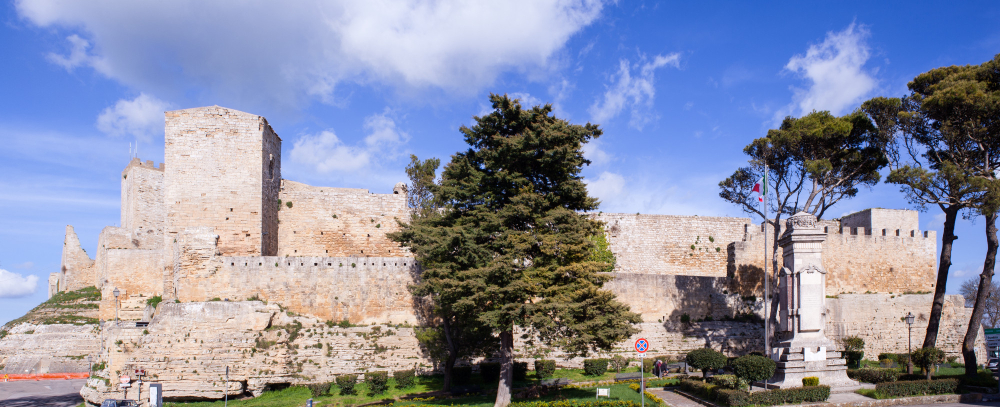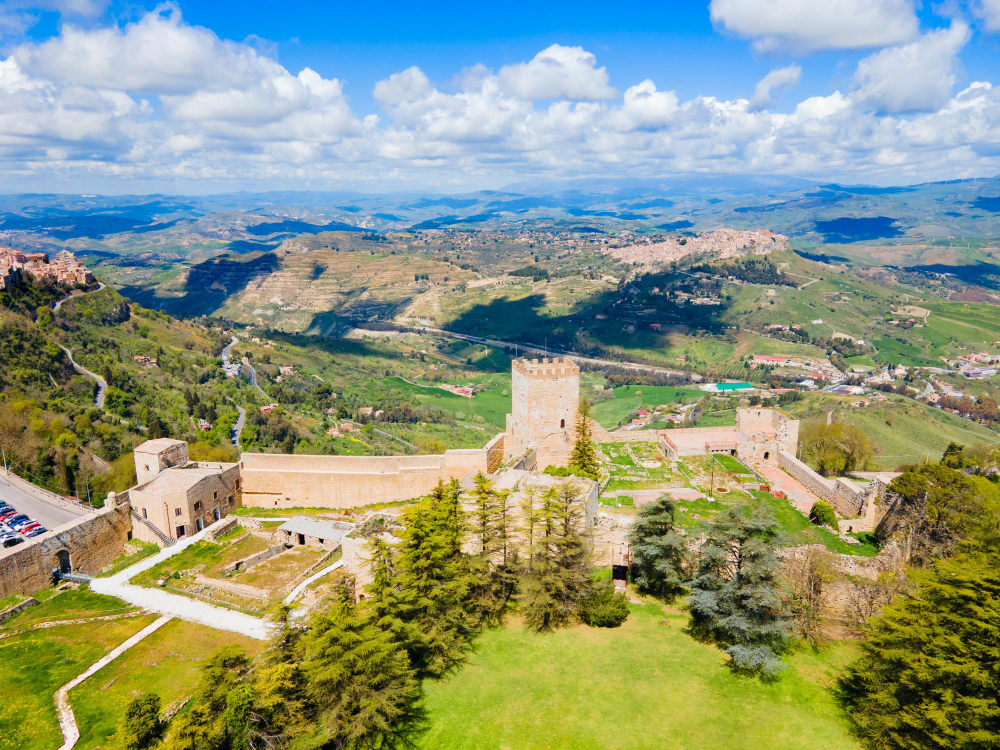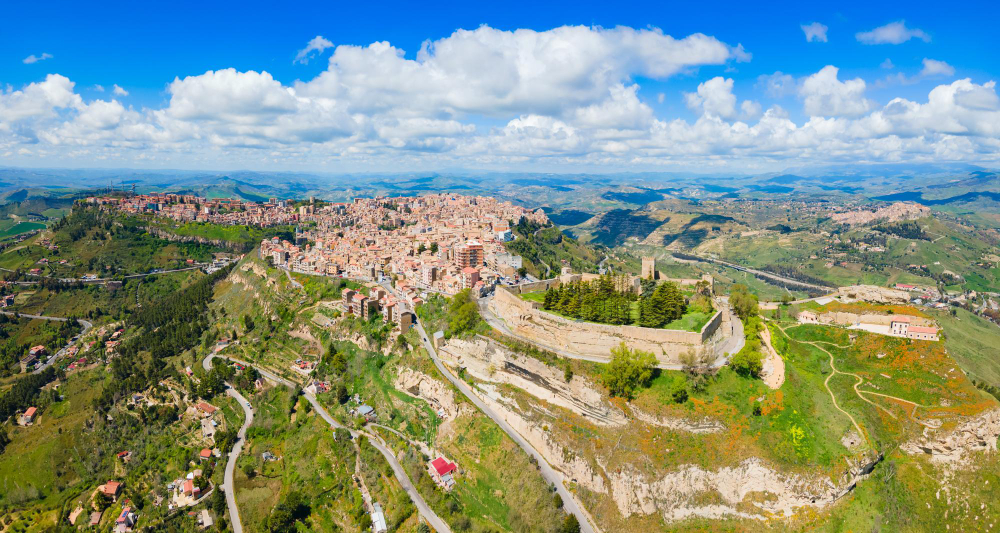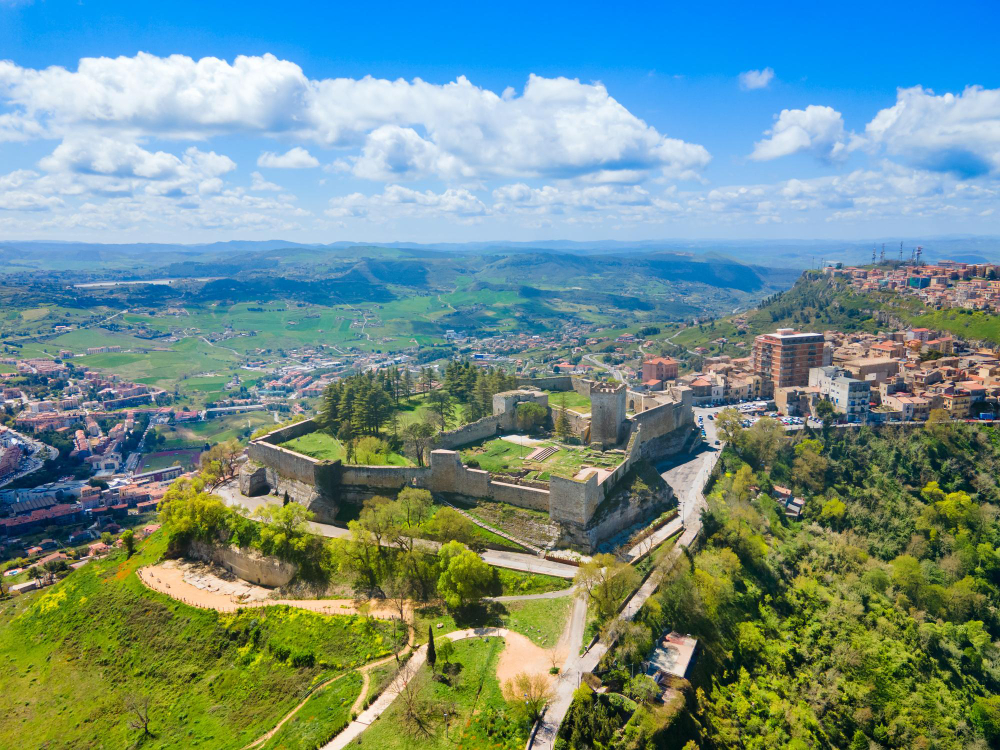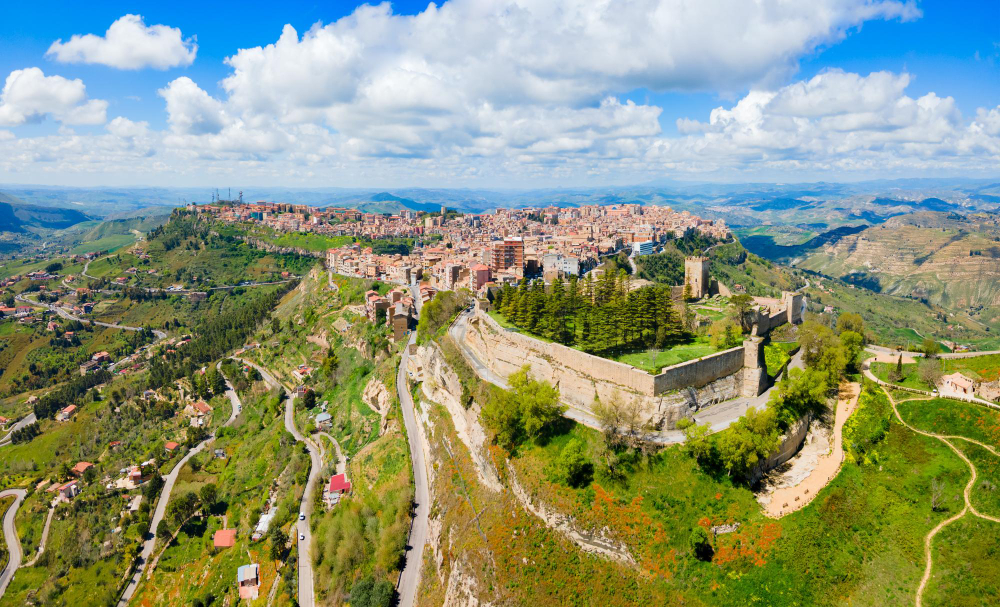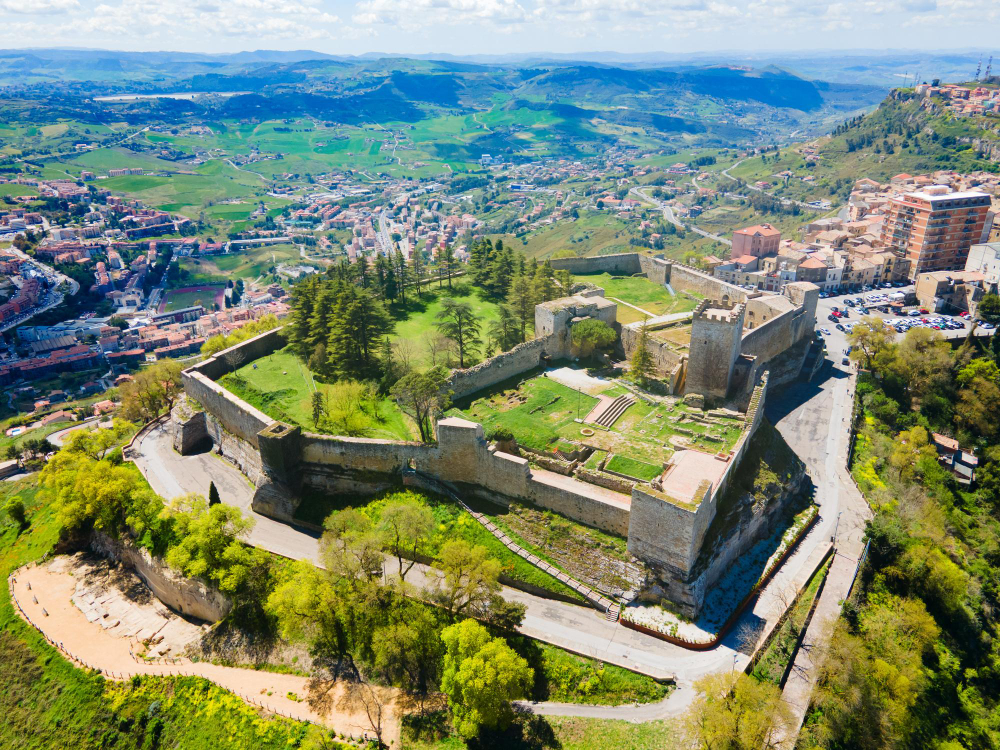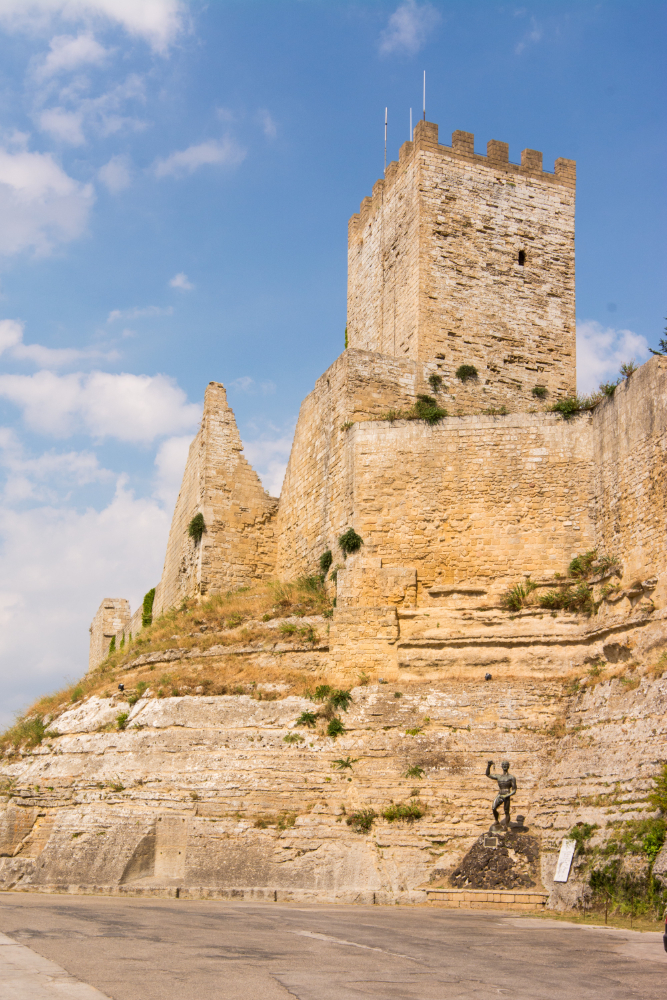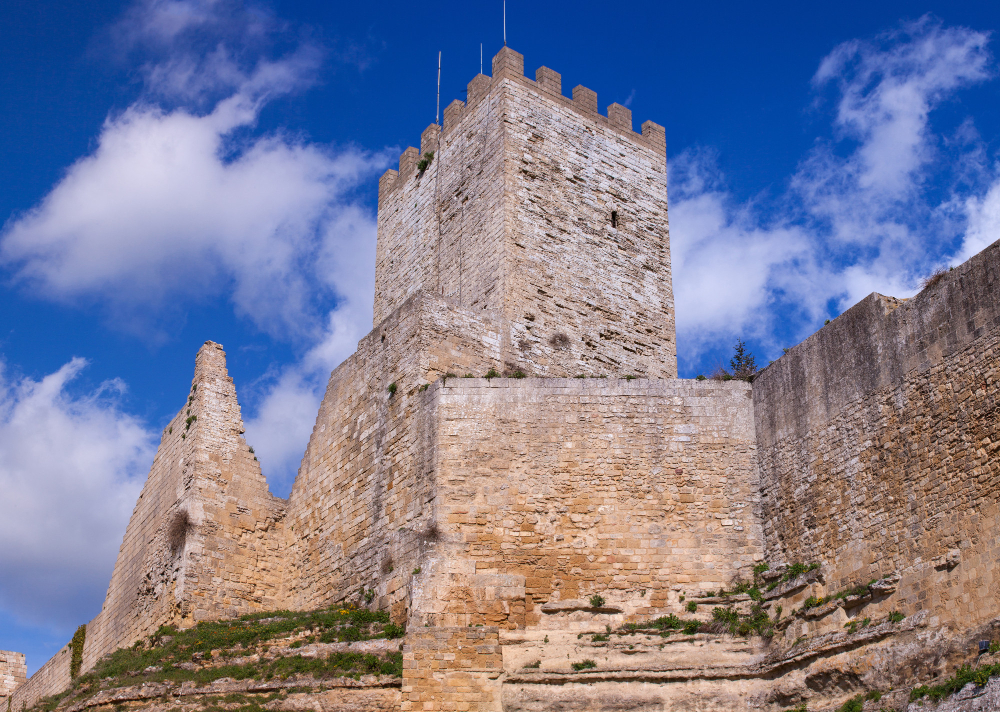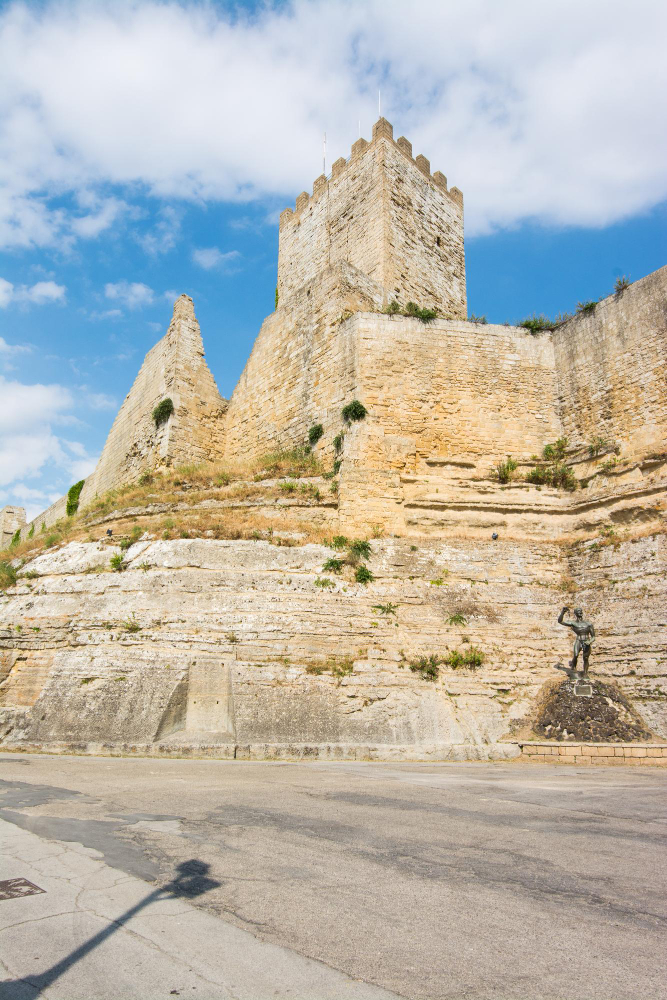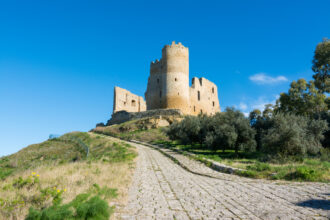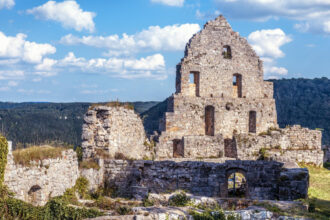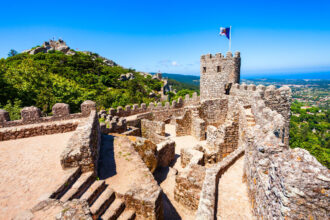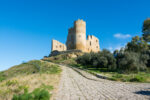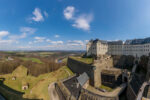

In the heart of Sicily, perched on a mighty rock above the town of Enna, stands the Castello di Lombardia – one of the island’s largest and most significant castles. The sprawling castle complex, which once played a key strategic role, now attracts not only history enthusiasts but also captivates visitors with its impressive architecture, spectacular location and the rich legends that surround it. This article explores the fascinating history of the Castello di Lombardia, its architecture and significance, as well as the cultural context that makes this fortress a historical gem of Sicily.
Historical Origins and Naming – The origins of the Castello di Lombardia are deeply rooted in Sicily’s eventful history. Although Frederick II of Hohenstaufen is often cited as the castle’s builder, there is a degree of uncertainty surrounding this attribution: archaeological evidence suggests that the fortress was built on the ruins of an older Arab fortification. In the Middle Ages, the area around Enna was a focal point of various cultural and military influences, including those of the Arabs, the Normans and, later, German rulers. The name ‘Lombardia’ dates back to Roger I, a Norman commander who conquered Sicily in the 11th century. Roger commanded Lombard mercenary troops here, and it is from their origins that the castle’s unusual name is derived. This connection strikingly illustrates the fusion of different cultures that shaped Sicily over the centuries.
Strategic location – majestic and impregnable – The Castello di Lombardia lies on the outskirts of Enna at an altitude of around 980 metres, making it one of the highest castles in Sicily. The complex is situated on a rugged rock face that offered natural defensive advantages. Only the western side of the rock face is accessible, which made any attack an extremely difficult task: Attackers were forced to advance across the inhospitable terrain without cover, rendering the castle virtually impregnable. The strategic importance of the fortress was particularly evident in the 13th century. In 1232, Frederick II used the Castello di Lombardia as a base from which to crack down on internal unrest and rebels. This military function underlines just how important the castle was for controlling the central part of Sicily.
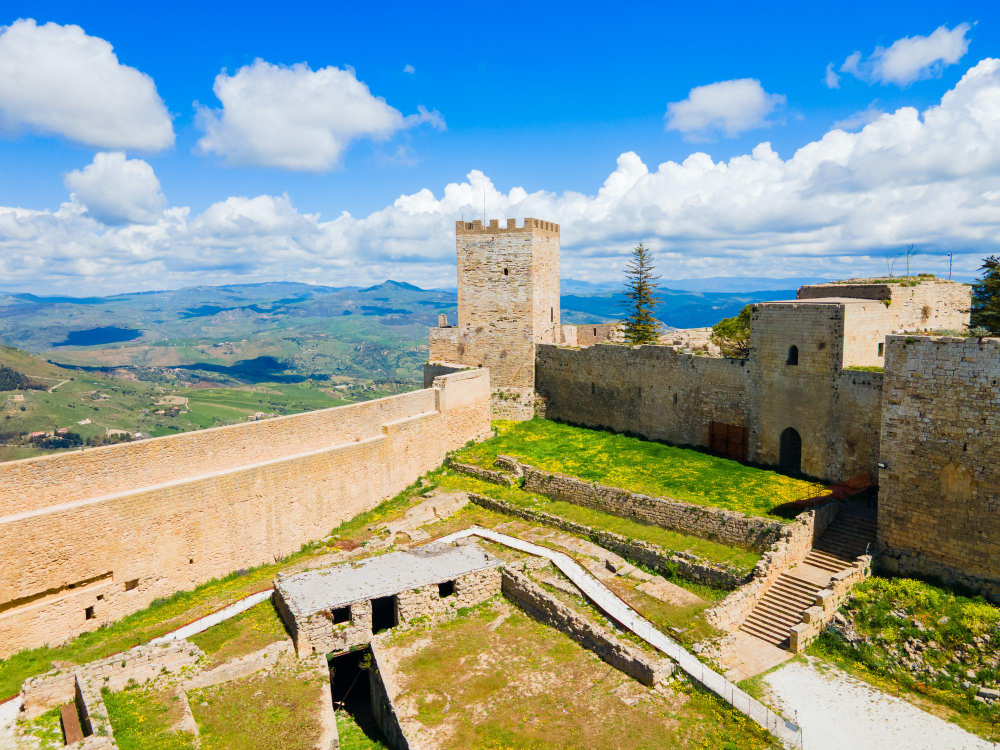
Architecture and Structure – one of Europe’s largest fortresses – The Castello di Lombardia covers an area of around 27,000 square metres, making it one of the largest surviving medieval castles in Europe. The original structure had around 20 towers; six of which remain today. The sturdy walls, impressive defences and large courtyards bear witness to a masterful urban and military design. The courtyards are considered particularly remarkable as they have been preserved in their entirety. The largest courtyard is now used as an open-air theatre and serves as a stage for cultural events that attract visitors from all over the world. From the platform of the Torre Pisana – the castle’s tallest tower – a breathtaking panoramic view unfolds. To the east, one can admire the Mount Etna massif, Europe’s highest active volcano, whilst to the north the mountain ranges of the Monti Nebrodi and Monti Madonie are visible. To the south, on a clear day, the view even extends as far as the Mediterranean Sea, offering a fascinating vista across the landscape.
Power struggles and political significance in the Middle Ages – In the 14th century, the Castello di Lombardia became the focus of rivalry between two Sicilian noble families, namely the Alagona and the Chiaramonte. These families sought to gain possession of the castle, as it held the key to control over central regions of the island. The disputes over the castle reflect the political tensions of that era, when power in Sicily was contested between local noble houses, royal claims and external powers. This episode illustrates the castle’s enduring significance over the centuries – not only as a military stronghold, but also as a symbol of political power and the exercise of authority.
The Rock of Demeter – Myth and Archaeological Heritage – Not far from the castle, situated at the foot of the complex to the north-east, lies the so-called Rock of Demeter or Rocca di Cerere. Even in ancient Greece, this site was a sacred place where the sanctuary of Demeter, the goddess of fertility, stood. Demeter was one of the most important deities in ancient mythology, responsible for agriculture, growth and fertility. The proximity of this place of worship to the castle demonstrates how different eras and cultures are interwoven in this region. Whilst the castle reflects the medieval military heritage, Demeter’s Rock points to a much older spiritual tradition. Archaeological finds attest to the significance of the sanctuary for the peoples who lived there and show that the site has played a central role for millennia.
A living monument to Sicilian history – The Castello di Lombardia embodies the many facets of Sicilian history – from its Arab roots, through the Norman conquerors, to the German emperors. As one of the largest medieval castles in Europe, the complex is not only an impressive example of military architecture but also a symbol of the island’s cultural richness. Its spectacular location at an altitude of almost 1,000 metres, its fortified construction and its rich mythical background make the castle a fascinating destination. Visitors can immerse themselves in Sicily’s history first-hand as they stroll through the courtyards, which come alive in summer with theatre performances, or enjoy the sweeping views from the Torre Pisana. Last but not least, its location near the ancient sanctuary of the goddess Demeter serves as a reminder that this place has inspired and protected people for millennia. The Castello di Lombardia thus remains a living testament to times when power, faith and culture merged in a unique way.