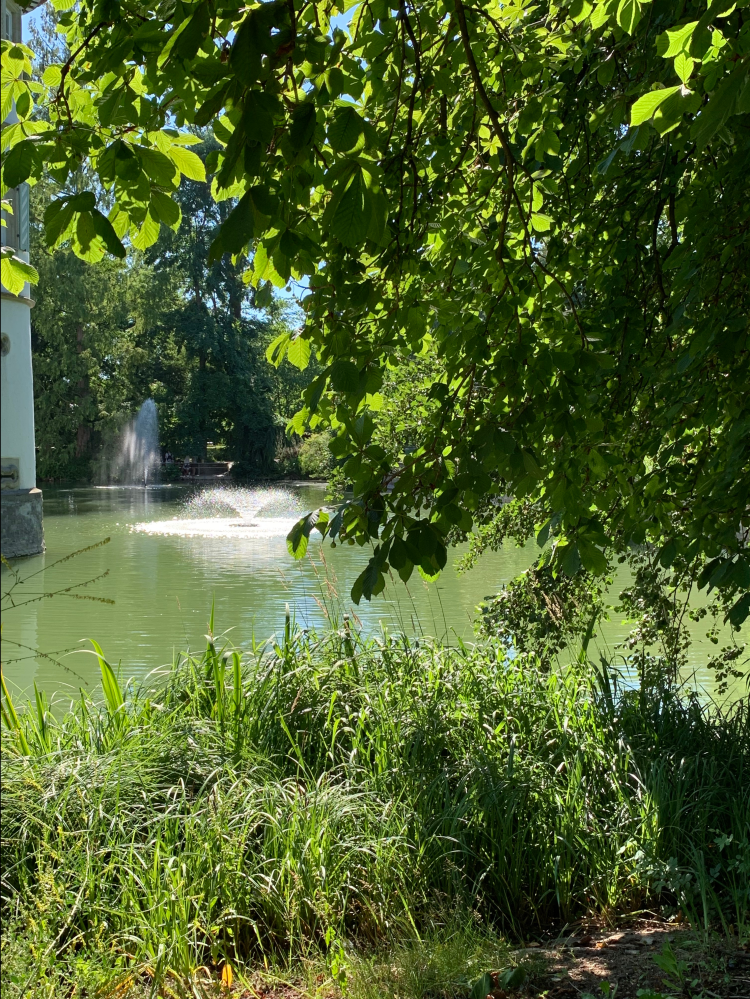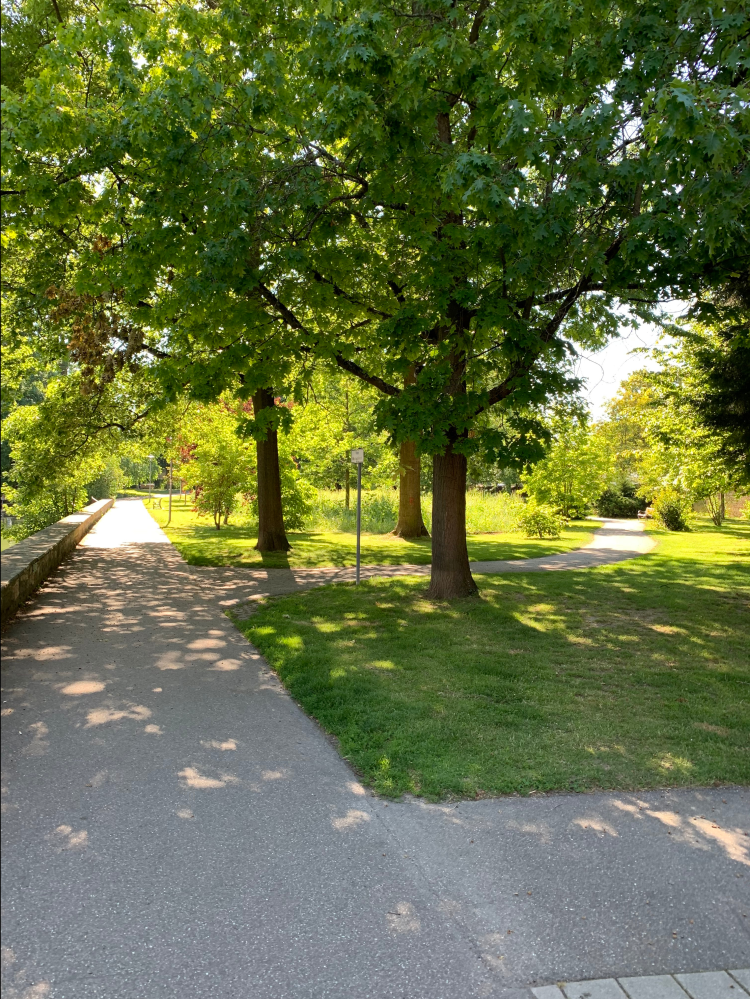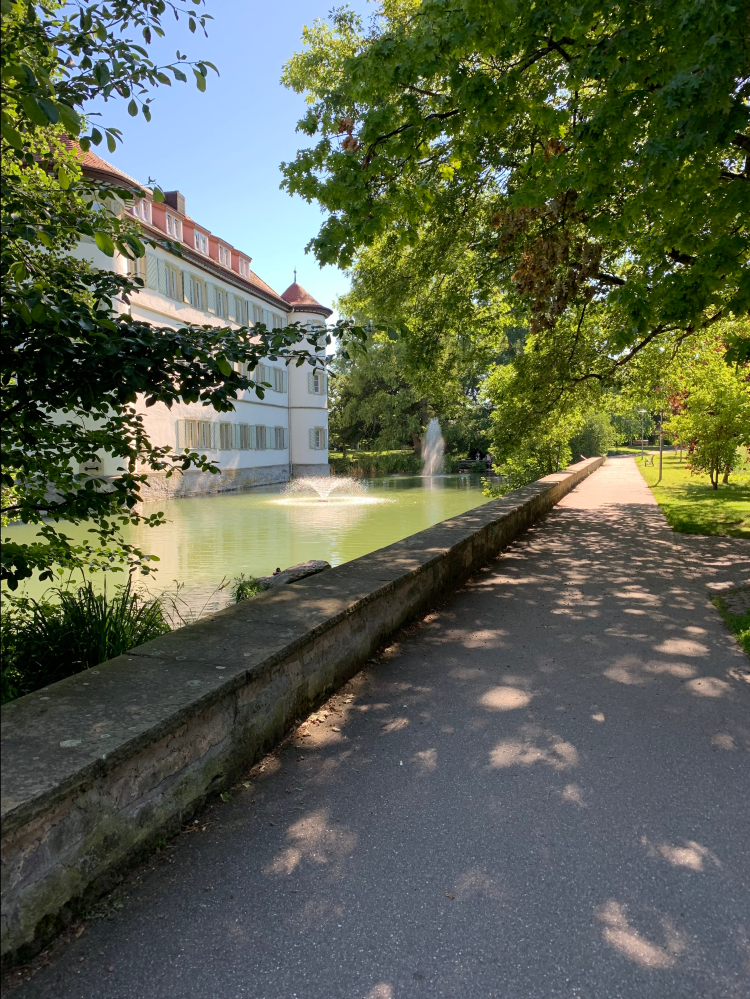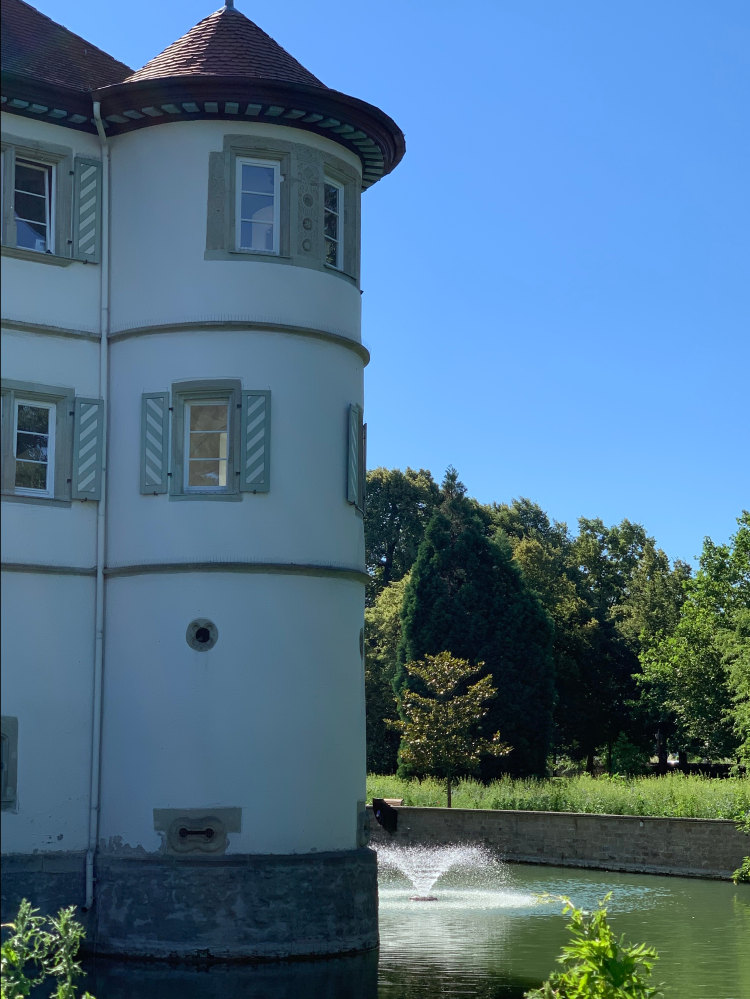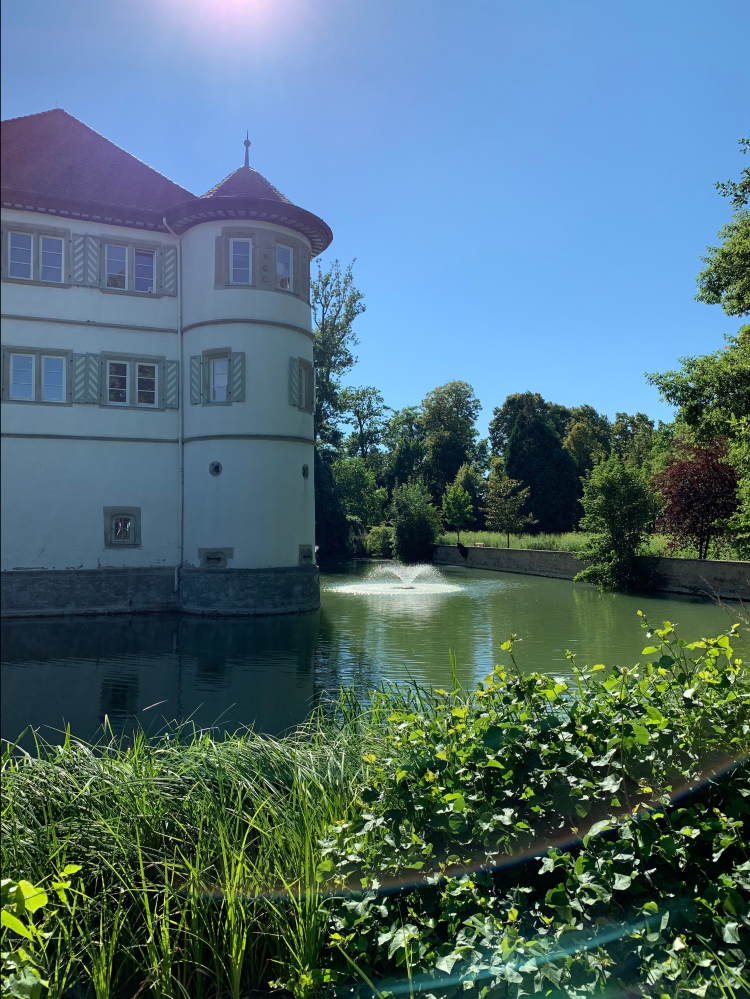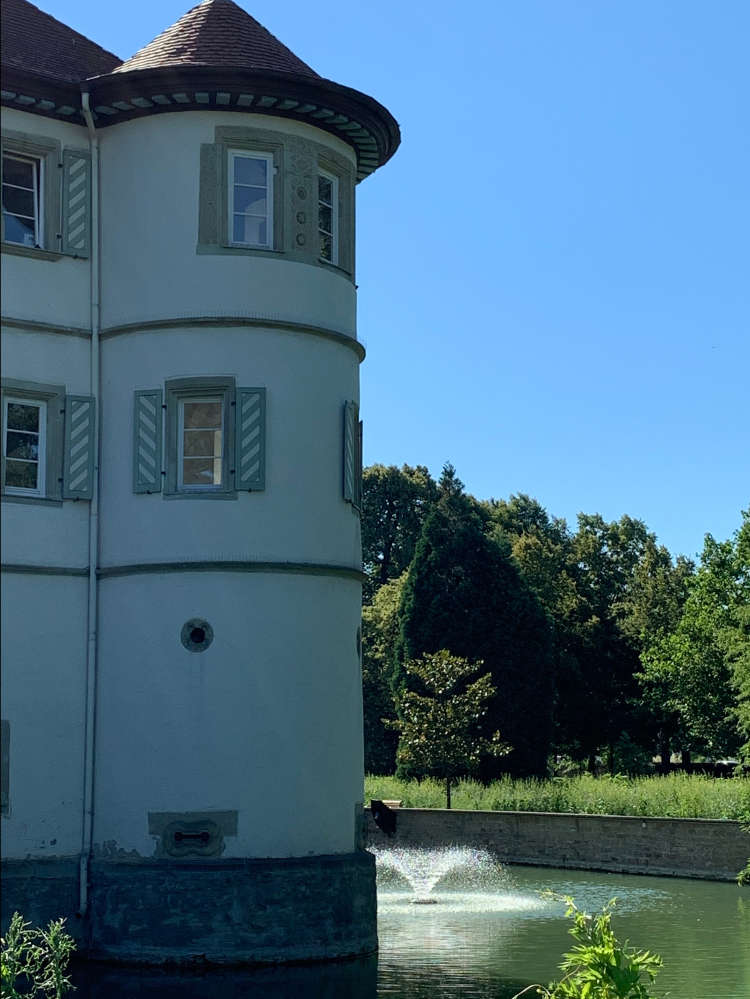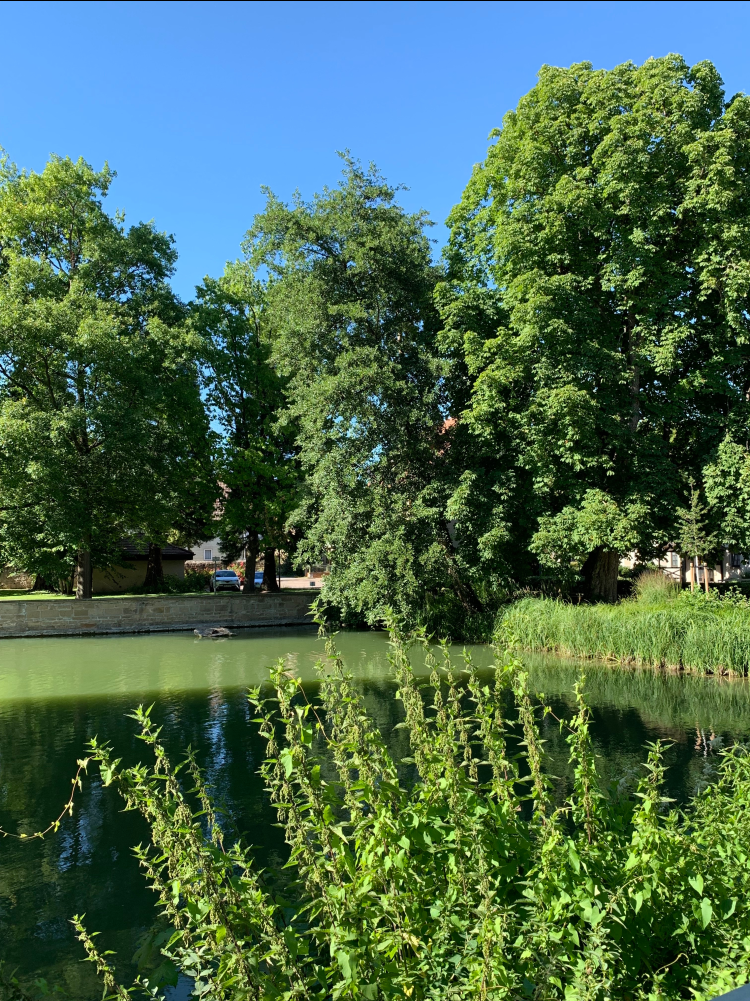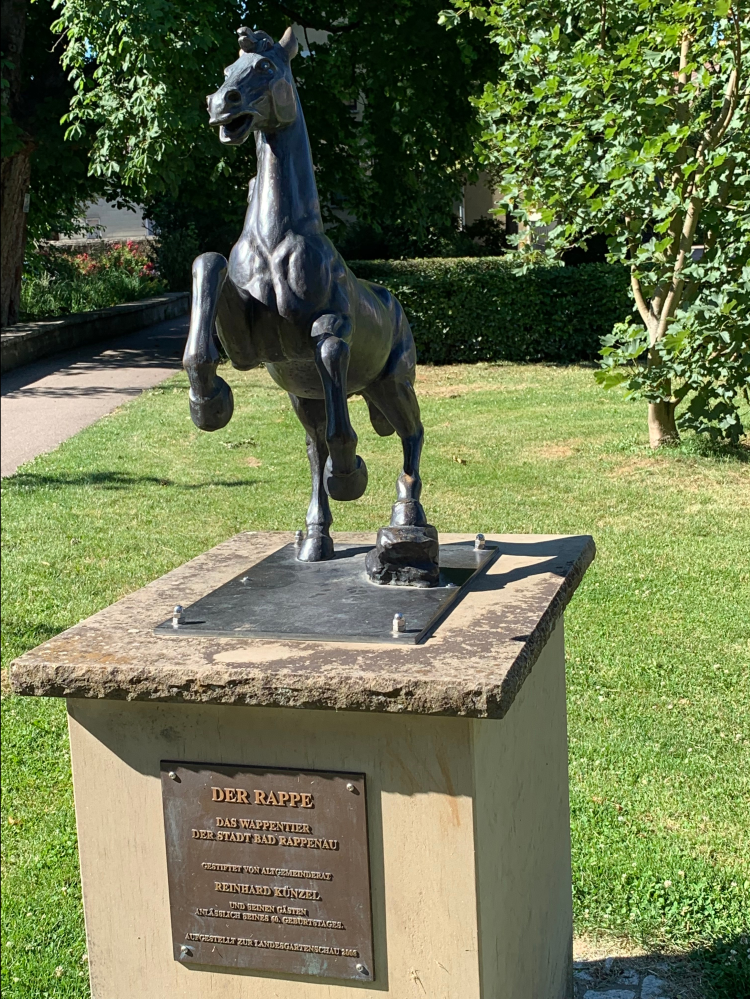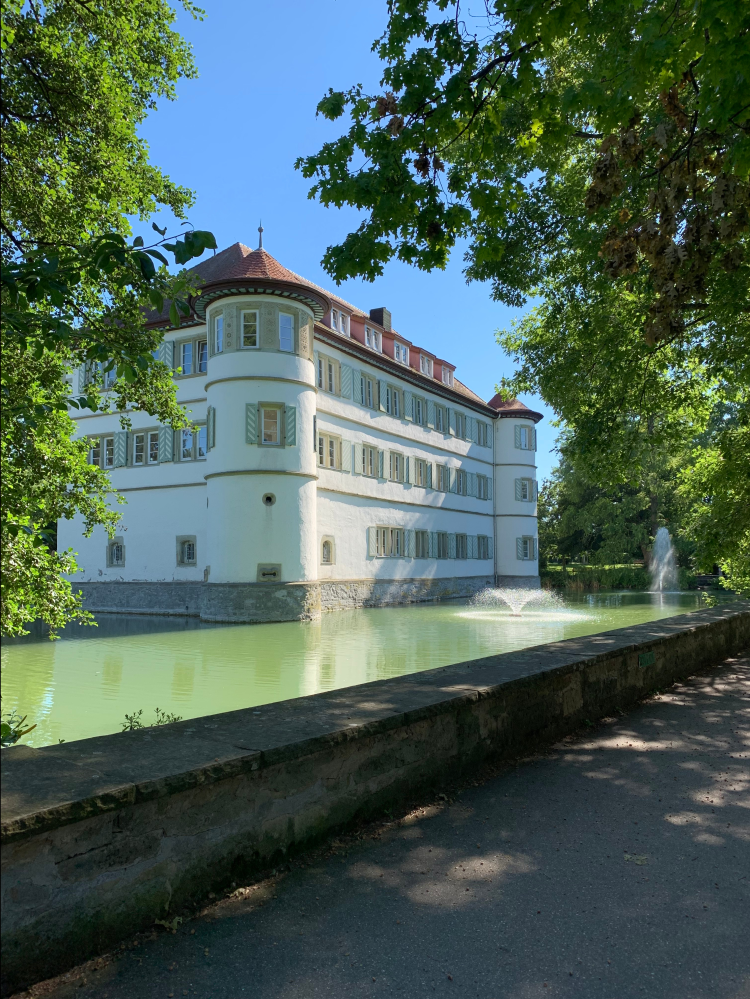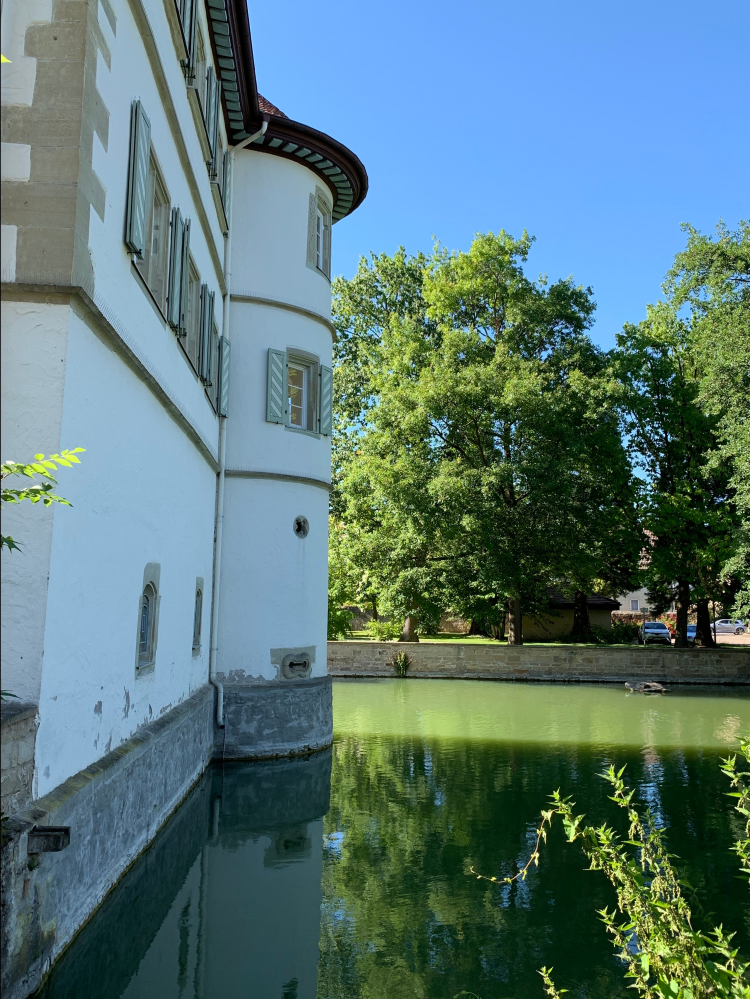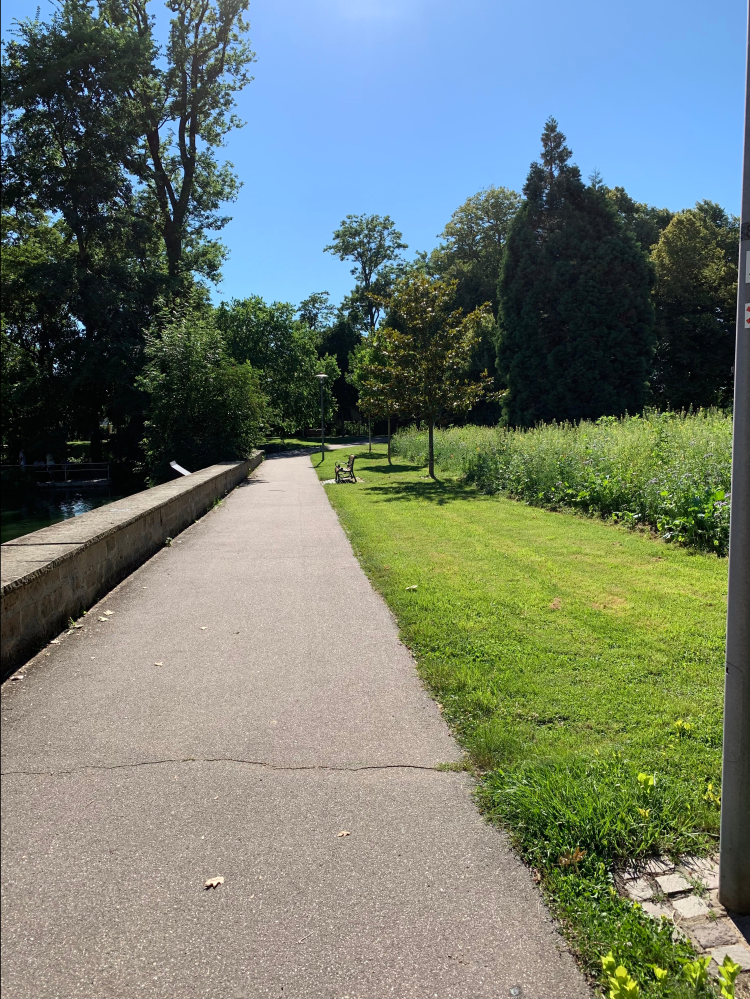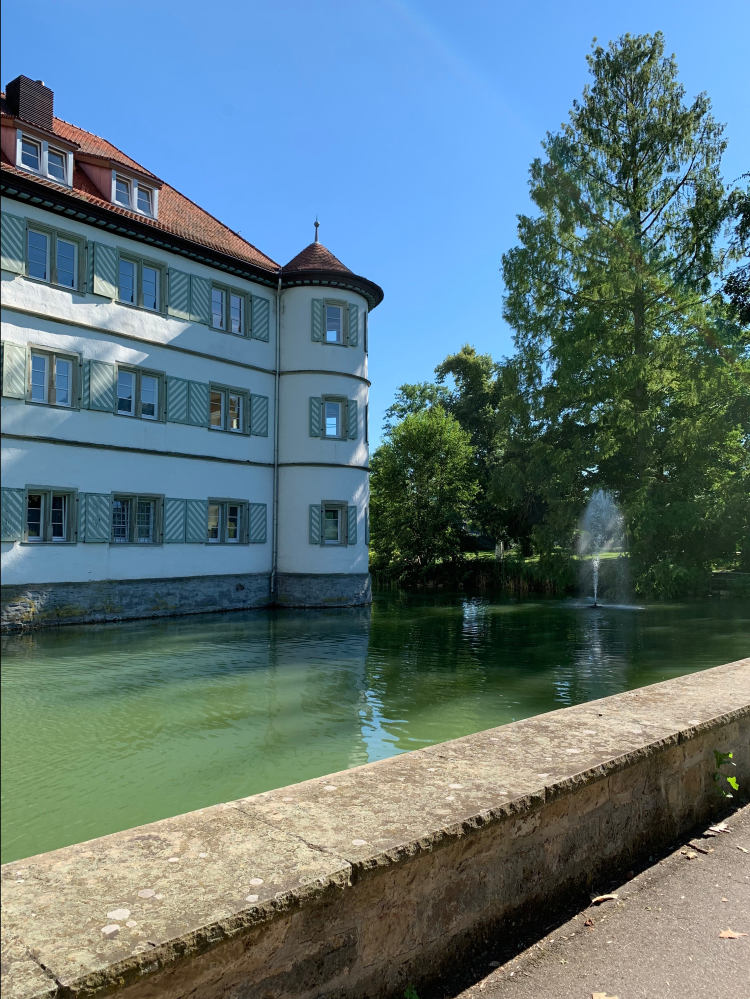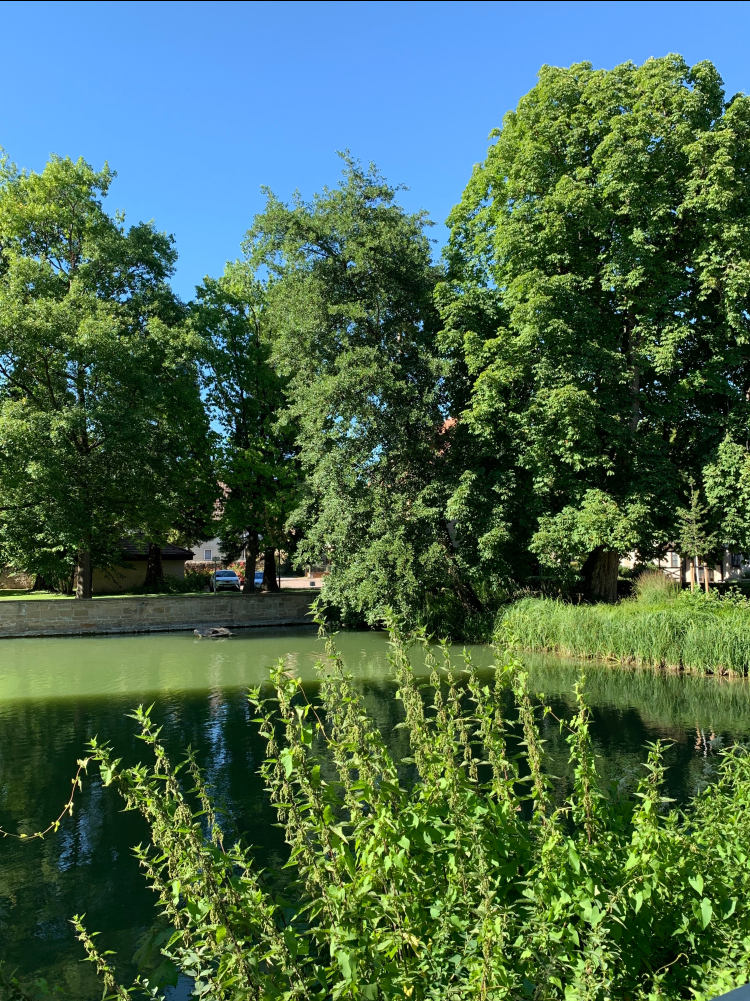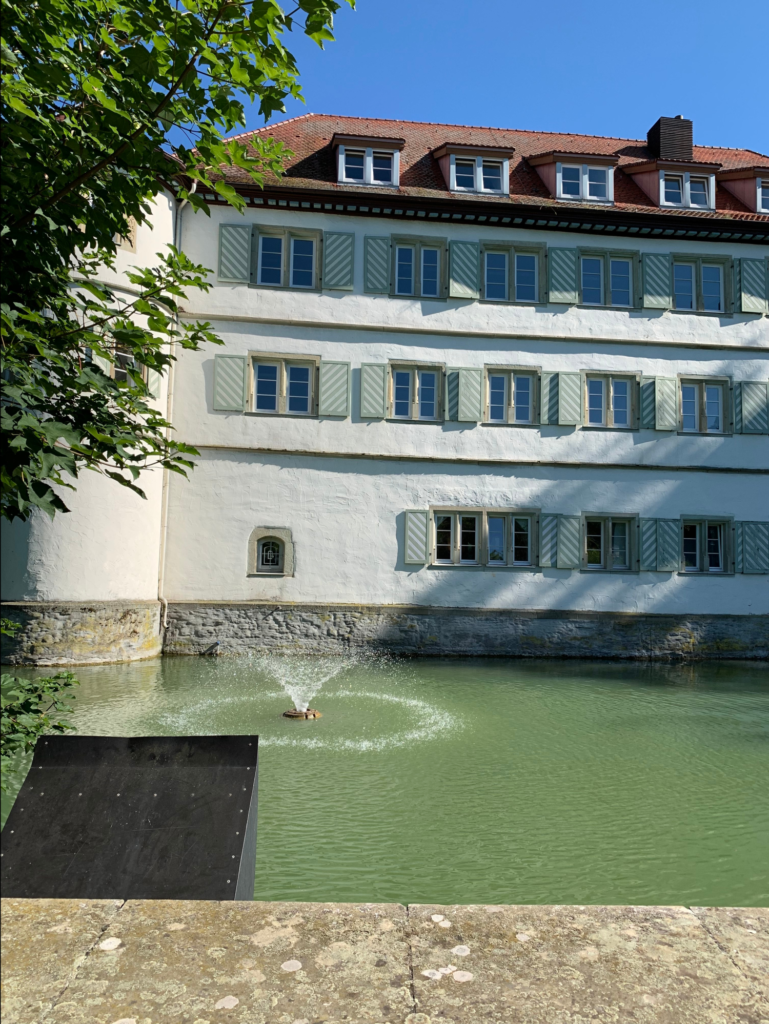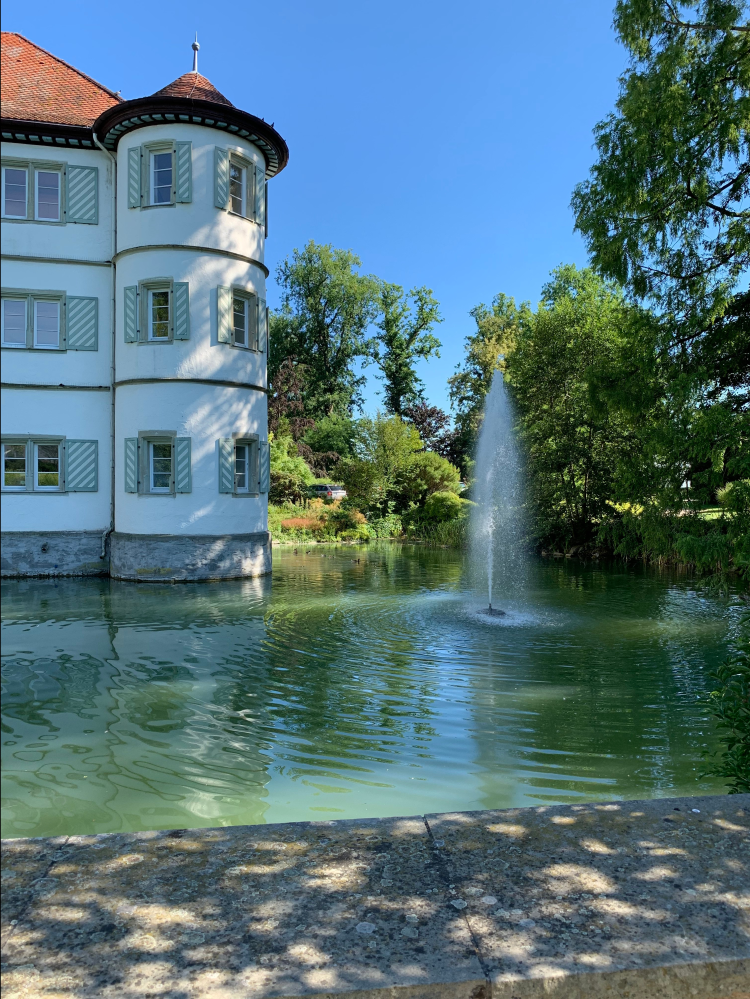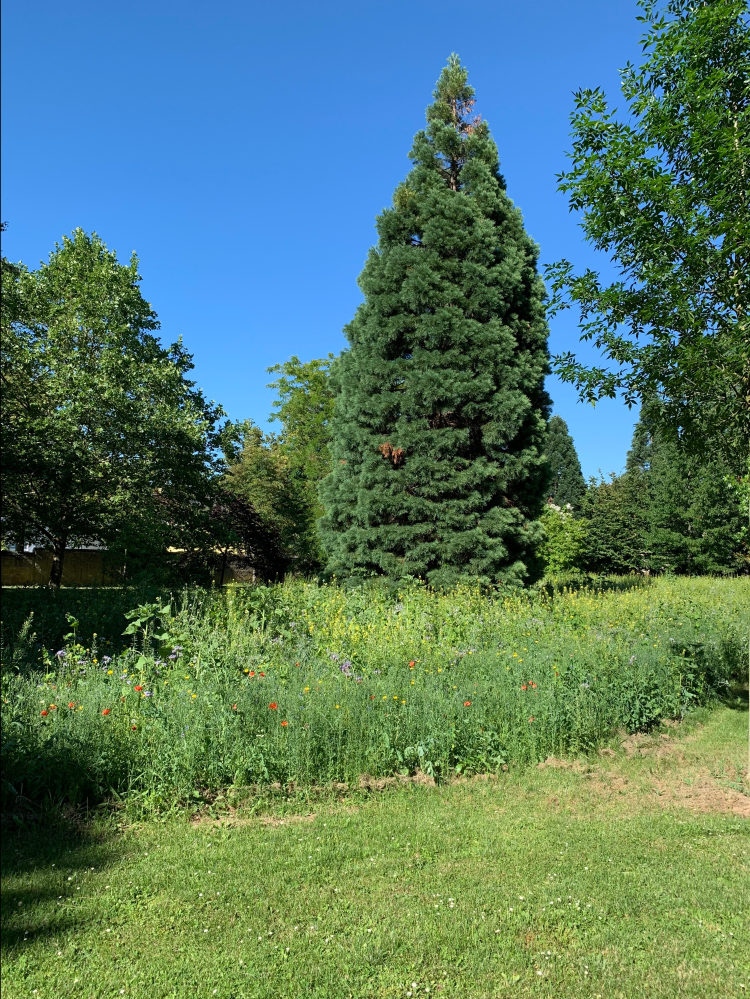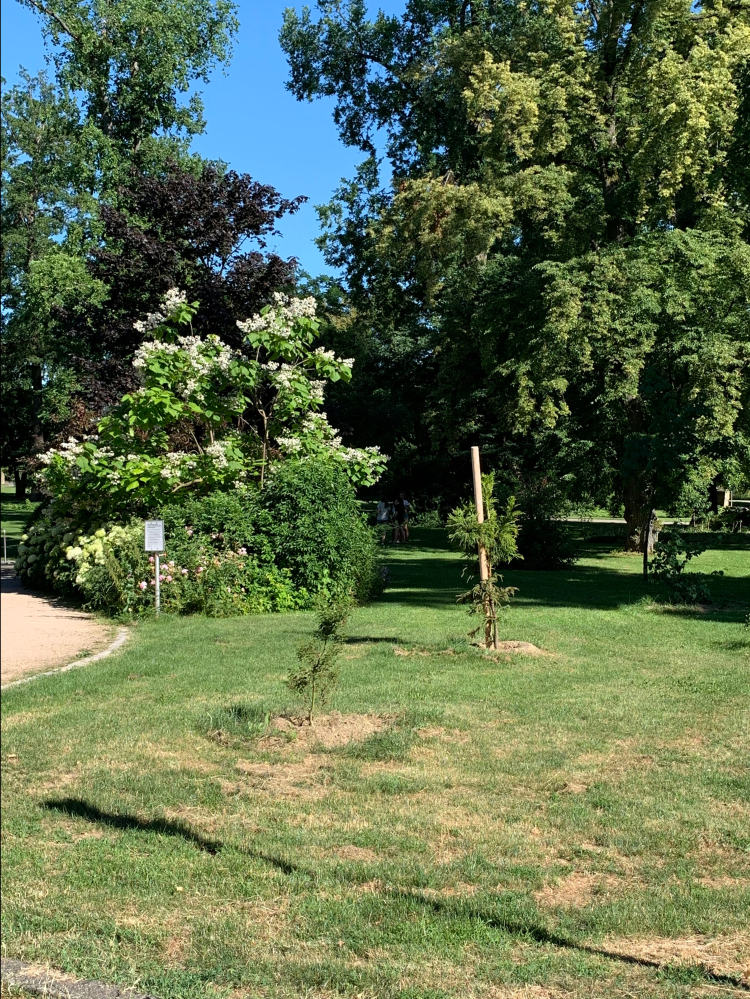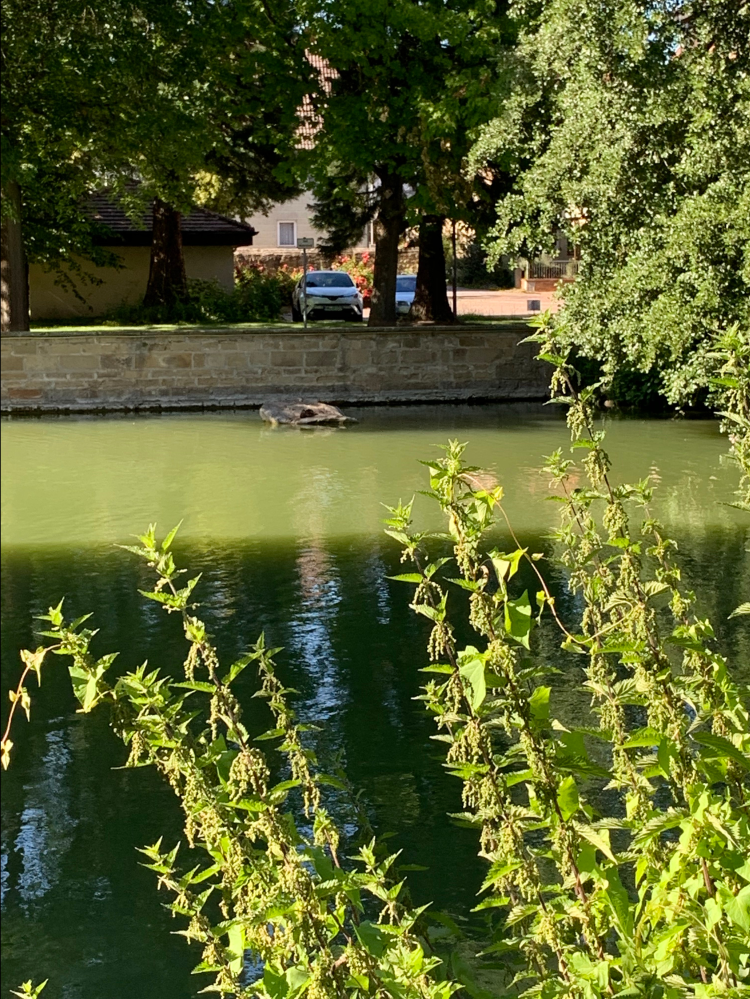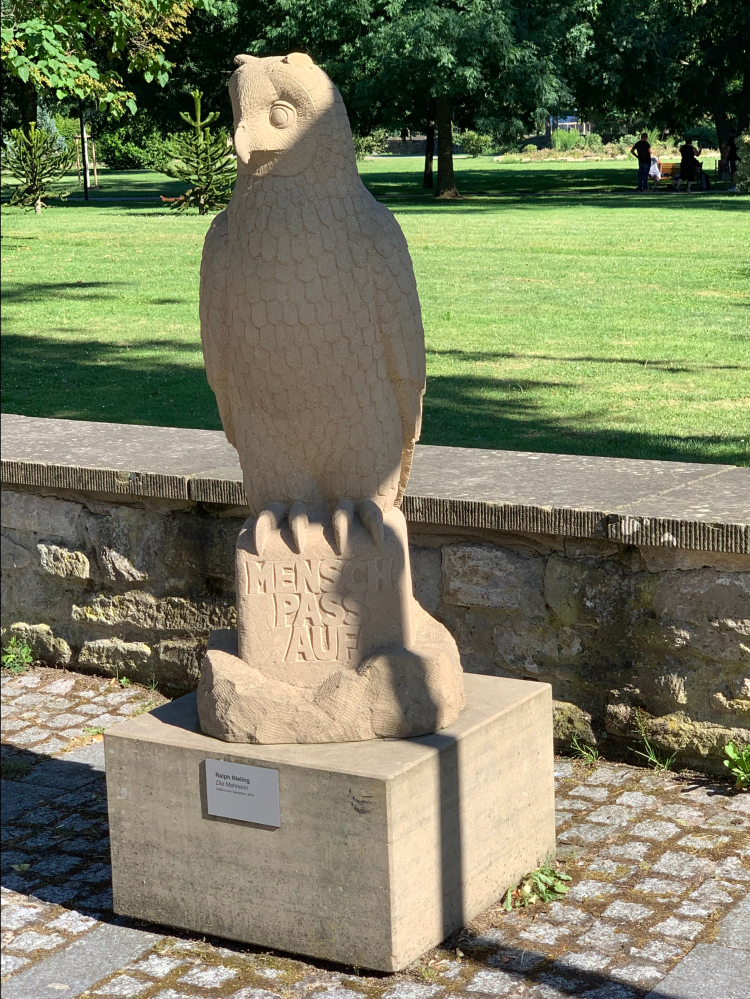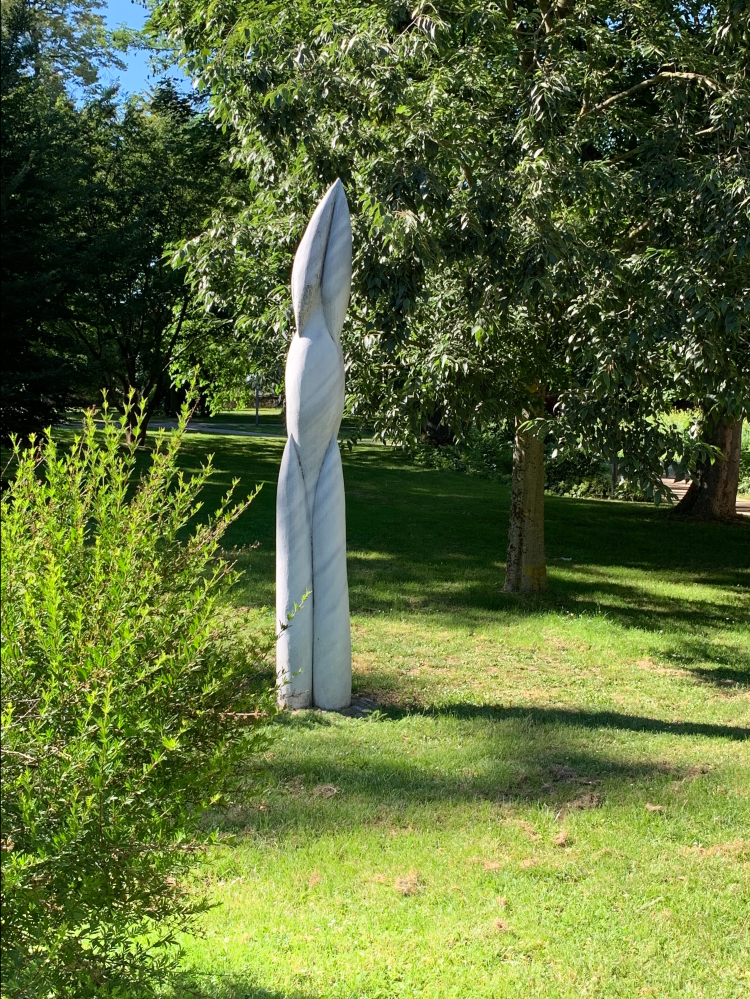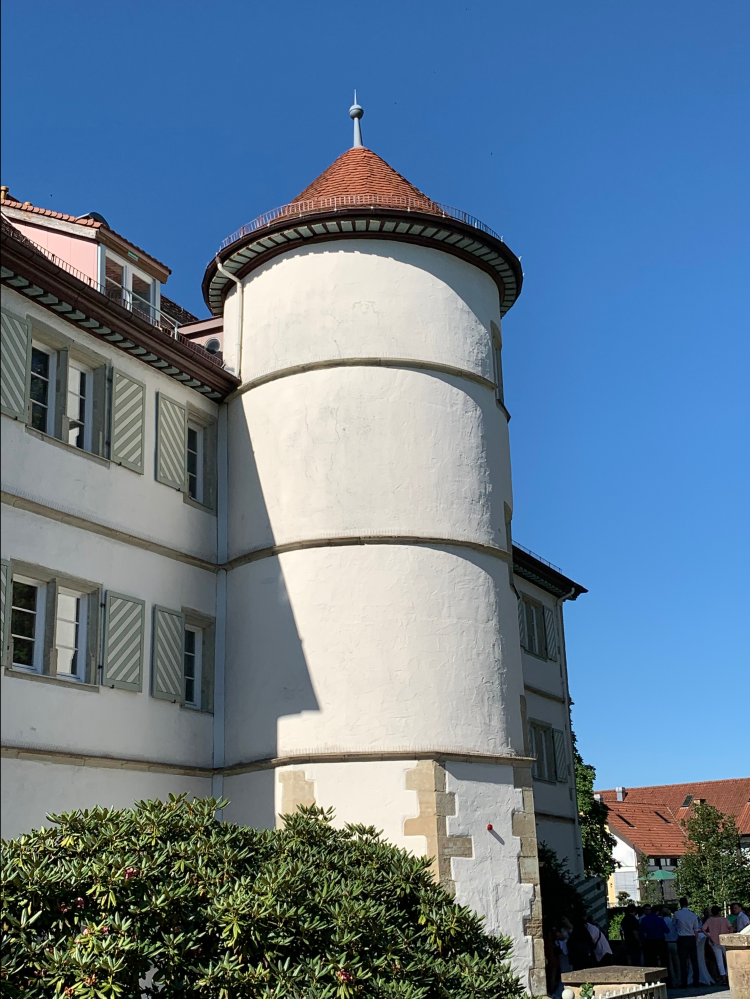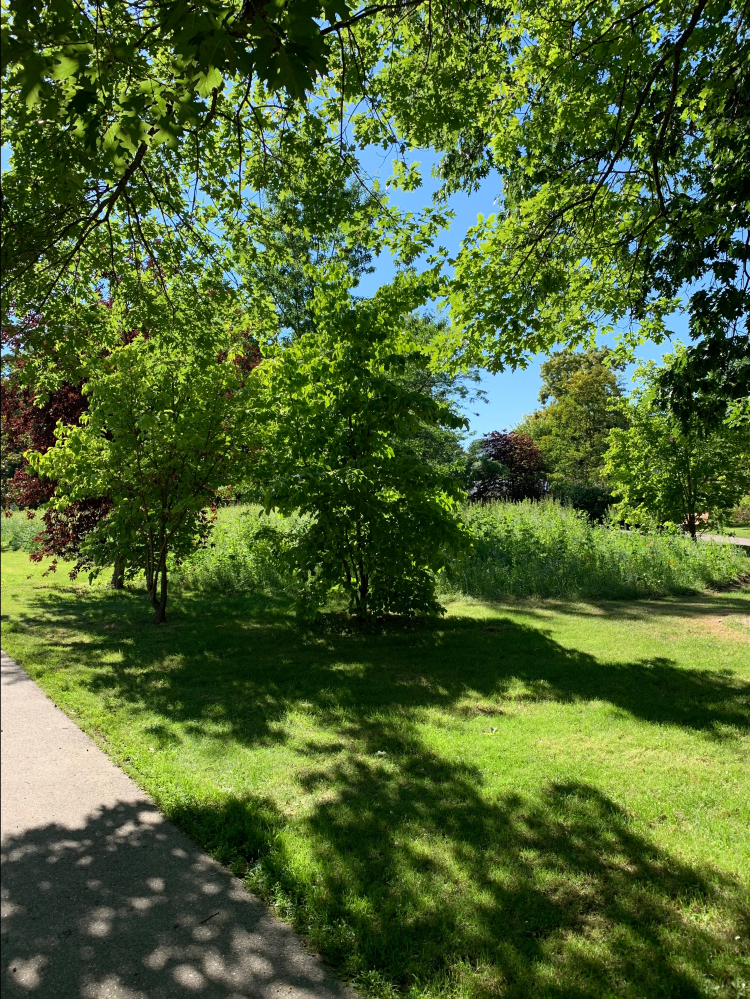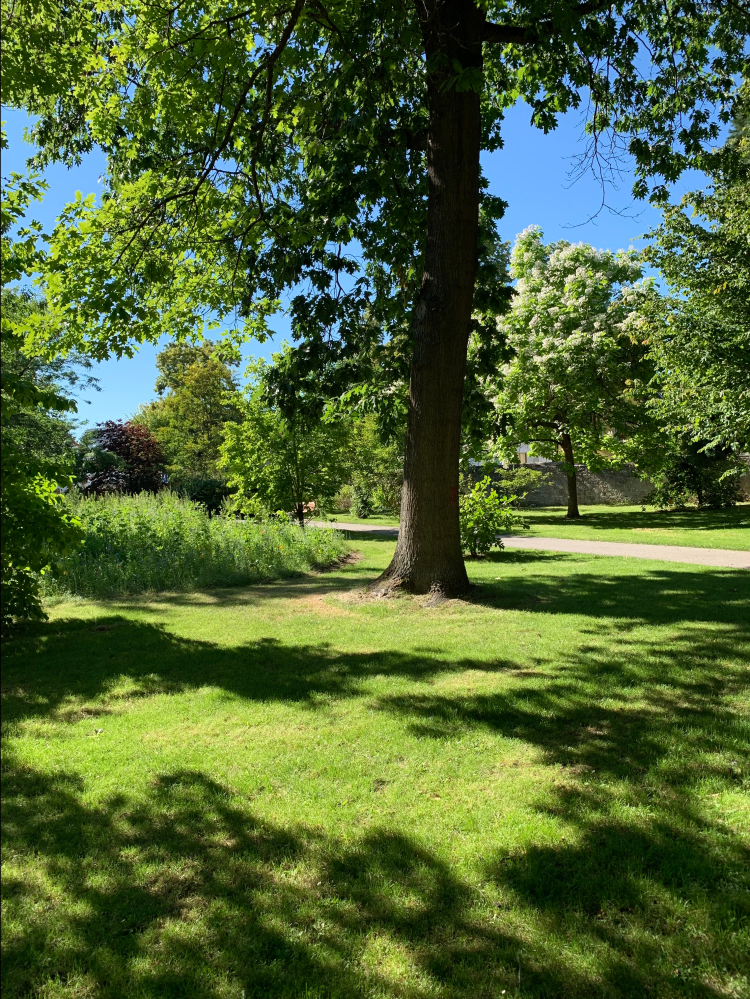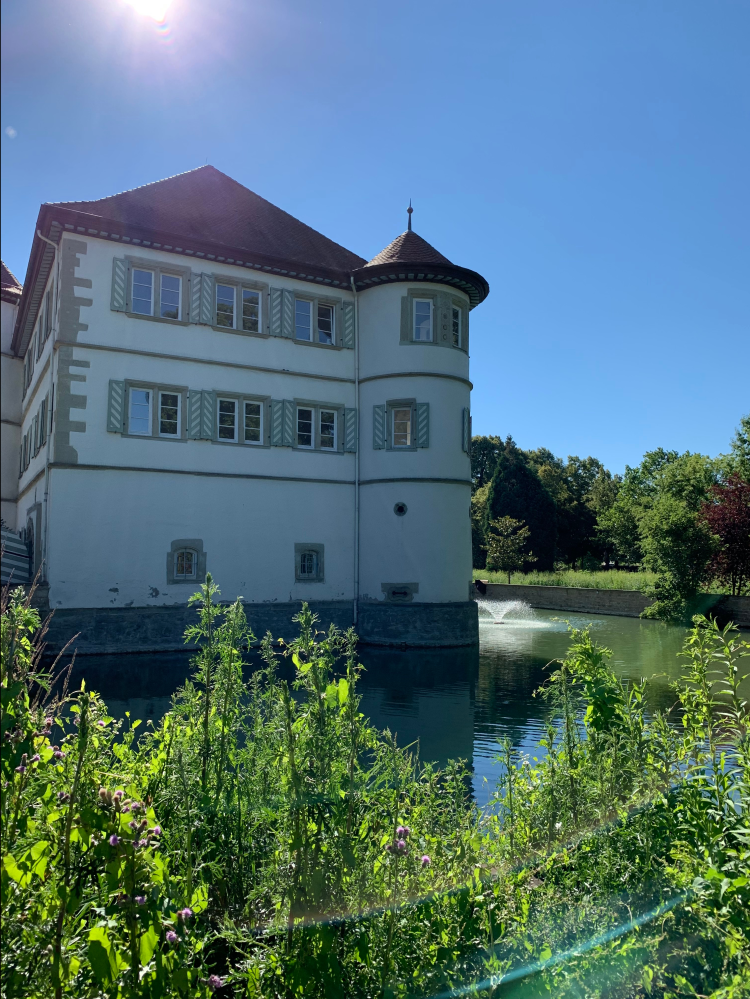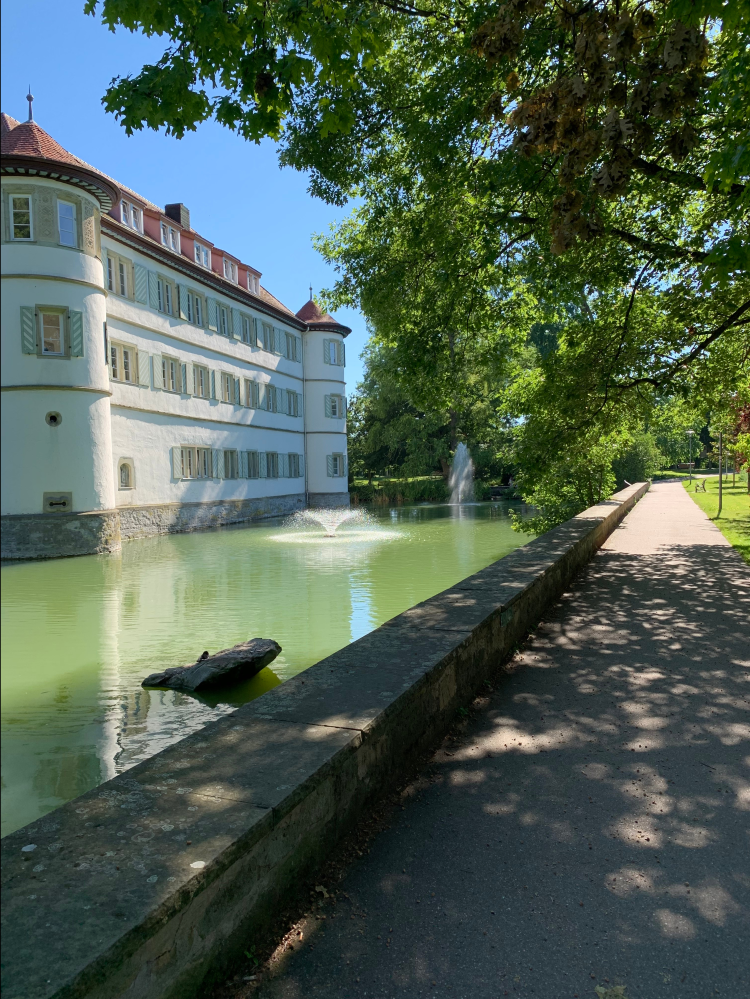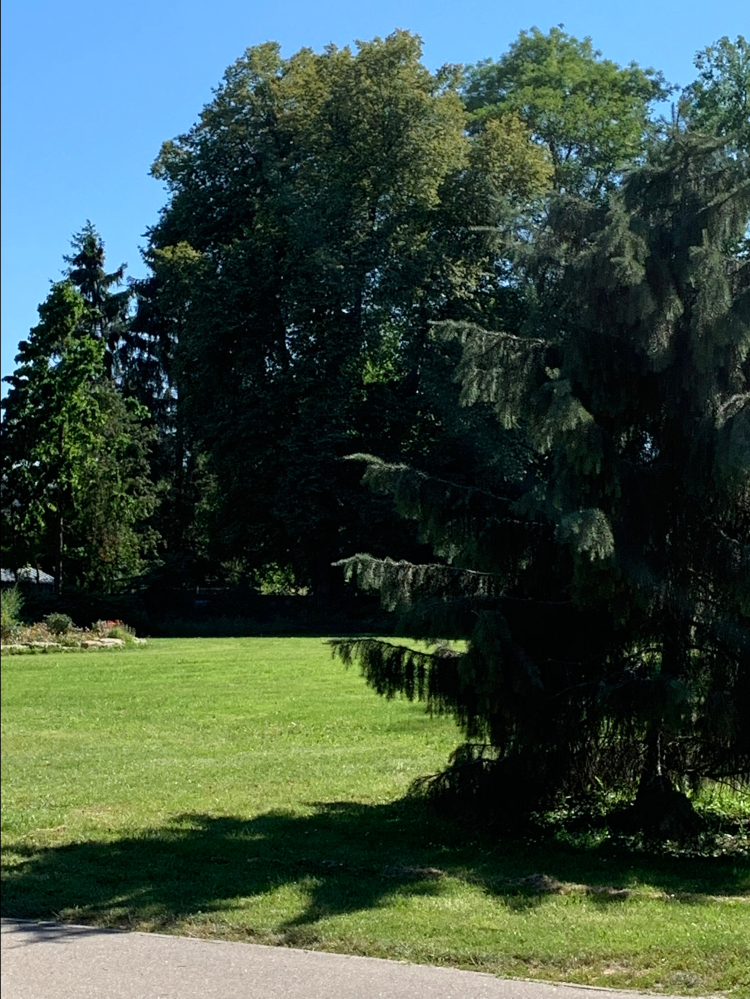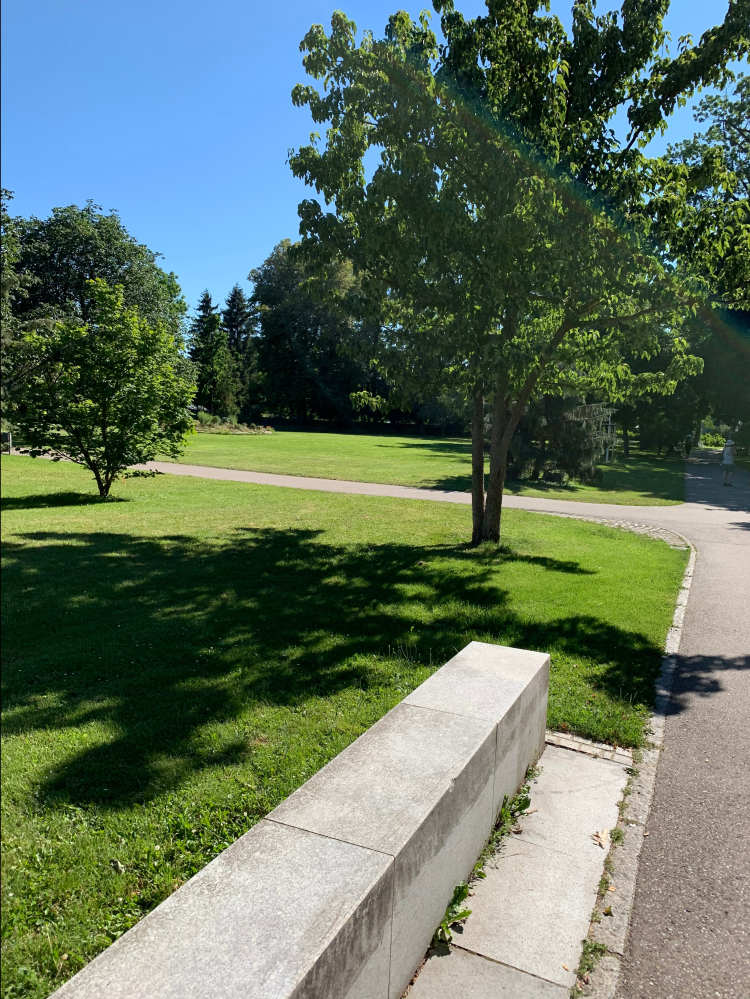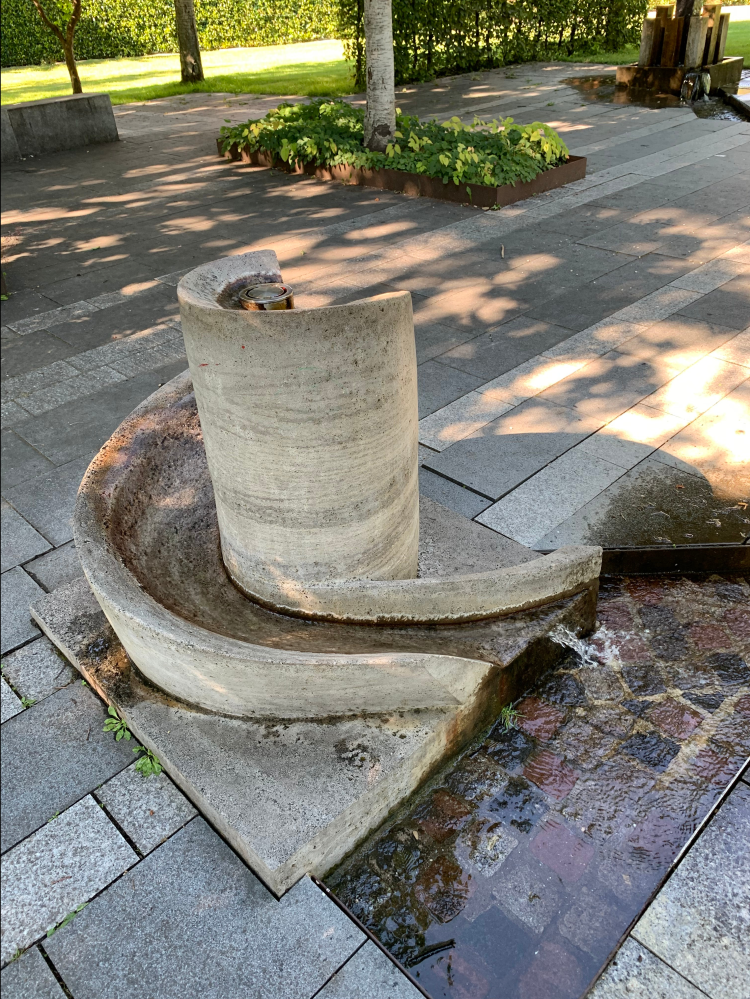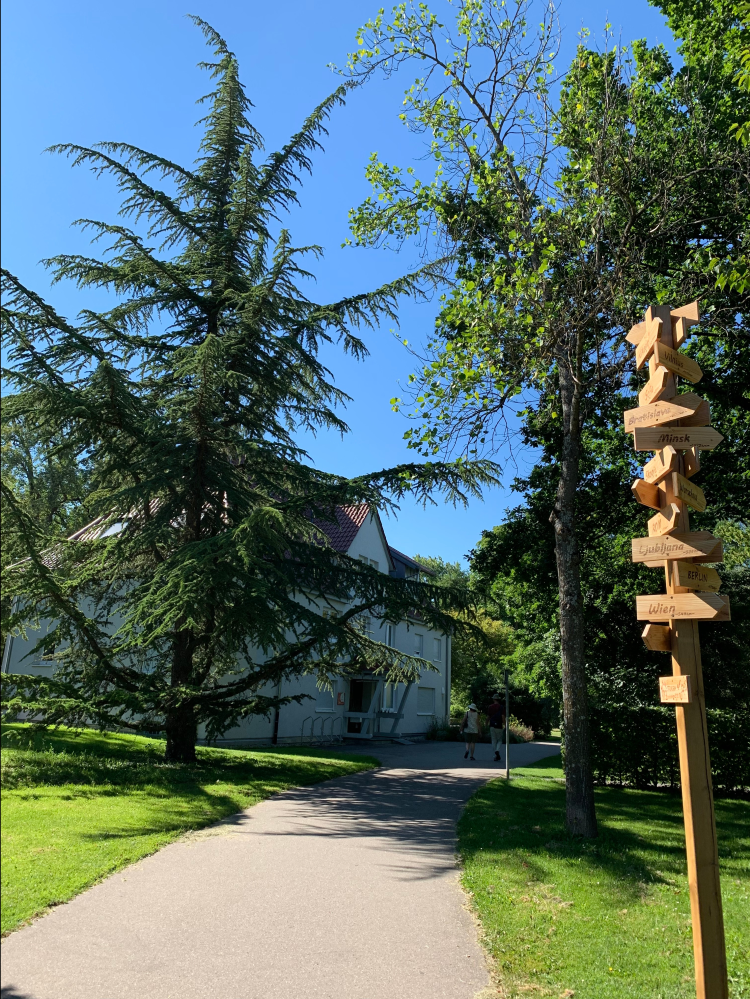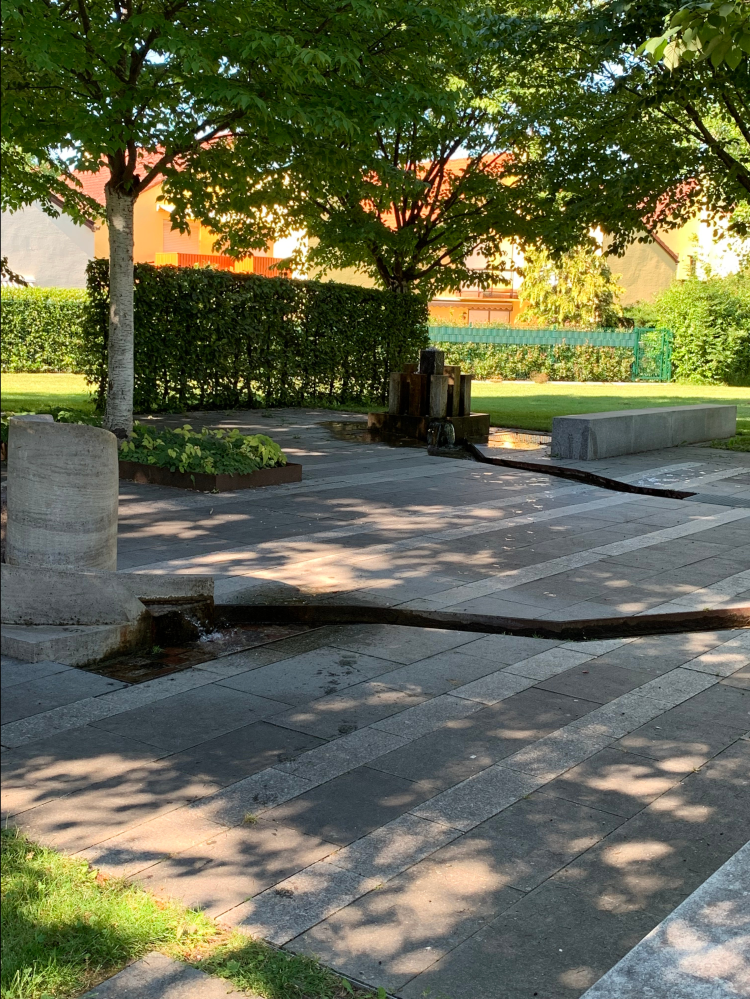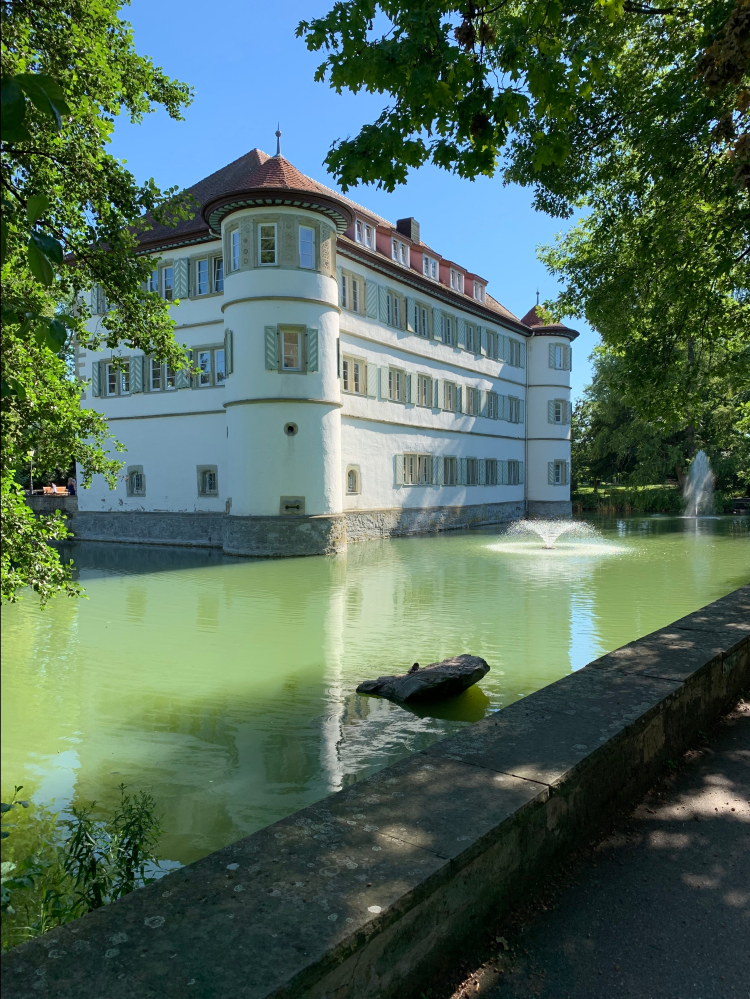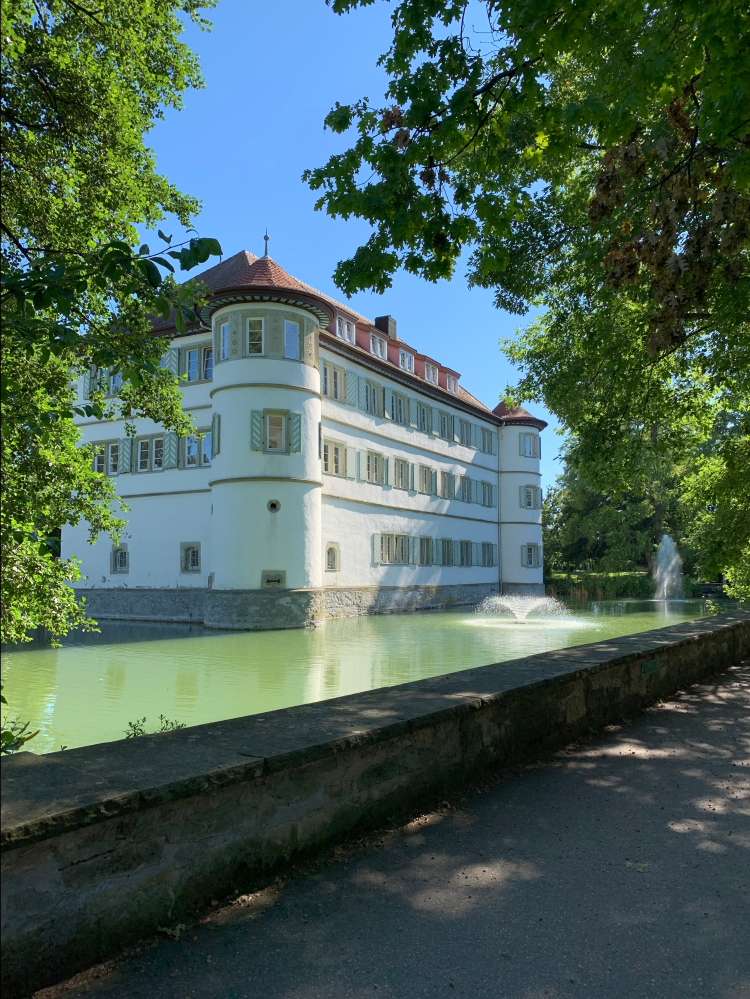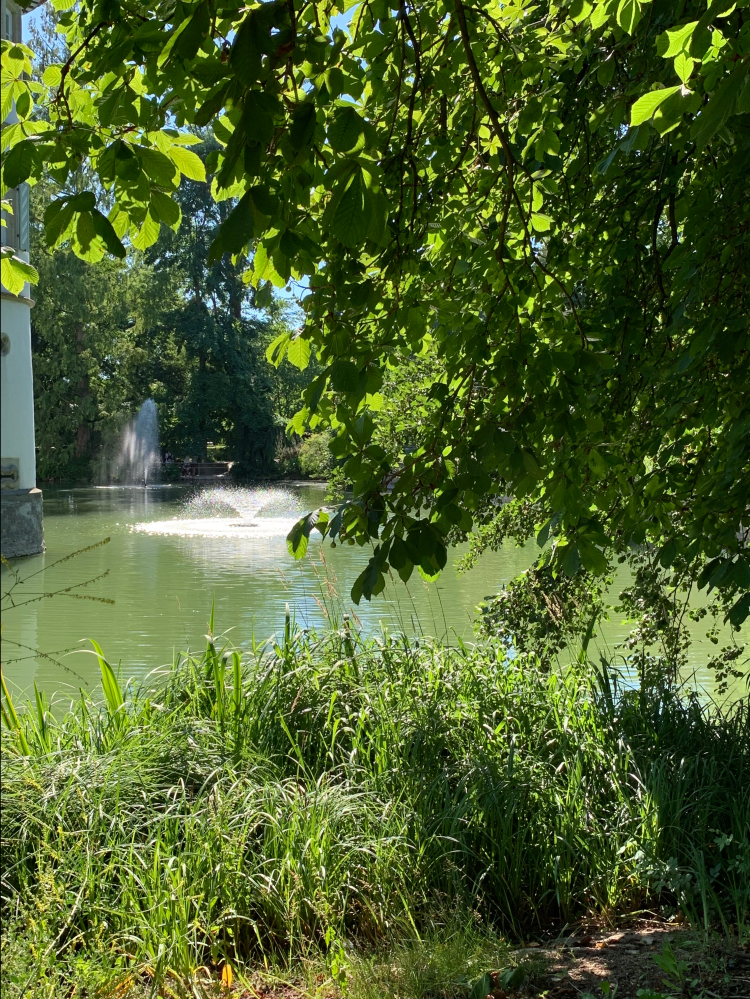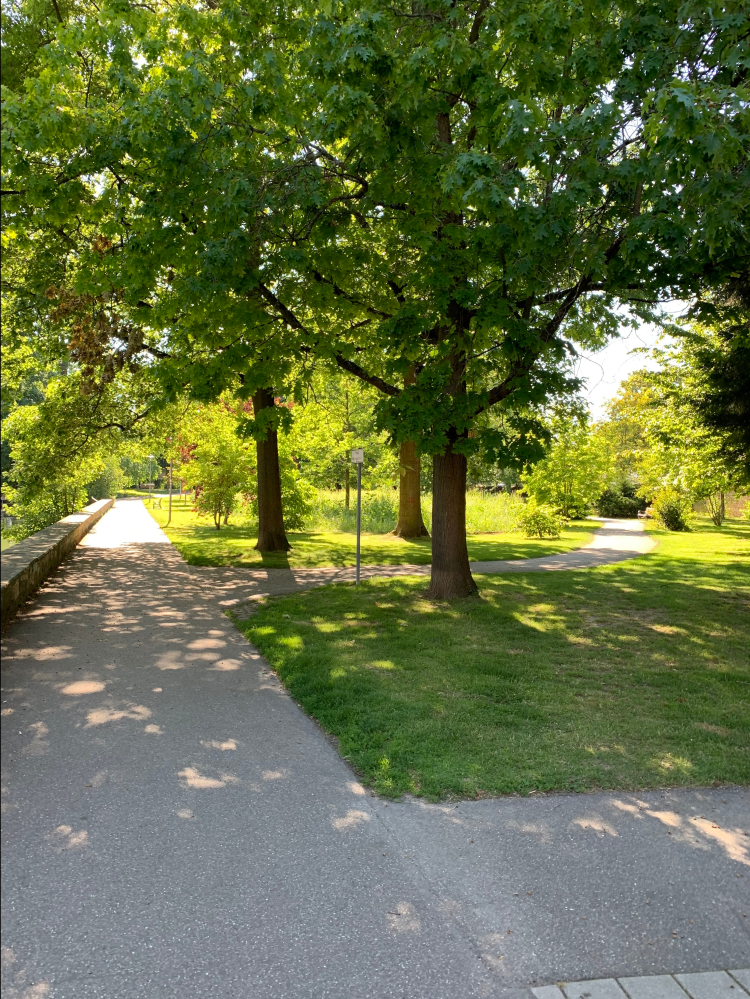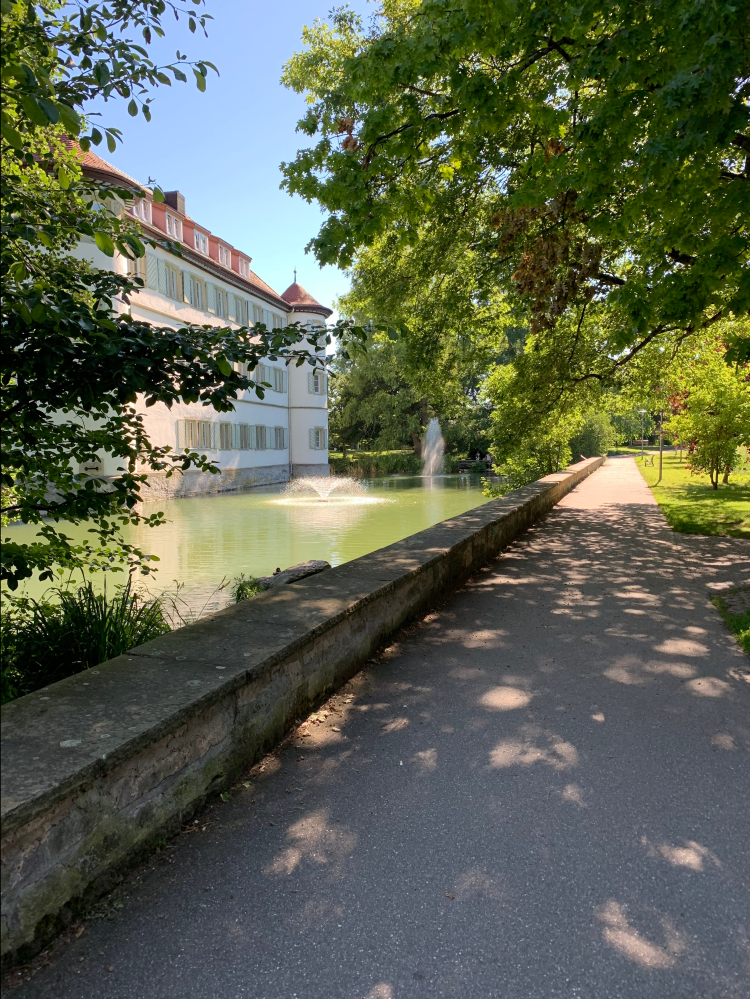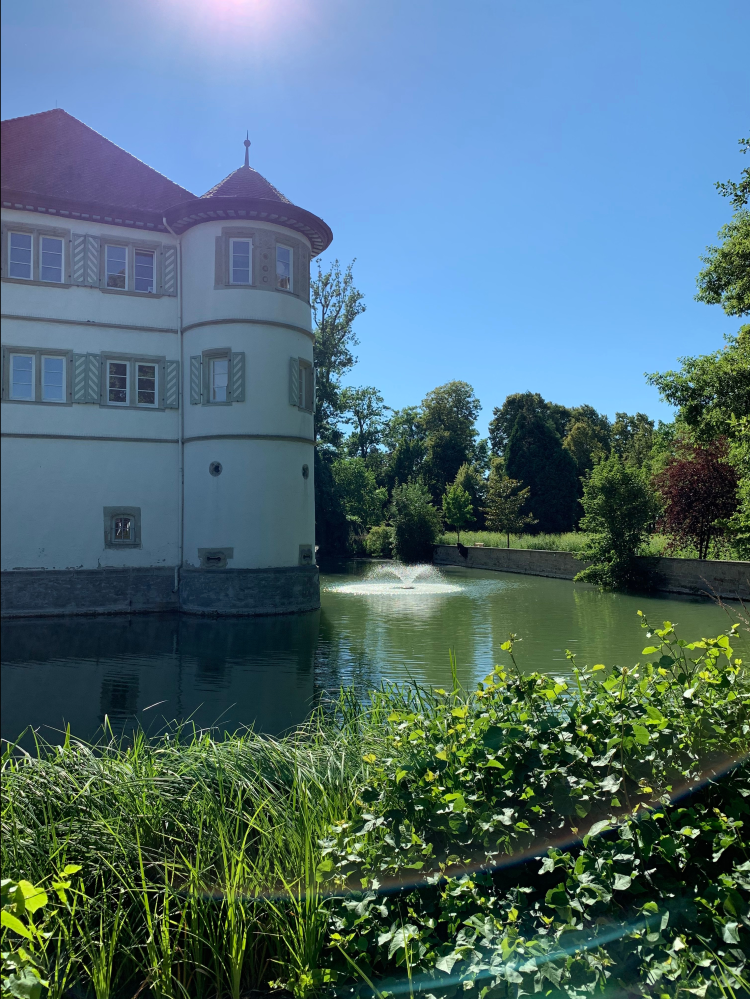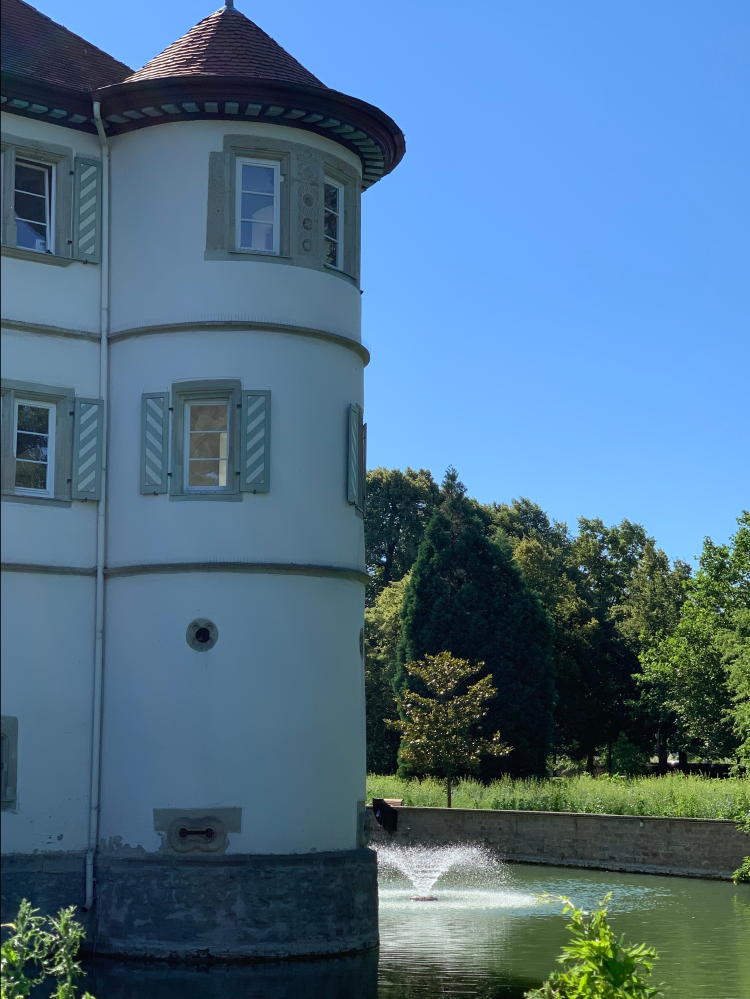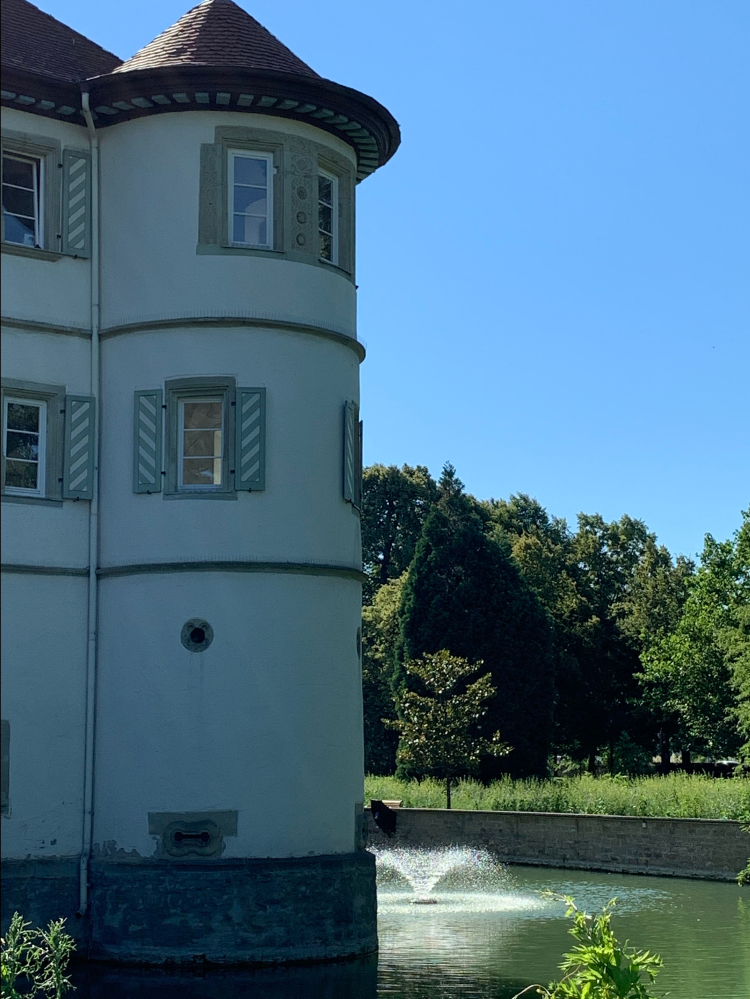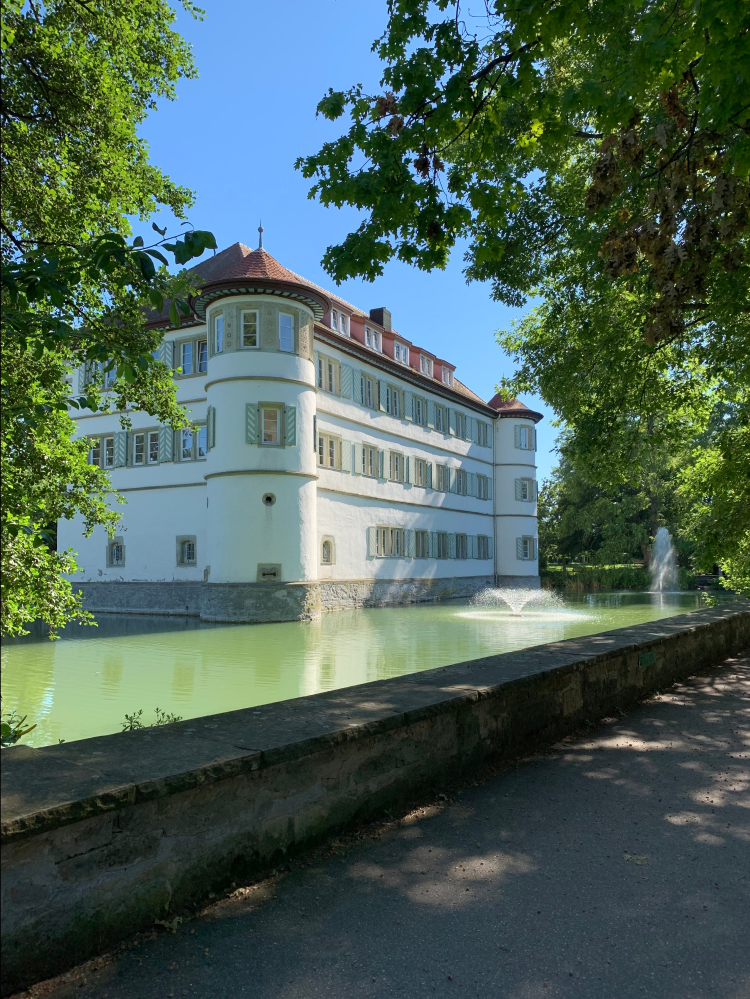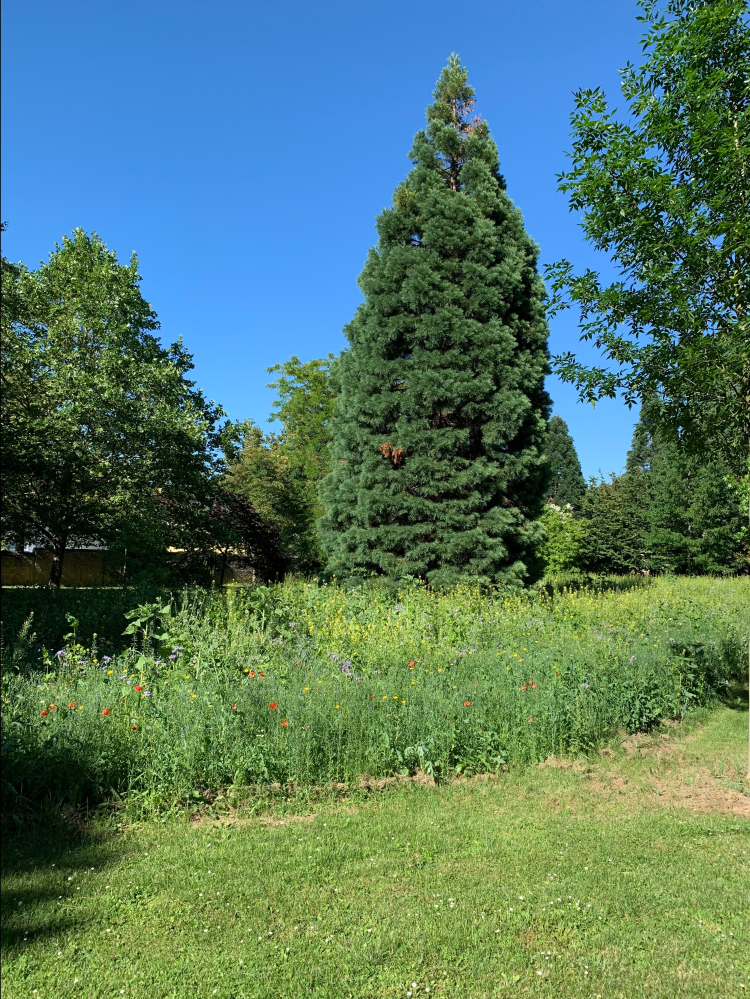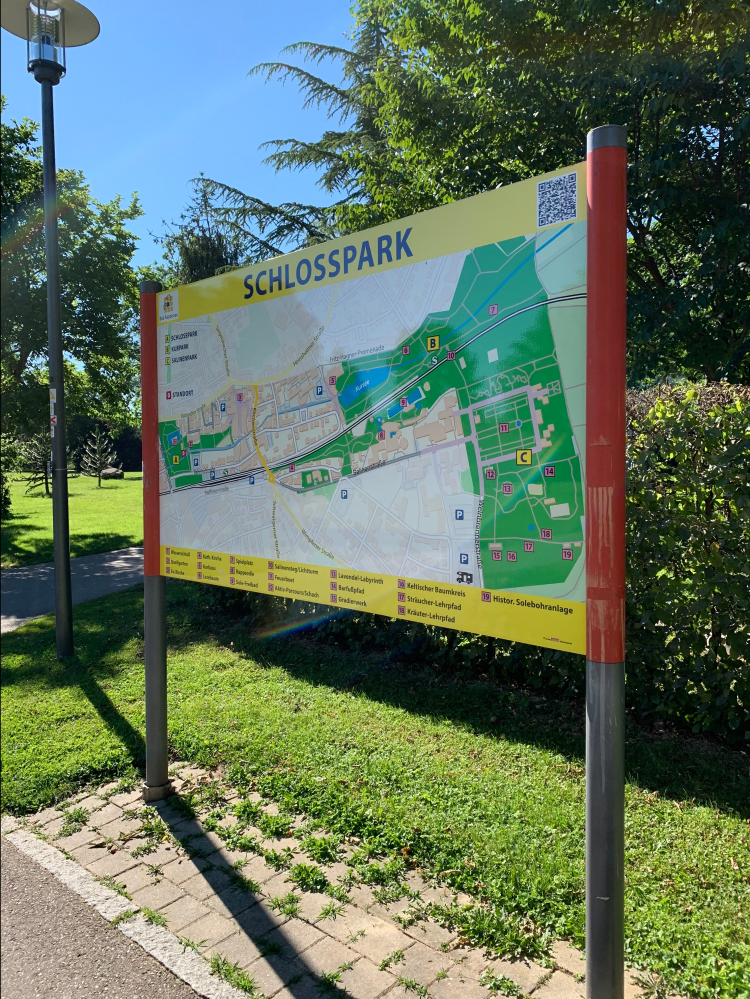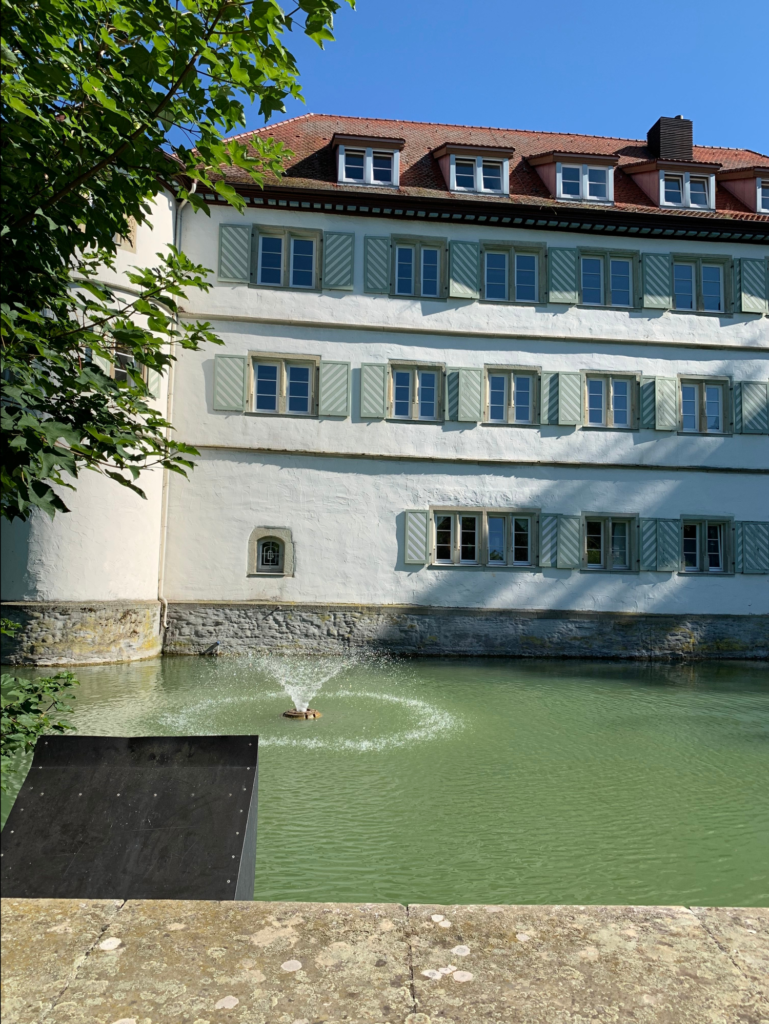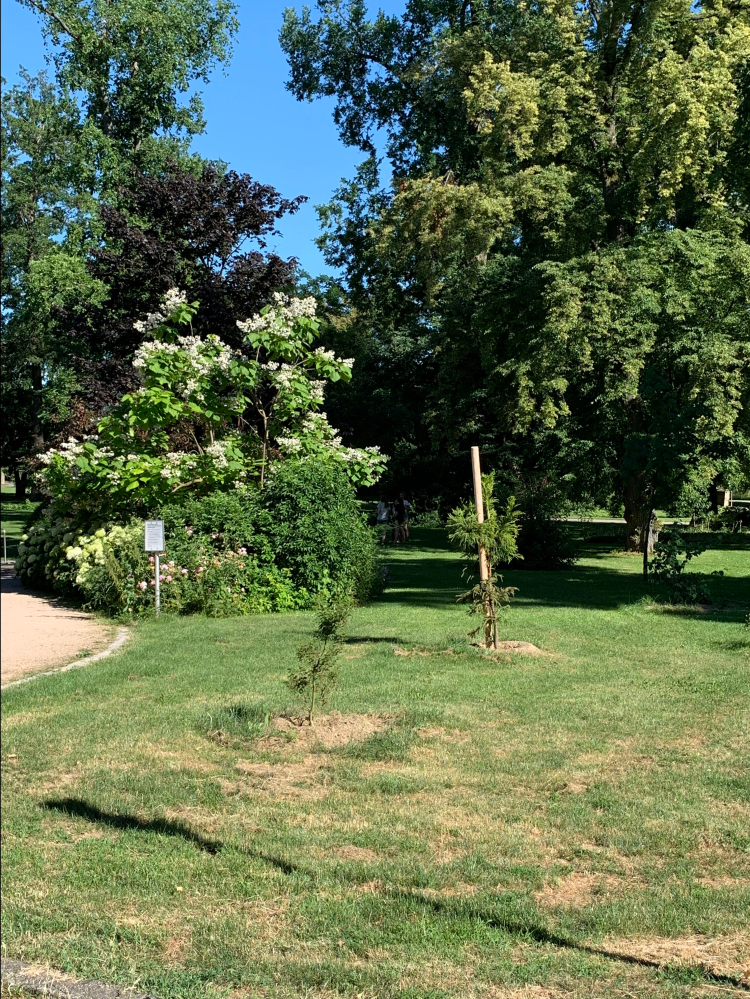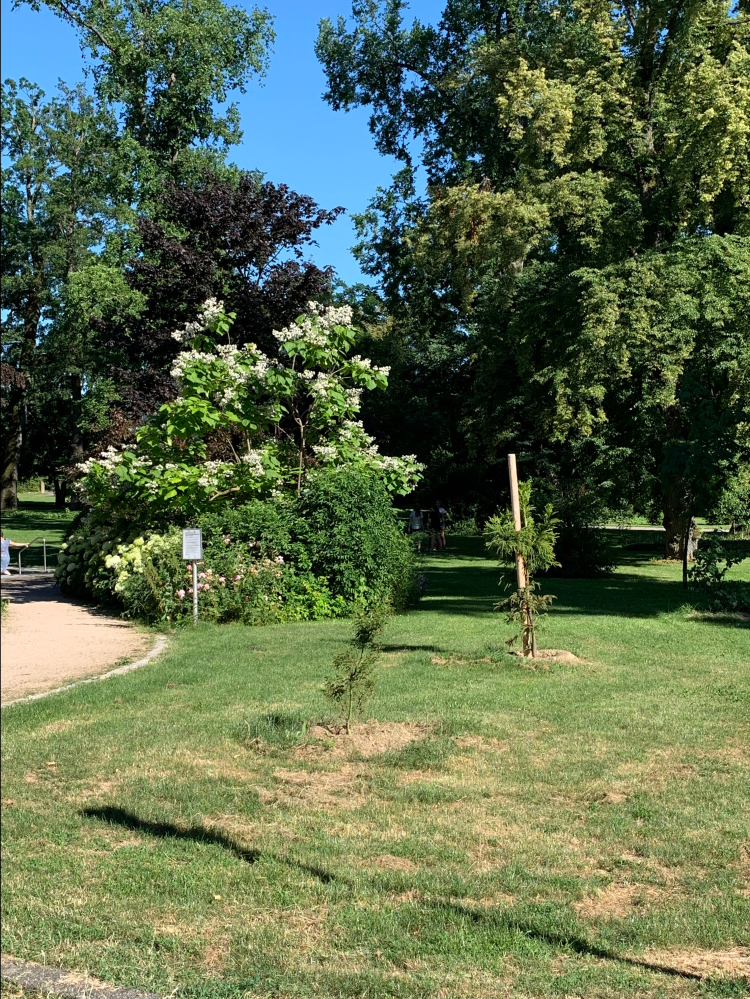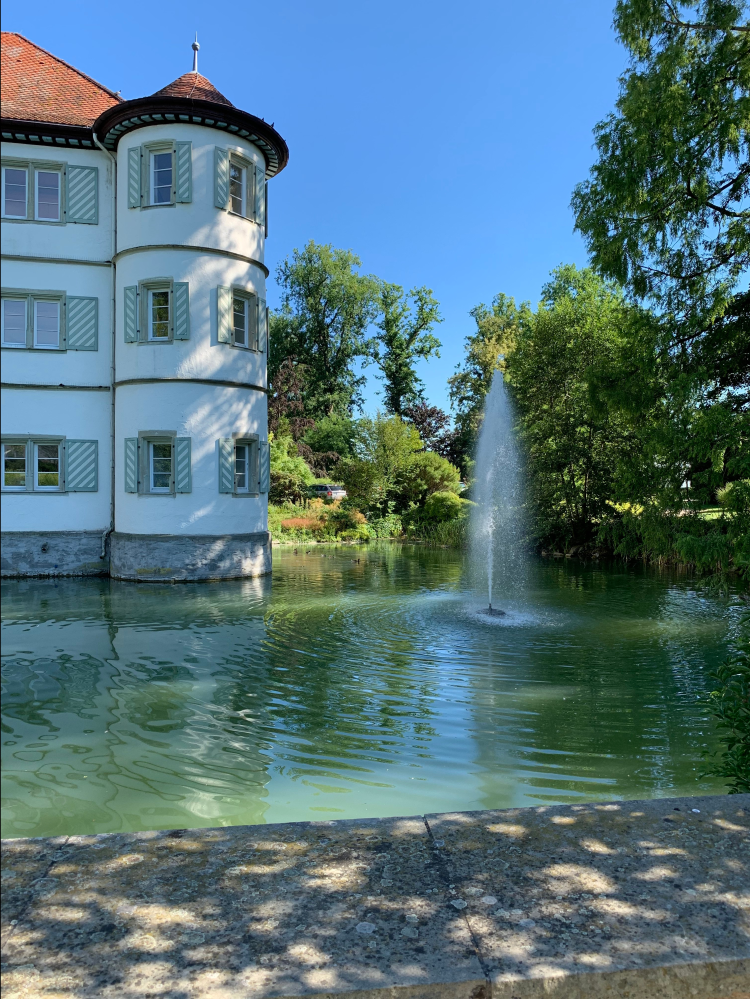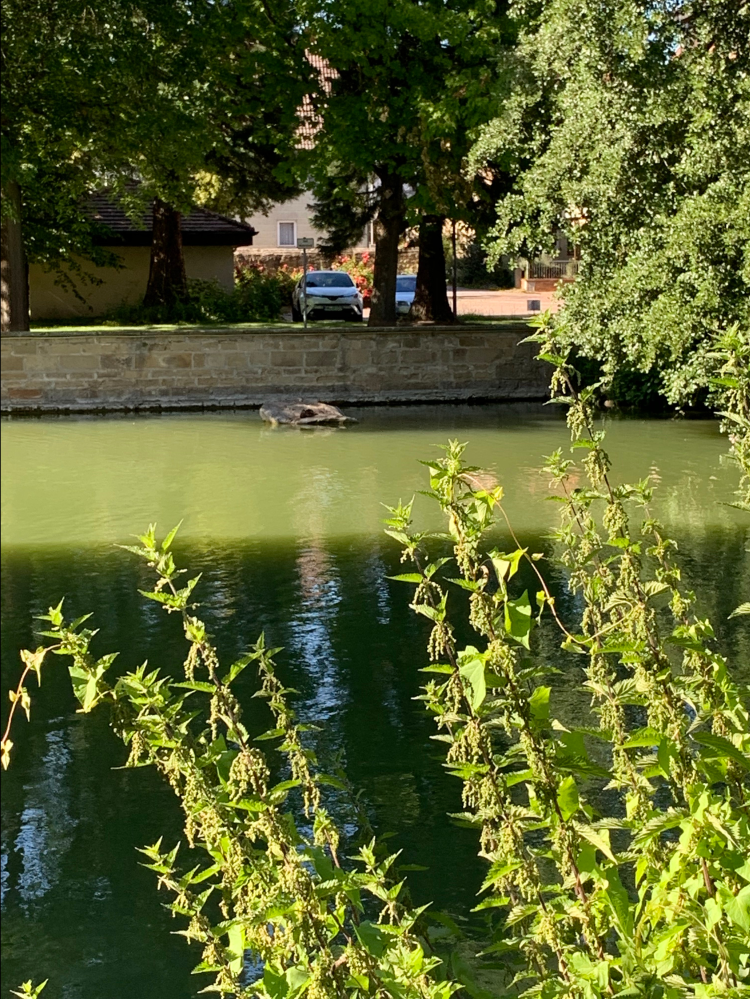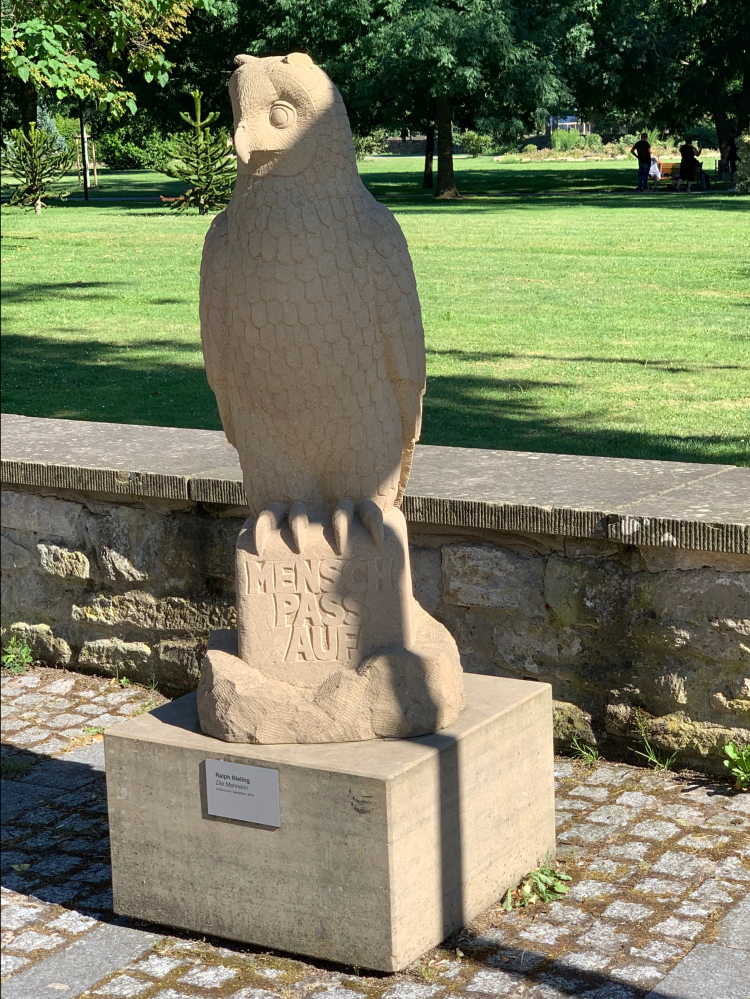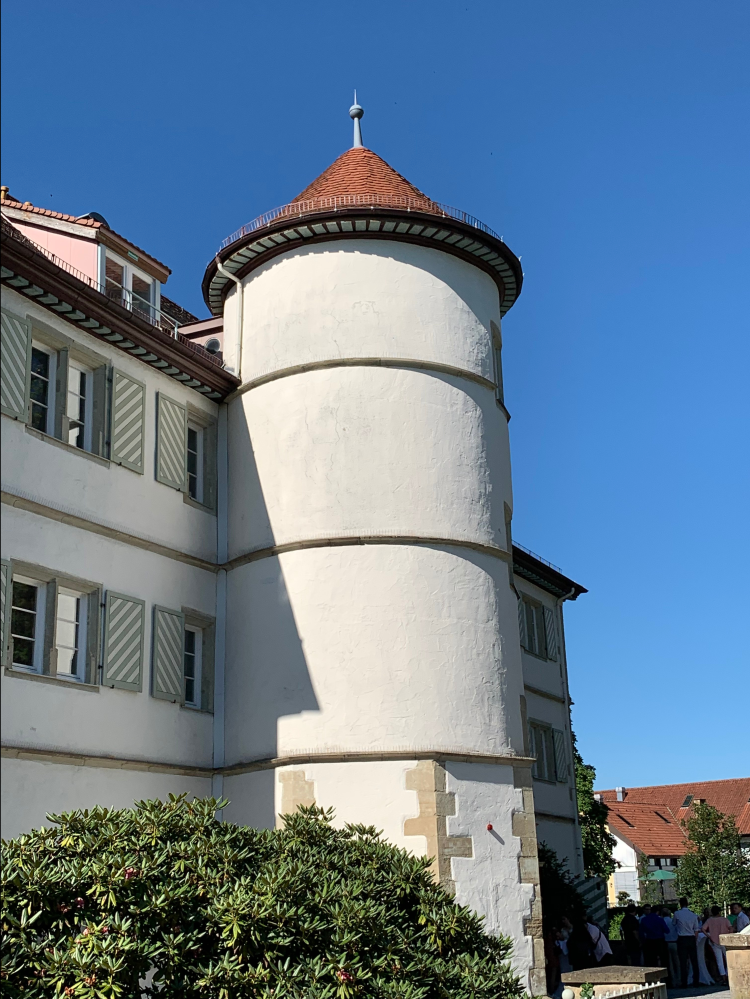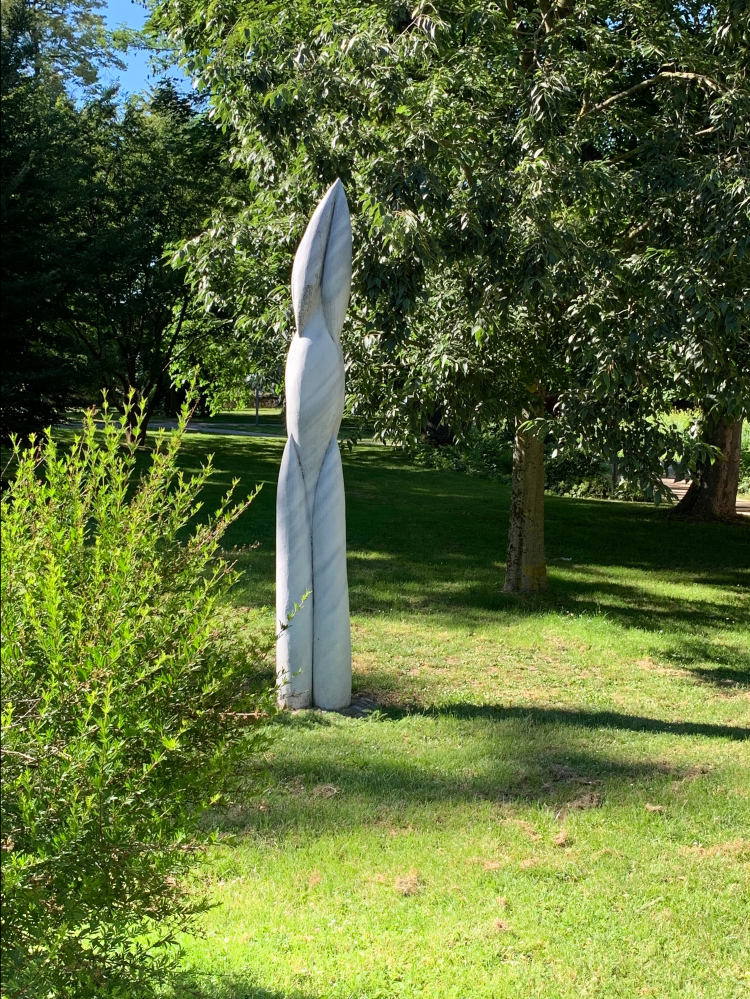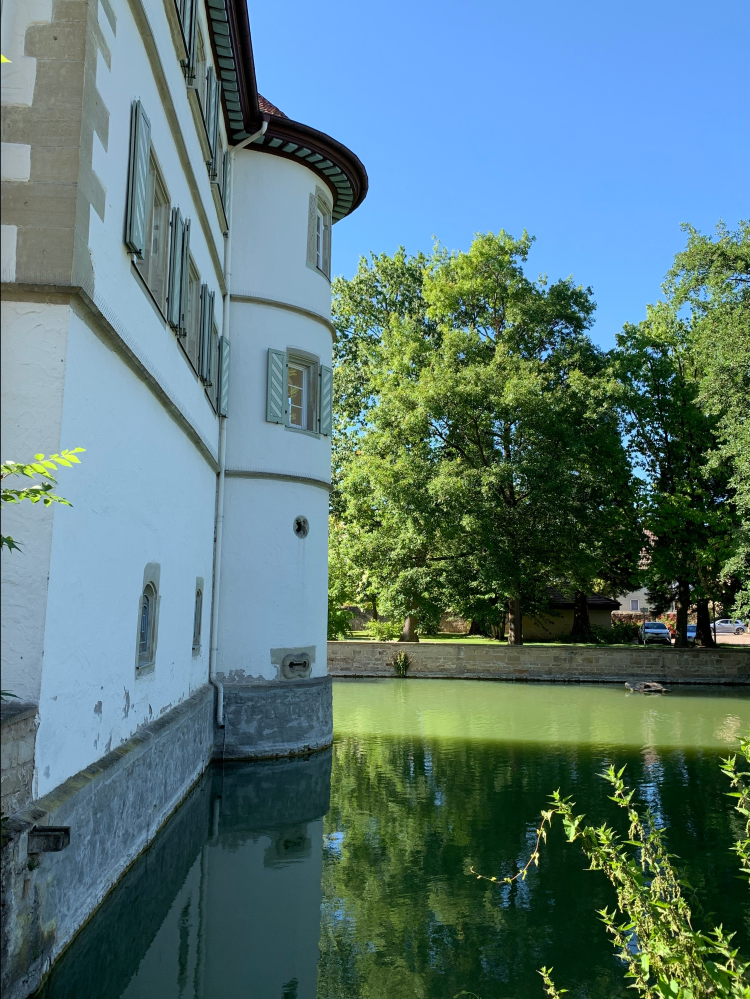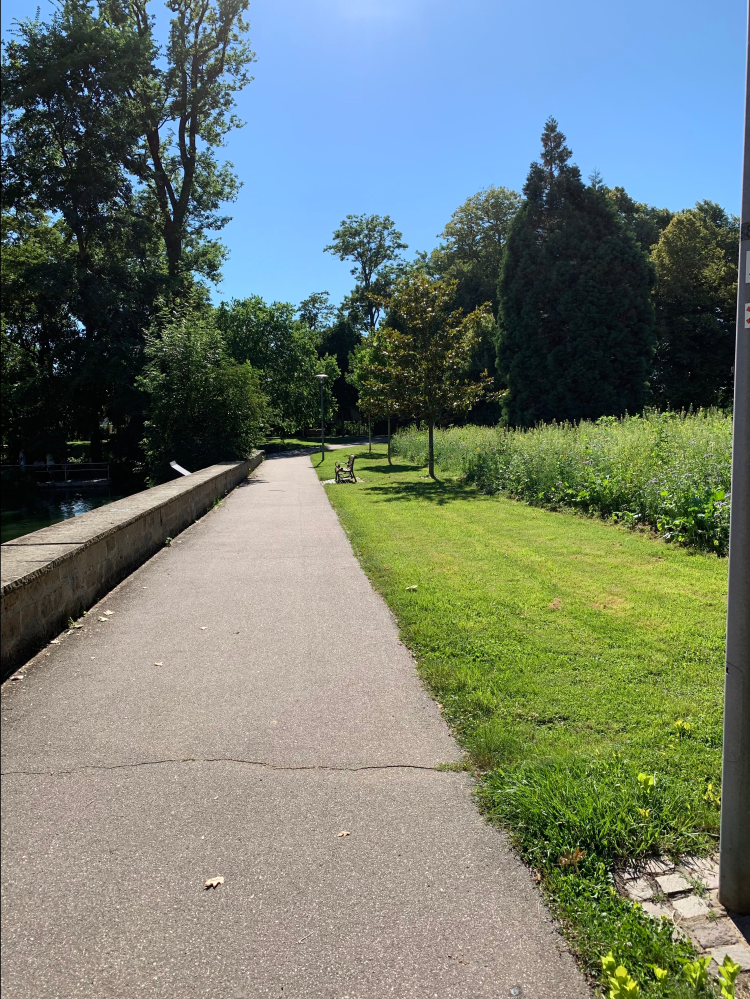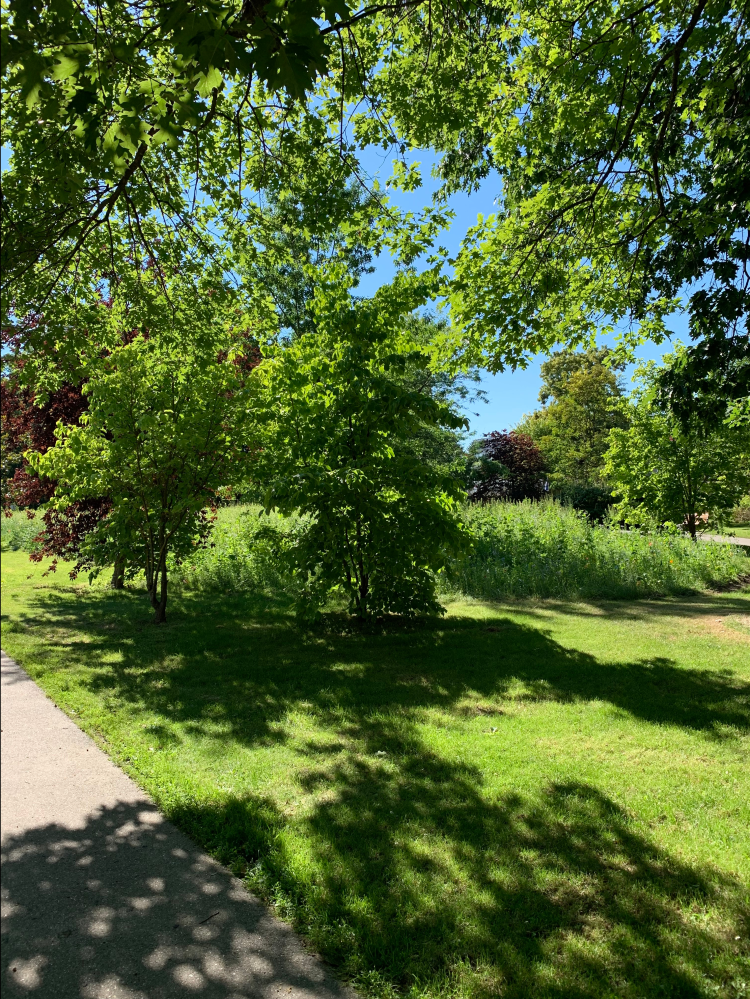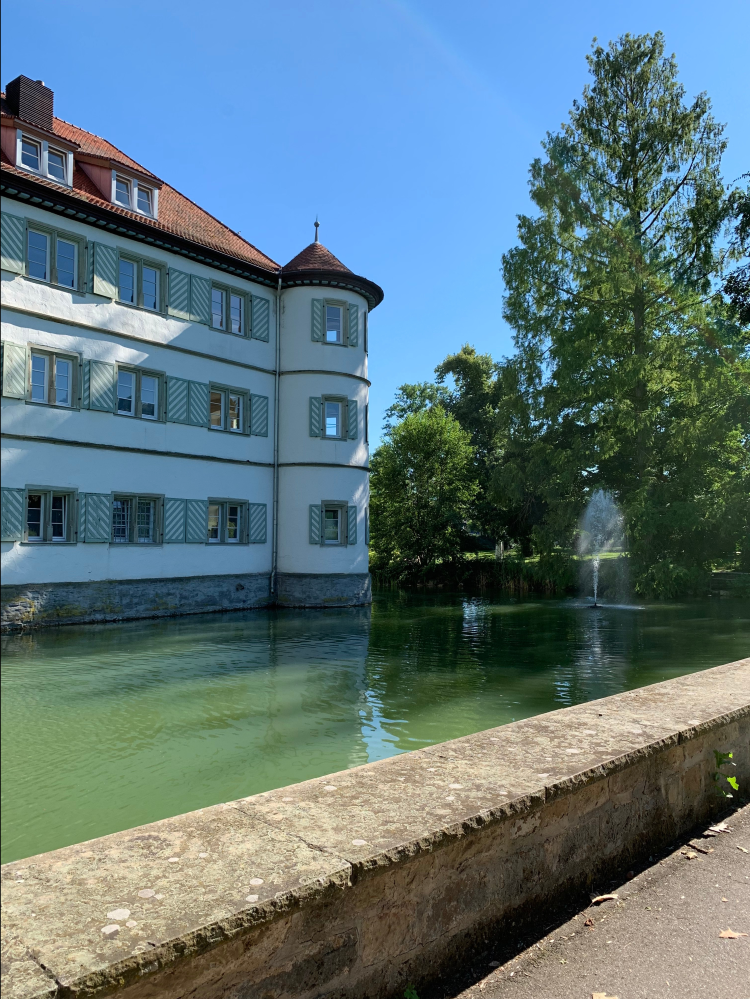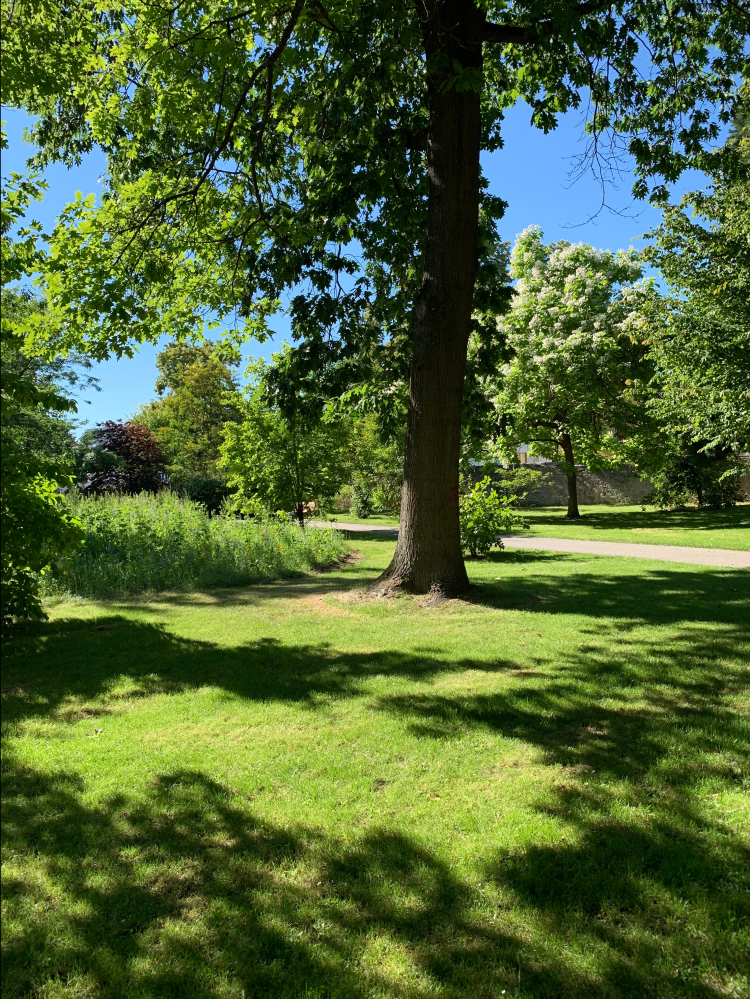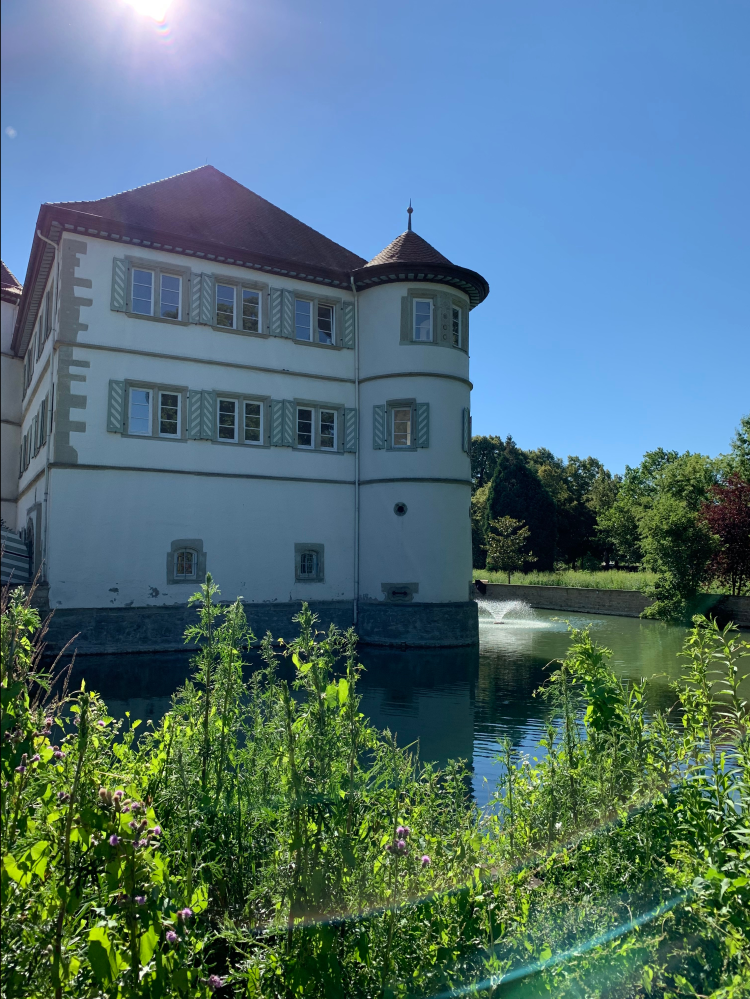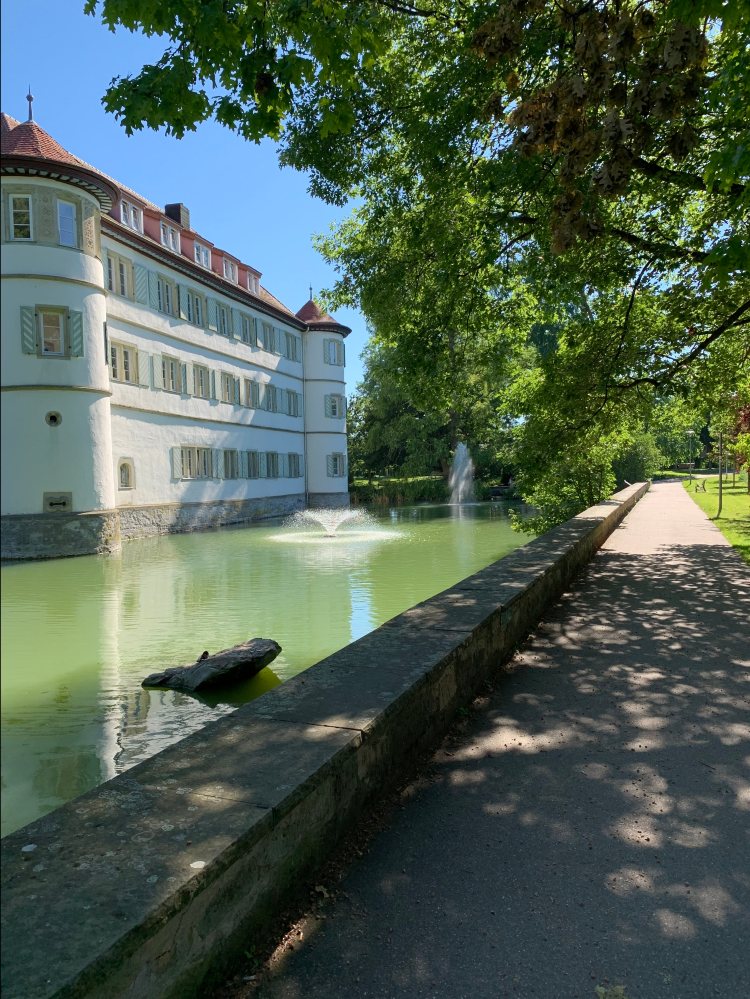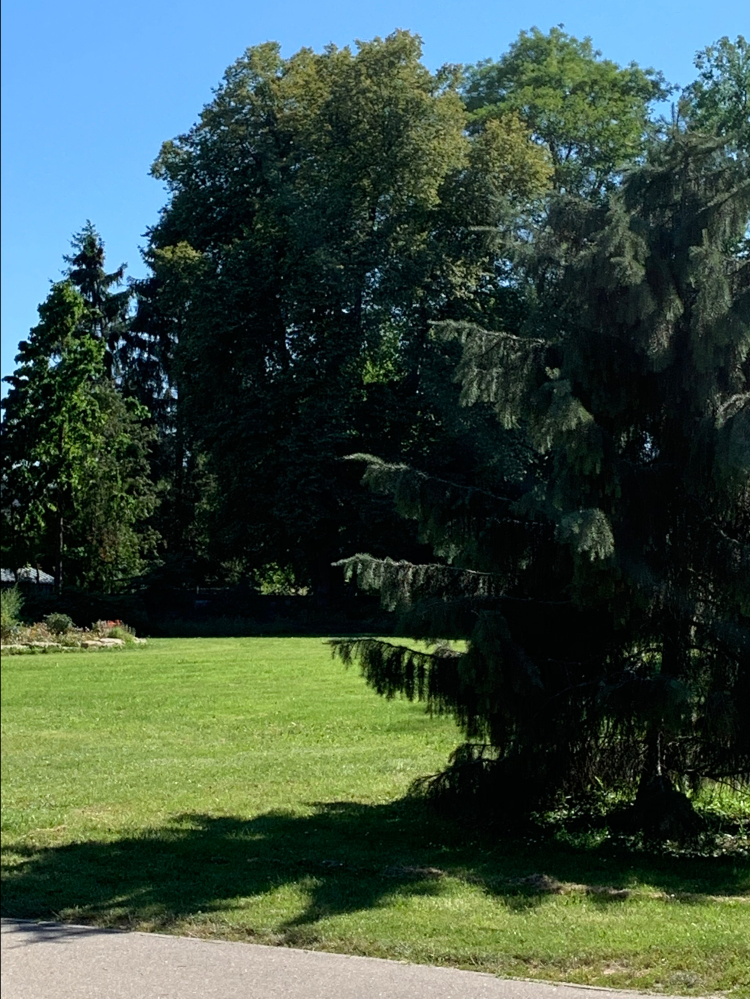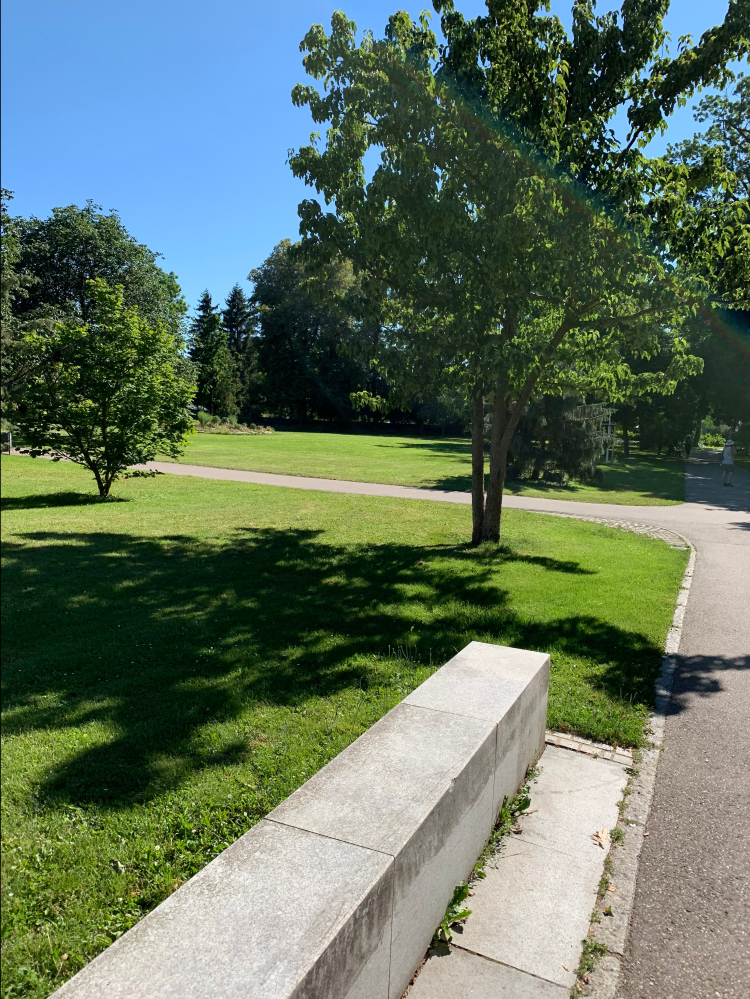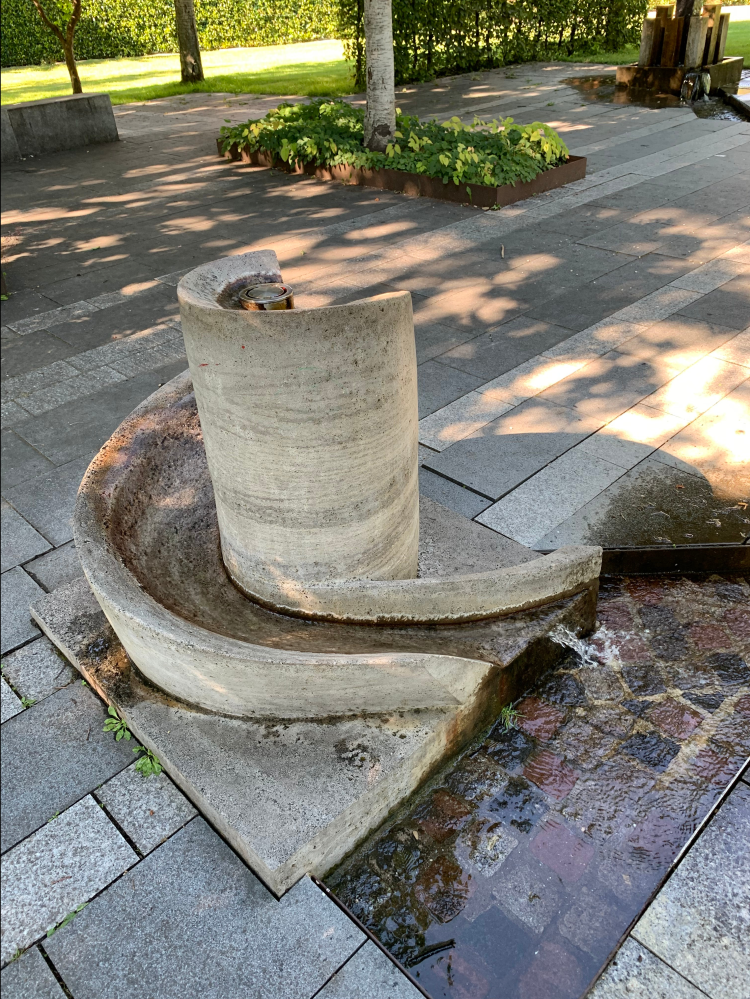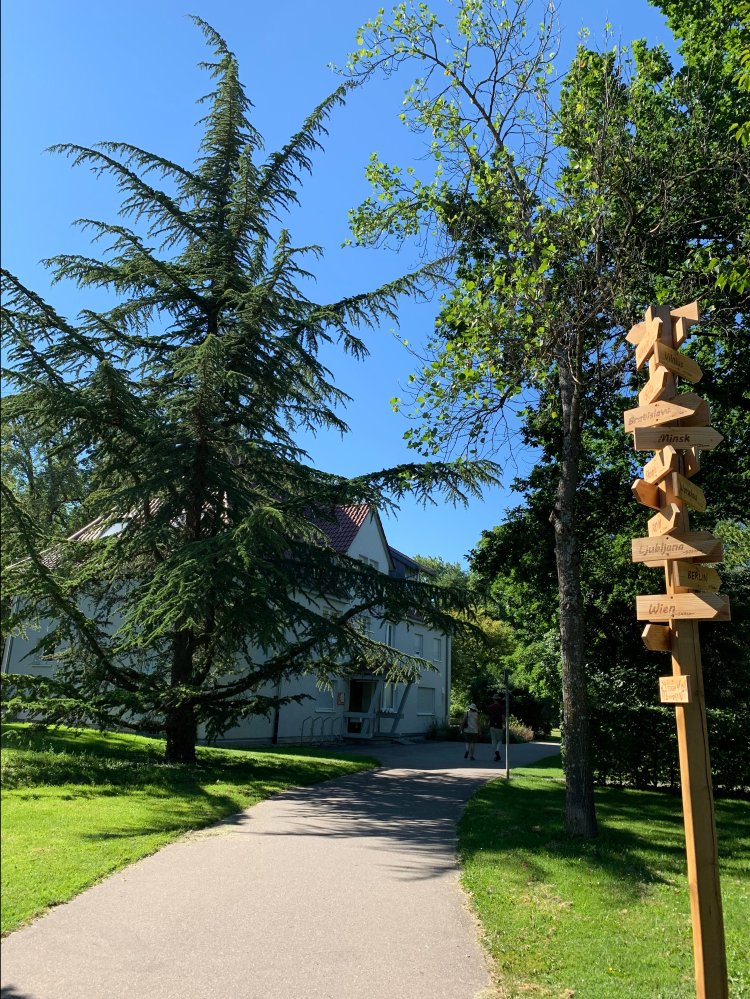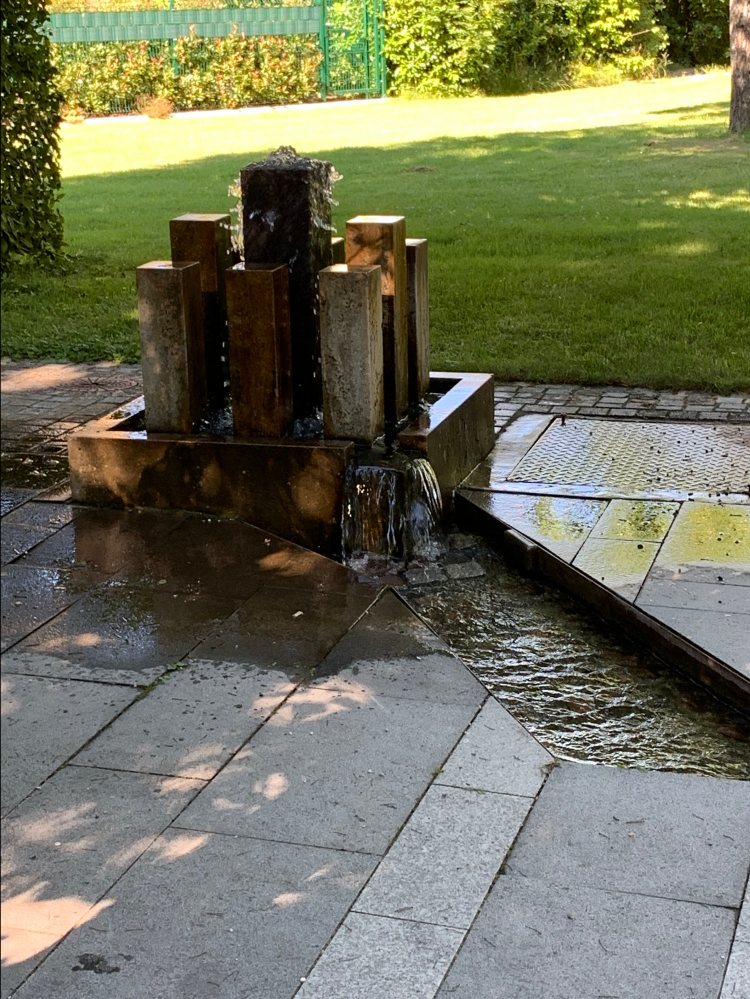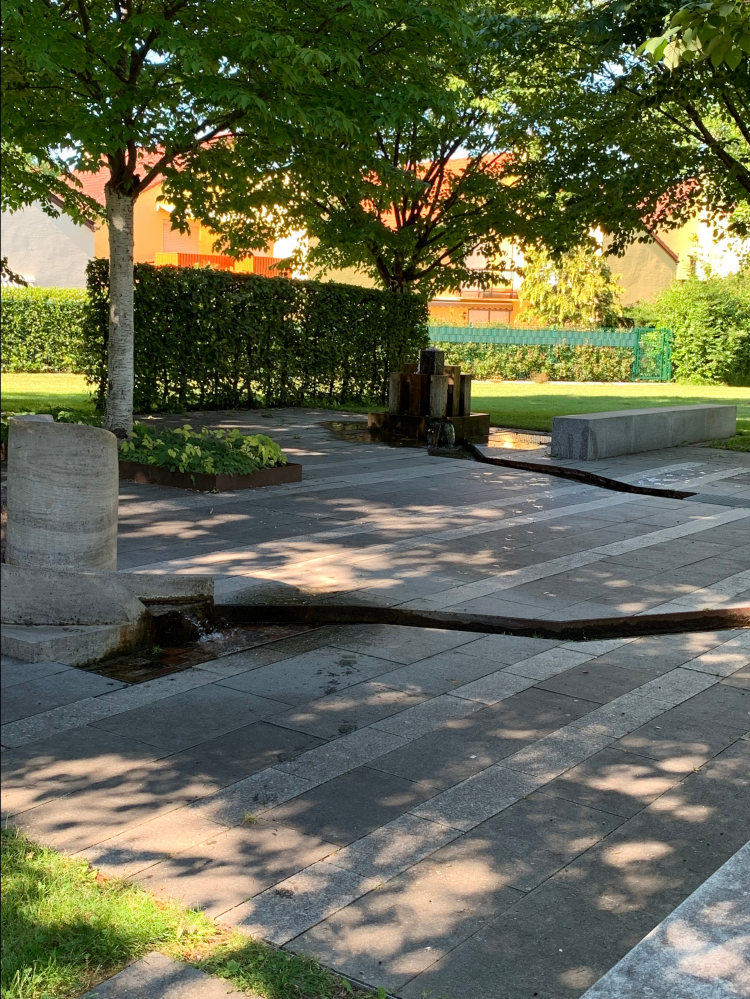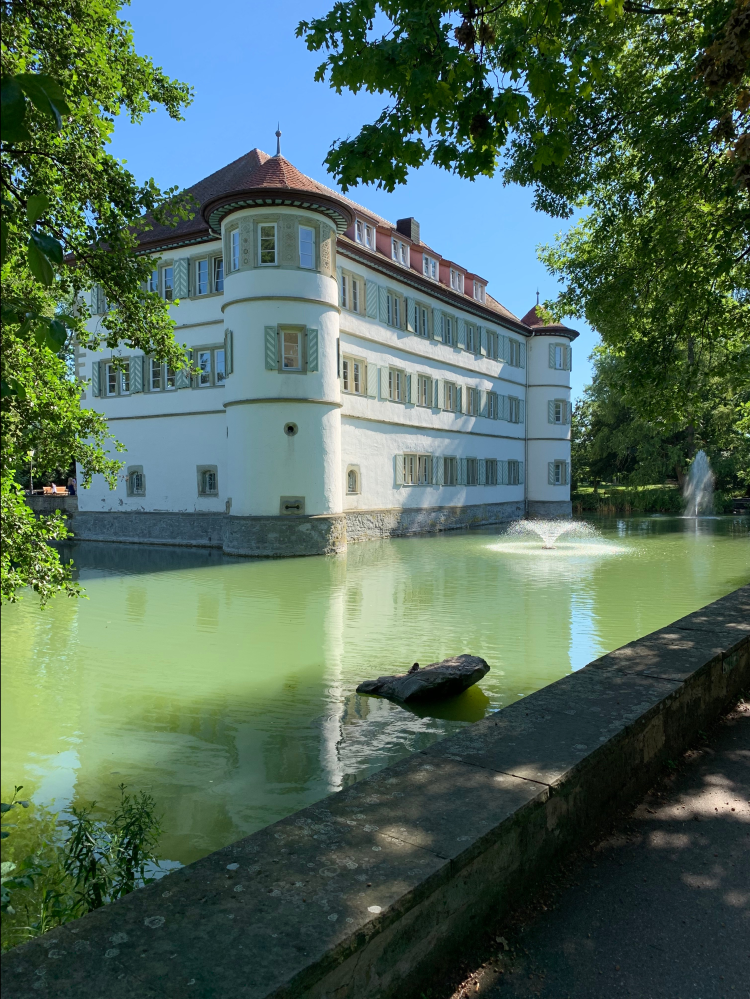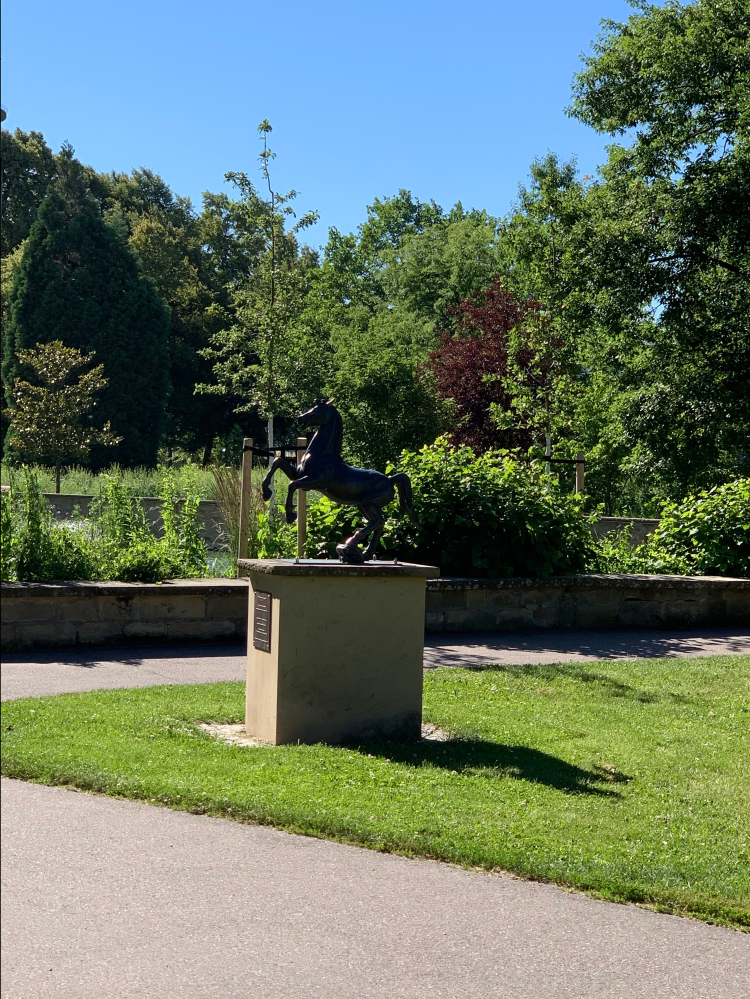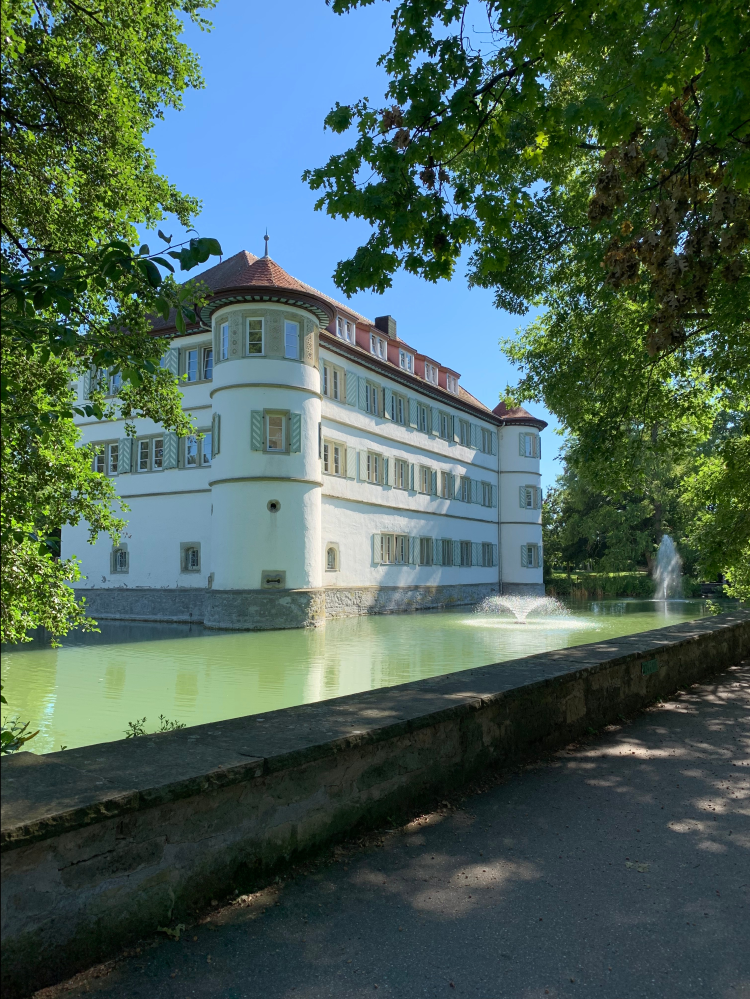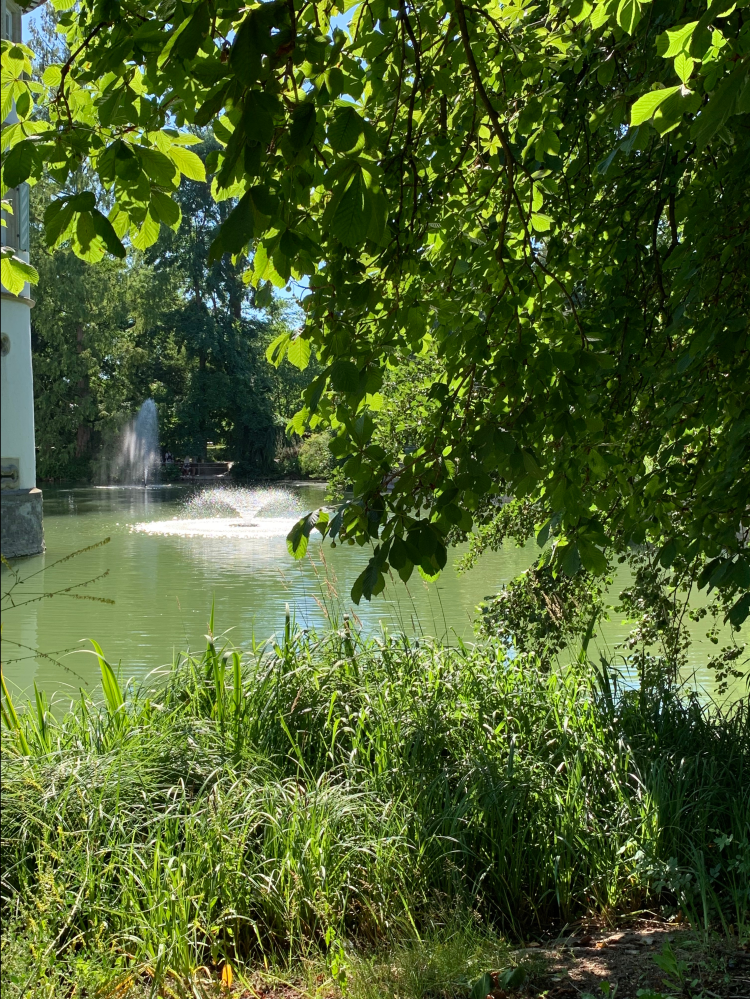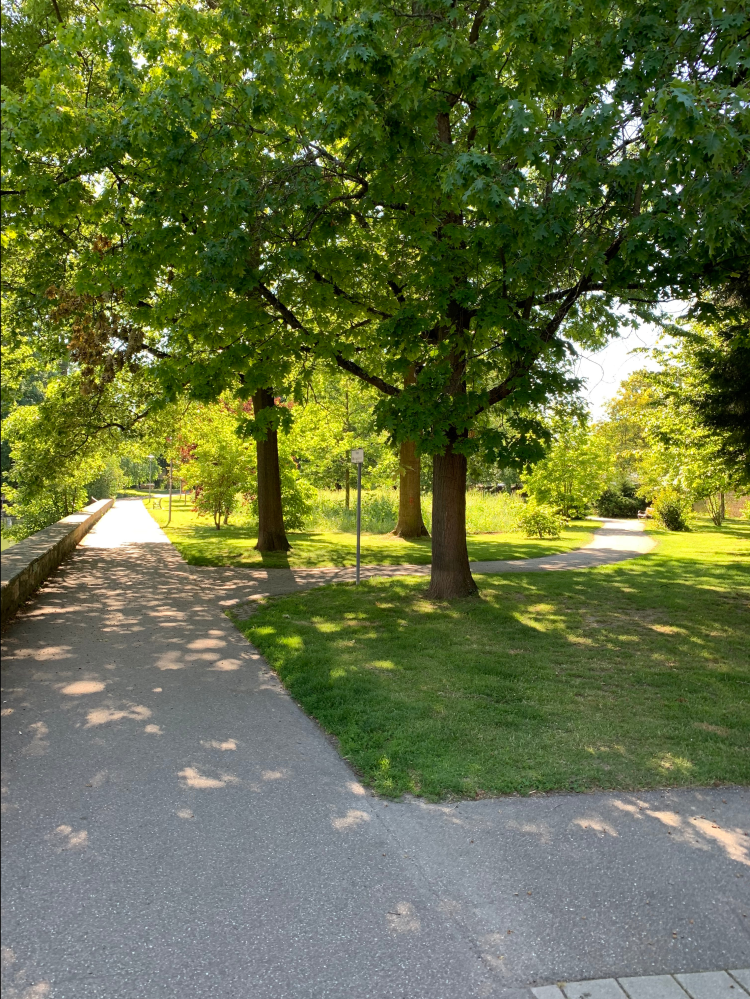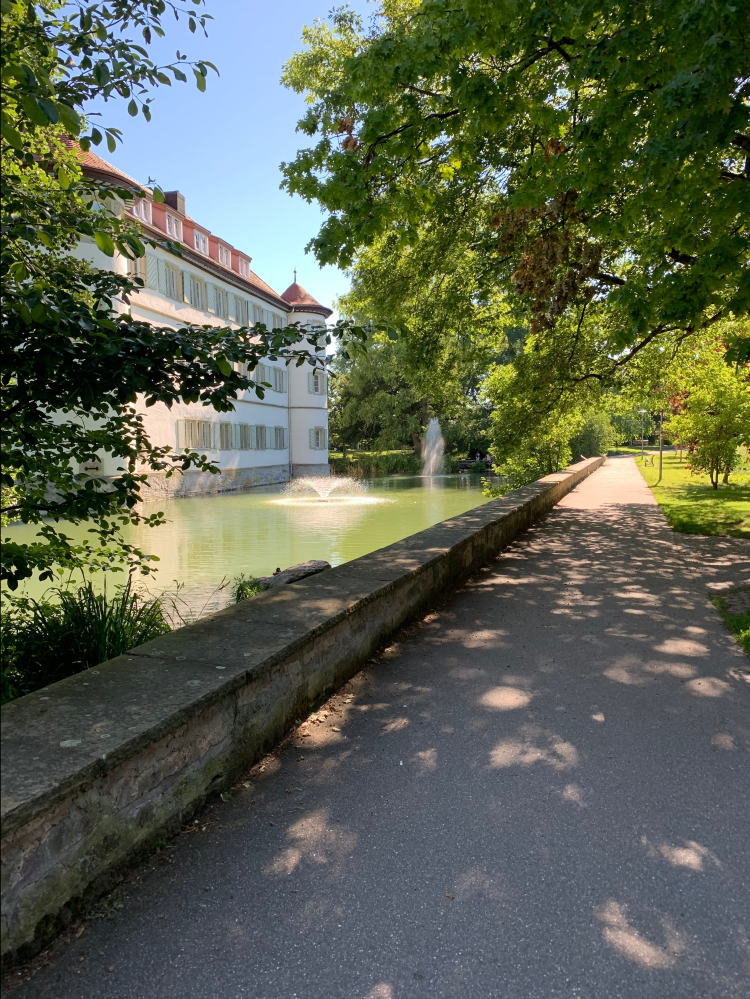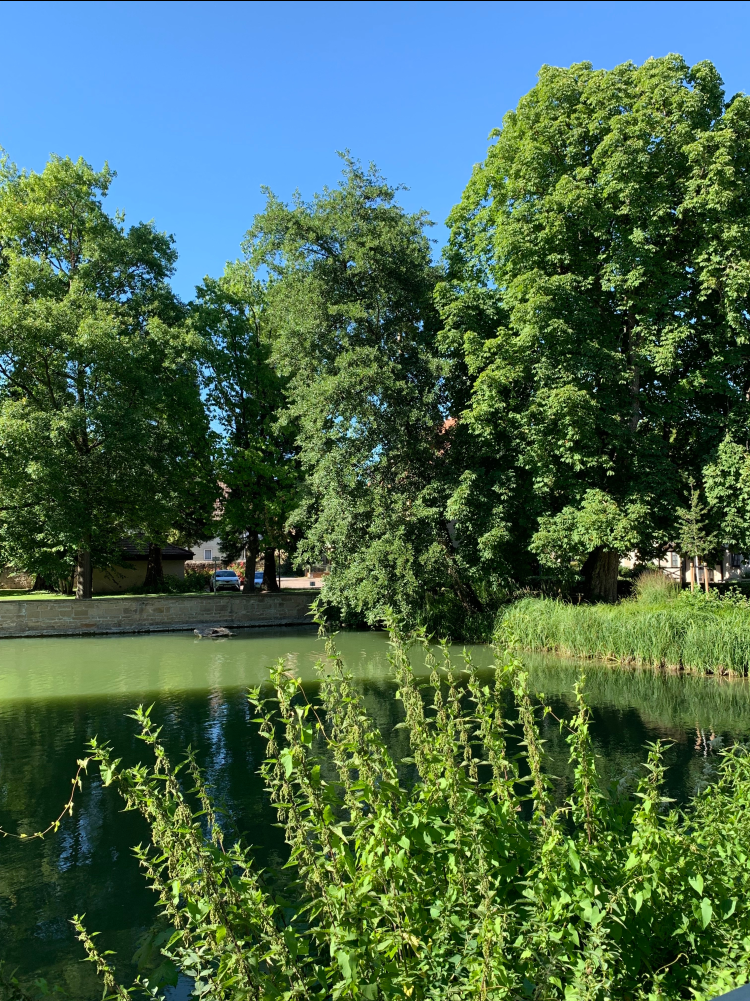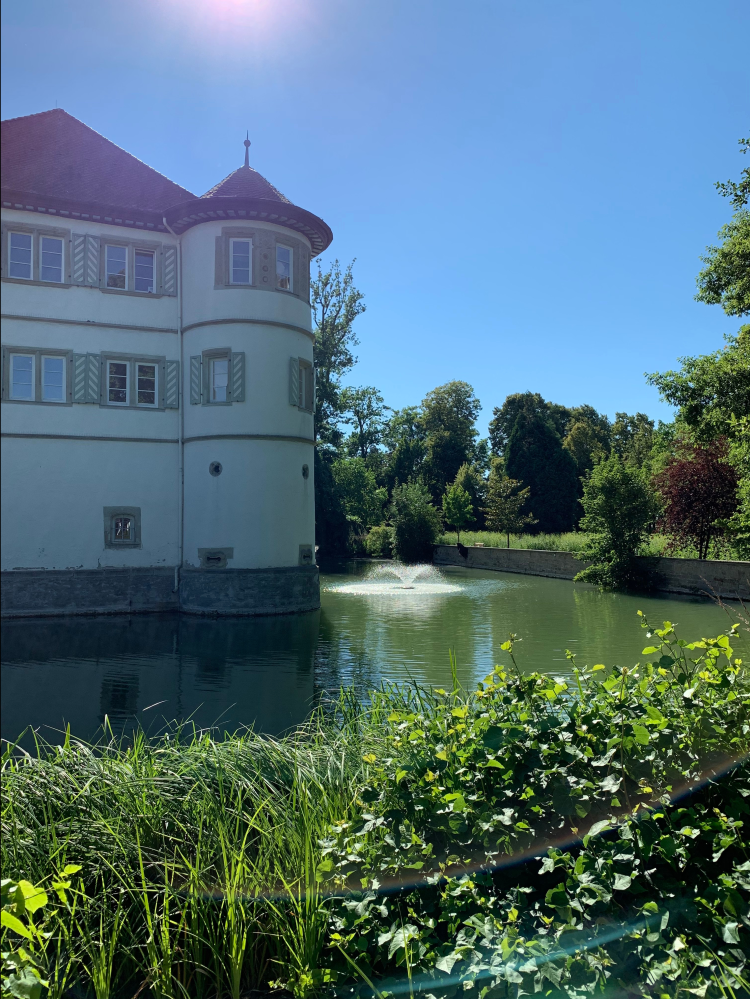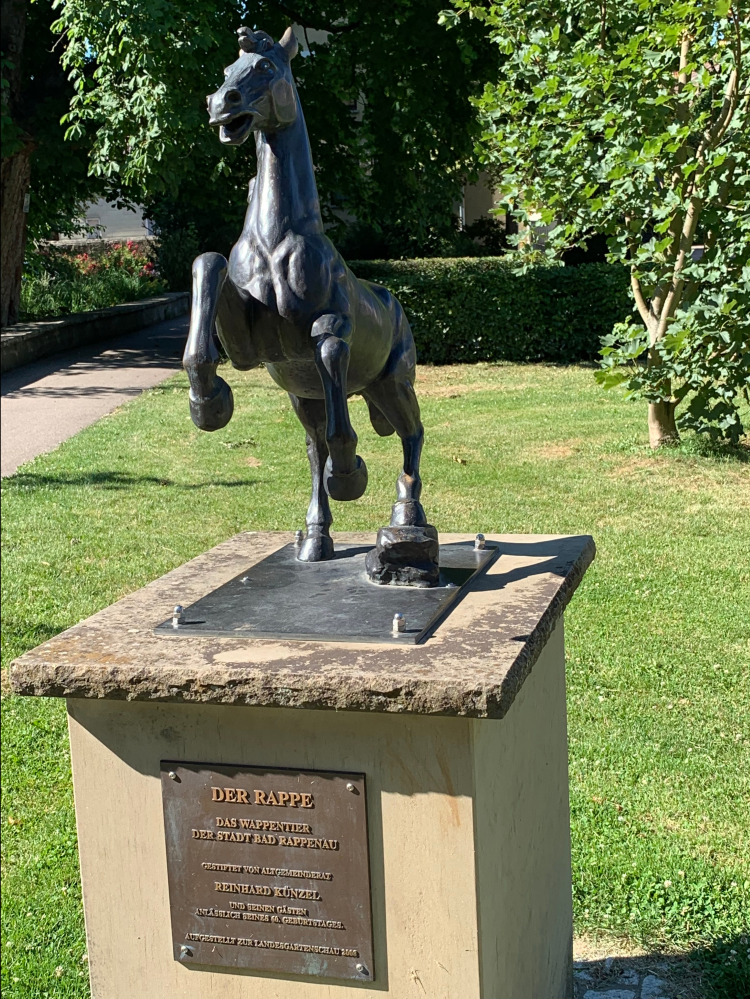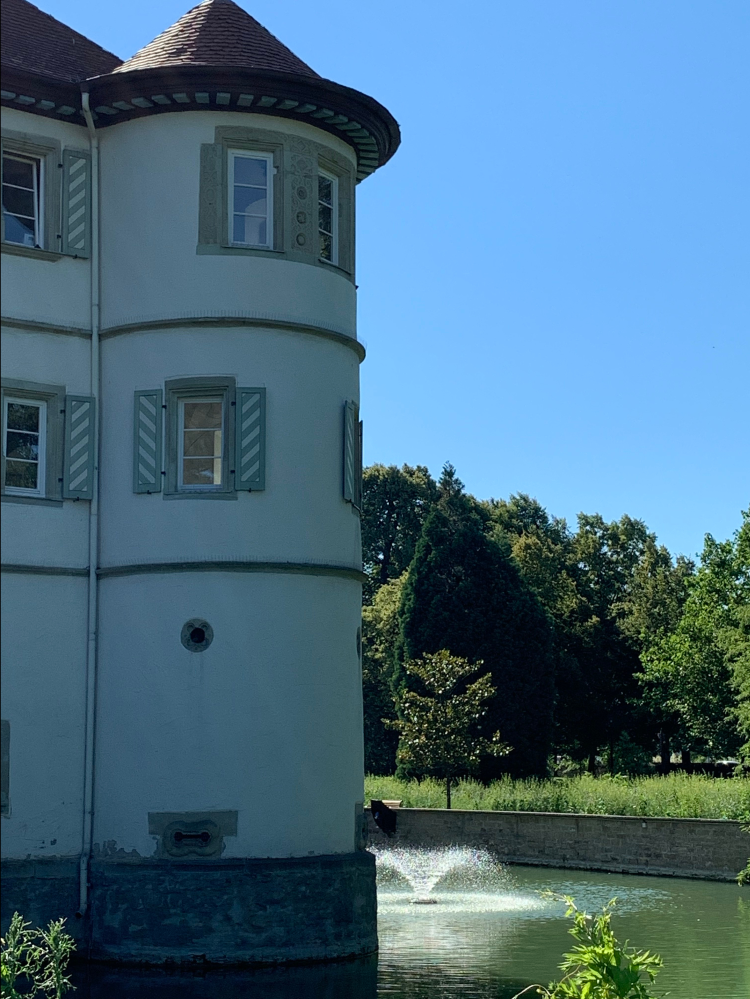

The castle park at the moated castle in the center of the Baden-Württemberg town of Bad Rappenau is beautiful and an ideal place in summer, not only because of its Kneipp basin, where I can cool my feet in fresh spring water, but also because of its shady trees. This means that despite the tropical heat, I can stroll through the park and linger on one of the numerous park benches with a view of the magnificent moated castle. The moated castle is surrounded by an idyllic lake. Three artistically designed springs at the spring grove feed a small stream that flows through the city center along the Grünspange into the Kurparksee lake. The moated castle was built in 1601 on the site of an old moated castle by Eberhard von Gemmingen on rammed oak trunks. The castle was formerly divided into the castle courtyard, the castle lake, and the farm buildings. The castle and the castle courtyard were once completely surrounded by the water of the castle lake until 1904, when the castle lake was drained and filled in by the then lord of the castle, Karl von Gemmingen. What remains is a moat approximately 1–2.5 meters wide, which ran directly around the walls of the actual castle building to keep its pile foundation constantly under water. It was not until 1957, one year after the municipality of Bad Rappenau purchased the castle and the surrounding grounds, that the castle lake was partially restored. The historic building housed the castle sanatorium for twenty years. From 1980 to 1991, the municipal administration was based in the moated castle. Between 1993 and 1995, the castle was completely renovated by the town of Bad Rappenau at a cost of around seven million German marks. An incredible 85 tons of building rubble had accumulated in the building over the centuries. From 1995 to 2000, the public order office was based there. Today, the moated castle is used exclusively for cultural events, and art lovers in particular can feast their eyes in the moated castle. Among other things, it houses works by Marc Chagall, Günter Grass, and Friedensreich Hundertwasser. The entrance to the moated castle at the stair tower is particularly worth seeing. It is a late Renaissance portal, the upper part of which is adorned with a sandstone bust of the builder. The castle courtyard is often used for concerts, theater performances, and other cultural open-air events during the summer months. The castle park with its sea of flowers is a true oasis of relaxation for the residents of Bad Rappenau. The park is framed by an old sandstone wall to the north and south, and hornbeam hedges form a natural border to the west and east. This gives the park a sense of closure and makes it feel like a recreational space. I particularly like the park’s old trees. Some of them are over 160 years old. During the 2008 State Garden Show, the park with its maple, linden, oak, ash, chestnut, and elm trees was supplemented by a geographical arboretum. This resulted in a collection of trees and shrubs organized according to the origin of the trees. It is fascinating that I can admire trees and shrubs from nine regions across all continents in the park. I enjoy strolling through the park with its colorful shrub peonies and rhododendrons and admiring the beautiful moated castle, which is often used as a wedding venue. For me, the park is not only a place of relaxation, but also an experience every time I visit, with all its wonderful plants. As the American philosopher Ralph Waldo Emerson said, “Flowers are the smile of the earth.”