
In the heart of Georgia, nestled within the dramatic landscape of the Shida Kartli region, stands the imposing Skhvilo Fortress – a testament to medieval architecture and a living piece of history. Built in the 14th century, the castle was once the proud residence of the distinguished Amilakhvari family, before later serving primarily as a defensive structure. Although its significance has faded over the centuries, this fortress remains a fascinating monument that combines historical legends, architectural masterpieces and the stories of past conflicts.
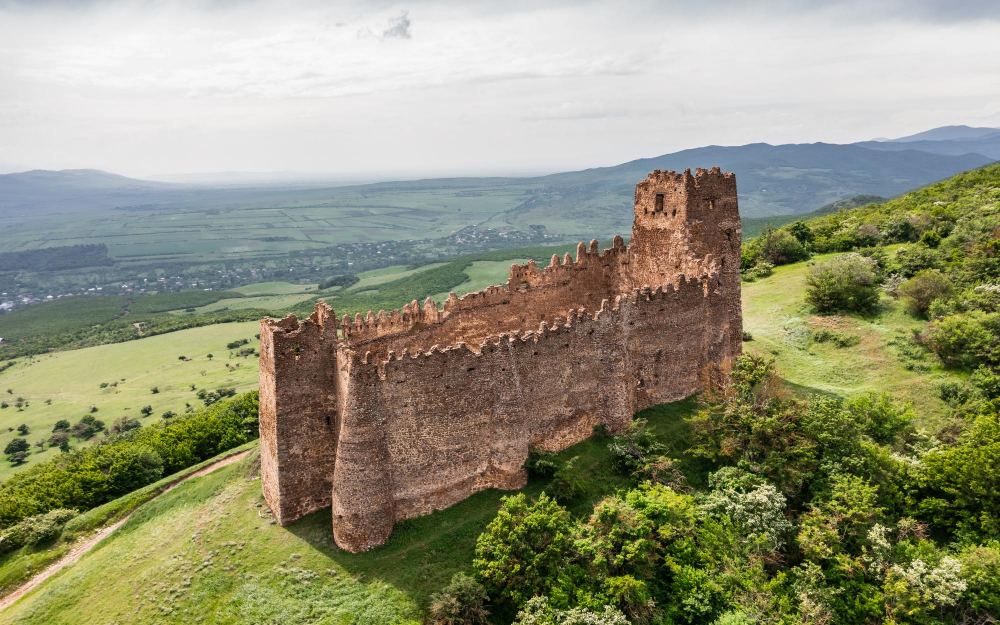
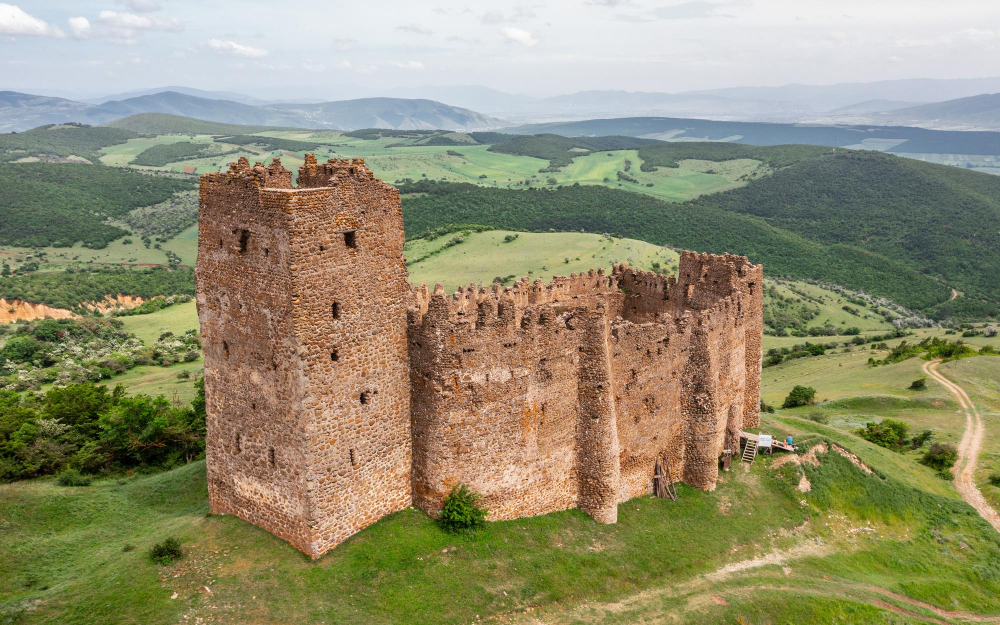
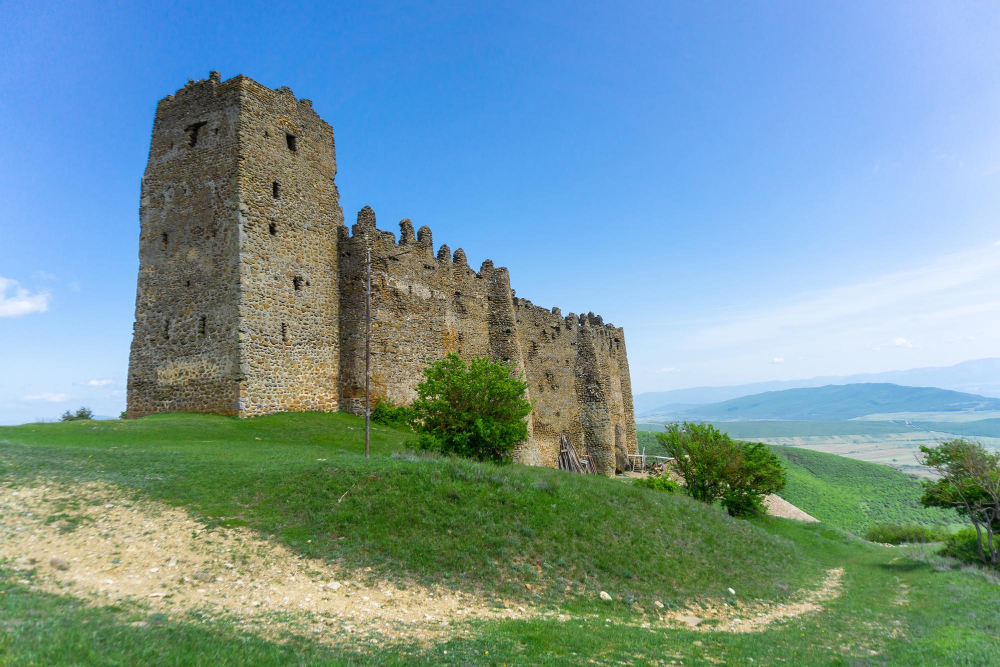
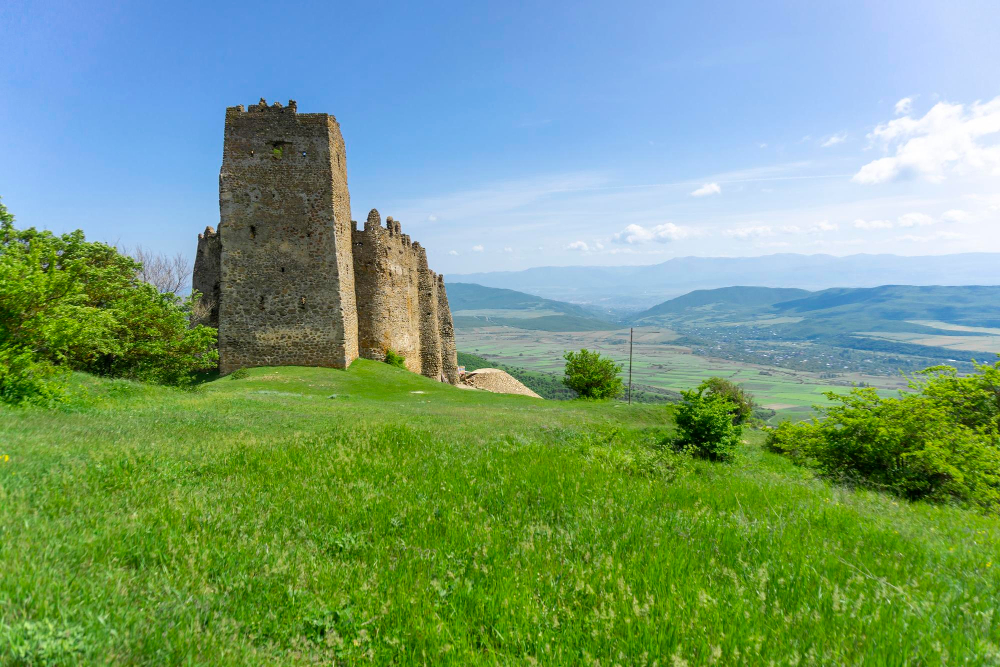
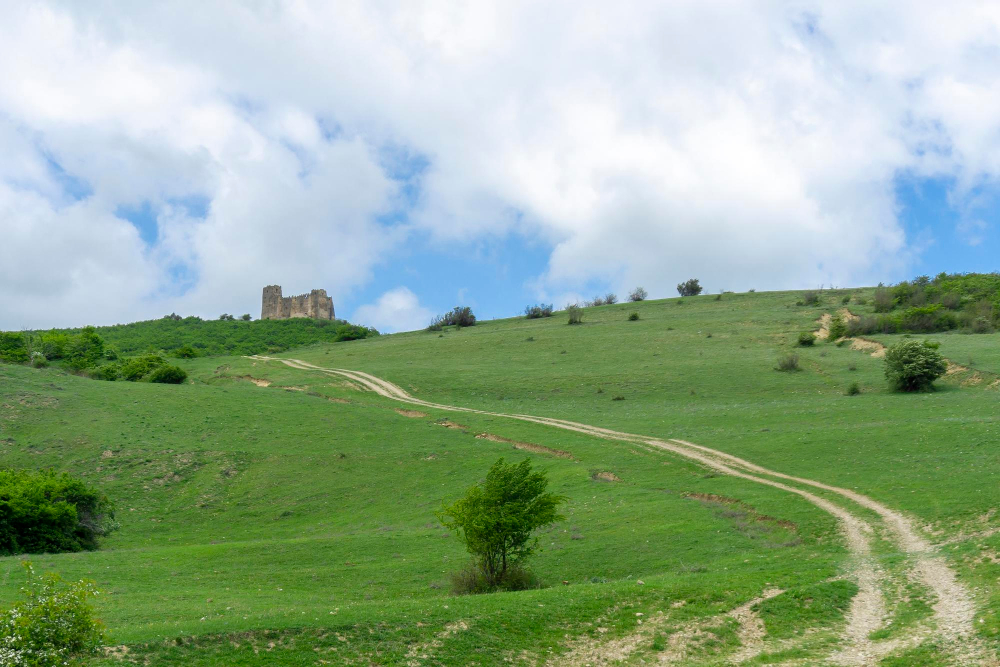
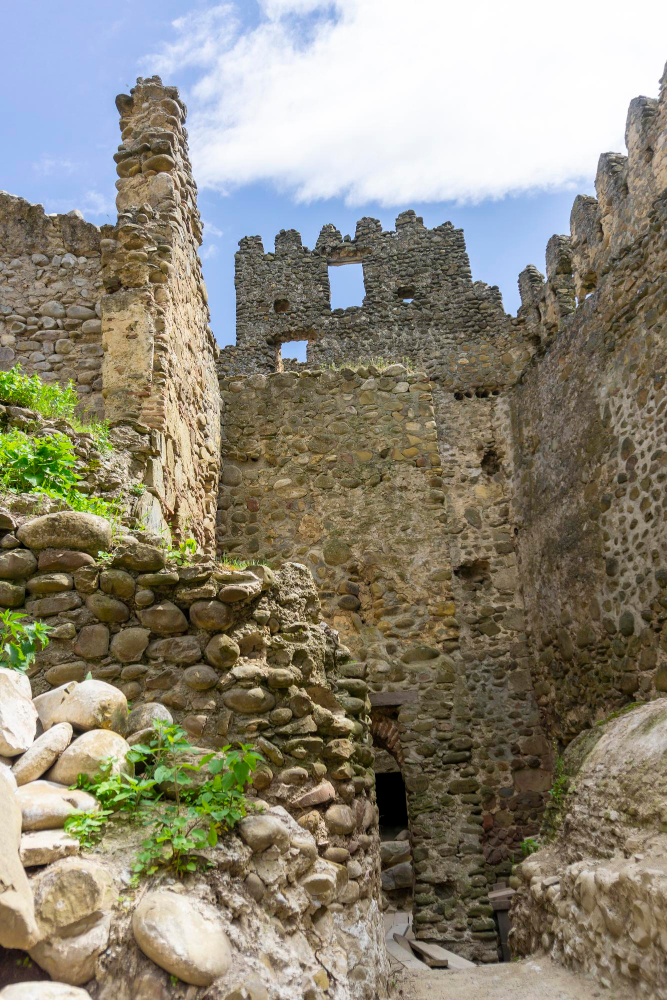
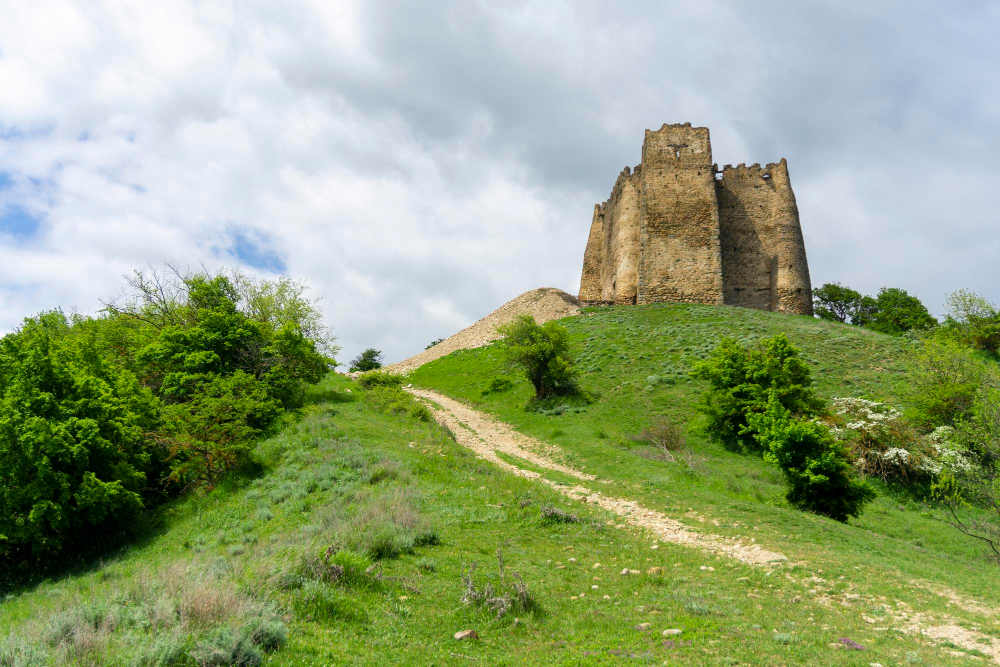
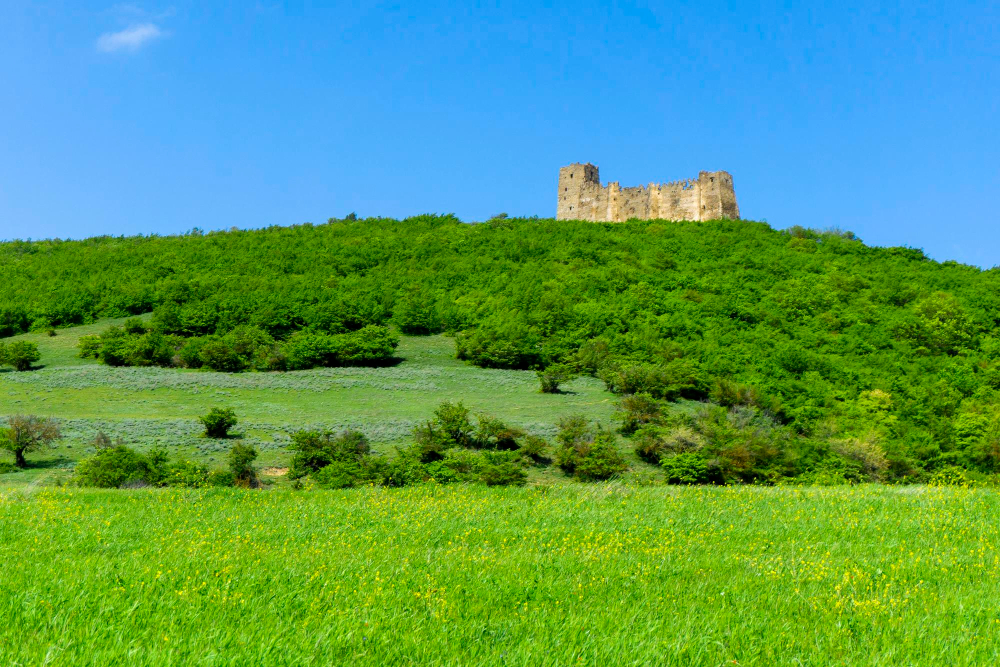
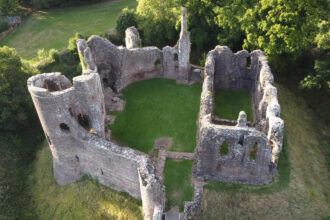
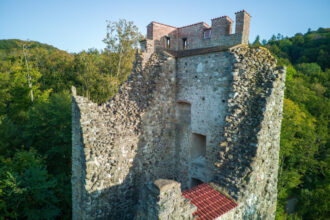
An architectural masterpiece – Skhvilo Fortress impresses with its strategic location and robust construction, which has withstood the test of time. It stretches along a mountain ridge bounded to the west by the gorge of the River Rekhula and to the east by the Tiriponi Valley. This natural setting was crucial to its role as a defensive structure and made access difficult for attackers. The rectangular complex measures approximately 45 by 20 metres and, with its three to four storeys, rises just under 14 metres above ground level. The outer walls, which are between two and four metres thick depending on the source, are crowned by battlements that once provided cover for archers. The fortress also featured a wooden battlement supported by corbels that ran along the rear of the massive walls. Loopholes at eye level allowed for optimal defence against attacks. Particularly striking are the bastions, which gave the fortress additional stability and protection. Whilst the west side is fortified with two semicircular bastions, the east side features four bastions that protruded from the load-bearing wall. The only access to the fortress was on the south-west side. To enter, a makeshift wooden ladder had to be used – an effective defensive mechanism against intruders. Another architectural feature is the small inner courtyard behind the entrance gate. This courtyard contained a second wall that blocked direct access to the adjacent buildings, thereby further strengthening the complex’s defensive capabilities. To the north of the site stands a five-storey square tower, which served as the fortress’s main watchtower. This tower guarded the northern corner of the complex and was a central defensive point. On the south side stands another square tower, which has been reduced to the height of the surrounding walls. Various buildings were erected within the fortress, including residential houses that leaned against the defensive walls, as well as a small church, which was built on two storeys due to the limited space. Near the church there is also a water reservoir that was fed via an aqueduct – a clever method of ensuring the inhabitants’ supply during times of siege. Also noteworthy are the occasionally visible underground passages and other traces of sieges that the fortress has had to endure throughout its long history.
The history of the fortress: power struggles and legends – Skhvilo Fortress is closely linked to the history of the Amilakhvari family and the political developments in Georgia. Its origins date back to a time of feudal ascendancy of the ancestors of the Zevgendenidze family (later Amilakhvari). In the 14th century, the family received the estate as a fief and initially used it as their main residence. Its strategic location and robust construction made Skhvilo an ideal site for the needs of a noble family seeking both prestige and security. In the 16th and 17th centuries, the Amilakhvari family moved their seat to Kvemo Chala and built Amilakhvari Castle there. Consequently, Skhvilo Fortress gradually lost its function as a residence and served exclusively as a defensive structure. Nevertheless, it remained the scene of historical conflicts and political intrigues. One of the fortress’s most famous episodes took place in the 17th century, when Iota Amilakhvari defended himself there against King Rostom of Kartli and defeated him. The fortress also played a significant role in the battles against the Persians, particularly under Givi Amilakhvari, one of the governors of Kartli. Despite this glorious past, the fortress’s importance began to wane with the decline of the Amilakhvari family in the 18th century, and it was eventually abandoned.
Legends and myths surrounding Skhvilo – Like many historical structures in Georgia, Skhvilo Fortress is shrouded in numerous legends that have been passed down from generation to generation. One tale speaks of hidden treasures said to be concealed deep within the fortress’s underground tunnels – a motif that attracts adventurers and treasure hunters alike. Other stories recount the Amilakhvari family’s heroic battles against the Persian invaders and their steadfastness during the sieges. A particularly moving tale is the legend surrounding the small church within the fortress. It is said that a sacred artefact was once kept here, which granted the fortress’s inhabitants divine protection from their enemies. Although there is no historical evidence for these stories, they help to preserve the building’s mystical character.
Current condition and cultural significance – Despite the centuries that have passed since its heyday, Skhvilo Fortress is relatively well-preserved. Its walls still stand as an impressive testament to Georgian craftsmanship and engineering. Yet, like many historical monuments in Georgia, it is now threatened by decay. Urgent restoration work is required to preserve this cultural heritage for future generations. Skhvilo Fortress is not only a testament to medieval architecture but also a symbol of Georgia’s turbulent history. Its walls tell tales of wars, intrigues and the courage of the people who once lived there. For hikers, historians and tourists, it offers a unique opportunity to immerse oneself in the past and enjoy the beauty of the Georgian landscape.
Skhvilo Fortress is more than just a collection of stones. It is a window into a time when power struggles, political intrigue and architectural masterpieces shaped life. With its strategic location, impressive architecture and the stories surrounding its walls, it remains a fascinating and important part of Georgia’s cultural heritage. It is up to us to cherish and preserve this heritage and to pass on the stories of Skhvilo. For every fortress, every ruin carries a message from the past – and Skhvilo is no exception.