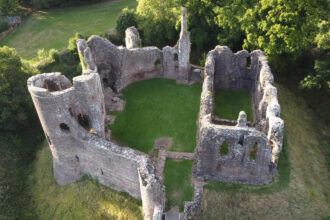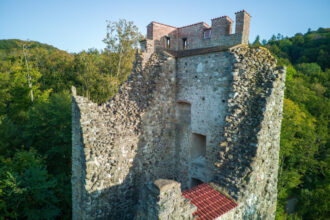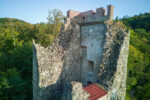

Perched high above the picturesque Moselle Valley, Kobern Lower Castle stands as a silent witness to centuries of history, legends and architectural development. This medieval fortress, also known as Niedernburg, Unterburg or Neue Burg, is a hidden gem near Kobern-Gondorf in Rhineland-Palatinate. Even though its stones are weathered and its walls are but a shadow of their former glory, the stories that live on in its ruins bring a bygone era back to life – a time of knights, noble families and ecclesiastical intrigues.
A landscape steeped in history – Niederburg Castle sits enthroned on a steep, rocky ridge rising some 150 metres above the picturesque village of Kobern. This vantage point gave the castle both strategic importance and a breathtaking view of the surrounding landscape. On the same ridge as Niederburg lies Oberburg Kobern, situated some 50 metres higher. Adjacent to Oberburg stands the striking Matthias Chapel, an architectural gem from the Middle Ages. To the observant visitor, the location of these two fortresses – one higher, one lower – suggests a hierarchical defence system in which each structure fulfilled a unique purpose to ensure the security of the surrounding region. The ridge itself, with its commanding view of the Moselle, underscores the site’s importance for controlling trade routes and securing territorial borders in the Middle Ages.
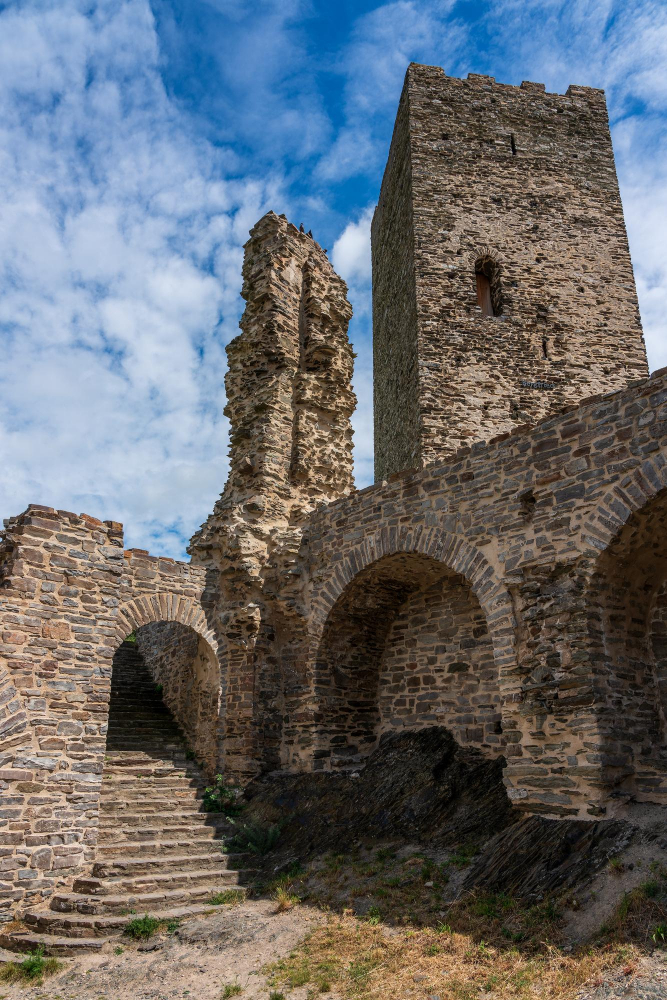
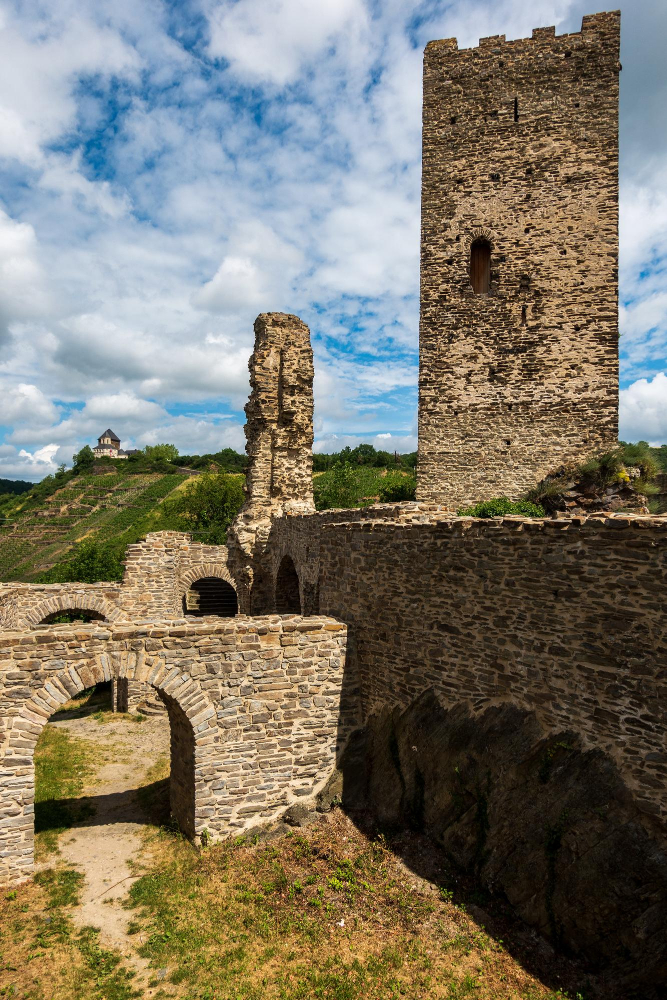
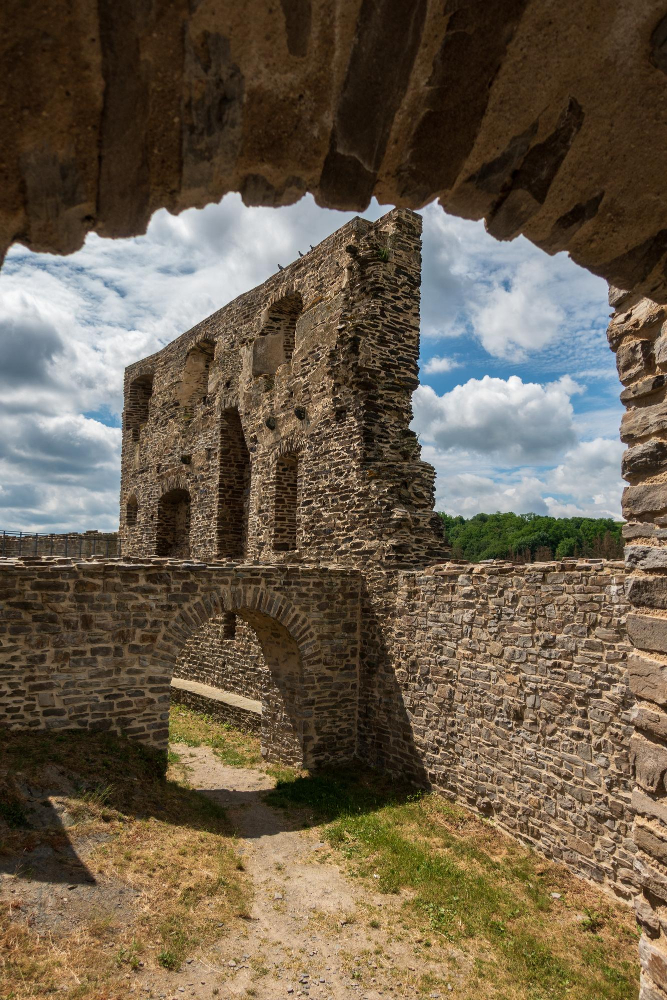
An architectural testament – The almond-shaped design of the Lower Castle bears witness to medieval ingenuity and was conceived to withstand both the passage of time and attacks. At the heart of the fortress stands the imposing three-storey keep, a 20-metre-high tower with massive stone walls. The tower’s high entrance – situated 10 metres above ground level – illustrates the defensive strategies of the time, which made it difficult for attackers to breach the fortress. Measuring 7.5 by 8 metres, the keep offered a safe haven, a last line of defence against any attacker who dared to approach. Although much of the castle is now in ruins, the remains of its late-Gothic great hall – the living quarters – still tell tales of its former splendour. These two-storey buildings, together with a well-preserved cistern and a small tower, offer a glimpse into the daily lives of its inhabitants. The outer defensive walls once included a bailey, which provided additional protection against enemy troops, whilst a deep moat secured the northern flank. Interestingly, parts of the keep were reconstructed in the 19th century, including the upper sections and the battlements, bringing an impression of its original appearance back to life. Further restoration work in the late 20th century ensured that the great hall and the cistern were preserved for future generations.
A Chronicle of Power and Decline – The history of Niederburg Kobern is closely intertwined with the history of its noble owners and their connections to ecclesiastical powers. Construction of the castle began in the mid-12th century; during this period, it developed into an impressive fortress for the local nobility. Historical records first mention the fortress in 1195, when its owner swore allegiance to the Archbishop of Trier – a move that was symbolic of the feudal conditions of the time. The noble family of Isenburg-Kobern held the castle until the 13th century, when their male line died out. Through Cecilia, the heiress of the Isenburg-Kobern dynasty, the castle passed to Frederick II of Neuerburg, a member of the Vianden family. However, this branch of the Vianden family also met a similar fate and died out in the early 14th century. This was followed by the transfer of the castle and the surrounding lands to the Archdiocese of Trier, which marked the end of private noble ownership. The fortress’s final decline occurred during a turbulent period in European history. In 1688, amidst the conflicts of the Nine Years’ War, French troops ravaged the castle and reduced it to ruins. Although its defensive function was thus ended, its legacy as a cultural and historical landmark remained intact.
Legends and stories that haunt the stones – Niederburg Kobern is not merely a relic of feudal architecture – its stones form the foundation of myths and legends that deepen its mystery. Locals tell of ghostly knights who guard the ruins on moonlit nights, their spectral presence forever bound to the land they once defended. Others recount tales of hidden treasures concealed during the castle’s destruction, waiting to be discovered by those brave enough to venture into its depths. One particularly fascinating legend concerns Cecilia, the last of the Isenburg-Kobern line. It is said that she wanders the ridge between Niederburg and Oberburg, a solitary figure in search of something that has fallen victim to time. Whether she seeks justice for her family’s downfall or simply mourns the legacy that slipped through her fingers remains unclear. Such tales have drawn storytellers, artists and curious travellers to this place for generations.
A journey for visitors – Today, Niederburg Kobern invites visitors to delve into the pages of history. Unlike many other medieval ruins, which require an entrance fee or guided tours, this castle is freely accessible all year round. The route to the fortress begins with a narrow path from the Mühlbach Valley, winding its way through dense foliage and rugged terrain – the perfect start to an adventure into the past. As you ascend, the view changes, revealing panoramic vistas of the Moselle Valley that are every bit as beautiful as those of the Rhine. Whilst exploring the ruins, visitors can marvel at the keep, take a look inside the remains of the great hall and study the architectural details that hint at the castle’s former splendour. Although the climb up the tower through a narrow opening requires caution, many agree that it is well worth the effort – if not for the interior, then for the thrill of walking in the footsteps of knights from centuries past. For those seeking deeper meaning, the castle is more than just a tourist destination. Its designation as a protected cultural monument reaffirms its significance as a symbol of local heritage. Efforts to preserve and maintain the ruins continue, ensuring that Niederburg remains a source of inspiration for generations to come.
Timeless Paths and Echoes of the Past – Standing amidst the ruins, it becomes clear that Niederburg Kobern is more than just a forgotten fortress – it is a bridge to another time. It connects modern visitors with the people who lived, loved and fought within its walls. Its legacy lives on, etched into every stone and whispered across every ridge, weaving history and myth into a tapestry as captivating as the Moselle landscape itself. Whether you are a history lover seeking to unravel the mysteries of medieval Germany, or a hiker drawn to the romance of ancient ruins – Niederburg Kobern offers a journey of discovery like no other. From its breathtaking views to its rich heritage, it beckons all who wish to experience the enduring mystique of the past.