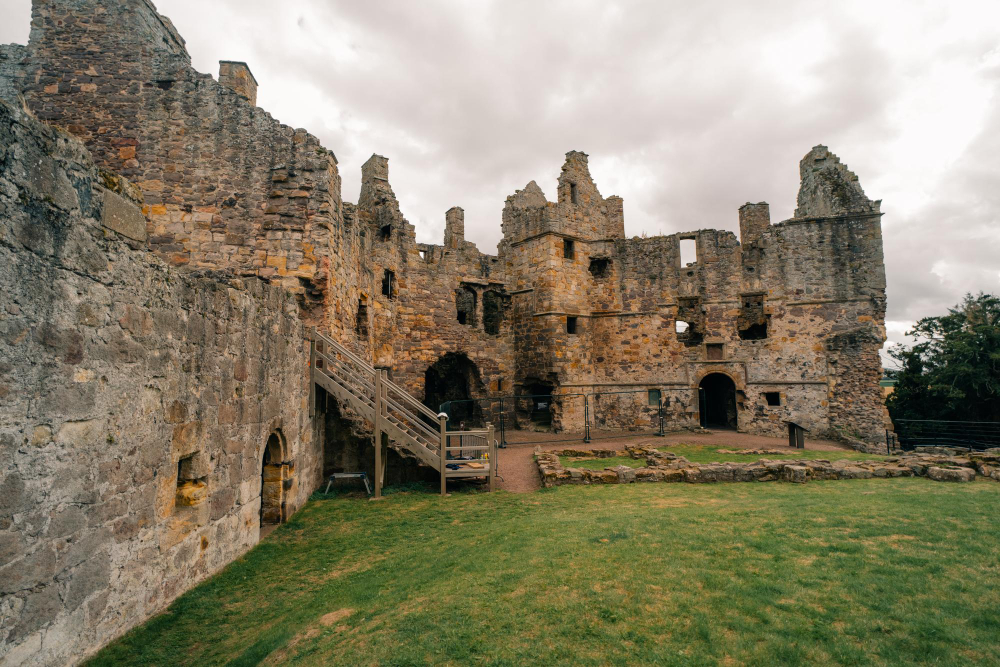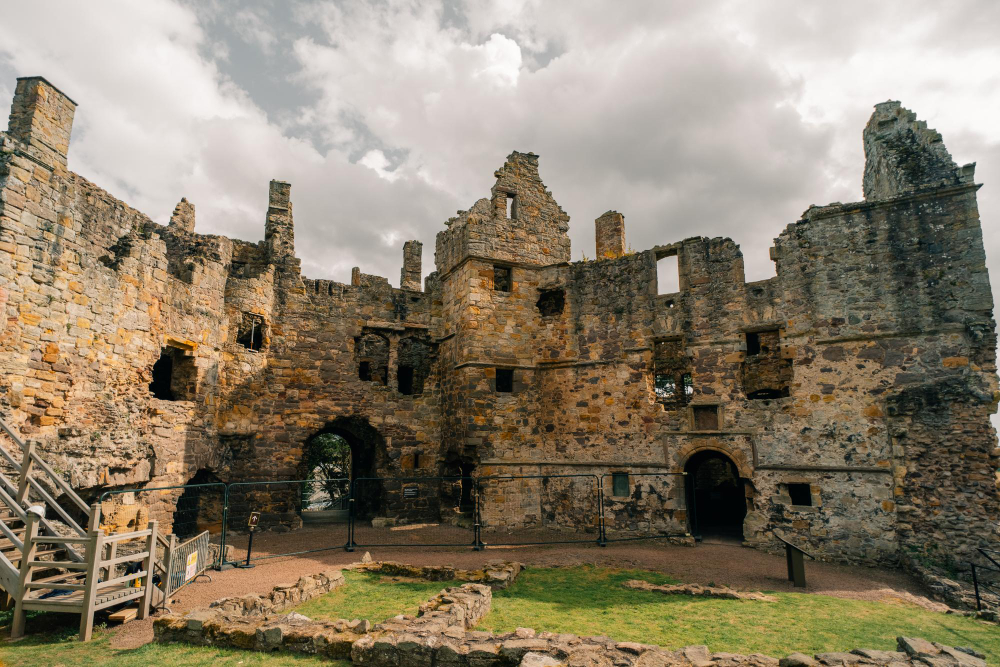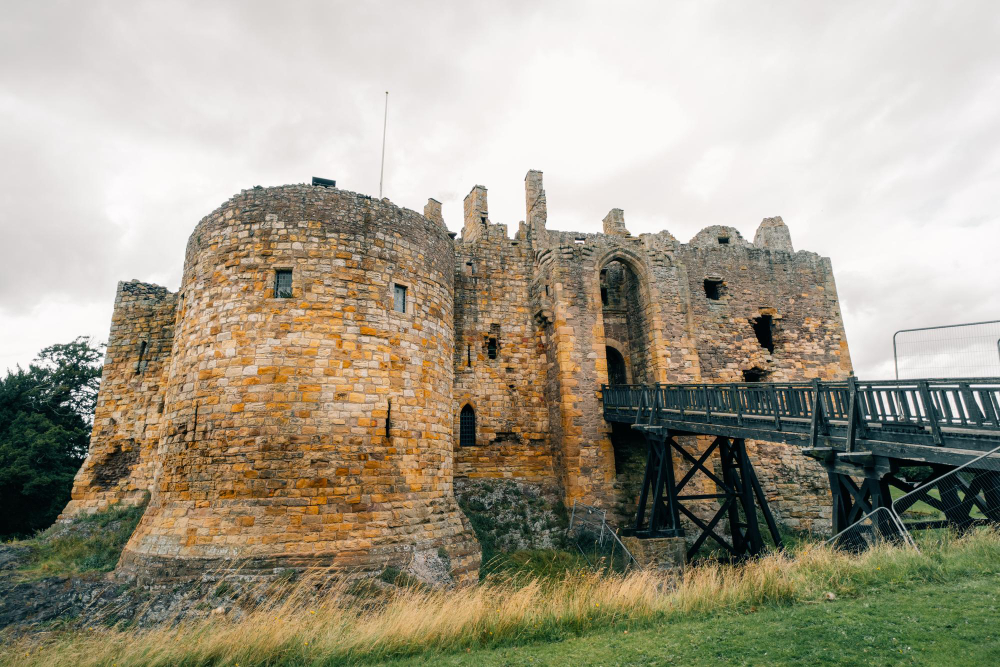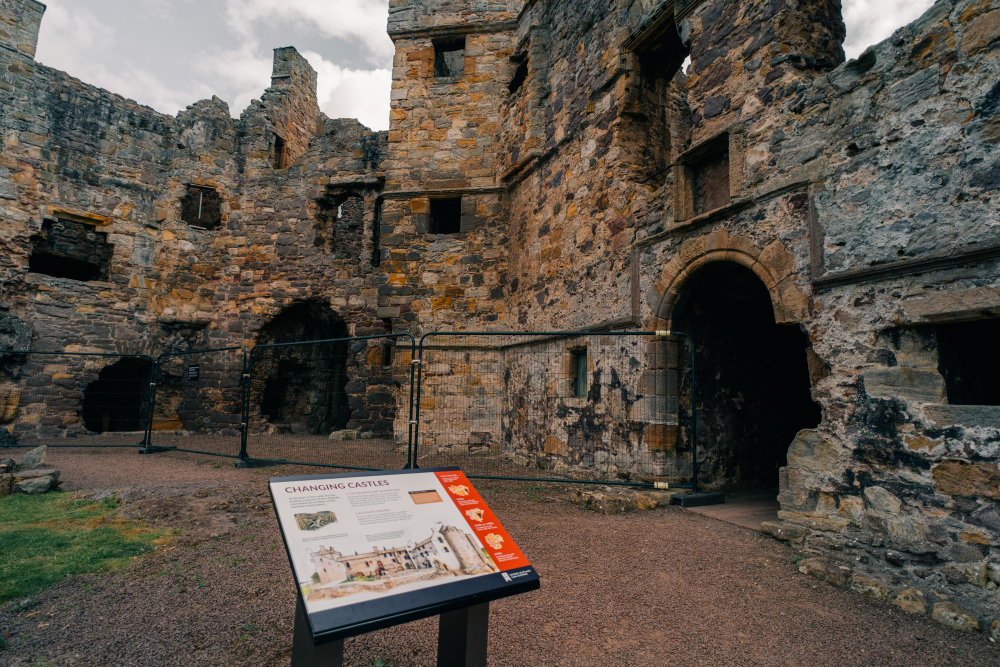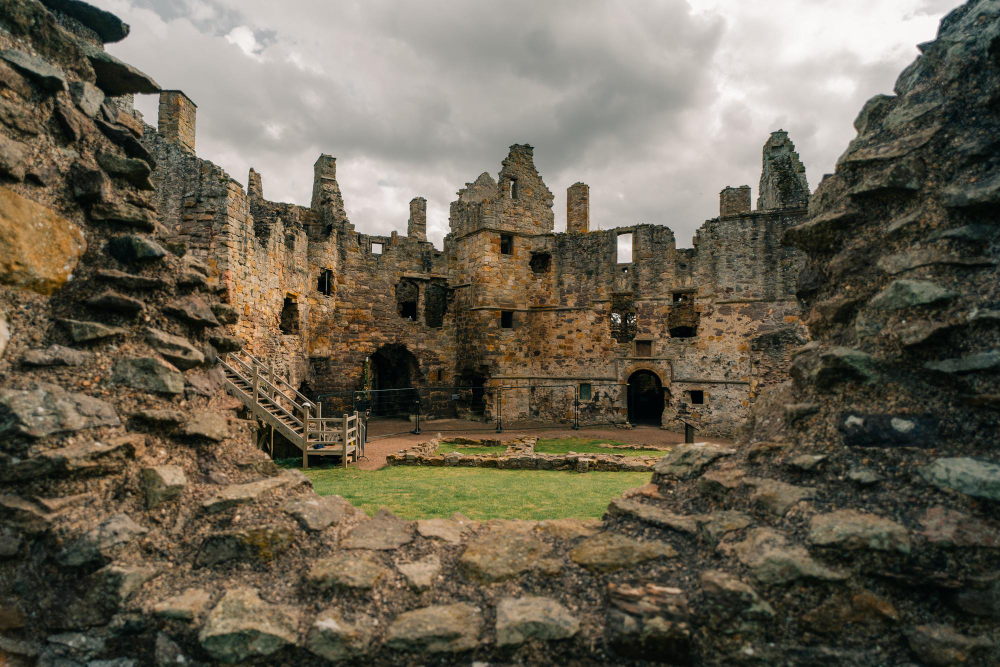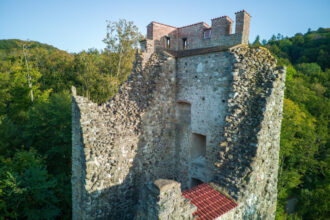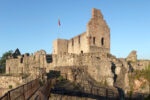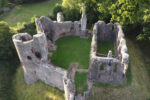

The idyllic village of Dirleton in the Scottish region of East Lothian is renowned for its historic castle ruins, the impressive Dirleton Castle. With its picturesque setting on a small rocky outcrop and its fascinating history, this structure attracts numerous visitors every year. Once a proud fortress, now a silent witness to times long past – the history of Dirleton Castle is characterised by medieval splendour, intrigue and centuries of power struggles.
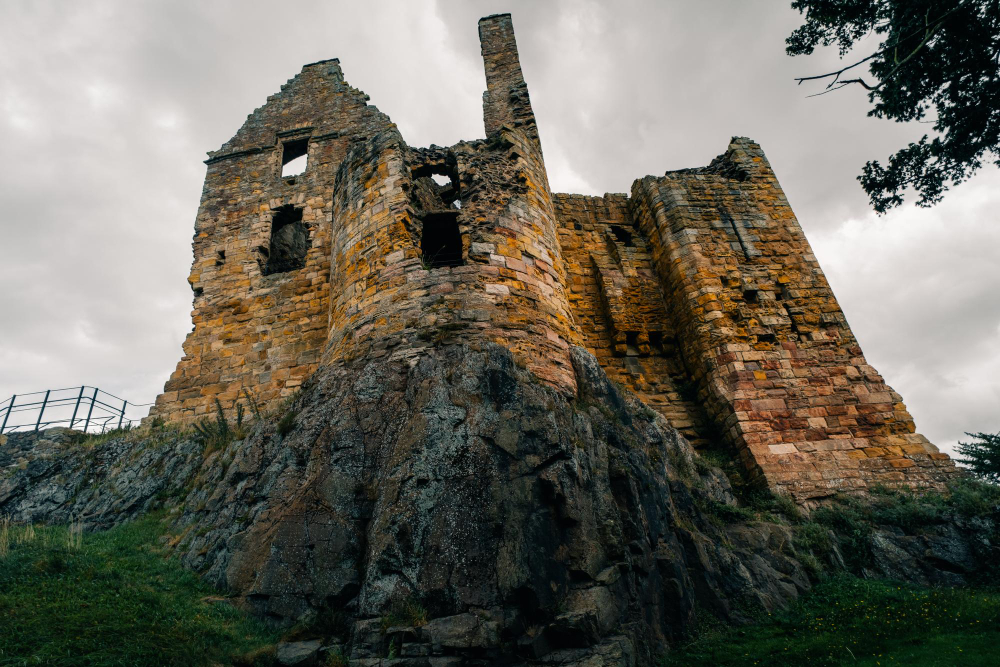
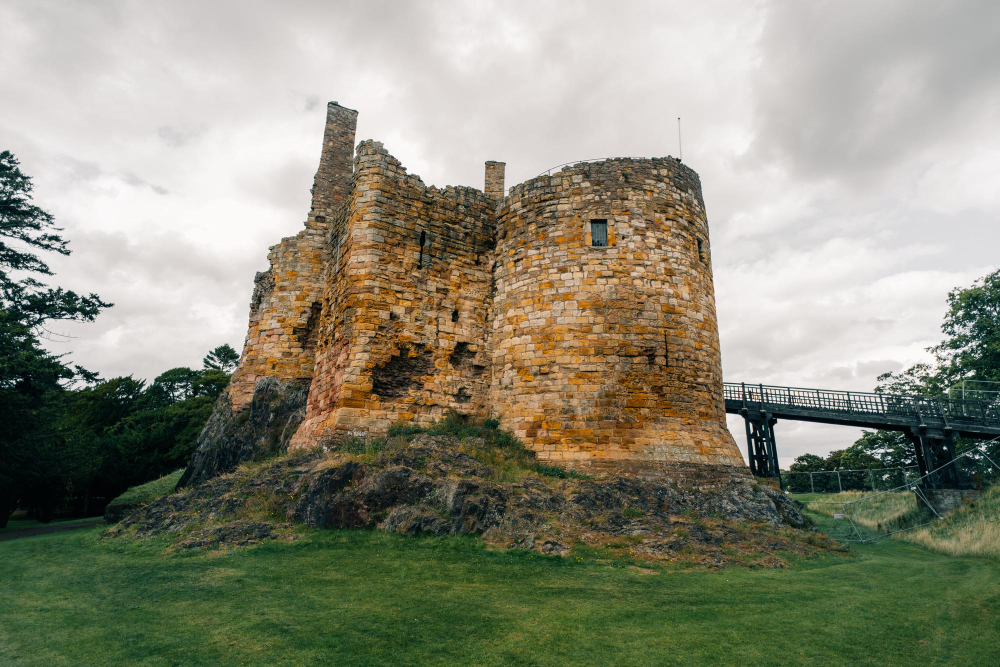
A strategic structure on imposing grounds – Dirleton Castle lies at the eastern end of a range of hills and is perched on a rocky outcrop that seems tailor-made for the construction of a defensive structure. This elevated position allowed control over the important trade route from Edinburgh along the coast – a strategic advantage that made the castle a valuable asset. The origins of Dirleton Castle date back to the 12th century. At that time, the barony of Dirleton, whose lands stretched as far as the Firth of Forth, passed into the possession of William de Vaux. The de Vaux family initially erected a wooden fortress on this site, but in the 13th century this was replaced by a stone structure – the precursor to today’s Dirleton Castle. The stone required came from a nearby quarry in Gullane.
A scene of wars and conquests – The castle’s eventful history began with the attacks by the English King Edward I in 1298. His troops stormed the complex and occupied it, whilst extensions were built to use the castle as a fortress. However, Robert the Bruce, who later became King of Scotland, recaptured Dirleton Castle in 1311. Parts of the English extensions were destroyed, and the castle returned to the ownership of the de Vaux family. A new chapter in the castle’s history began during the reign of David II, King of Scotland. Through the marriage of John Halyburton to a daughter of the de Vaux family, the castle passed into the possession of the Halyburtons. Yet even under its new lords, Dirleton Castle was not spared from attacks: William Douglas, the first Earl of Douglas, captured the fortress in 1363 during a rebellion against King David II.
Expansion under the Halyburtons – Following its recapture by the Halyburtons, an extensive phase of expansion and fortification of the castle began, spanning several generations. It was particularly under Sir Walter Haliburton, a distinguished politician and Lord High Treasurer of Scotland, that the castle acquired its magnificent extensions and new defences. The work continued into the 15th century, when King James IV, during a visit, provided funds for further building projects. The Halyburtons’ influence grew steadily, but following the death of Patrick Haliburton, the fifth Lord Haliburton of Dirleton, who had no male heir, the castle passed to the Ruthven family through marriage. This marked the end of the Halyburtons’ era at Dirleton Castle.
Intrigues and conspiracies amongst the Ruthvens – The Ruthvens, a distinguished noble family, left their mark on Dirleton Castle – albeit often under dramatic circumstances. Patrick Ruthven, the third Lord Ruthven, was implicated in the plot to assassinate David Rizzio, a close confidant of Mary, Queen of Scots. His son William Ruthven, the fourth Lord Ruthven, was appointed the first Earl of Gowrie in 1581 and led the so-called ‘Ruthven Raid’, during which King James VI was abducted. This act ultimately led to his downfall and execution. The consequences of the political intrigues were devastating: the Ruthven family lost all their titles, estates and rights. Dirleton Castle subsequently passed to Thomas Erskine, the first Earl of Kellie.
Decline into ruin -Following further changes of ownership, the castle fell into disuse by the mid-17th century. During the English Civil War, Dirleton Castle was captured by Oliver Cromwell’s troops in 1650 and briefly used as a military hospital. Later, the castle was sold to John Nisbet, who had Archerfield House built nearby. This marked the beginning of Dirleton Castle’s slow decline. Only the gardens and parks surrounding the castle were preserved and continued to be maintained. Today, Dirleton Castle is owned by the National Trust for Scotland and managed by Historic Scotland.
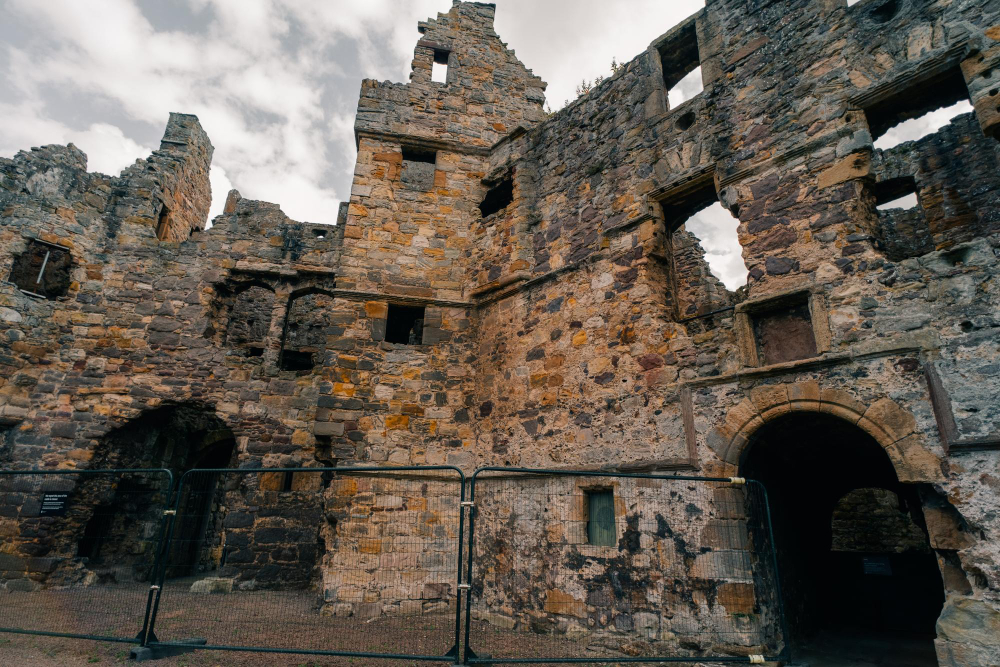
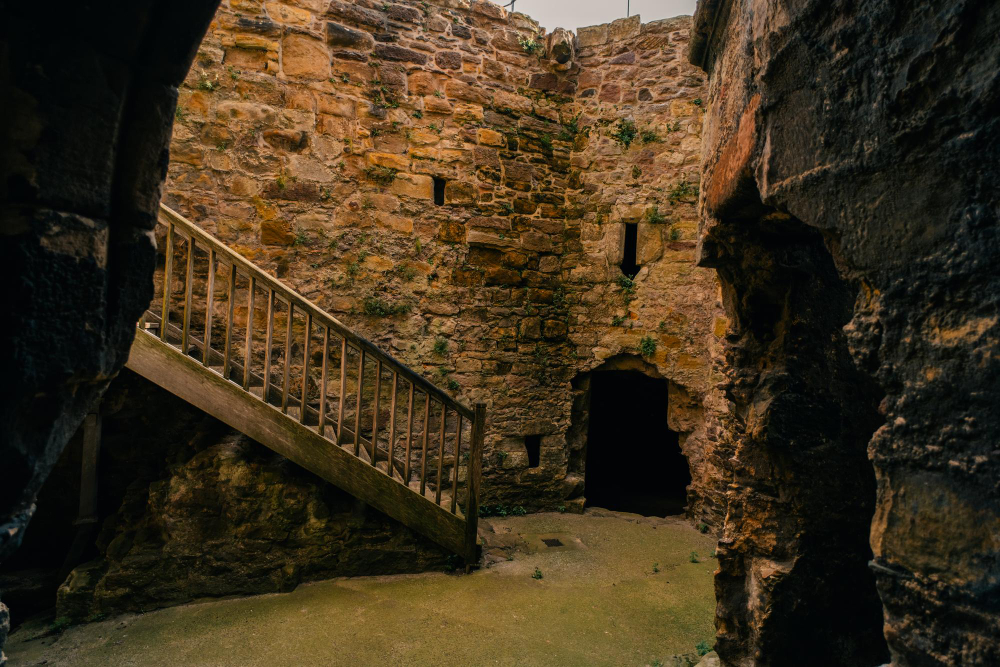
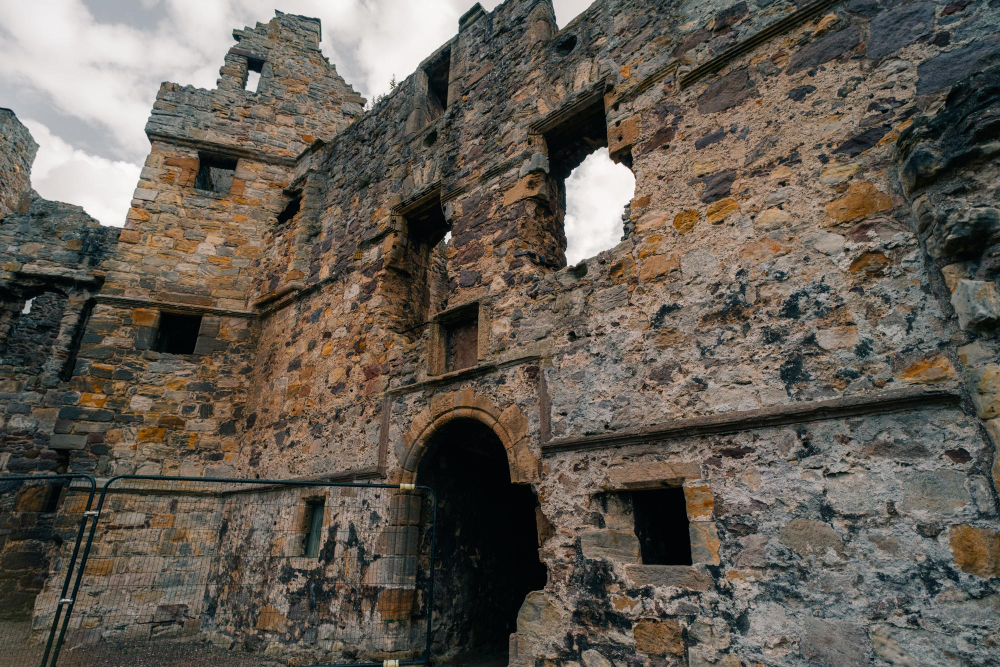
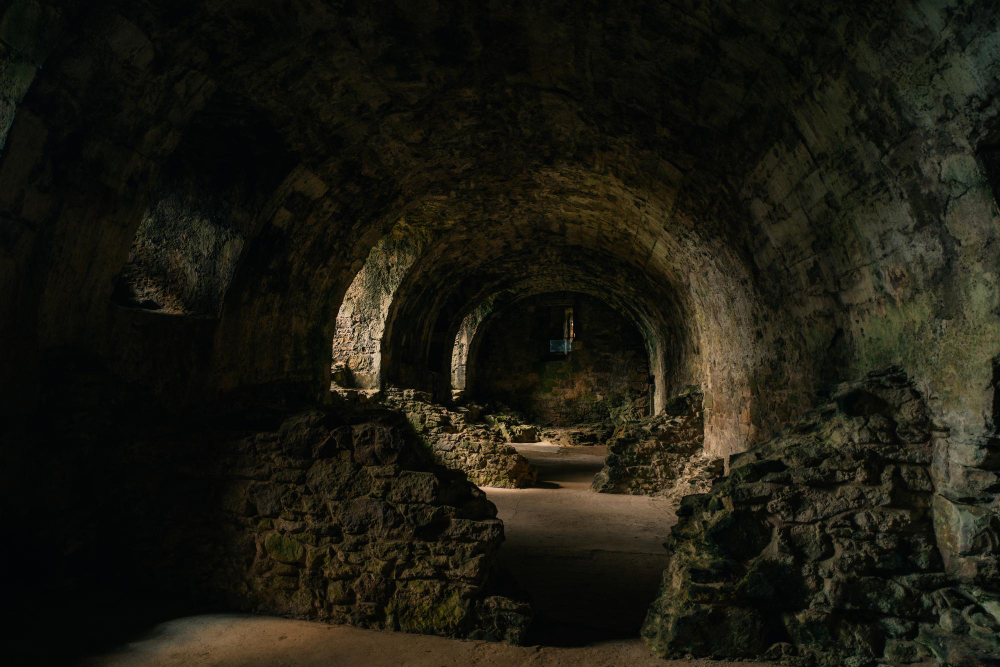
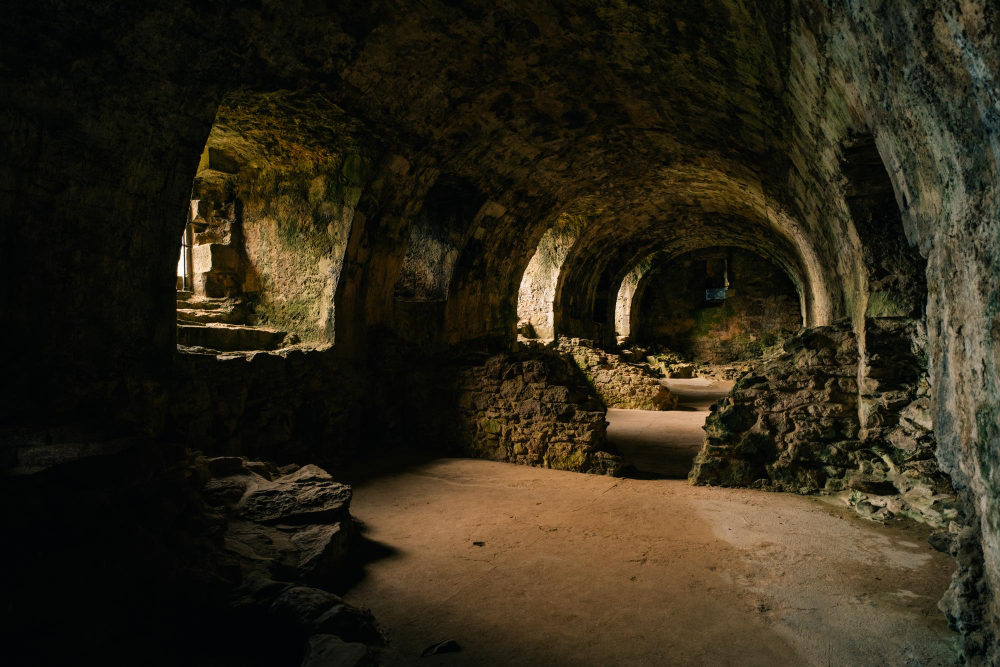
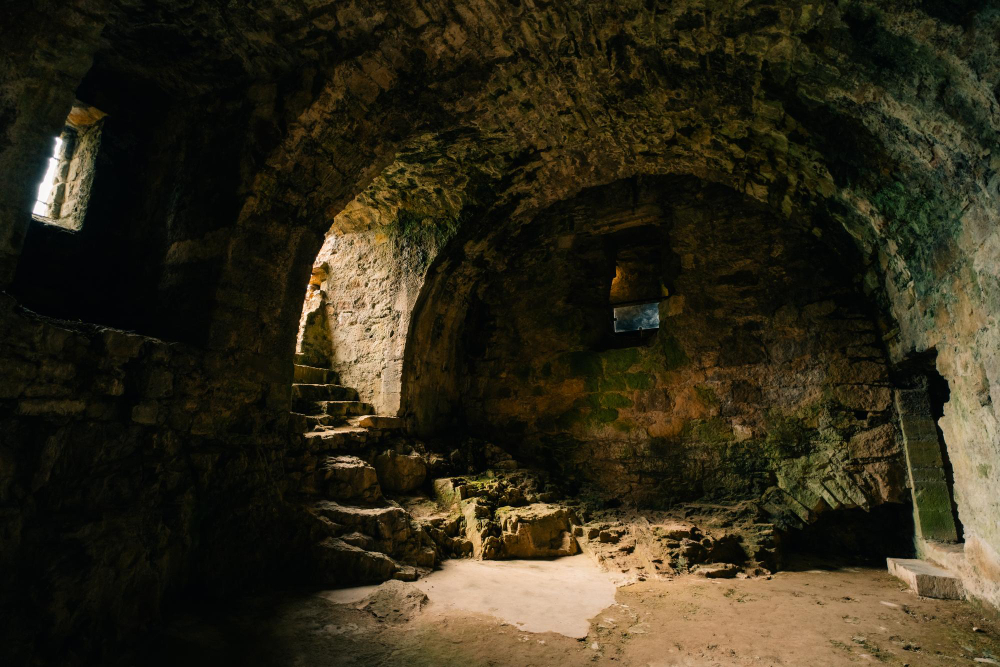
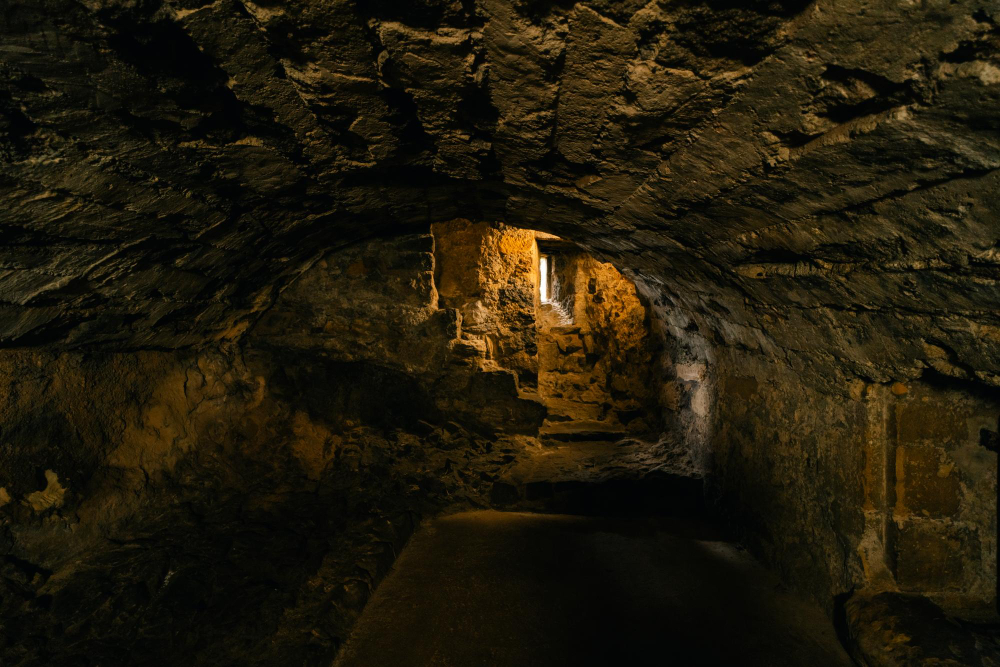
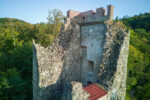
Architectural highlights of the castle – The architecture of Dirleton Castle is just as impressive as its history. The complex follows the contours of the rocky outcrop and is therefore laid out as an irregular rectangle. The oldest part of the castle, a massive 13th-century round tower, is situated in the south-west. Particularly noteworthy are the well-preserved architectural details, such as the ornate fireplaces and the window recesses with benches. These bear witness to the wealth and influence of the original owners. Later, elaborate extensions were added to the east and south, including the gatehouse with its drawbridge and portcullis, as well as the east wing with a massive defensive wall. The lower floors housed storerooms and baking ovens, whilst the upper floors contained living quarters, a chapel and the magnificent great hall. The most recent part of the castle is the so-called Ruthven Extension, a three-storey residential building dating from the 16th century. This section shows a marked change in architectural style: the windows are larger and let in more light, and the masonry features more decorative elements.
A ruin steeped in history – Today, Dirleton Castle is far more than just an impressive ruin. It is a place that brings history to life and allows visitors to immerse themselves in times gone by. From the medieval splendour of the de Vaux and Halyburton families to the dramatic intrigues of the Ruthvens – every era has left its own unique mark. Yet the castle’s quiet beauty tells not only of power struggles and wars, but also of change and transience. Its gardens, designated as a landscape conservation area, bring the peaceful moments of its long history back to life and invite visitors to linger. Dirleton Castle remains a must-see for history and architecture enthusiasts, as well as for anyone who wants to be captivated by tales of heroism, betrayal and the inexorable passage of time.