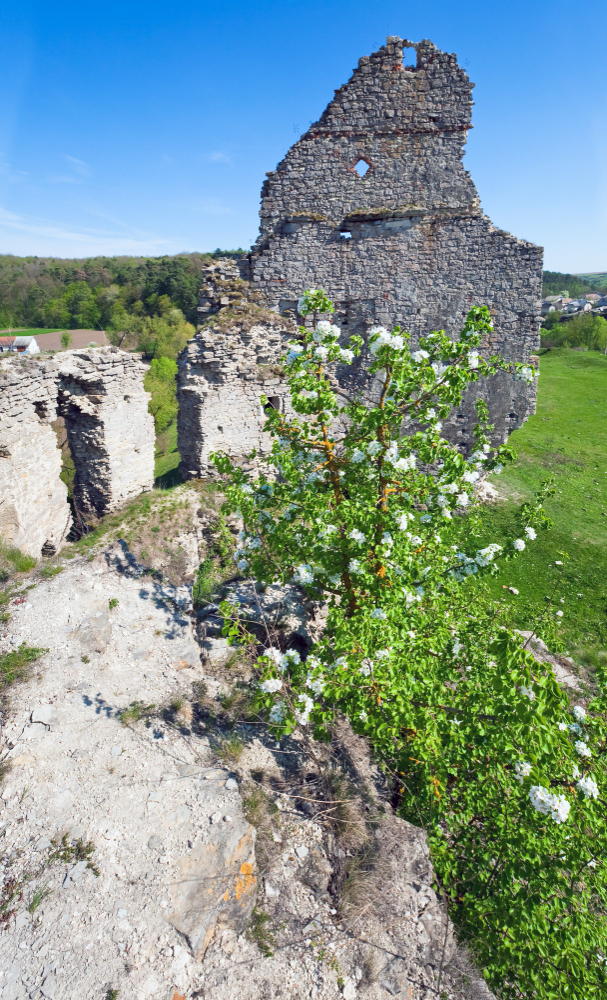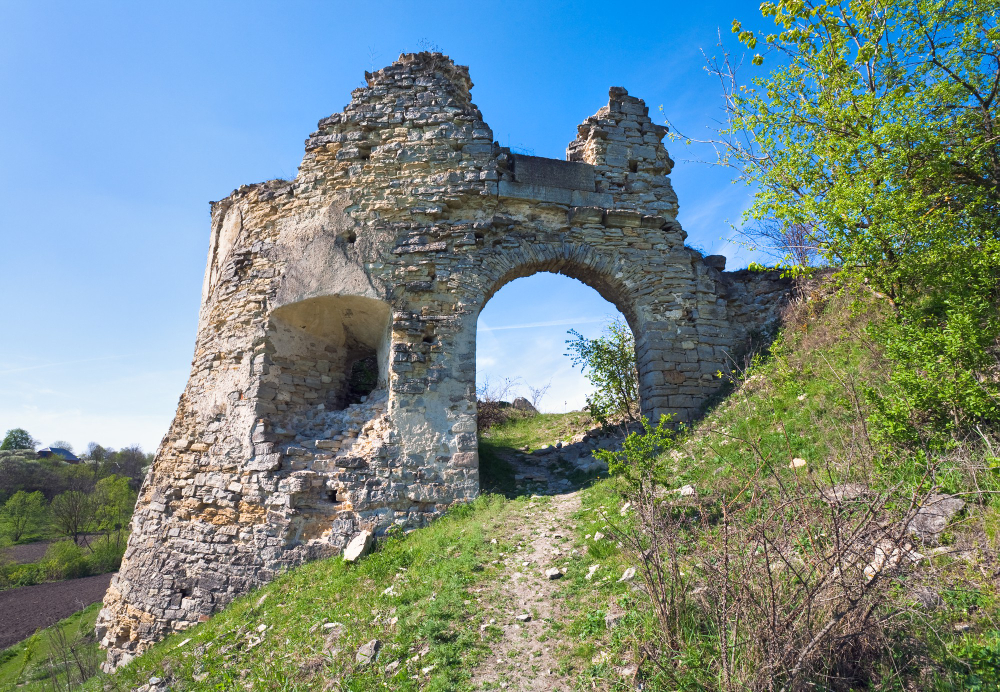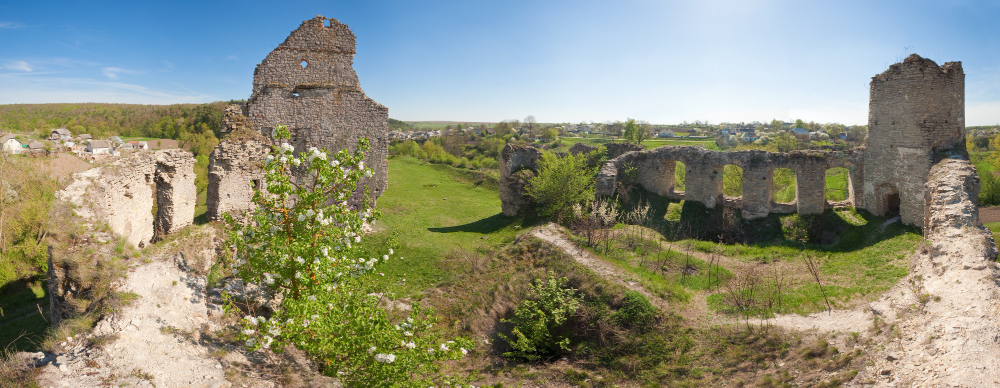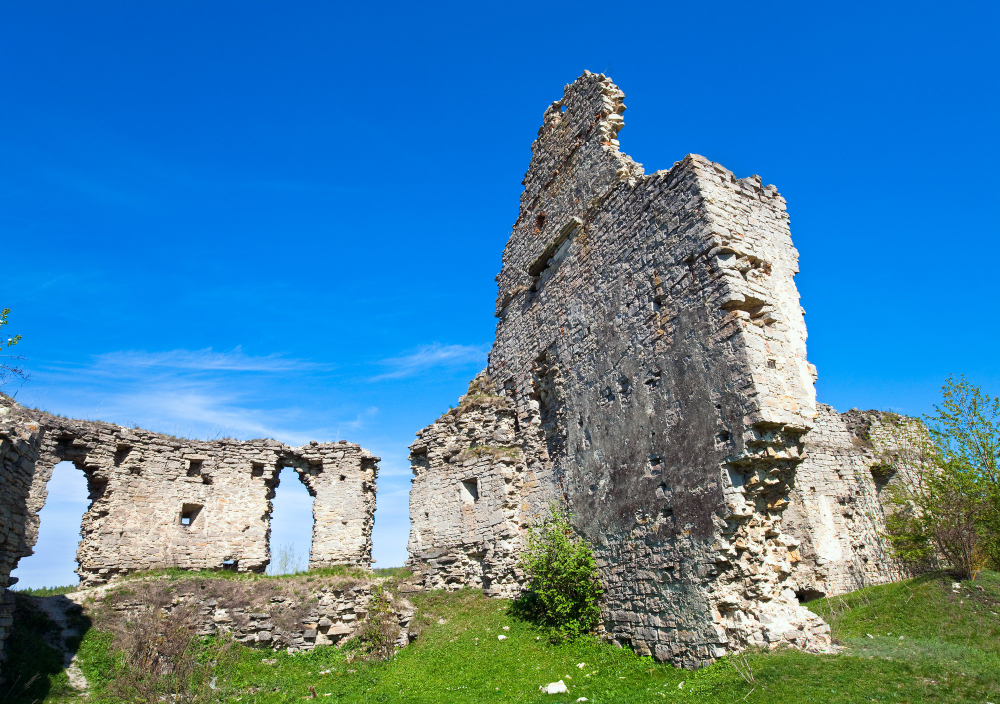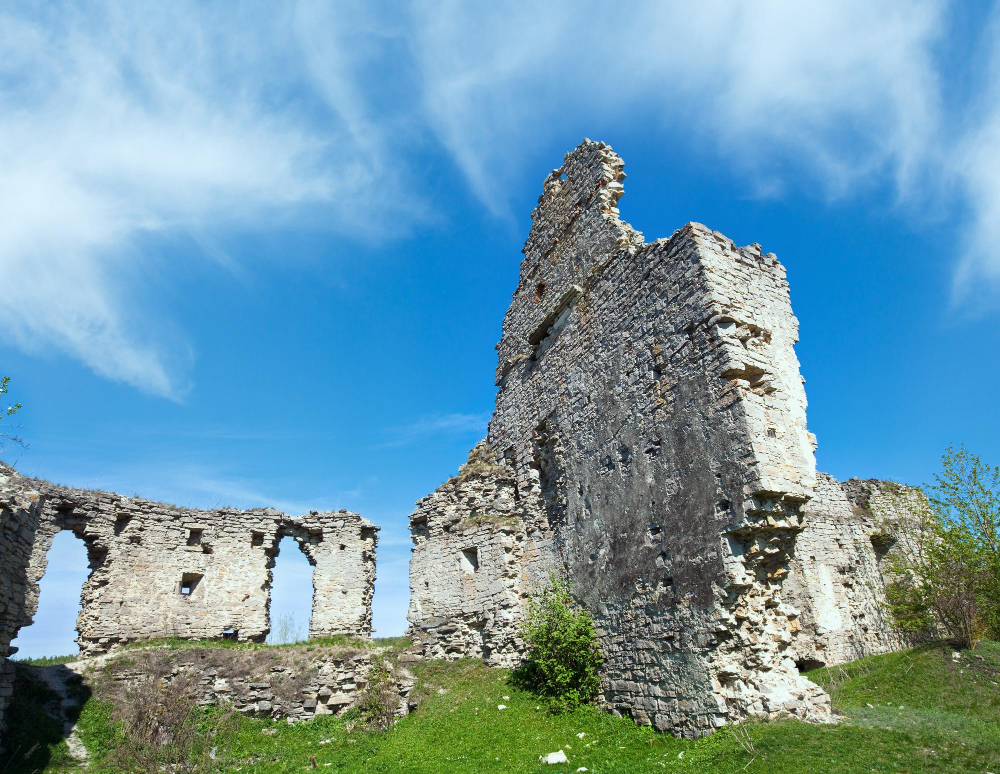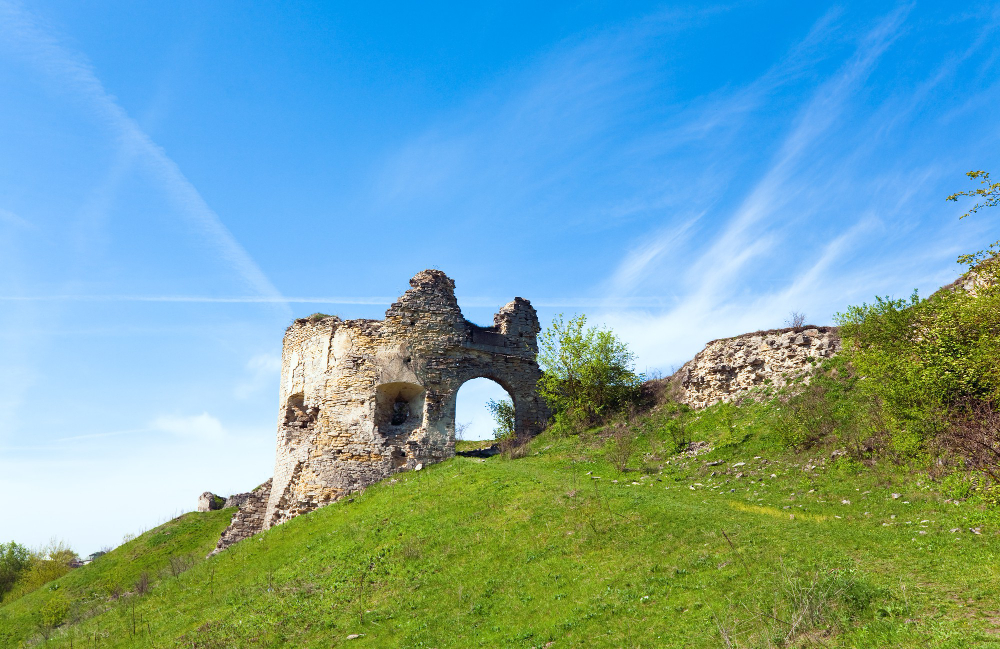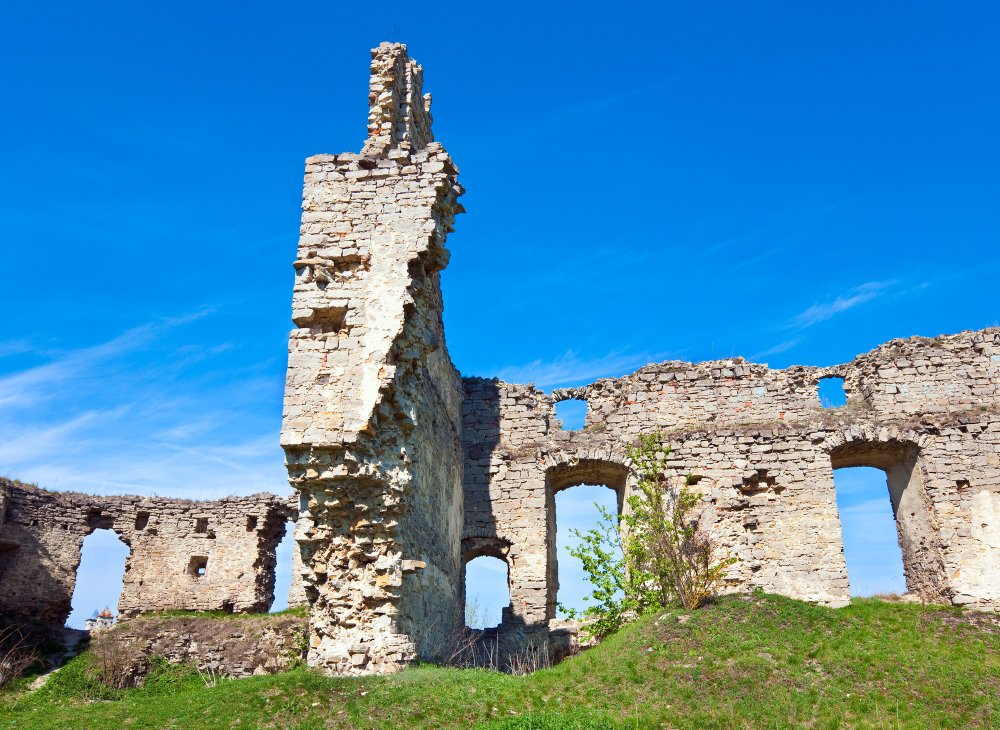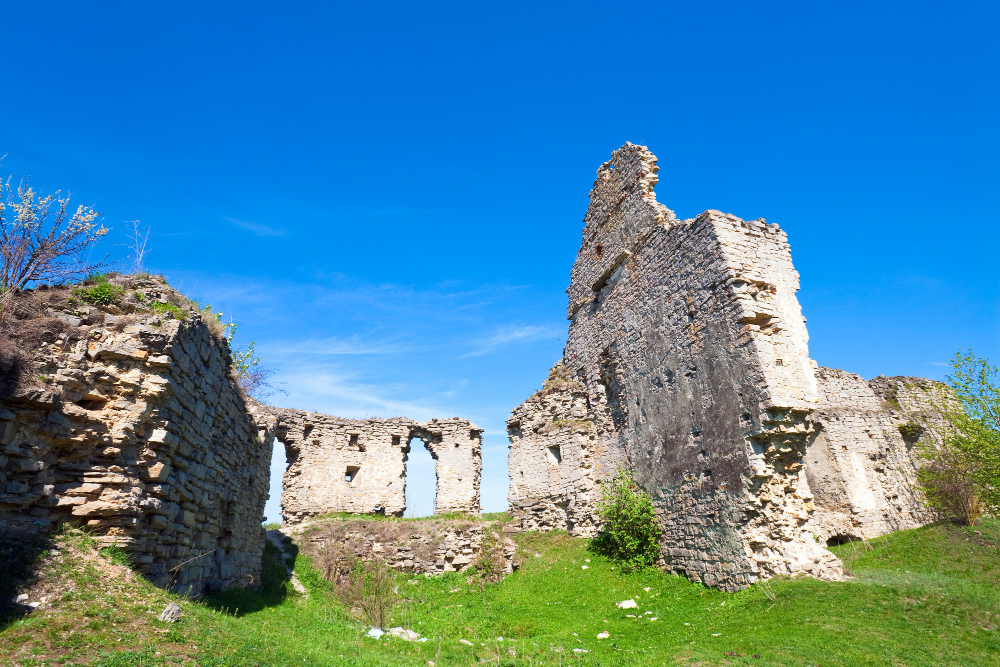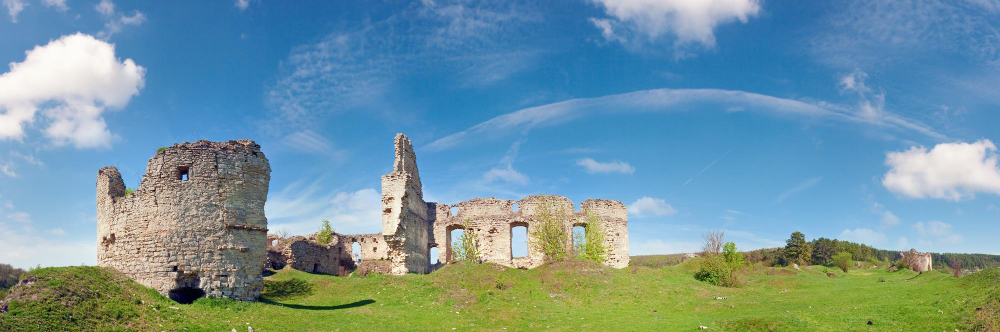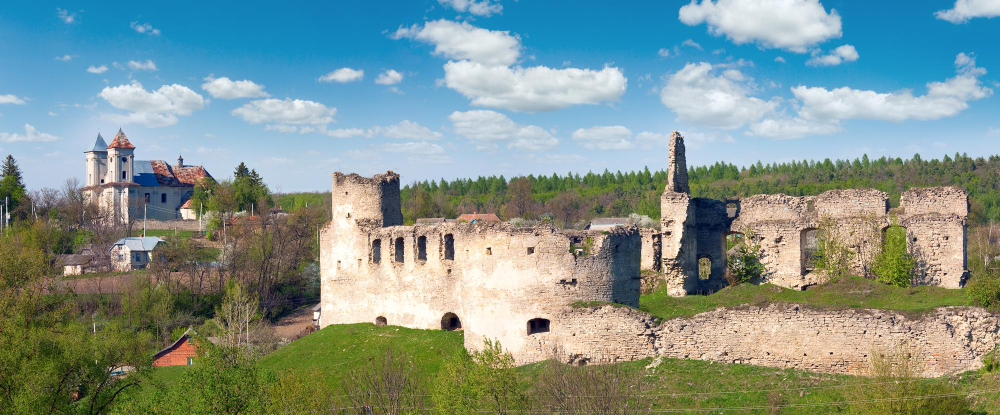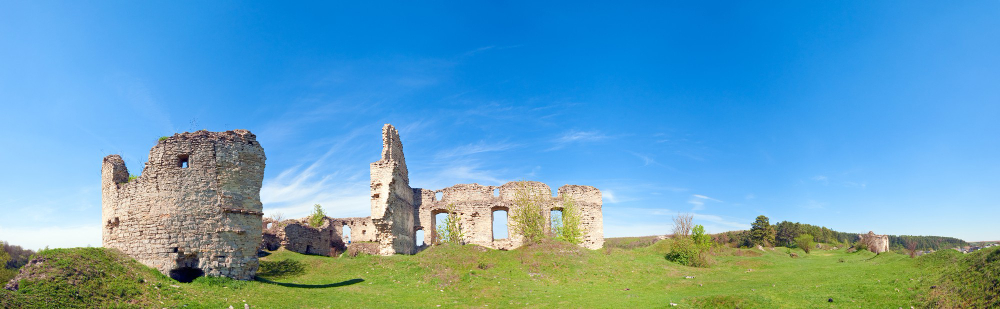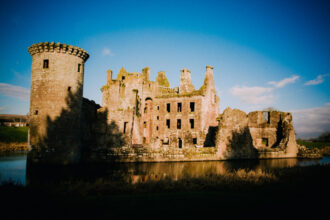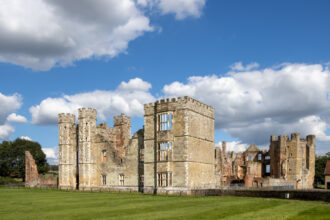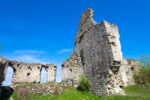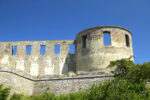

High above a bend in the river in western Ukraine stands a ruin which, at first glance, looks more like a feature of the landscape than a former nobleman’s residence. Crumbled walls, overgrown towers and steep slopes characterise the appearance of Sydoriw Castle, known in Ukrainian as Sydoriwskyj samok and in Polish as Zamek w Sidorowie. Yet behind the weathered stones lies a story of borderland politics, military incursions, aristocratic wealth and centuries of decay. The castle is situated in the village of Sydoriw, around seven kilometres south of Husiatyn in what is now the Ternopil Oblast. Its location was not chosen at random: the complex stood on a hill surrounded on three sides by a river. This natural protection made the site militarily attractive. At the same time, in the 17th century, the region lay in an unstable border area of what was then the Polish–Lithuanian Commonwealth, which was repeatedly affected by wars, uprisings and raids. Today, Sydoriw is known above all for its unusual silhouette. The elongated ruin with its towers is occasionally referred to as the ‘Flower on the Dniester’ – even though the fortress itself is not situated directly on the main course of the Dniester. The nickname refers to the impression created by the remaining bastions and walls from a distance: like petals or jagged peaks, they stand out against the wooded valley. This poetic description is part of the local perception of the ruins, but it must not obscure the fact that the structure once served a serious military purpose.
A fortress in a vulnerable borderland – The castle was built in the 1640s by Marcin Kalinowski, an influential magnate and military figure of the Polish–Lithuanian Commonwealth. Kalinowski held high offices, including that of Crown Field Marshal, and was one of the large landowners who controlled extensive estates in the south-eastern regions of the Republic. At a time when fortified residences were not only status symbols but also places of refuge and military strongholds, he had a significant complex built in Sydoriw. The building was constructed during a period of great tension. The Ukrainian territories of the Republic at that time were marked by social conflicts, Cossack uprisings and clashes with the Ottoman Empire and the Crimean Khanate. The Khmelnytsky Uprising, which began in 1648, in particular, shook the political order in the region. Noble families therefore invested increasingly in fortifications. Castles, fortresses and city walls were intended to secure estates, protect administrative centres and, in an emergency, enable military resistance. In its original form, Sydoriw Castle was considerably larger and more fortified than the present-day ruins would suggest. According to historical descriptions, the complex stretched for approximately 178 metres from north to south. It featured seven towers and was surrounded by mighty walls. The ground plan was elongated and followed the natural ridge of the terrain. The combination of man-made fortifications and the steep slopes, protected by the river, gave the castle a strategic advantage. The fact that the complex had seven towers was remarkable for a noble residence of this scale. Towers served several purposes at once: they enabled the surrounding area to be observed, provided space for defenders and reinforced particularly vulnerable sections of the walls. In the age of firearms, however, fortresses increasingly needed to be protected against artillery. Consequently, thick walls, bastions and skilfully utilised high ground played an ever greater role.
Marcin Kalinowski and the Price of the Struggle for Power – The castle’s founder, Marcin Kalinowski, was a defining figure in the Polish-Lithuanian aristocratic circles of his time. His career illustrates how closely private power, military service and land ownership were intertwined. Magnates such as Kalinowski often commanded their own troops, owned vast estates and wielded considerable political influence. Kalinowski died in 1652 at the Battle of Batoh, one of the bloodiest episodes of the Cossack War. The conflict ended in a heavy defeat for the Polish-Lithuanian troops at the hands of Cossack-Tatar forces. However, the death of the castle’s builder did not spell the immediate end for the castle. It initially remained in his family’s possession and continued to be one of the region’s most important fortified residences. It was precisely these decades, however, that made it clear how limited even strong walls were in guaranteeing protection. The political and military conflicts of the 17th century engulfed the entire border region. Villages were ravaged, power structures shifted, and many fortifications were repeatedly besieged, damaged or provisionally repaired following an attack.
The Turkish campaign of 1672 – Sydoriw suffered decisive destruction in 1672. That year saw the start of a major campaign by the Ottoman Empire against the Polish–Lithuanian Commonwealth. Sultan Mehmed IV led an army into the contested region of Podolia. The attack culminated in the capture of the important fortress of Kamianets-Podilskyi and the Treaty of Buchach, which forced the Republic to cede extensive territories and pay tribute. In the course of this Ottoman offensive, Sydoriv Castle was also severely damaged. Sources on local architectural history cite the Turkish invasion of 1672 as the pivotal turning point in the history of the complex. As with numerous castles and towns in the region, the consequences were not merely structural in nature. Military campaigns brought with them looting, loss of life and economic damage. Even where walls remained standing, there was often a subsequent lack of funds, labour and political stability for a complete reconstruction. The Ottoman Empire was unable to permanently extend its rule over parts of Podolia. Nevertheless, the region remained characterised by military instability for a long time to come. The Treaty of Karlowitz of 1699 fundamentally altered the balance of power in Eastern Central Europe and resulted in the Republic regaining lost territories. For many local fortifications, however, this development came too late: their military significance had diminished, and the high costs of restoration were often no longer proportionate to the benefits.
From Fortification to Abandoned Ruin – In the 18th century, the owners finally abandoned the castle. This marked the beginning of the long period of decay that continues to characterise its appearance to this day. The reasons for this lay in several developments: new forms of warfare rendered older castles obsolete, the political situation had changed, and noble families increasingly favoured more comfortable residences over fortresses that were difficult to maintain. Many castles in the former border regions underwent a similar development. What had been built in the 17th century as protection against attacks often appeared outdated, too remote or a financial burden by the 18th century. Living comfort, prestigious architecture and proximity to administrative centres became more important than defensive capabilities. In Sydoriw, this transformation was particularly evident because the complex was apparently not restored to its former state following the destruction of 1672. Over the following centuries, the ruins became increasingly overgrown with vegetation. Roofs collapsed, interior spaces disappeared, and parts of the walls were further weakened by the elements and, possibly, by the use of building materials from the surrounding area. Nevertheless, the core of the fortification remained intact. Its location above the river valley and several remaining sections of wall still give an idea of its former extent.
Architecture: Seven towers and an exceptional location – The surviving remains still reveal the basic concept behind the complex. The castle was not designed as an isolated residential tower, but as a complex fortified residence. Its elongated shape made use of the hill’s topography. On three sides, the river provided natural protection, whilst the more accessible side had to be secured by walls and towers. The spatial effect is particularly striking: as one approaches the ruins, one realises how closely the architecture and the terrain are intertwined. The slopes make access difficult, whilst the tall remains of the walls dominate the view across the valley. This combination of natural landscape and fortification was typical of castles in a region where security was not planned in the abstract, but derived directly from the landscape. Of the seven towers that once stood, only parts are visible today. However, they give the complex its characteristic rhythm. Unlike a regular Renaissance castle, the focus was not on symmetry but on defensive capability. The towers marked strategic points, created fields of fire along the walls and gave the complex its striking, almost jagged outline.
A monument to the region’s history – Sydoriw is more than just a romantic ruin. The castle bears witness to the history of a region that, over the centuries, lay straddling various political spheres: the Polish–Lithuanian Commonwealth, the Ottoman sphere of influence, Habsburg Galicia, the Russian Empire and later the Soviet Union, and finally independent Ukraine. Each of these eras left its mark on the landscape, place names, religious denominations and architecture. The bilingual name of the building – ‘Sydoriwskyj samok’ in Ukrainian and ‘Zamek w Sidorowie’ in Polish – reflects this complex past. It does not imply that history can be reduced to a single national narrative. Rather, the ruins symbolise a shared, often conflict-ridden heritage of Eastern Central Europe. For visitors, the castle’s fascination lies precisely in this contrast: on the one hand, there is the spectacular setting with the river, the slopes and the overgrown walls; on the other, the remains tell of violence, the loss of power and transience. Sydoriw Castle was not built as a picturesque tourist attraction. It arose out of the uncertainty of its time – and was scarred by the wars of that same era. Today, the ruins remain a silent yet striking testament to the 17th century. Anyone standing amongst the crumbling walls is not merely looking at stones from the past. They are looking at a place where the great conflicts of Eastern Europe are condensed into a single fortress.