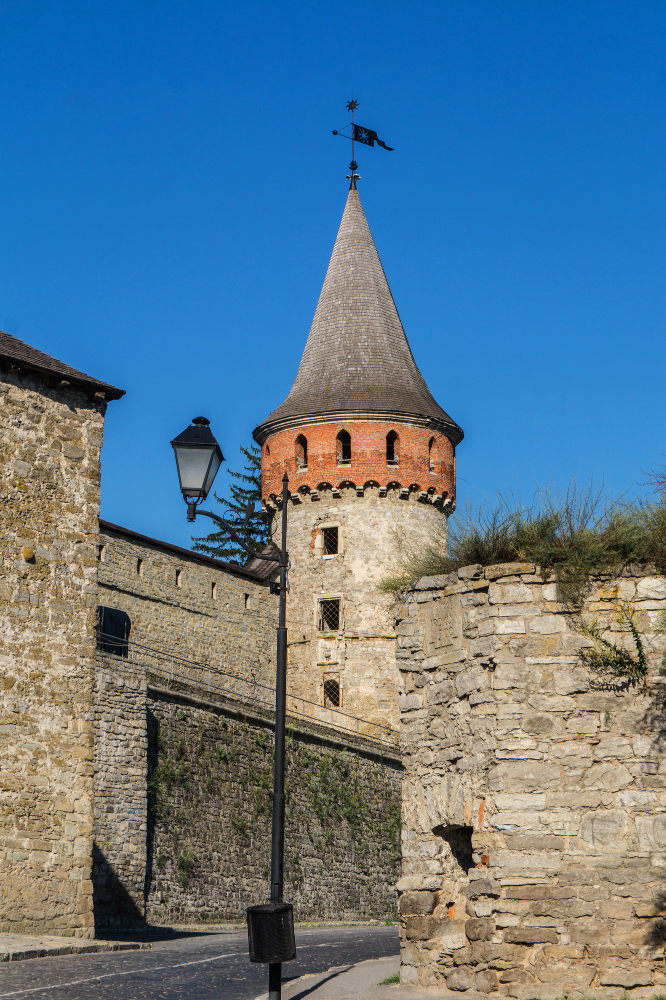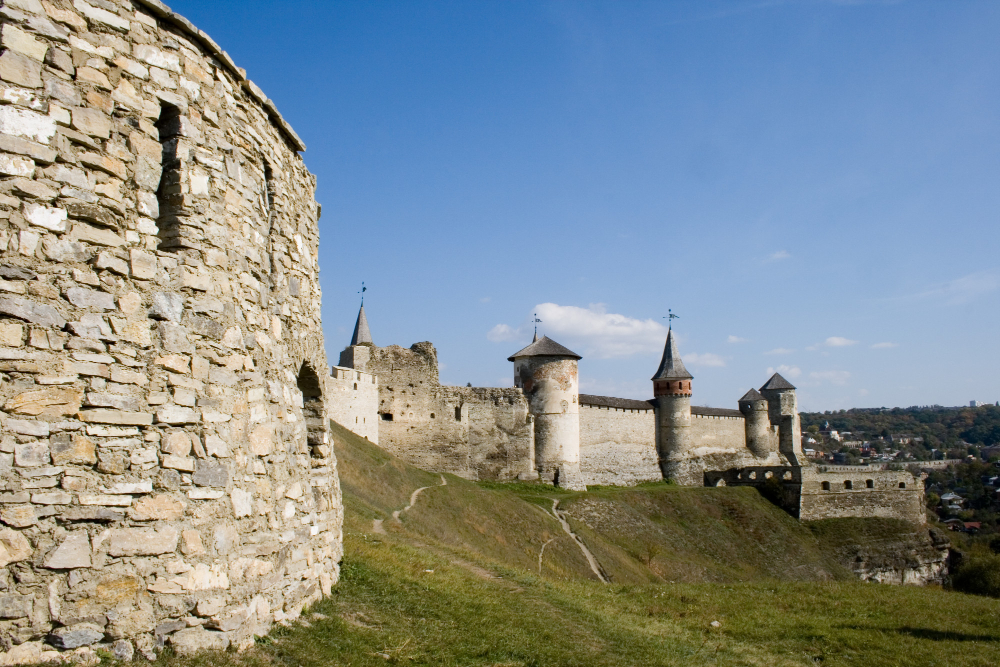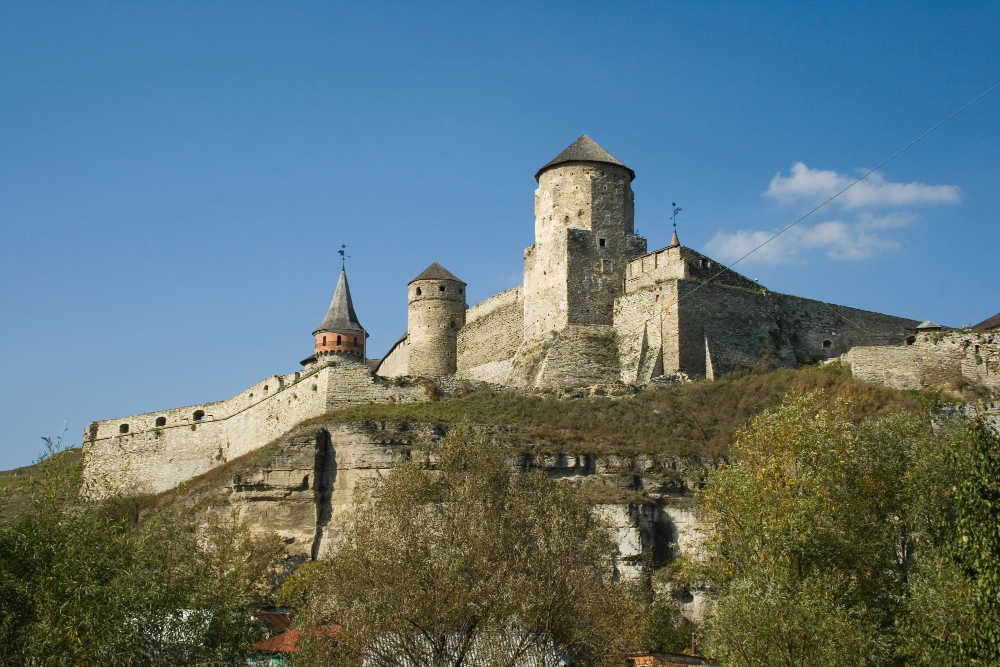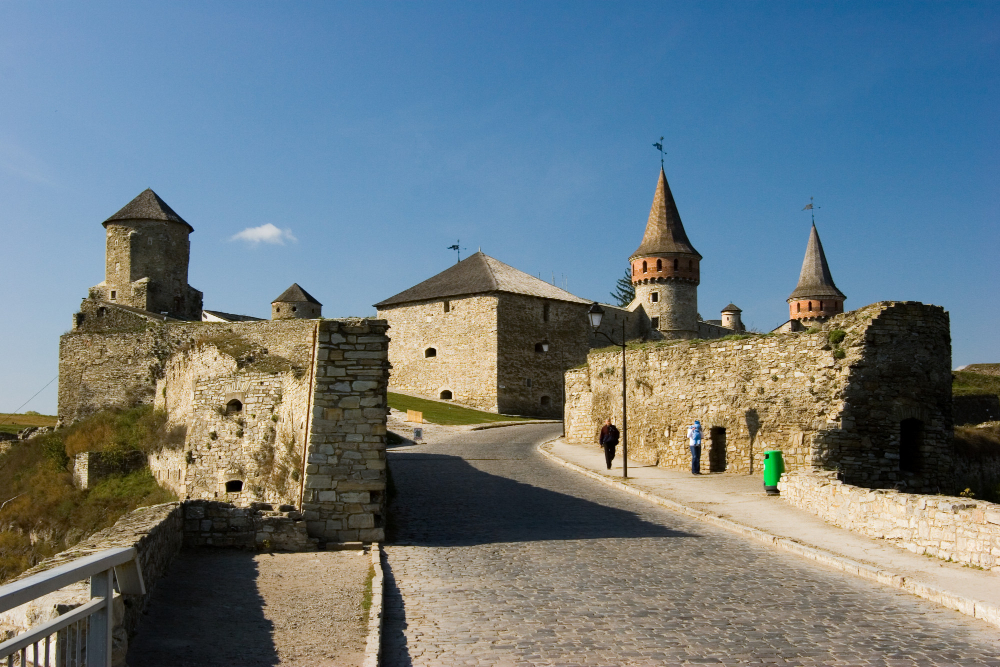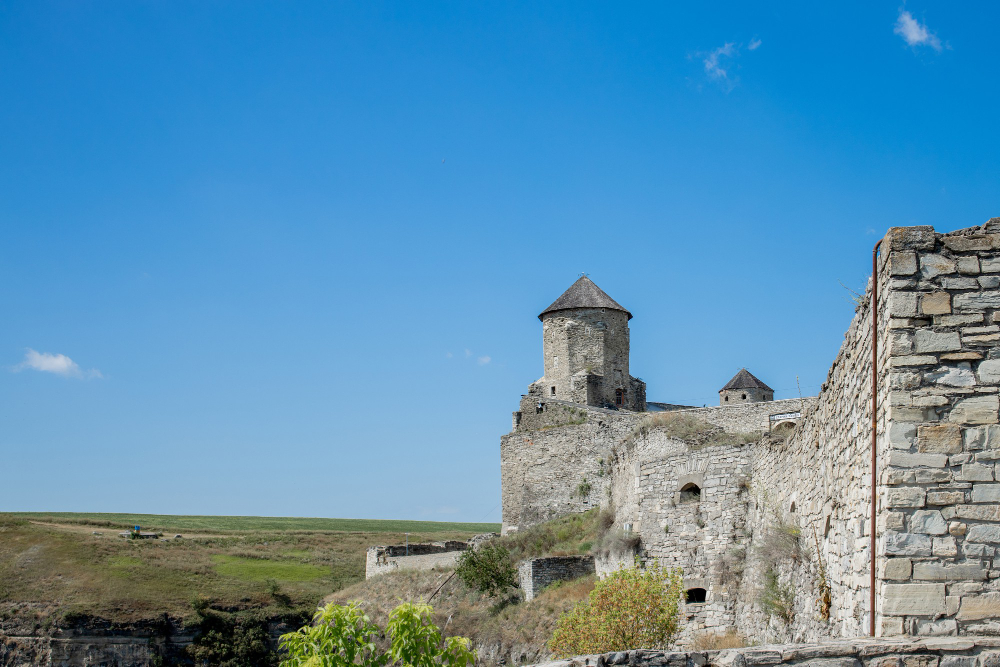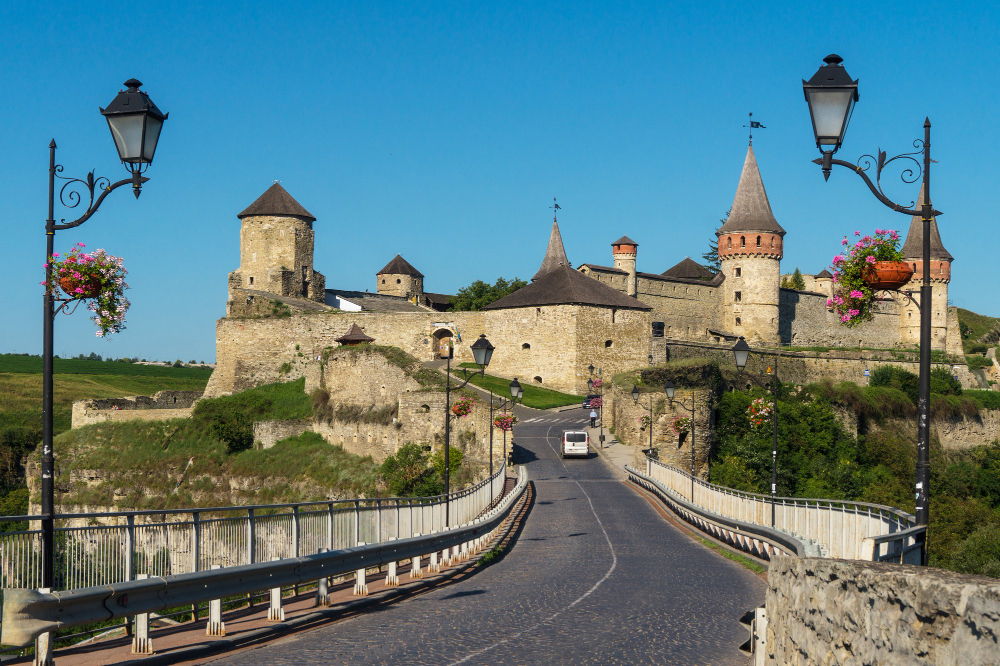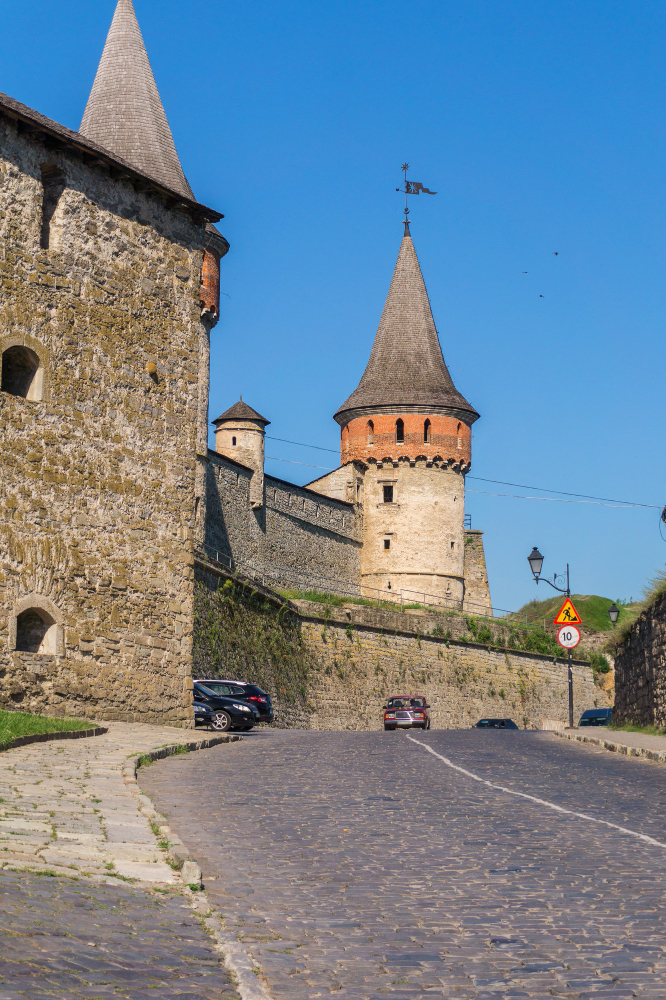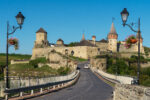

High above the River Smotrych stands one of the most impressive fortifications in Eastern Europe: Kamianets-Podilskyi Castle in western Ukraine. Its towers, mighty walls and the narrow bridge leading to the old town have shaped the city’s skyline for centuries. However, the complex is far more than just a photogenic landmark. It tells a story of changing rulers, besieged borders, military innovations and the convergence of Ukrainian, Lithuanian, Polish, Ottoman and Russian history. The fortress is situated in the historic region of Podolia. Its location was the decisive factor in its significance: The old town of Kamianets-Podilskyi is situated on a rocky peninsula almost entirely enclosed by the River Smotrych. At its narrowest point, the only access to the town was via a bridge. Whoever controlled this crossing also controlled an important trade and transport route between Central and Eastern Europe. The name of the town and the fortress already alludes to the material from which they are built: The Slavic word “kamin” means ‘stone’. Indeed, the fortress appears to rise directly from the surrounding limestone. The combination of natural gorges, steep rock faces and man-made fortifications made Kamianets-Podilskyi one of the most difficult places in the region to capture for a long time.
A fortress with older roots than long assumed – For a long time, historians assumed that the present-day castle was built in the 14th century. The first clear written records date from this period. A document issued by Prince Yuri Koriatovych in 1374 mentions Kamianets in connection with the Magdeburg city charter, thereby attesting to the town’s political and economic significance under Lithuanian rule. However, archaeological investigations carried out in the 20th century pushed the origins of the fortification’s history further back. They provided evidence that the area was already fortified by the end of the 12th or the beginning of the 13th century. It is also said that an earth and timber fortress existed in the vicinity during the time of Kievan Rus’. Whether it stood exactly on the site of today’s stone castle, however, cannot be confirmed. In the 14th century, large parts of Western Rus’ belonged to the Grand Duchy of Lithuania. Kamianets developed on a strategically important border. Later, the town became part of the Polish-Lithuanian realm and thus increasingly assumed the role of a military outpost against incursions from the south and south-east.
Expansion into a border fortress of the Polish–Lithuanian state –
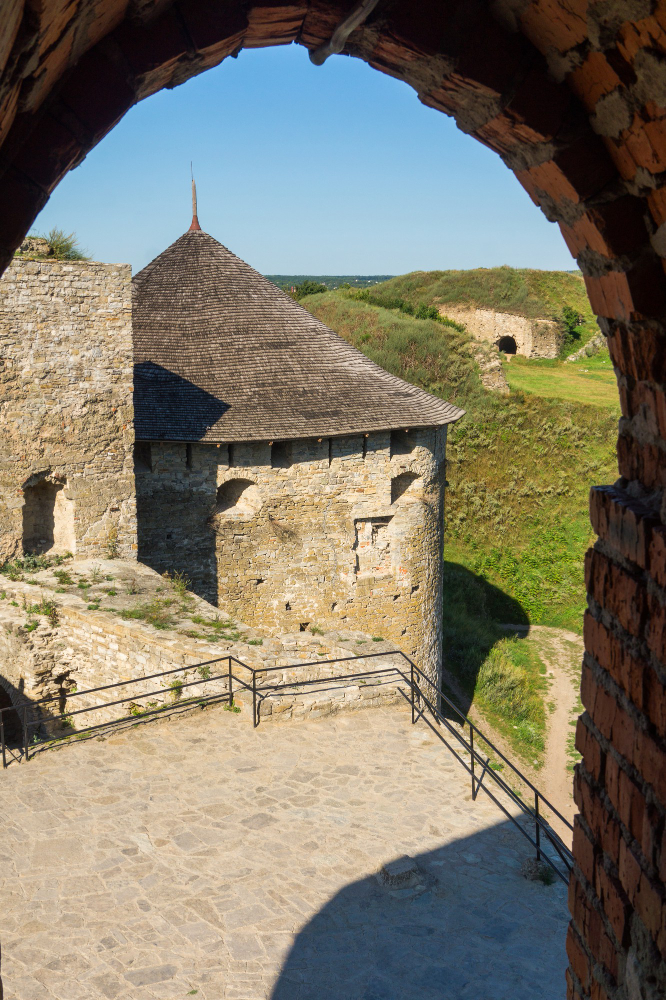
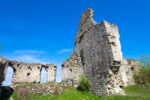
Although the medieval complex was well positioned, it soon ceased to meet the demands of military technology. Around 1400, therefore, a comprehensive modernisation programme began. Spytek of Melsztyn, the Voivode of Kraków, had older towers repaired and additional defensive towers erected. The castle was expanded into a system comprising walls, gates, casemates and gun emplacements. Particularly in the 16th century, the widespread use of cannons fundamentally transformed fortress construction. Tall, narrow walls offered only limited resistance to artillery. In Kamianets-Podilskyi, the builders responded with stronger ramparts, expanded fields of fire and new fortification elements. The military engineer Hiob Bretfus is associated with significant alterations: he worked on the eastern side of the complex, on underground passageways and on towers designed for the use of firearms. Ultimately, the fortress did not consist of a single structure, but of several historical layers. The fortified old town, the so-called Old Castle, and the New Castle, built later, together formed a defensive system. This architectural complexity is now one of its most striking features: medieval towers stand alongside early modern artillery works, and Polish architectural elements alongside traces of Ottoman and Russian occupation.
Tatars, Cossacks and Ottomans: Centuries of Sieges – Kamianets-Podilskyi was situated on a conflict-prone border. From the 15th to the 17th century, the region was repeatedly subjected to attacks by Crimean Tatar forces. Historical records mention a total of 51 Tatar attacks on the castle. Several incursions in the 15th and 16th centuries caused damage to the town and the fortress, but failed to permanently break the defences. During the Khmelnytsky Uprising in the mid-17th century, Kamianets once again became the focal point of military conflict. The Zaporozhian Cossacks, led by Bohdan Khmelnytsky, fought alongside sections of the peasant population and, at times, the Crimean Tatars against Polish-Lithuanian rule. The fortress was besieged but did not change hands permanently. These events demonstrate how strongly the complex was perceived not only as a military stronghold but also as a symbol of political power. The most significant turning point came in 1672. Sultan Mehmed IV led the Ottoman Empire on a campaign against Poland–Lithuania. A massive army comprising Ottoman troops and allied Tatar and Cossack units gathered outside Kamianets-Podilskyi. After a brief but intense siege, the town surrendered on 18 August 1672. The castle became an Ottoman stronghold in Podolia for 27 years. It was not until the Treaty of Karlowitz in 1699 that Ottoman rule over the region came to an end. Poland regained Kamianets. However, this return did not mean that the fortress regained its former strategic importance: military frontiers had shifted, and new forms of warfare were increasingly calling even strong fortresses into question.
From stronghold to prison – In the 18th century, the castle gradually lost its military purpose. It was increasingly used as a prison. Following the Second Partition of Poland in 1793, Kamianets-Podilskyi fell to the Russian Empire. The commander at the time handed over the keys to the fortress and swore allegiance to the new rulers. During the Russian period, the complex initially continued to serve military purposes, but later functioned primarily as a place of detention for debtors, criminals and political prisoners. Among the best-known figures associated with the castle is Ustym Karmalyuk, a leader of anti-feudal uprisings in Podolia. He is still regarded as a folk hero in Ukrainian collective memory, although his historical role is situated somewhere between social resistance, regional revolt and the romanticised image of a bandit. The linguist Vladimir Dal also worked in Kamianets-Podilskyi for a time. In the 19th century, the fortress was thus not only a place of imprisonment and military administration, but also part of urban life that had long since transcended its original defensive function.
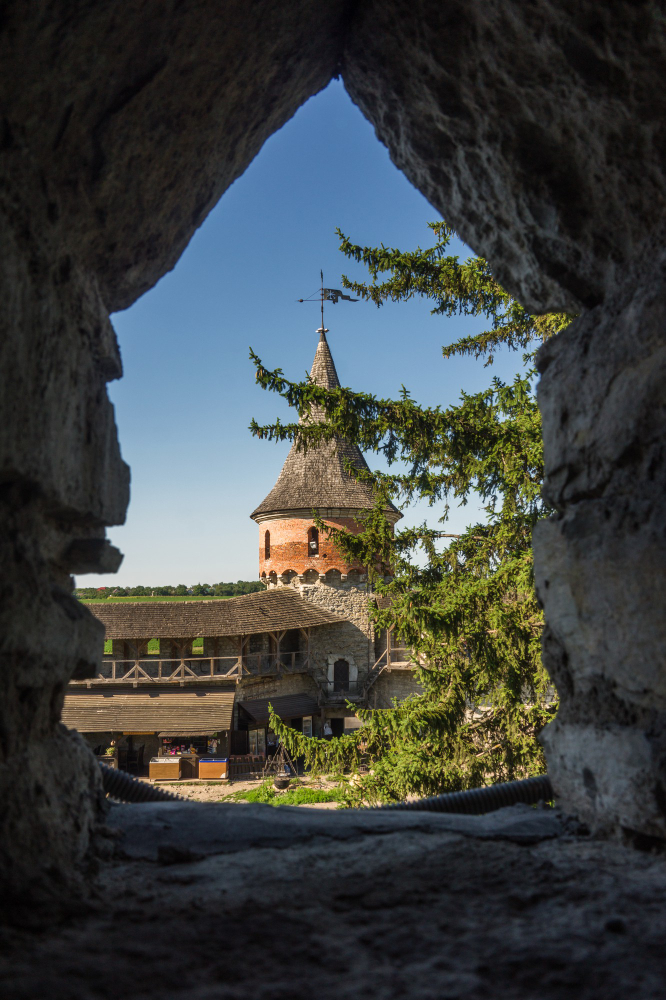
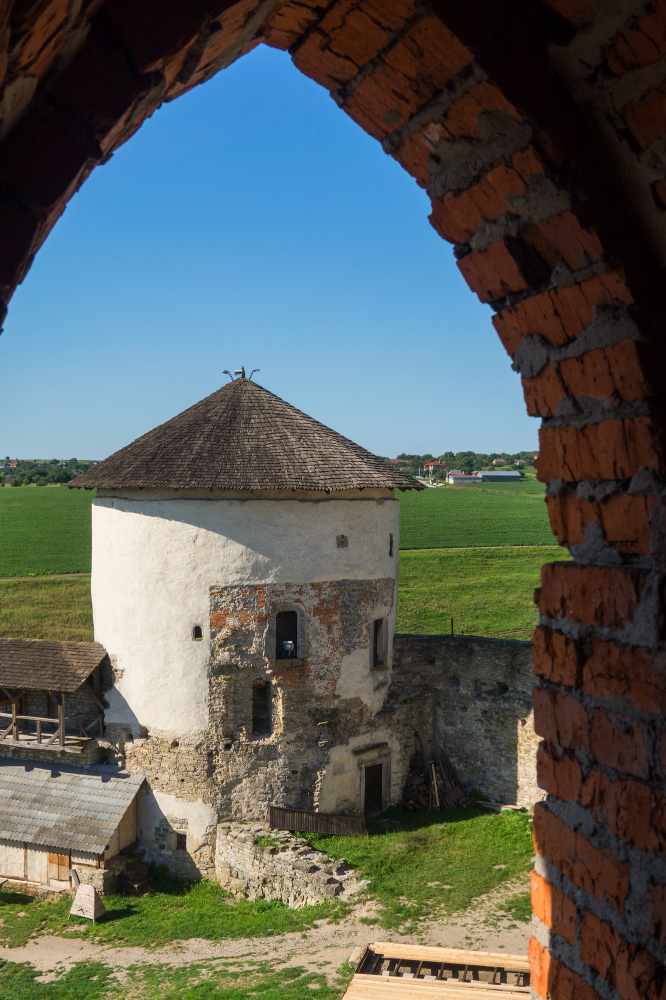
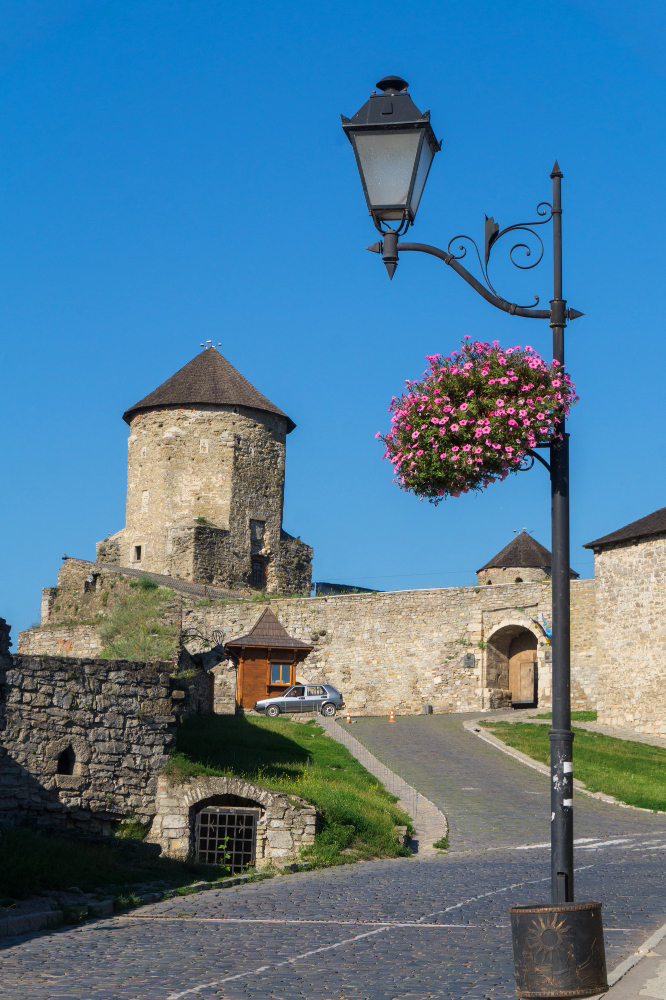
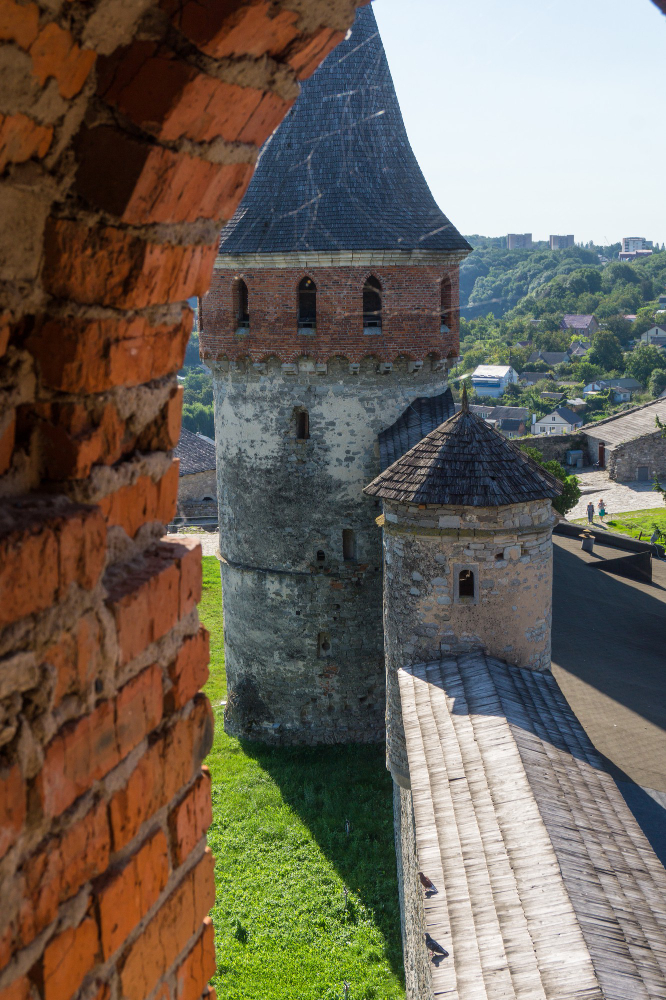
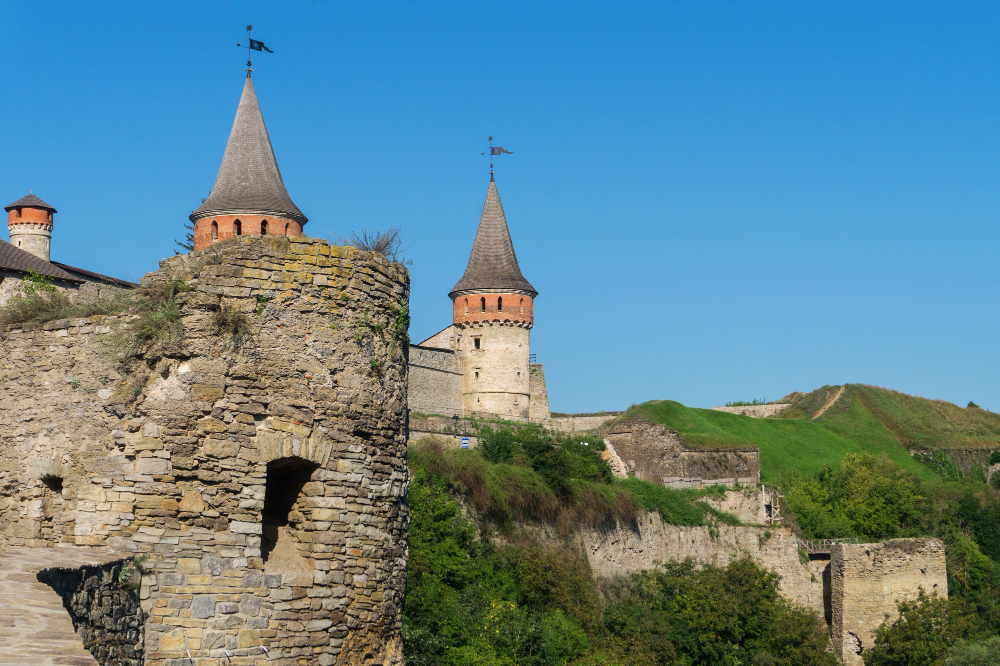
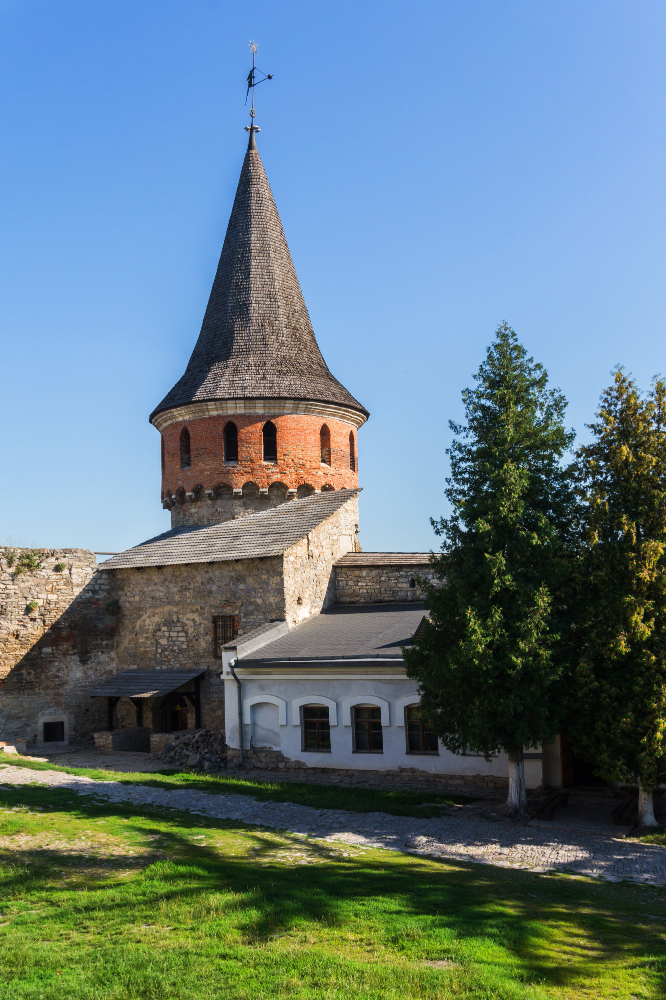
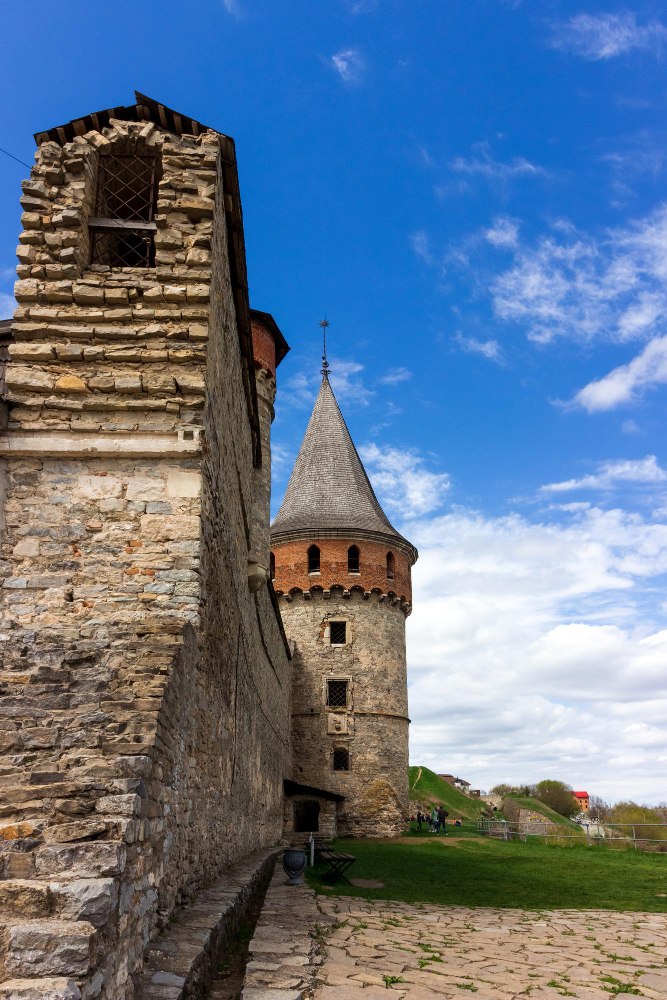
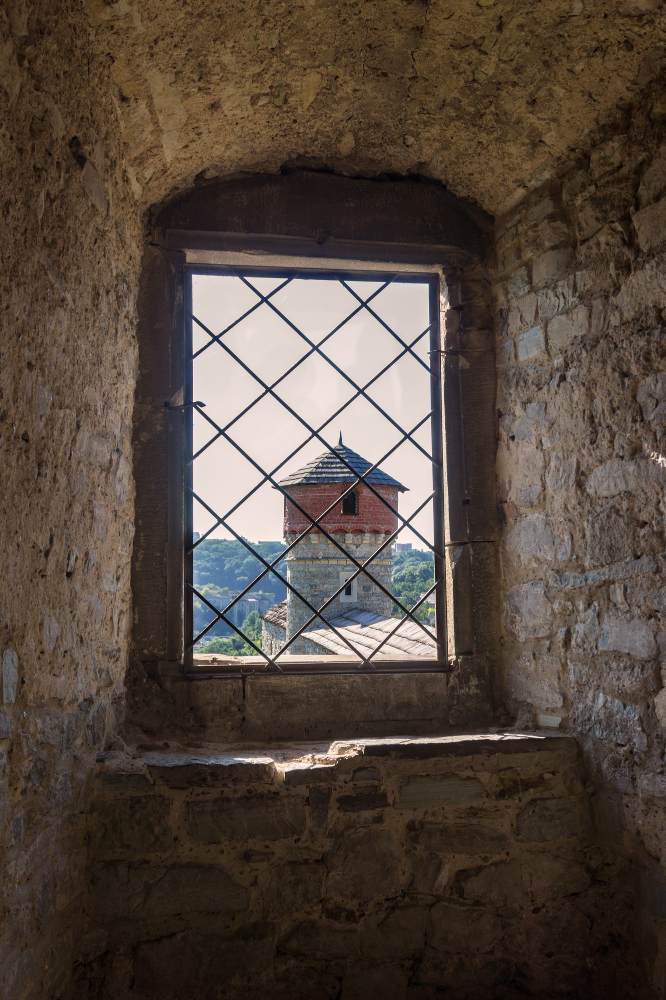
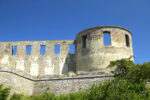
Twelve towers and a bridge as the key to the city – The castle’s appearance is defined above all by its towers. Historically, the complex comprised twelve major towers, several of which have survived to this day. These include the Pope’s Tower, which is also associated with Ustym Karmaljuk, the Tenchynska Tower, the White Tower, the Day Tower, the Lanckorońska Tower and the Commandant’s Tower. The towers served various functions. Some served as gun platforms, others as stores for gunpowder and weapons, as guard posts or prison cells. The New West Tower, dating from 1544, was particularly important for the artillery. It was severely damaged during a heavy storm in 2011 – an event that highlighted the ongoing threat to historic buildings posed by the weather and inadequate safety measures. The castle bridge is also of central importance. It connects the fortress with the old town and spans the deep gorge of the Smotrytsch. With a length of around 88 metres, it was not only a transport route but also part of the defence system. During Ottoman rule, it was reinforced and is still often referred to in local parlance as the ‘Turkish Bridge’.
National Monument and International Cultural Heritage – The complex has been under special protection since the Soviet era. In 1928, it was recognised as a cultural and historical reserve; later, a museum was established and restoration projects were undertaken. Since 1977, the castle has been part of the ‘Kamianets’ historical and architectural reserve, which was granted the status of a national protected area in 2004. Together with the old town, Kamianets-Podilskyi was added to Ukraine’s tentative list for UNESCO World Heritage status in 1989. Furthermore, the fortress has been counted amongst the ‘Seven Wonders of Ukraine’ since 2007. Its significance lies not solely in its spectacular location. The complex documents in stone the history of a border region where empires, religions, trade routes and armies converged. Kamianets-Podilskyi Castle is therefore not merely a lifeless ruin. It is an open-air historical archive – built of limestone, shaped by sieges and preserved as a testament to a multifaceted European past.