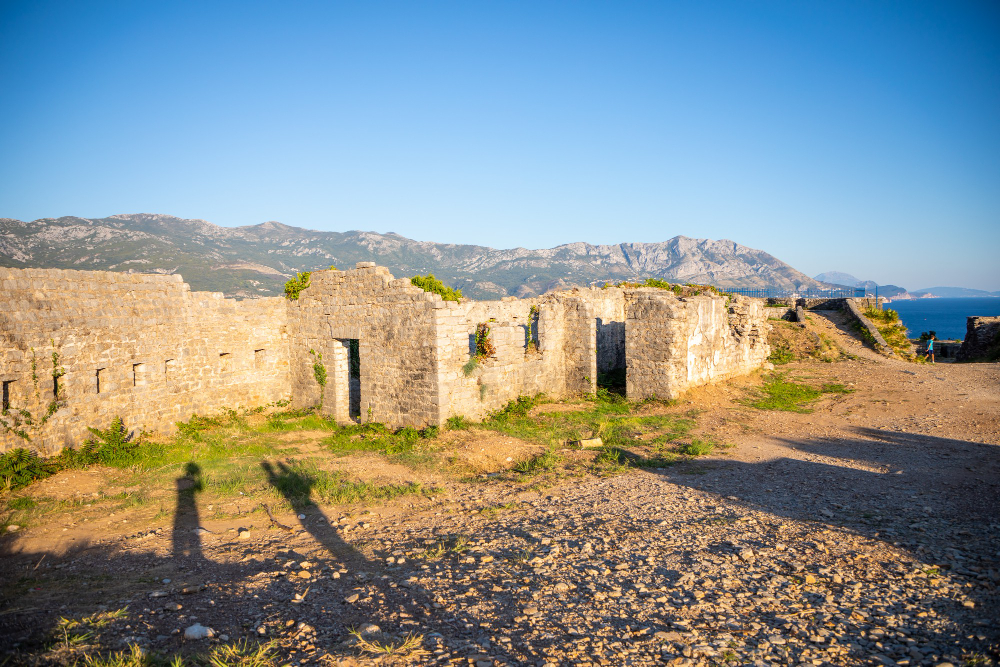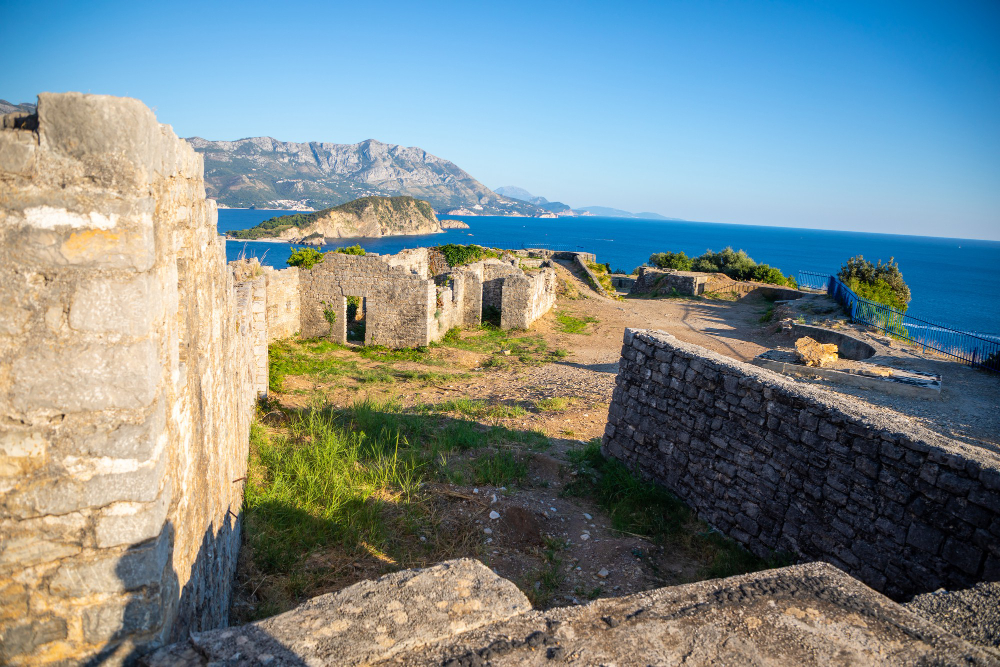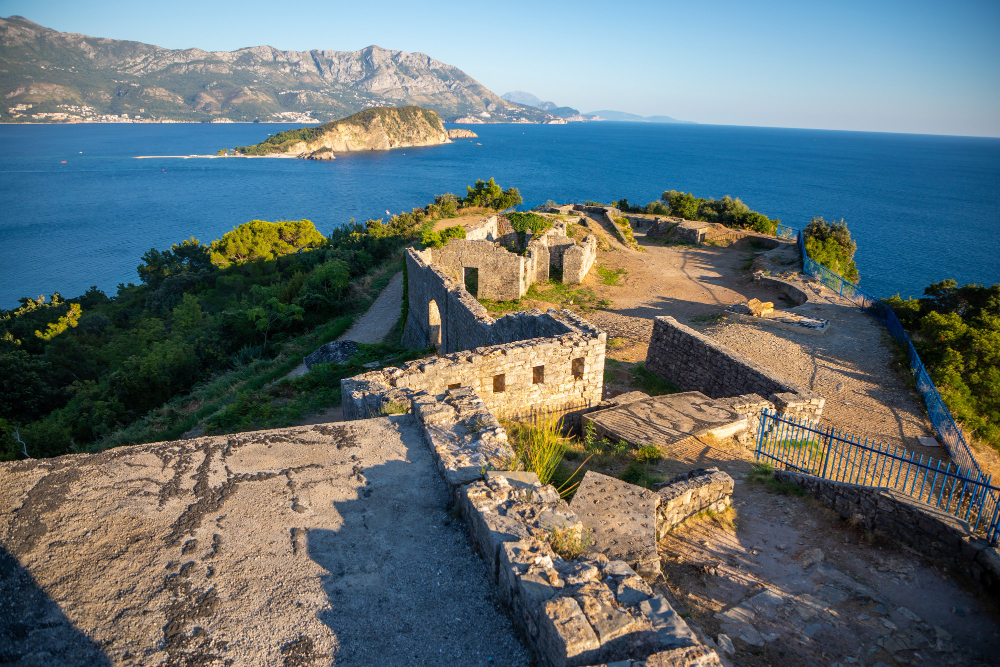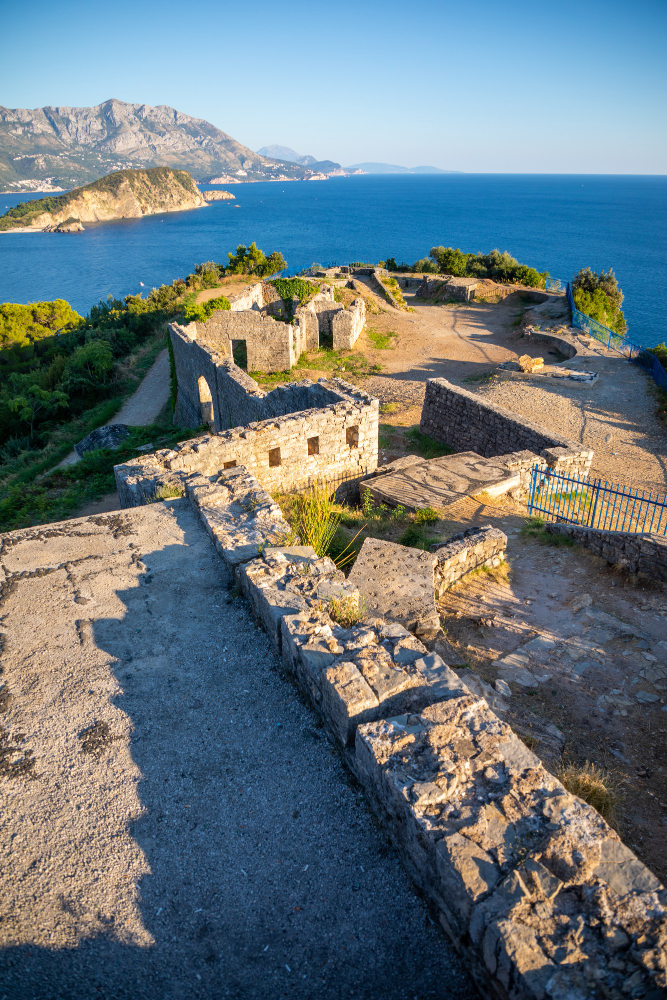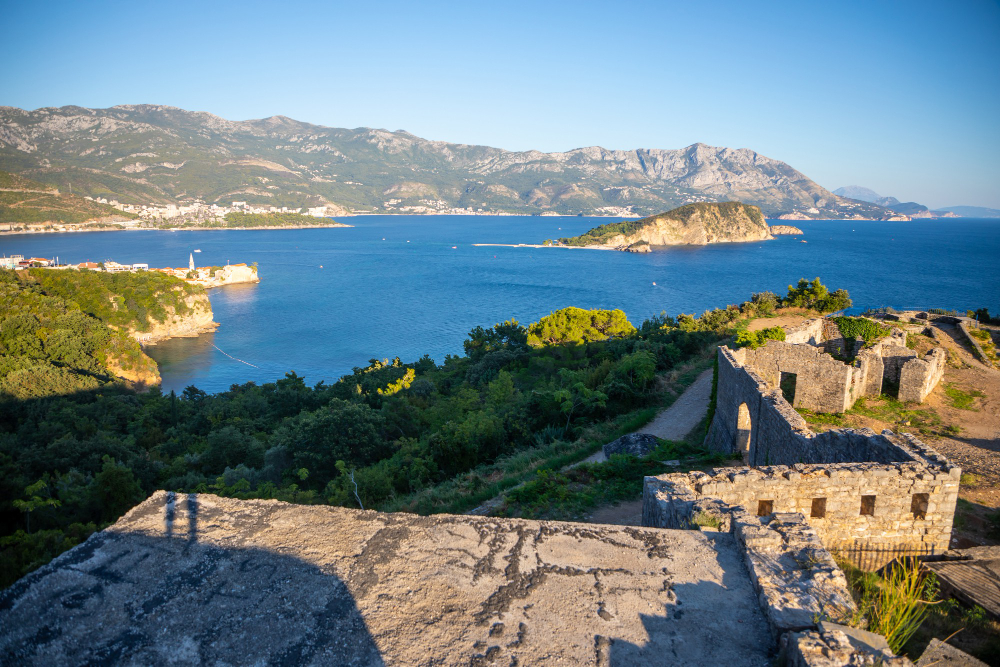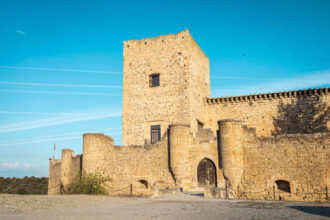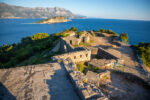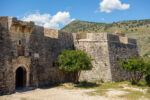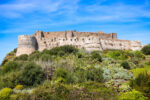

High above the Adriatic coast, to the west of Budva’s old town, lie the ruins of Mogren Fortress. Parts of its mighty walls still rise up amongst pine trees, dense scrub and stony slopes. From here, the view takes in the sea, the island of Sveti Nikola, the beaches of Mogren and the Bay of Jaz. Today, the site appears quiet and deserted – yet in the 19th and 20th centuries, it formed part of a strategic defence system designed to secure the coastline of what was then the Austrian Monarchy. The complex is known by several names: Mogren Fortress, Fort Mogren, Fort Jaz or even Jaz Fortress. Its history intertwines the military expansion of the Habsburg Empire, the shifting borders of the Balkans, the wars of the 20th century and the question – still unresolved today – of how to deal with a significant but heavily damaged cultural monument.
An outpost of the Austrian Empire – The fortress was built in 1860 by soldiers of the Austrian Empire. At that time, the Bay of Kotor, with its important naval base, fell within the Habsburg sphere of influence. Budva was situated on a strategically vulnerable stretch of coastline: whoever controlled the high ground to the west of the town could observe transport routes, detect a potential attack from land or the coast at an early stage, and monitor the approaches to the town. Originally, the complex was known as Fort Jaz. The name referred to the nearby bay and beach of Jaz, situated to the west of Budva. The name ‘Mogren’ later became established and refers to Cape Mogren and the beaches below it. The fortress was not intended as a magnificent structure, but as a functional military installation: accommodation for soldiers, a base for weapons and supplies, and a fortified observation post. The location was carefully chosen. The ruins are situated on Spas Hill, some 110 metres above sea level and approximately one kilometre west of Budva’s old town. From there, a sweeping view of the Riviera unfolded. The position made it possible to keep an eye on the routes towards Budva and Tivat, as well as the coastal sections near Jaz and Mogren. At a time when rapid communication and aerial reconnaissance did not yet exist, such elevated fortifications were of central importance.
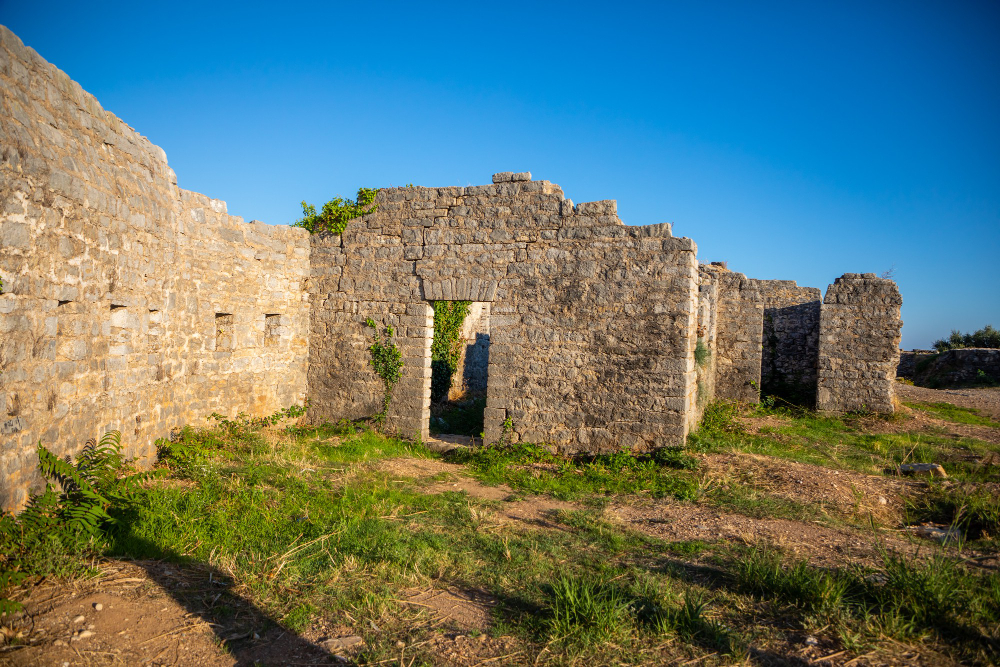
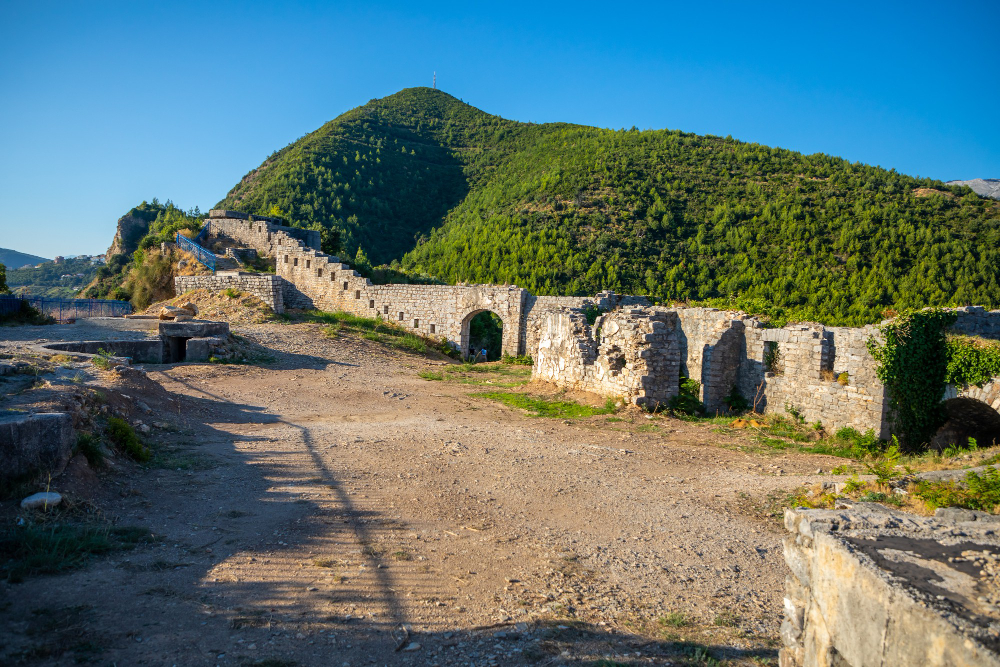
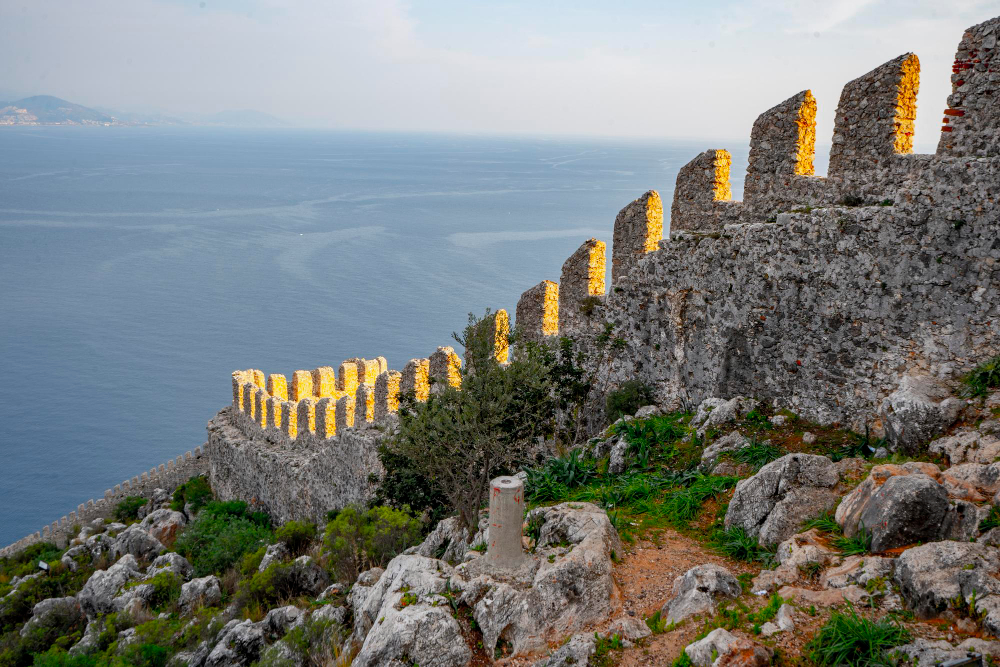
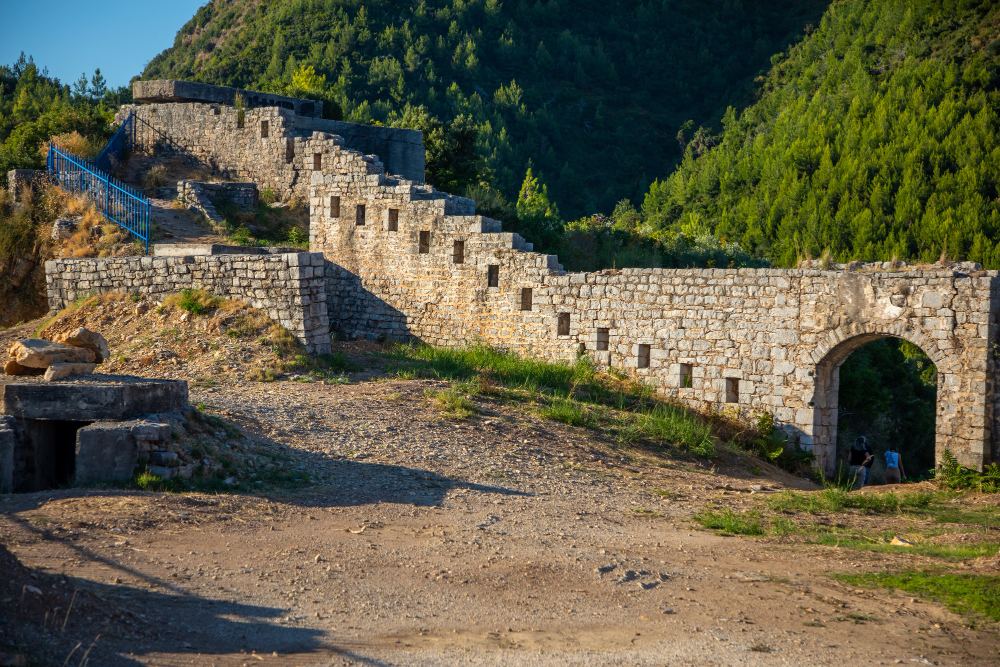
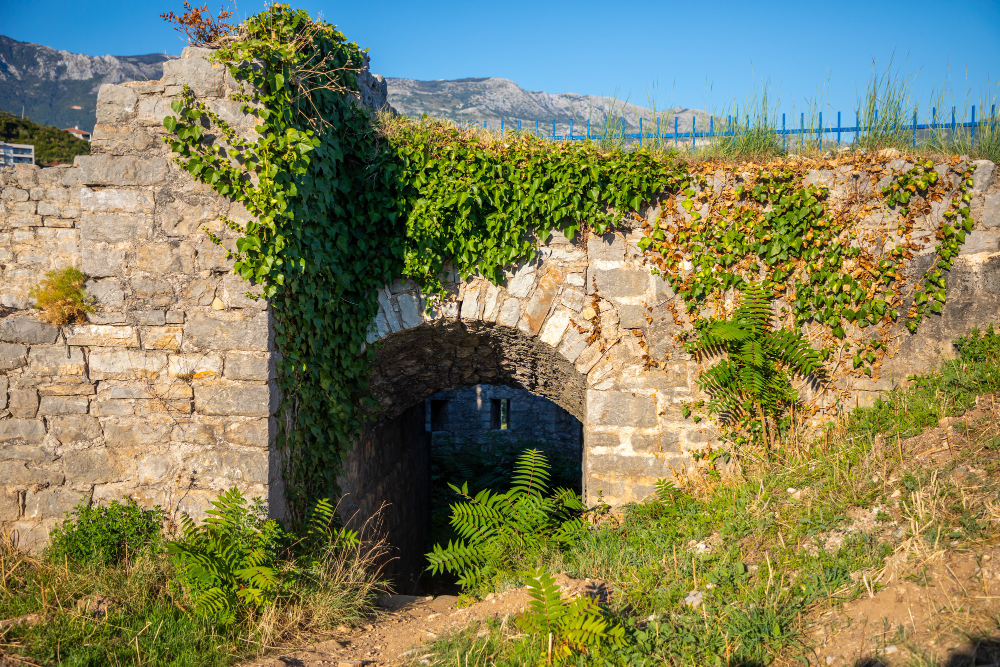
Rectangular walls, towers and military vantage point – The original fortress was rectangular in plan and surrounded by high walls. At the corners were towers or fortified corner sections, designed to facilitate defence along the walls. Such clear, geometric layouts were typical of 19th-century military structures: lines of sight, fields of fire and controlled access points were more important than architectural ornamentation. Of the complex, mainly the outer walls and a few architectural remains have survived to this day. Nevertheless, one can imagine just how dominant the fort must once have been, perched above the hillside. The thick stone walls blend almost unobtrusively into Montenegro’s karst landscape. It is precisely this fusion of nature and ruins that makes the site so appealing to visitors – yet at the same time, it makes preservation more difficult. Plants grow in the wall joints, roots loosen the masonry, and damp and the elements take their toll on the stone. The fortress was part of a wider military context. The Austrian Monarchy built numerous defensive structures along its Adriatic coast, particularly in Dalmatia and around the Bay of Kotor. The aim was to secure ports, roads and border areas. Fort Jaz was therefore not an isolated structure, but a small component in a network of coastal fortifications and military observation posts.
New borders after the end of the monarchy – With the end of the First World War, Austria-Hungary collapsed. The political maps of South-Eastern Europe were redrawn, and the fortress passed into the possession of the Kingdom of Yugoslavia. During this period, it came to be increasingly referred to as the Mogren Fortress. The significance of the complex had changed. From a military-technical perspective, the era of classical stone fortresses was already in flux: artillery, modern means of communication and, later, the air force rendered many older fortresses vulnerable or less crucial. Nevertheless, the site remained of interest due to its location. Observation posts and protected camps continued to serve a purpose, particularly on the Adriatic coast. Consequently, the fortress did not receive the same level of attention as large coastal installations or military structures located in urban areas. Its fate was thus increasingly shaped by political upheavals and, later, by war and natural disasters.
Arms depot during the Second World War – During the Second World War, the fortress and the tunnels beneath it were used as a depot for weapons and ammunition. Even today, bunkers and small concrete gun emplacements – so-called pillboxes – serve as reminders of this era. They differ markedly from the older walls dating from the Austrian period: whilst the 19th-century fortress was built of solid stone, the structures from the Second World War represent a more modern style of warfare, focused more on concrete and covered defences. This layering of different historical periods makes Mogren particularly interesting from a historical perspective. In a single location, the military architecture of the Habsburg Monarchy, the interwar period of Yugoslavia and the traces of the Second World War converge. The site thus tells the story not only of Budva, but of a region whose political affiliations changed several times. Publicly available details regarding the specific use of individual rooms and tunnels during the war are limited. What is certain, however, is that the complex served as a weapons and ammunition depot. This is an important point for visitors to bear in mind: ruins and underground areas should not be entered without due care. Apart from potential dangers posed by collapses or unsecured paths, the fortress is a historic site that demands respectful treatment.
The 1979 earthquake and the decline – After the Second World War, the fortress lost its military function for good. Without ongoing use and without comprehensive conservation work, it began to fall into disrepair. The complex was particularly hard hit by the severe earthquake in Montenegro in 1979. The quake caused enormous damage along the Montenegrin coast; numerous historic buildings in Budva and the surrounding area were also affected. Mogren Fortress was severely damaged by the earthquake and was not subsequently rebuilt. Whilst other structures – including parts of Budva’s historic old town – were restored, the fort remained largely in ruins. This explains its current appearance: Mogren is not a restored tourist attraction with reconstructed interiors, but a monument preserved in a fragmentary state. Yet it is precisely this that gives it its special atmosphere. The walls stand not as a backdrop to a recreated past, but as visible traces of real history. At the same time, this state of affairs presents the town of Budva with a dilemma: should the ruins be secured and made more accessible to visitors, or would further development jeopardise their character and authenticity?
A visit combining sea views and history – Mogren Fortress is now accessible both by car and on foot. Those travelling by car should take the E65 and E80 roads on the Budva–Tivat route and approach via the access road above the hill. Another option leads uphill from the Mogren 2 beach area. The walk is relatively short, but requires sturdy footwear and caution due to the uneven, partly stony terrain. The walk is worthwhile not just for the ruins. From the hilltop, a panoramic view unfolds that explains the strategic decision of the builders: below lie the bays and beaches; to the east, the old town of Budva glimmers; off the coast lies the island of Sveti Nikola. To the west, the view opens out towards Jaz. What appears today as a holiday destination was once an area of military control. Mogren Fortress is therefore more than just an abandoned photo spot overlooking the sea. It is a testament to Austrian military history on the Adriatic coast, a relic of the Yugoslav era and a place where the consequences of the Second World War and the 1979 earthquake remain visible. Its incomplete state is not a weakness of history, but part of its message: the walls tell of power, border defence and war – but also of how quickly even massive fortresses can lose their function.