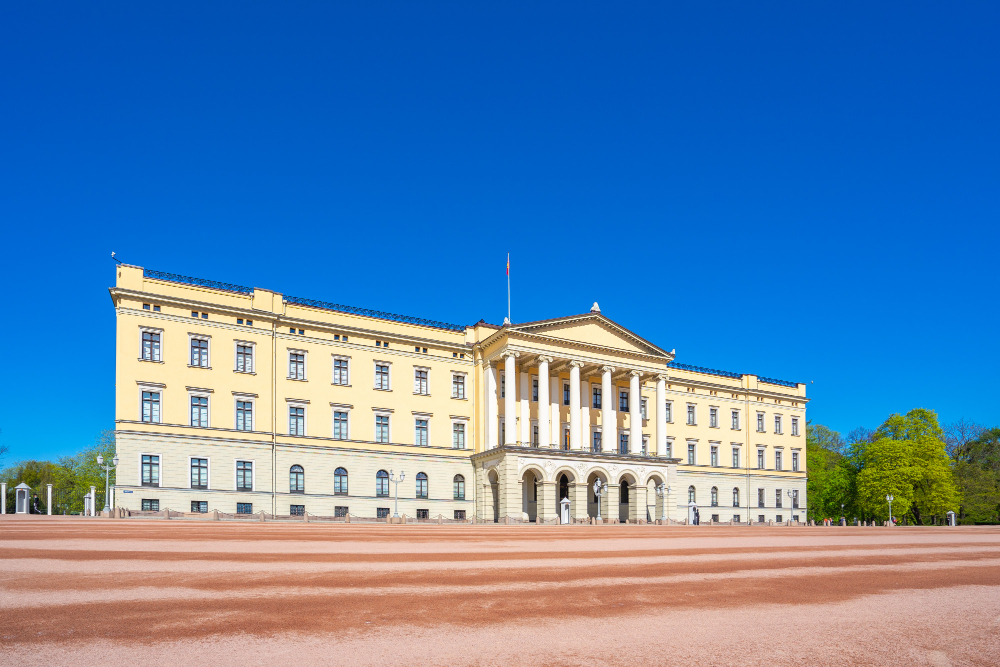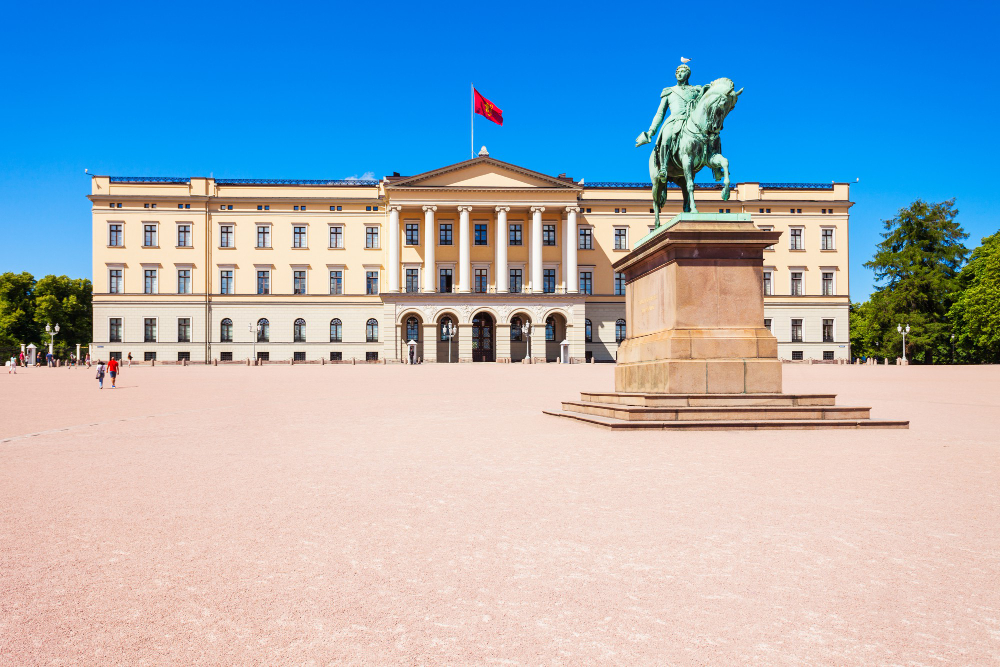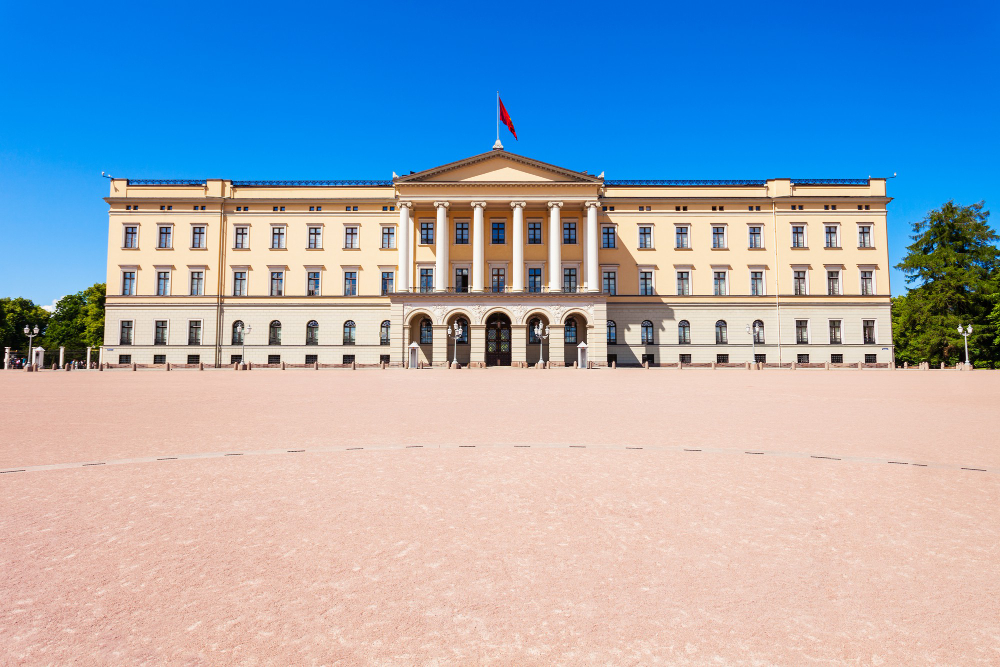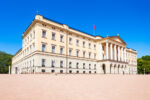

At the upper end of Karl Johans gate, Oslo’s central boulevard, stands the Royal Palace – “Det kongelige slott” in Norwegian, or “Slottet” for short. The light-coloured, neoclassical building is more than just the official residence of the Norwegian monarch: it tells the story of a country on the path to statehood, of the difficult union with Sweden, of political power struggles, and of the transformation from a once-secluded royal court to a comparatively open monarchy. With its extensive palace grounds and the palace square in front, the building forms a striking conclusion to Karl Johans gate. Anyone walking uphill towards the west from the Central Station or the Stortinget parliament building can already see the palace from a distance. Its location was deliberately chosen: the royal family were to be visible above the then capital, Christiania – now Oslo – without, however, residing in a medieval fortress or behind high walls.
Before there was a palace: the Paléet as royal accommodation – When Norway did not yet have its own royal residence at the start of the 19th century, members of the royal family stayed at the so-called Paléet in Christiania. This stately townhouse was once owned by the wealthy merchant Bernt Anker. Upon his death in 1805, Anker bequeathed the building to the state so that it could serve as accommodation for royal guests. During the final years of the union with Denmark, the country’s viceroys made use of the Paléet. Following the dramatic events of 1814, when Norway was granted its own constitution and initially sought independence, Christian Friedrich, who was briefly King of independent Norway, also resided there. Following the subsequent union with Sweden, the building once again became the residence of the Swedish-Norwegian king and his representatives. For a modern state with a growing sense of national identity, however, this temporary solution was inadequate in the long term. Although Norway continued to share the same monarch as Sweden, it had its own constitution, its own parliament and, to a large extent, its own institutions. A permanent residence in Christiania was intended to symbolise this special political status.
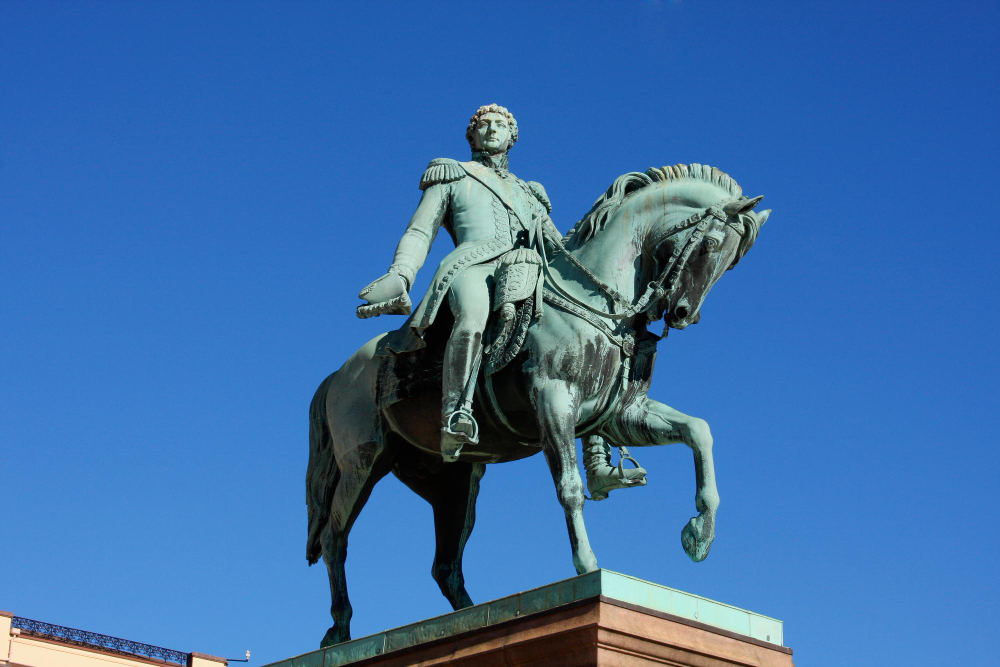
Karl Johann’s decision – King Karl III Johann of Norway – known in Sweden as Karl XIV Johan – decided in 1821 to have a new palace built to the west of what was then the city. The monarch was originally from France: Jean Bernadotte had once been an officer in Napoleon’s army before being elected Crown Prince of Sweden and eventually becoming King of Sweden and Norway. His life story was extraordinary, but his relationship with Norwegian politics was not without tension. He commissioned Hans Linstow, who was of Danish descent, to produce the designs for the new palace. Linstow was an officer and, up to that point, had only limited experience as an architect. Nevertheless, he was to design one of Norway’s most important state buildings. His first design envisaged a two-storey main building with wings projecting from either side. The architecture was modelled on the ideals of Classicism: clear symmetry, understated ornamentation and a façade intended to radiate dignity and order. The Storting initially approved 150,000 speciedaler. The construction was to be financed through government bonds. Work began in 1824, and a year later Karl Johann laid the foundation stone. This is located beneath the altar of what would later become the palace chapel – a symbolic location linking the monarchy and Christian tradition.
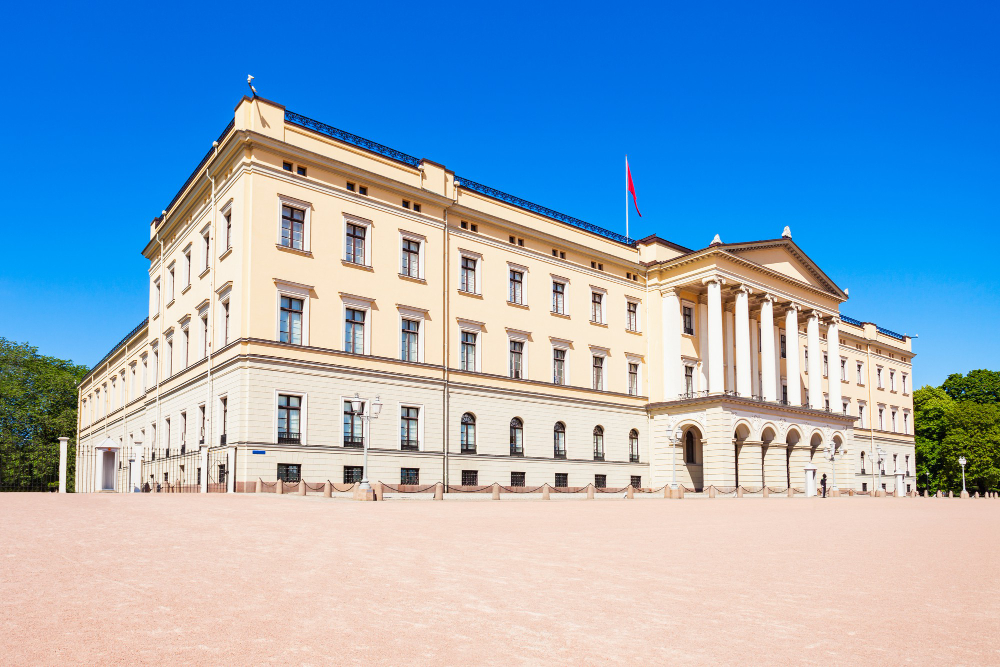
Construction halt, cost disputes and political tensions – The construction quickly proved to be more expensive and complicated than planned. The foundation work, in particular, consumed considerable funds. As early as 1827, work had to be halted. The reason was not solely financial: the conflict over the palace was also a manifestation of political tensions between the King and the Norwegian Parliament. Karl Johann sought to forge closer ties between Norway and Sweden. Many members of the Storting saw this as a threat to Norwegian independence, which was enshrined in the Constitution of 1814. The refusal to provide further funds for the palace thus also became a political statement against the King’s plans. It was not until 1833 that the project gained momentum. Hans Linstow submitted a more economical design. The side projections originally envisaged were omitted; instead, a third storey was planned to create sufficient space. Relations between the King and Parliament had improved in the meantime, and the Storting approved the necessary funds. The roof was completed in 1836, whilst the interior was finished in the late 1840s. Karl Johann himself did not live to see the completion of his palace. He died in 1844, before he could take up residence in the building he had intended as a permanent residence for Norway.
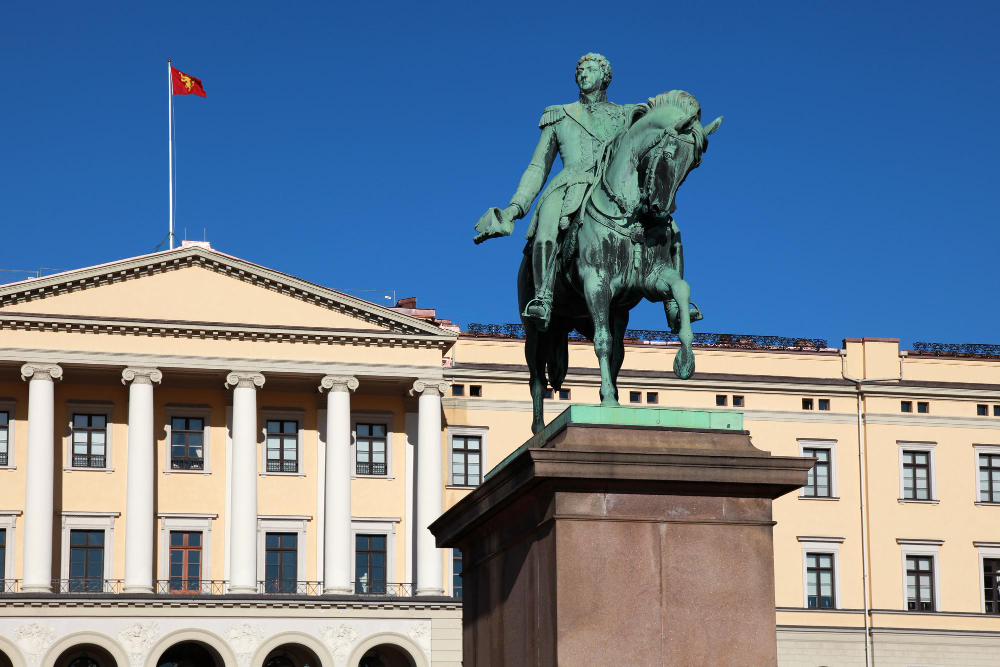
The first residents and a building in flux – The first royal residents were Karl Johann’s son, Oscar I, and his wife, Josephine. It soon became apparent, however, that the palace was too small to meet the needs of a large royal family and their court. The wings facing the park were therefore extended. Before the official inauguration in 1849, the building underwent further alterations. A colonnade in the central area, which had previously been omitted, was reinstated. The steep roof, which had initially appeared rather makeshift, was replaced by a flatter, more elegant and, at the same time, more costly solution. This gave the palace the external appearance that still characterises the cityscape today. During the Bernadotte era, Christiania remained an important capital of the dual monarchy, but the kings frequently resided in Stockholm. Charles IV and Oscar II used the palace, but spent much of their time in Sweden. Oscar II’s wife, Sofia of Nassau, often spent the summer months in Norway for health reasons, but preferred the Skinnarbøl estate near the Swedish border. In 1905, when the union between Norway and Sweden was dissolved, Oscar II was not present at the palace. His son, Crown Prince Gustaf, visited Christiania twice more in an attempt to save the union – without success. The peaceful dissolution of the union became a defining moment in Norwegian history.
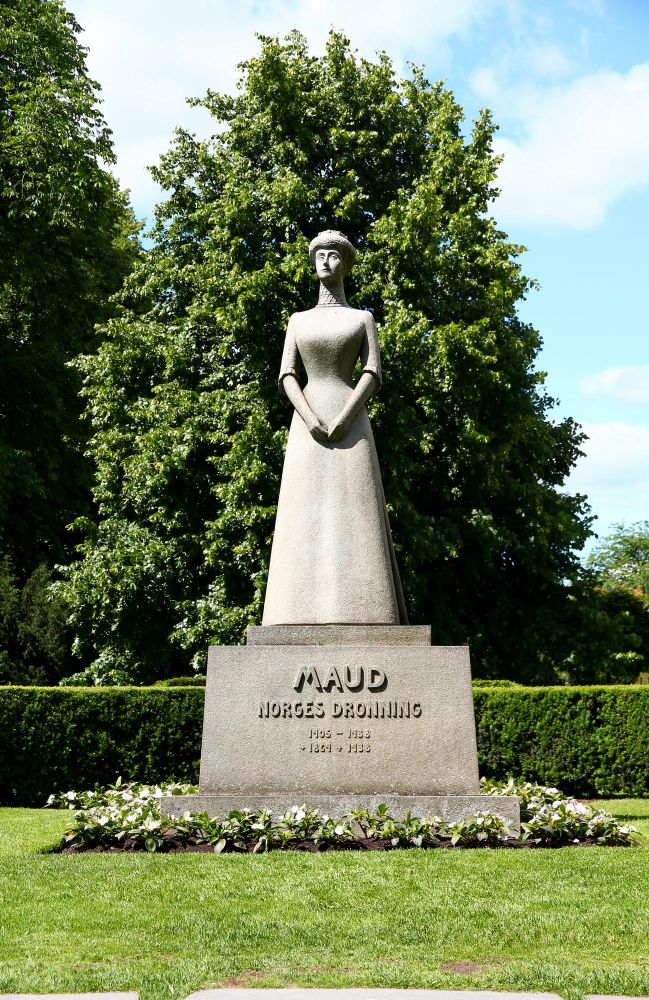
Haakon VII and the Palace of an Independent State – After 1905, Norway – now fully independent – needed a king of its own. The choice fell on the Danish Prince Carl, who took the name Haakon VII. With him began a new era for the palace: he was the first monarch to use it as his permanent residence. Before Haakon VII, Queen Maud and Crown Prince Olav could move in, the building underwent modernisation for around two years. The residence was no longer to be merely an occasionally used retreat for a Swedish-Norwegian court, but the centre of an independent Norwegian monarchy. Haakon VII also established one of the country’s best-known traditions: On 17 May, Norway’s Constitution Day, he greeted the children’s parade from the palace balcony. Even today, tens of thousands of people gather in front of the building on this day. The royal family appears on the balcony and waves to the schoolchildren marching past – a scene that, for many Norwegians, is closely linked to national identity and democratic tradition.
Chapel, Council of State and Royal Daily Life – The palace has its own chapel, which was consecrated in 1844. The Church of Norway is responsible for services there. The chapel is the venue for important royal events, including christenings and confirmations. It also hosts concerts featuring church and chamber music. The Council Chamber is also of great political significance. It is here that the monarch holds regular meetings with the Council of State. This tradition dates back to Haakon VII and continues to this day. In Norway, the role of the king is embedded in the constitution and the parliamentary system: the government bears political responsibility, whilst the monarch performs important ceremonial and formal duties. It is precisely this combination of tradition and parliamentary democracy that shapes the Norwegian monarchy’s self-image.
Renovation under Harald V and Opening to Visitors – Under King Olav V, who reigned from 1957 to 1991, there was a long-standing lack of sufficient funds for comprehensive renovations. The building had struggled with structural weaknesses since its construction. Olav V therefore frequently stayed at the royal estate of Skaugum or at the Bygdøy estate. Following his accession to the throne, King Harald V initiated a fundamental modernisation programme. The state building authority, Statsbygg, refurbished, amongst other things, fire alarm systems, bathrooms, kitchens and office spaces. At the same time, numerous historic areas were restored. The high costs attracted public criticism at times. However, a considerable proportion of the expenditure was necessary to rectify structural defects dating back over a century and long-overdue technical issues. In 2001, King Harald V and Queen Sonja moved from the Skaugum estate to the palace. Skaugum subsequently became the residence of the then Crown Prince Haakon and his family. Guided tours have been offered in the summer since 2002. This has opened up to the public a building that had long been perceived primarily as a symbol of state authority. Visitors can view selected halls, works of art and historic interiors. The daily changing of the guard by the Royal Guard has also become a regular attraction.
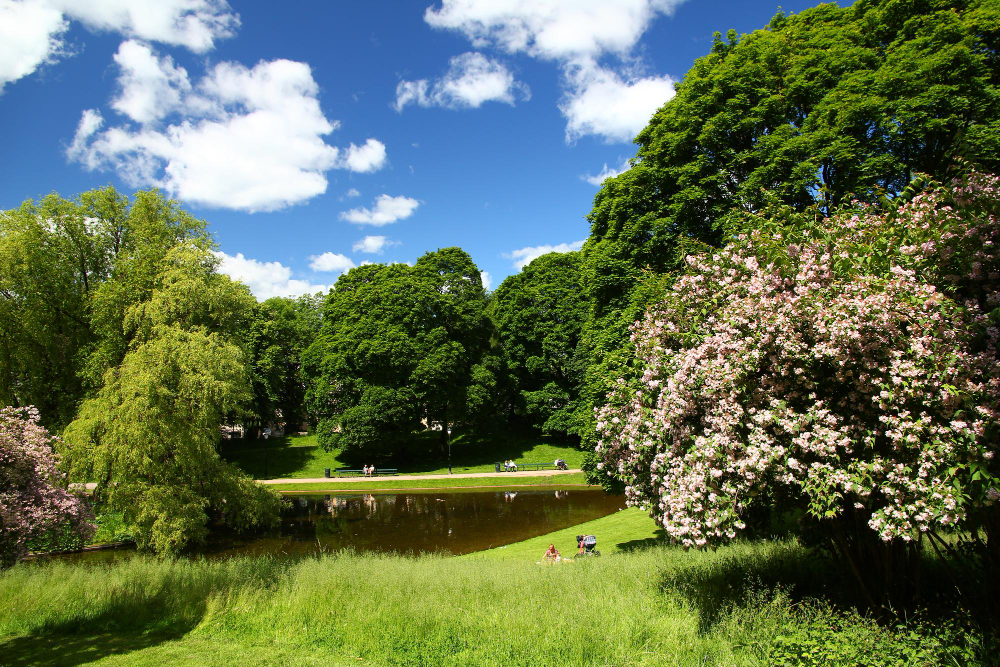
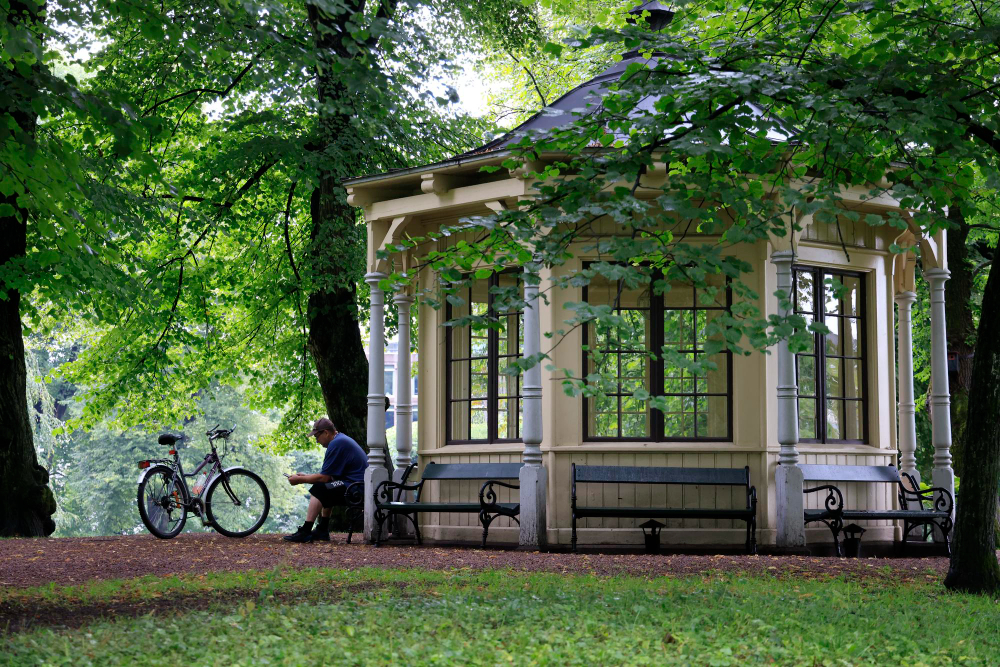
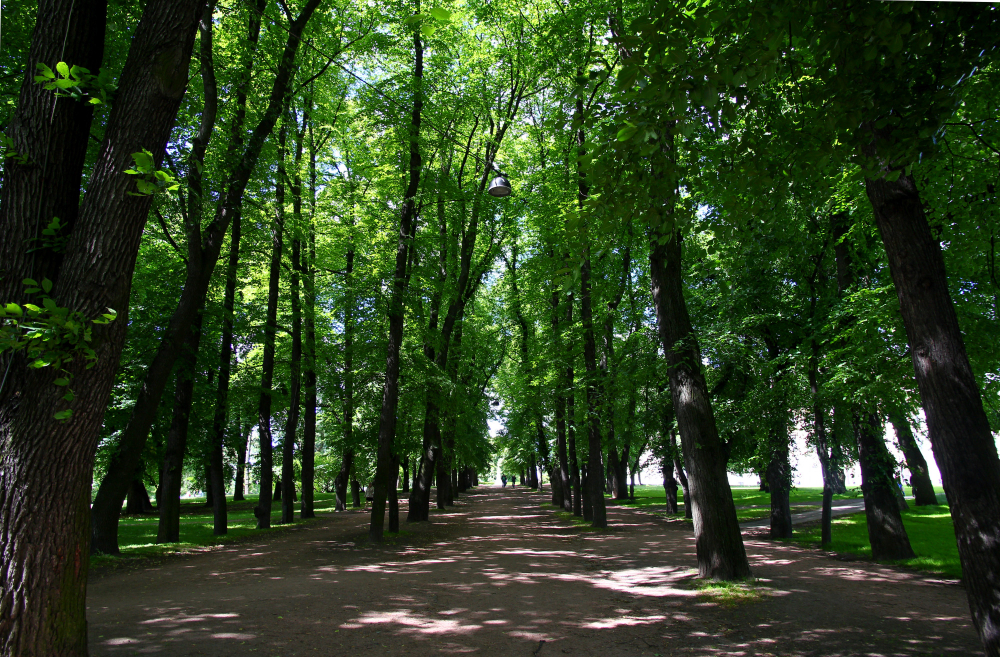
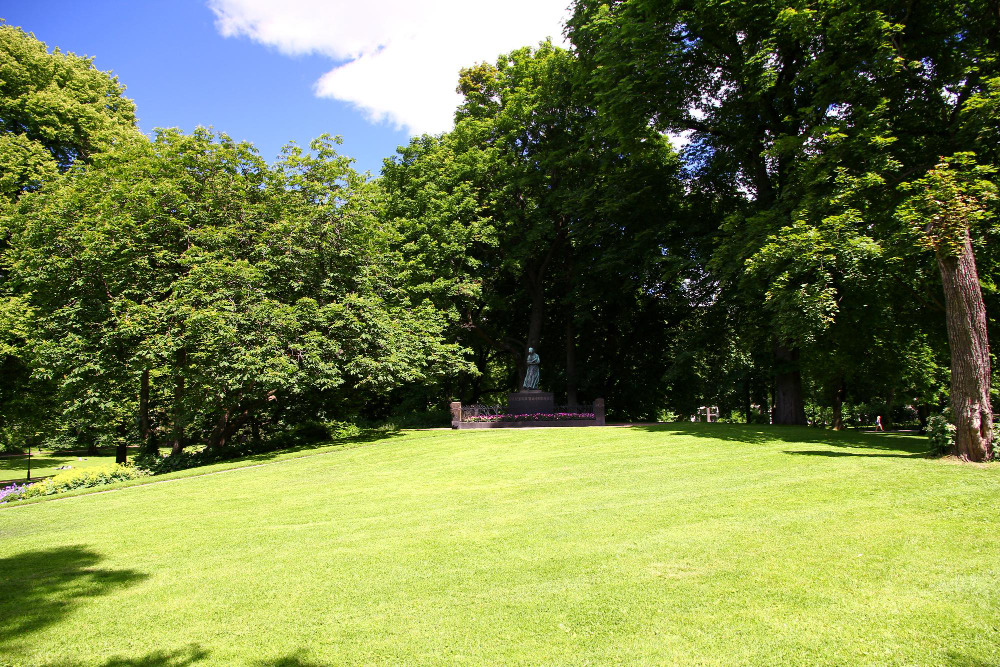
A palace in the heart of a public park – The Royal Palace is surrounded by Slottsparken, the palace park. Covering around 22 hectares, the grounds are among the largest parks in the centre of Oslo. Unlike many European palace gardens, the park is not a strictly enclosed area, but a public space. People stroll there, sit on benches or use the paths as they make their way through the city. It is precisely this openness that fits in with Norway’s political culture. The palace is visible, guarded and historically significant – yet it is not cordoned off from the city. It stands at the end of a street that links the railway station, the government buildings, the parliament and the city centre. As such, it is not only the residence of the Head of State, but also an architectural symbol of how closely Norway’s monarchy is intertwined with the history of its democracy, its independence and its capital.