
High above Reutte in the Tyrolean Außerfern region lies a ruin that is far more than just a romantic day-trip destination. For centuries, Ehrenberg Castle was a key strategic point between southern Germany and the Alpine region. Together with the Ehrenberger Klause in the valley, Fort Claudia on the Falkenberg and the Baroque fortress of Schlosskopf, it forms one of the most impressive and historically significant fortification complexes in Central Europe. Today, hiking trails, museums and the spectacular highline179 suspension bridge connect the individual sites. Yet the history of this place tells, above all, a story of power politics, trade, sieges and the evolution of military technology.
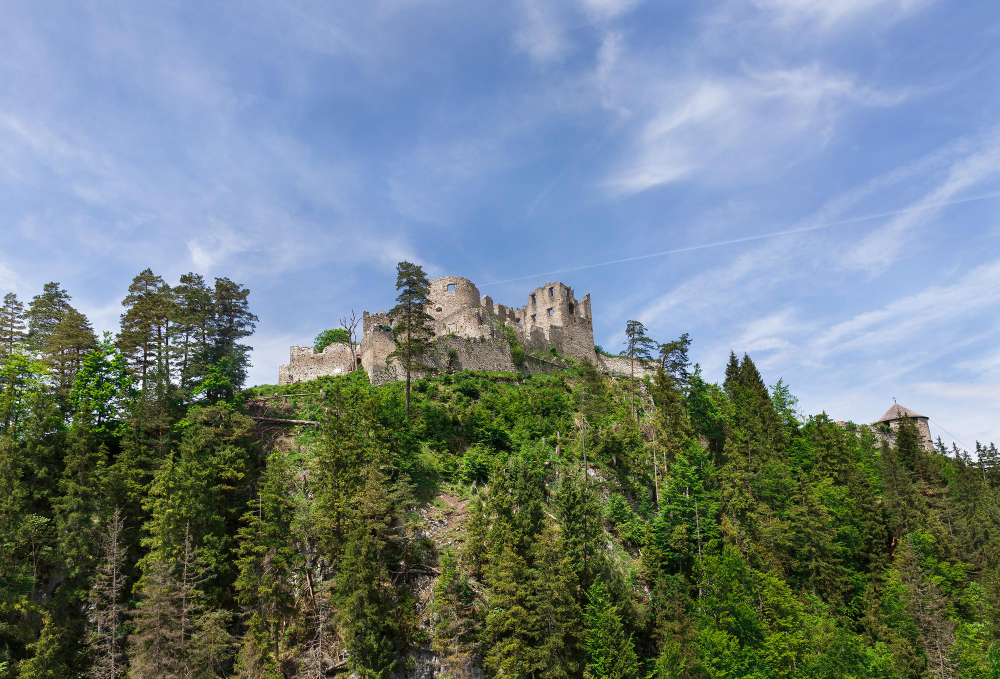
A castle on the border of spheres of influence – Ehrenberg Castle lies at an altitude of around 1,100 metres on the northern edge of the Lechtal Alps, south of Reutte. Its location was by no means chosen at random. This was the route of one of the most important links between southern Germany, the Allgäu and Tyrol. Whoever controlled this bottleneck could monitor the flow of goods, collect customs duties and direct military movements. In the 13th century, the area around Reutte belonged predominantly to the Staufer sphere of influence. After the end of the Staufer dynasty, the political landscape shifted. Towards the end of the century, the rights of sovereignty passed as a dowry to Count Meinhard II of Görz-Tyrol, one of the most influential feudal lords in the Alpine region. Under his rule, the new castle above what would later become the market town of Reutte was probably built around 1290. One possible reason for its construction was the loss of another border castle: Meinhard had ceded his Falkenstein Castle near Pfronten to the Bishop of Augsburg. Ehrenberg was able to take over this role as a strategic stronghold on Tyrol’s northern border. As early as 1293, Heinrich von Starkenberg is mentioned in a document as the first castle captain – as ‘Capitaneus ad Ernberch’. For its time, the construction was a considerable financial and organisational feat. Part of the costs came from the sovereign’s revenues. In addition, communities from several judicial districts were obliged to contribute to the financing and to perform extensive corvée labour. The castle was thus built not only as a symbol of power, but as a joint major project supported – and indeed, probably also enforced – by the population.
Customs post, pledge and contested property – Ehrenberg’s true economic strength lay not solely in the castle, but in the barrier at the foot of the mountain. The Ehrenberg Pass controlled the road through the valley and developed into a lucrative customs post. Merchants, carters and travellers on the route between north and south had to pass through this bottleneck. The revenue generated made Ehrenberg a particularly coveted possession. During the Middle Ages, the castle and its jurisdiction were pledged as security on several occasions. Such pledges were a common means of securing debts or cementing political alliances. In 1314, Duke Heinrich of Carinthia handed over the castle and jurisdiction ‘in the forest’ to Count Konrad of Kirchberg, but redeemed the pledge as early as 1317. Later, the rights changed hands once more: in 1352, Duke Konrad IV of Teck received the pledge, after which it passed to Duke Albrecht II of Austria and finally, temporarily, to Conrad of Freyberg. These shifting patterns of control demonstrate the value of the complex. It was not only the fortification itself, but above all access to customs revenue and trade routes that made Ehrenberg attractive. The castle thus served simultaneously as a military stronghold, an administrative centre and an economic asset. At the end of the 15th century, Ehrenberg came into the possession of the Augsburg merchant Georg Gossembrot. Under his rule, Reutte was granted market town status, which promoted the town’s economic development. Gossembrot, however, remains a controversial figure in historical accounts. His rule was apparently unpopular with sections of the population. Following his death in Füssen in 1502, a rumour arose that he had been poisoned. However, this account cannot be treated as an established historical fact; it belongs to the realm of local folklore. Following Gossembrot, control of the estate passed from the Paumgartner family of Augsburg to Gabriel Salamanca. The Spanish courtier was regarded as a harsh ruler. The discontent amongst the population grew so great that Duke Ferdinand I had the pledge redeemed in 1525. The history of Ehrenberg thus also illustrates how closely high politics and the everyday reality of life for the people in the valley were intertwined.
A Trial by Fire in the 16th Century – The castle complex had to prove its strategic importance time and again. The events during the conflicts of the 16th century were particularly dramatic. In 1546, troops of the Schmalkaldic League attempted to advance into Tyrol. Although the castle and the hermitage were occupied, the defences were poorly prepared: of the 200 subjects summoned, only 29 turned up. In total, there were only about 60 defenders available. On 11 July 1546, the hermitage fell; one day later, the castle also surrendered. A few months later, however, the Tyroleans succeeded in recapturing it. The positioning of artillery on the Falkenberg proved decisive. From there, Ehrenberg was shelled and rendered ready for a storming. The Protestant garrison was eventually able to escape towards the Allgäu. The damage was considerable; repairs took until 1551. Just a few years later, in 1552, Elector Moritz of Saxony advanced towards Tyrol via Füssen. The castle itself could not be taken. Nevertheless, a serious weakness came to light once again: the Falkenberg overlooked the complex. Whoever controlled this high ground could threaten the castle and the hermitage or bypass them. During the retreat, parts of the hermitage were damaged and plundered. Despite these experiences, the government in Innsbruck temporarily lost interest in the border fortress. In 1566, the garrison consisted of just five men and a stable boy. In 1601, the steward even moved his headquarters to Reutte. It was not until the beginning of the 17th century that it was recognised once again that Ehrenberg was indispensable as a pass barrier.
Expansion into a fortified complex – Between 1607 and 1609, Archduke Maximilian had the fortifications reinforced. The development of artillery had made medieval castles increasingly vulnerable. Whilst high walls and towers offered protection against attackers with ladders or catapults, they were hardly sufficient against cannon fire. Consequently, additional fortifications, bastions and forward defences were constructed. During the Thirty Years’ War, Ehrenberg once again became a focal point. In 1632, a Protestant army under the command of Bernhard of Saxe-Weimar threatened to invade Tyrol. The Ehrenberg Hermitage was attacked, but the Tyrolean defenders managed to repel the advance. This success confirmed the military importance of the pass. As a consequence of these earlier experiences, Claudia de’ Medici, the widow of Archduke Leopold V and Princess of Tyrol, commissioned the construction of Fort Claudia on the Falkenberg from 1639 onwards. The architect was Elias Gumpp. The fort was intended to secure precisely the hill from which enemies had previously threatened the castle. This systematically expanded the fortifications around Ehrenberg: the castle, the hermitage, the fort and later outer works were designed to function in concert. During the War of the Spanish Succession in 1703, it became apparent once again just how vulnerable the complex remained. Bavarian troops under Elector Max Emanuel initially managed to capture Ehrenberg. However, just one month later, the Austrians succeeded in recapturing it. In the process, local farmers brought artillery up to the Schlosskopf – the hilltop above the castle – and shelled the position from above. The lesson was clear: as long as the Schlosskopf remained unfortified, Ehrenberg would remain at risk.
The Schlosskopf and the end of its military significance – In response, a large Baroque fortress was built on the Schlosskopf between 1726 and 1741. It was the last major addition to the system and was intended to secure the higher vantage points. However, the Schlosskopf fortress was never put to the test in a major siege. Military developments rendered the complex obsolete more quickly than its builders had anticipated. In 1782, the Tyrolean fortresses – with the exception of Kufstein – were decommissioned. The reasons lay in changed strategic assessments and the high costs of maintenance and garrisons. The Ehrenberg complex lost its military function. Many buildings were sold, used as quarries or left to fall into disrepair. What had dominated traffic through the valley for centuries gradually crumbled. In April 1857, the manufacturer Friedrich Carl Hermann purchased the ruins, which were under threat of demolition. Since the mid-20th century, private owners, local initiatives and the ‘Save Ehrenberg’ association have campaigned for the preservation of the complex. Step by step, walls have been stabilised, buildings restored and individual areas made accessible to visitors.
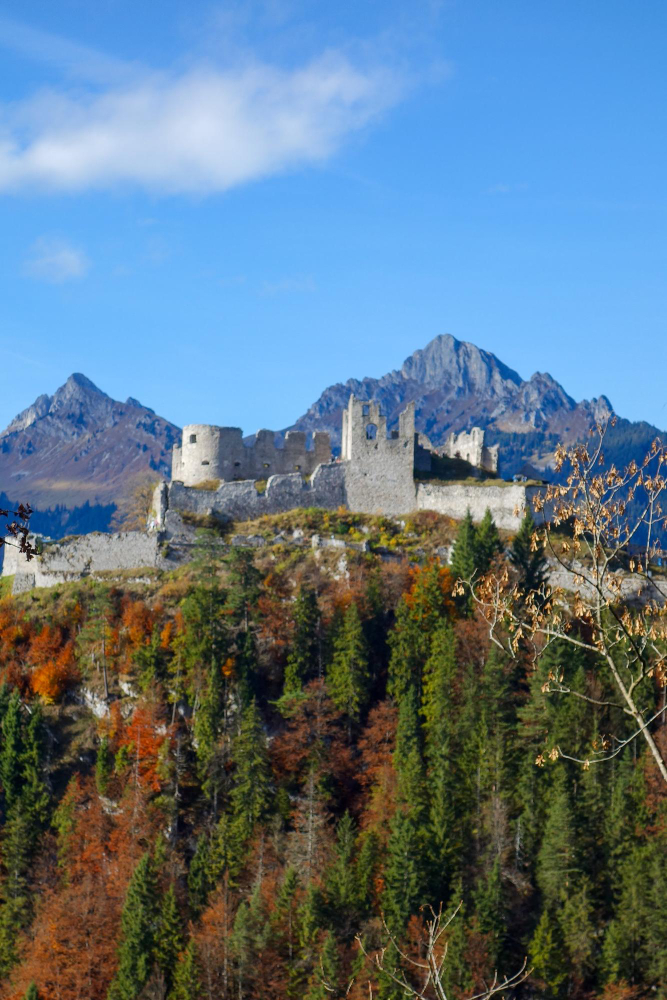
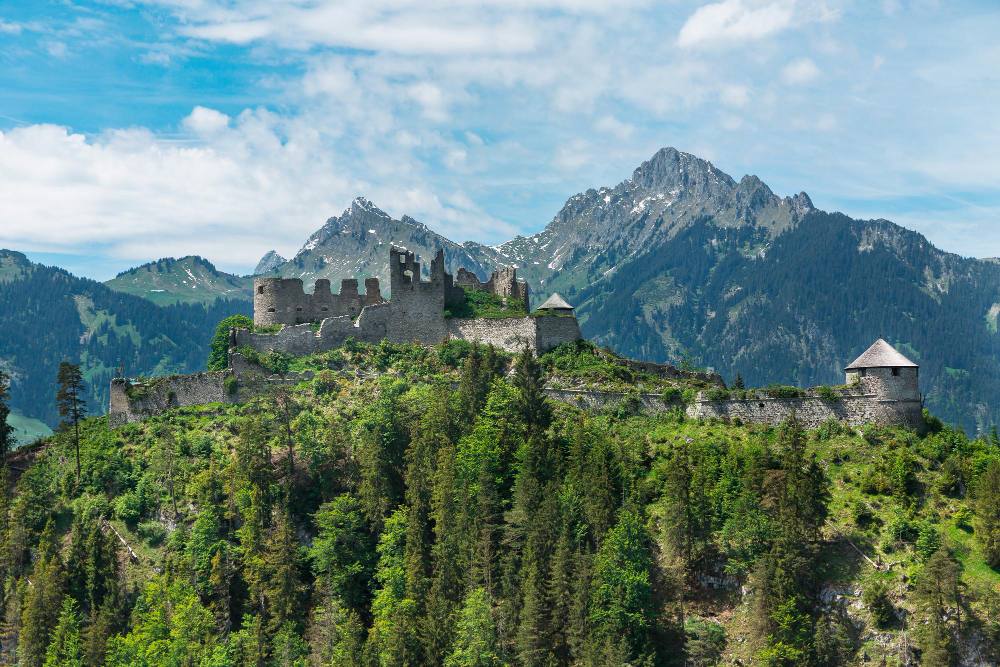
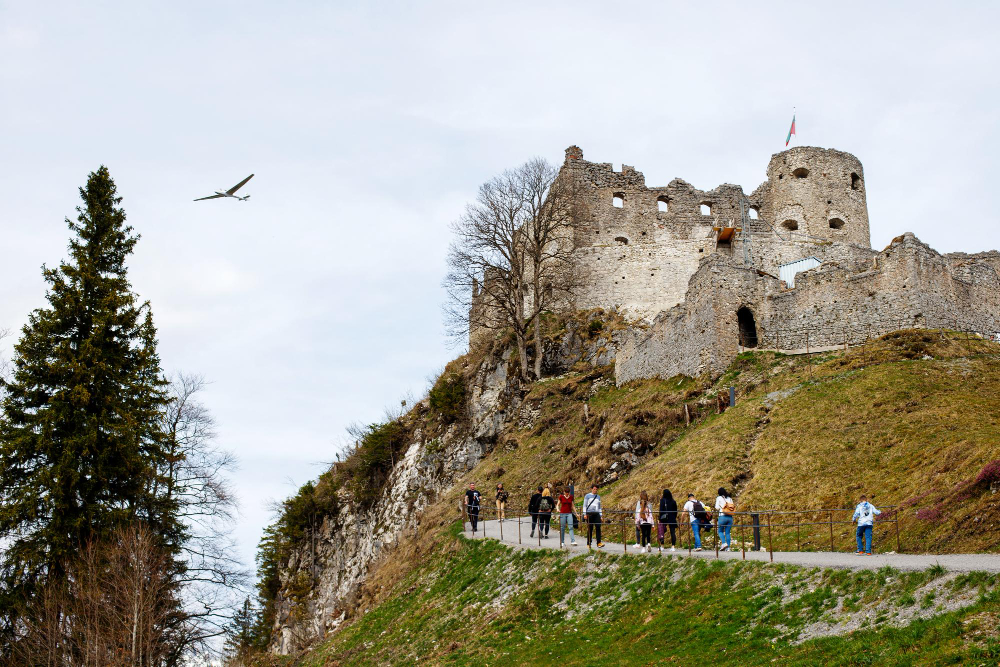
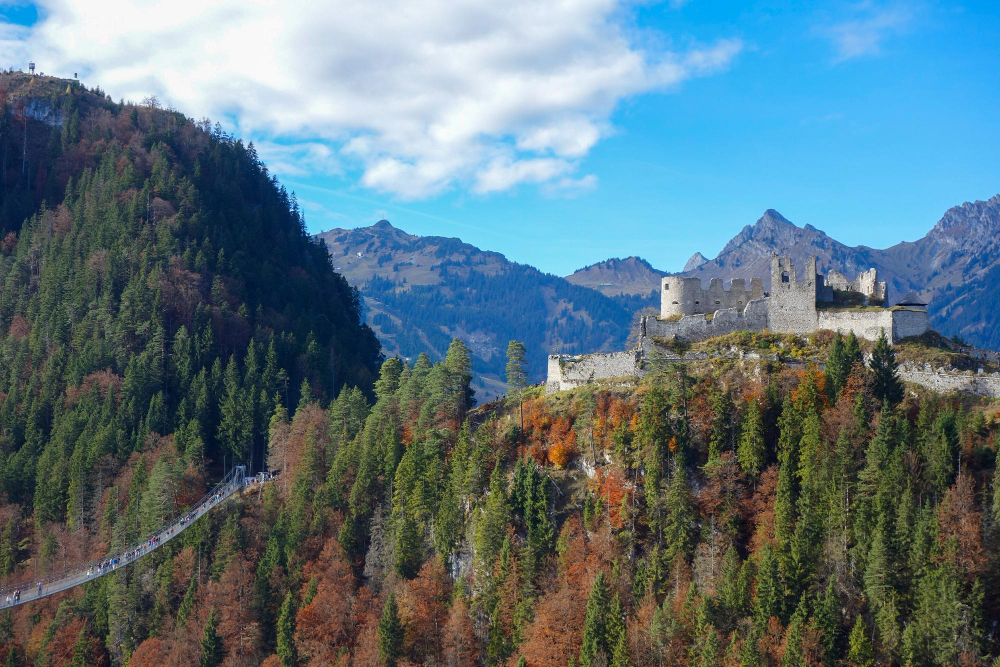
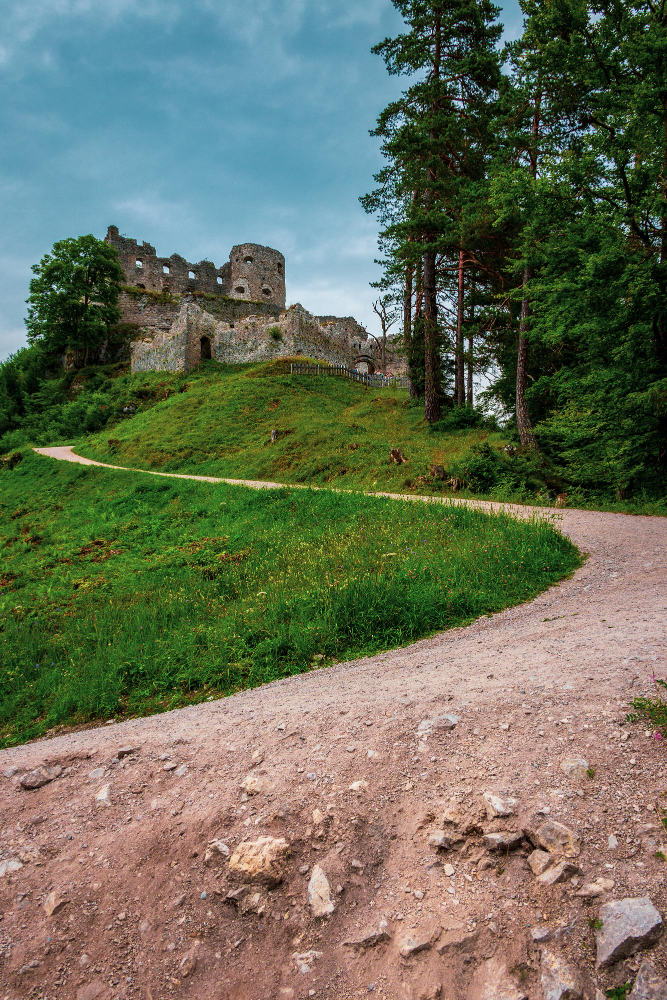
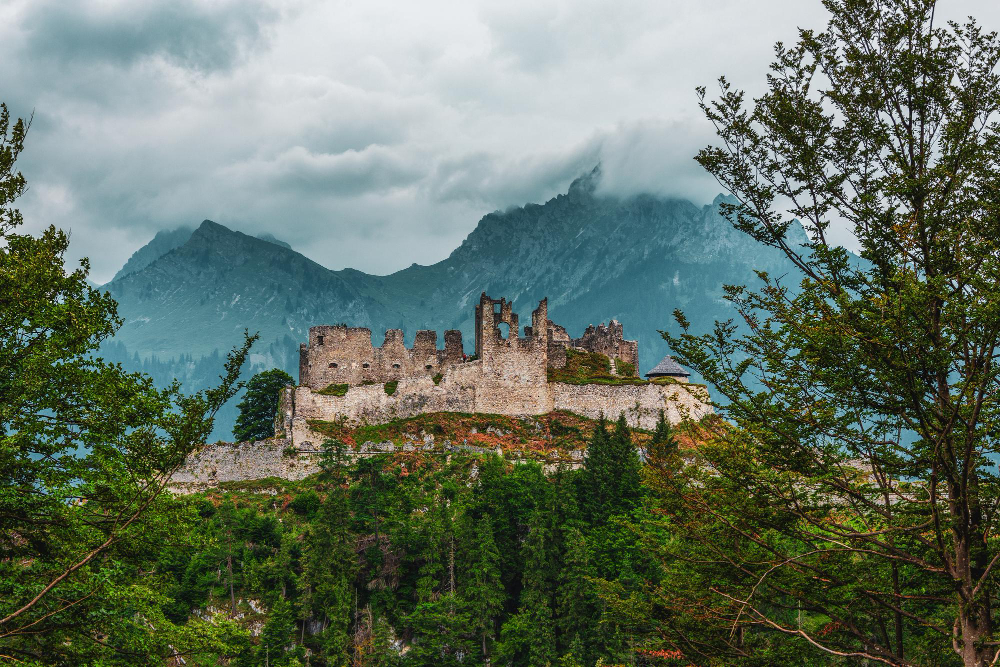
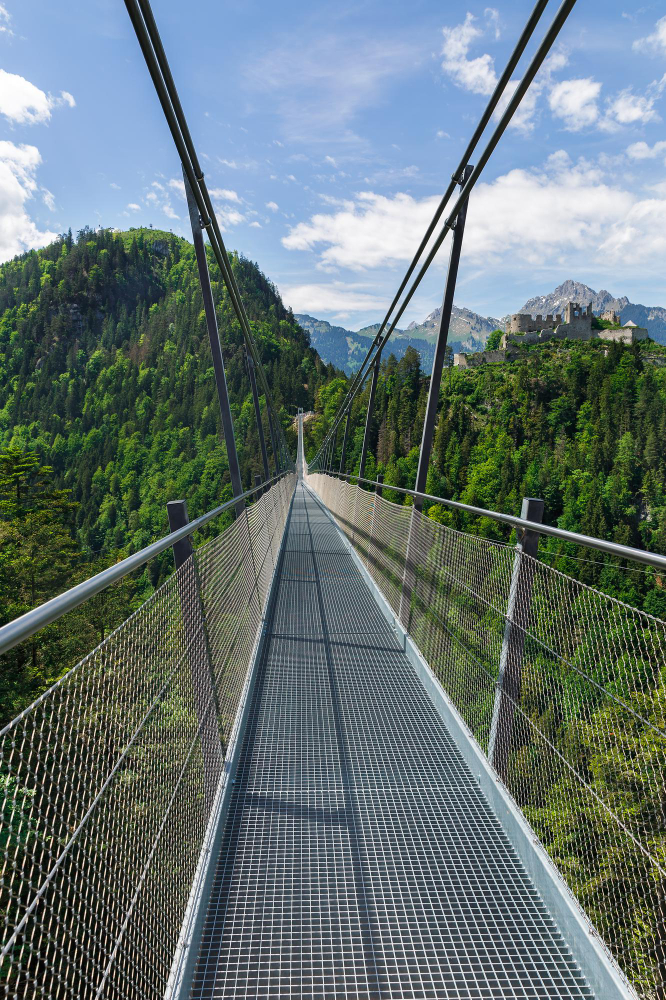
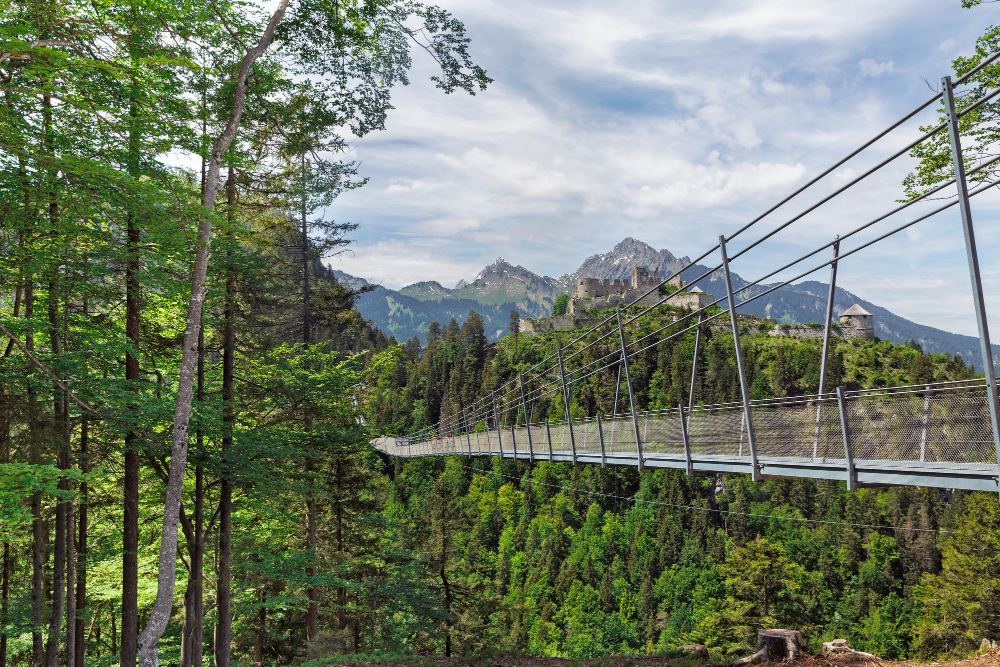
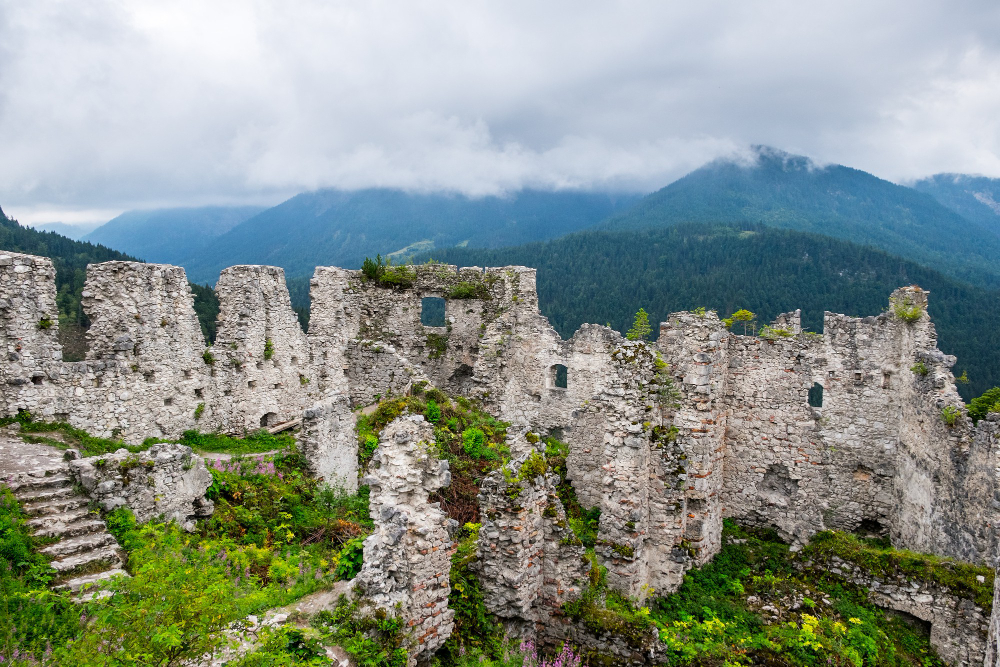
From a defensive fortress to a historical site – The castle itself still bears traces of its long construction history to this day. The inner keep stands on a rocky outcrop. Its curtain wall follows the irregular contours of the terrain. The so-called ‘Hohe Stock’, a striking transverse section of the building, was constructed in the third quarter of the 15th century. Later alterations in the 16th and 17th centuries added a bailey, gatehouses and gun towers. Particularly striking is the Falkenturm in the north-east, which was converted from an older shell tower into an artillery tower after 1551. Below the castle lies the Ehrenberger Klause, first mentioned in a document in 1317. It served as a customs post, a post station and, at times, an inn. In the 17th century, it was fitted with Italian-style bastions, and later a hornwork and further outworks. In the 18th century, a two-storey barracks was added. Today, the complex has been restored and houses the European Castle Museum. Tourist development has given this historic site a new significance. Since 2014, the highline179 – a pedestrian suspension bridge over 400 metres long – has spanned the valley directly above the Klause. It connects the area of the castle ruins with Fort Claudia and allows visitors to experience the extraordinary topography of the fortification complex at first hand. An inclined lift, the Ehrenberger Liner, also facilitates access to the castle and on towards the Schlosskopf. Ehrenberg is no longer an impregnable border fortress. Yet it is precisely the ruins, walls and bastions that demonstrate how rule, commercial interests and military technology have changed over the centuries. Anyone who passes through the gates of the hermitage or looks out over the valley from the heights of the castle sees not just a Tyrolean landmark – but a historic transport hub where the history of the Alpine region converges.