
In the heart of Greece, in the picturesque bay of Pylos, stands an impressive fortress that symbolises the eventful history of the Mediterranean: Neókastro Fortress, also known as ‘New Navarino’. This imposing fortress tells tales of battles, conquests and cultural upheavals. Its strategic location made it, over the centuries, the scene of significant historical events that have left a deep mark on the region.
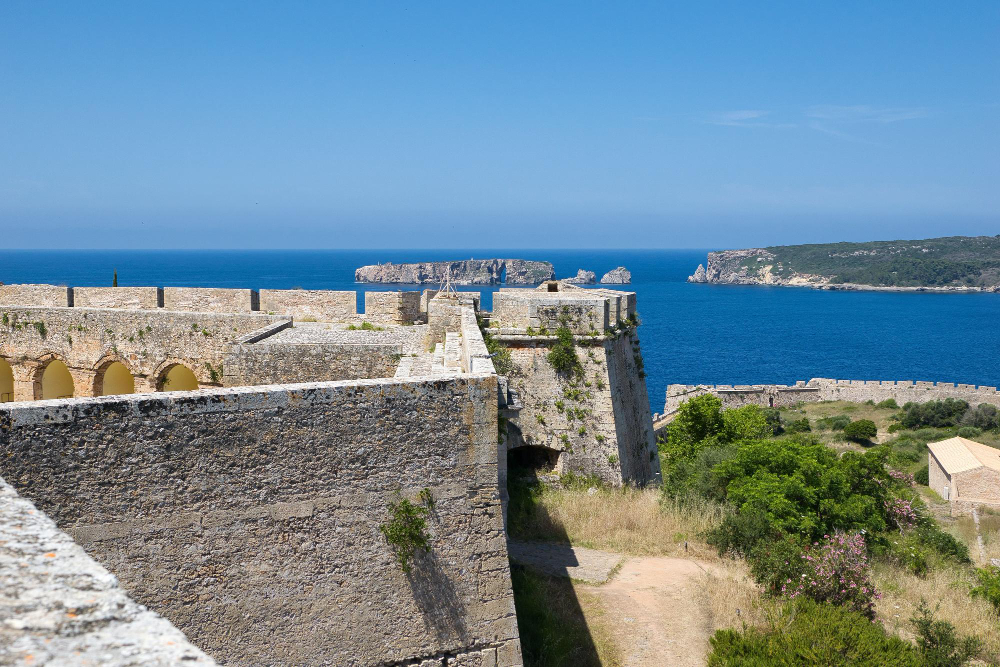
The Beginnings of a Fortress – Neókastro was built in 1572/73 under the command of the Ottoman Kapudan Pasha Uluç Ali Reis. This period was marked by the aftermath of the famous Battle of Lepanto (1571), in which the Ottomans had suffered a heavy defeat at the hands of the Christian powers. By building the fortress, the Ottomans were responding to the military necessity of consolidating their control over the western Mediterranean. Neókastro’s location at the southern entrance to Pylos Bay was of crucial importance in this regard. This was complemented by the older fortress of Palaiokastro (‘Old Navarino’) at the northern entrance to the bay, a 13th-century relic originally built by Crusaders from the Principality of Achaia. Unlike its medieval counterpart, Neókastro reflects the advanced military techniques of the age of gunpowder. With its sloping walls, massive bastions and a defensive system in the ‘Trace Italienne’ style, the fortress was ideally designed for artillery engagements. It was not only the architecture but also the geographical location that made Neókastro a central hub for Ottoman military operations.
War and Changes of Power – Neókastro played a key role in the Ottoman conquest of Crete in the 17th century, when the fortress served as a base for invasions in 1645. This chapter, however, was merely the prelude to a series of changes of power that the fortress was to experience over the centuries. In 1686, during the Morean War, the Republic of Venice, under Francesco Morosini, succeeded in capturing the fortresses of Navarino. The Venetians held the fortresses until 1715, when the Ottomans recaptured the Peloponnese and thus re-established their control over the region. Nevertheless, the fortress remained a contested site: in 1770, during the Russo-Turkish War and the Russian-inspired Orlov Uprising, Neókastro was captured by Russian troops after a six-day siege. The Ottomans were given the opportunity to withdraw to Crete, but the Russian victory was short-lived. As early as June of the same year, the Russians abandoned the fortress, destroyed parts of it and handed it over to the Ottomans.
The Greek War of Independence and the turning point – With the outbreak of the Greek War of Independence in March 1821, another dramatic chapter in the history of Neókastro began. The Greeks laid siege to the fortress for months until the Ottoman garrison surrendered in August 1821. Despite assurances of a safe withdrawal, a brutal massacre of the Ottomans took place. The fortress initially remained in Greek hands, but Ibrahim Pasha of Egypt, who was fighting on the side of the Ottomans, recaptured it in May 1825. Neókastro was finally liberated in 1828 by the French Morea Expedition under General Nicolas Joseph Maison. The Ottoman-Egyptian garrison surrendered the fortress to the French troops without a fight. Two years later, in 1830, the town of Pylos was founded near the fortress, and it still exists today. Over time, the fortress walls lost their military significance, and parts of the complex were used as prisons for a long period.
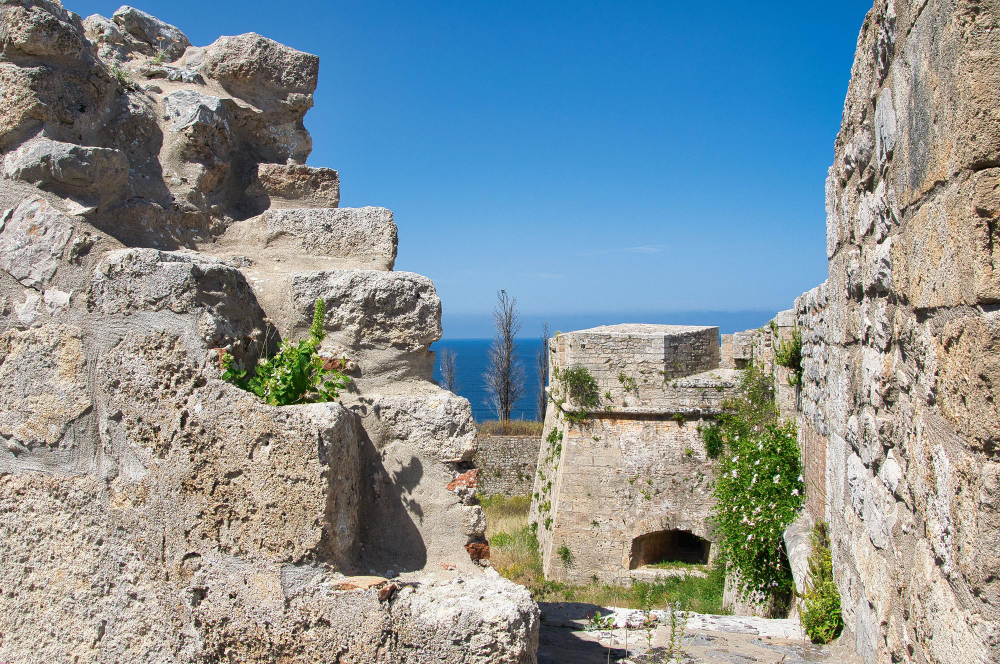
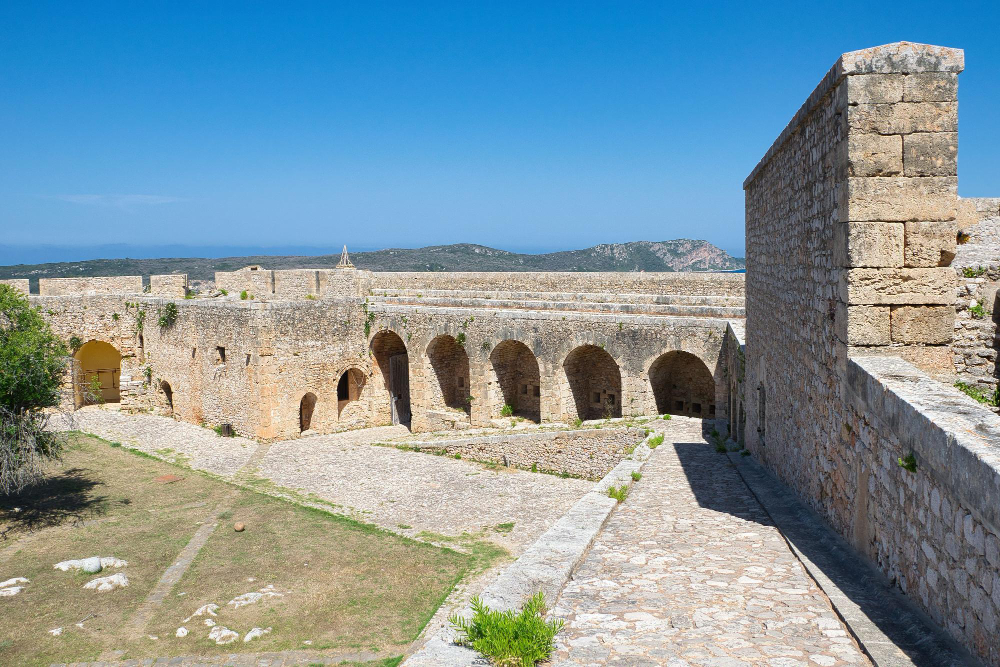
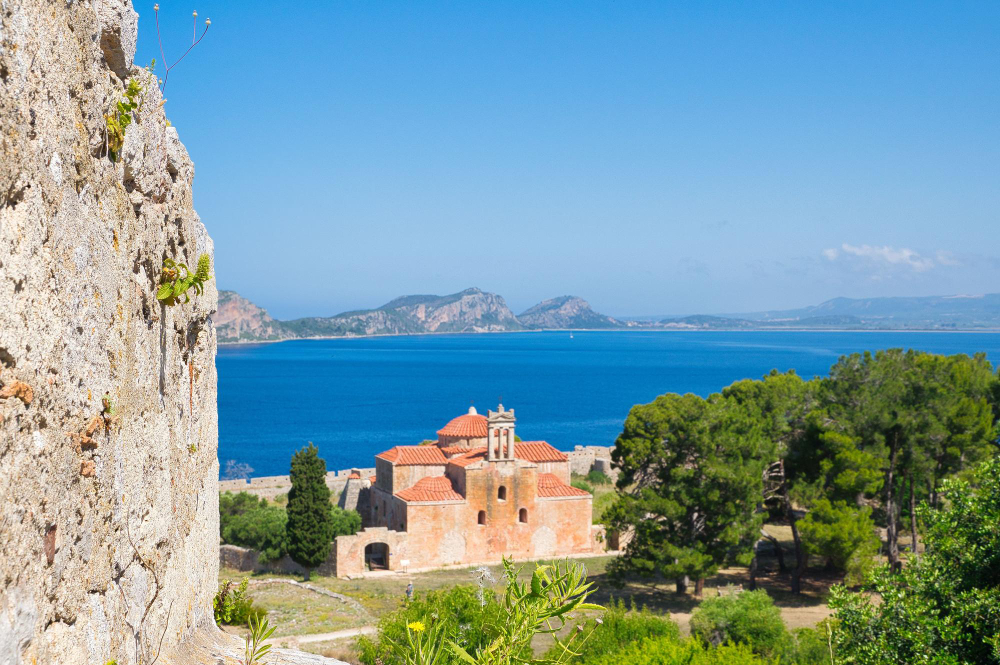
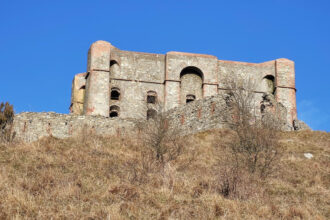
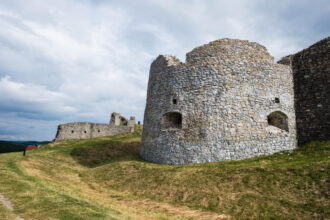
An architectural masterpiece and a symbol of history – The construction of the fortress bears witness to the advances in military technology during the early modern period. Particularly impressive are the massive bastions such as ‘Santa Maria’ and ‘Seventh’, which face the sea and were designed to protect the harbour. The fortress’s citadel, which was further secured by a dry moat, comprised six pentagonal bastions and nearly 60 guns – a veritable nightmare for enemy attackers. Within the fortress walls there were once numerous buildings, of which for the most part only ruins remain today. Particularly noteworthy, however, is the fortress’s former mosque, which was converted into the Orthodox Church of the ‘Transfiguration of Christ’ following Greek independence. To this day, it stands as a testament to the cultural and religious changes the region has undergone.
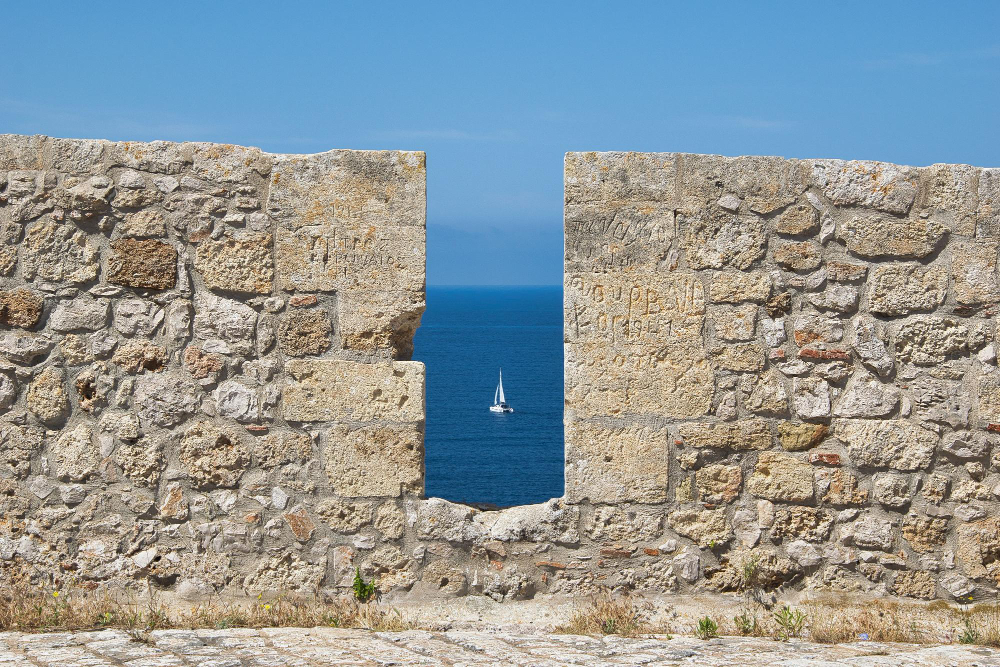
Neókastro: A Living Monument – Today, Neókastro is not only a historic landmark but also a popular destination for visitors from all over the world. The fortress offers a breathtaking view of Pylos Bay and gives a sense of the strategic importance of this place in times gone by. Yet it is not merely a place of history, but also a place of legends. One such legend centres on the ghosts of fallen soldiers, who are said to still wander within the fortress walls. Whilst historians often dismiss such stories as fantasy, they fascinate locals and tourists alike and lend Neókastro a mystical aura.
Neókastro Fortress in Pylos is more than just a building – it is a living testament to the turbulent history of the Mediterranean region and its people. Its walls tell of wars, political power struggles and cultural change, but also of the region’s resilience and cultural heritage. Anyone who has the opportunity to visit it will be impressed not only by its architecture, but also by the stories that surround it – stories full of courage, tragedy and hope that still resonate today. Neókastro thus remains an essential destination for history buffs and cultural travellers – and a symbol of how buildings, as silent witnesses, can preserve the soul and identity of a place across the centuries.