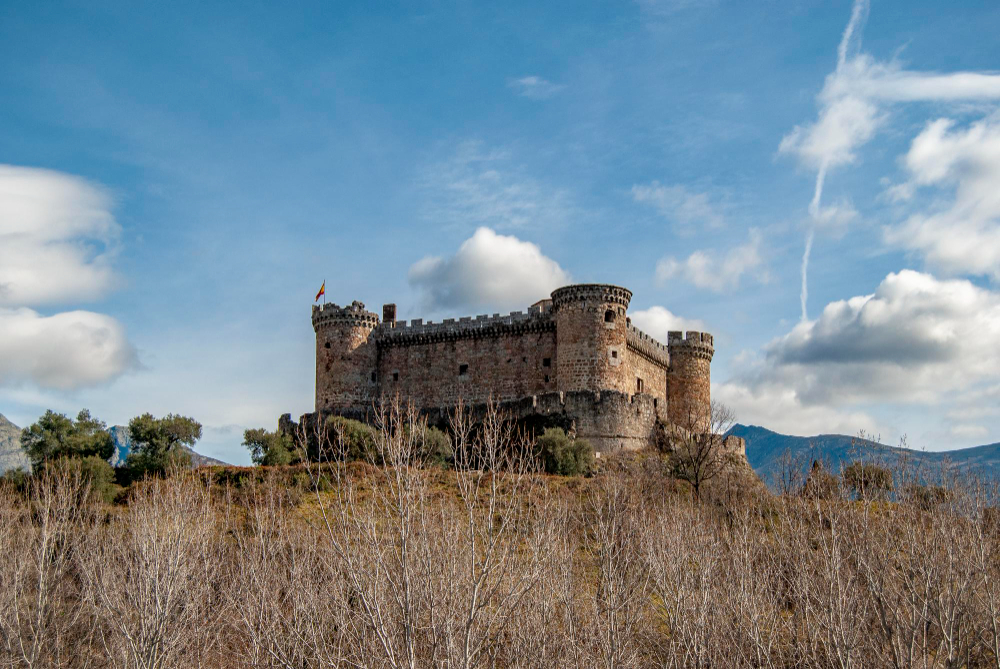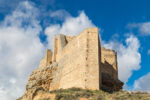

Anyone wandering through the picturesque landscapes of the province of Ávila in Spain will, sooner or later, come across an imposing structure that rises majestically above the Barranco: the Castillo de Mombeltrán, also known as the Castillo de los Duques de Alburquerque. This historic monument combines architecture, history and legends, offering a fascinating insight into Spain’s past. In this article, we delve into the history and significance of the structure, examine its architectural details and shed light on its role in history and culture.
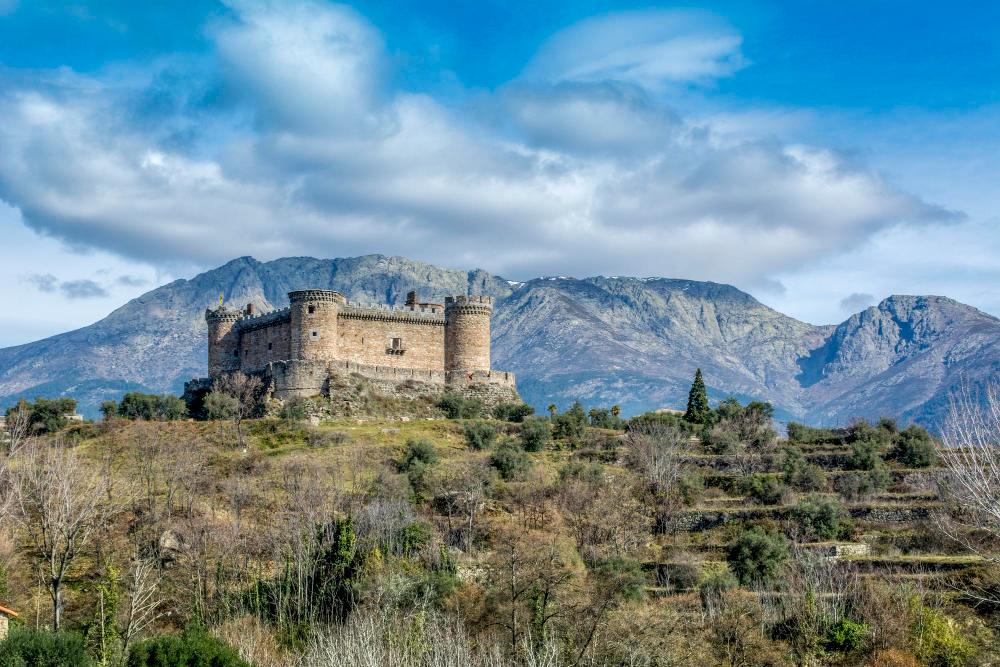
The Origins of the Castillo de Mombeltrán – The construction of the castle can be traced back to Beltrán de la Cueva, the first Duke of Alburquerque. He had the structure built between 1462 and 1474 – a period marked by political upheaval and armed conflict. The castle’s strategic location on the final slope of the Sierra afforded it a commanding view over the surrounding valley and made it an important defensive stronghold. The architectural details of Mombeltrán Castle bear similarities to other works by the renowned architect Juan Guas, who also designed the castles of Belmonte and Manzanares el Real. This connection was established on the basis of the castle’s coats of arms and architectural style, which are typical of 15th-century architecture.
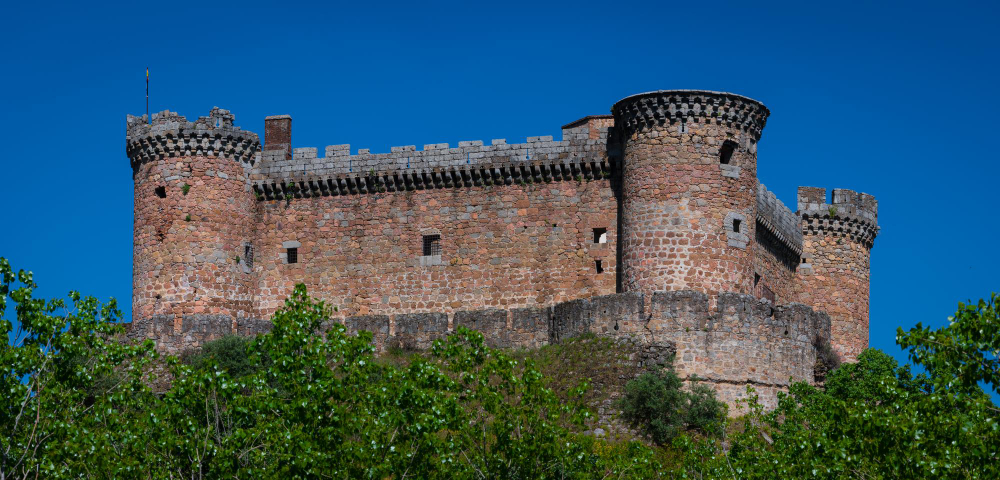
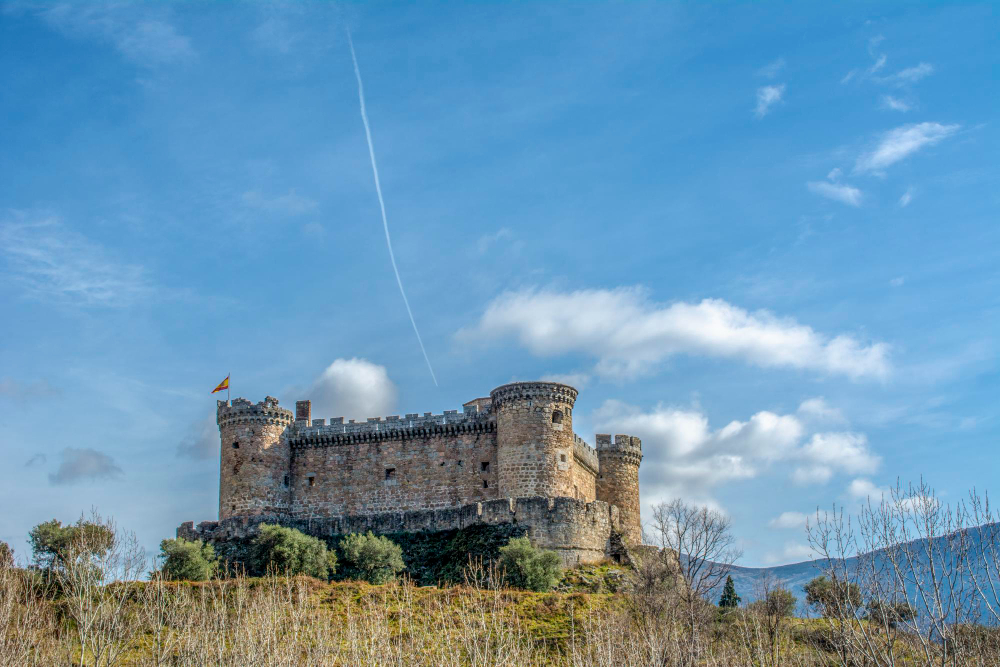
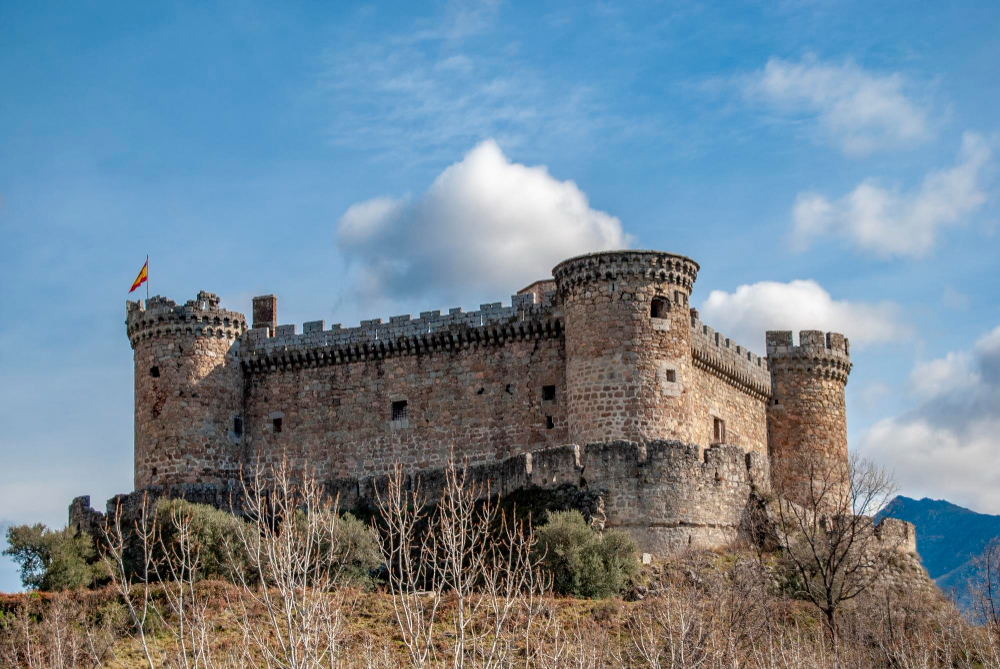
The Architecture: Power and Art Combined – Today, the castle is an impressive example of medieval architecture, even though parts of it are badly dilapidated. It consists of a rectangular main structure with four corner towers and a low outer bailey surrounding it. The walls are crowned with square battlements, some of which are supported by decorative arches serving purely ornamental purposes. Originally, the castle was probably surrounded by a moat, but this was filled in during the 16th century. This work took place as part of the renovation carried out under Francisco Fernández de la Cueva, the second Duke of Alburquerque. He transformed the castle from a purely defensive structure into a stately residence. During this phase, the former drawbridge mechanism was replaced by a Renaissance-style gate, which now forms the main entrance. Inside, the central courtyard is enclosed by a colonnade, around which the living quarters, the chapel and the servants’ quarters are arranged. Particularly noteworthy are the castle’s tower-like elements, which feature vaulted ceilings. The so-called ‘Torre del Homenaje’ (keep) once had an additional wooden platform, strategically positioned so that attackers could not gain access. This served to reinforce the inner defences.
A place steeped in history and legends – The Castillo de Mombeltrán is more than just an architectural gem; it bears witness to the region’s turbulent history and the power of the de la Cueva family, who played a significant role in Spanish society for centuries. For generations, the castle remained in the possession of the House of Alburquerque, whose members resided there from time to time. Although no specific legends are directly linked to this castle, the region itself is rich in tales of bravery, betrayal and love, which are often associated with such imposing structures. Of particular interest is the fact that, despite its military origins, the castle was later converted into a stately residence – a transformation undergone by many historic buildings of that era. Since 1949, the castle has been officially listed as a protected monument and classified as a ‘Bien de Interés Cultural’. This status protects it from further decay and ensures its preservation as part of Spain’s cultural heritage. Today, the castle is owned by Juan Miguel Osorio y Bertrán de Lis, a descendant of the original owners.
Challenges in Preservation and Use – Like many other historic buildings, the Castillo de Mombeltrán is struggling with the challenges of the times. The interior of the castle is badly damaged and is in urgent need of extensive restoration work. Whilst the exterior is relatively well preserved, there is a risk that the interior areas will continue to fall into disrepair. Funding such projects is particularly problematic. Although the castle is under state protection, many of the restoration measures are funded by private initiatives or organisations. There is ongoing discussion as to whether the castle could be utilised more extensively for tourism to generate revenue for its conservation.
The castle’s significance for the region – For the Ávila region, and in particular for the small municipality of Mombeltrán, the castle is of great cultural and tourist significance. Every year, it attracts numerous visitors who not only admire the impressive architecture but are also interested in the history of the Alburquerque noble family. In addition to its historical significance, the castle also offers breathtaking views of the surrounding countryside and serves as a symbol of the region’s eventful history. Many local events and cultural activities take place around the castle, underlining its role as the centre of local life.
A treasure from times gone by – The Castillo de Mombeltrán is not only a magnificent structure but also a living part of Spanish history. From its strategic importance in the Middle Ages, through its conversion into a residence, to its current role as a monument, the castle brings together history, architecture and the diverse stories of those who lived there. Mombeltrán may be a small town, but with the castle it possesses a monument that symbolises the region’s past and pride. Its walls tell of power, change and the eternal pursuit of beauty in architecture. This makes it all the more important to preserve this treasure and make it accessible to future generations.