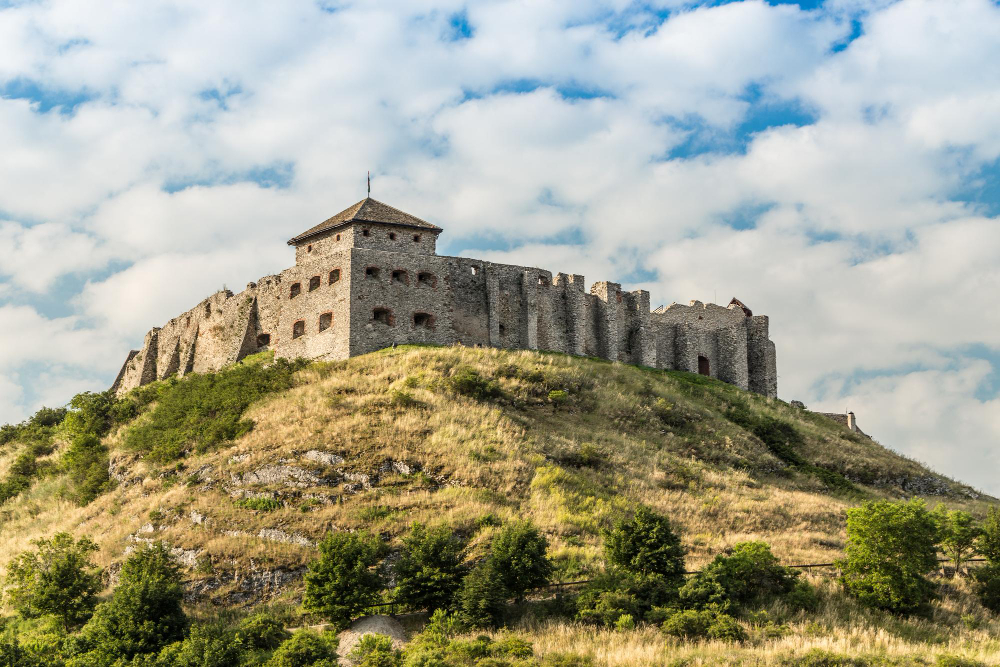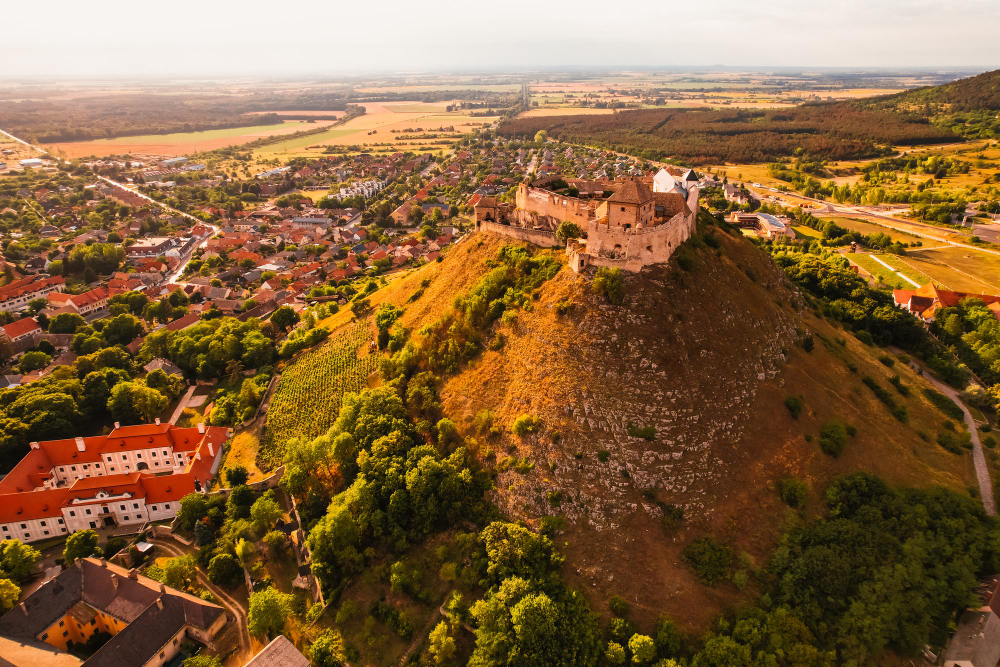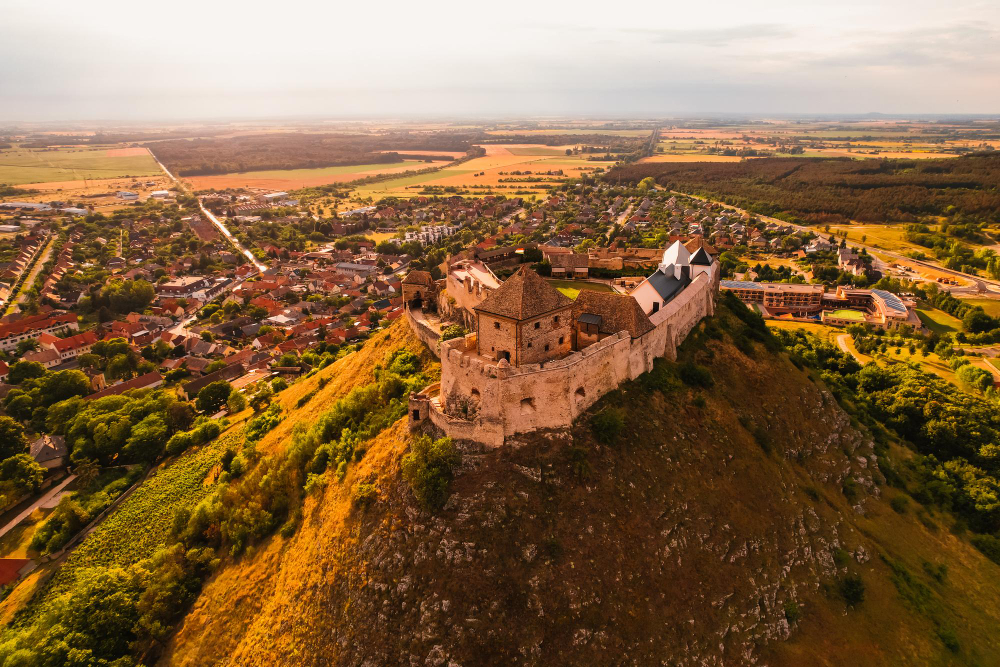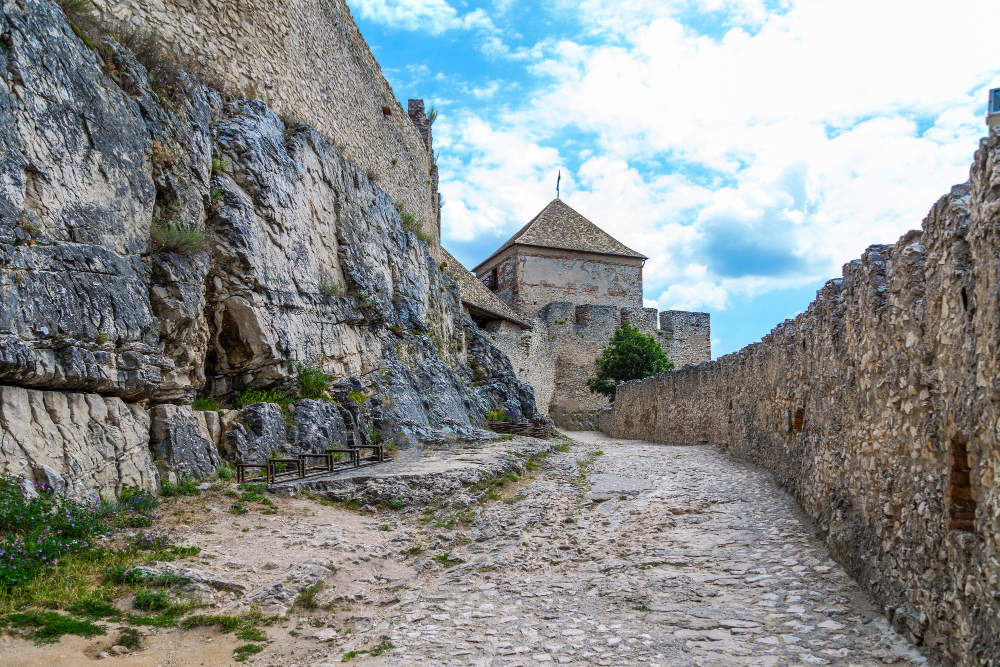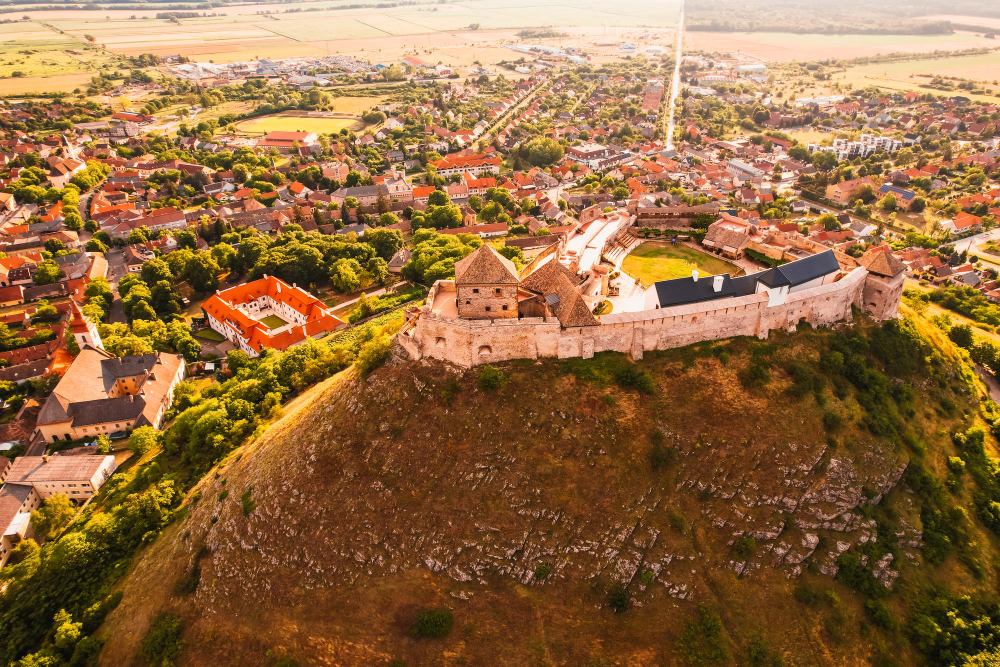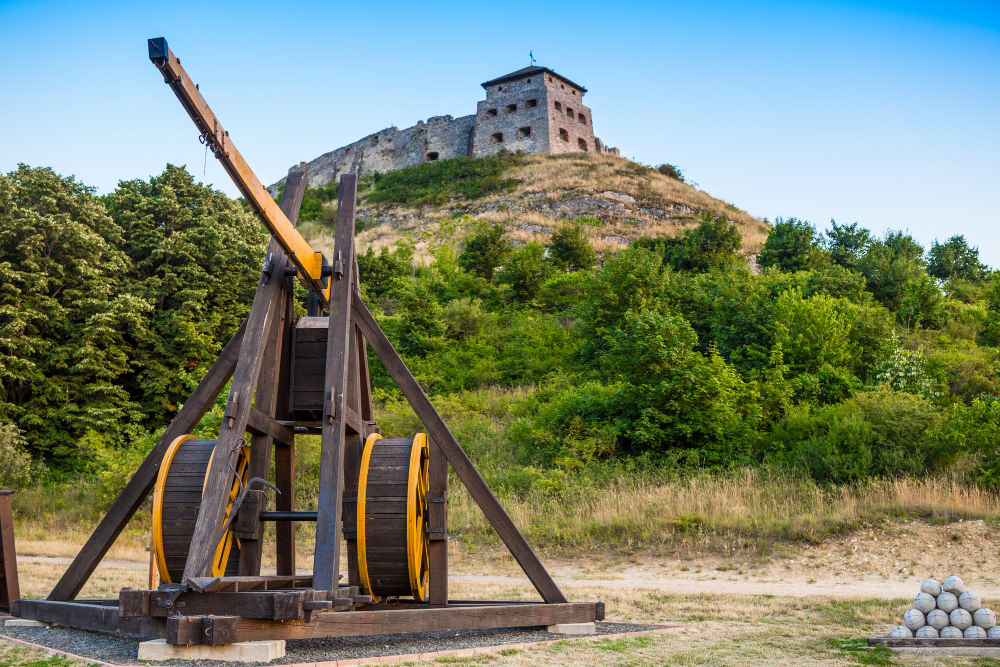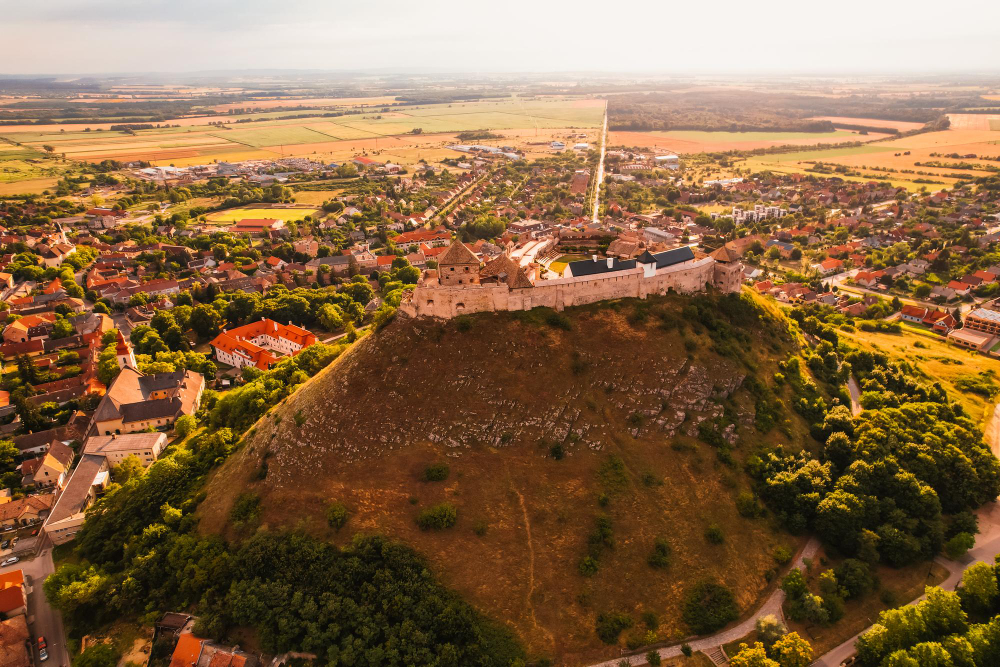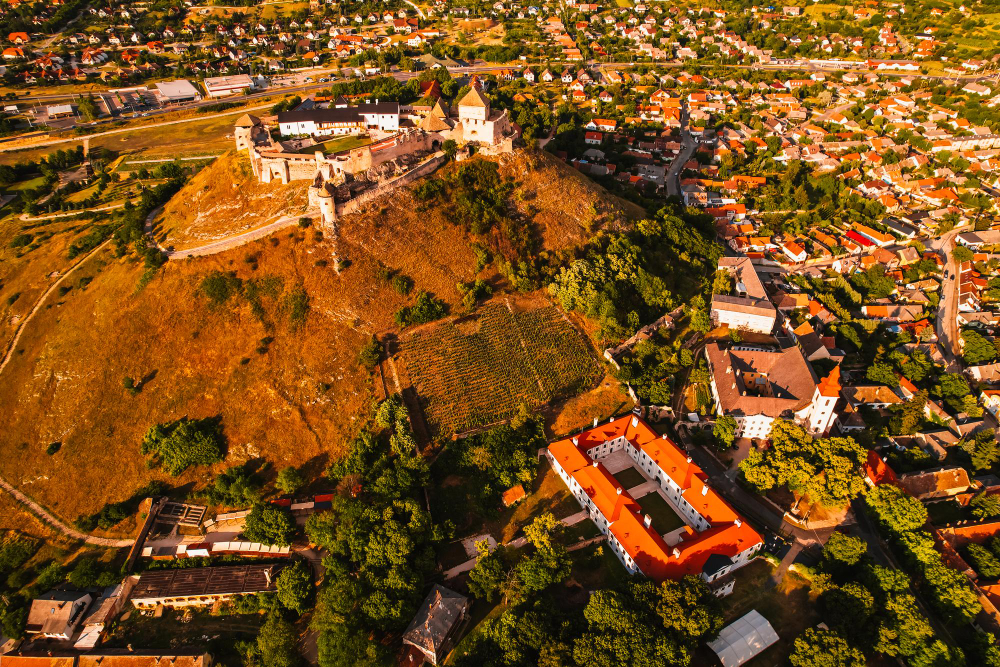

Perched high on a steep hill, the imposing Sümeg Castle towers over the Hungarian town of the same name. Its rugged, partly ruined walls tell a story marked by both bloodshed and strategic thinking. Once an important defensive stronghold against enemy invaders, later a place of decay – today an important monument where times gone by are brought back to life. Yet behind the castle’s well-restored façades lies a history that is as fascinating as it is sombre.
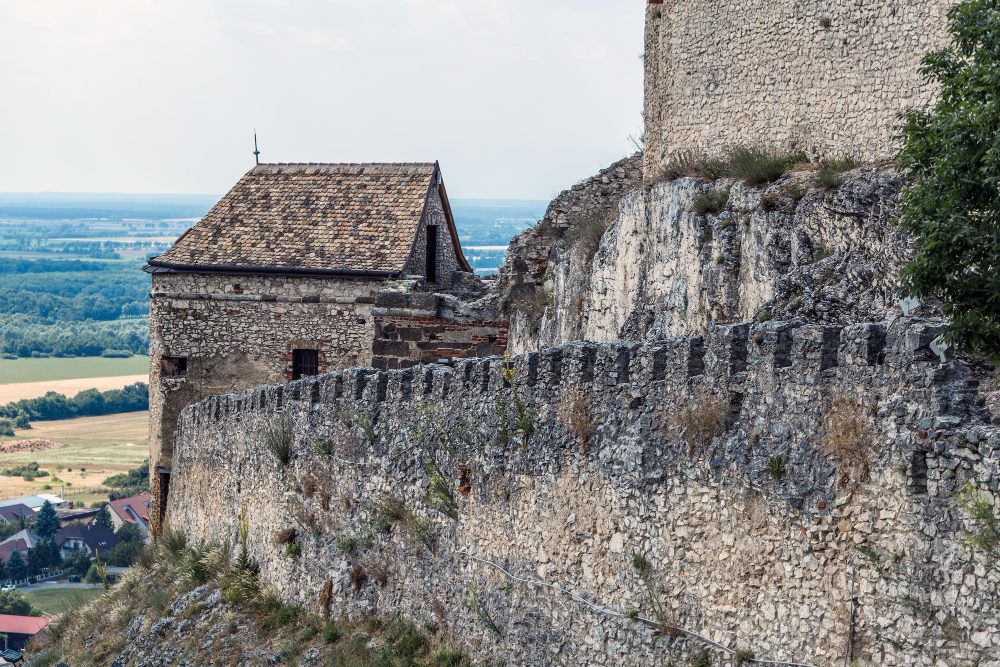
Beginnings in the shadow of war – The origins of Sümeg Castle date back to the second half of the 13th century. It was King Stephen V of Hungary who bestowed this jewel of medieval architecture upon the Diocese of Veszprém. Initially, the fortress consisted merely of a tower, a cistern and a few other rooms, but its strategically favourable location soon made it an indispensable part of the region’s defences. The castle was first mentioned in a document in 1301, at a time when Hungarian history was also marked by political unrest. In the 15th century, Bishop Albert Vetési laid the foundation stone for a major expansion of the complex. Under his leadership, Sümeg gradually took on the form it has retained to this day – with thick walls designed to withstand the ravages of time. Yet, as is so often the case in history, the castle’s fate was closely intertwined with the conflicts and power struggles of the eras in which it stood. Following the fall of Veszprém in 1552, Sümeg was declared the residence of the bishops of the county. This decision had far-reaching consequences: the castle was expanded once more to fulfil its new role as a place of protection and prestige. Particularly striking is the so-called Kövessy Bastion on the north-eastern side of the castle, named after the then Bishop András Kövessy, who had it built. To this day, this bastion bears witness to the military significance of the complex.
An impregnable fortress in turbulent times – During the expansion of the Ottoman Empire, the region around Lake Balaton repeatedly became the scene of fierce fighting. Sümeg was besieged on several occasions, but was never directly conquered – a testament to the solid construction and the strategic ingenuity of its designers. Yet although the fortress itself withstood the attacks, the town below the castle was not spared. A particularly dark chapter in the castle’s history began after the Battle of Szentgotthárd in 1664: the defeated Ottoman troops retreated through Sümeg, but unleashed a wave of destruction by setting the town and the castle alight. Bishop István Sennyei played a decisive role in the subsequent restoration. Thanks to his efforts, the castle regained its former appearance and function. Yet peace was short-lived. During the Rákóczi War of Independence (1703–1711), an uprising against Habsburg rule, the castle fell into the hands of the rebels before being recaptured by imperial troops in 1709. This conflict left deep scars on the fortress’s structure. In 1726, Sümeg was set alight once more, and its gates were blown up. This event marked the beginning of its final decline.
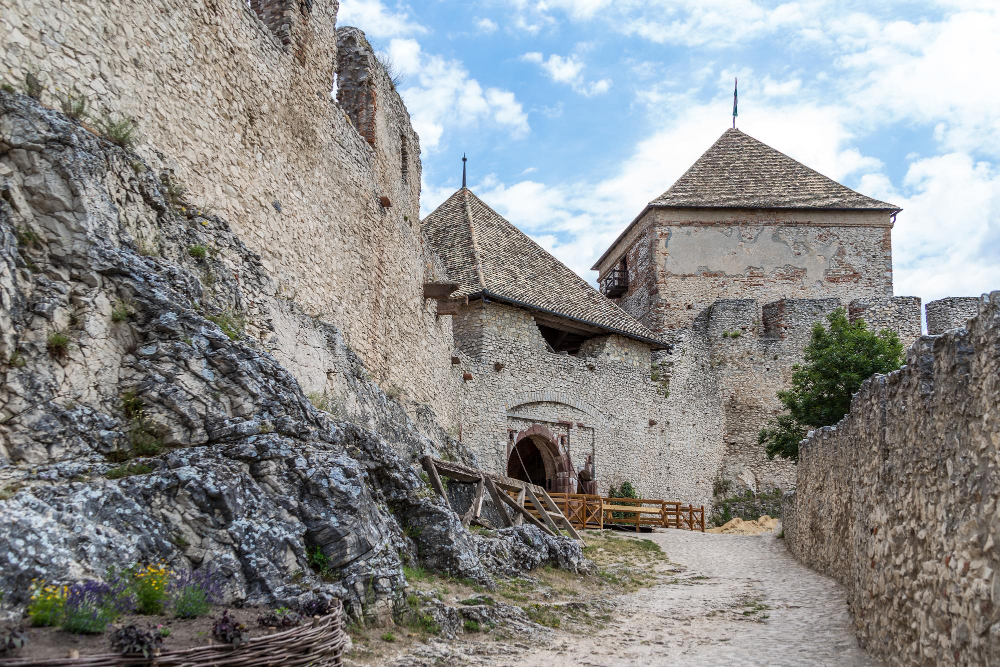
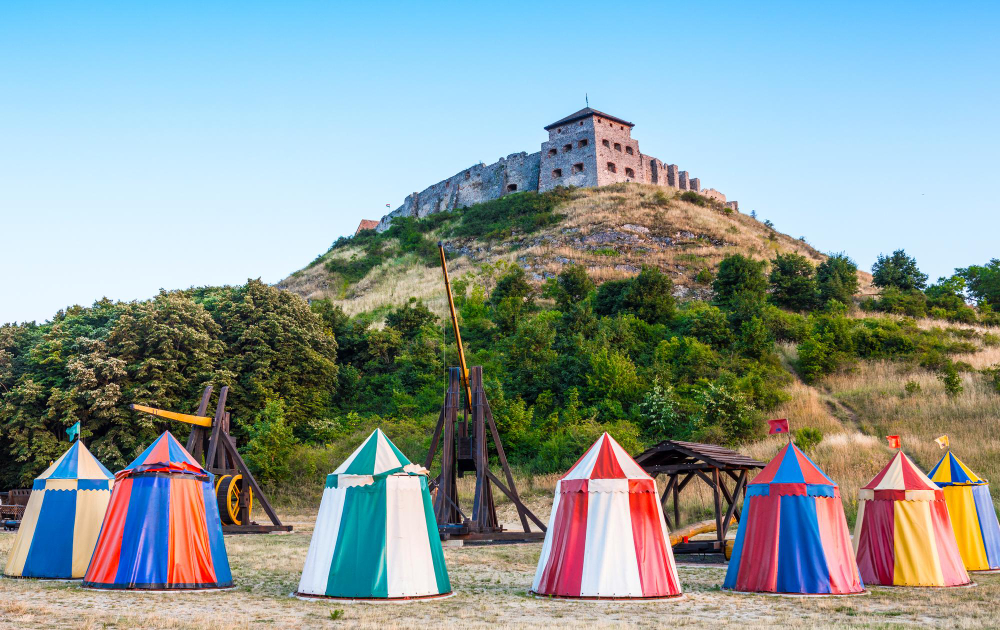
Decline and Rebirth – After centuries of war and neglect, Sümeg gradually faded into obscurity. As a silent witness to times long past, it stood there, lonely and dilapidated, towering over the town of the same name. It was not until modern times, after the political winds in Europe had shifted, that a new era began for the venerable castle. In 1989, a private operator took over responsibility for the ruins. With great attention to detail and a vision to breathe new life into the castle, restoration work began. The focus was not only on preserving the historic structure, but also on bringing history to life for visitors. Today, Sümeg Castle is one of the region’s most popular tourist destinations. Tourists can experience first-hand what life was like in the Middle Ages – from jousting tournaments and sword fights to traditional 15th-century-style banquets.
Stories and Legends: The Castle’s Dark Legacy – Like any castle with a history steeped in intrigue, conflict and human suffering, Sümeg is also the subject of numerous legends. One of the best-known stories concerns a hidden underground tunnel that is said to have linked the castle to a nearby monastery. This passage is said to have served as an escape route for the clergy during times of siege. To this day, no conclusive evidence of the tunnel’s existence has been found, yet tales of hidden treasure chambers and ghosts roaming the castle persist. Another grim tale is the legend of a prisoner who is said to have met his end in the castle’s deep dungeons. According to the legend, his ghost is said to still wander amongst the cold stones, seeking his unfulfilled revenge. To this day, visitors report strange noises and unexplained apparitions at twilight, which only serve to heighten the castle’s already mystical character.
Medieval romance meets modern attractions – Despite its eerie past, Sümeg Castle has shed its sinister reputation and transformed itself into a place that has far more to offer than just dark tales. The imposing walls, which rise steeply into the sky, are now the venue for numerous events. The medieval jousting tournaments, in particular, are a real highlight. Here, the past comes to life: knights in shining armour cross swords in fair duels, whilst musicians play historical melodies on ancient instruments. For history lovers, too, the fortress offers rich insights into Hungary’s past. Interactive exhibitions, guided tours of the renovated residential tower and a detailed portrayal of life in the Middle Ages make Sümeg an ideal destination for history enthusiasts and families alike.
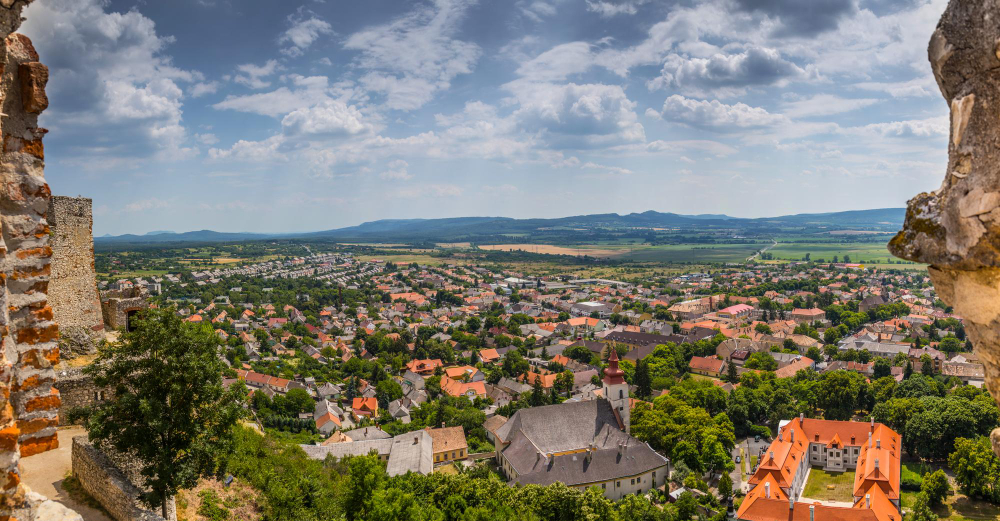
Mysterious beauty amidst nature – Another highlight of the castle is the breathtaking view it offers. From the castle walls, you can enjoy an unforgettable vista of the surrounding countryside – the rolling hills, the green forests and the glistening waters of Lake Balaton, just twenty kilometres away. This contrast between the castle’s rugged architecture and its idyllic surroundings makes Sümeg a unique destination. Yet, despite all the modern comforts, there is a hint of the inexplicable in the air. Perhaps it is the history that lives on within the castle walls. Or perhaps it is the silent presence of those who once walked through these stone corridors – generations of bishops, soldiers and ordinary people, whose traces have long since faded, but whose spirits still seem to linger in the darkness.
Sümeg Castle is more than just another historical relic. It is a living testament to Hungarian history and a link to a time when the country was torn between the forces of war and faith. Yet it is also a place where legends and mysteries spark the imagination – a place where one can feel close to the unknown whilst touching the massive walls of history. For anyone who dares to visit this place, Sümeg Castle will be an unforgettable experience. Whether as a setting for living history, a hub of legends or simply a majestic structure – it remains a mystical place, surrounded by stories just waiting to be told.