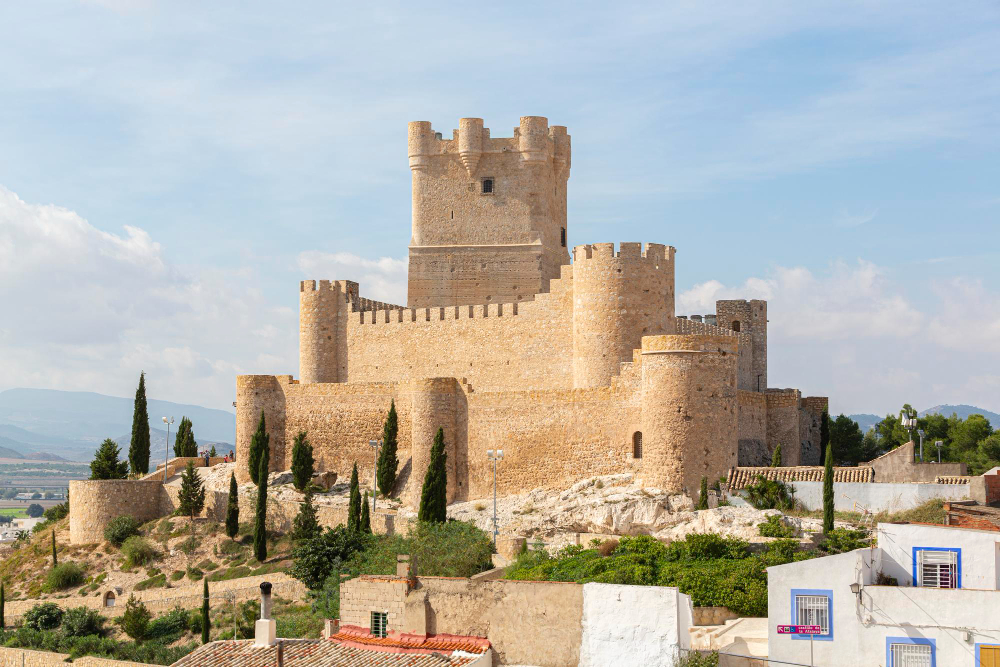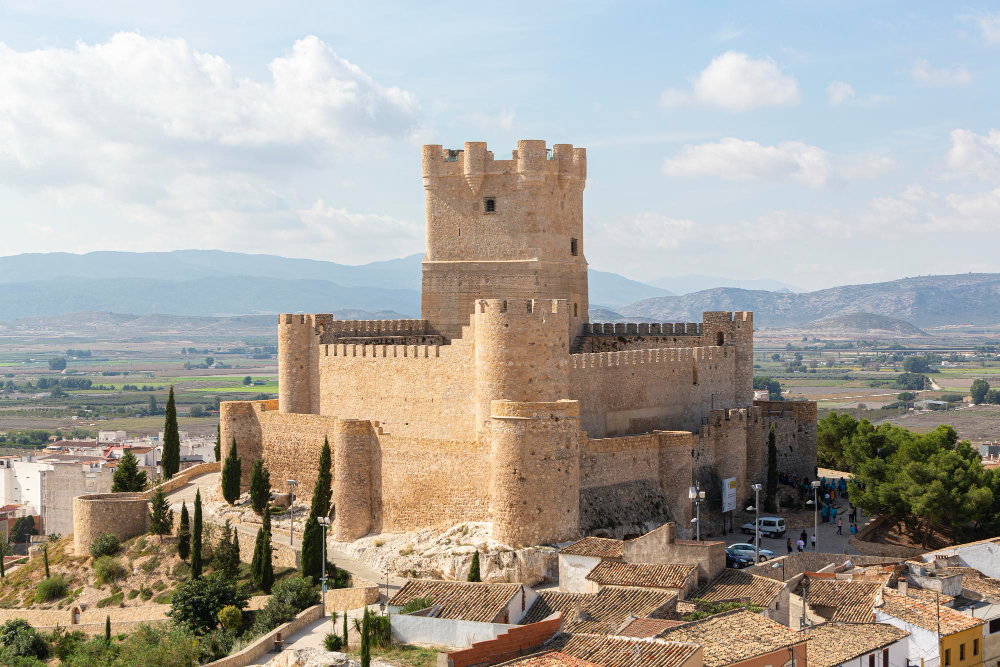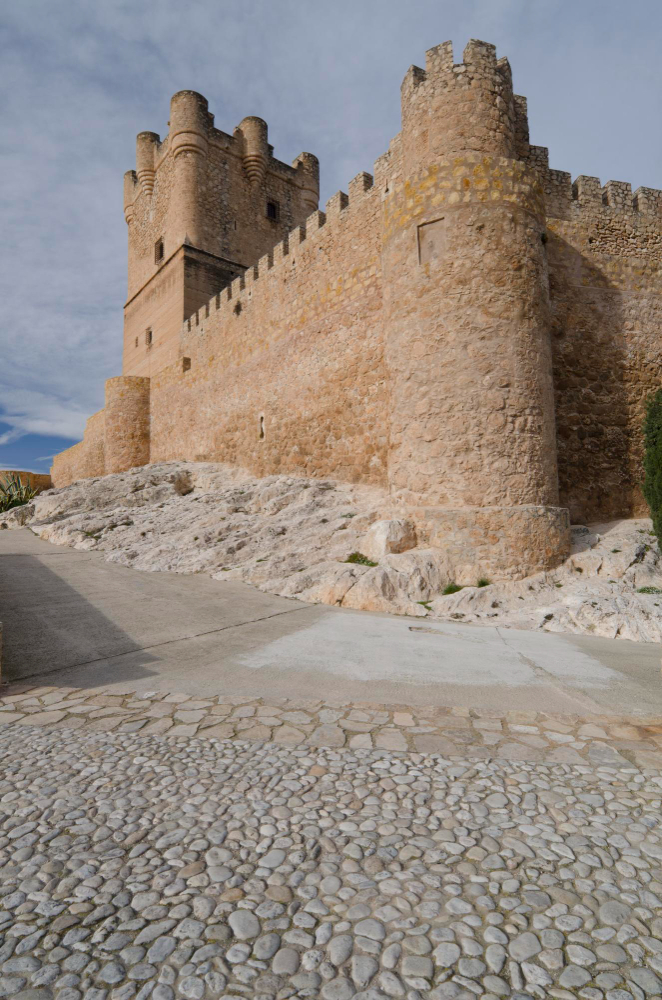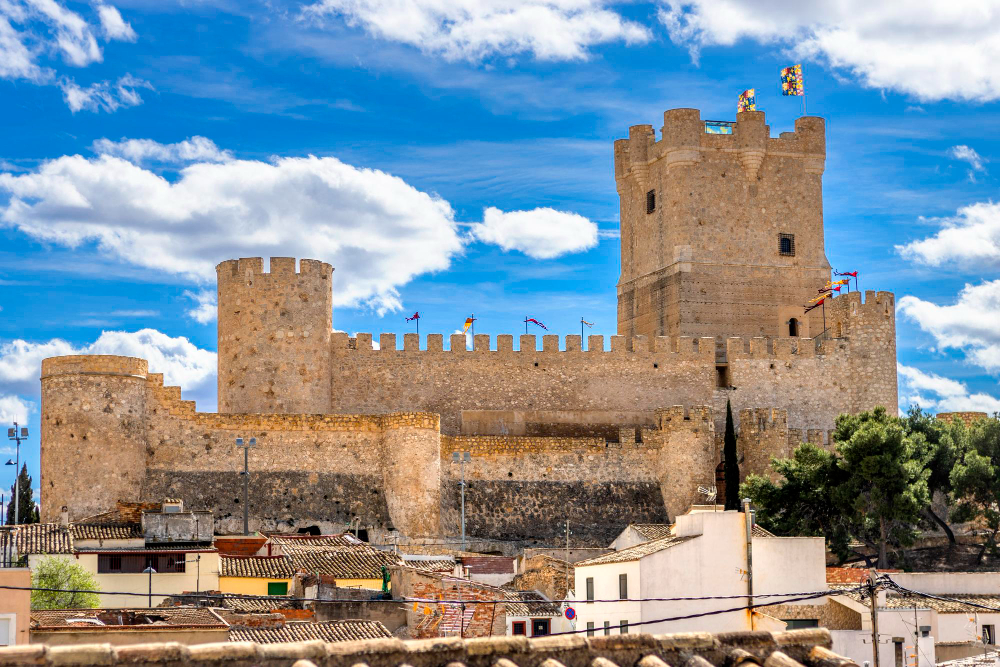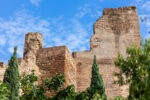

The imposing Atalaya Castle – known in Spanish as ‘Castillo de la Atalaya’ or ‘Castillo de Villena’ – stands majestically enthroned on a rugged rocky outcrop in the Sierra de la Villa, overlooking the historic town of Villena in the southern Spanish province of Alicante. This imposing fortress is not merely a relic of stone and mortar; it is a silent witness to centuries of political intrigue, cultural fusion and military conflicts that shaped the border region between the Kingdom of Castile and the Crown of Aragon. Today, the castle fascinates historians, locals and visitors alike with its rich architectural heritage, its legendary tales and its enduring role as a cultural symbol.
Historical Origins: From the Shadows of Time to an Almohad Fortress – The origins of Atalaya Castle remain shrouded in a certain mystery, largely due to the lack of precise records confirming the exact year of its construction. However, Arabic chronicles provide the earliest mention of the fortress, dating from 1172, which demonstrates that it was already a significant stronghold by the 12th century. Whilst some scholars have speculated that the castle may have been built on the site of an earlier Roman ‘castrum’ or villa, archaeological investigations have so far failed to confirm such claims. What is certain is that Atalaya Castle developed into a crucial outpost during the period when much of the Iberian Peninsula was under Islamic rule. In particular, it marked the northern border of Al-Andalus – the Islamic emirate on the Iberian Peninsula – and served as a watchtower and defensive stronghold to protect against incursions by Christian kingdoms from the north. The fortress’s strategic location enabled its defenders to monitor and control movements in the turbulent border regions, where the Christian Reconquista clashed with Muslim territories.
The chronicles of the sieges and shifting power dynamics – The castle’s robust defences were put to the test on several occasions during the turbulent times of conquest and reconquest. In particular, it withstood three separate sieges led by James I of Aragon, one of the leading Christian monarchs who spearheaded the expansion into Muslim-held territories. Despite repeated attempts, the fortress held out until James I succeeded in capturing it in 1240 through a campaign led by Ruy Pérez Ponce de León, the commander of Alcañiz. His forces included knights of the Military Order of Calatrava, accompanied by highly skilled Almogavar mercenaries – a feared infantry unit renowned for its guerrilla tactics. This conquest was controversial, as it contravened the Treaty of Cazola (1179), which had established the spheres of influence between Castile and Aragon and assigned Villena to the Castilian sphere of control. Ultimately, the Treaty of Almizra in 1244 resolved these territorial disputes and sealed Villena’s incorporation into the Kingdom of Castile. Initially, control of the castle was entrusted to the Order of Calatrava, but it soon passed into the possession of Infante Manuel, Lord of Villena, marking the beginning of a new chapter.
A cultural heyday under the Lords of Villena – Under the leadership of Infante Manuel and his descendants, particularly his son Juan Manuel, Prince of Villena and a prominent medieval writer, Atalaya Castle grew beyond its purely military function. Juan Manuel carried out extensive renovation work to strengthen the fortress’s defences, motivated in part by personal reasons – namely, the protection of his fiancée, Princess Constanza of Aragon. His efforts transformed the castle not only into a symbol of military strength, but also into a noble residence and a sign of political power. In the 14th century, ownership passed to Alfonso of Aragon and Foix, who became the first Margrave of Villena. The margraves enhanced the castle’s prestige and integrated it even more closely into the socio-political fabric of the region. Nevertheless, it was also during this period that the seeds of tension between the ruling nobility and the citizens of Villena were sown. The year 1476 marked a turning point, when the townspeople, emboldened by the support of the Catholic Monarchs, Ferdinand and Isabella, rebelled against the authority of the Margraves. Following the uprising, Atalaya Castle ceased to serve as a noble residence and became a royal possession, closely intertwined with the Crown’s expanding power throughout Spain.
A Fortress in War and Peace: From Uprisings to the Restoration – The military significance of Atalaya Castle persisted into the early modern period. During the Revolt of the Brotherhoods (1519–1523), a popular uprising against royal authority, particularly in Valencia, Viceroy Diego Mendoza sought refuge behind the castle’s mighty walls following a defeat at Gandía. From this fortress, Mendoza led the royalist counter-offensive that ultimately crushed the revolt. The fortress’s resilience was put to the test once again during the War of the Spanish Succession (1701–1713), when a small garrison of fifty Bourbon loyalists withstood an eight-day siege by a sizeable Austrian force, underscoring Atalaya’s enduring strategic value even amidst evolving military technologies. However, the Napoleonic Wars at the beginning of the 19th century dealt a severe blow to the fortress. The troops of the French Marshal Louis-Gabriel Suchet sacked the castle during the Spanish War of Independence, leading to its abandonment and gradual decline. In recognition of its historical and cultural significance, restoration work began in 1958, breathing new life into the ancient walls. Today, Atalaya Castle is in remarkably good condition, not only as a monument of national cultural heritage – it was declared a historic-artistic monument in 1931 – but also as the centrepiece of the famous ‘Moros y Cristianos’ festival in Villena. This vibrant festival commemorates the centuries-old conflicts between Moors and Christians and combines historical re-enactments with festive splendour, bringing the fortress to life every year.
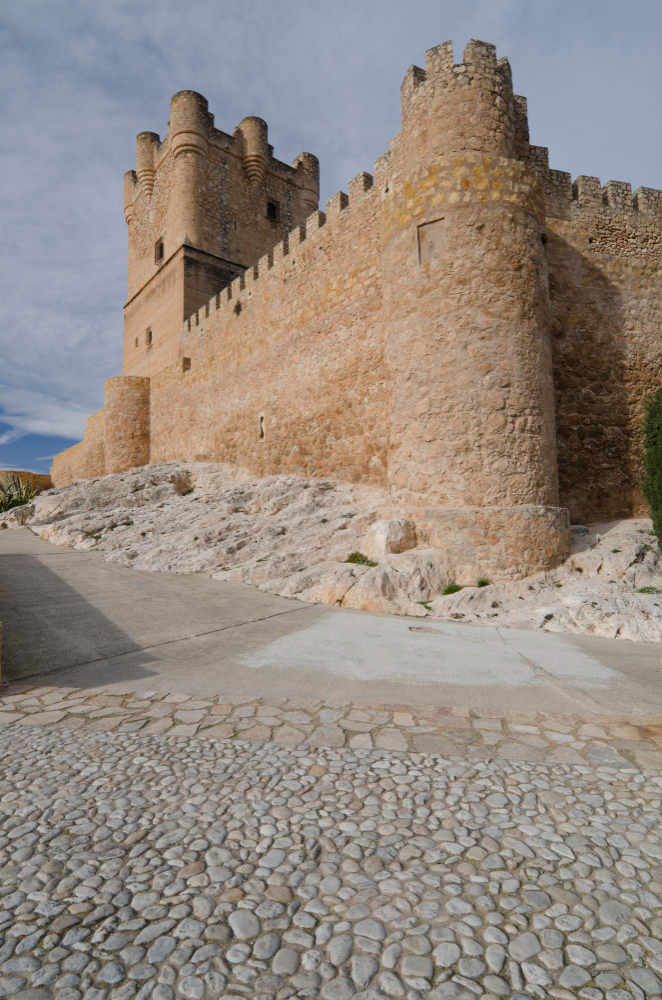
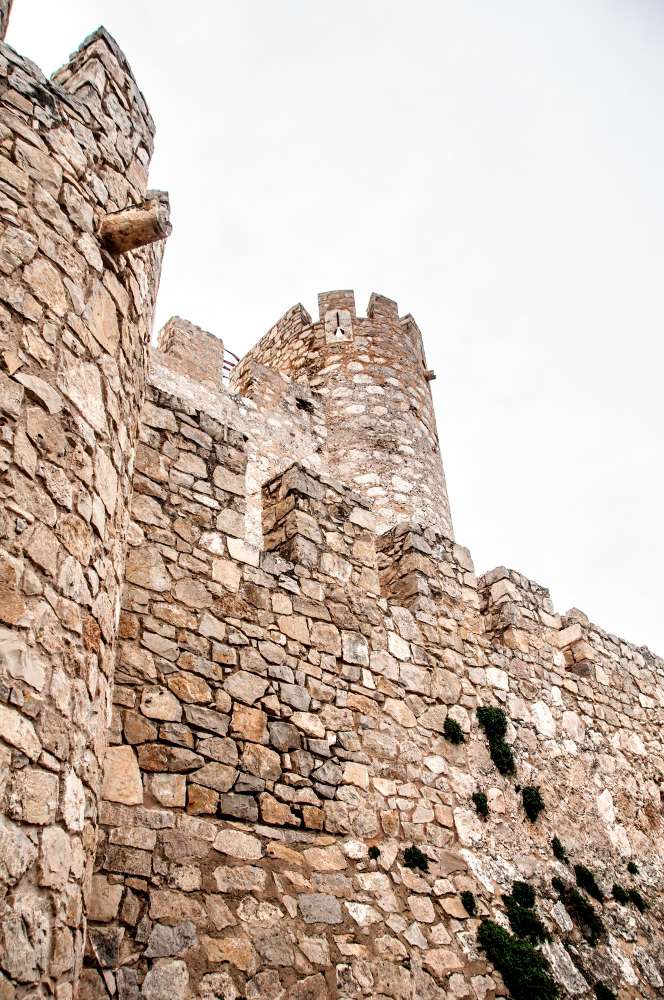
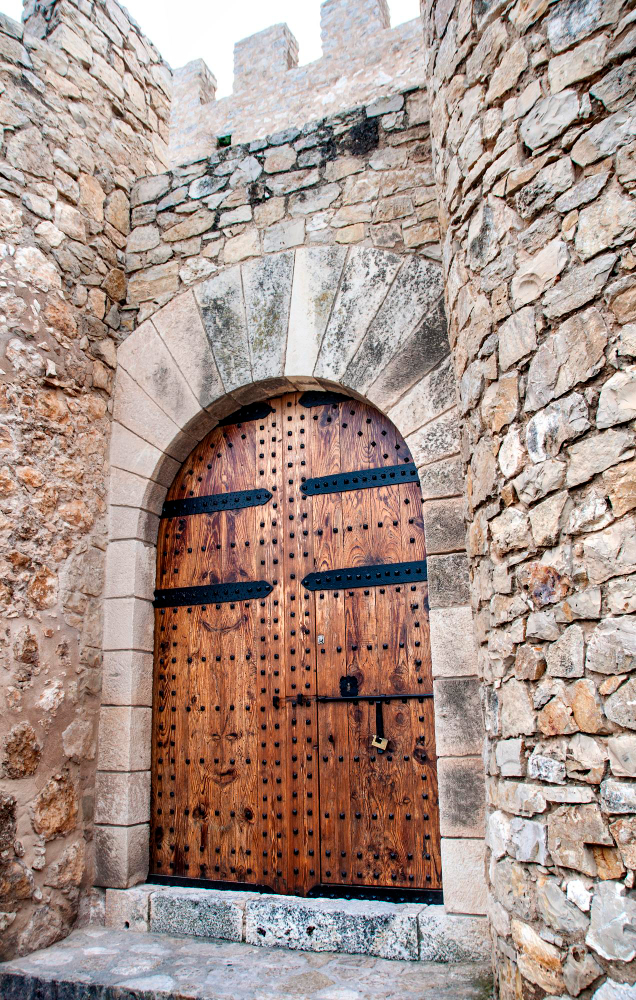
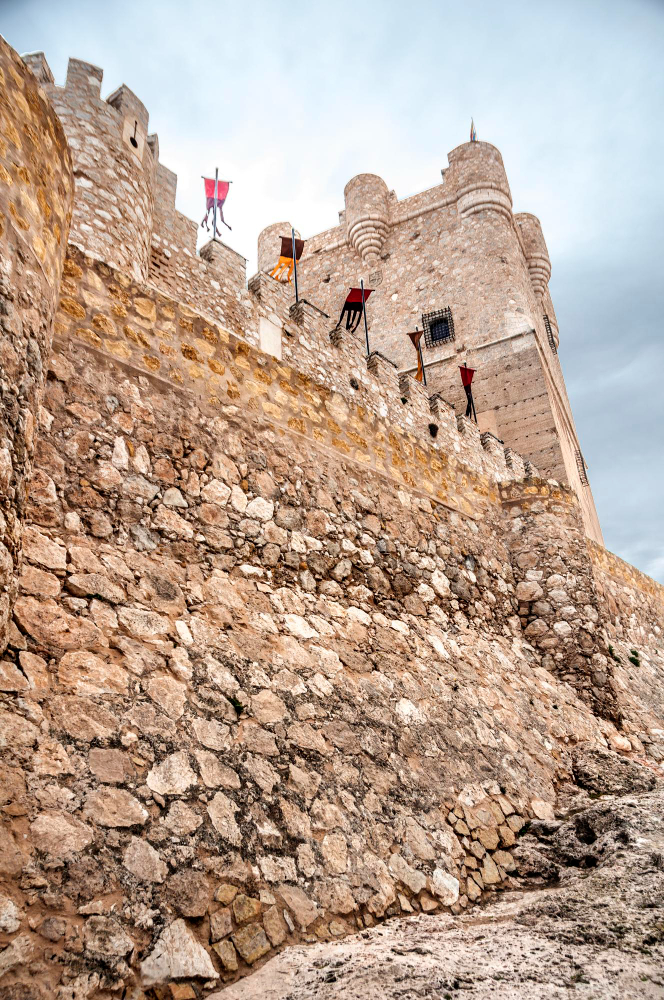
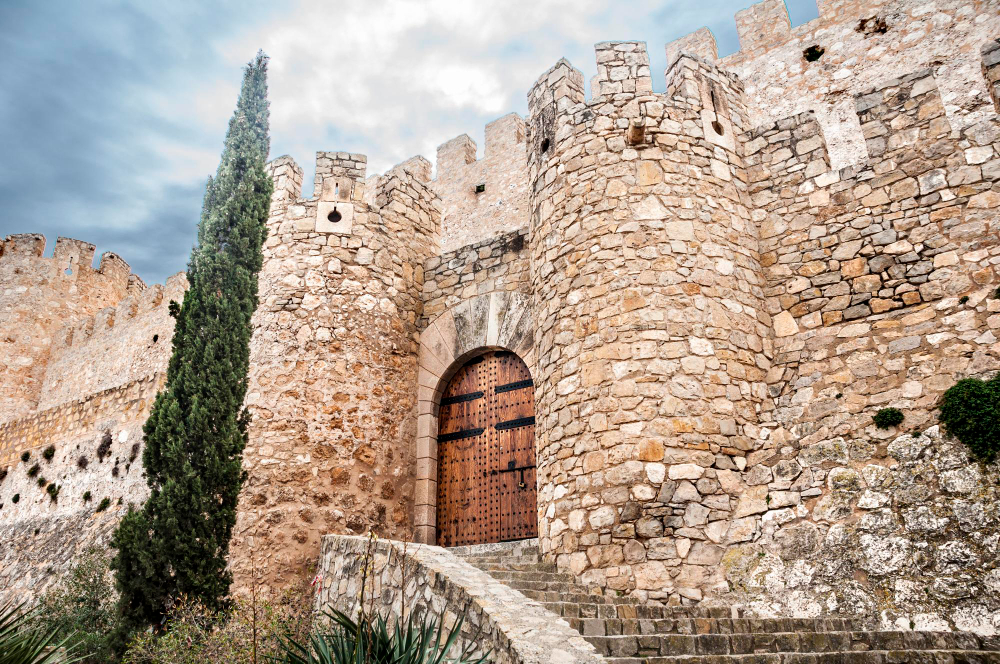
An architectural marvel: the layout of Atalaya Castle – The architectural design of Atalaya Castle offers an insight into the military ingenuity and cultural influences that shaped its construction. The castle’s layout is concentric, comprising an inner square compound with an imposing keep rising above the remaining fortifications. This layout maximised the fortress’s defensive capabilities by creating multiple layers of defences that were difficult to breach. The north-west-facing entrance leads into a rampart flanked by a ‘chemin-de-ronde’ – a defensive walkway along which sentries could patrol the battlements, connecting the various towers. Although historically there were two further entrances, these are now sealed off, suggesting evolving defensive strategies. Archaeological excavations in the area of the inner gate have unearthed remains believed to be those of the Sanctuary of Our Lady of the Snows, a religious site documented in medieval texts. This discovery highlights the intertwining of spiritual life with the fortress’s martial atmosphere. The inner walls, which are polygonal in shape and punctuated by round towers, date from the Almohad period (12th century) and bear witness to the characteristic Islamic military architecture, which favours robust yet elegant forms. These were later reinforced in the 15th century on the orders of Don Juan Pacheco, reflecting the castle’s adaptation to different eras. The rectangular outer bailey in front of the keep forms an additional defensive courtyard, which served to hold off attackers and protect the fortress’s most important interior. It is worth noting that the towers and the keep are crowned with rectangular battlements – typical of medieval fortresses – which enabled the defenders to protect themselves whilst repelling intruders.
The Keep: Last Bastion of Defence and History – The complex is dominated by the castle’s keep, which towers above all other structures. Its lower sections, constructed using rammed earth, date from the Almohad period and bear witness to the combination of ingenuity and available materials in medieval Islamic fortification architecture. This method involved compacting layers of earth to form extremely stable walls capable of withstanding siege weapons. Inside, a compact hall measuring 7 by 7 metres, with walls averaging 3.5 metres in thickness, clearly demonstrates the priority given to defence. The remarkably well-preserved ceiling is an authentic 12th-century Almohad artefact and an example of intricate craftsmanship featuring wooden and stucco details characteristic of Moorish art. As they climb the stairs to the upper chambers, visitors pass a reproduction of a graffiti-adorned khamsa – a hand-shaped amulet symbolising protection – which originally belonged to the castle and is now housed in the Villena Museum. This touch of cultural symbolism links the fortress’s martial identity with spiritual beliefs regarding protection against evil. The upper storeys of the keep, built in the mid-15th century, reveal the castle’s multifaceted history and bring together elements from different eras and various rulers, all of whom have left their mark on this steadfast guardian.
A living heritage: Atalaya Castle today – Beyond its stones and stories, Atalaya Castle remains a living monument, firmly rooted in Villena’s identity. It offers a vivid gateway to the past, through which visitors can walk in the footsteps of medieval knights, princes and ordinary citizens. As the setting for the annual ‘Moros y Cristianos’ celebrations, the castle bridges the gap between history and contemporary culture, transforming itself from a symbol of conflict into a symbol of communal celebration. For historians and tourists alike, the castle represents a microcosm of Spain’s complex medieval tapestry – an era characterised by religious, political and cultural intertwining that continues to fascinate and inspire. From its uncertain beginnings in the 12th century to its current status as a preserved cultural heritage site, Atalaya Castle stands as a resolute testament to the enduring spirit of a country that was once contested by empires, yet is united by its rich heritage.