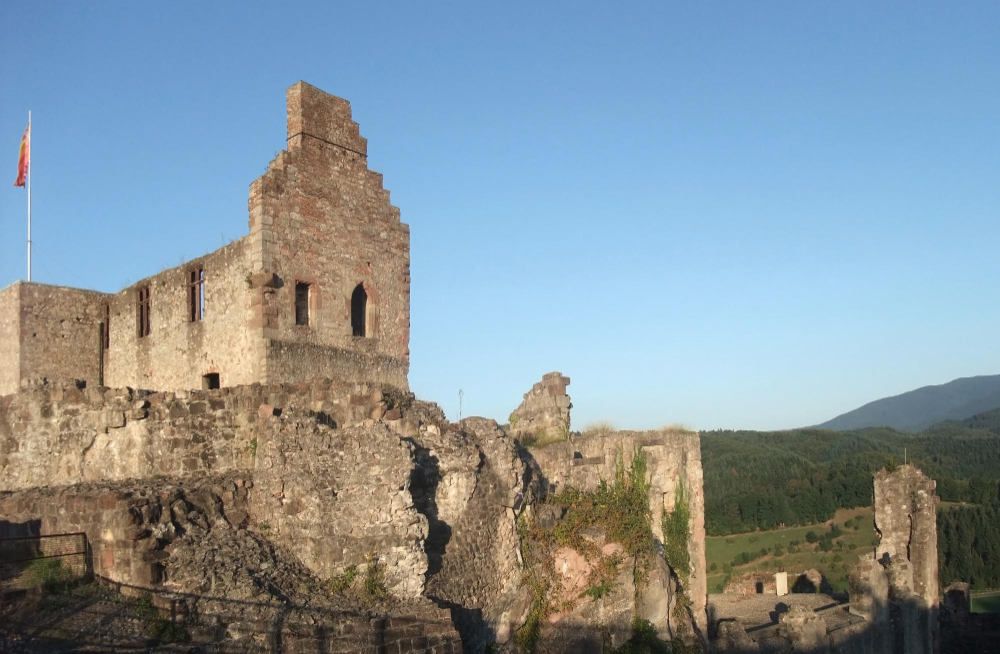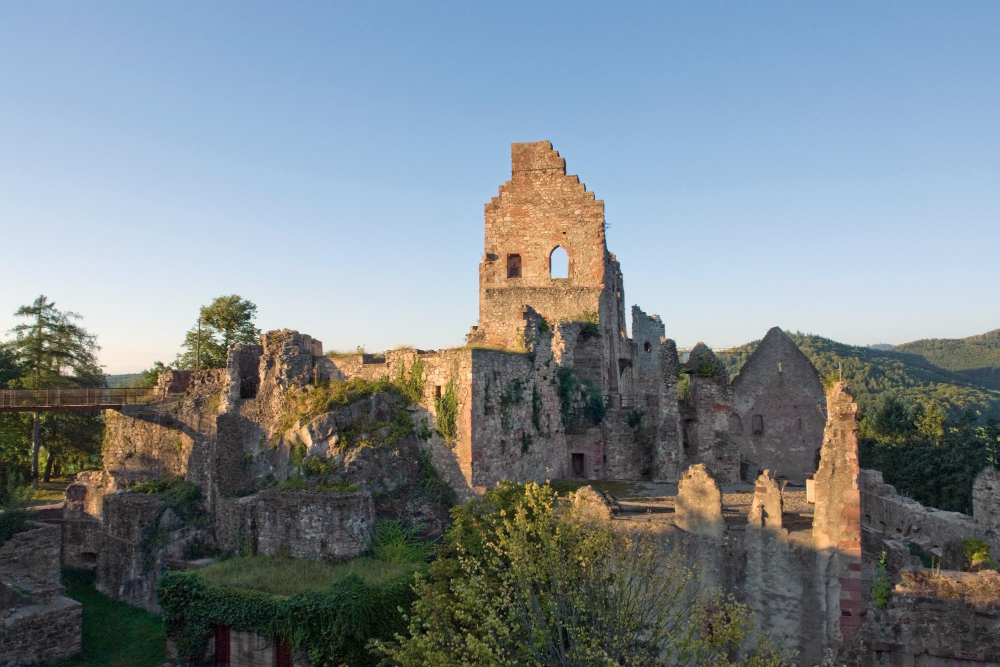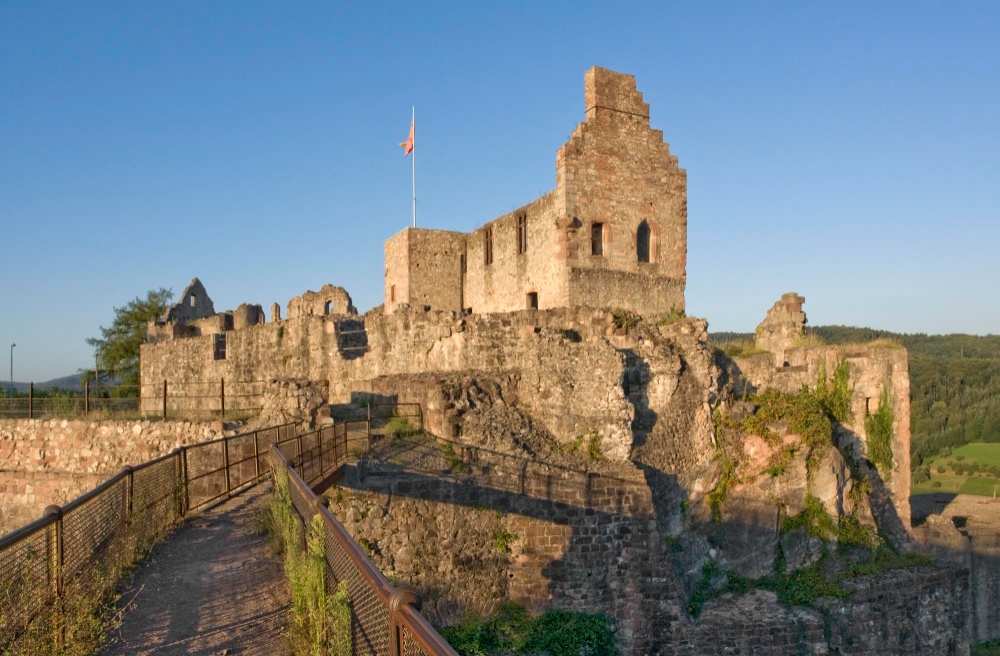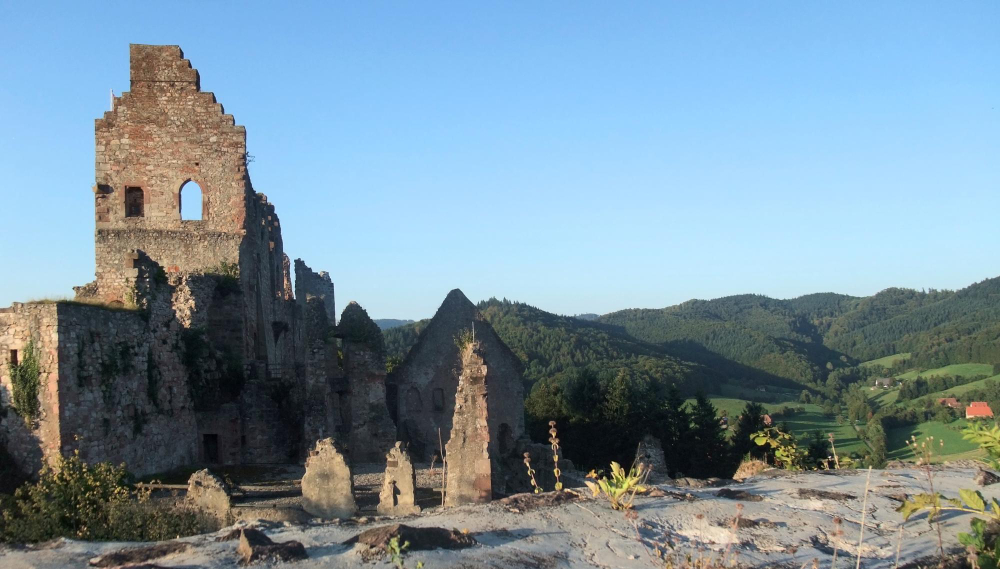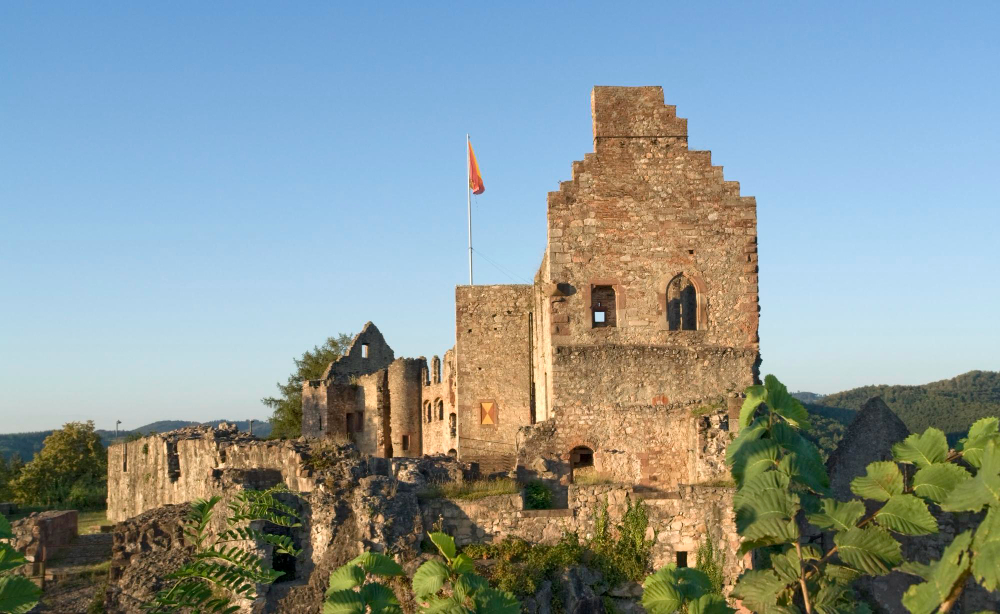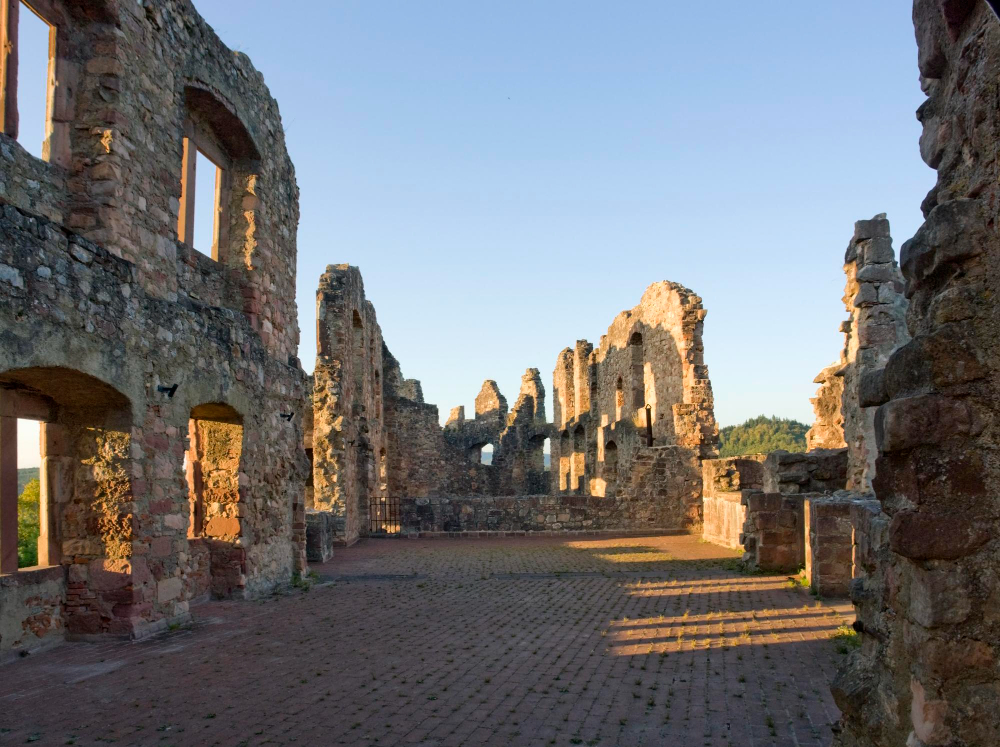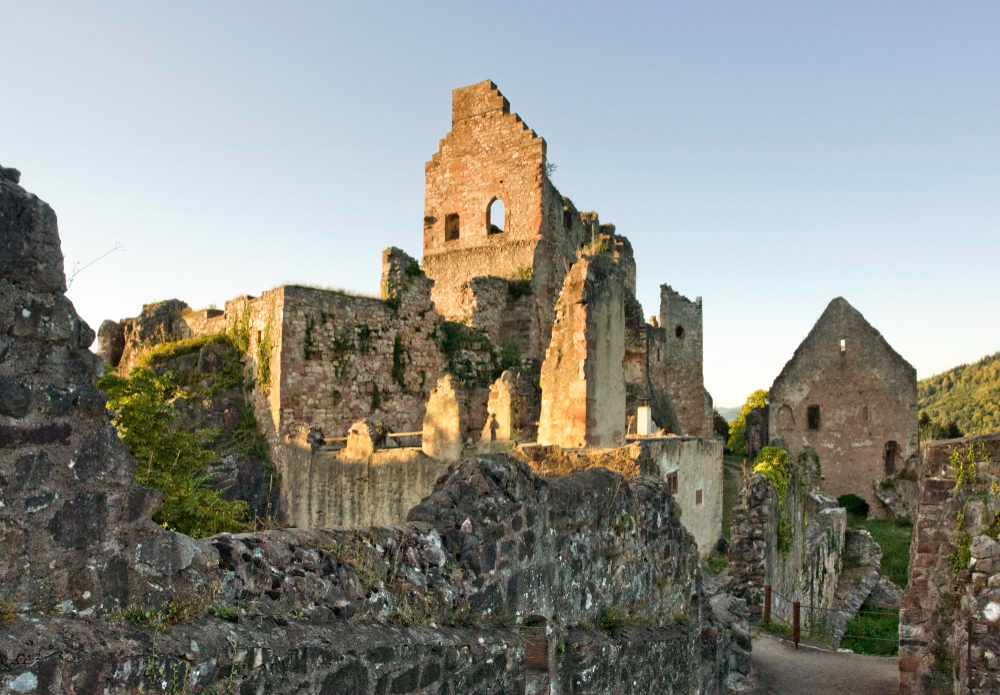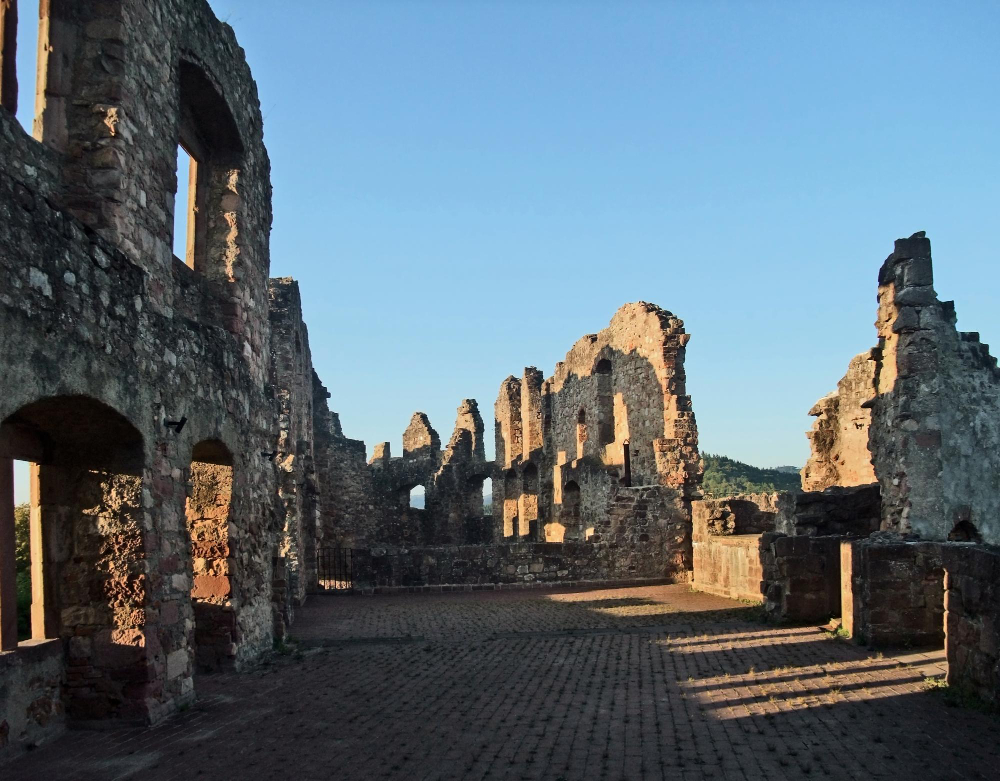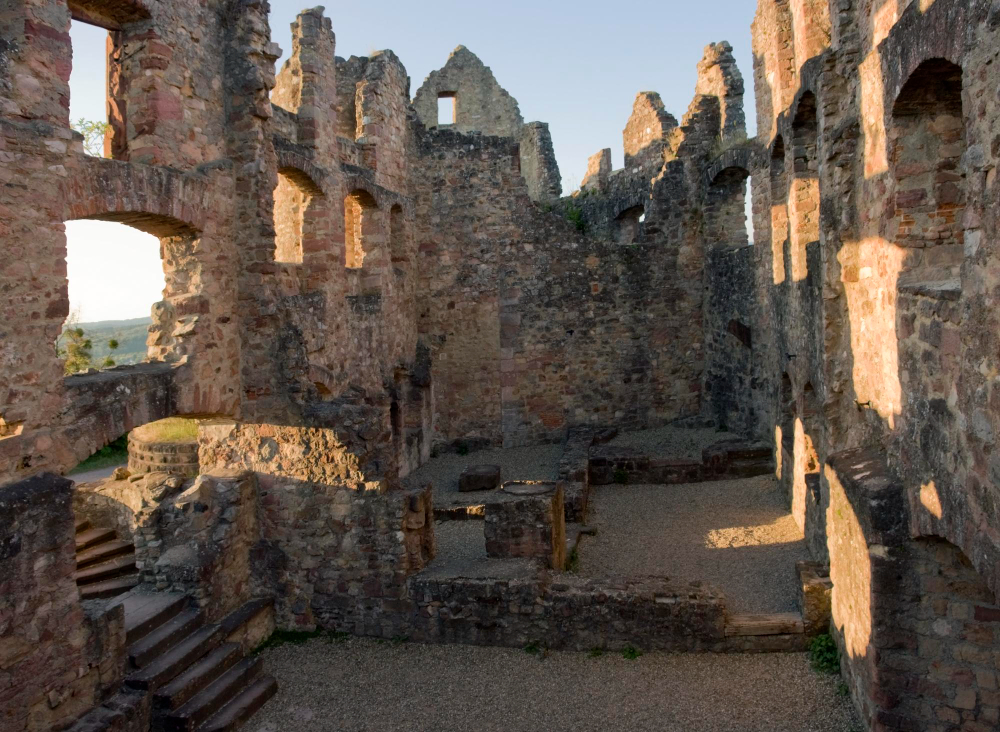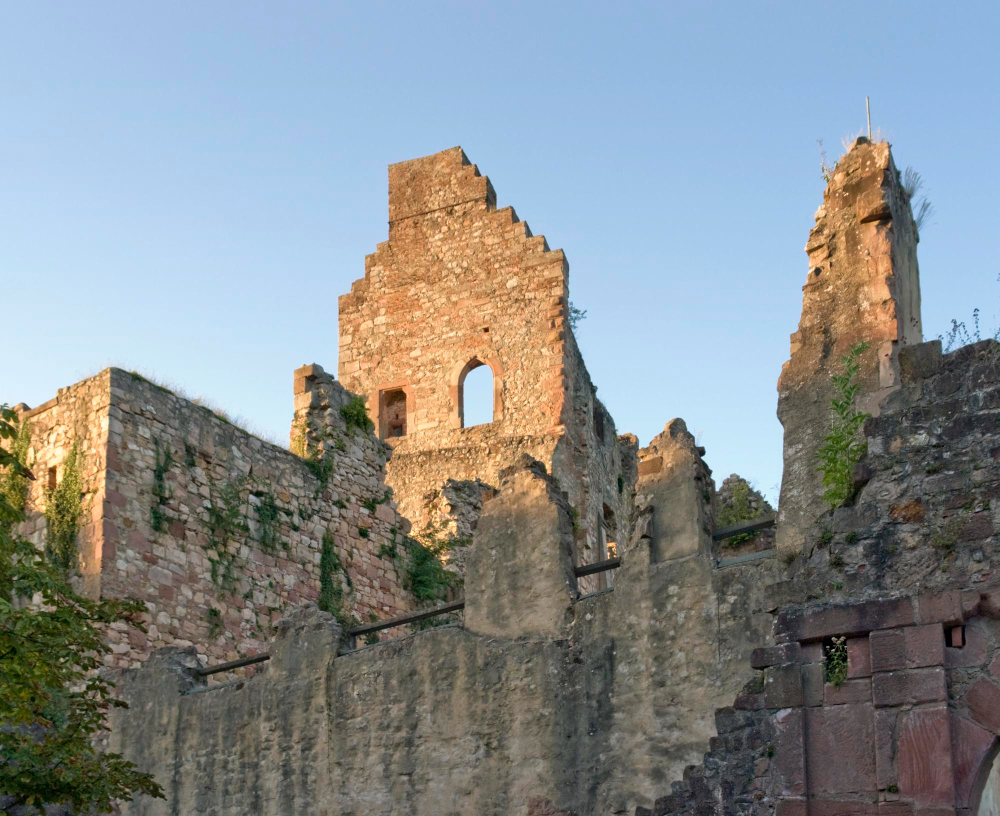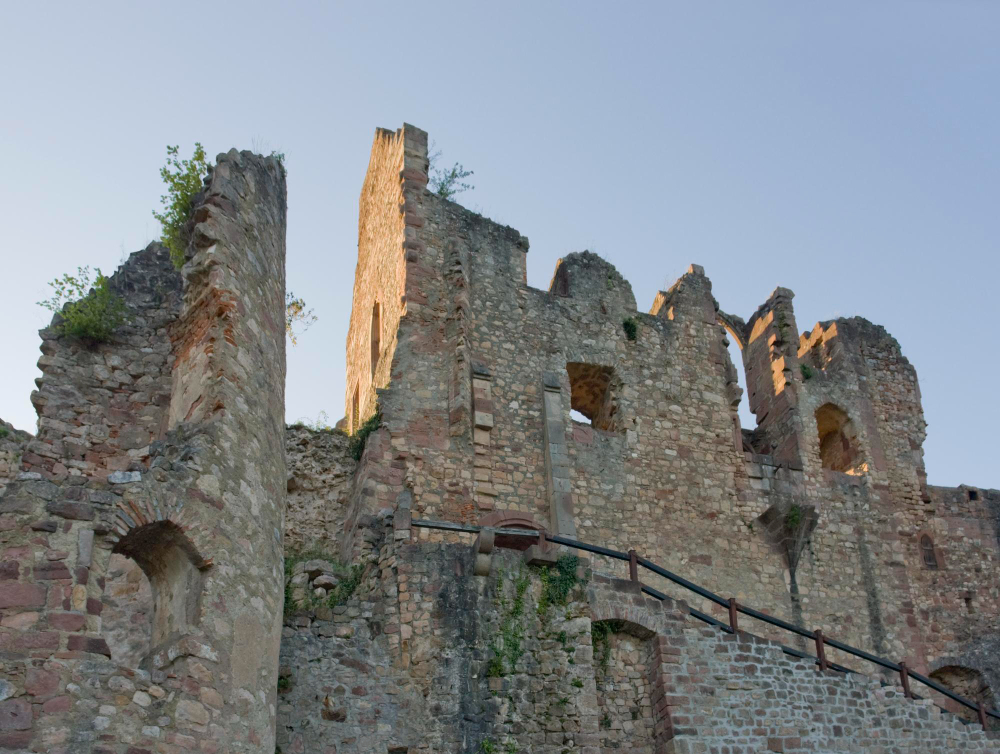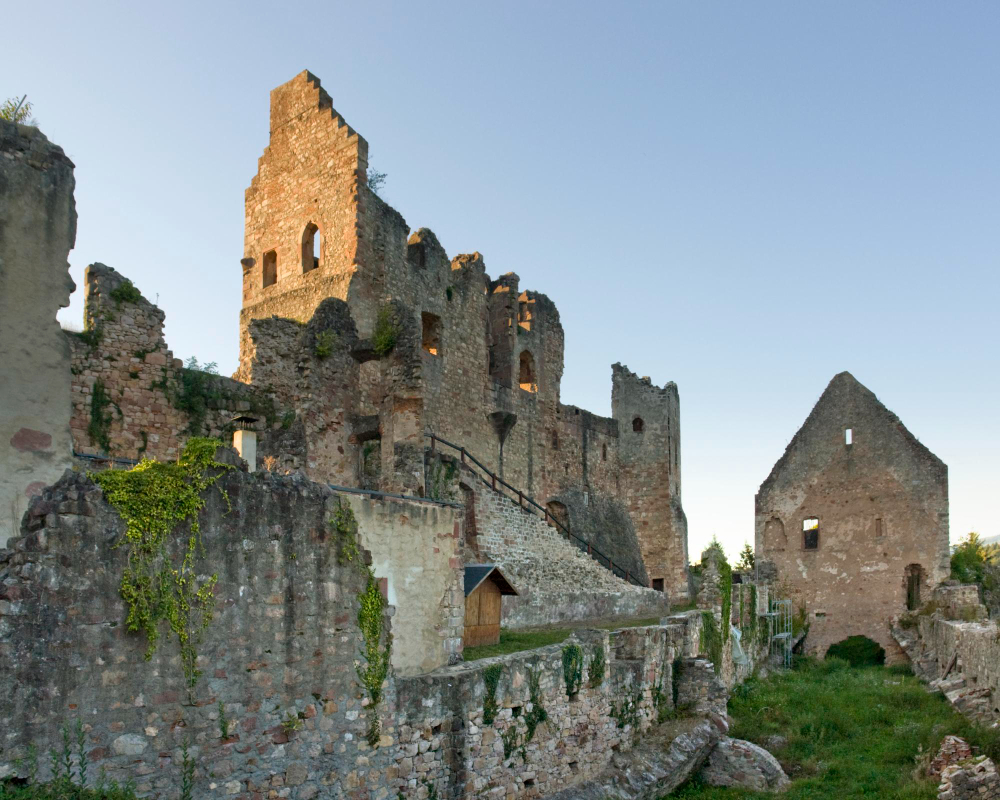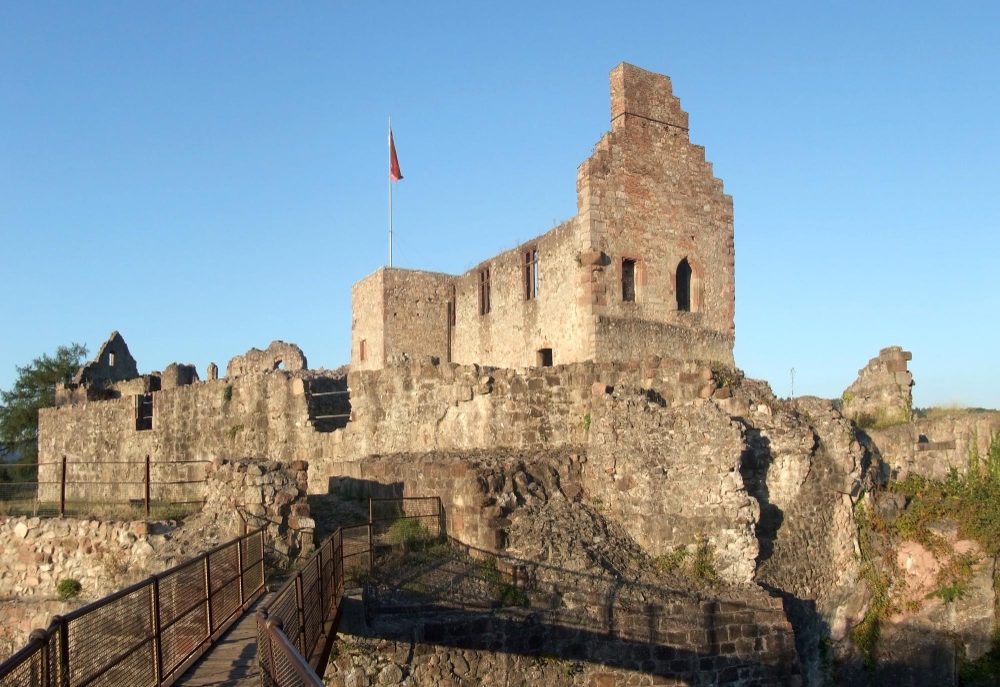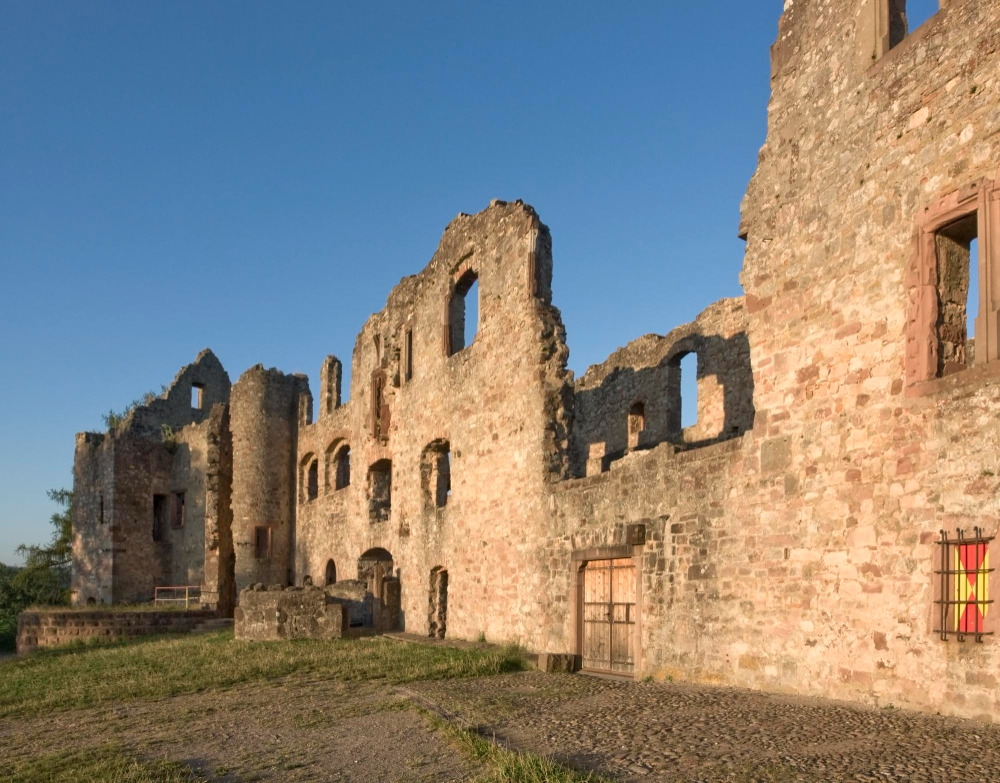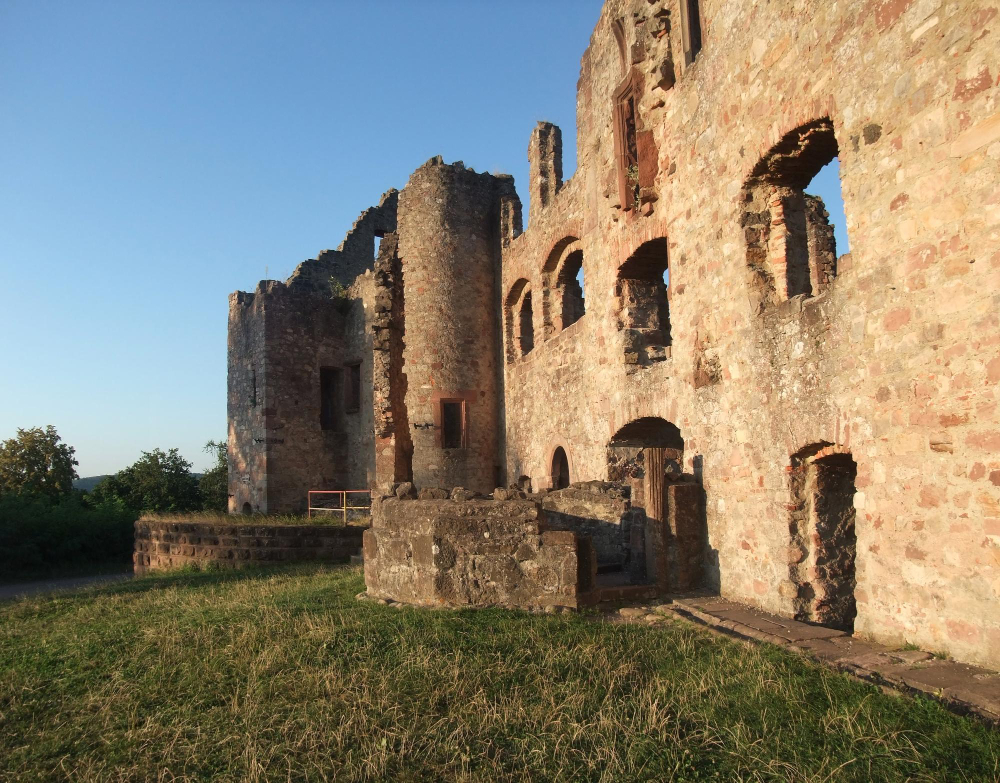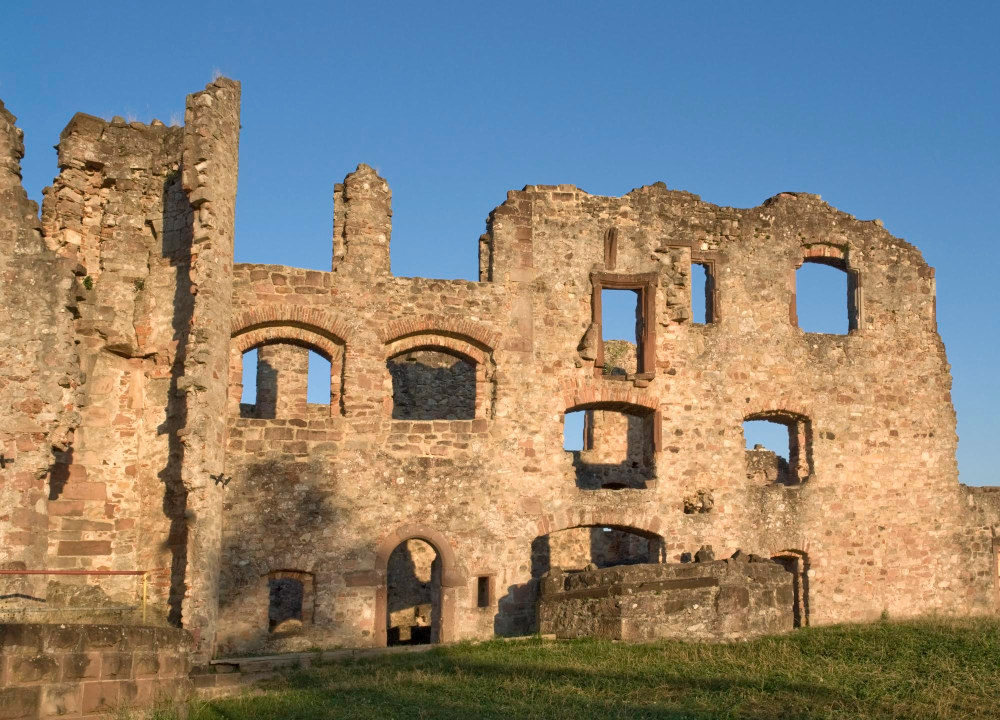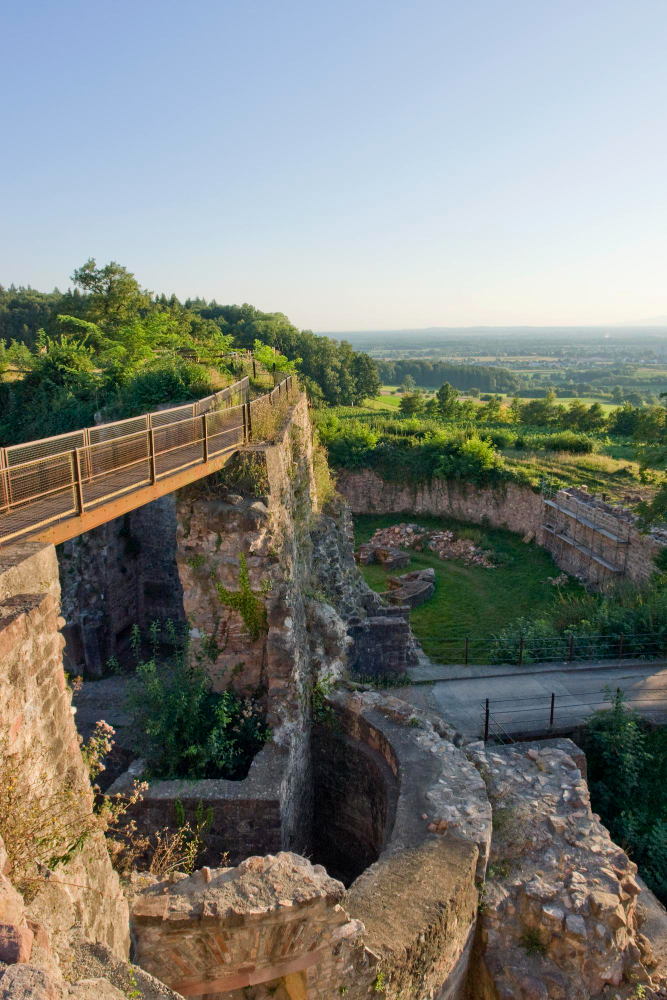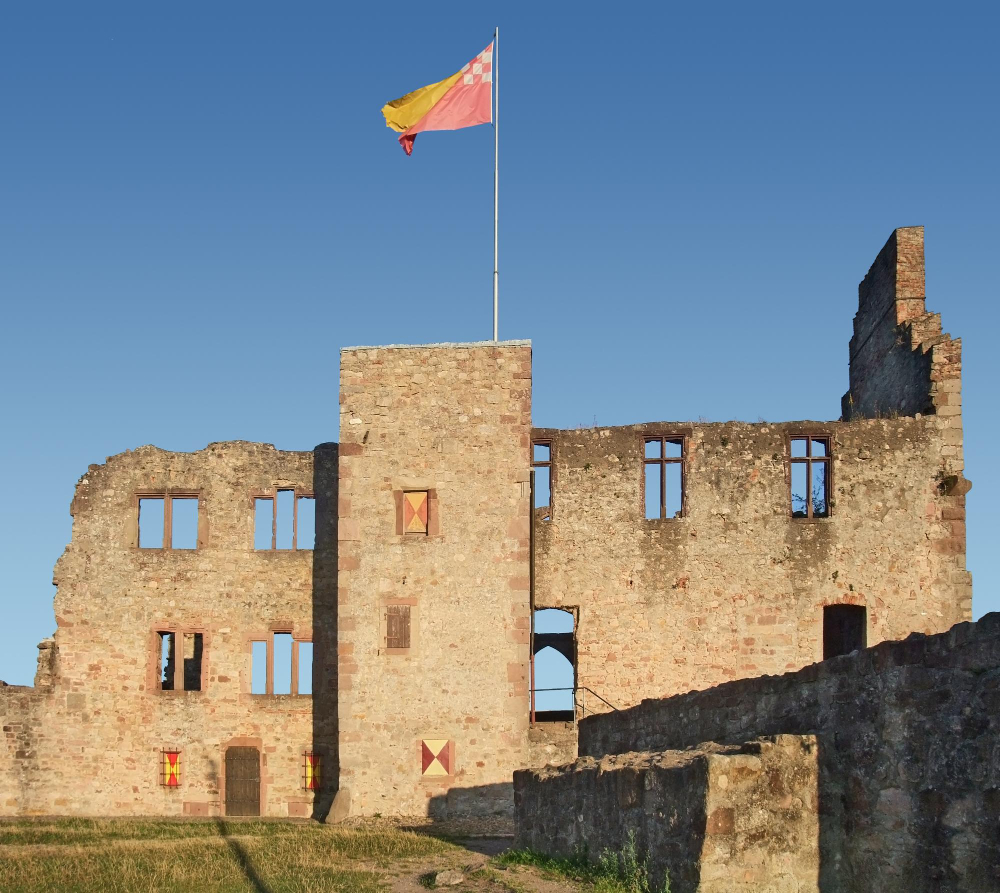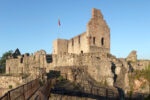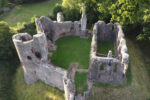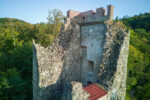

The Hochburg, often also known as Hachberg Castle, is perched on a 343.6-metre-high hill above the district of Windenreute, a neighbourhood of Emmendingen, near the picturesque town of Sexau in the district of Emmendingen, Baden-Württemberg. As one of the most significant hilltop castles in the south-west, the Hochburg occupies a prominent place not only in regional history but is also regarded as the third-largest castle complex in Baden – after the famous Heidelberg Castle and Rötteln Castle near Lörrach. It lies on the edge of the Black Forest in the Emmendingen foothills, a landscape characterised by rolling hills and undulating forests.
Origin and Naming: The Legend of Hacho – The origin of the name ‘Hachberg’ has not been conclusively established historically, but one of the best-known theories traces it back to a follower of Charlemagne named Hacho. He is said to have been granted an estate in the area by Charlemagne, which is interpreted as having given its name to the castle that was later built there. This legend is supported, amongst other things, by a plaque in the castle dedicated to Margrave Charles II, which highlights the significance of the name’s origin. The first documented mention dates from 1161, when the castle was recorded as ‘Castro Hahberc’. It is believed that the original lord of the castle adopted the castle’s name for his family – much like the later noble line of the House of Baden, which called itself ‘Hachberg’. Over time, the name gradually evolved into ‘Hochberg’, particularly in French sources dealing with the line of the Hachberg-Sausenberg Counts of Neuchâtel. In the late 18th century, the name ‘Hochberg’ regained significance when Margrave Karl Friedrich of Baden elevated his second wife, Luise Karoline, Baroness Geyer of Geyersberg, to the title of Baroness of Hochberg.
From a clearing castle to the seat of the Margraves – The Hochburg was probably founded in the 11th century as a so-called ‘clearing castle’, built by Dietrich von Emmendingen. He was the first to take the name ‘von Hachberg’ after the castle, a sign of the close connection between the family and their seat of power. The first written mention dates from the year 1127. Later, control of the castle passed to Erkenbold von Hachberg, who is known to have supported the Second Crusade (1147–1149) and ultimately handed over his estate to the powerful Zähringer family. Another significant development took place in the mid-12th century: A document from 1161 mentions Hermann IV of Baden as lord of the stronghold, suggesting that the castle played an important role in Baden’s territorial politics from an early stage. The division of the Margraviate of Baden around 1212 resulted in Hermann IV’s sons, Hermann V and Heinrich I, each receiving their own domains. As a result, the Hochburg became the centre of the newly formed Margraviate of Baden-Hachberg and also the ancestral seat of an important collateral line of the House of Baden.
Power and Conflicts: Eras of Expansion and Sieges – The 15th and 16th centuries were a time of challenges and upheaval for the castle. Around 1415, the Hochburg returned to central Baden ownership following its acquisition by Margrave Bernhard I, a member of the main Baden line. This period was characterised by political turmoil, war and uprisings. Under Bernhard I, the Hochburg withstood an attack in 1424 by the Upper Rhenish League of Cities, an alliance of urban powers opposed to margrave rule. The defenders also managed to hold the castle during the Peasants’ War of 1525. Under Margrave Karl II, a major reconstruction of the Hochburg began in 1553. The medieval structure was expanded into a Renaissance fortress, equipped with modern defences such as bastions and fortified walls. Margrave Georg Friedrich, in particular, had seven bastions added to the complex in the early 17th century; their names symbolically referred to sister castles such as Rötteln, Sausenberg and Badenweiler. These extensive extensions transformed the Hochburg into a major military and administrative centre.
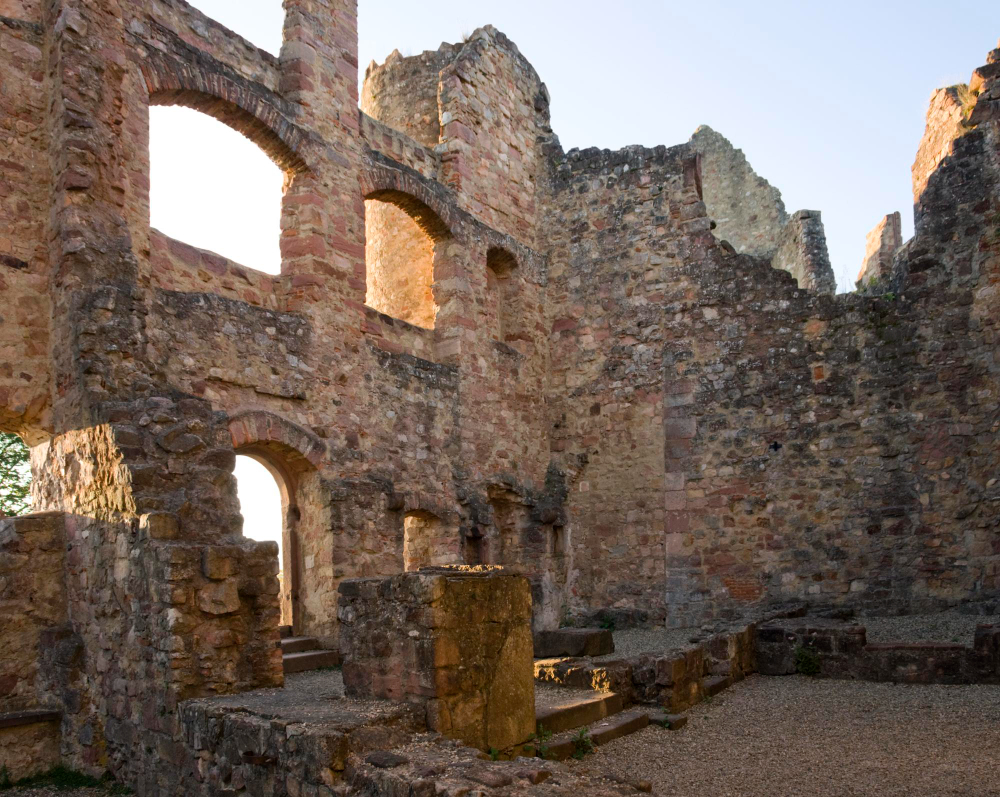
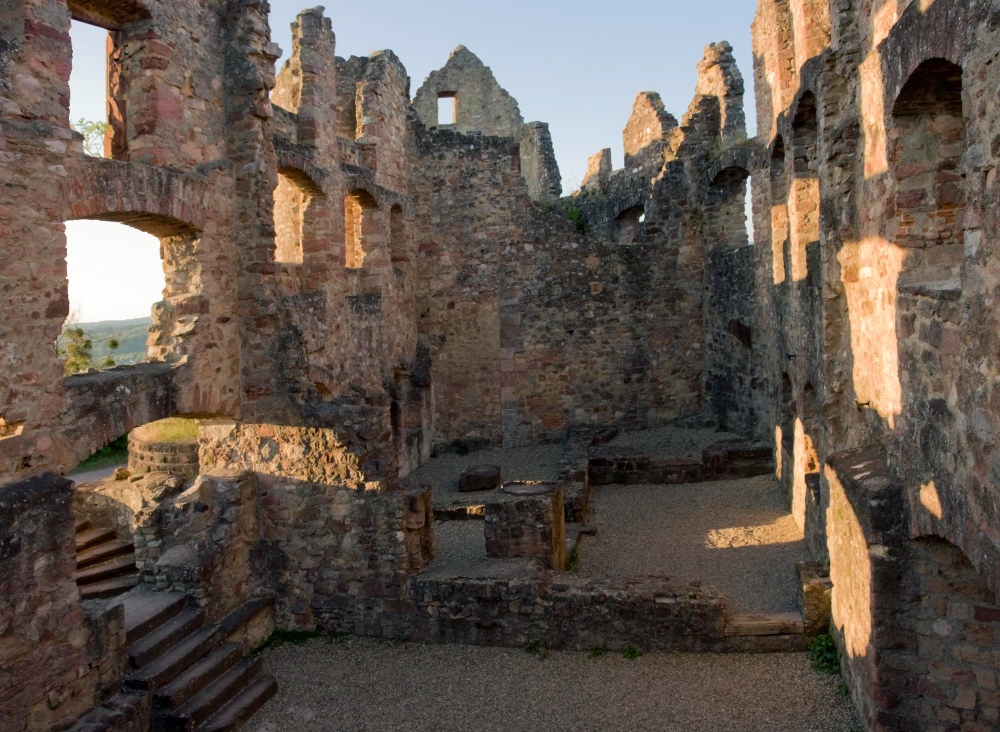
The Thirty Years’ War and the destruction of the fortress – However, the Hochburg was not spared the devastation of the Thirty Years’ War. Between 1634 and 1636, it was besieged and, following the defenders’ surrender, systematically razed to the ground. Reconstruction did not begin until some 24 years later under Margrave Friedrich VI, who endeavoured to restore the once-mighty complex. But the political situation changed once again: following the Treaty of Nijmegen in 1678, when France extended its sphere of influence as far as Freiburg im Breisgau, the stronghold lost its strategic importance. Out of fear of another French occupation and as a concession to its powerful neighbour, parts of the defences were voluntarily demolished in 1681. A fire in October 1684, caused by negligent servants, inflicted further damage. Its final decline came during the War of the Palatinate Succession: in October 1688, French troops occupied the ruins; in February 1689, they blew up the remaining towers and walls and also destroyed the habitable buildings and the vaulted cellars. This measure was intended to permanently prevent the castle’s restoration. Contemporary accounts report that the bastions could have been restored within six weeks, but the French wished to remove the fortress as a military obstacle once and for all.
From Decay to Preserved Ruins: Dedicated to Preservation – Following the destruction, the Hochburg gradually fell into disrepair. It was not until the end of the 19th century that the first efforts were made to secure and conserve the ruins. This work was interrupted several times by the two world wars, but always found new supporters. Since 1971, the Association for the Preservation of the Hochburg Ruins has been maintaining the site on a voluntary basis. Based in Emmendingen, the association has set itself the aim of preserving the castle’s cultural heritage and making it accessible to the public. Since 2007, the association has also been the leaseholder of the ruins, which has enabled more extensive restoration and conservation work to be carried out.
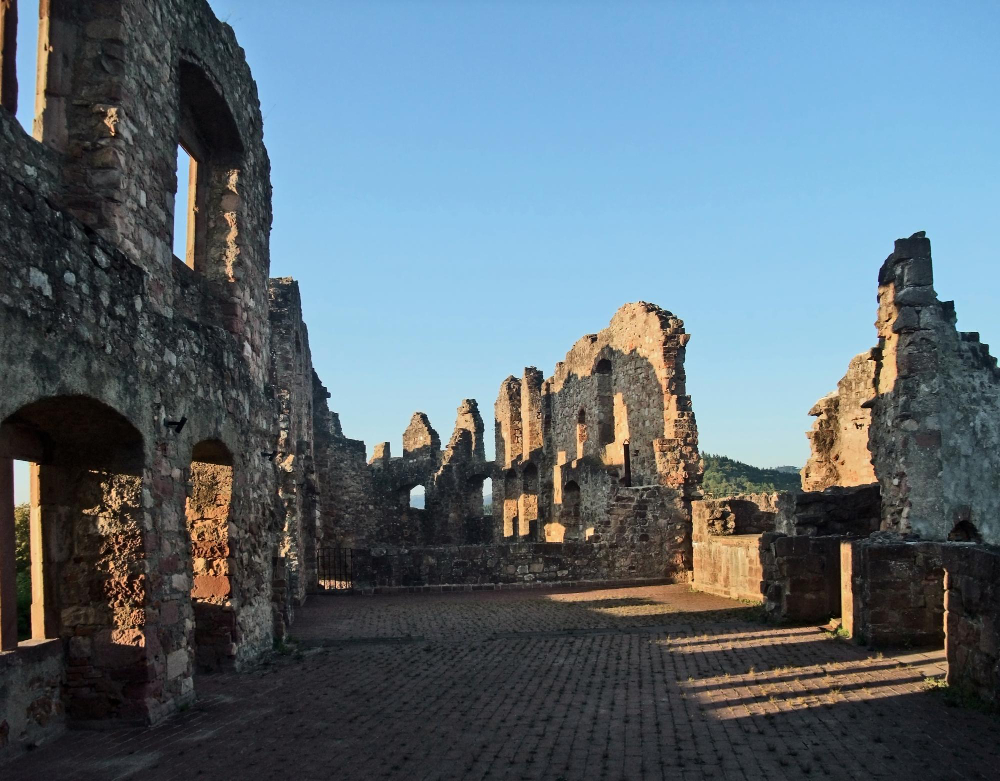
Hochburg today: a historic landmark and cultural meeting place – Today, Hochburg is one of Baden-Württemberg’s state-owned cultural monuments and is managed by the State Palaces and Gardens Authority. Visitors are free to explore the ruins at their leisure, taking a journey through the history of the Middle Ages and the early modern period. Since 1991, the vaulted cellar of the Upper Castle has housed a small but excellent museum, which offers fascinating insights into the history of the castle, its inhabitants and the circumstances surrounding its destruction. In addition, cultural events, guided tours and historical re-enactments take place regularly, bringing medieval life and the Hochburg’s eventful past to life.
The Hochburg near Emmendingen is more than just an old ruin on a wooded hill. It tells the story of the rise to power of the Margraves of Baden, of political intrigues, military conflicts and the eventful history of the Upper Rhine region. Its walls harbour legends and artefacts from bygone eras, and represent a piece of living history that is carefully preserved and kept alive today. Visitors to the Hochburg are immersed in a world where tales of knights, margraves and sieges become tangible – a fascinating experience blending history and nature that reflects the rich and varied history of Baden.