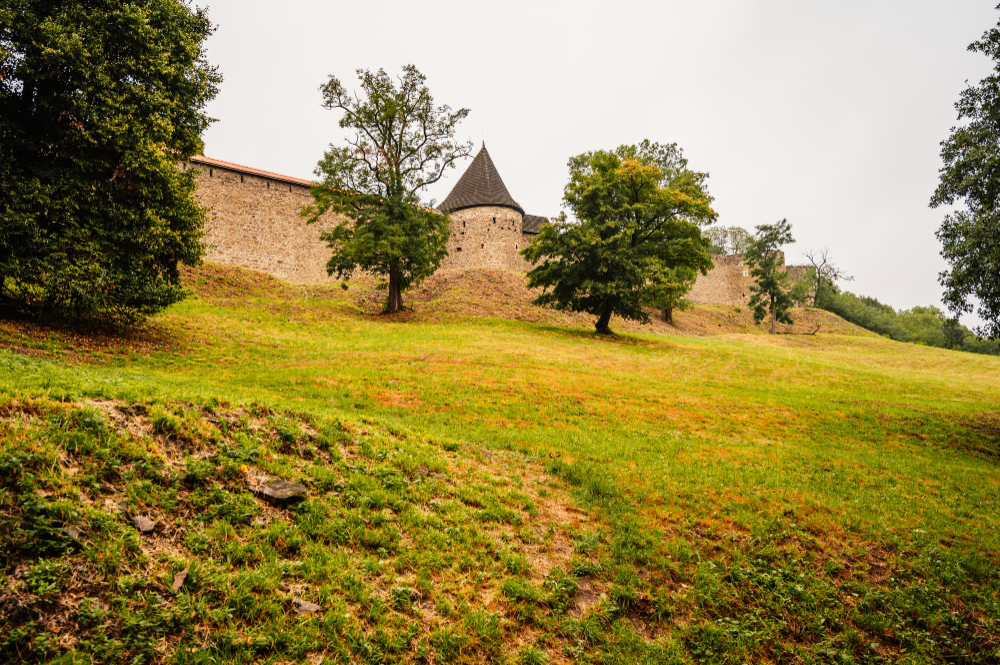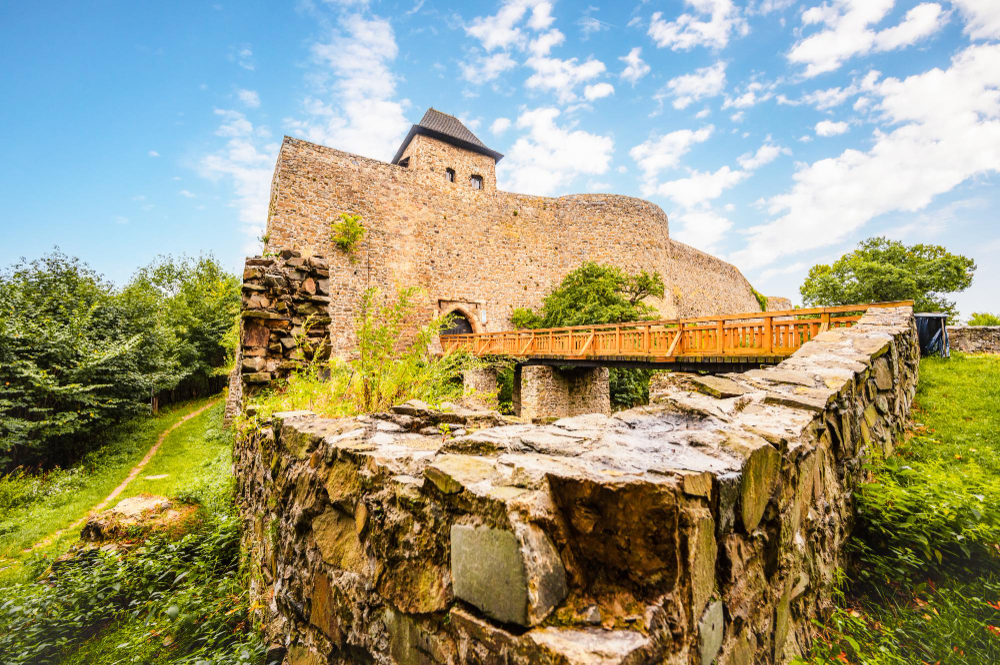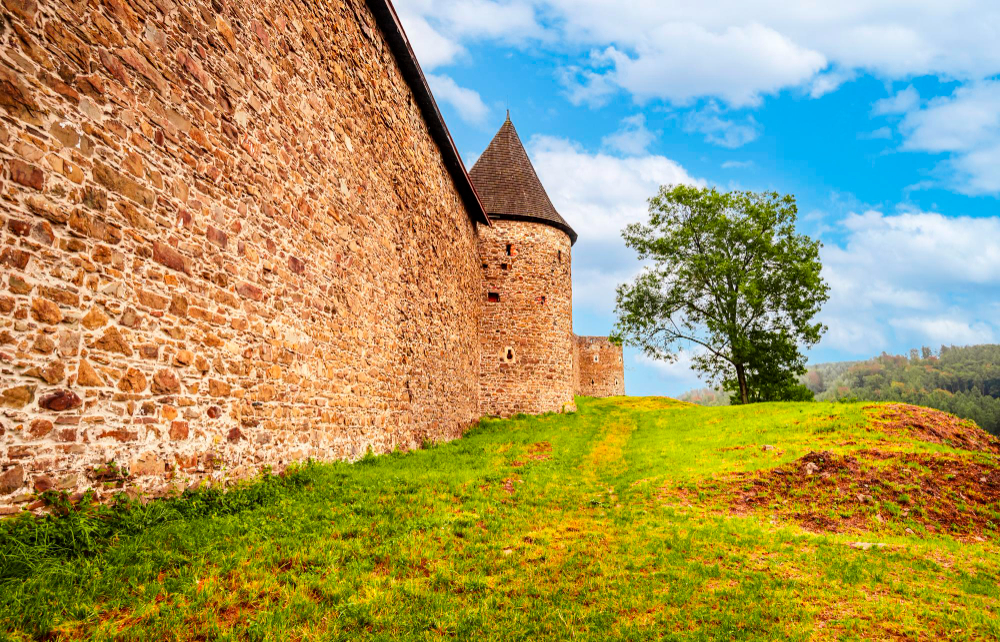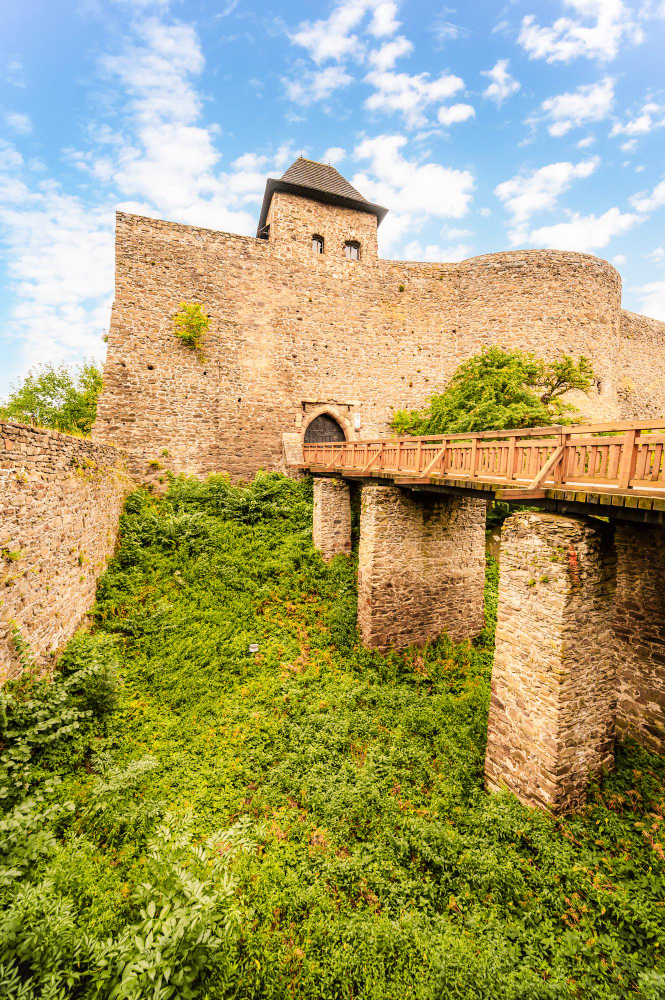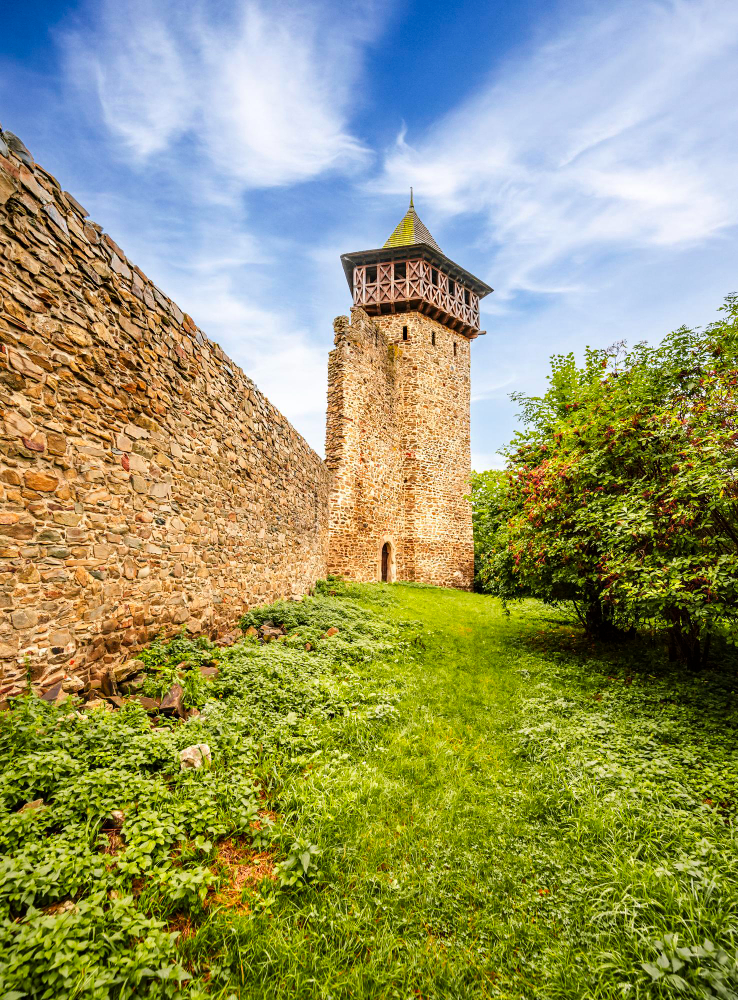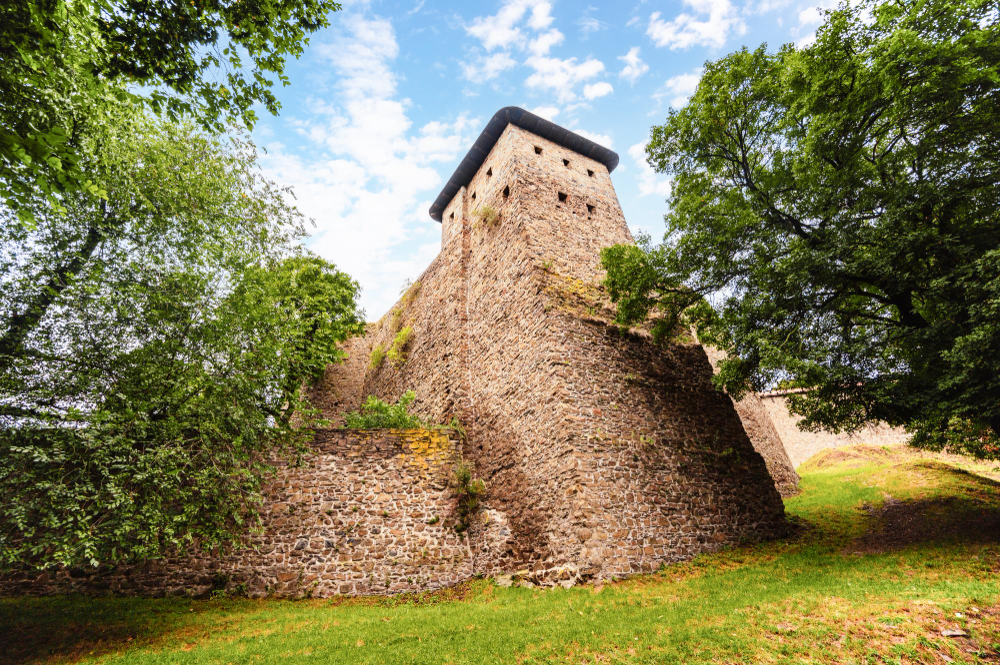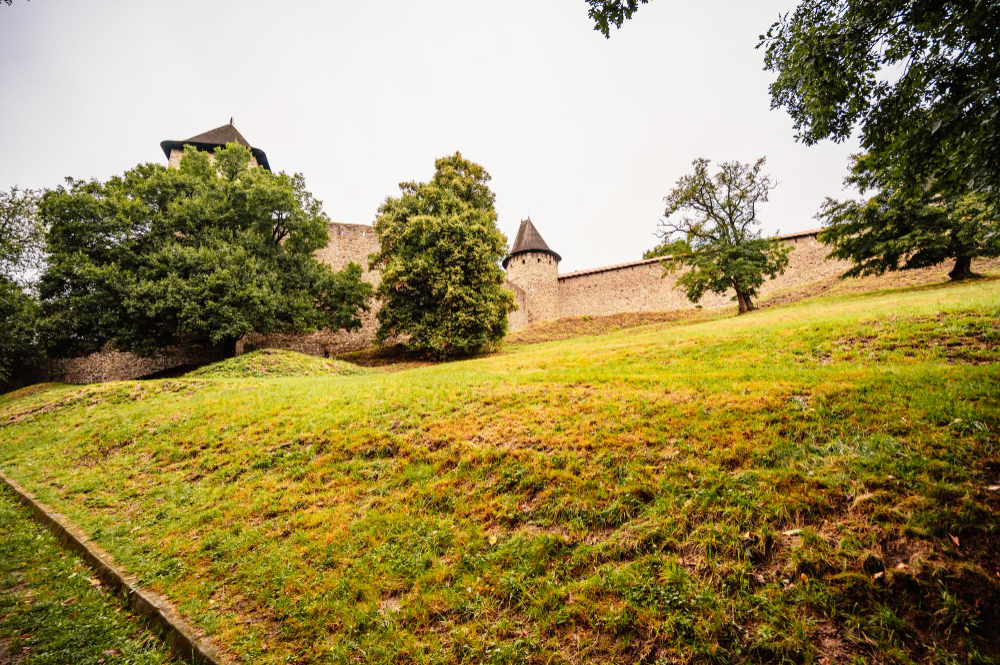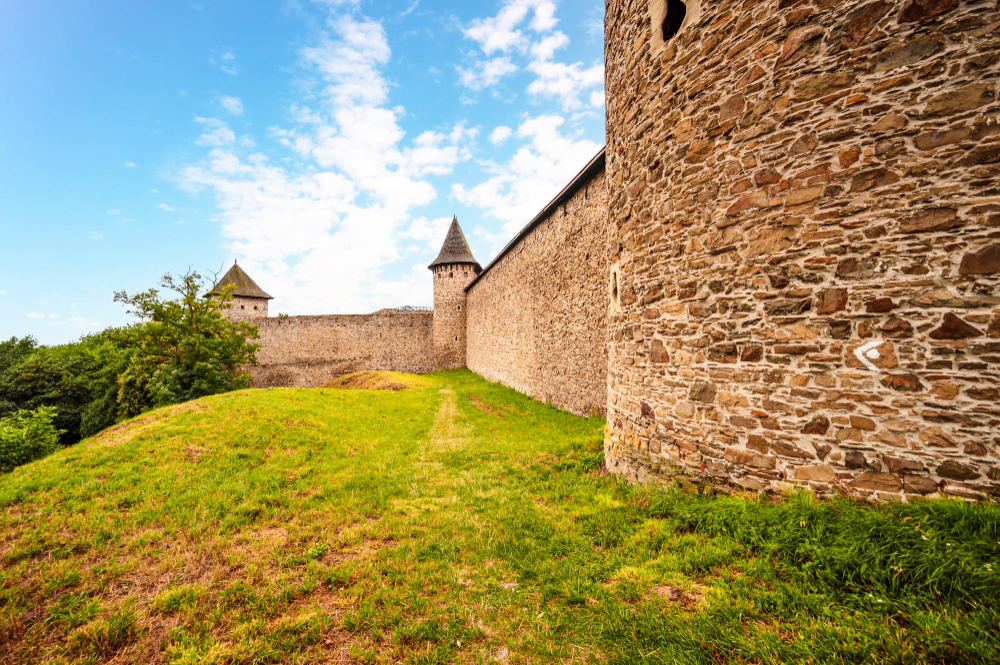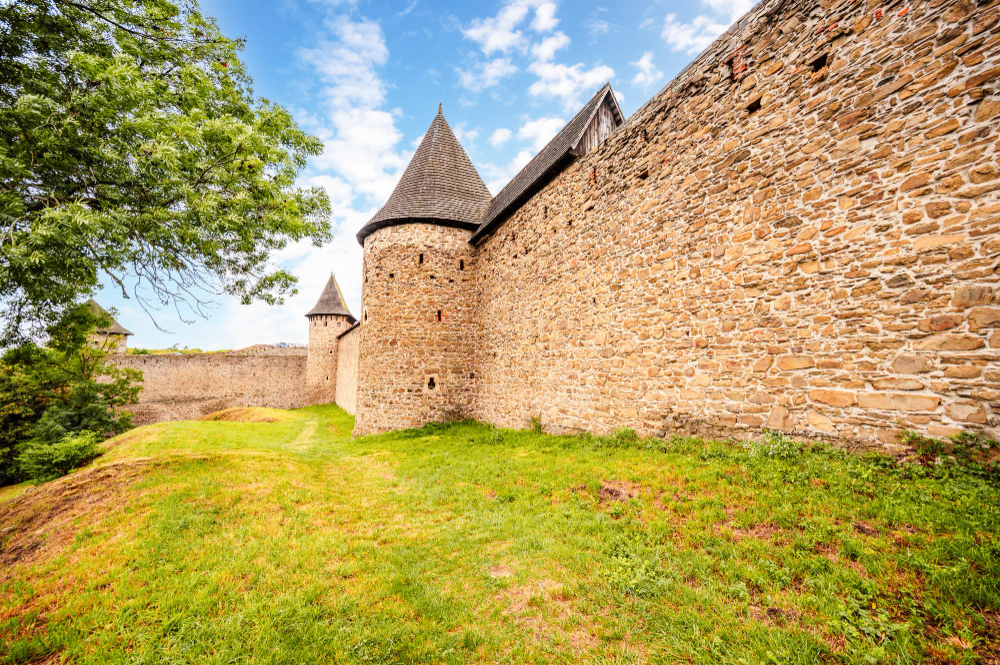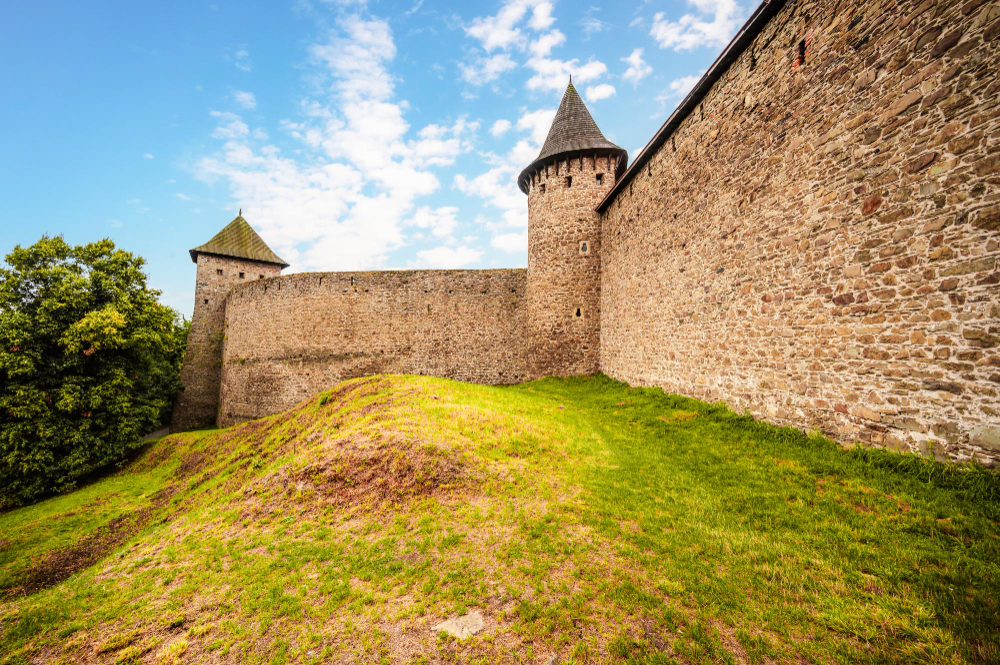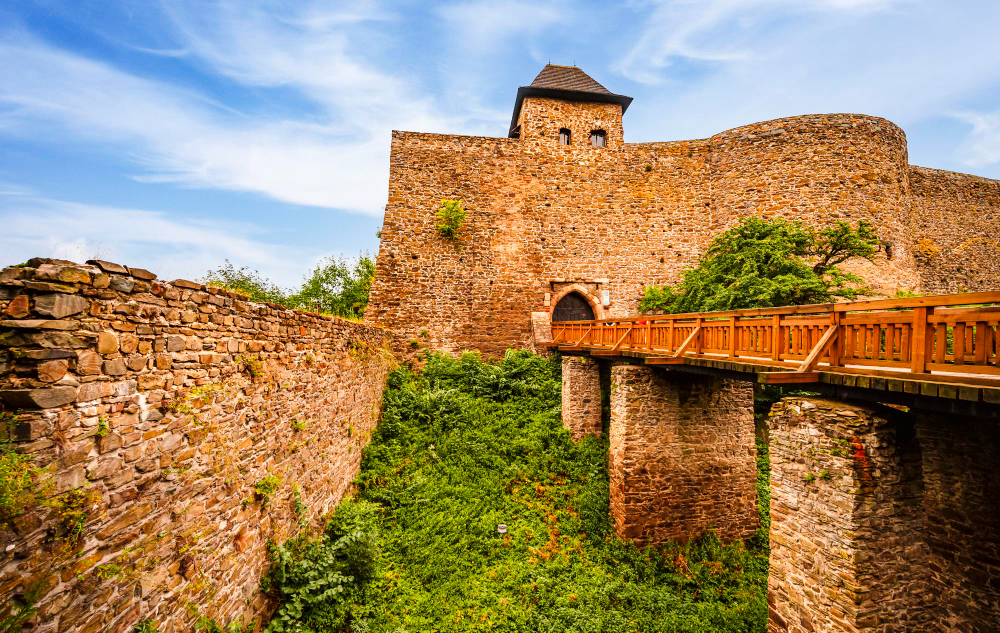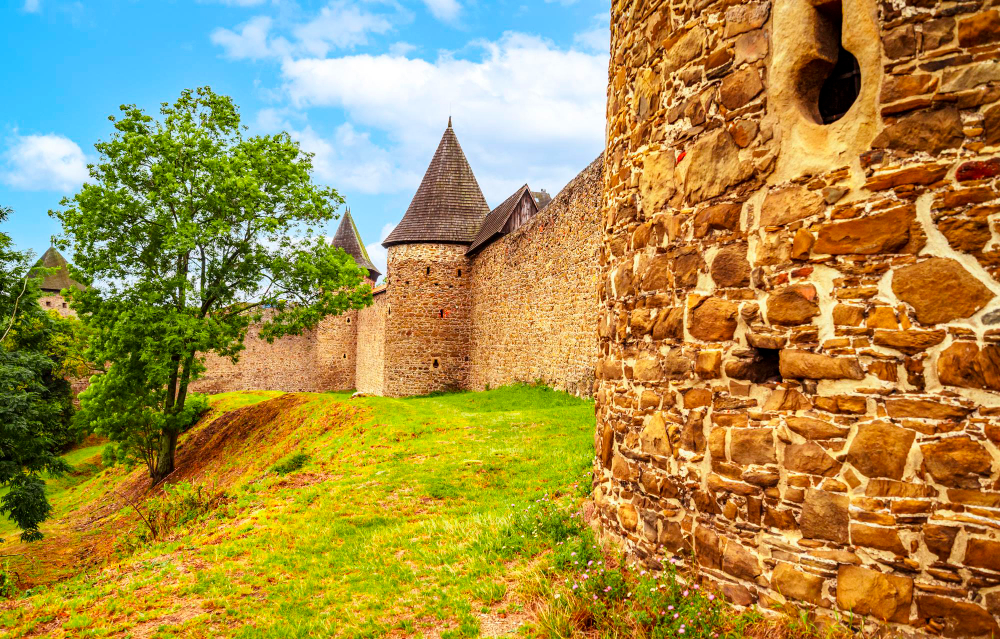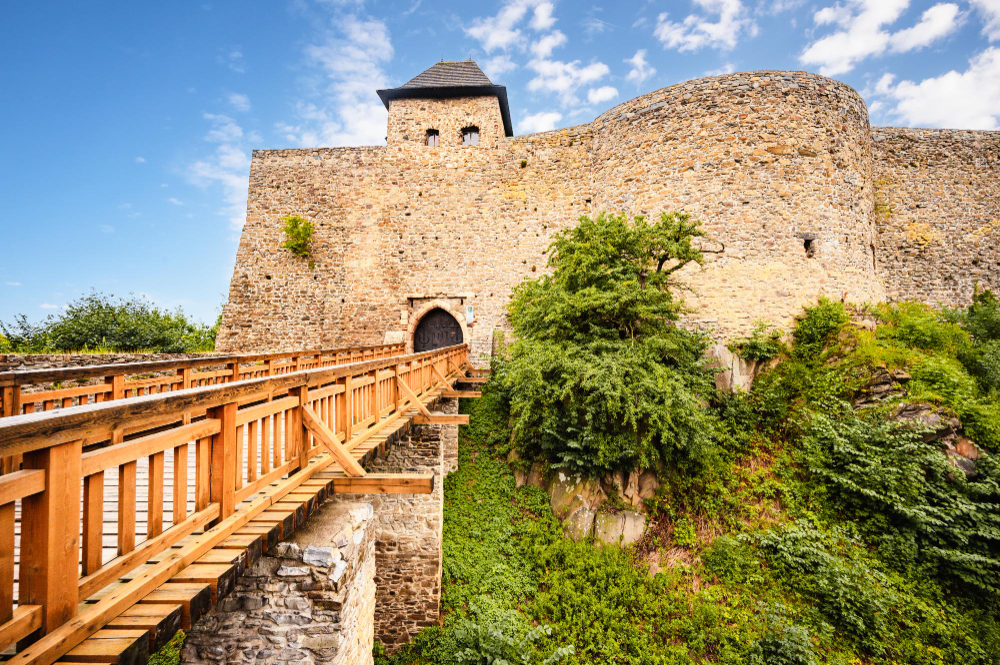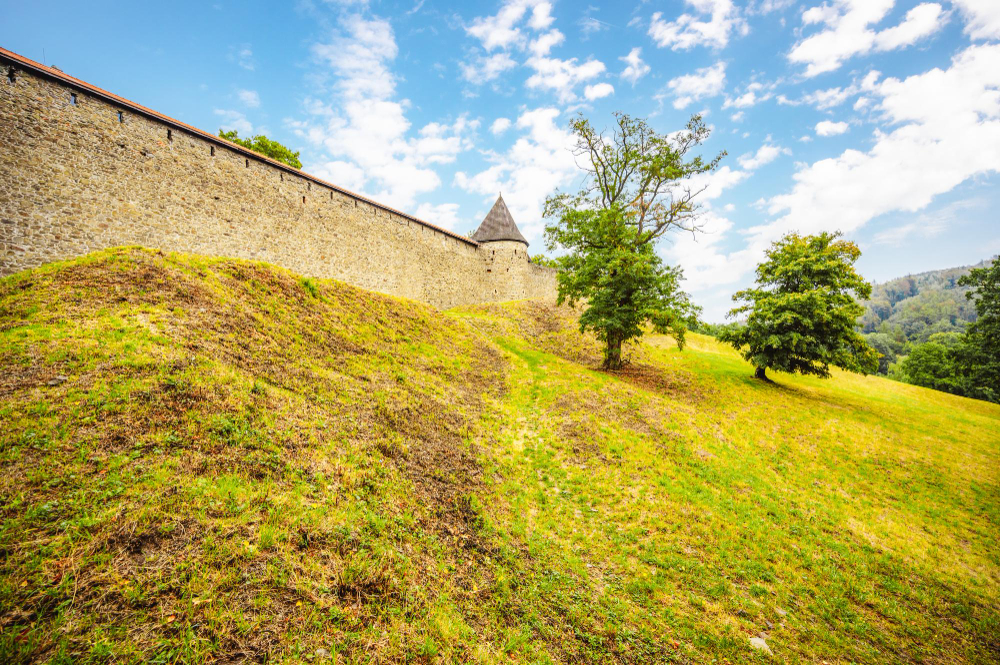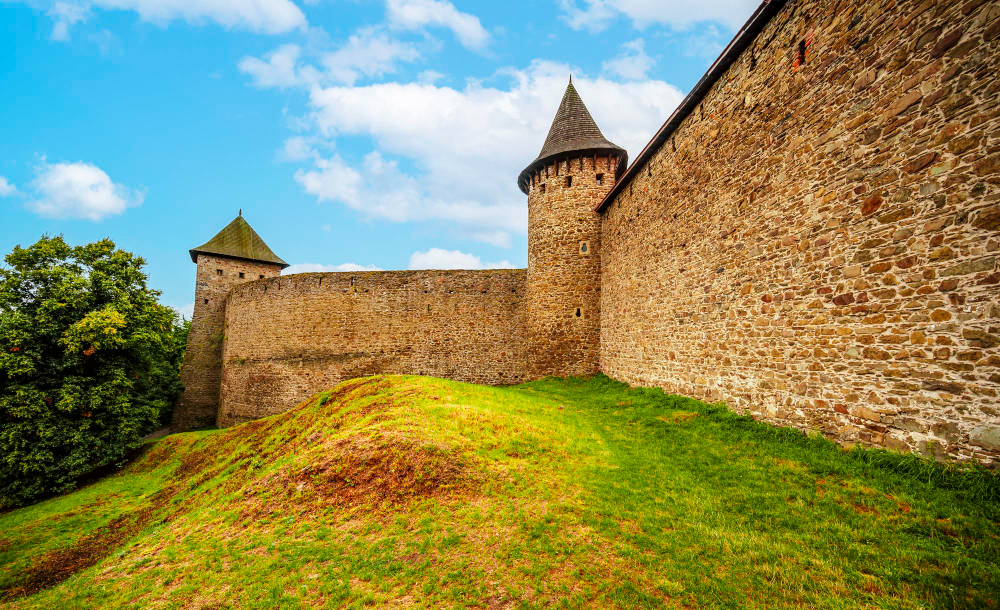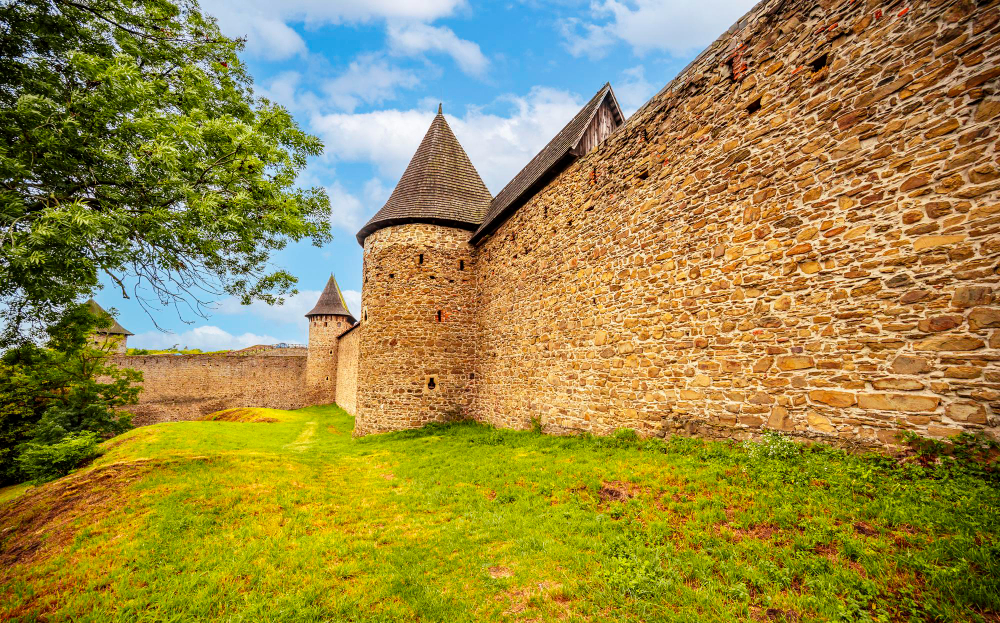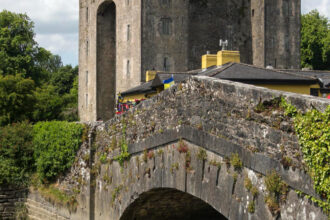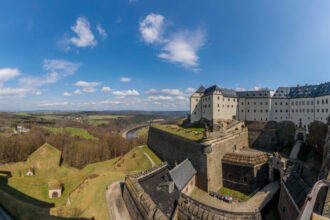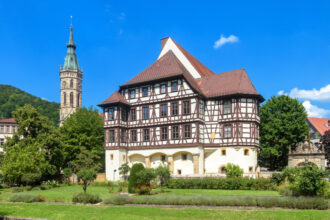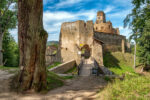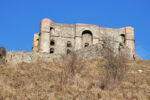

The ruins of Helfštýn Castle stand proudly atop a steep rock above the picturesque Bečva Valley in Moravia, near the town of Týn nad Bečvou in the eastern part of the Czech Republic. With its imposing appearance and strategically significant location at the entrance to the so-called Moravian Gate, this complex ranks among the largest castle fortresses in Europe – a striking testament to medieval architecture and military ingenuity.
From a seat of power to an impregnable fortress – The origins of Helfštýn Castle date back to the late 13th century, when it was built on land belonging to the noble Drahotuš family. Their aim was to control the surrounding valley and, with it, an important trade and transport route. The Moravian Gate, a natural bottleneck amidst rolling countryside, gave the castle great strategic importance from the very beginning. Following the death of the Bohemian King Ottokar II of the Přemyslid dynasty, the notorious robber baron Friduš of Linavy gained control of the complex. This so-called ‘robber baron’ used the castle to rob travellers and consolidate his position of power – a practice that was by no means uncommon at that time. From around 1320, Helfštýn came into the possession of King John of Luxembourg, who handed it over to the nobleman Wok of Krawarn. The Krawarn family held the keys to the castle for almost a century. Over the centuries, Helfštýn changed hands several times, including ownership by the powerful Albrecht of Pernstein, who heavily fortified the castle, thereby establishing its reputation as an impregnable fortress. Despite numerous wars, including during the turbulent Hussite Wars and the Bohemian-Hungarian conflicts, the castle withstood attacks and remained an impregnable stronghold for a long time.
A Centre of Power and Faith – The Lords of Krawarn were not only political figures but were also closely linked to the religious movements of their time. Peter von Krawarn, for instance, supported the teachings of Jan Hus, which embroiled him and his family in dangerous conflicts. The Hussite Wars in the 15th century led to the sale and reorganisation of the territories surrounding Helfštýn. Later, in the 16th century, the castle passed to the von Würben family of Freudenthal. Georg von Würben moved his seat of power to the newly built Renaissance castle in nearby Leipnik, causing Helfštýn to lose its military significance and gradually fall into disrepair. Yet despite these changes, Helfštýn remained an important symbolic and cultural landmark.
Decline and Reconstruction – The Castle in Modern Times – During the 17th century, Helfštýn was officially declared an imperial fortress, but lost its importance as military developments progressed. In 1656, Emperor Ferdinand III ordered the partial demolition of the defences to prevent their reuse for military purposes. Nevertheless, the castle was still used intermittently as a garrison during the Turkish Wars and the Seven Years’ War. Its final decline began in the early 19th century when the keep, a former defence tower, was demolished by imperial decree. However, the emerging Romantic movement breathed new life into the ruins: more and more visitors came to admire the once magnificent castle. From the late 19th century onwards, extensive rescue and conservation work began, which continues to this day. After the Second World War, restoration efforts were stepped up. Particularly since the 1970s, Czech Scouts and volunteers, known as ‘Brontíci’, have been passionately committed to preserving the historic structure. Today, Helfštýn stands as an almost completely restored fortress with impressive defensive walls, the width of which in some places even exceeds that of the Great Wall of China.
Blacksmithing and Culture – A Living Heritage – One of Helfštýn’s most remarkable features is its connection to metalwork. The vaults of the great hall house a museum with an outstanding collection of modern and contemporary forged works. These pieces are the result of the Hefaiston international blacksmithing symposium, which has been held for decades and at which artists from all over the world present and forge their masterful works. During the annual Hefaiston festival, the castle comes particularly to life: the historic castle smithy is brought back into use, and visitors can witness the skilful handling of red-hot iron first-hand. In addition, monumental metal sculptures adorn the grounds, including impressive works such as the ten-metre-high ‘Prometheus’ sculpture. An accessible, artistically designed chess set is also among the special attractions.
Legends and myths surrounding Helfštýn – Like many ancient castles, Helfštýn is shrouded in numerous myths and legends. One particularly well-known tale tells of a hidden treasure said to lie somewhere deep within the castle’s secret vaults – guarded by invisible forces and the spirits of former inhabitants who occasionally appear. Some visitors report seeing lights at night and hearing unexplained noises, which lend the ruins’ mystical aura an added charm. The ‘Hussite Tower’, now rebuilt and accessible as a viewing platform, takes its name in honour of the period when the castle was the subject of fierce political and religious conflict. Its massive walls symbolise the indomitable spirit that Helfštýn has always retained, despite numerous attacks.
Today – A meeting place and cultural hub – Today, Helfštýn Castle serves as much more than just a historical monument. It is a vibrant cultural venue where concerts, exhibitions and lectures are held regularly. The castle restaurant invites visitors to enjoy regional specialities amidst a medieval atmosphere. Here, history blends with the present, and tradition with innovation. With its unique combination of impressive architecture, rich history and vibrant culture, Helfštýn remains a fascinating testament to the past and a symbol of an unbroken passion for history and craftsmanship.
Helfštýn Castle thus stands not only as a silent witness to an eventful history, but as a vibrant hub of art, culture and community – a place where legends come to life and history is rewritten with every strike of the blacksmith’s hammer.