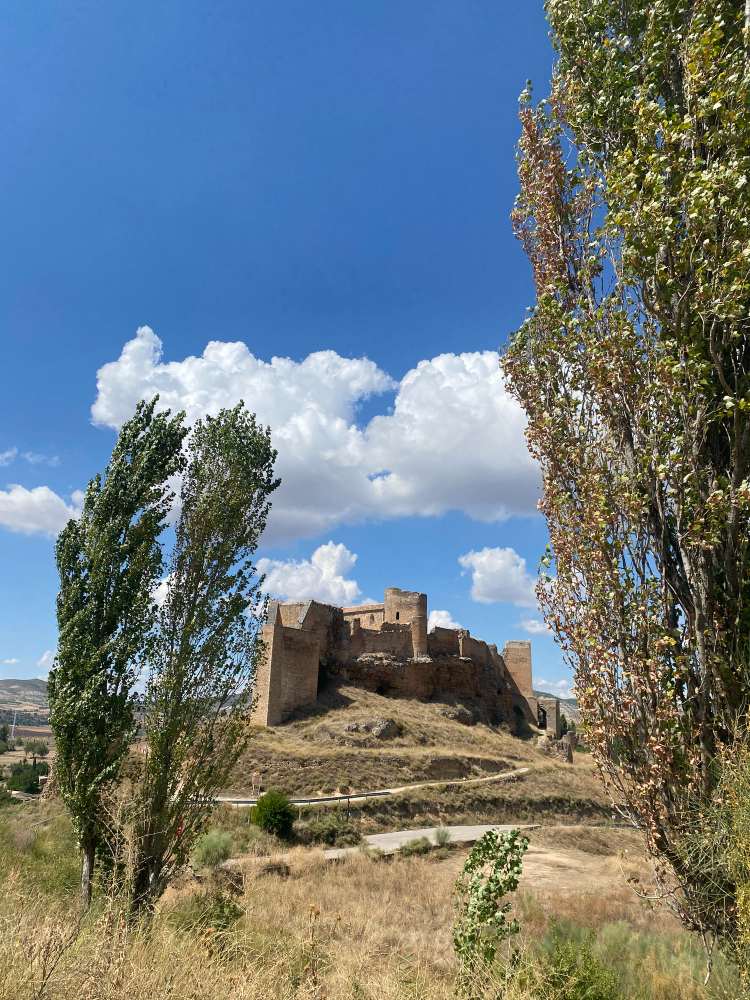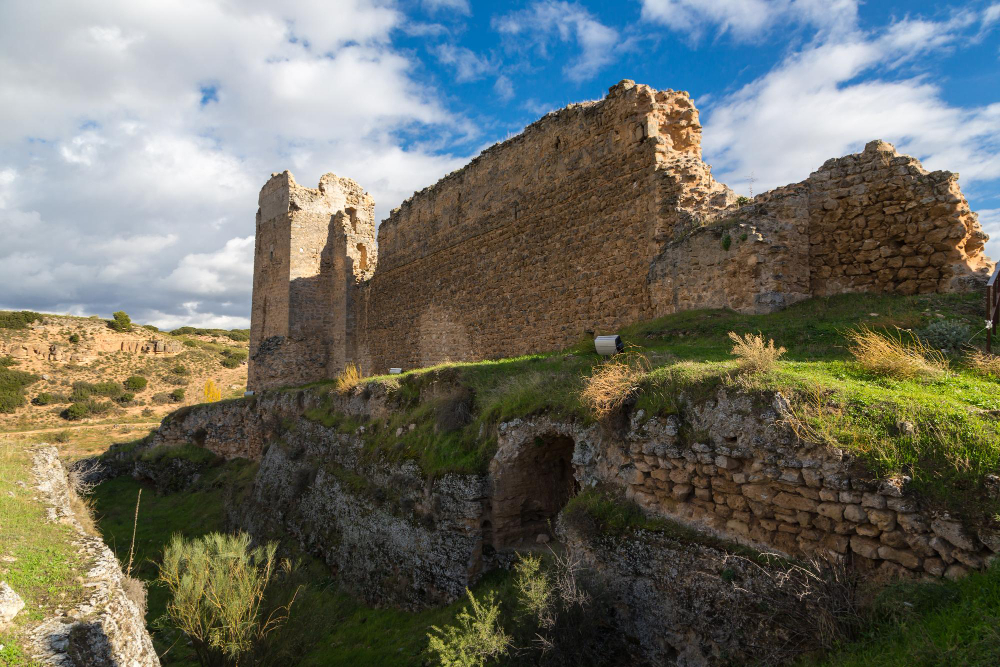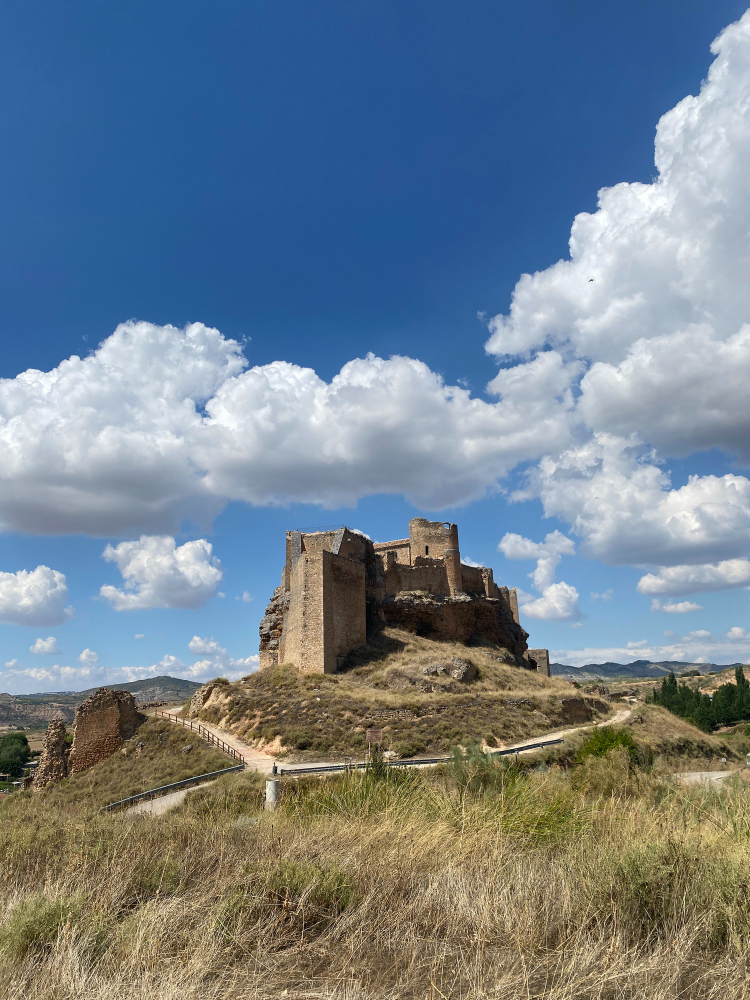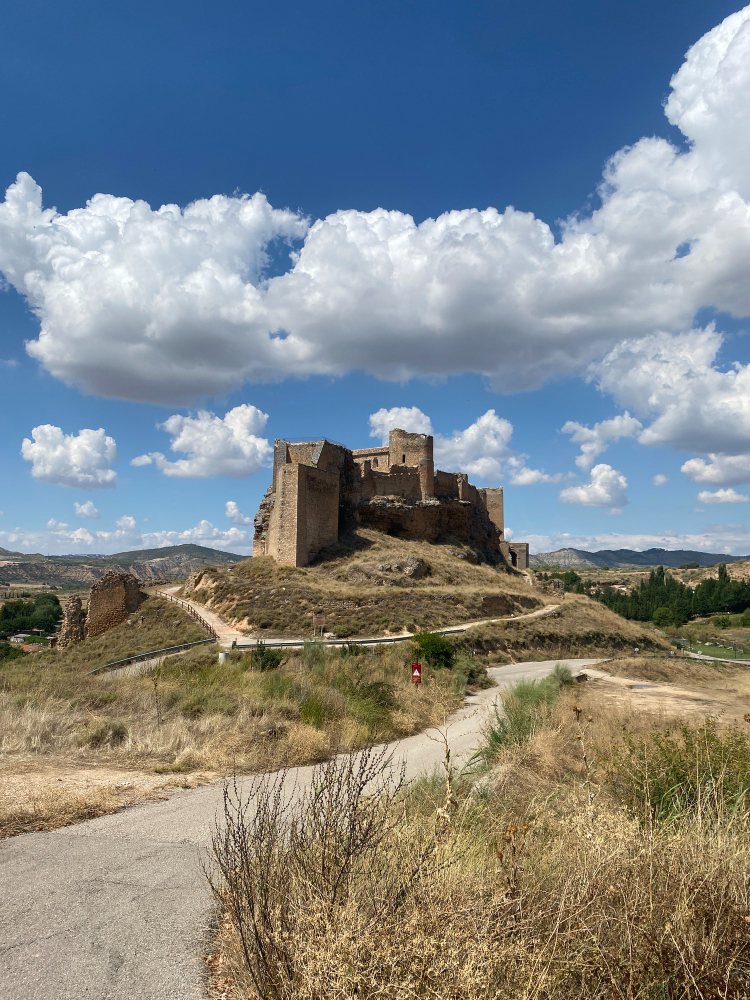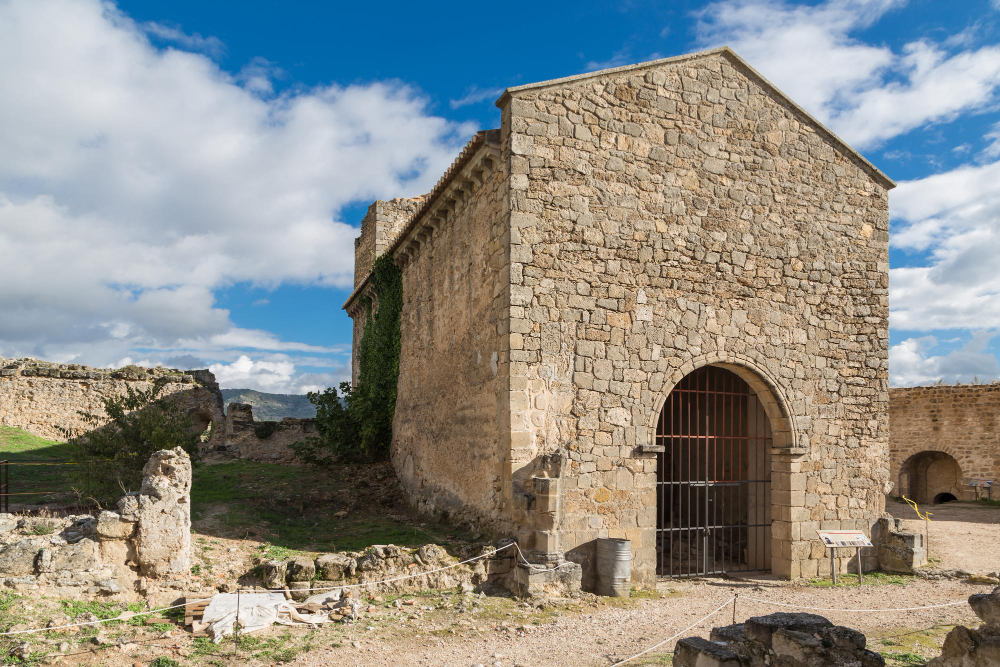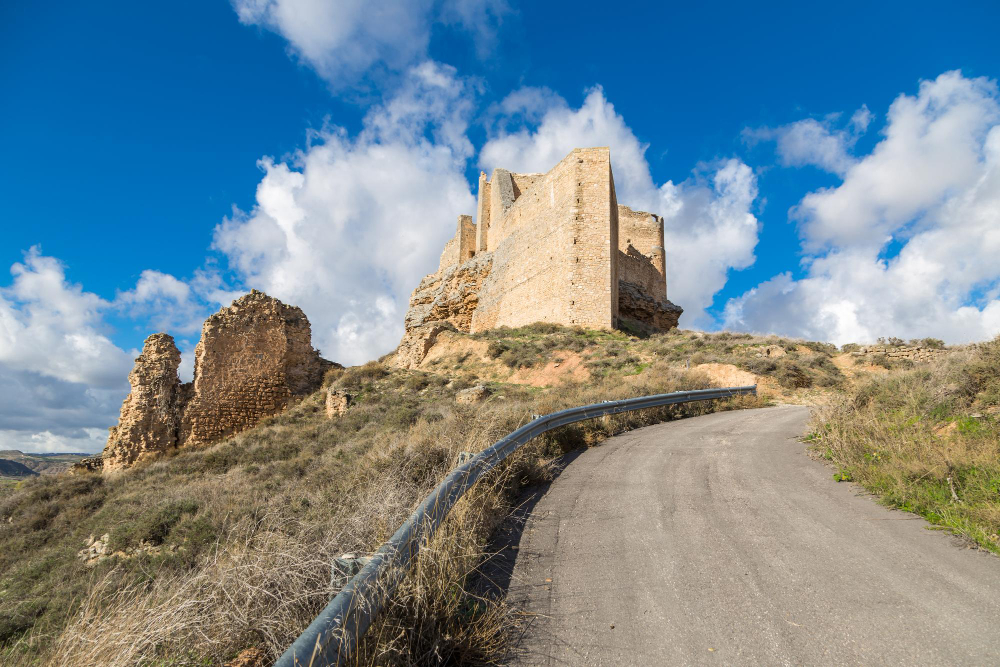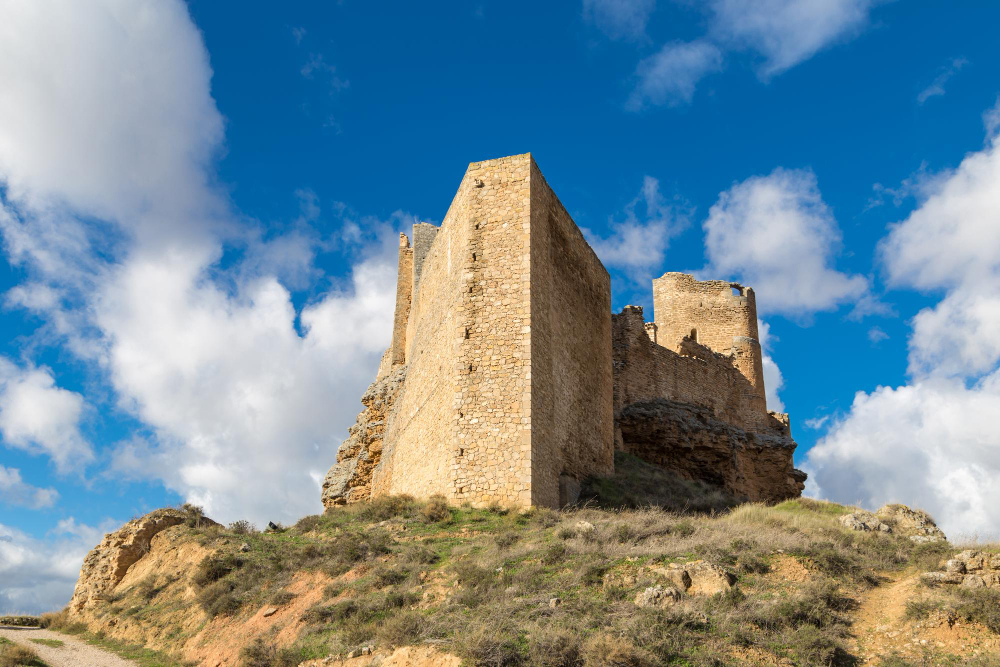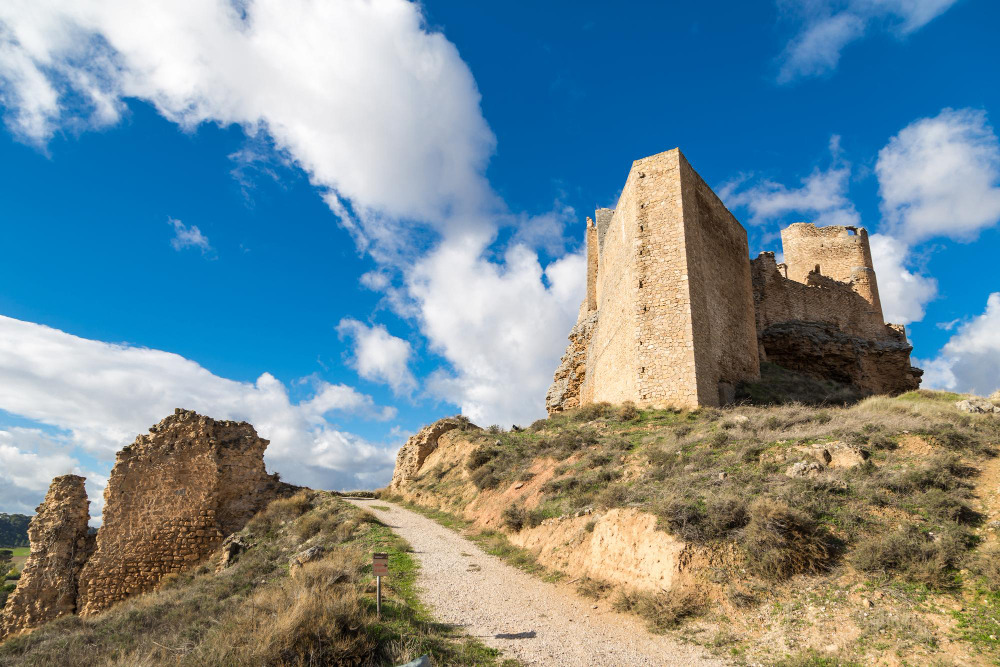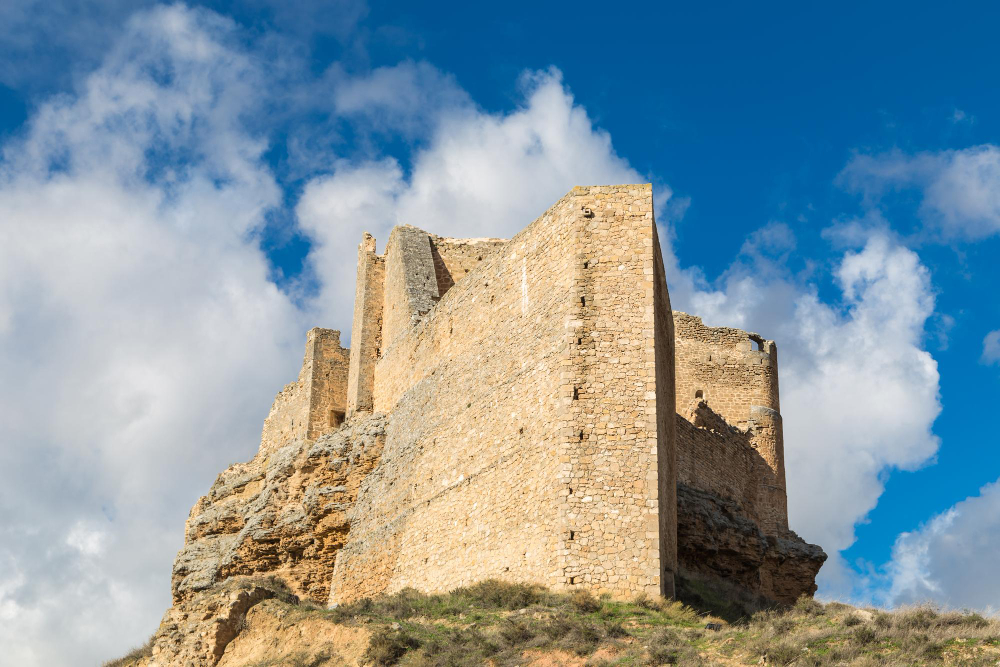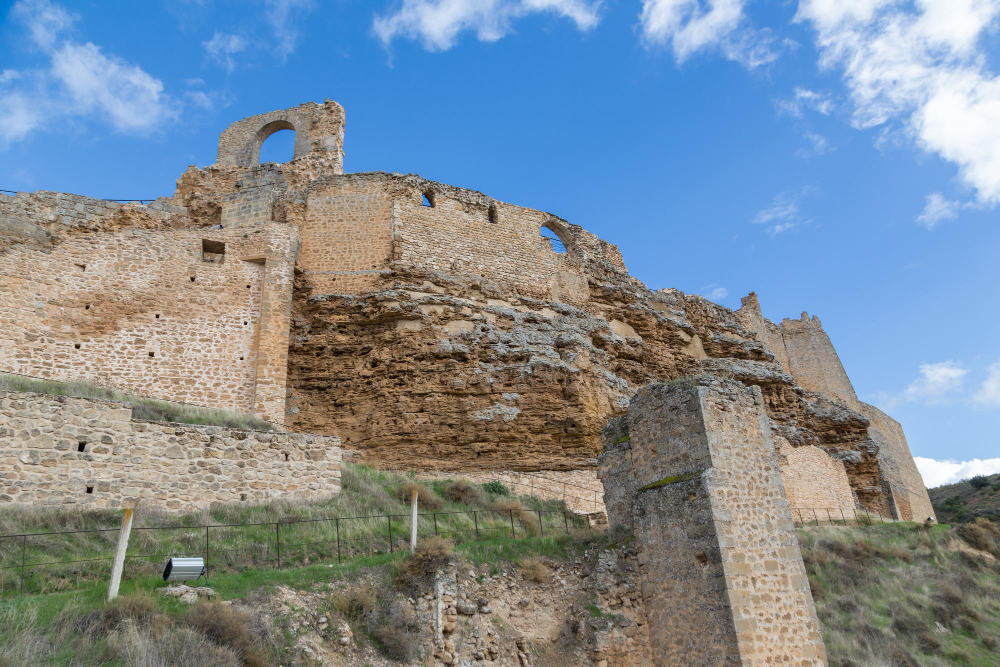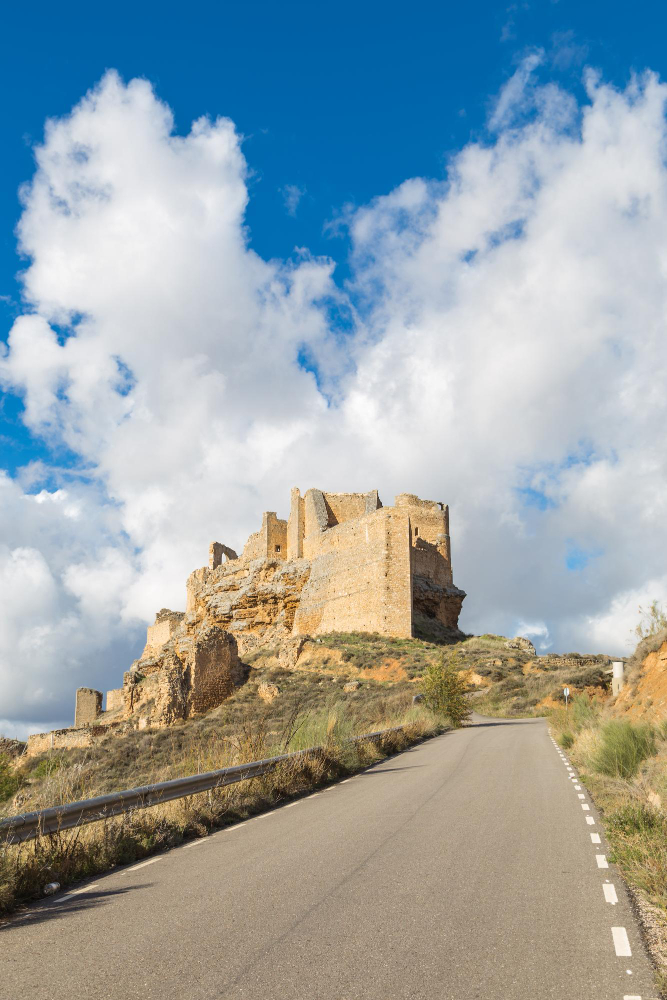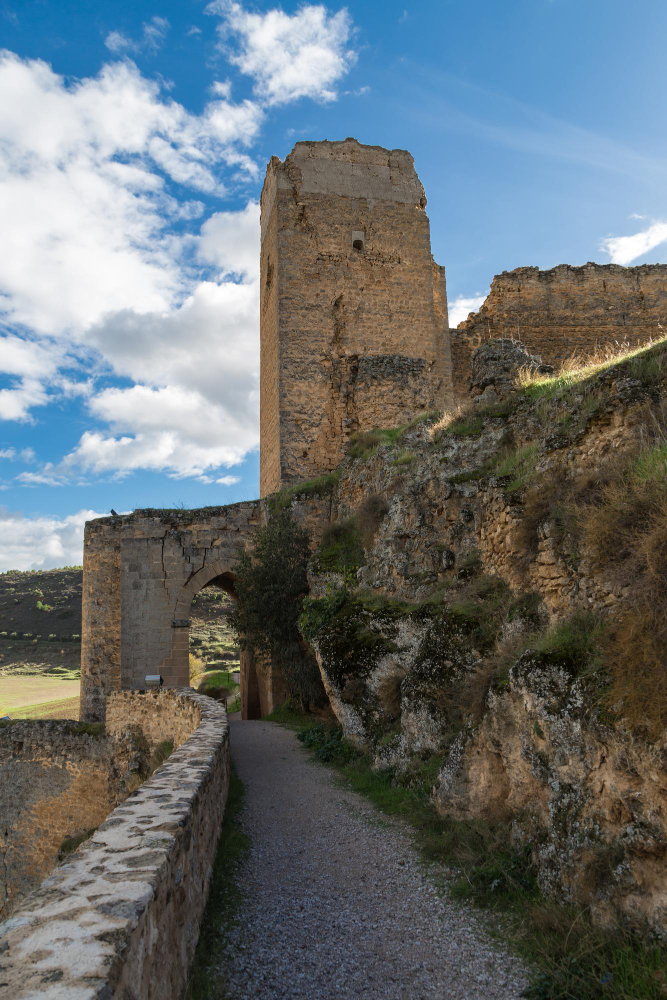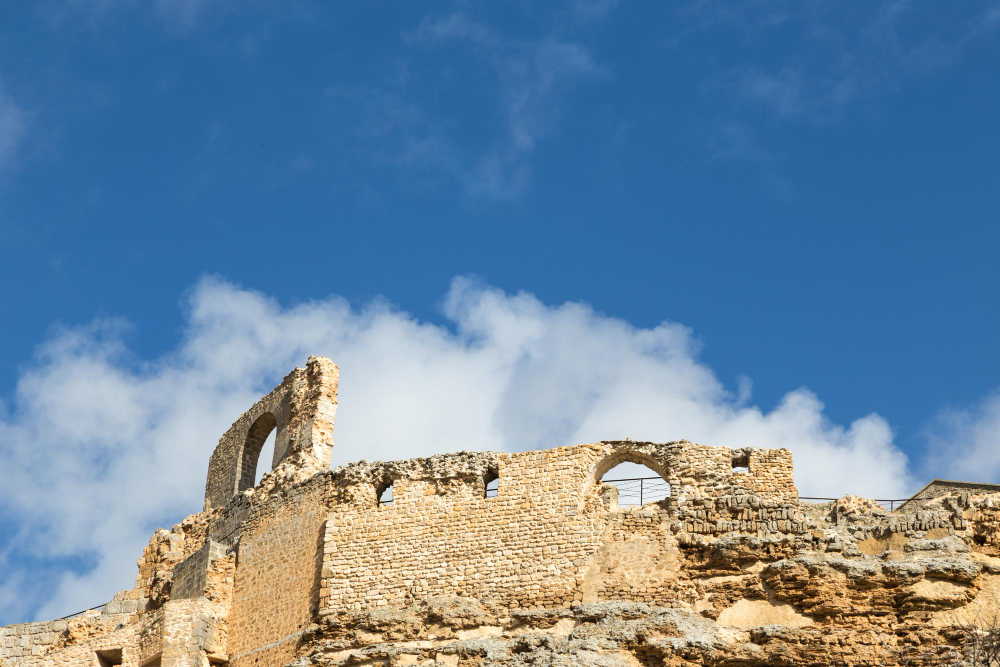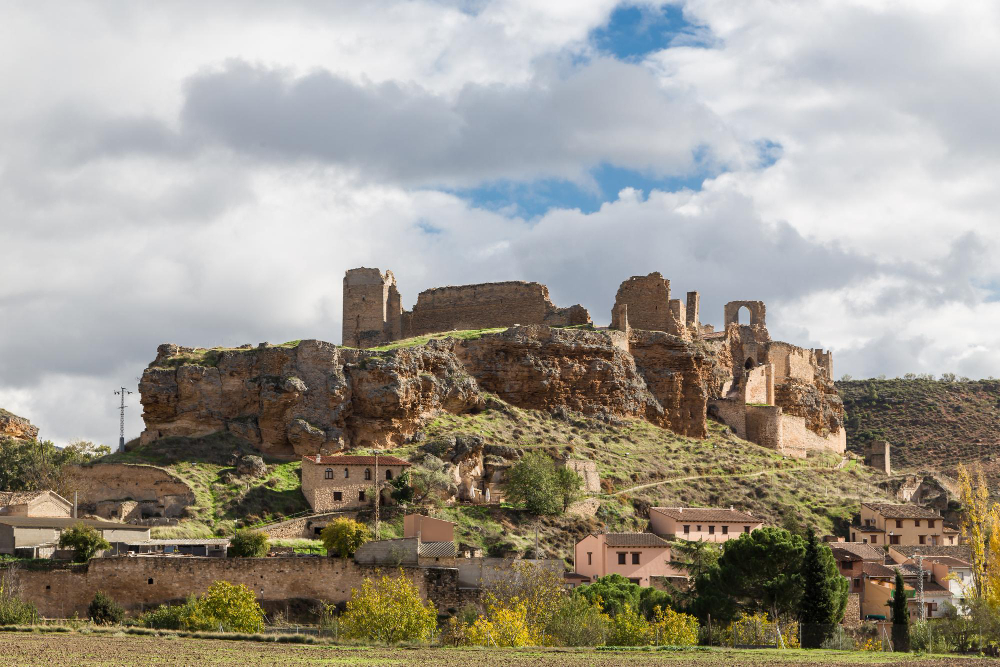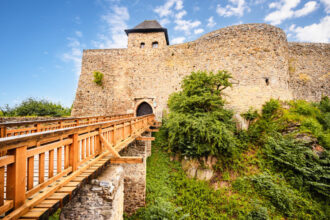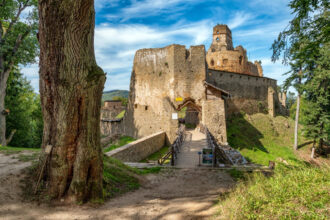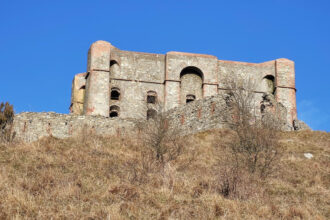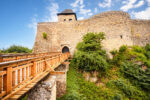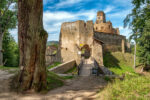

In the heart of Spain, in the small village of Zorita de los Canes, the venerable Zorita Castle – also known as the Alcazaba de Zorita – stands atop a striking sandstone cliff. This imposing fortress tells the story of numerous rulers, battles and orders that shaped the region’s destiny here over the centuries. Its walls reflect an eventful past, ranging from the Moorish emirate through the orders of knights to the dynastic struggles of the Castilians.
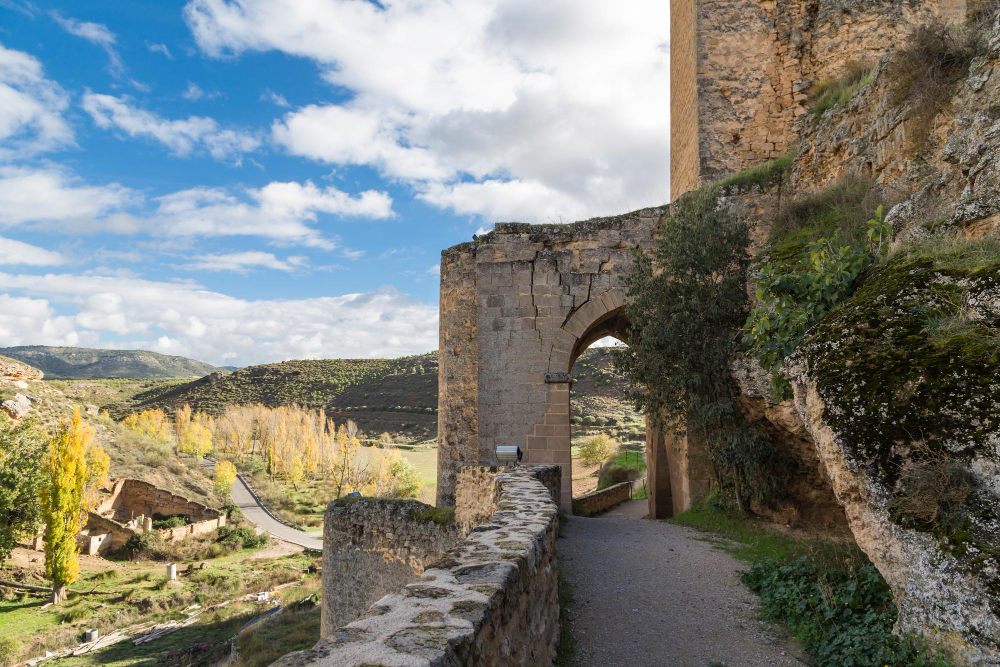
Origins and the Moorish Period – The castle’s foundation dates back to the year 852, when Emir Muhammad I of Córdoba ordered the construction of a fortified castle on the strategically important rock overlooking the River Tagus. The aim was to control the passage through the Santaver-Korā valley and to secure the northern borders of his domain. Just one year after construction began, the complex had to be repaired several times due to the porous nature of the sandstone; the characteristic horseshoe arches at the entrance to the fortress still serve as a reminder of this period today. Zorita became a place of great significance as the centre of several uprisings against the Caliphate of Córdoba. In the late 9th century, the rebel Umar ibn Hafsun launched his campaigns from here, including the raid on the city of Toledo in 886. Later, Abd al-Rahman III used the castle as a military base during the reconquest of the area around Santaver. Despite the ongoing political unrest, the fortress remained a symbol of Moorish power in the region until the political landscape of Europe underwent a fundamental change.
Transition to Christian rule – In the 11th century, the balance of power shifted in favour of the Christian kingdoms. Al-Mamun of Toledo, seeking to consolidate his rule in the region, ceded large parts of the territory, including Zorita, to Alfonso VI of León and Castile. This was done as part of an alliance against his brother Sancho II, as a result of which Zorita officially came under Castilian control in 1072. Despite initial setbacks at the hands of Almoravid troops, the Castilians recaptured the castle and established it as an important outpost. In 1124, the knights of the famous Order of the Temple succeeded in capturing the fortress, but its possession was contested and it was repeatedly attacked by the Almohads. The defence was under strain, as the borders between Moorish Andalusia and the Christian kingdoms were fluid, and control of castles such as Zorita remained of strategic importance to both sides.
The Calatrava Period and Heyday – A turning point came with the transfer of the fortress to the Order of Calatrava in 1174 by King Alfonso VIII of Castile. The Order, renowned for its military zeal against the Moorish forces, erected monastic buildings within the castle and made it its first and most important stronghold. It became a place of refuge and headquarters following the crushing defeat at the Battle of Alarcos in 1195. This fortress enabled the Order of Calatrava to regroup its forces and secure the Castilian border against further invaders. During this period, the Order not only had new walls erected but also incorporated its own church into the castle complex. Until the victory in the decisive Battle of Las Navas de Tolosa in 1212, Zorita remained the spiritual and military heart of Calatrava.
Internal conflicts and power struggles – In the 14th century, the Order of Calatrava became embroiled in internal power struggles that directly affected the castle and the region. Protracted disputes flared up between Grand Master Garci López de Padilla and the local commanders, which were eventually resolved with the support of the royal troops. The sieges and skirmishes left visible marks on the castle’s structure. Zorita remained the scene of rivalries within the Order throughout the 15th century as well. On several occasions, various factions staked a claim to leadership, leading individual commanders to use the castle as a base from which to exert their influence. During a particularly turbulent period, Juan Ramírez de Guzmán managed to occupy the fortress from 1443 to 1445, before being ousted by another rival.
Decline and Decay – As neighbouring towns such as Almonacid de Zorita and Pastrana flourished, the slow decline of Zorita itself began. In the 16th century, the fortress increasingly lost its military significance. Ruy Gómez de Silva, Prince of Éboli, acquired the castle in 1565 but did not reside there, as it no longer offered the comforts of a modern residence. From that point on, the complex fell into disrepair and was no longer maintained. Today, only ruins bear witness to the once-mighty fortress, which significantly influenced the region’s fate for centuries. Yet despite its decay, Zorita Castle remains an important monument to Spanish history – a testament to the shifting powers, the knights, kings and rebels who have left their mark here.
Legends and Tales – Numerous legends surround the old fortress. One of them tells of a mysterious treasure said to lie hidden deep beneath the walls – guarded by the ghosts of the fallen knights of the Order of Calatrava. Other stories speak of secret passages that allegedly connected the castle with neighbouring settlements and ensured the inhabitants’ survival during sieges. It is also said that on New Year’s Eve, the echoes of past battles and chivalrous vows reverberate through the ruins, as if the walls themselves were keeping history alive. These mystical tales lend Zorita Castle a special allure that continues to attract visitors and historians to this day.
Zorita de los Canes Castle is far more than just a ruin – it is a living piece of history that reflects the major events of the Iberian Peninsula: the era of the Moorish Empire, the Reconquista, the rise of the orders of chivalry and the internal conflicts of medieval Europe. Its walls tell tales of power, faith, betrayal and courage, thereby preserving the legacy of a turbulent era in Spanish history. Anyone who experiences the silence of the ruins is immersed in a world full of drama and legends that shaped the course of history.