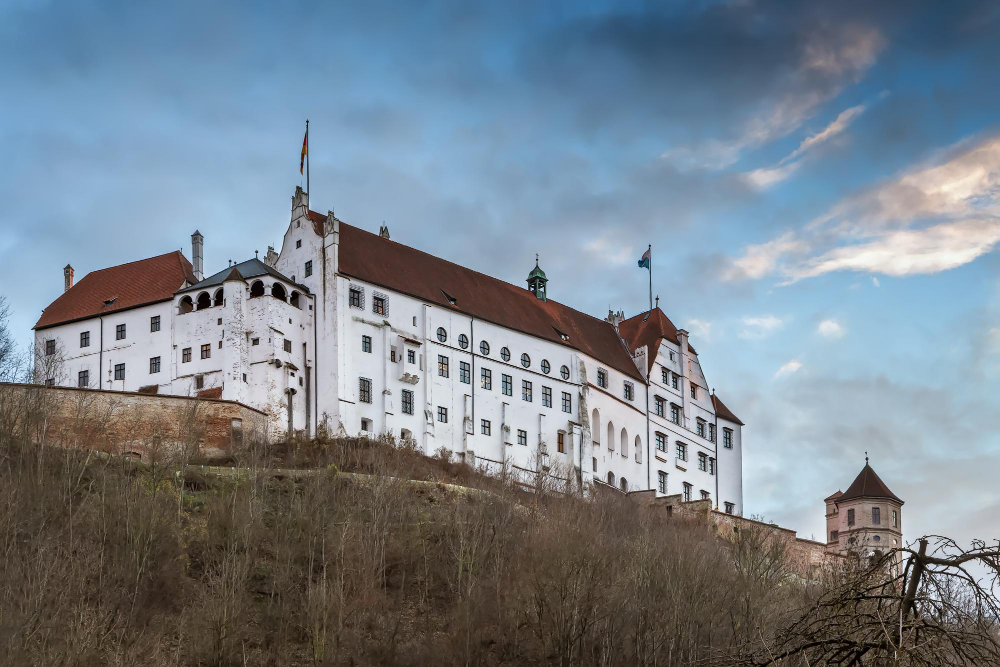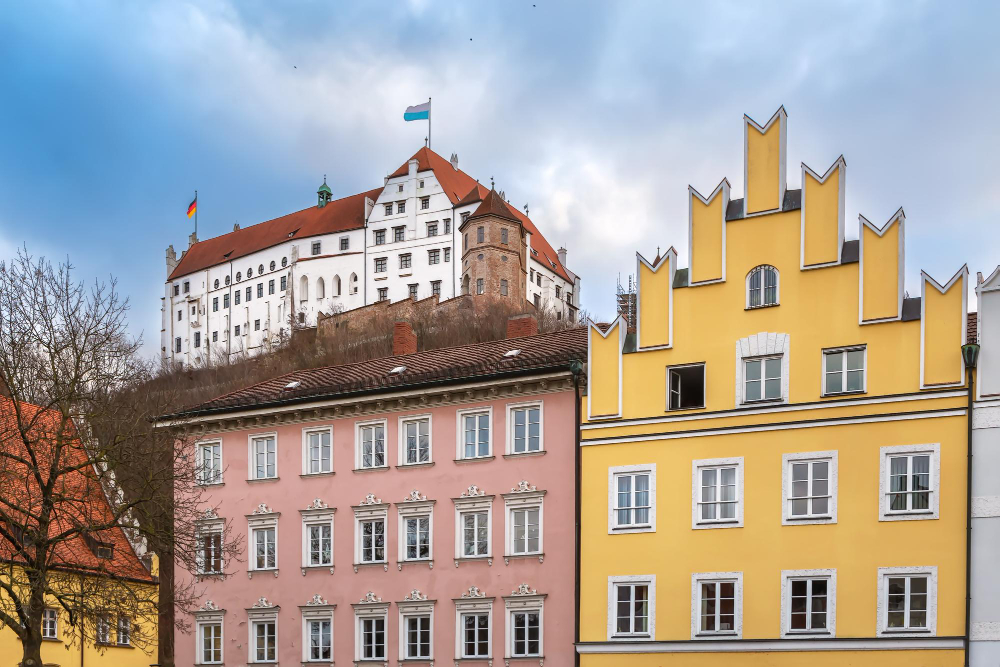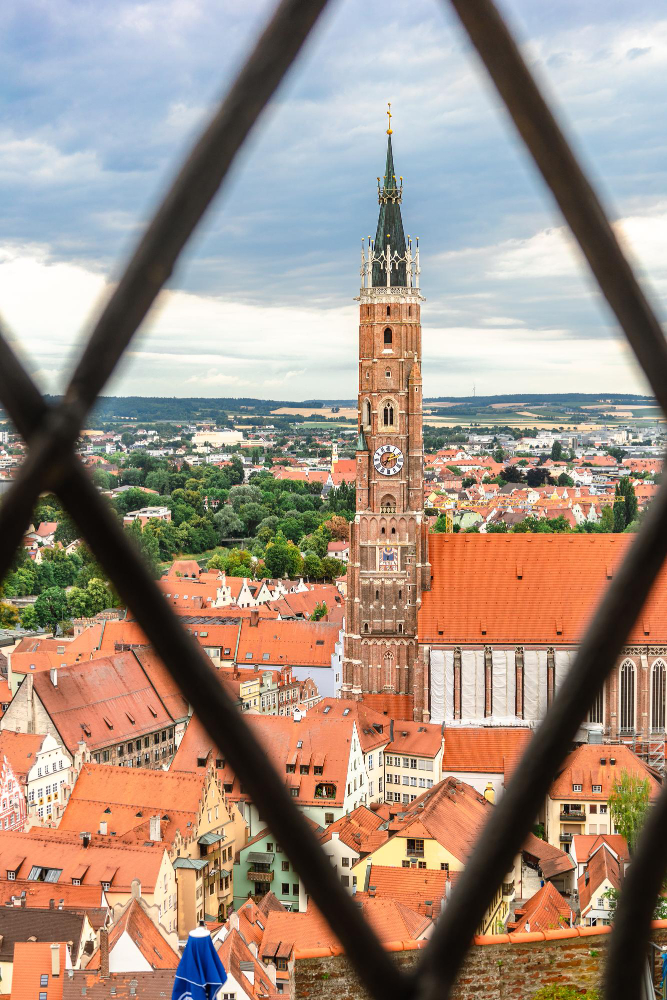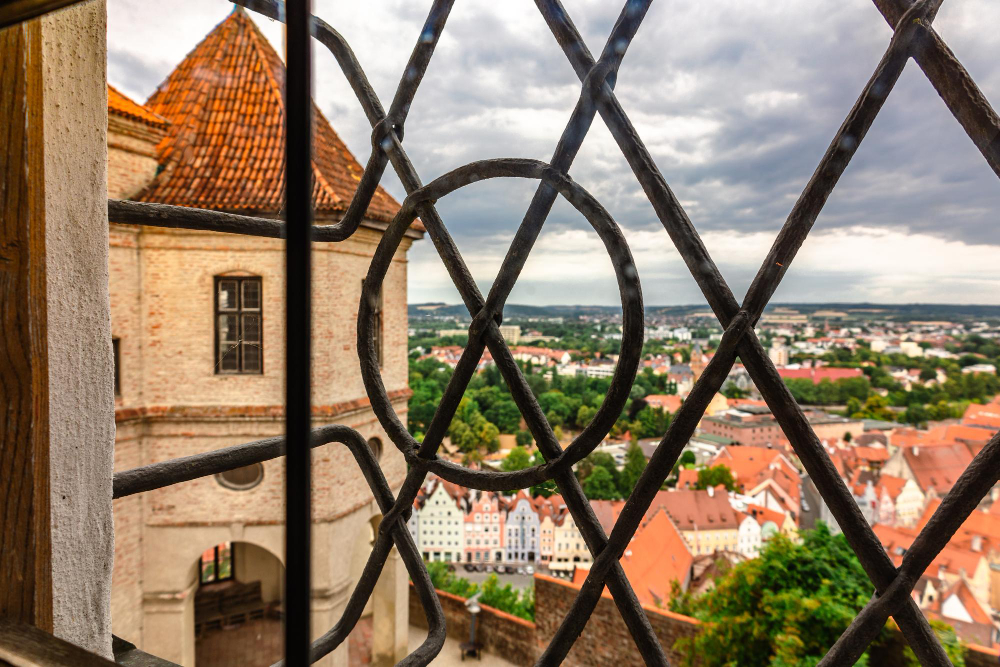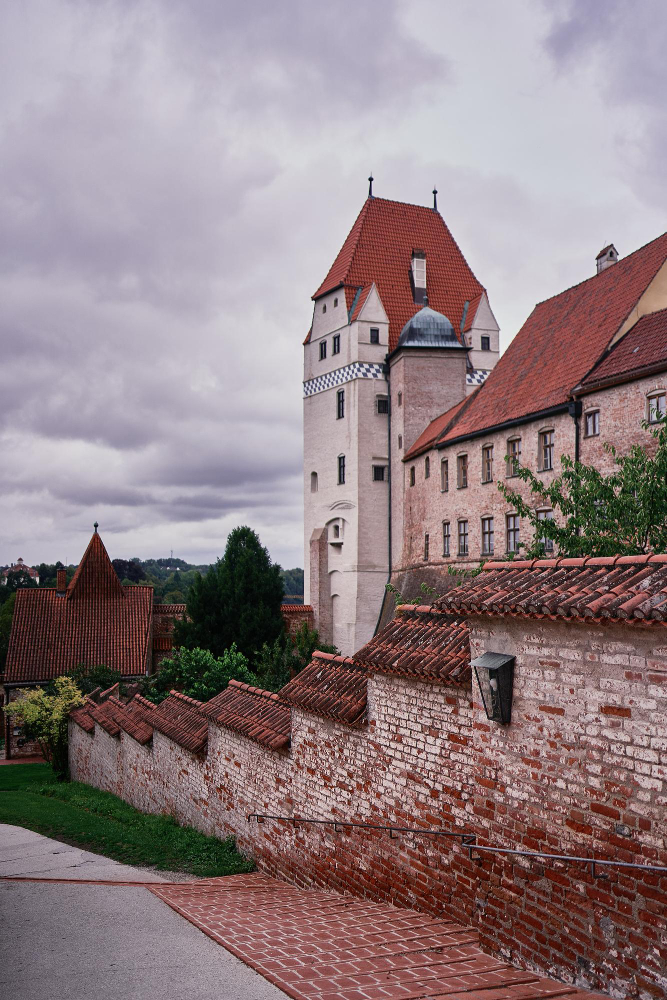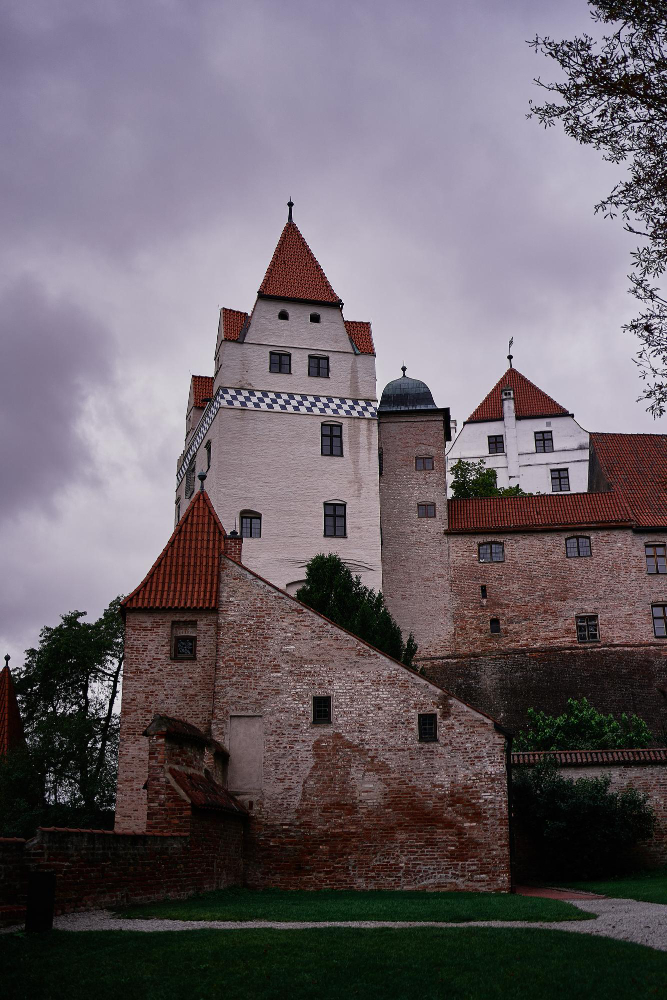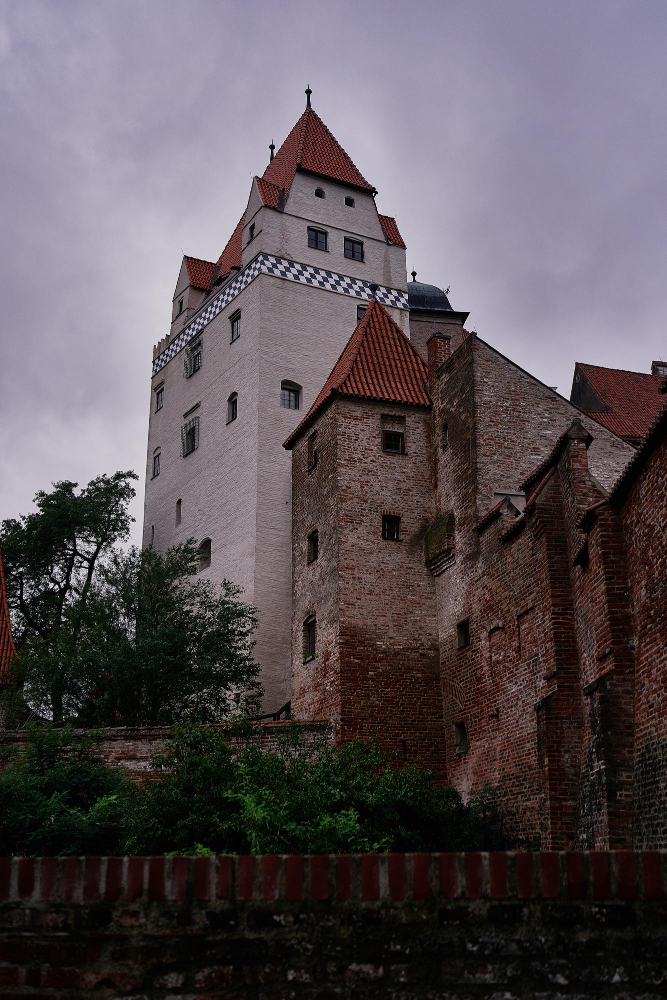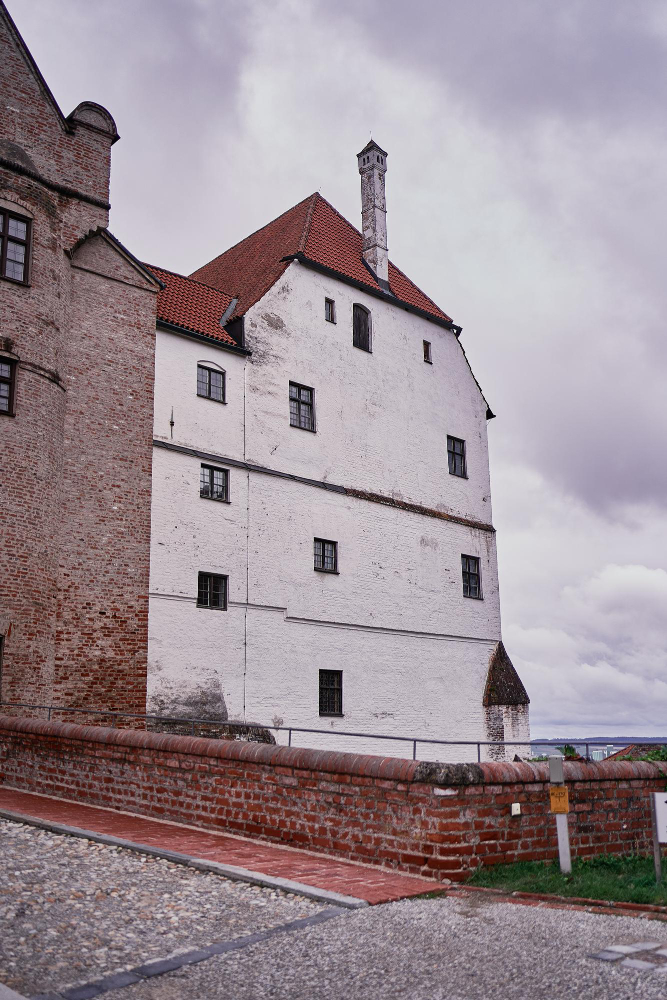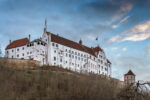

Trausnitz Castle towers over the old town of Landshut, the district capital of Lower Bavaria, visible from afar. Nestled on the so-called Hofberg, a steep spur in the Lower Bavarian hills, it is not only an impressive example of medieval castle architecture, but also a living testament to Bavarian history, culture and art. Since its foundation in the early 13th century to the present day, the castle has undergone numerous transformations – from a striking defensive structure to a stately residence of the House of Wittelsbach and, finally, to a monument of great cultural and historical value. This article invites you on a fascinating journey through time, shedding light on the history and architecture of Trausnitz Castle and recounting its myths and legends.
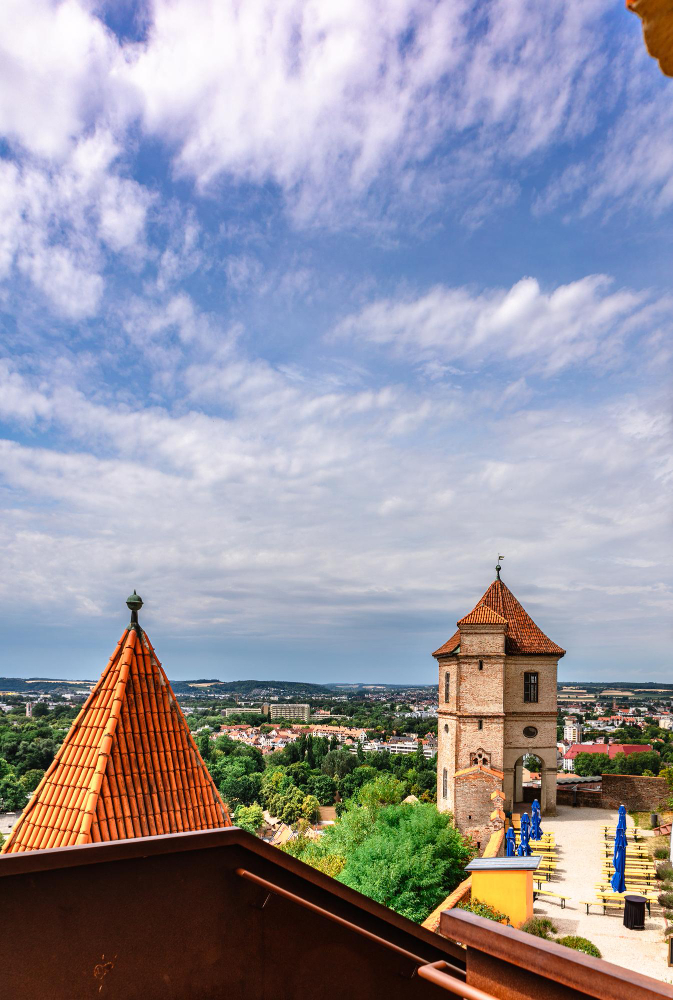
Location and surroundings: A guardian over Landshut – At an altitude of over 500 metres, Trausnitz Castle towers above the town of Landshut on the River Isar, offering sweeping views across the Lower Bavarian hills. Its location on the Hofberg, a steep rocky outcrop jutting out from the hilly landscape, was strategically ideal for a defensive structure: from here, the surrounding countryside could be monitored and warnings issued against enemies. The castle lies in a wooded area; to the east lies the so-called Hofgarten – once a magnificent palace park, which was opened to the public in 1837. Immediately adjacent is the Herzogsgarten, which was designed in the late 18th century by Friedrich Ludwig von Sckell and his brother Matthias in the Neoclassical style. These green oases remain places of relaxation for residents and visitors alike to this day.
Prehistory: Traces of prehistoric settlement – Archaeological investigations carried out between 2001 and 2002 unearthed significant finds on the castle grounds: pottery shards attributed to the Urnfield culture, as well as relics from the Early Middle Ages. This suggests that the Hofberg served as a fortification as far back as prehistoric times – possibly as a wooden watchtower or even with the first stone walls – long before the present-day castle was built. The site’s importance as a strategic vantage point was thus confirmed over millennia.
The Founding of Trausnitz Castle: From Watchtower to Princely Residence – The oldest parts of the castle date from the early 13th century. The name ‘Landshut’ itself derives from a wooden watchtower erected around 1150 – the ‘Landeshuata’, meaning ‘protector of the land’. Duke Ludwig of Kelheim (1173–1231), who founded the town of Landshut in 1204, had the first stone castle built on this site; this is attested by the accounts of Abbot Hermann of Niederaltaich, who noted precisely: ‘Ludwig, Duke of Bavaria, began to build a castle and a settlement in Landshut.’ Following the fire at his former castle, Wartenberg, Ludwig moved his seat here, marking the beginning of a long era. His son Otto II, known as ‘the Illustrious’, continued the work. It is significant that around 1227, Elisabeth of Bavaria – daughter of Otto II and later Queen of Jerusalem and Sicily – was born at the castle. The castle was thus not only a seat of power but also the birthplace of notable figures.
Medieval heyday and Staufer culture – In the early 13th century, Trausnitz Castle developed into a centre of Staufer power and culture. Emperor Frederick II was a guest there in 1235 and brought the Empire to this Lower Bavarian residence. At the same time, the arts and minnesang flourished: famous troubadours such as Tannhäuser and Walther von der Vogelweide stayed here. A sculptor from Strasbourg was specially commissioned to undertake the castle’s artistic decoration, reflecting the high standards of the builders. Following the death of Otto II, Bavaria became fragmented. In 1255, the division between Lower Bavaria and Upper Bavaria took place, with Landshut and Trausnitz Castle emerging as the centre of Lower Bavaria. Alongside this, there were secondary residences such as Straubing Palace and Burghausen Castle.
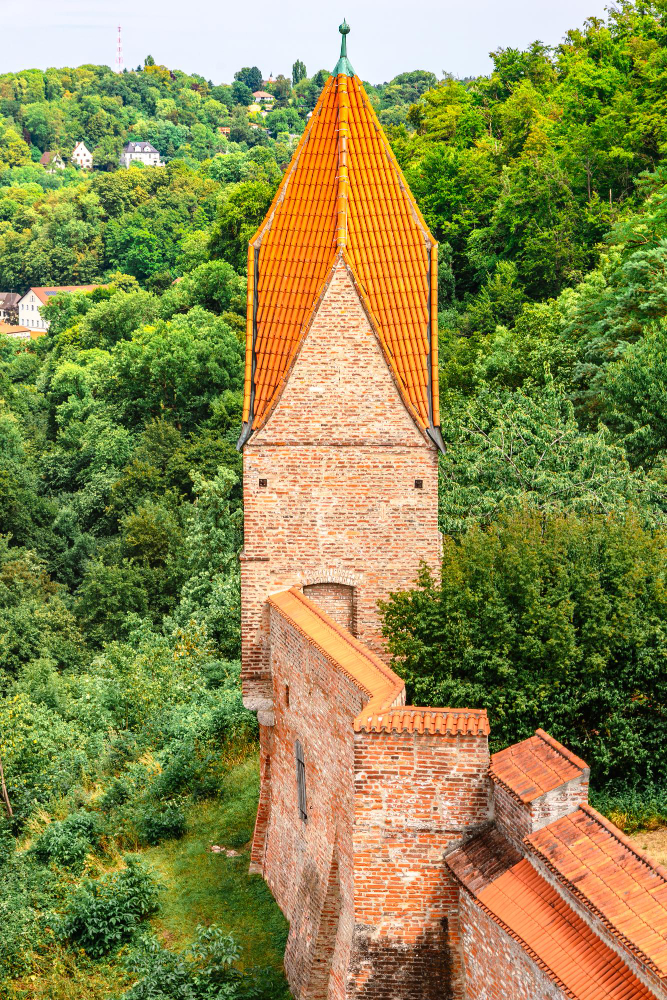
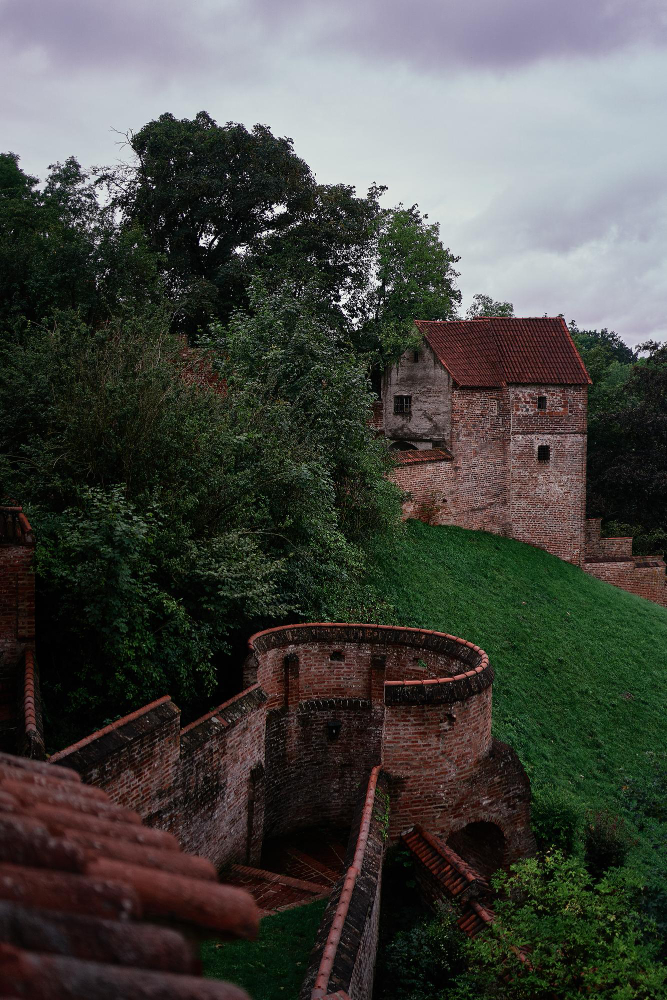
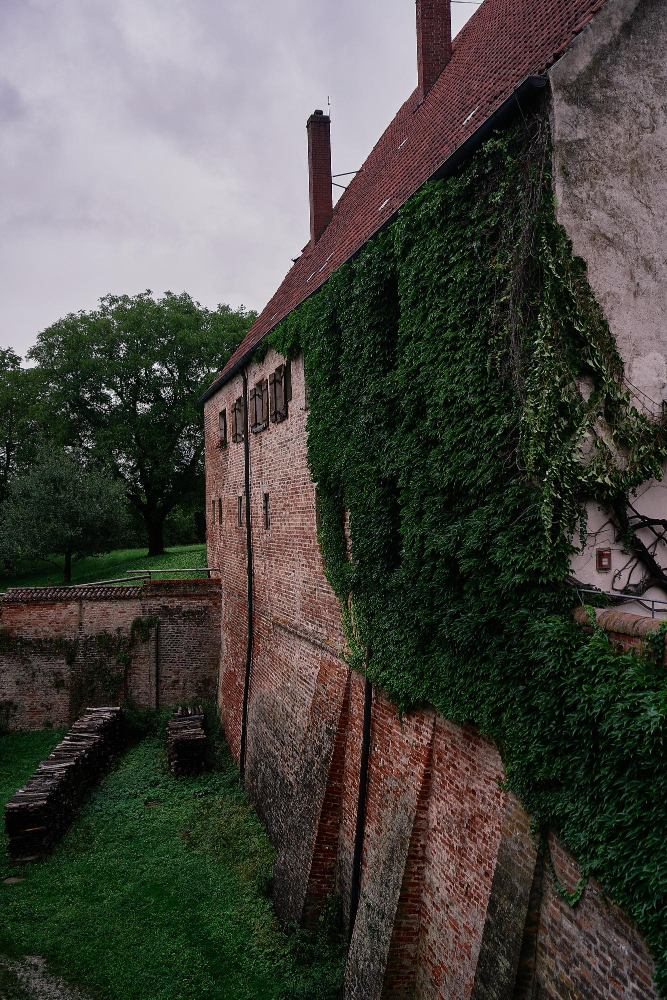
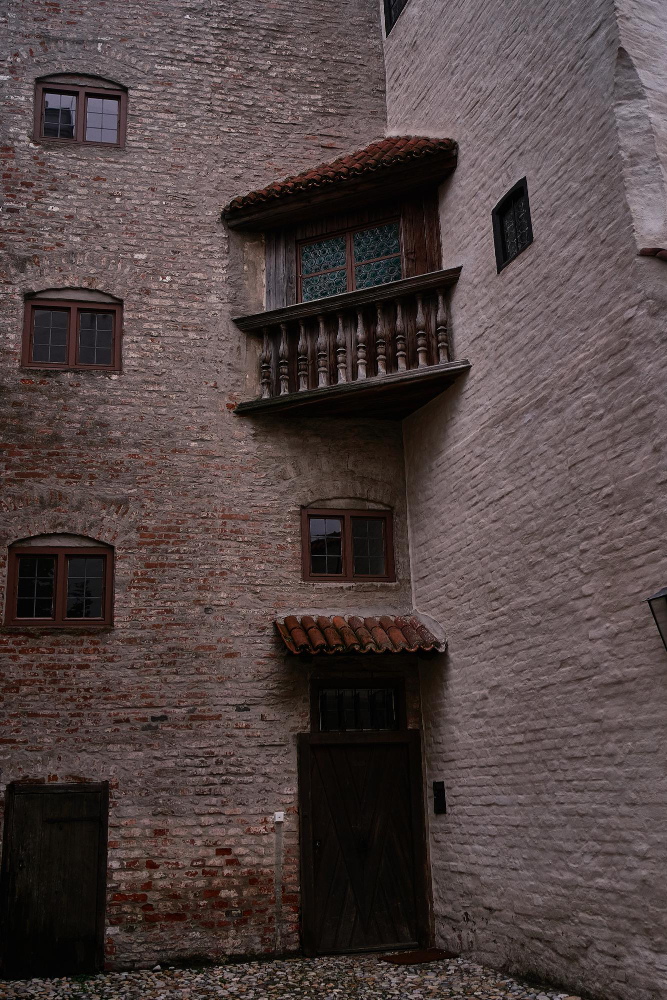
Expansion and the Renaissance: The ‘Rich Dukes’ and their Vision – In the 15th century, the castle underwent extensive expansion under the ‘Rich Dukes’, Ludwig IX and Georg the Rich. New curtain walls, Dürnitz buildings (stately living and reception rooms) and defensive towers were erected – giving the complex its medieval appearance. In the 16th century, the name was changed from ‘Landeshuata’ to ‘Trausnitz’ – a name popularly interpreted as a warning: ‘Don’t dare!’ From 1516, Duke Ludwig X began a renovation in the Renaissance style, intended to make the castle appear more as a residence than as a fortress. Unfortunately, very few physical remains of these prestigious alterations have survived. However, the model from 1572, crafted by Jakob Sandtner, depicts a densely built-up castle courtyard with outbuildings, of which only the stables and cellar buildings remain today. A further cultural heyday was associated with Wilhelm V, who, from 1568 onwards, brought numerous artists, musicians and comedians to his court – including what was probably the first Bavarian court brewery, which was established here in 1573 and brewed brown ale until 1590. The significant alterations carried out by Friedrich Sustris, who incorporated stylistic elements of the Italian Renaissance and Florentine Mannerism into the castle, have had a decisive influence on its present appearance.
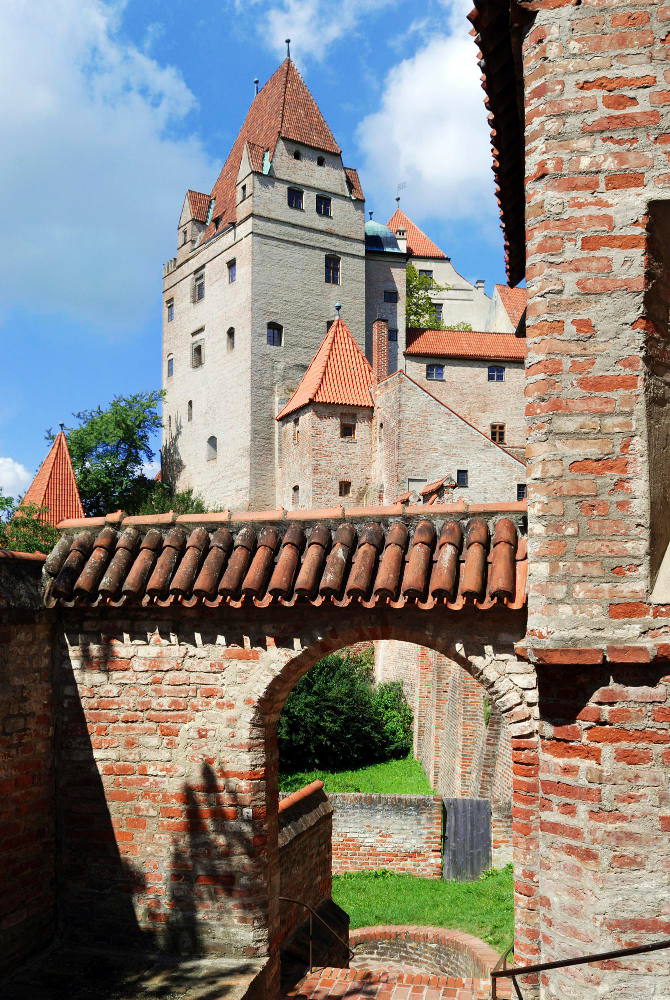
Architecture in detail: the Middle Ages meet the Renaissance – Trausnitz Castle can be divided into three main sections:
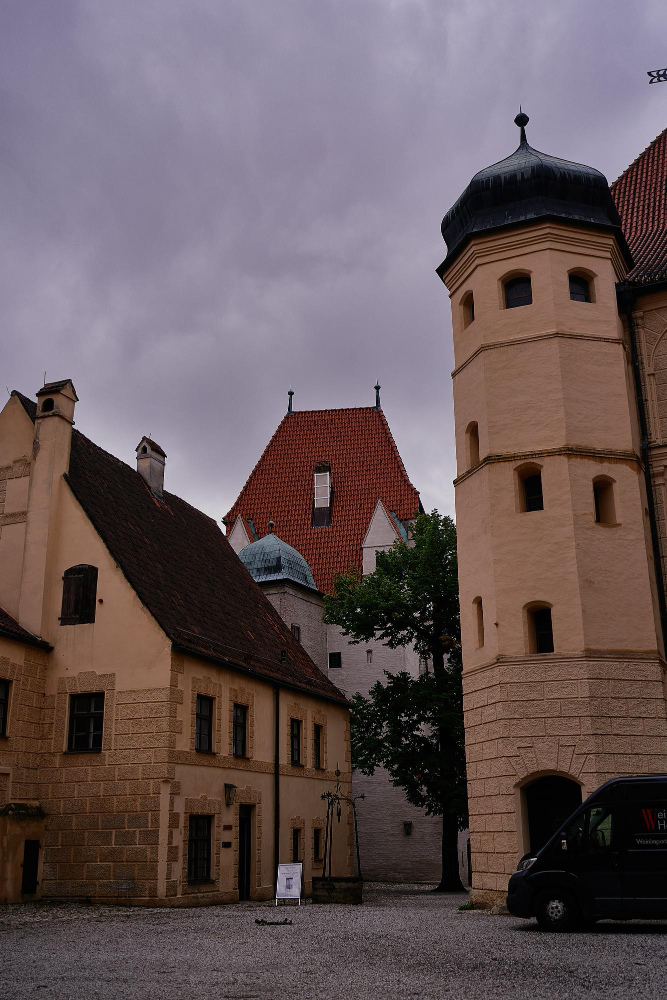
– Main castle: Situated on the south-western edge of the hill, the main castle comprises the keep (‘Wittelsbacher Tower’), the Fürstenbau (former great hall), the late Romanesque St George’s Chapel, and the Dürnitz and Damenstock buildings. Many of these structures date from the Cistercian Gothic period of the early 13th century. St George’s Chapel is regarded as a significant example of medieval sculpture in Bavaria.
– Ensemble of inner courtyards: The old castle courtyard, enclosed by the curtain walls, houses the White Hall – a large banquet hall whose wall paintings were never completed. Adjoining the southern section is the Italian annex, known for the famous ‘Fools’ Staircase’. This three-storey staircase is adorned with frescoes by Alessandro Scalzi, depicting figures from the Commedia dell’arte – a unique work of art from the Bavarian Renaissance.
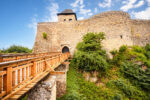
– Outer bailey with service buildings: This area once housed stables and cellars, of which only ruins remain today. During the Thirty Years’ War, many of these buildings were destroyed and never rebuilt. Today, the area is home to the so-called ‘Schwedenwiese’.
Historical events: wars, fires and upheavals – Over the centuries, the castle has been the scene of significant events on several occasions. During the Thirty Years’ War, the Swedes laid siege to the castle in 1634 and were able to breach the walls and enter – the so-called ‘Swedish Gate’ serves as a reminder of this to this day. Physical changes also followed, as damaged outbuildings were demolished. In the 18th century, the castle lost its significance as a Baroque residence. It served as barracks, a prison for noble prisoners and, at times, housed a wool and silk factory. In addition, the Lower Bavarian State Archives were established at the castle. At the beginning of the 19th century, the castle functioned as a hospital – for example, as a cholera hospital from 1831 onwards. A tragic event was the fire of 1961 in the Fürstenbau, in which many Renaissance frescoes, pieces of furniture and furnishings were lost. A forgotten immersion heater was presumably to blame. Some treasures, in particular the ‘Jester’s Staircase’ and St George’s Chapel, were preserved. Following reconstruction, museum facilities, amongst other things, were established here.
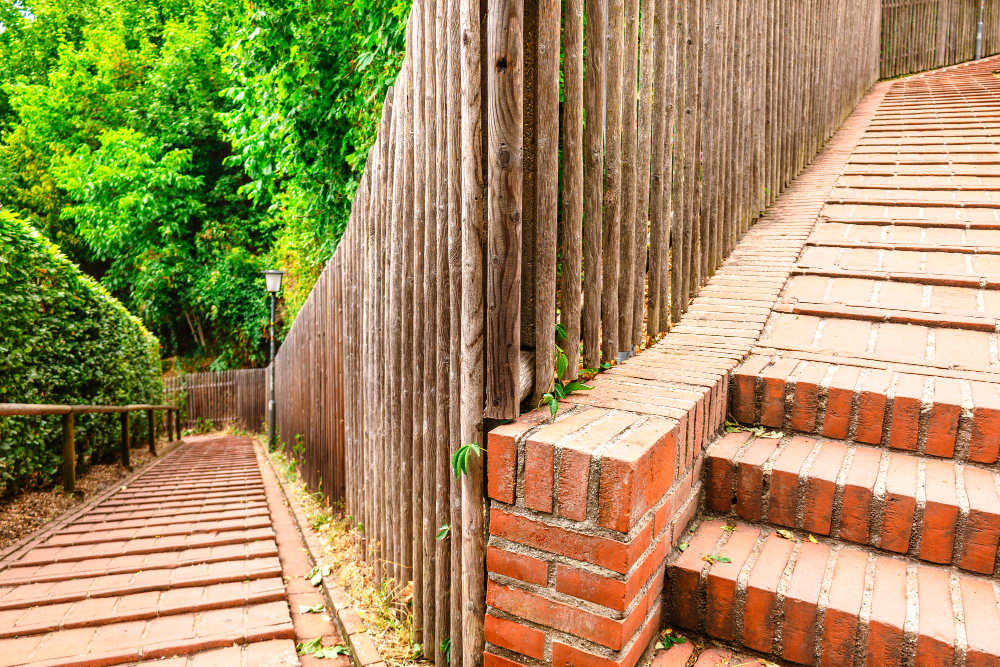
Legends and anecdotes: The ‘Ochsenklavier’ and the ‘hermit on the Trausnitz’ – From the old town, the so-called ‘Fürstentreppe’ (Princely Staircase) – colloquially known as the ‘Ochsenklavier’ – leads up to the castle. This path, built of bricks with cross-bracing, was specially designed so that horses could negotiate the incline with ease – a testament to the practical side of courtly infrastructure. One curious historical figure is Josef Edmund Jörg, the ‘hermit of the Trausnitz’. Jörg was a politician, historian and archivist who, from 1869 until his death in 1901, managed the Lower Bavarian State Archives at the castle and was strictly committed to order and preservation. His reclusive lifestyle earned him this nickname.
Today: Museum, Culture and Tourism – Today, Trausnitz Castle is one of Landshut’s most important attractions and draws thousands of visitors every year. Particularly noteworthy is the ‘Cabinet of Curiosities’, a branch of the Bavarian National Museum, which has been housed in the restored ladies’ wing since 2004. Here, Duke Albrecht V’s magnificent collection – once highly prized in Munich – is displayed true to the original. Since 2011, a room in Ludwig II’s apartments, furnished with original pieces from Herrenchiemsee, has also been open to the public. With its varied programme of activities, the castle is a vibrant meeting place for history, culture and leisure.
A monument to Bavarian history and art – Trausnitz Castle is far more than just an old fortress. It is an emblem of Bavarian identity, a symbol of power, culture and art in both the Middle Ages and the Renaissance. Its walls tell tales of princes, battles and ways of life, of architecture and the royal court, of legends and historic turning points. The combination of medieval defensive structures and elegant Renaissance extensions makes it unique. Whether you’re admiring the well-preserved St George’s Chapel, climbing the masterfully painted ‘Fools’ Staircase’ or simply enjoying the view of the countryside – Trausnitz Castle offers history to experience and discover. It is an indispensable treasure in the heart of Lower Bavaria and a living link between the past and the present.