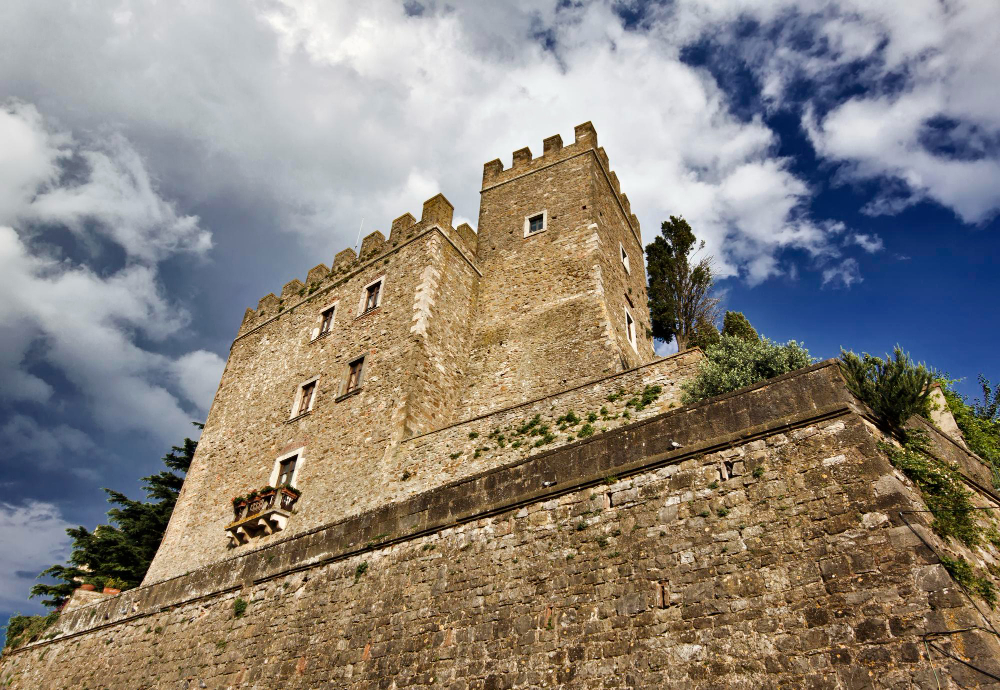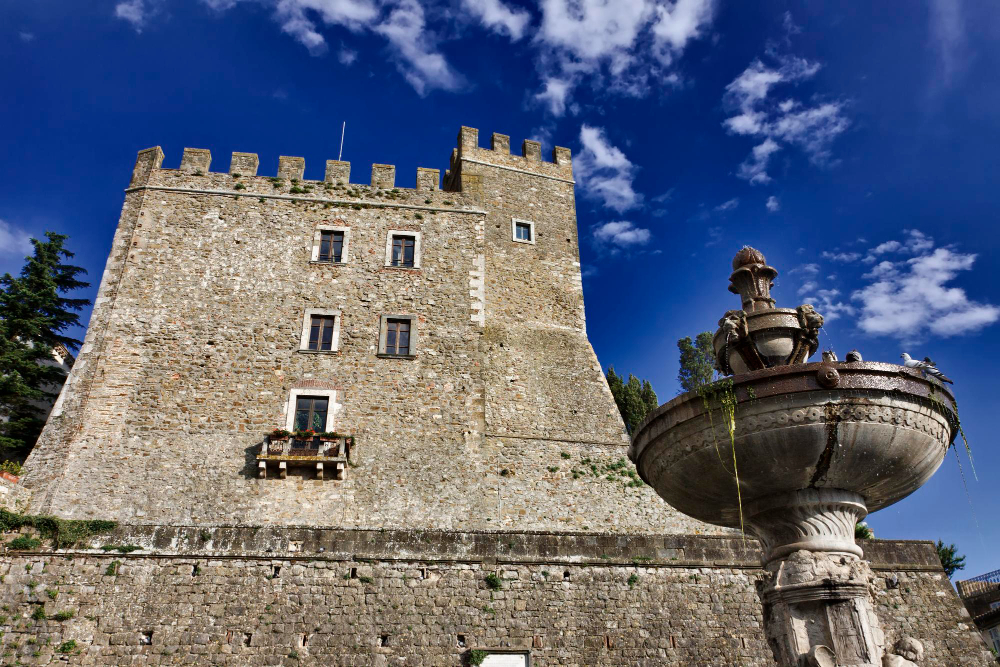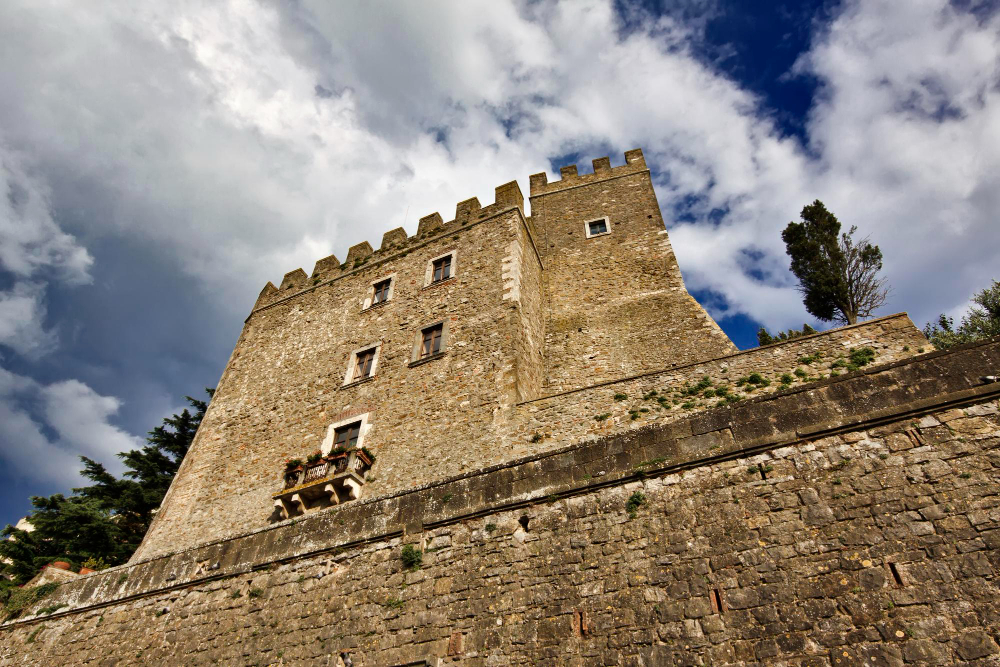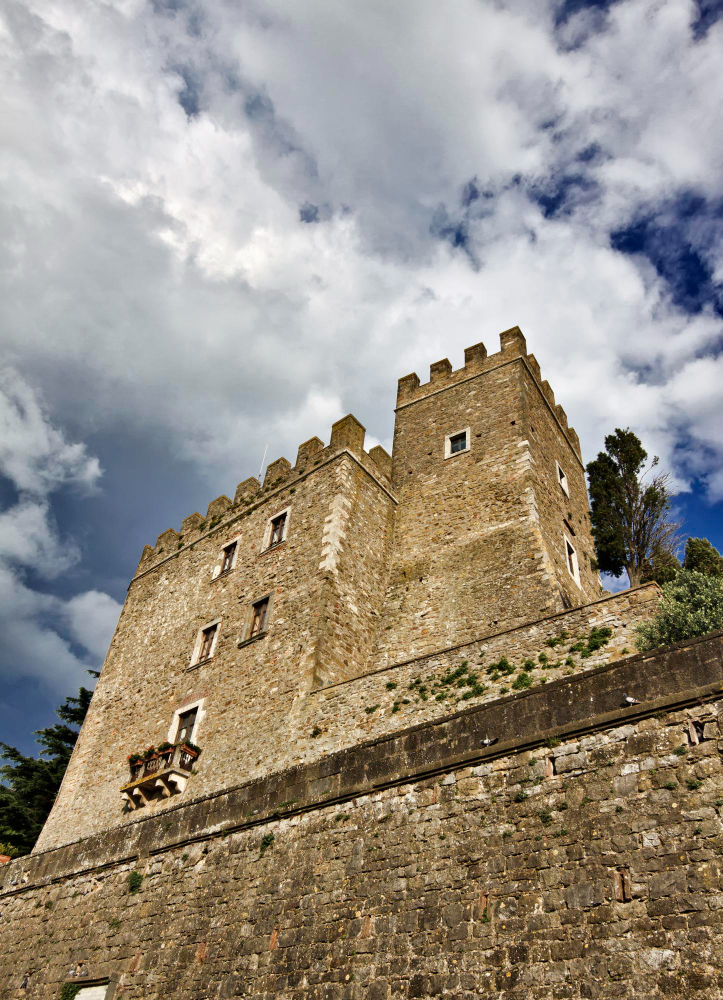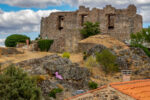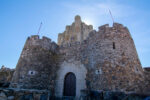

In the heart of the historic centre of the picturesque town of Manciano in southern Tuscany stands the imposing La Rocca Aldobrandesca, a medieval fortress whose origins date back to the 12th century. This striking structure, built on a square base, is not only architecturally fascinating but also a symbol of the turbulent history and power struggles that shaped this part of Italy for centuries. Today, La Rocca houses Manciano’s town hall and stands as a living testament to an era dominated by castles, clans and territorial disputes.
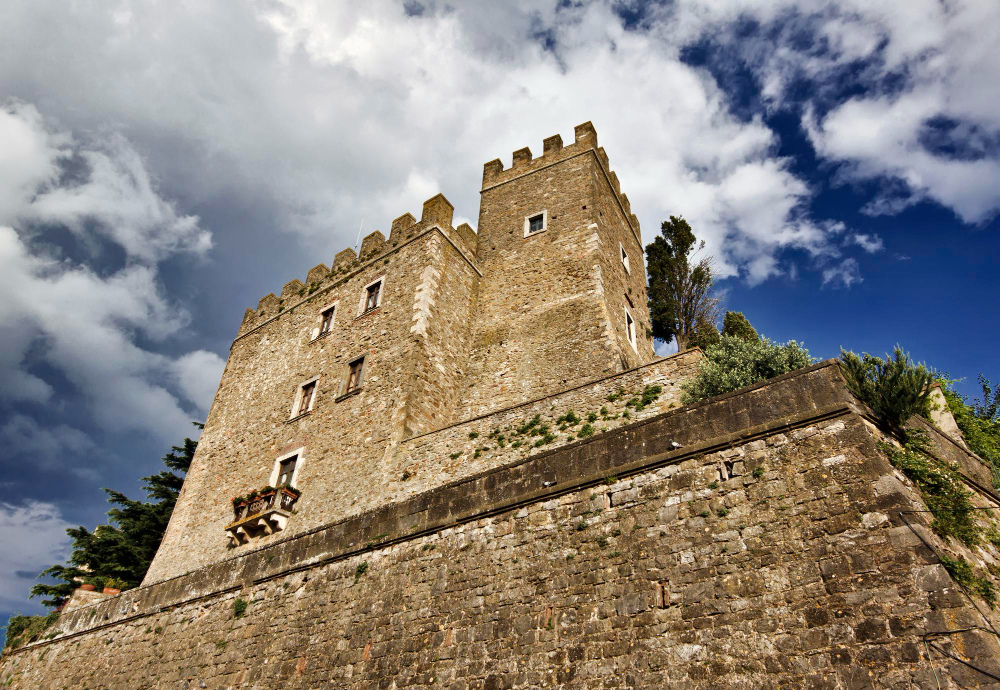
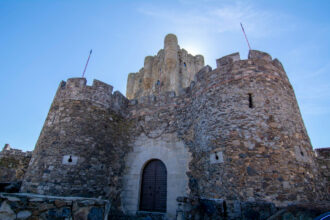
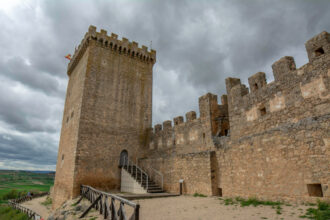
Architecture: A reflection of medieval fortification art – La Rocca presents itself as a two-part complex, consisting of two adjoining sections. The larger section is a relatively low-rise structure with a clearly defined square floor plan. Particularly striking are the wide foundations featuring so-called ‘basamenti a scarpa’ – sloping wall plinths that lend the structure additional stability and emphasise its defensive purpose. The walls, entirely clad in robust natural stone, are punctuated by windows spread across three storeys, ensuring a bright interior. The crowning feature of this section is the upper edge, fringed by a crown of battlements (merlatura), which gives the building its typical medieval appearance. Adjacent to this stands a taller tower structure, which serves as the core of the defensive complex. Architecturally, this tower section mirrors many elements of the main building: it also features a jagged merlature and a corded mezzanine, which lends the tower a harmonious yet imposing character. The stone walls here have fewer openings to enhance defence. Furthermore, the plinth, which is also bevelled, is much more pronounced, conveying a fortified impression. On three sides, thick walled courtyards enclose the tower, effectively forming a small courtyard or outer bailey that adjoins the lower part of the building directly whilst also providing an additional protective barrier. This combination of a square main castle and a tall defensive tower is a typical example of the military architecture of the period, which took into account both residential comfort and defensive potential.
The eventful history of La Rocca Aldobrandesca – The eponymous Aldobrandeschi family, one of the most powerful noble families in central Italy during the Middle Ages, had the fortress built in the 12th century. Manciano’s strategically favourable location – on the edge of the Maremma, a region that was once difficult to access and characterised by marshes – made the Rocca a coveted military stronghold. Throughout the 14th century, the castle was the scene of numerous conflicts between regional powers. The Aldobrandeschi were repeatedly subjected to attacks and occupations, as control of the Rocca also meant exerting influence over the region’s transport and trade routes. At the beginning of the 14th century, the Orvietani, citizens of the nearby town of Orvieto, briefly took control of Manciano and its fortress. However, ownership soon passed to the influential Orsini family of Pitigliano, who remained the owners until the 17th century. Another turning point came in the first half of the 15th century, when the Republic of Siena temporarily gained supremacy over the fortress. Under Sienese rule, La Rocca underwent significant alterations and extensions, which took the defensive structures to a new level and adapted the complex to changing military requirements. The works included, amongst other things, the reinforcement of the walls and the expansion of the towers to better repel attacks.
From a noble residence to a centre of government – Over the course of the 17th century, the political landscape of central Italy began to change drastically: once-powerful families such as the Orsini increasingly lost their influence. Consequently, the entire region around Manciano, including the Rocca, came under the influence of the Grand Duchy of Tuscany. From the mid-17th century onwards, Manciano officially became part of the Grand Duchy of Tuscany, a development that coincided with the dissolution of the Orsini county. In the 18th century, the fortress was increasingly at risk of falling into disrepair. Initial restoration work aimed to preserve the historic building from complete ruin. Over the centuries, the building was repeatedly adapted to meet new requirements, until it underwent extensive renovation towards the end of the 20th century. These renovations focused on preserving the original structure whilst allowing for functional use – today, the Rocca Aldobrandesca serves as the seat of Manciano’s local council.
Legends and cultural significance – Numerous legends also surround the Rocca, some of which are based on oral traditions that further mystify the castle’s image. For instance, there are tales of hidden passages running deep underground, which once served as escape routes or secret connections to other castles. However, these tunnels have not yet been confirmed archaeologically – yet stories of this kind are typical of ancient fortresses and bear witness to the vivid imagination of the people of that time. The castle has also always been a hub of political events and social power dynamics, a theme often explored in historical novels and regional tales. The Rocca is thus far more than just a building site: it symbolises the legacy of medieval seats of power in Tuscany and today stands at the heart of the cultural consciousness of Manciano’s inhabitants.
A window into times gone by – La Rocca Aldobrandesca towers high above Manciano as an impressive landmark, its walls telling the story of centuries filled with intrigue, wars and political upheavals. Its architecture is a classic example of medieval fortification, offering both protection and prestige. Its eventful history – from the Aldobrandeschi family’s noble residence, through Orvieto’s claim to power and the Orsini family’s expansion, to its incorporation into the Grand Duchy – reveals the region’s turbulent development. Today, as the seat of the local council, the Rocca bridges the spirit of the past with the present and remains an indispensable part of Manciano’s cultural identity. Anyone walking through its ancient walls can literally feel the weight of history and the fascination of an era that shaped Italy – preserved and kept alive in stone and battlements.