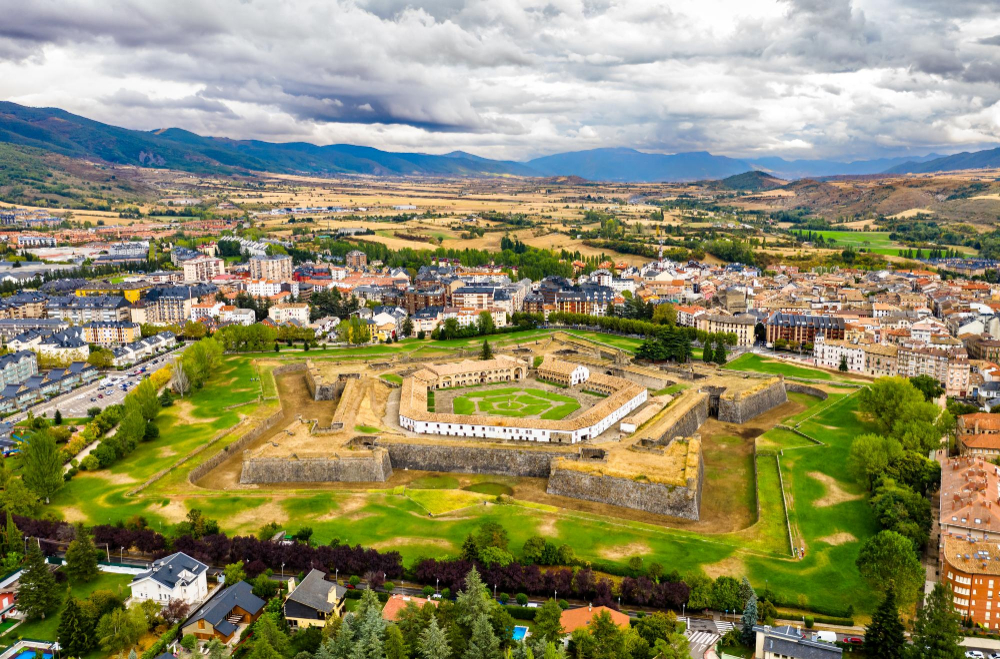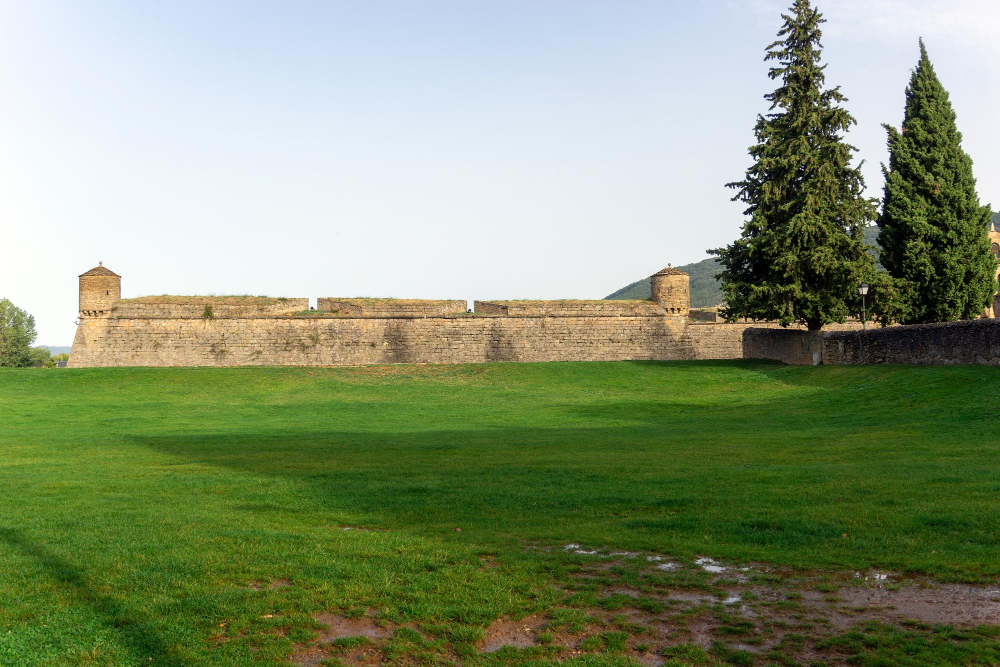

Nestled in the heart of Jaca, a picturesque town in the northern Spanish province of Huesca, lies an architectural marvel steeped in history, military strategy and legend – the Ciudadela de Jaca. Known until the 19th century as the Castillo de San Pedro, this star-shaped fortress stands as a testament to the Renaissance brilliance of Italian fortress architecture, whilst also bearing the weight of centuries of historical events. Declared a historic monument on 28 June 1951 and restored in 1968, the Ciudadela today combines its military heritage with cultural significance, housing museums and exhibitions that breathe new life into its historic past.
The creation of a masterpiece of defensive architecture – The origins of the Ciudadela date back to the final years of the 16th century. In 1592, amidst political unrest following the flight of Antonio Pérez, the Spanish King Philip II ordered the construction of the fortress as part of a wider line of defence against incursions from neighbouring France. The star-shaped layout, designed by the Italian engineer Tiburzio Spannocchi, was groundbreaking for its time and embodied the principles of Italian military architecture. Its strategic purpose was clear: to protect the Pyrenean border and repel the armed incursions of the French Protestants, known as the Huguenots. The fortress fulfilled its task admirably and was exposed to relatively few military conflicts between its completion and the 18th century. During the War of the Spanish Succession (1701–1714), however, the Ciudadela played a notable role by siding with the Bourbons. As a reward for its loyalty, Philip V bestowed upon the town of Jaca the titles ‘Fidelísima’ (the Most Loyal) and ‘Vencedora’ (the Victorious).
Echoes of the Battle: The Ciudadela Through the Wars – The Ciudadela was not entirely spared the ravages of war. During Napoleon’s invasion of Spain at the start of the 19th century, troops under General Louis Gabriel Suchet captured the fortress in 1809. The fortress remained in French hands for five years before being recaptured in 1814 by the Spanish patriot Francisco Espoz y Mina. During the Carlist Wars and subsequent conflicts, the Ciudadela once again proved to be a reliable bulwark for the Spanish central government. Perhaps one of the darkest chapters in the fortress’s history occurred during the Spanish Civil War (1936–1939). Used as a field prison by Franco’s troops, the lower levels of the Ciudadela were cruelly overcrowded, housing three times the intended capacity. The imprisoned Republicans suffered under appalling and unsanitary conditions, prompting concerns among local authorities regarding the health risks to the guards themselves. Even after the war, the fortress resumed its punitive role in 1944, imprisoning Spanish exiles who had been lured back to their homeland by Franco’s false promises of amnesty.
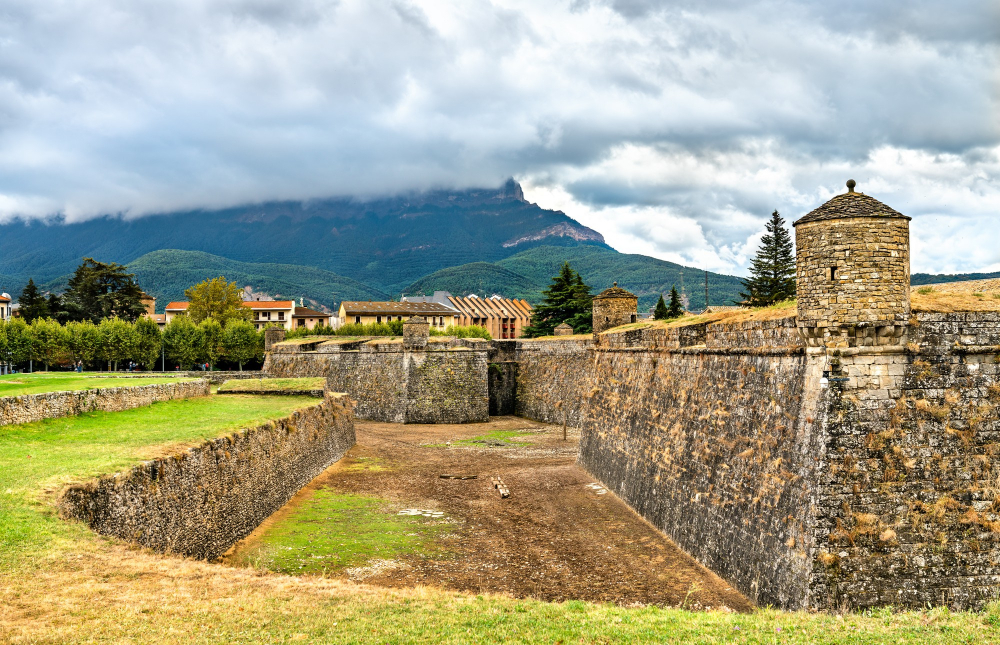
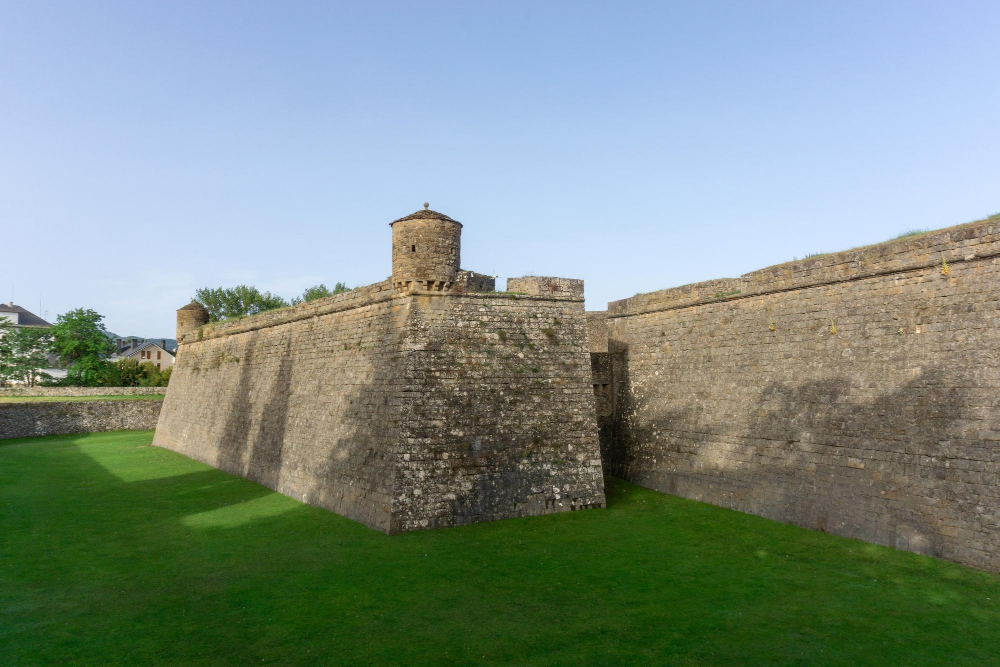
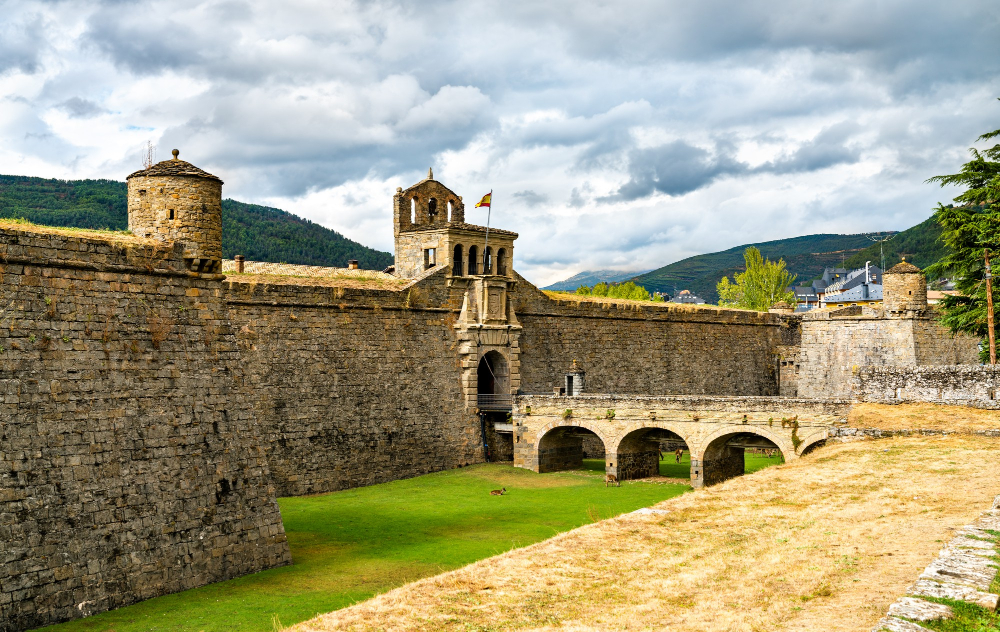
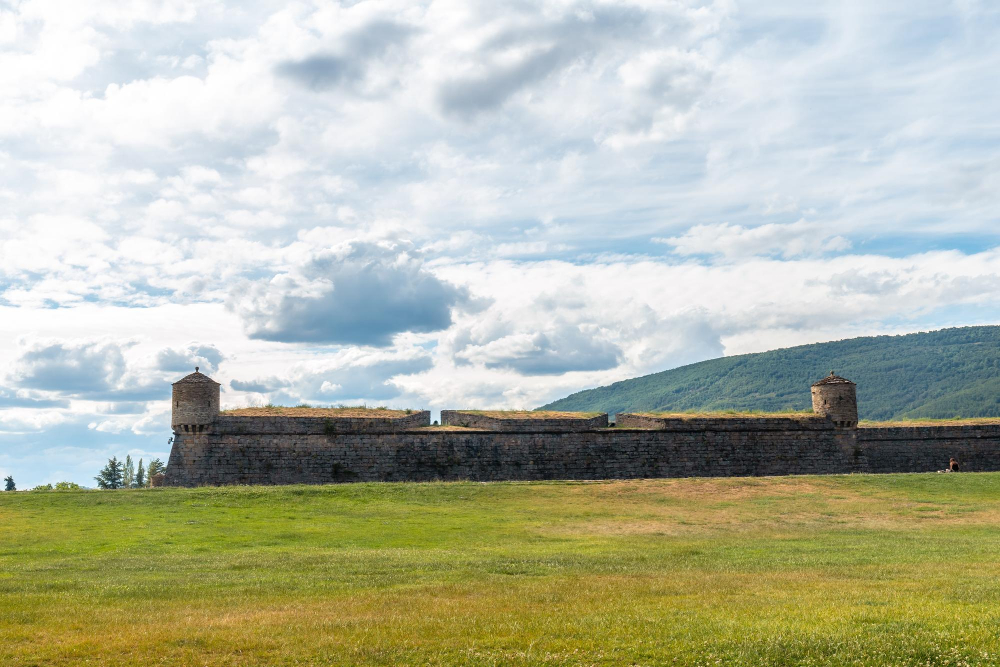
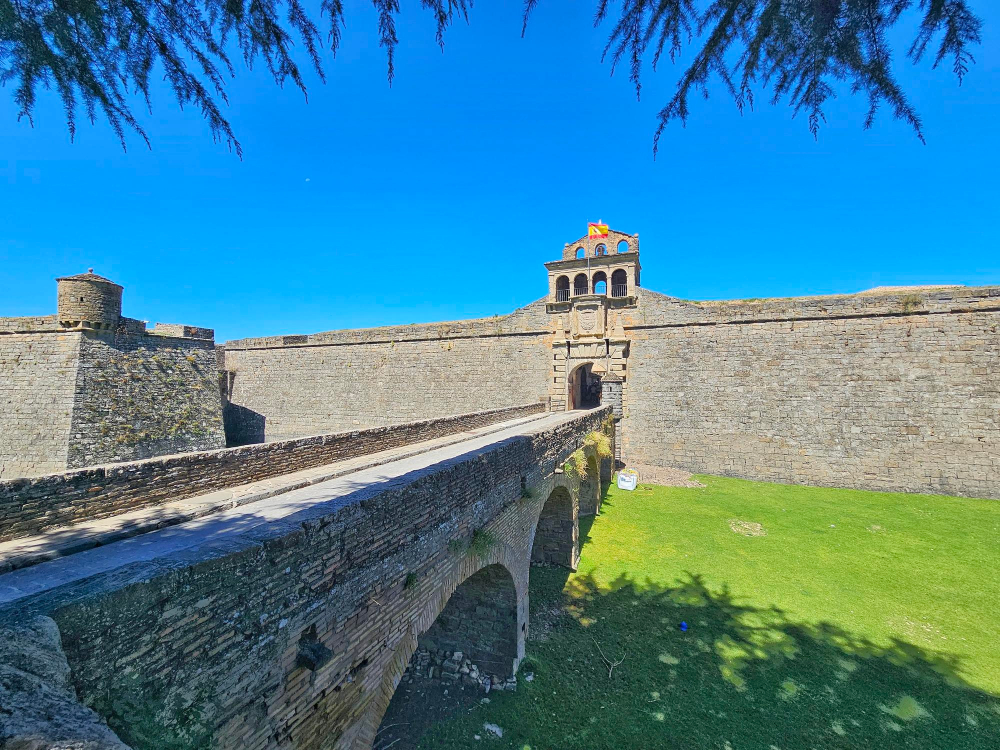
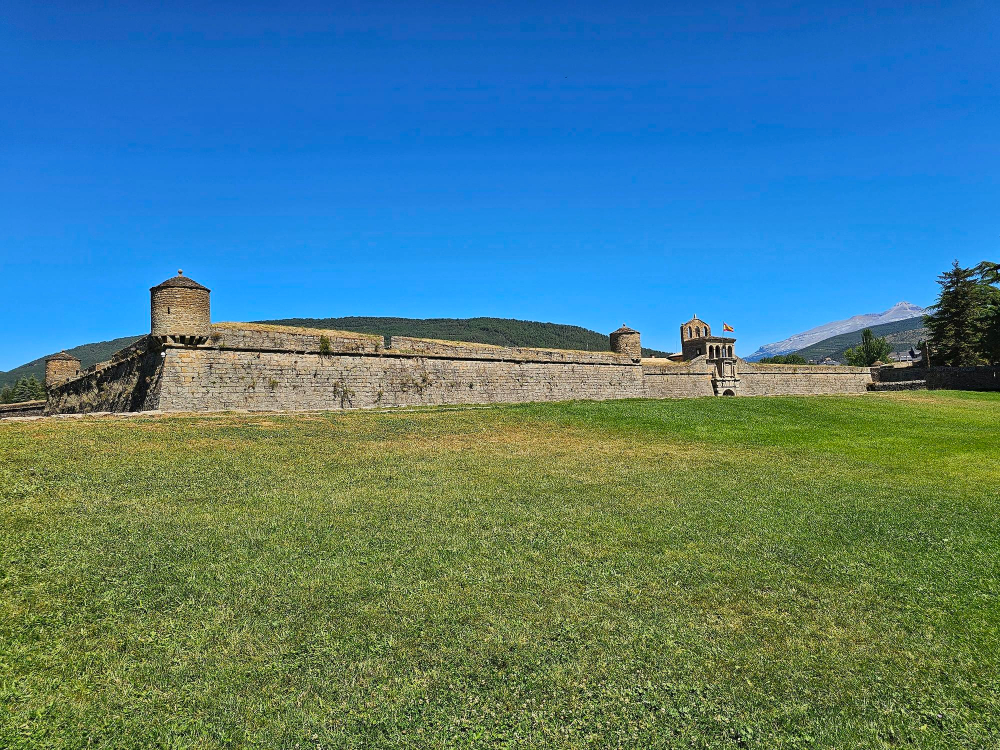
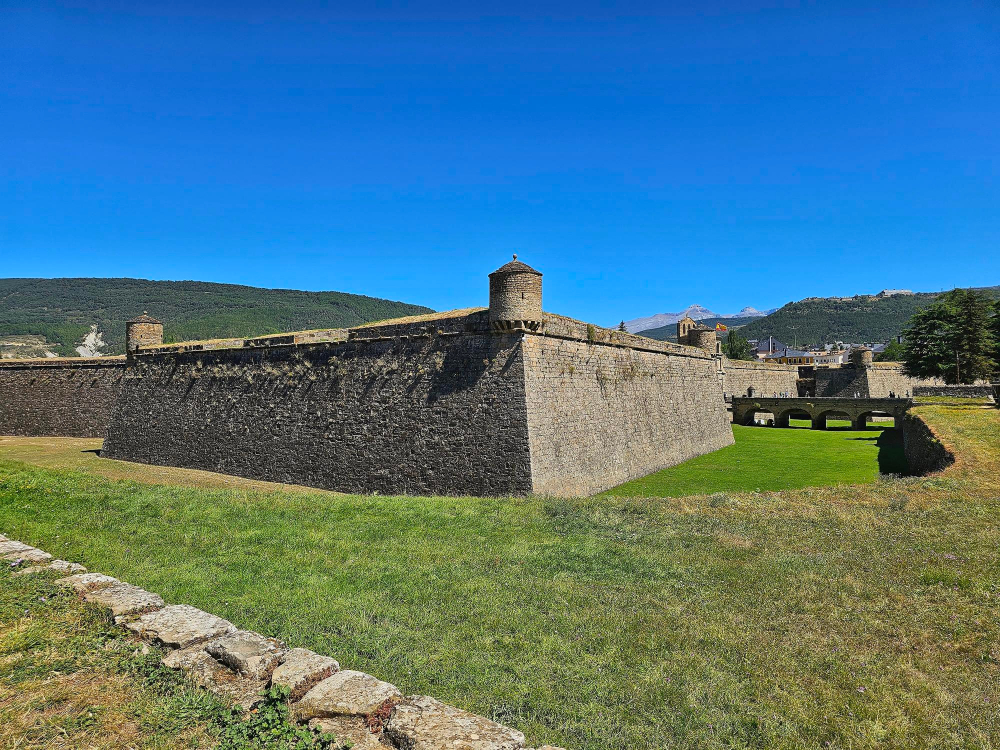
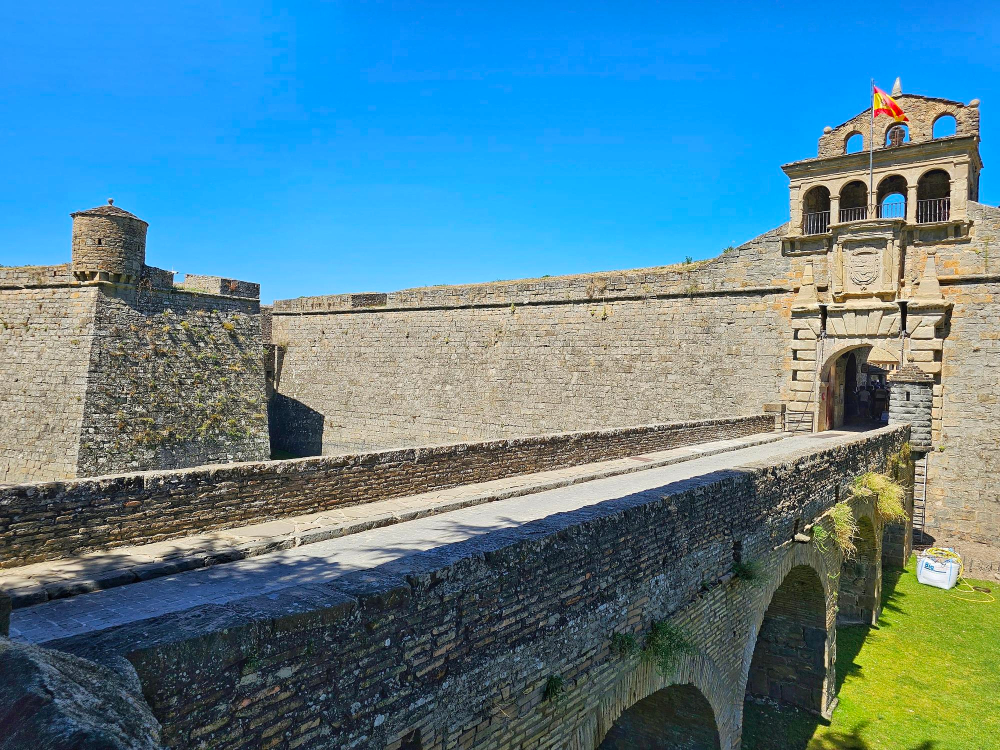
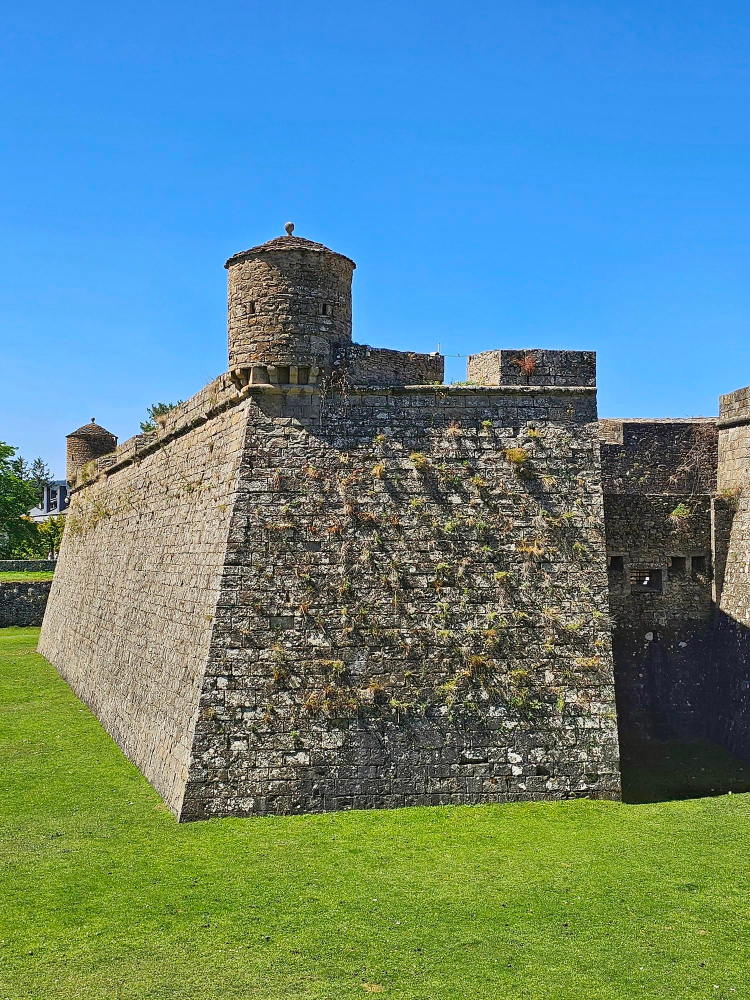
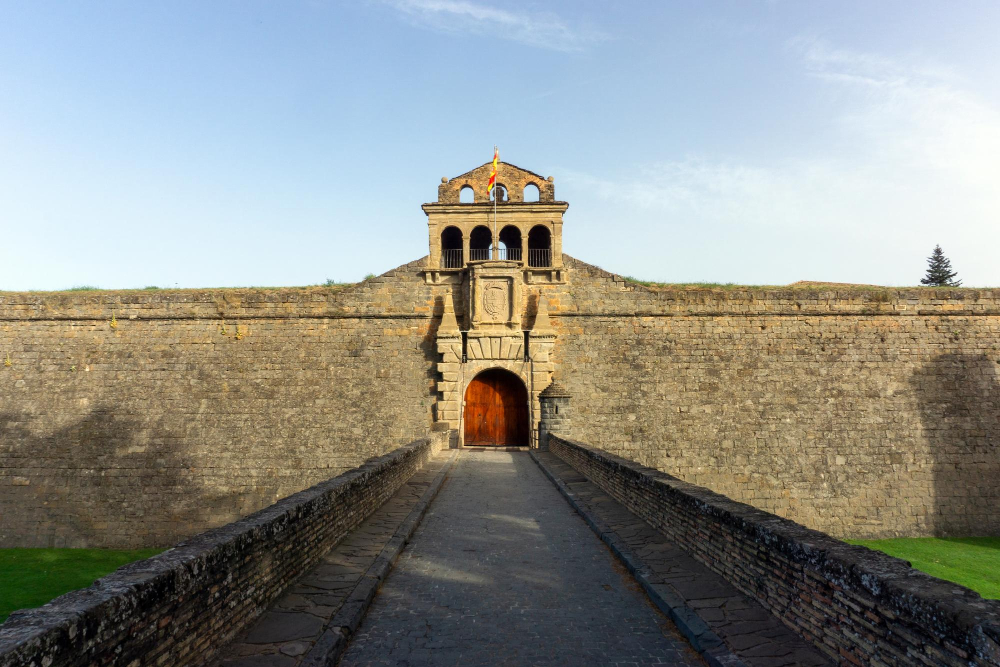
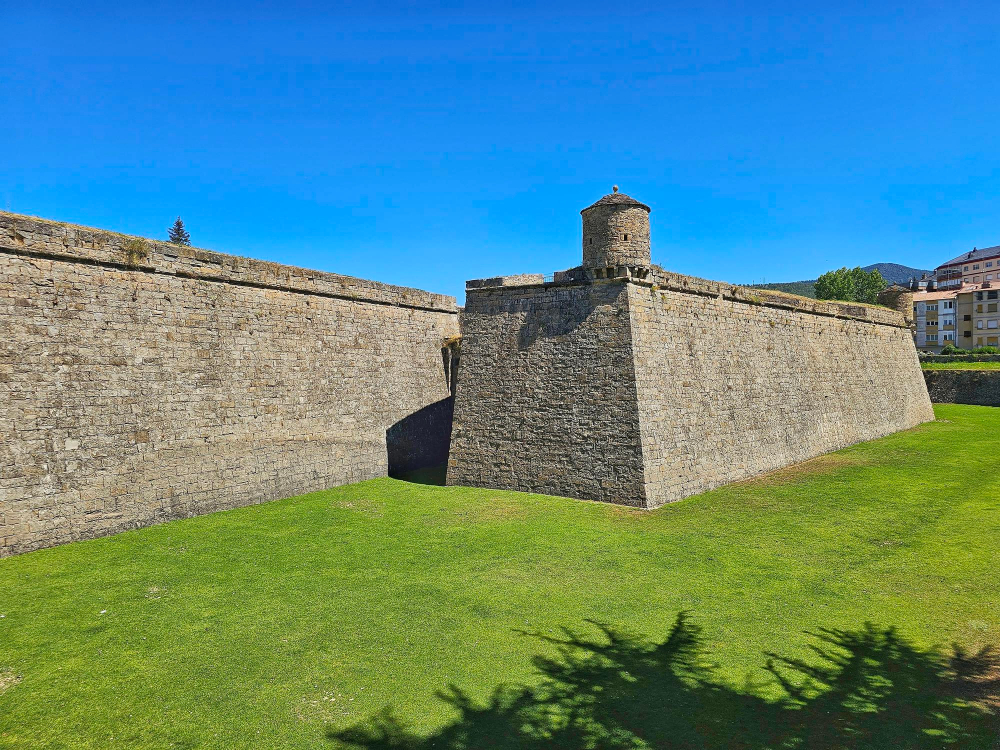
An architectural triumph endures – Despite its turbulent history, the Ciudadela is remarkably well-preserved and retains its Renaissance design and defensive features. Its star-shaped structure, with five angular bastions, is both aesthetically impressive and strategically ingenious, as it allowed defenders to fire upon attackers from multiple angles. Each bastion bears its own name: Santa Bárbara, España, Santa Orosia (the patron saint of Jaca), San Francisco (in honour of a demolished monastery) and San Pedro, the fortress’s namesake. The Ciudadela is surrounded by a deep, dry moat with a circumference of over a kilometre, which served more to prevent direct attacks than to carry water. Soldiers could emerge through hidden passages, known as poternas, to engage attackers with counter-attacks. Today, the moat serves as an unusual refuge for a herd of deer and offers visitors a peaceful contrast to its former military purpose. Another hallmark of the fortress is its ornate Baroque gate, completed in 1613 by Jorge Sorbis. Inspired by the entrance to the Ciudadela of Pamplona, it features decorative stone carvings, an arcaded gallery and a bell tower that served to signal troop movements. The bridge leading to the gate combines fixed arches with a drawbridge and is an example of Renaissance engineering ingenuity.
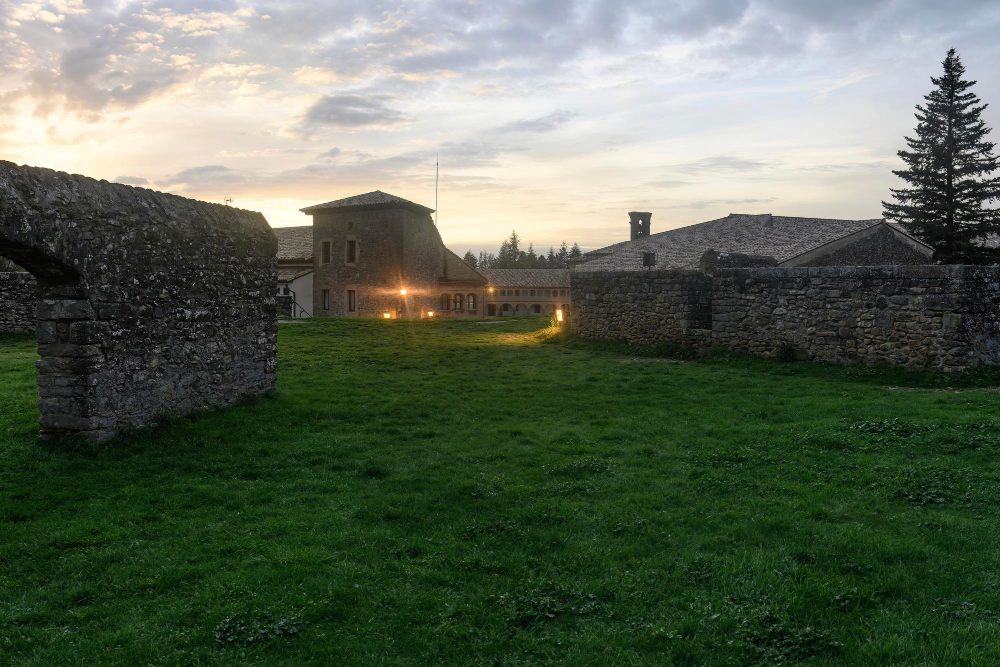
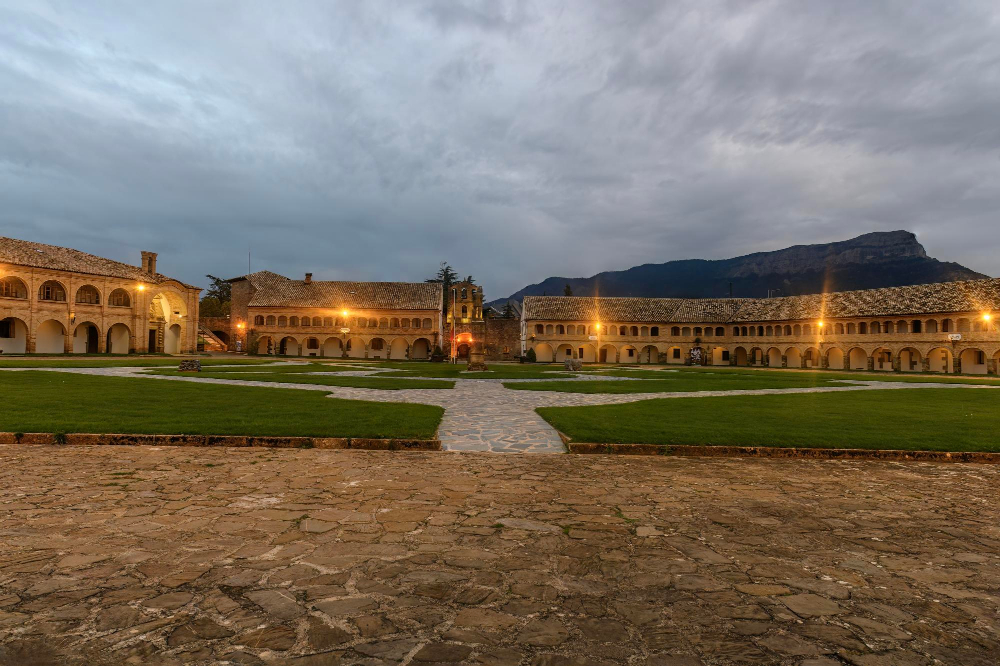
Life within the fortress walls – Inside, the Plaza de Armas extends in a pentagonal symmetry that mirrors the fortress itself. This central square was the heart of military life, where soldiers trained, gathered for ceremonies and had access to essential facilities such as a tavern, a bakery and a butcher’s shop. Fountains ensured a steady supply of water, and whilst the square originally had an earthen floor, renovation work in 1968 gave it a more modern paving. The square is dominated by a statue of Philip II, erected in 1969 in honour of his visionary role in commissioning the fortress. Surrounding the square are the once-separate barracks, which were merged over time to facilitate troop movements and consolidate the perimeter of the site. These buildings now house exhibitions and provide shelter for today’s visitors exploring the rich history of the Ciudadela. Other notable features include the north-facing powder magazines, which were reinforced with barrel vaults made of porous stone to protect the gunpowder from damp. Nearby stands the charming chapel dedicated to Saint Peter, built in 1679 in the Baroque style. ts ornate columns, pedimented gables and altarpiece bear witness to artistic creativity amidst military functionality. Inside, relics such as a Romanesque baptismal font and the tomb of Juan de Velasco, the fortress’s first commander, connect visitors with the figures who shaped its legacy.
From military fortress to cultural landmark – Although military operations at the Ciudadela ceased in 2008, its transformation into a cultural centre began much earlier. Since 1968, efforts to restore the fortress have focused on preserving its historical integrity whilst making it accessible to the public. One of the most fascinating attractions is the Museo de Miniaturas Militares, housed in the barracks. This museum displays 23 meticulously crafted dioramas featuring over 35,000 two-centimetre-tall lead figures. From scenes depicting the armies of Egyptian pharaohs to modern warfare, the exhibitions offer a vivid journey through global military history, with a particular focus on the battles of Spain. In June 2021, the fortress inaugurated the Sala de Batallas, an exhibition entitled ‘Hechos de armas, hechos de arte’ (Deeds of Arms, Deeds of Art). The collection, donated by Pedro Ramón y Cajal, comprises works from various eras that celebrate the connection between art and martial daring. These cultural initiatives breathe new life into a place that was once dedicated exclusively to warfare.
Legends linger amongst the stones – Among the many stories associated with the Ciudadela is the tale of its patron saint, Santa Orosia. According to legend, she was a Christian martyr from the 9th century whose relics – hidden in Jaca – brought divine protection to the area. Her connection to the fortress lends it a spiritual significance that complements its military purpose. Another curiosity is the deer that now inhabit the moat. Although their presence is purely decorative, locals joke that they serve as the fortress’s silent guardians. Visitors are often enchanted by this picturesque sight, which blends nature and history.
A fortress that stands the test of time – The Ciudadela de Jaca, with its star-shaped splendour and multi-layered historical significance, transcends its original purpose as a border fortification. It has evolved into a beacon of cultural preservation, offering insights into Spain’s military, artistic and architectural heritage. From the echoes of clashing swords to the quiet serenity of deer grazing in the moat, the Ciudadela remains a living testament to resilience and adaptability. Whether you are drawn to its historical tales, its architectural splendour or its curious legends – the fortress invites you to step into its timeless embrace and experience the soul of Jaca at first hand.