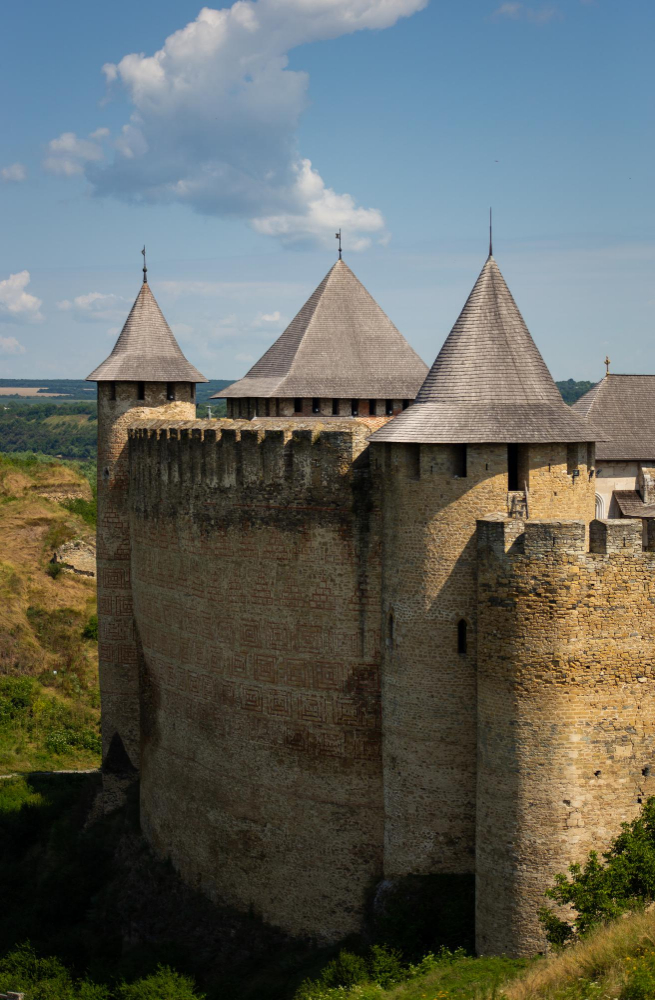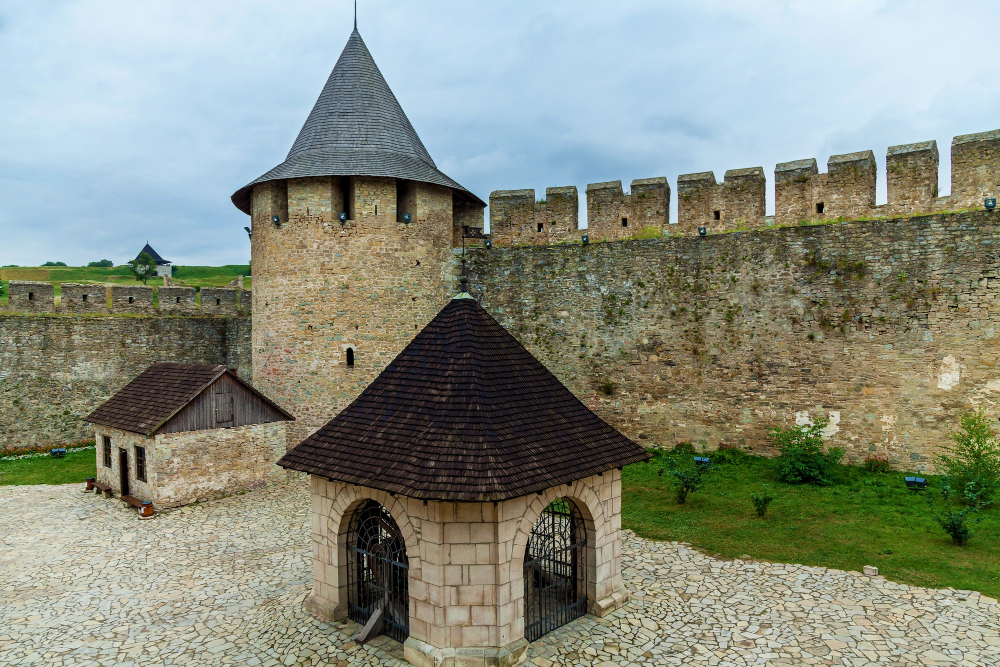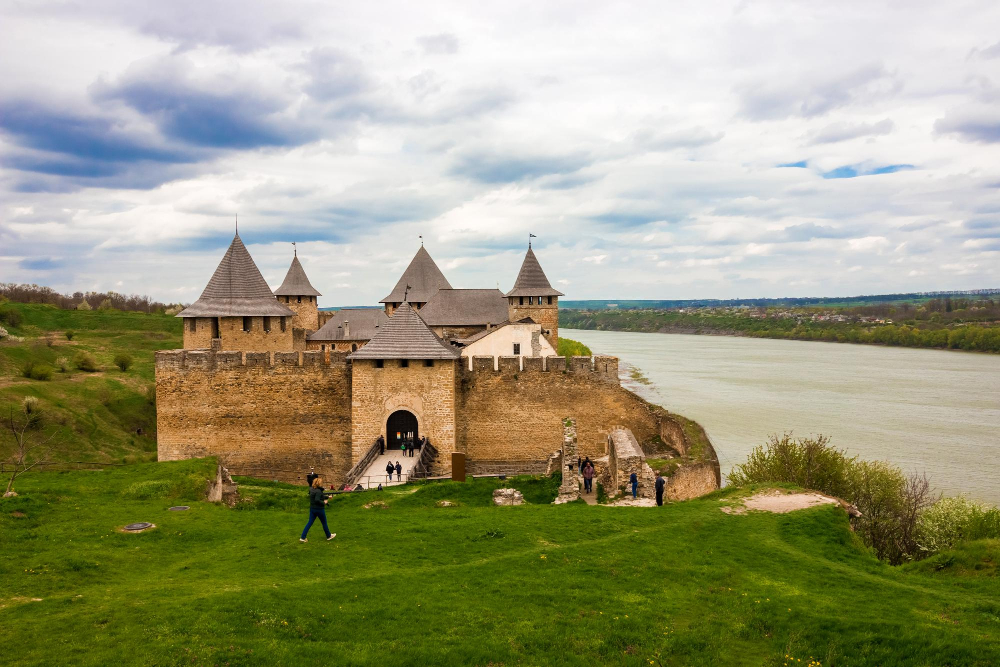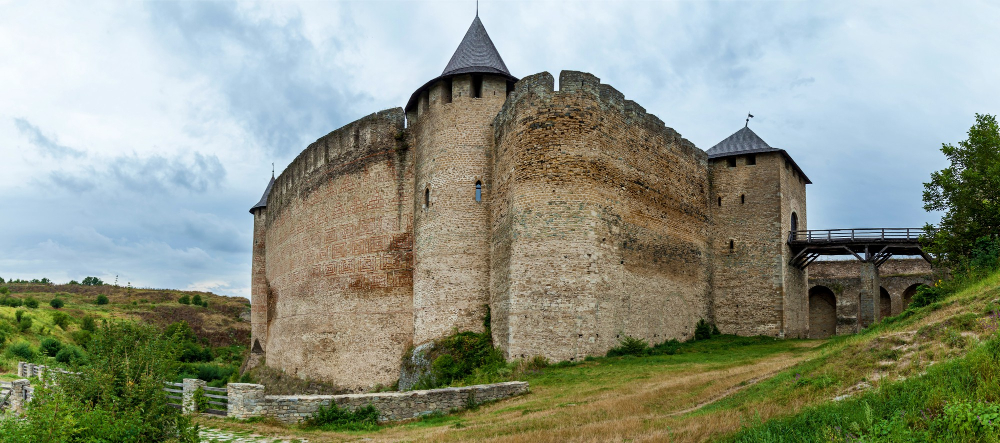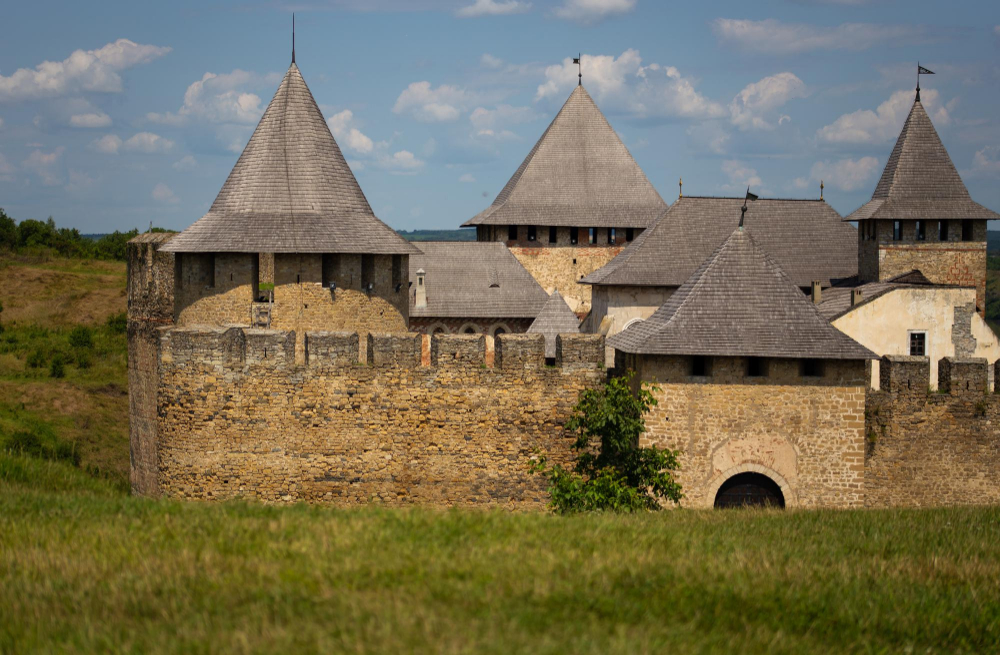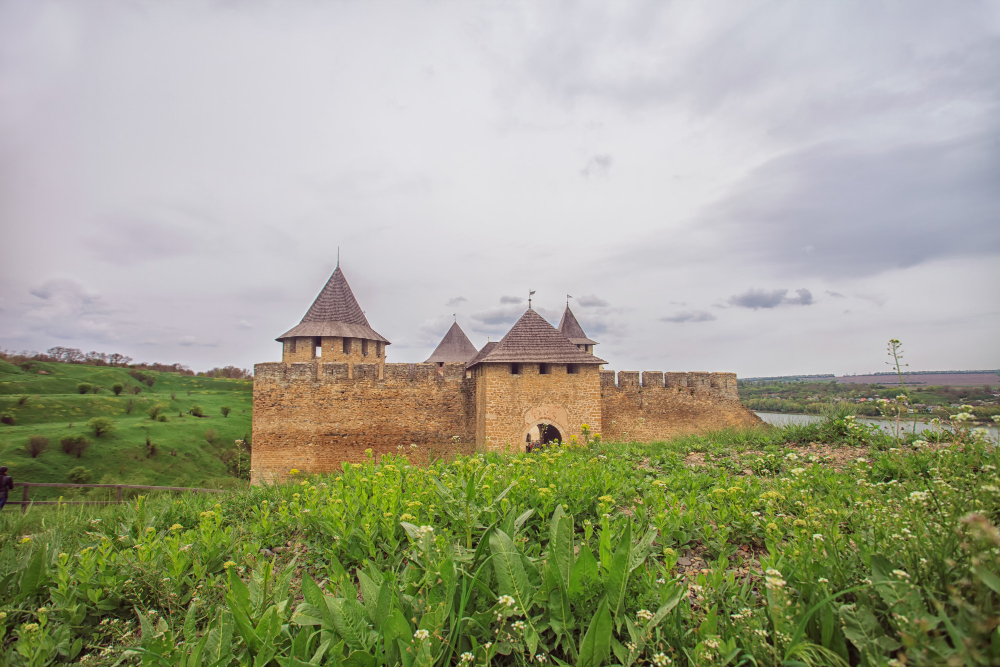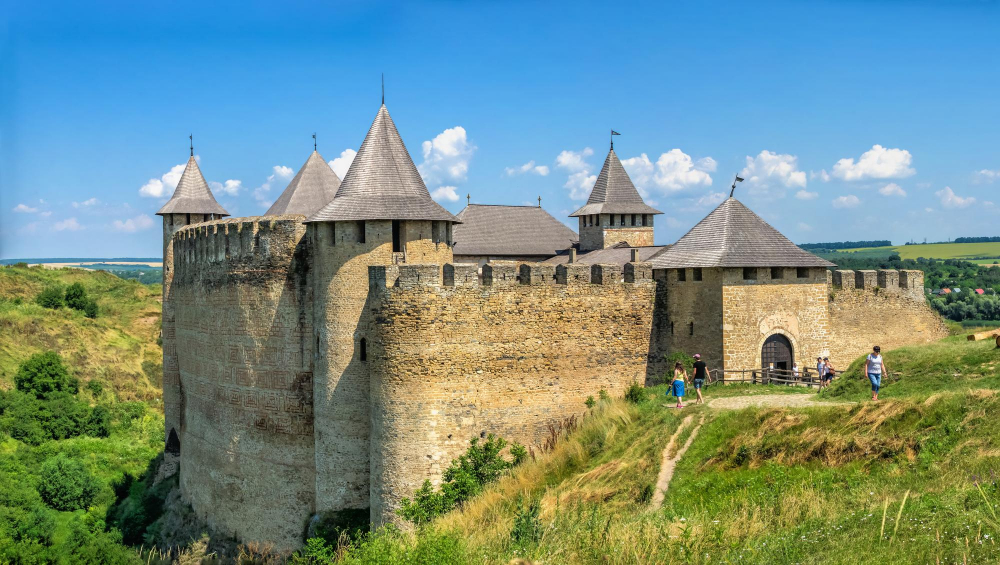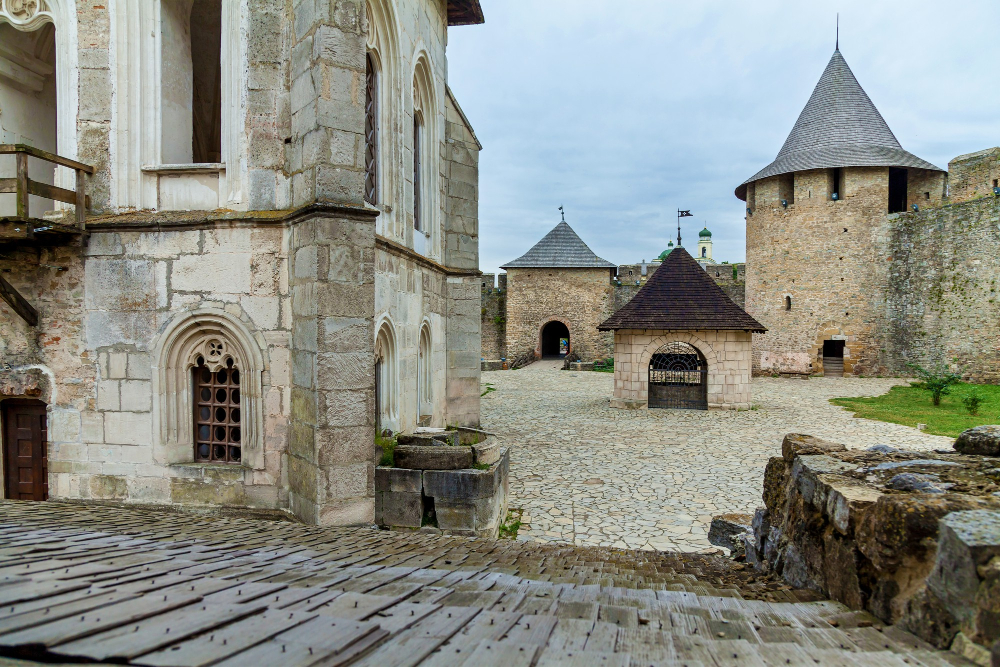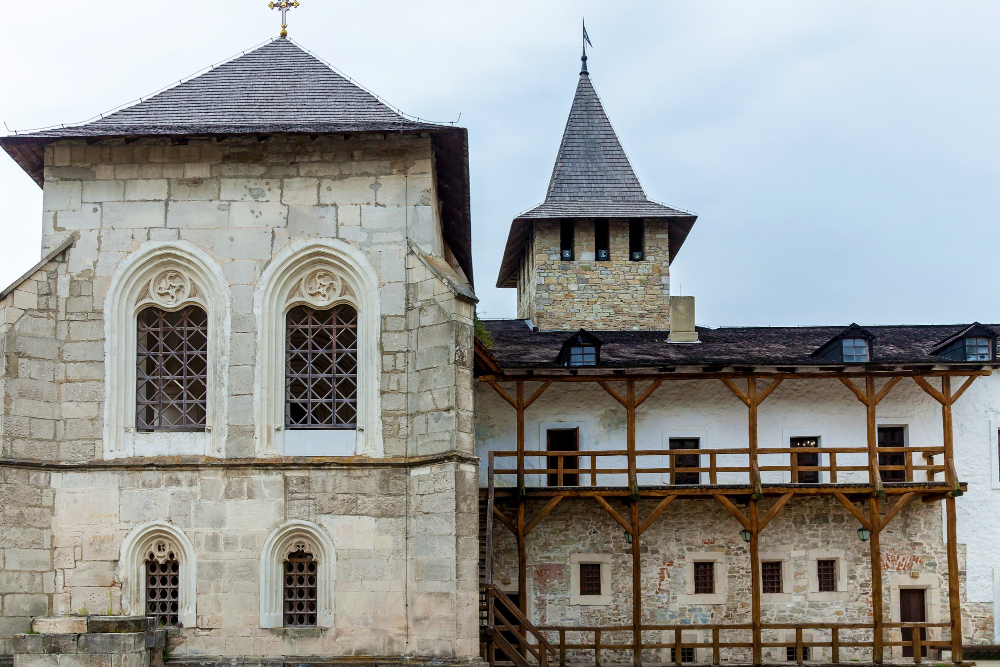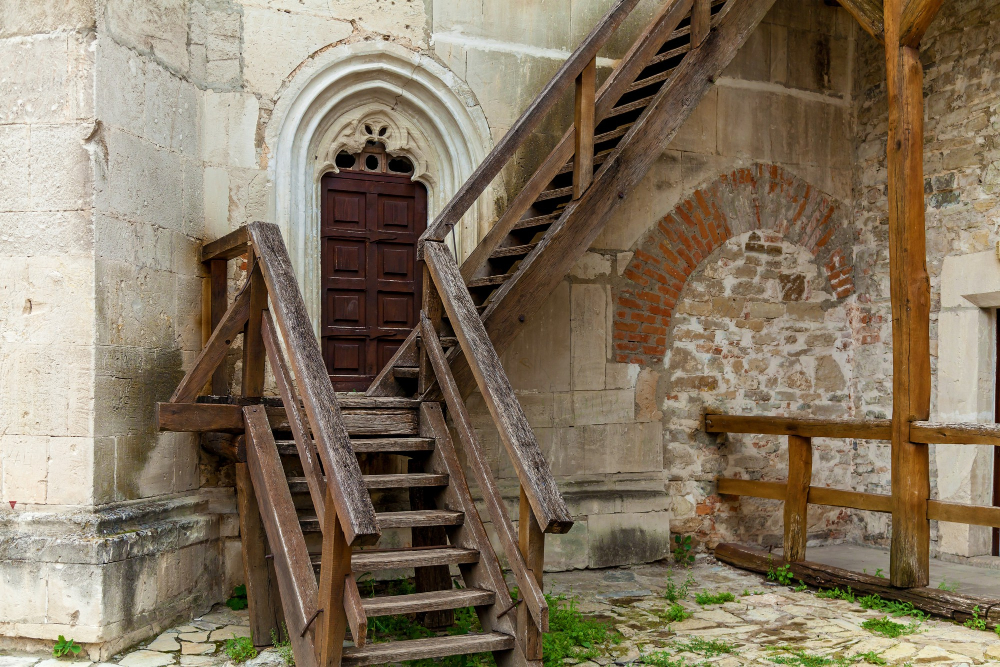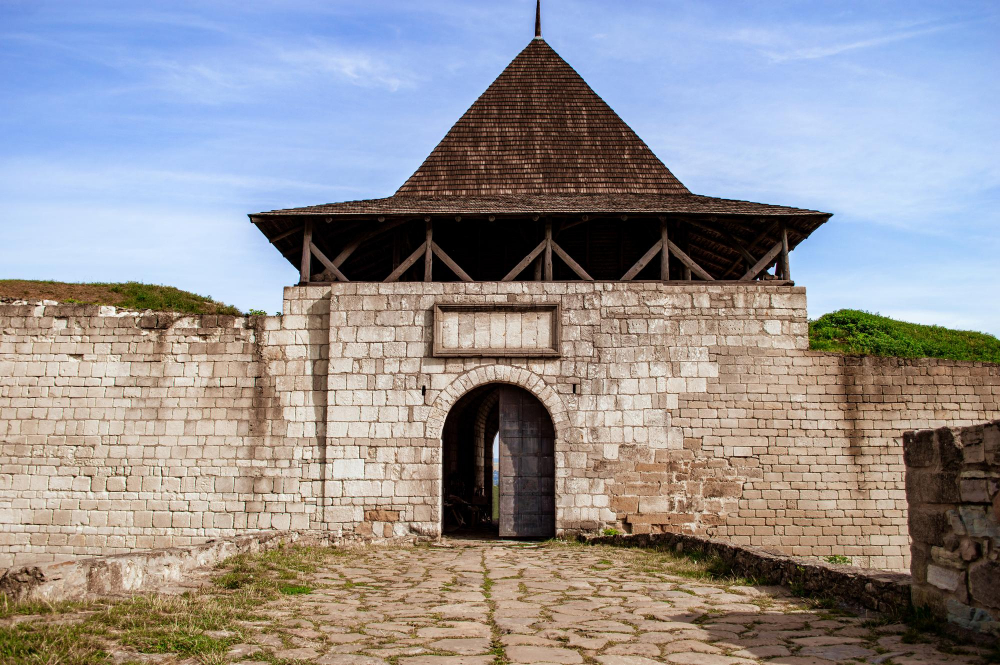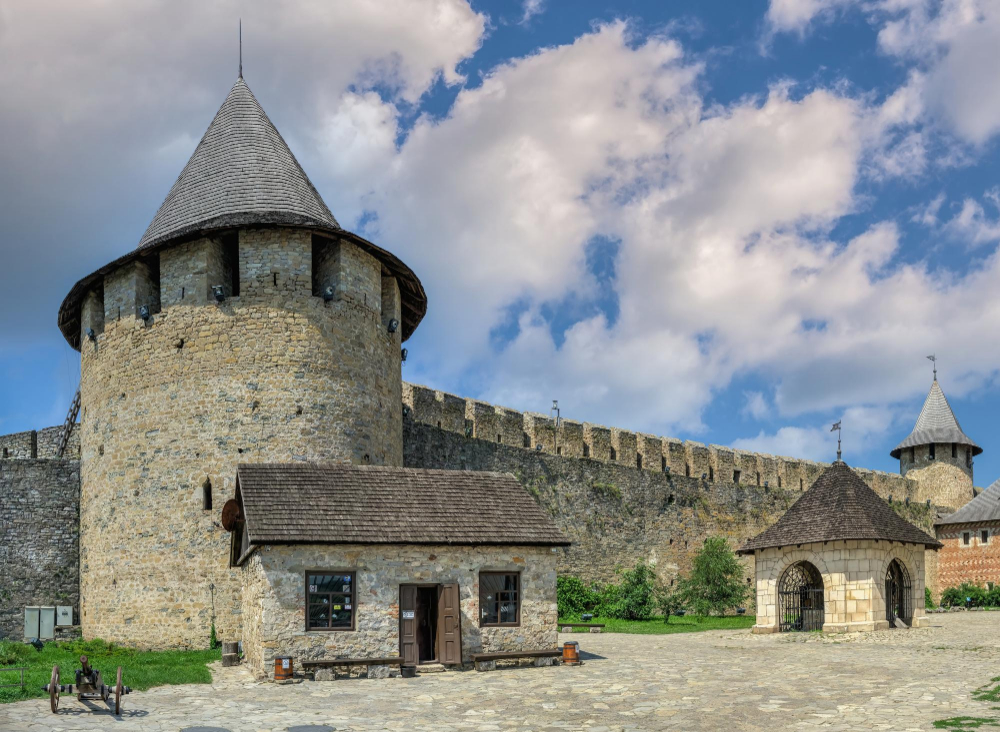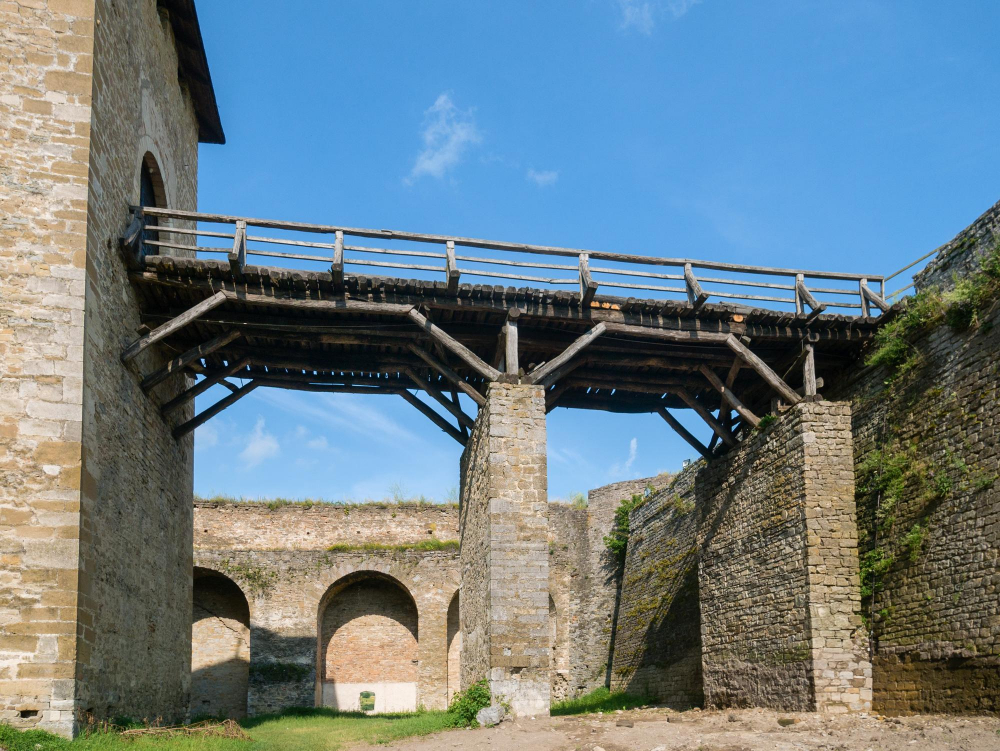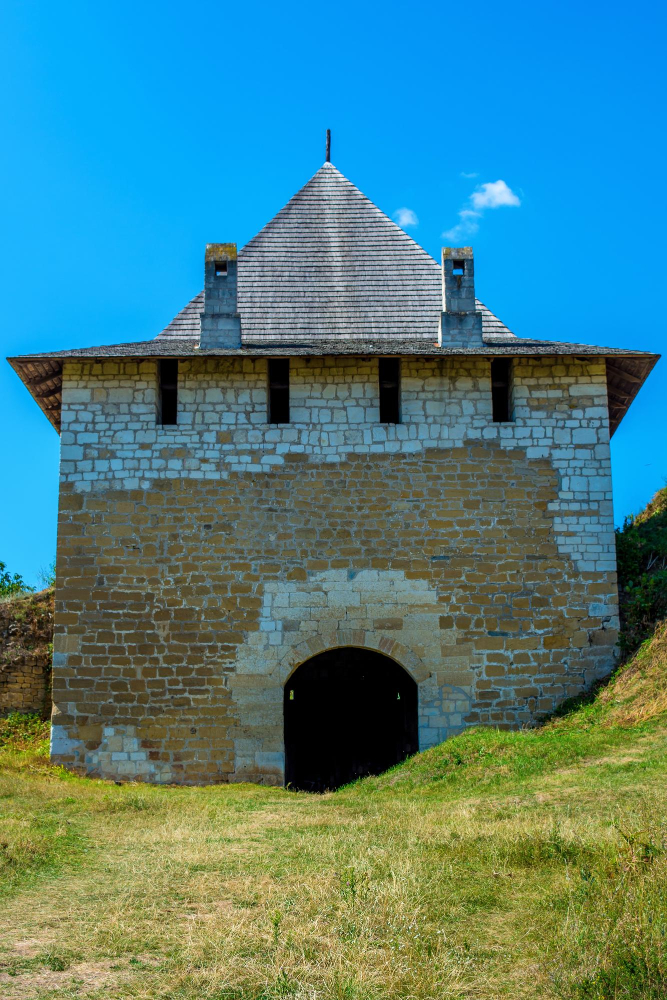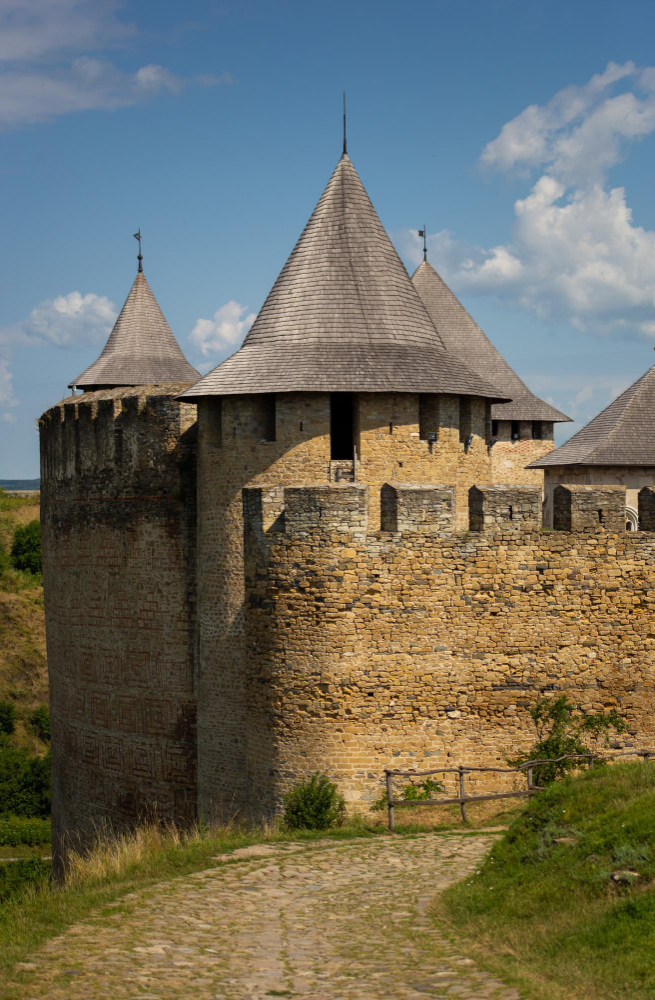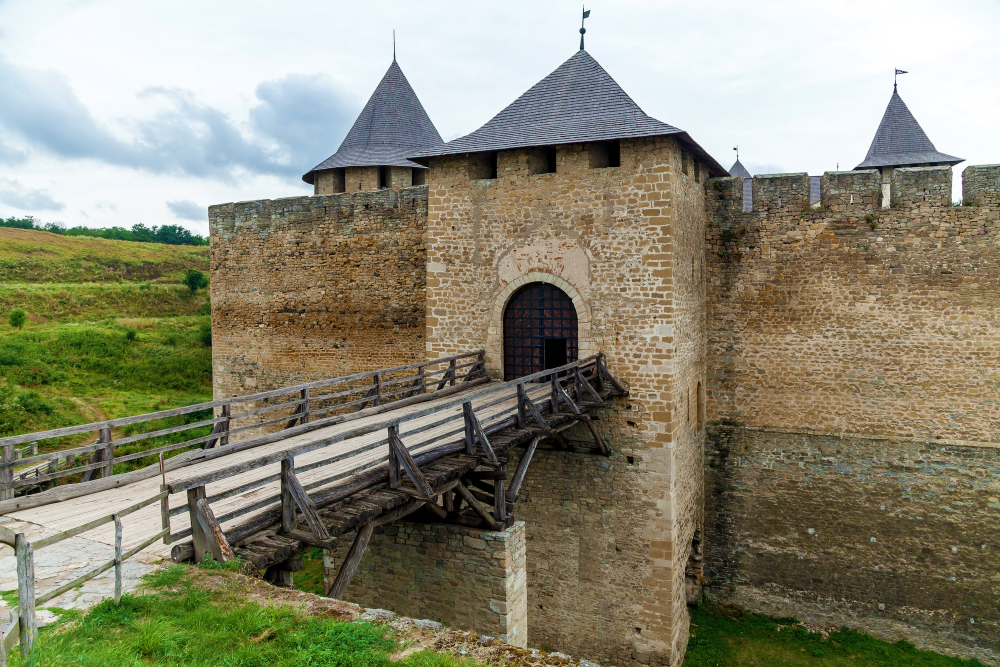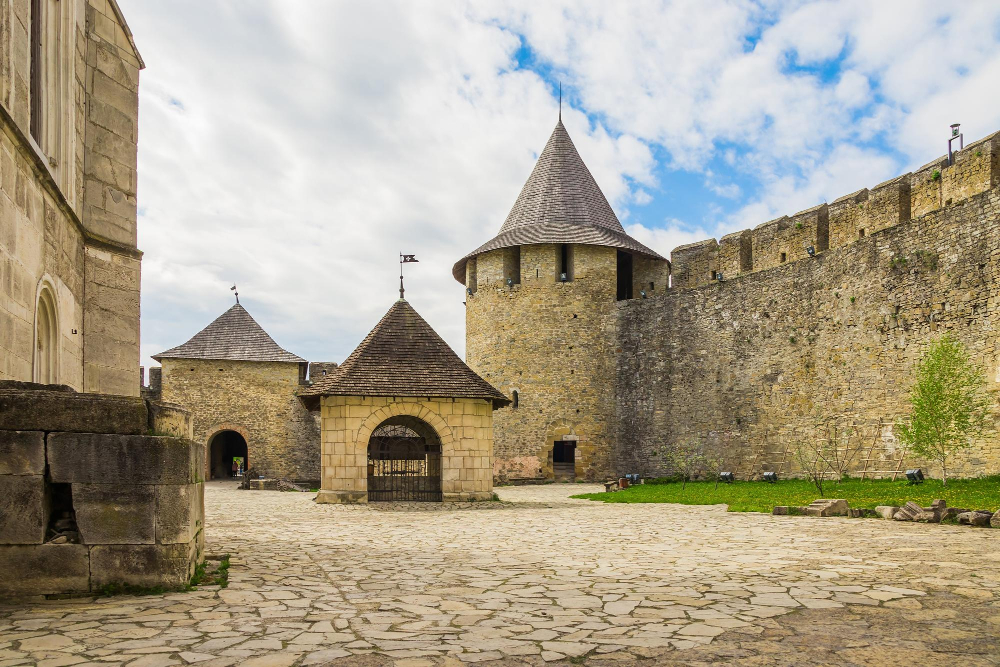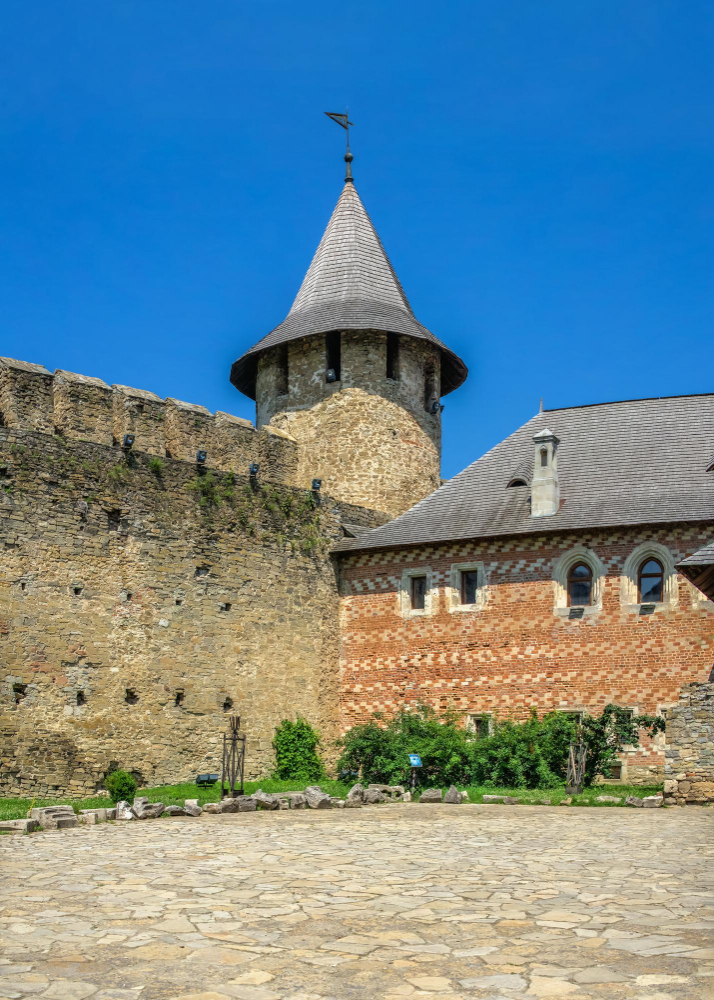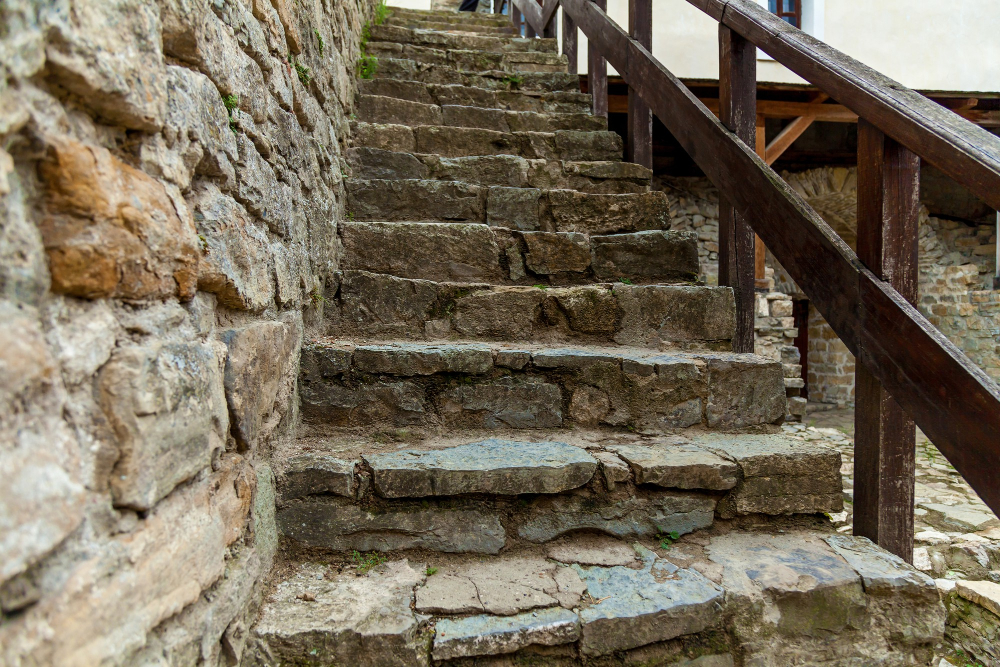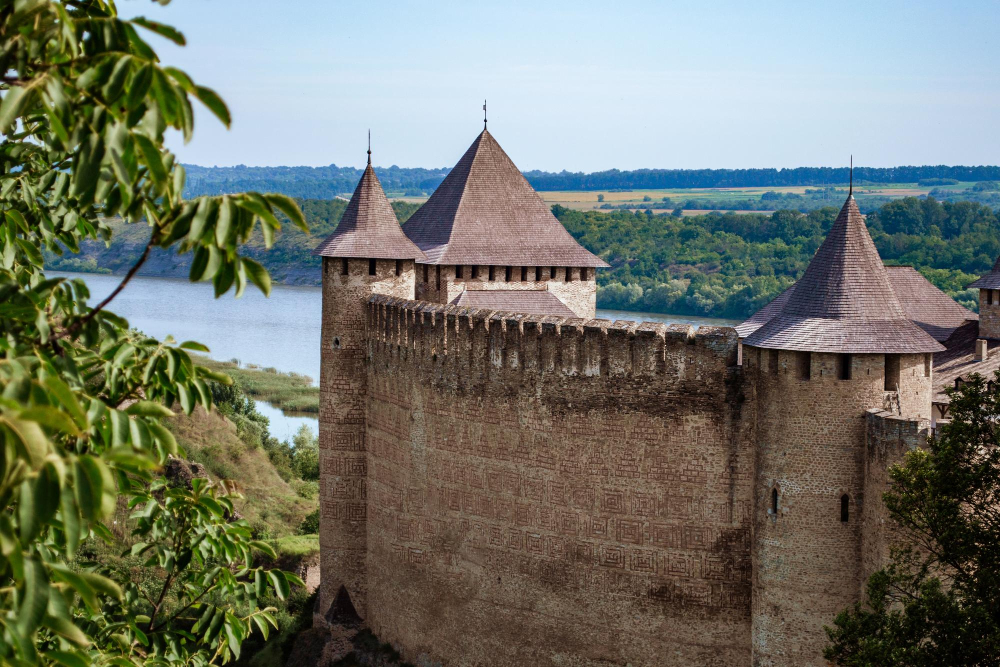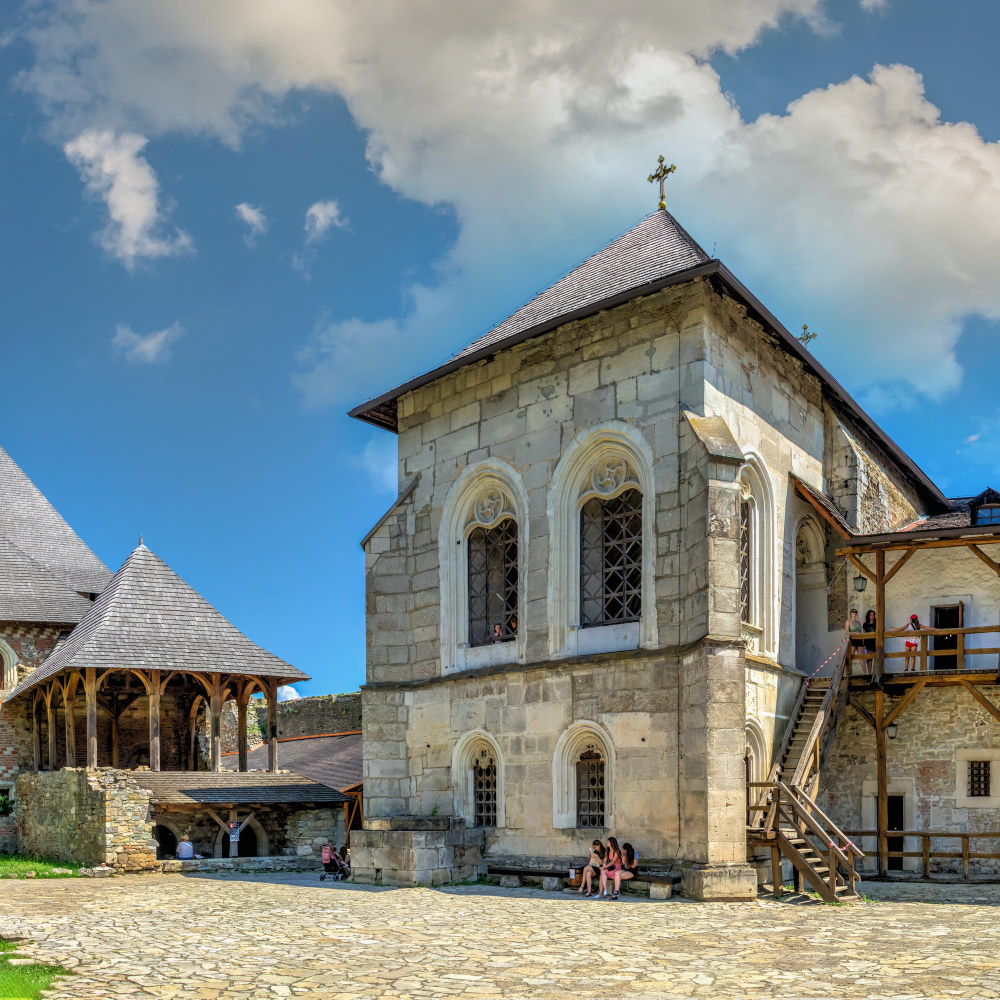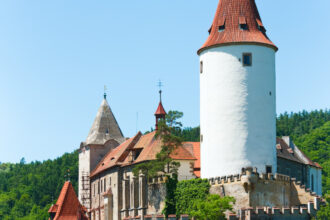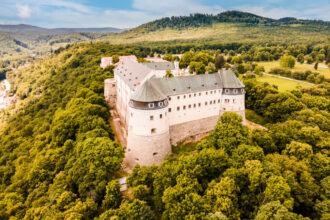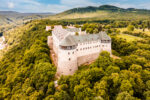

Khotyn Fortress, situated on the right bank of the Dniester River in the Chernivtsi region of south-western Ukraine, is a magnificent example of historical architecture that has witnessed numerous cultural and political changes over the centuries. As one of the most significant defensive structures in the region of Northern Bessarabia, a former Romanian territory, it attracts visitors from all over the world who are fascinated by its eventful history and the many legends that surround its stone walls.
The origins of the fortress: From a wooden fortification to a mighty stone castle – The origins of Khotyn Fortress date back to the 10th century, when Prince Vladimir the Great had the fortress built as a border fortification in what was then Kievan Rus’. The region of Bukovina, where the fortress is located, had only recently been conquered by him. Originally, the complex consisted merely of earthworks and wooden palisades designed to protect the settlement of Chotyn from enemy attacks. Its strategically favourable location on a high rocky bank of the Dniester and on important trade routes linking Scandinavia with the colonies on the Black Sea gave the fortress great significance from an early stage. Over the centuries, the originally simple fortification was continuously expanded and renovated. In the 13th century in particular, Prince Danylo of Galicia and his son Lev carried out significant construction work, reinforcing the fortress with a half-metre-thick stone wall and a six-metre-wide moat. Military buildings were also added. Later, the Republic of Genoa introduced new architectural elements to the fortress.
The Moldavian princes and the golden age of the fortress – In the 14th century, Khotyn came under the rule of the Moldavian prince Dragoș and subsequently became part of the Principality of Moldavia. Under the rule of Alexandru cel Bun (Alexander the Good) and Ștefan cel Mare (Stephen the Great), two significant Moldavian princes, the fortress underwent a radical transformation. The structures, originally built of wood, were completely replaced with stone, and the walls were raised to impressive heights and widths. Three towers were added to the new design, whilst the inner courtyard was divided into various areas for princes and soldiers. These alterations gave the fortress its present form and turned it into a cultural and military centre. Stephen the Great, in particular, played a decisive role in defending the fortress against external threats. In 1476, the Moldavian garrison successfully defended the fortress against the invading troops of the Ottoman Sultan Mehmed II – an event that once again underscored the fortress’s strategic importance.
Significant battles and changing rule: From the Ottoman Empire to the Russian Empire – The conquests and sieges of Khotyn Fortress over the centuries tell the story of Eastern Europe’s turbulent history. In the 16th century, the fortress fell to the Polish-Lithuanian Commonwealth, which, following a successful offensive led by Hetman Jan Tarnowski, destroyed large sections of the western fortress wall and later rebuilt it. Over time, Khotyn Fortress was once again occupied by the Ottomans, who stationed a Janissary garrison there and implemented further defensive measures. One of the fortress’s most famous battles, however, took place in September 1621: the Battle of Chotyn. During this conflict, an alliance of Polish soldiers and Ukrainian Cossacks, led by Jan Karol Chodkiewicz and Petro Sahaidachny, successfully defended the fortress against a superior force of Ottoman troops. Although the siege was devastating for both sides, the peaceful end to the fighting led to the signing of the Treaty of Chotyn, which established the borders between the Ottoman Empire and the Polish-Lithuanian Commonwealth along the Dniester. In the centuries that followed, the fortress remained a contested site. Russian troops captured it on several occasions, including during the Russo-Turkish War of 1739 and again in 1788. Despite repeated recaptures by the Ottomans and the subsequent peace treaties, the fortress remained a key stronghold in the conflicts between East and West until the early 19th century.
Legends and myths surrounding Khotyn Fortress – In addition to its historical significance, Khotyn Fortress is also the setting for numerous myths and legends that enhance its mystical aura and capture the imagination of visitors. One of the best-known stories revolves around a dark stain that can still be seen today on the fortress’s stone wall. According to legend, this stain comes either from the tears of the Khotyn rebels who fought against the Ottoman occupiers and lost their lives in the process, or from the tears of a young girl named Oksana, who, according to tradition, was walled up alive by the Ottoman soldiers. These tragic stories, whether true or not, lend the fortress an emotional dimension and bring the past centuries to life. They serve as a reminder that every castle is built not only of stone, but also of memories and destinies.
A monument to history and a backdrop for adventure films – Today, Chotyn Fortress serves as a historical cultural heritage site and a popular tourist destination in Ukraine. In 2000, it was declared a state historical and architectural reserve and offers visitors the chance to immerse themselves in the past. Its monumental walls and towers have also inspired numerous film productions. For instance, the fortress was depicted as both a French château and an English castle in historical adventure films such as ‘The Arrows of Robin Hood’ (1975) and ‘D’Artagnan and the Three Musketeers’ (1978).
A place that unites history and myth – Chotyn Fortress offers far more than just impressive architecture. It is a testament to Europe’s turbulent history, a symbol of resistance and a treasure trove of legends that have endured through the centuries. The stories of brave defenders, tragic victims and political power struggles make it a place that fascinates historians, archaeologists and history enthusiasts alike. Anyone who has the opportunity to visit this fortress follows in the footsteps of thousands who once passed through its gates – be they soldiers, princes, adventurers or history enthusiasts. Khotyn Fortress remains an enduring monument that unites past and present, and whose unique magic will continue to inspire future generations.