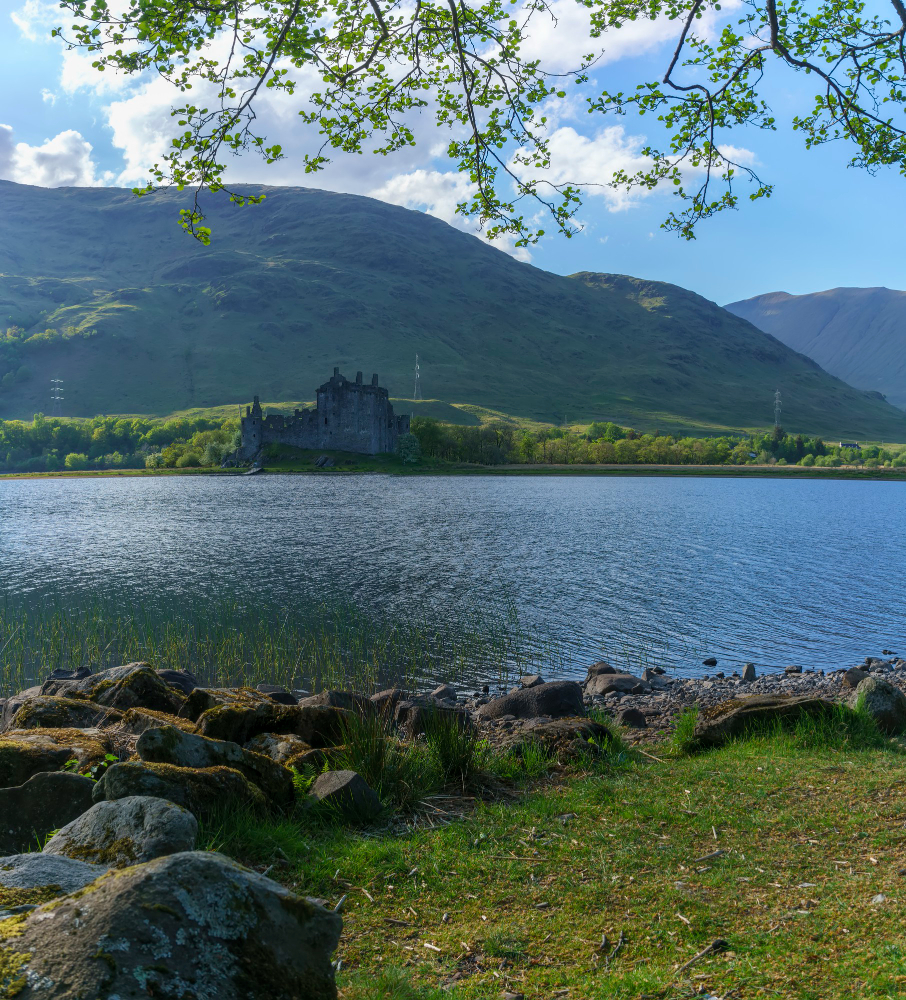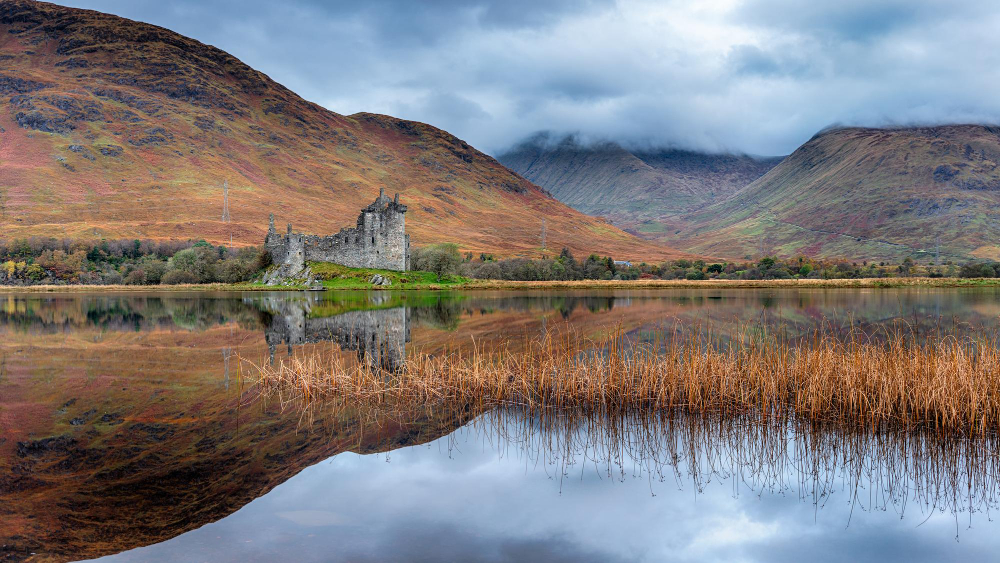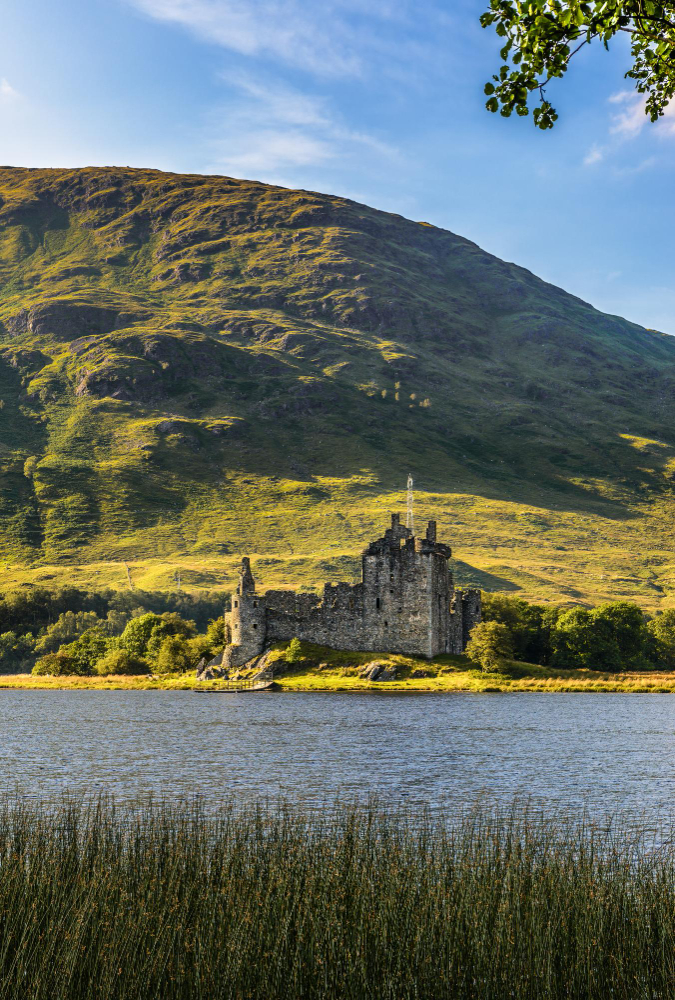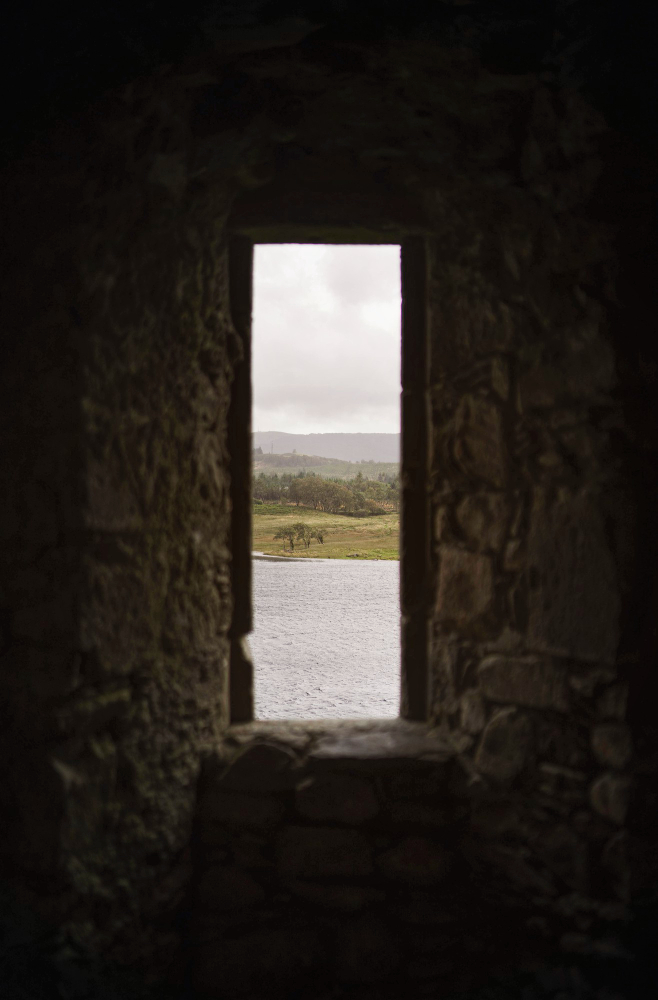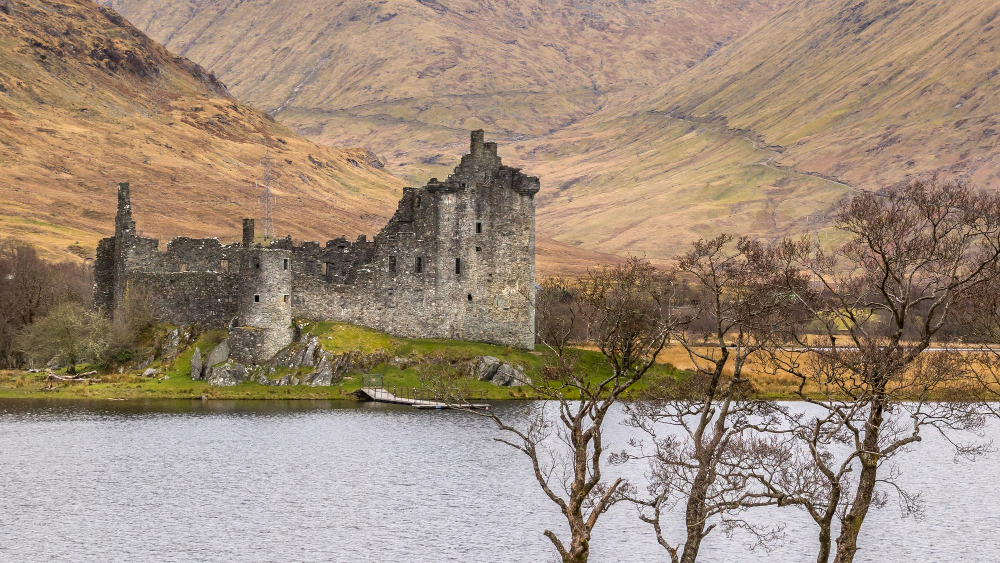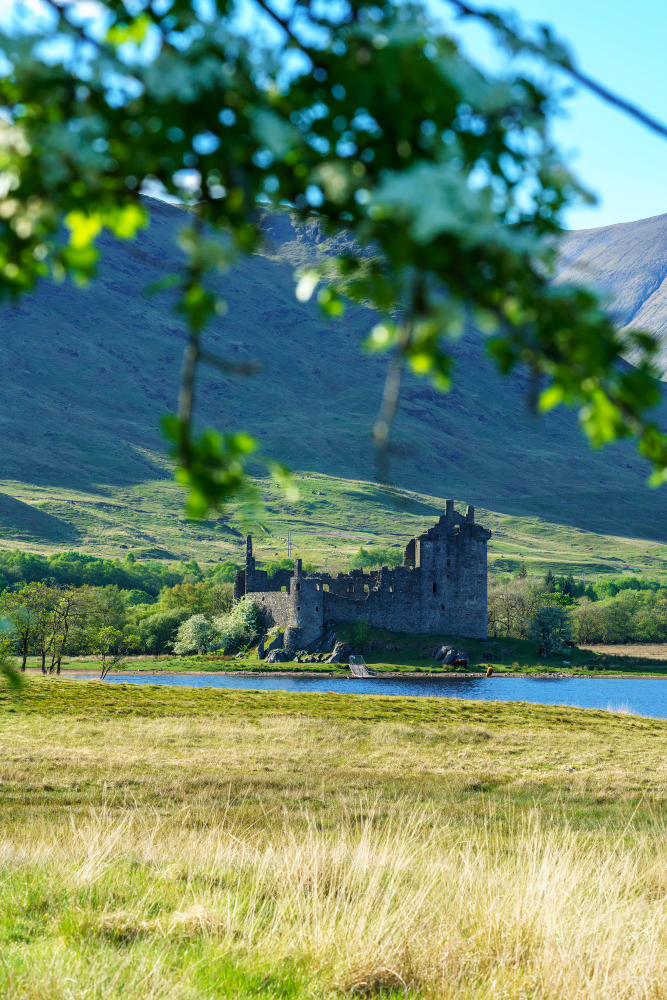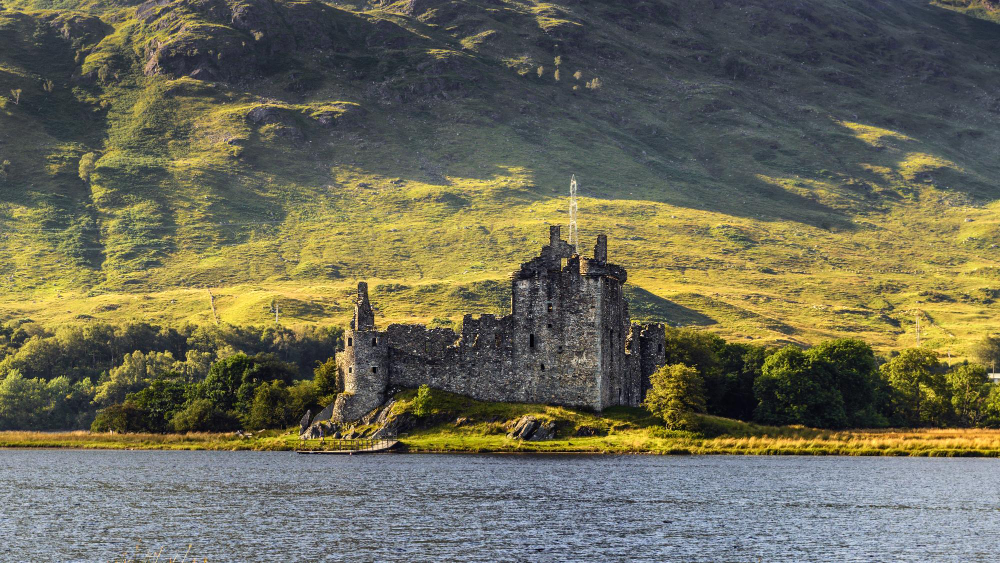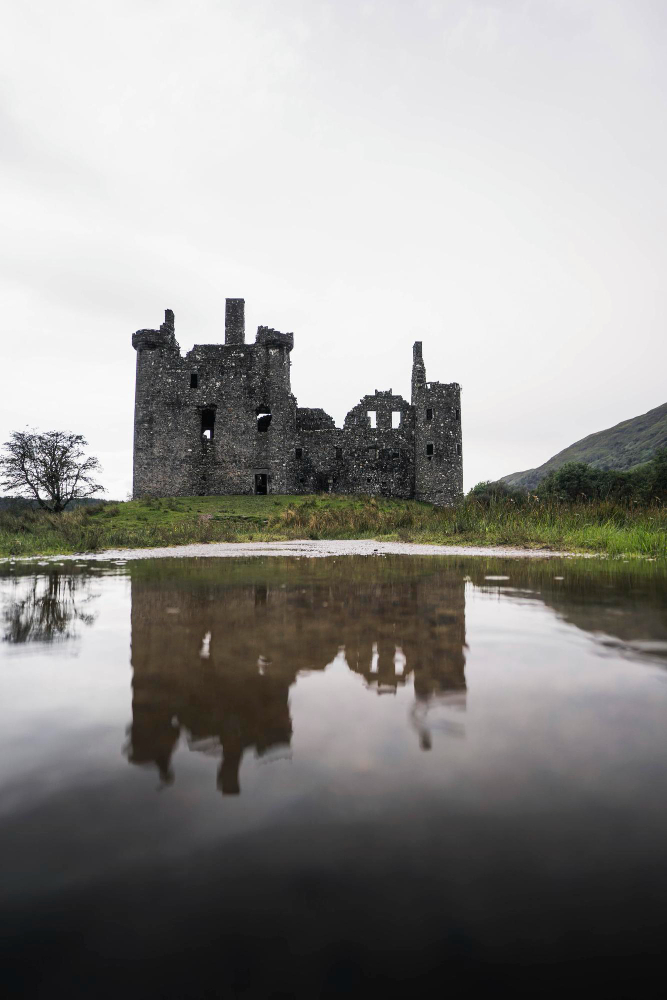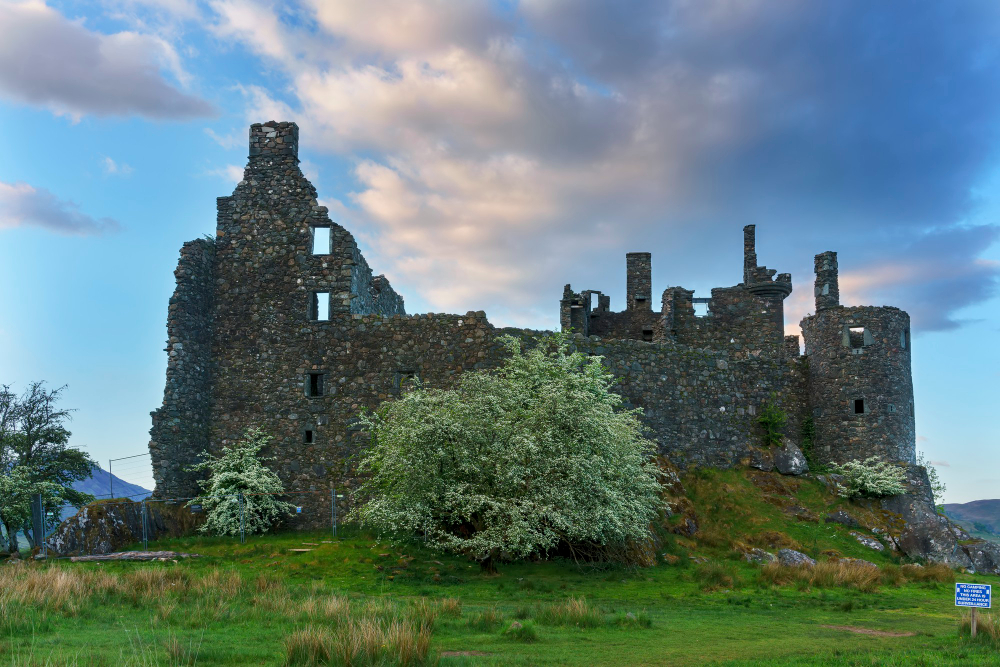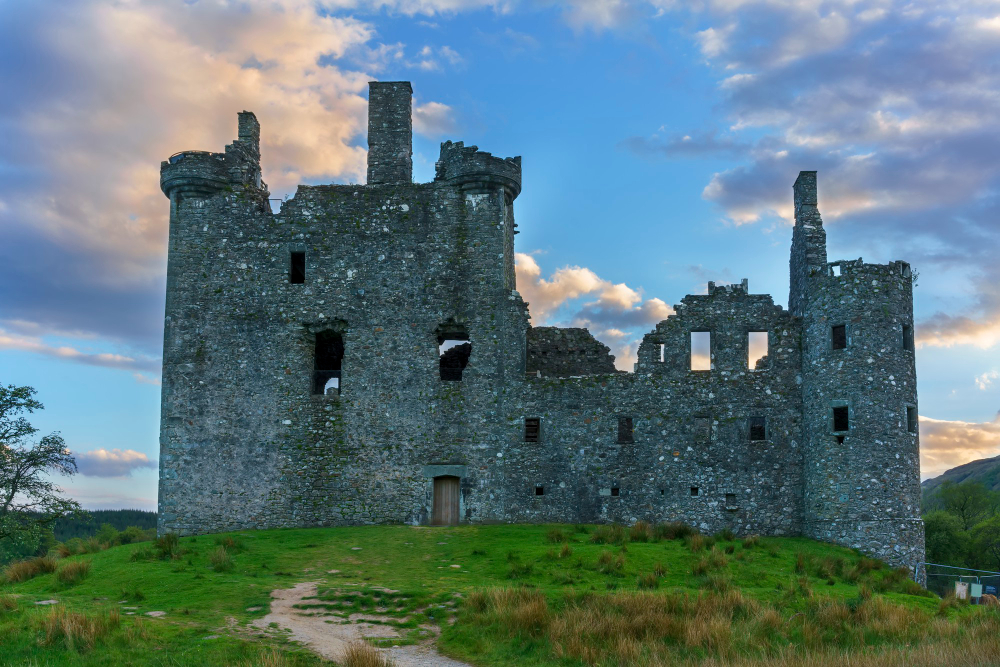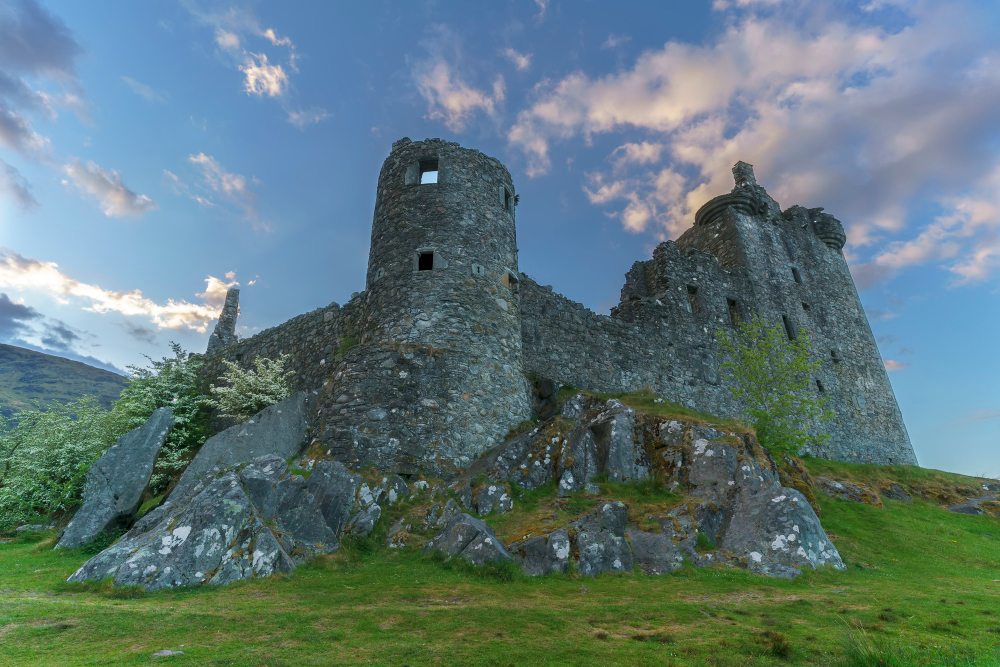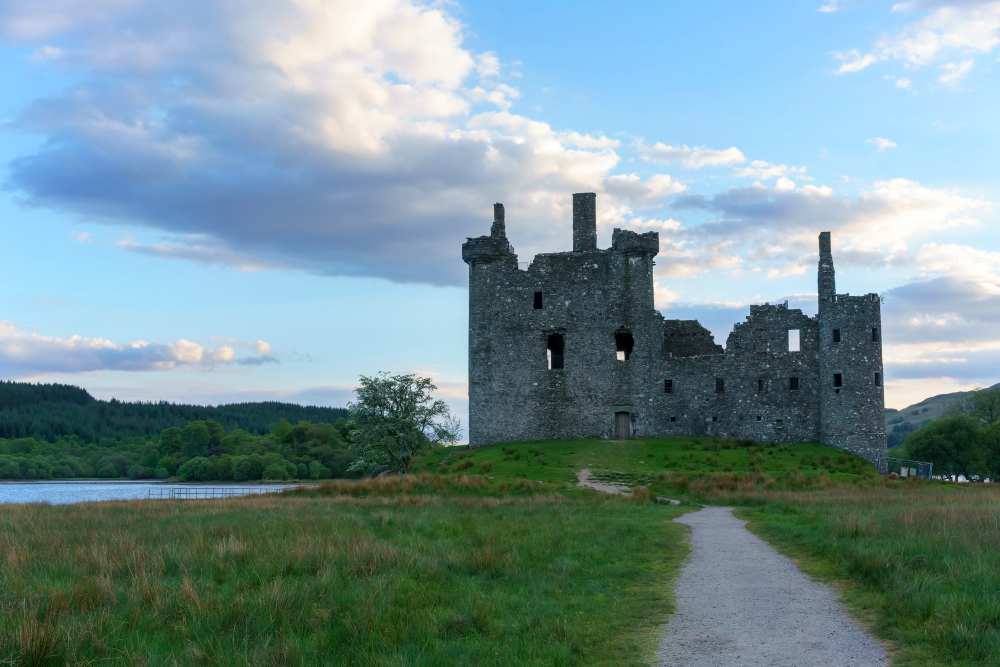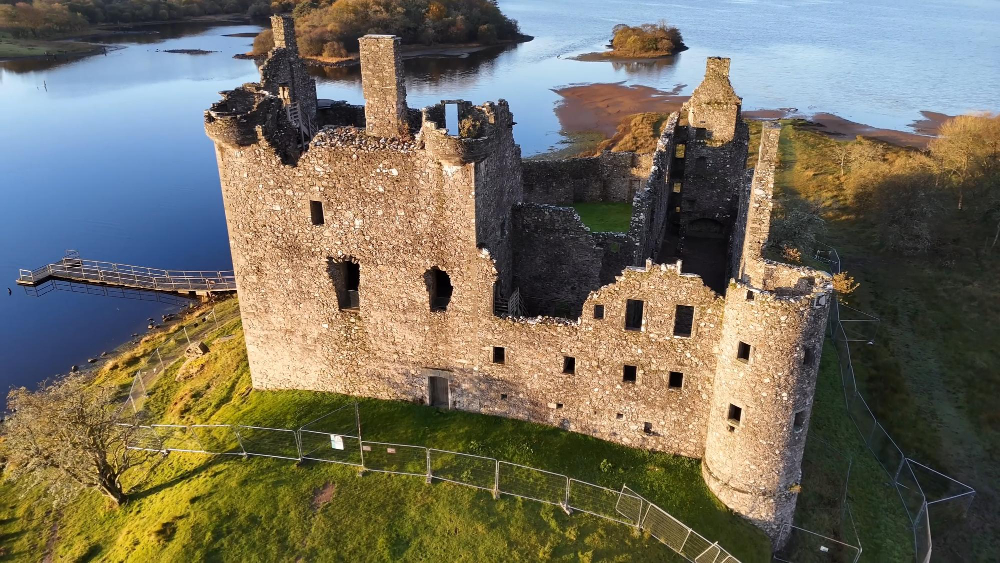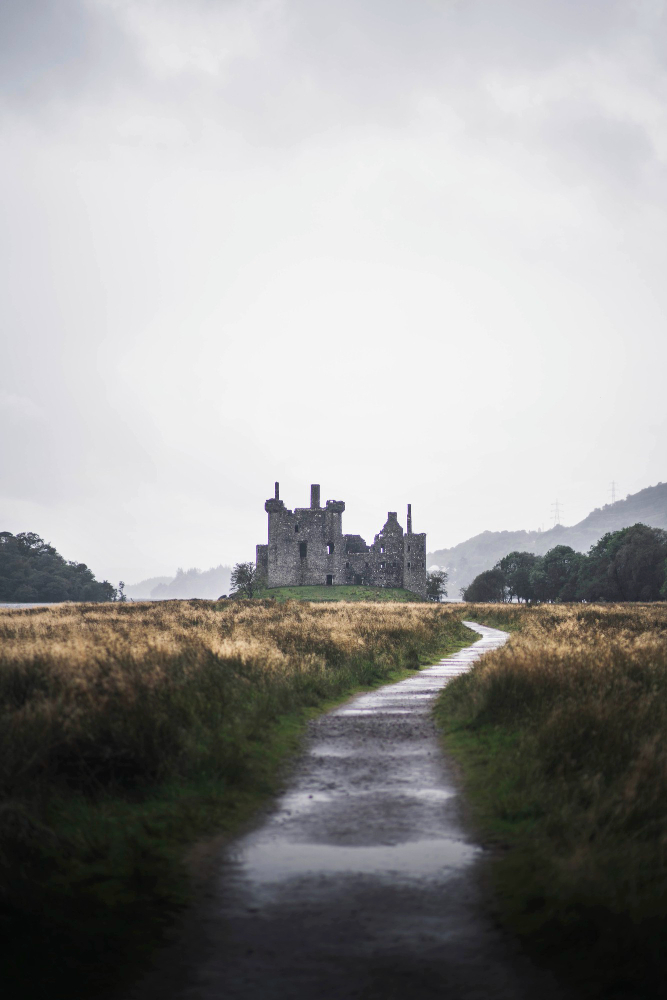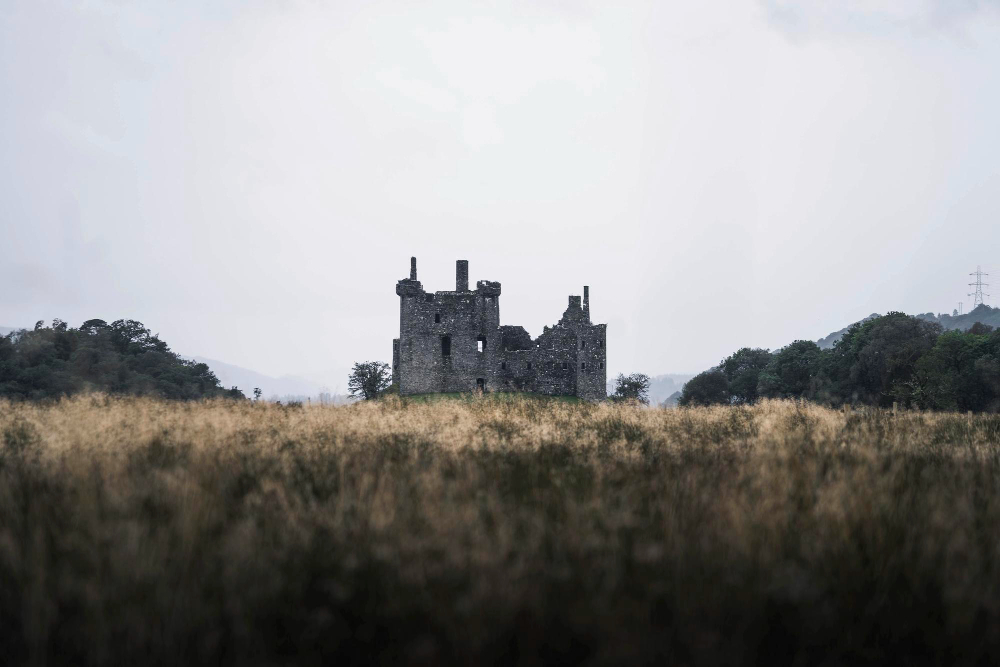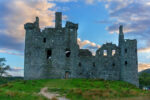

At the north-eastern end of Loch Awe, nestled amidst the rugged beauty of the Scottish Highlands, stands Kilchurn Castle – an impressive ruin perched on a rocky headland. This once-majestic fortress not only tells the story of its builders, but also serves as a silent witness to Scotland’s turbulent past. From its earliest construction in the 15th century to its final abandonment in the 18th century, the castle has endured through the generations and is now a fascinating monument that attracts visitors during the summer months. But what stories, intrigues and historical twists lie hidden within the stone walls of this fortress?
The Beginnings: The Power and Expansion of the Campbells – Kilchurn Castle was built in the mid-15th century by the Campbells of Glenorchy, one of the most powerful sub-branches of the Clan Campbell. The land originally belonged to the MacGregors, but around the year 1440, following a power struggle and land seizure, it passed to Colin Campbell, who is also regarded as the primary driving force behind the castle’s construction. His father, Duncan Campbell, had already transferred the lands of Glenorchy to him in 1432, which eventually became the starting point for the construction of several castles. The first phase of the castle’s construction comprised a five-storey tower house, surrounded by a courtyard and protected by ramparts. At that time, Kilchurn stood on a tiny island in Loch Awe, accessible only via a low or submerged causeway. As well as offering strategic protection, the castle’s location provided the Campbells with a perfect base for their territorial ambitions in the Central Highlands.
Expansion and Heyday – Subsequent generations of the Campbells steadily expanded and modernised the castle. Sir Duncan Campbell, son of the builder, added a ‘Laich Hall’ to the fortress – a single-storey hall running along the southern inner wall, which served as a dining hall. However, he too met a tragic end – like many other Scottish nobles – at the Battle of Flodden in 1513. Another milestone in the history of Kilchurn Castle was the remodelling carried out by Sir Colin Campbell, the sixth Laird of Glenorchy, in the 16th century. He significantly improved the castle’s living quarters and added corner turrets with decorative corbels, which gave the castle its distinctive appearance. The Campbells increasingly established themselves as the dominant power in the region, often at the expense of former allies such as the Clan MacGregor. During the reign of Sir Duncan Campbell, also known as ‘Black Duncan’, the south side of the castle was extended once more in 1614 and enhanced with a chapel. Black Duncan was an extremely ambitious figure in Scottish politics; not only did he optimise the agricultural use of his estates, but he also began the construction of other significant fortresses such as Finlarig Castle at the western end of Loch Tay.
Political intrigues and Jacobite uprisings – In the late 17th century, Kilchurn Castle underwent a decisive turning point. Sir John Campbell, the fifth baronet, was appointed Earl of Breadalbane and Holland in 1681 – a title that underpin his political power. He assumed an unusual role for the time: on the one hand, he supported the Jacobite rebels; on the other, he served King William III. His strategy to pacify the Highlands led to Kilchurn Castle being converted into a modern military base from 1693 onwards. An L-shaped extension on the north side provided accommodation for up to 200 soldiers. However, the political situation remained tense. Following the death of Queen Anne in 1714, Campbell held a secret meeting with Jacobites at the castle, which ultimately drew him into the 1715 uprising. After the rebellion’s defeat, he was forced to hand over Kilchurn and other fortresses to forces loyal to the government and spent his final years under house arrest at Taymouth Castle.
Decline and artistic recognition – The decline of Kilchurn Castle began in the mid-18th century. The Campbells had already moved their residence to the lavishly refurbished Taymouth Castle and, in 1740, tried unsuccessfully to sell Kilchurn to the government. The castle finally lost its significance when it was severely damaged by a lightning strike in 1760. A toppled tower, which still lies in the middle of the courtyard today, serves as a reminder of the storm’s ferocity. By 1770, the castle was completely uninhabited and without a roof. The romantic ruin later inspired artists such as J. M. W. Turner, who painted the castle during one of his travels through Scotland. These works helped to establish Kilchurn Castle in the public consciousness as a symbol of Scottish history and landscape.
Today: A balancing act between preservation and decay – Kilchurn Castle is now under the care of Historic Environment Scotland and is a listed monument. Visitors can explore the castle during the summer months, although access is sometimes restricted by high water levels in Loch Awe, which transform the peninsula into a temporary island. However, the castle is currently closed due to restoration work, as falling stones pose a hazard. Nevertheless, walkers are allowed to explore the ruins from the outside and immerse themselves in the mystical atmosphere that surrounds the stone remains.
A living link to the past – Kilchurn Castle is far more than just a ruin – it is a monument to Scottish history, reflecting the turbulent past and political intrigues of centuries gone by. With each generation of the Campbells, the castle’s function and significance changed; from a private family seat to a military outpost and finally to an abandoned ruin. Its walls tell tales of military conflicts, political manoeuvres and architectural mastery. Even today, the castle continues to fascinate locals and tourists alike. It invites visitors to reflect on the eventful history of the Highlands whilst gazing out over Loch Awe and imagining the stories preserved within these ancient stones. With hopes for its full restoration, Kilchurn Castle remains an essential destination for history enthusiasts and lovers of Scottish culture alike.