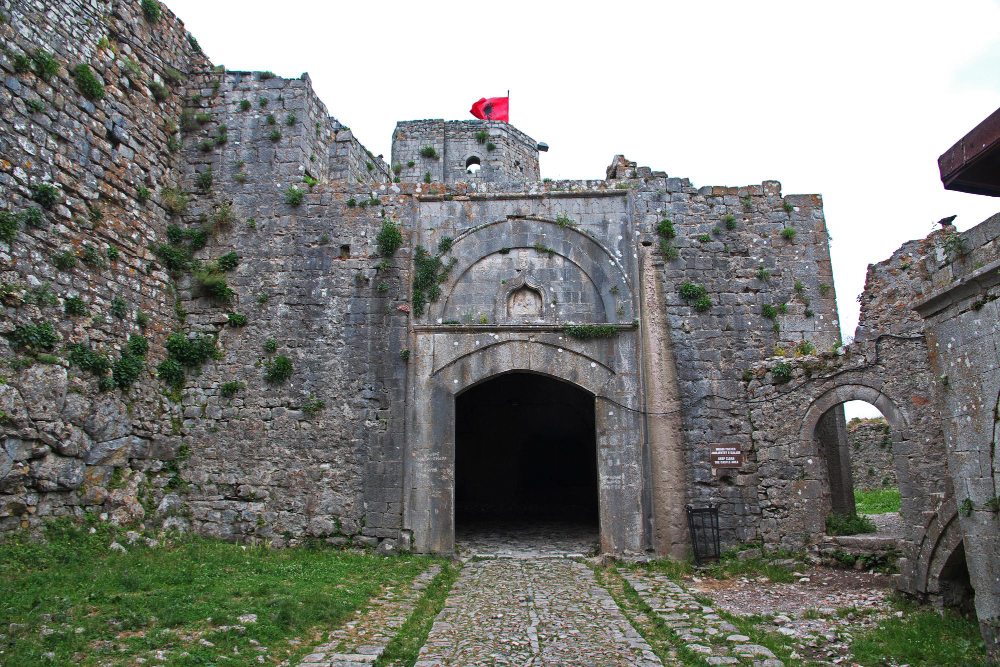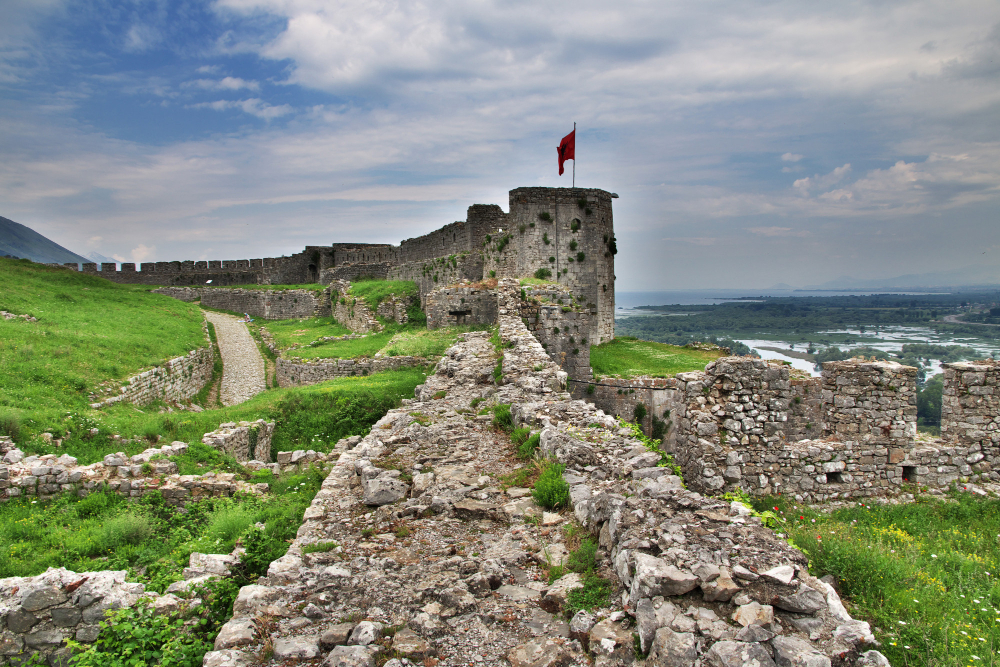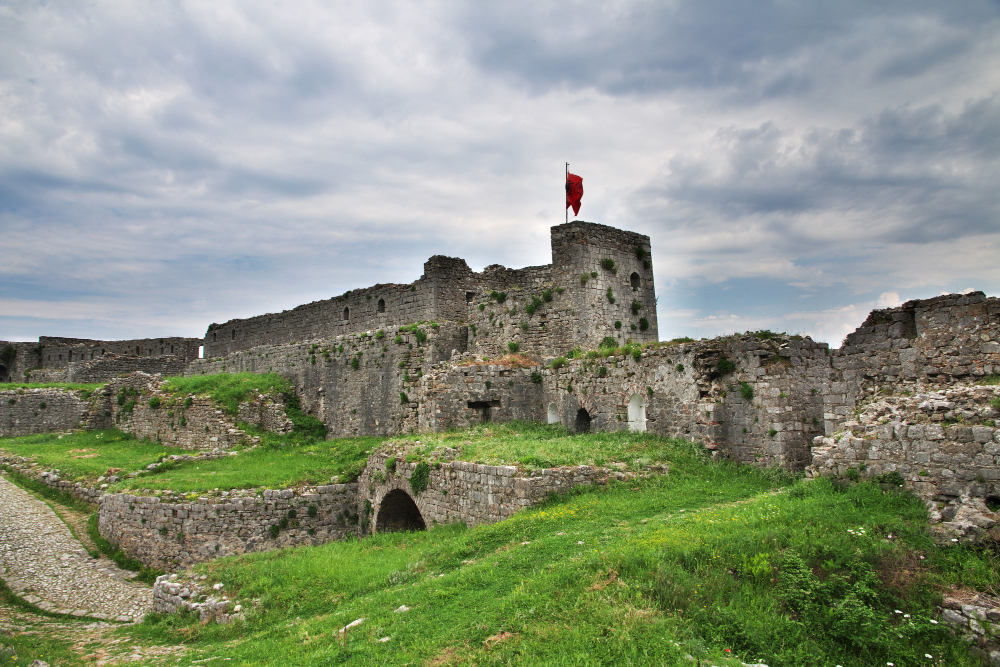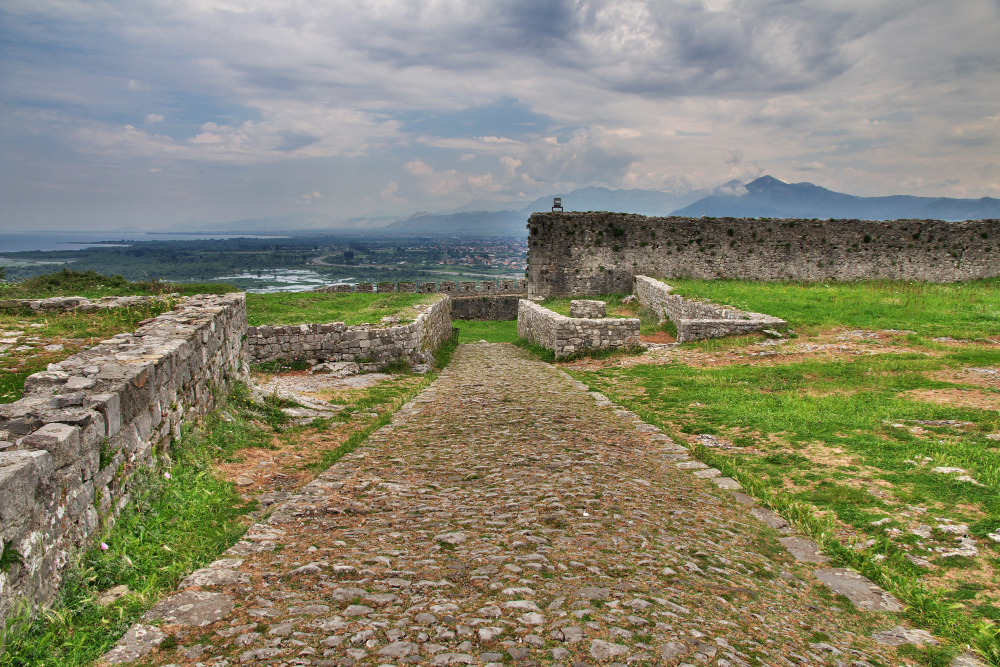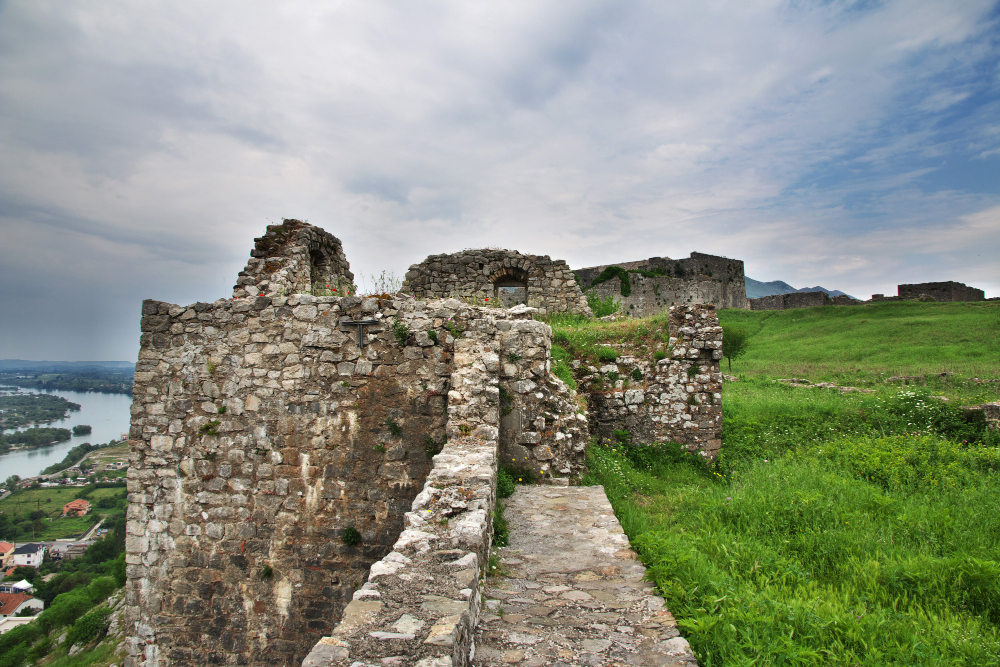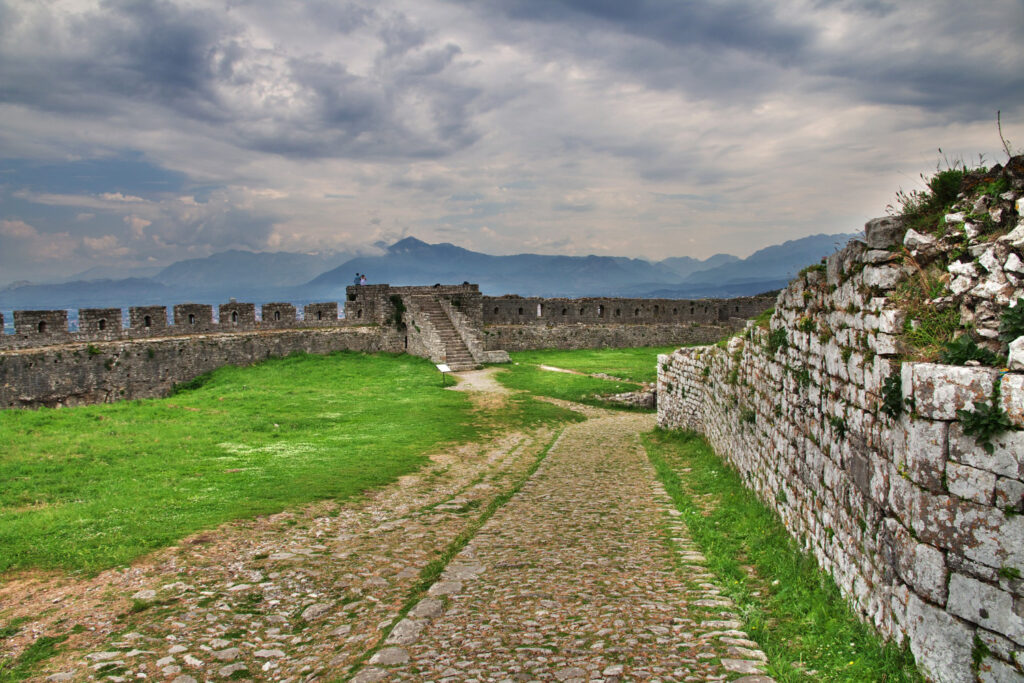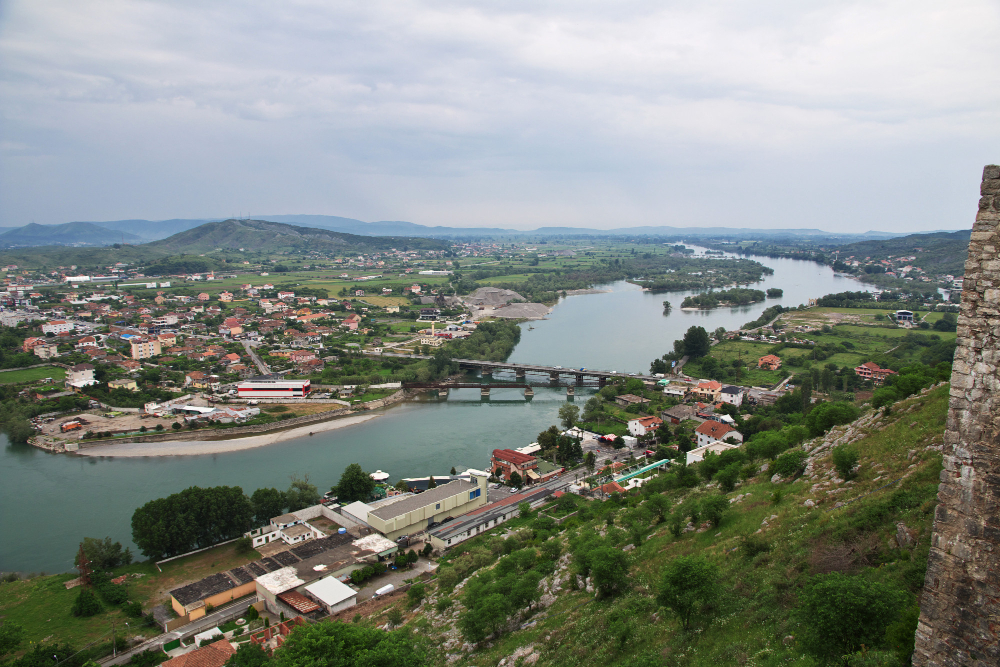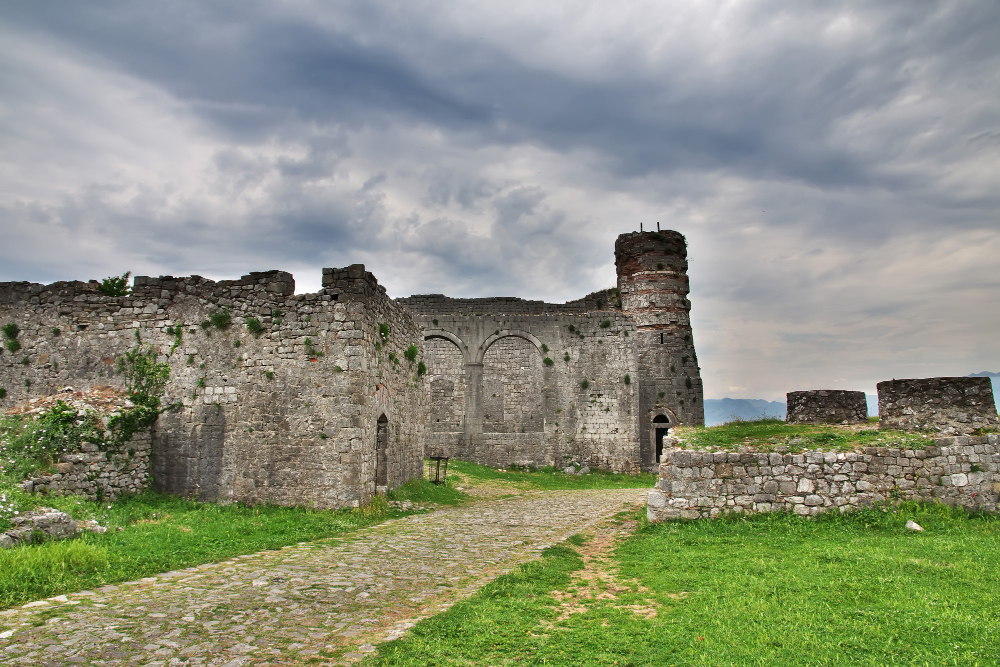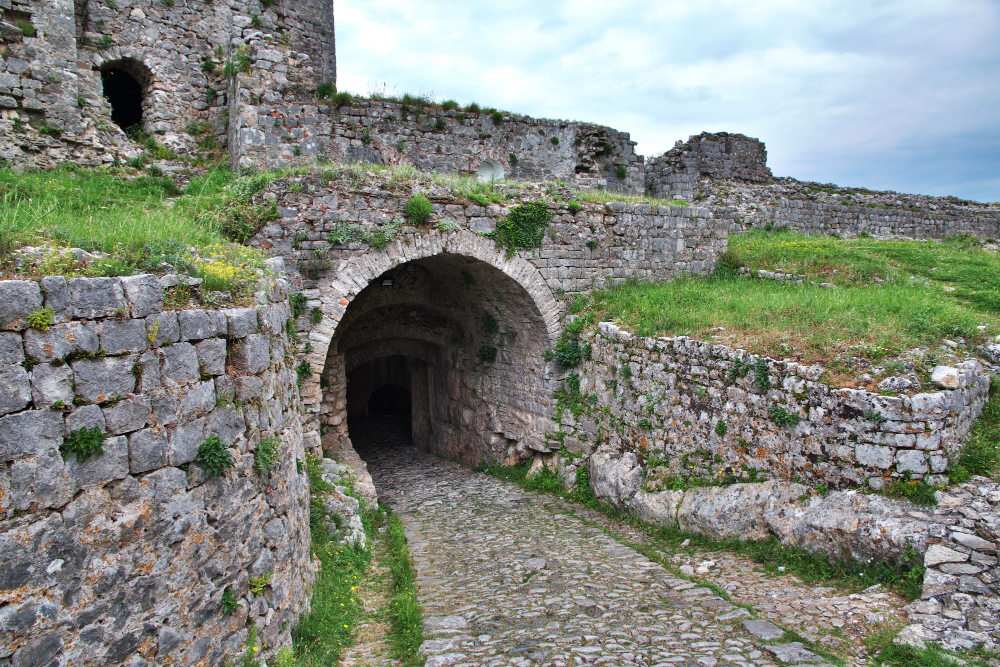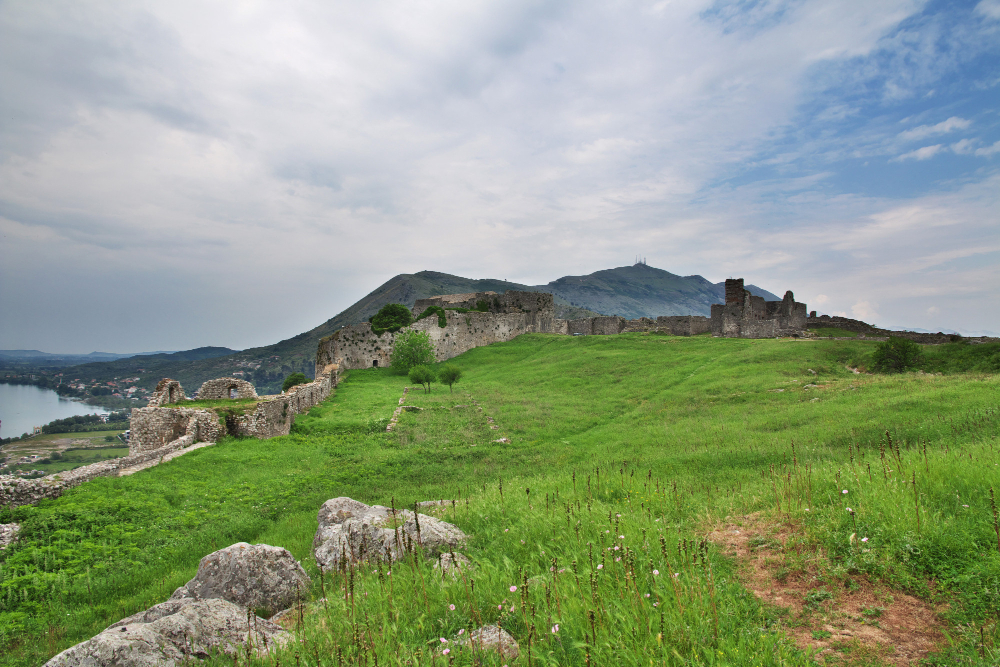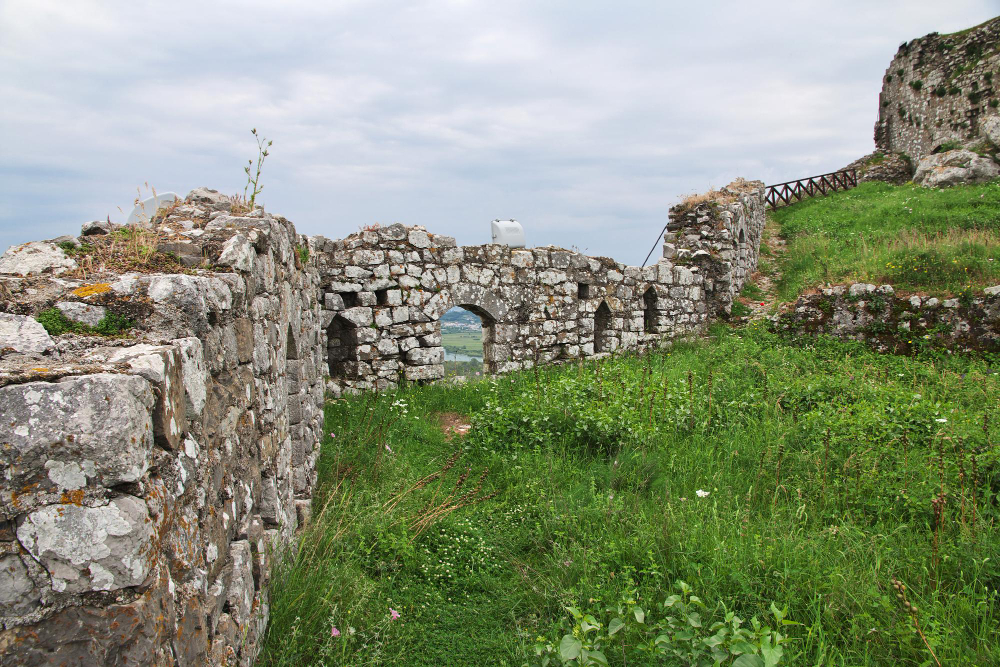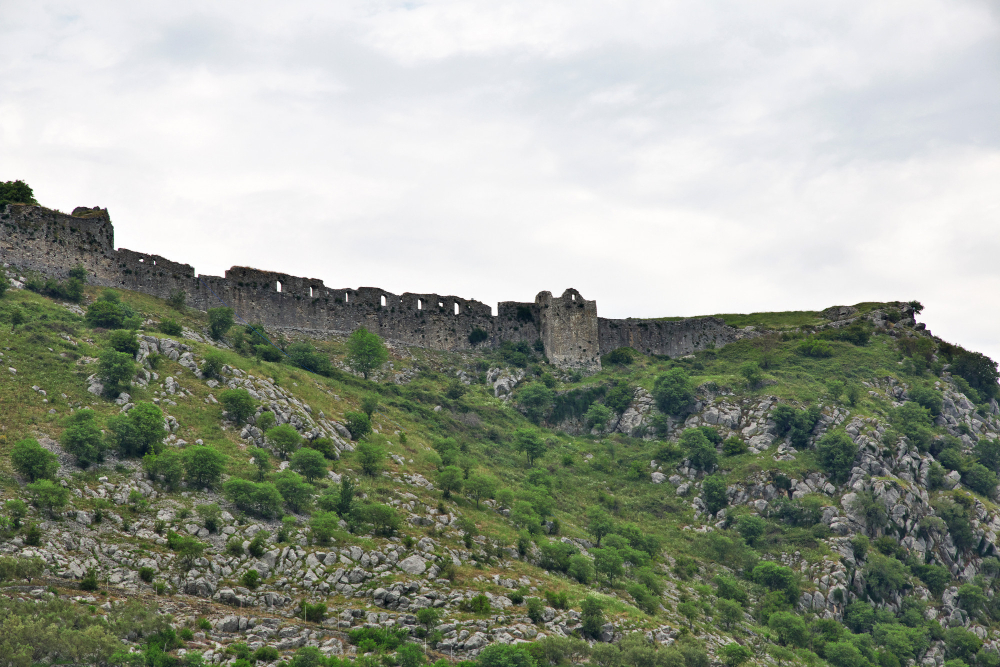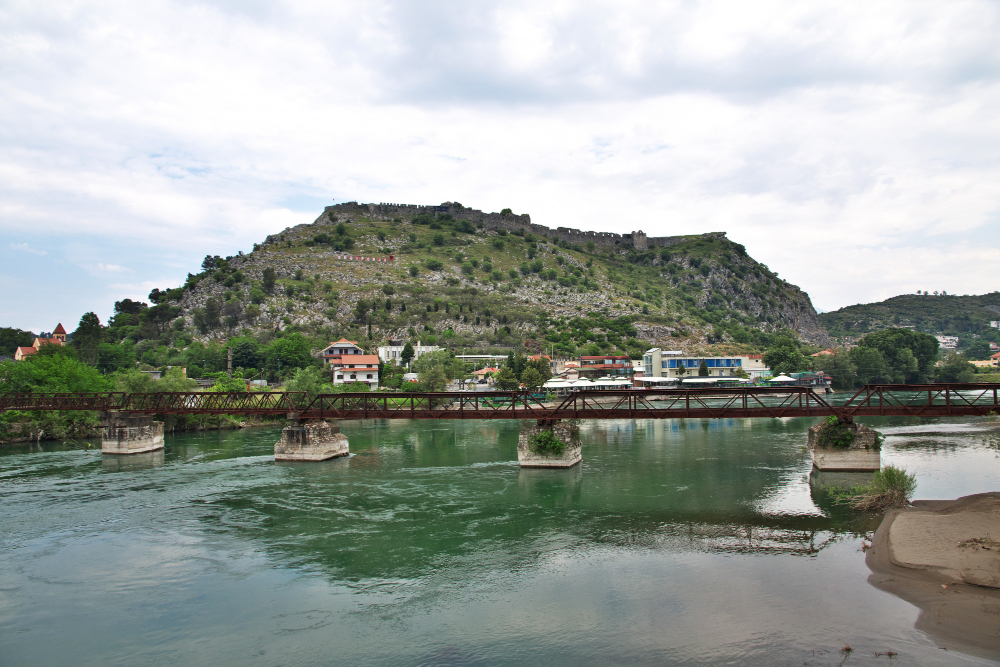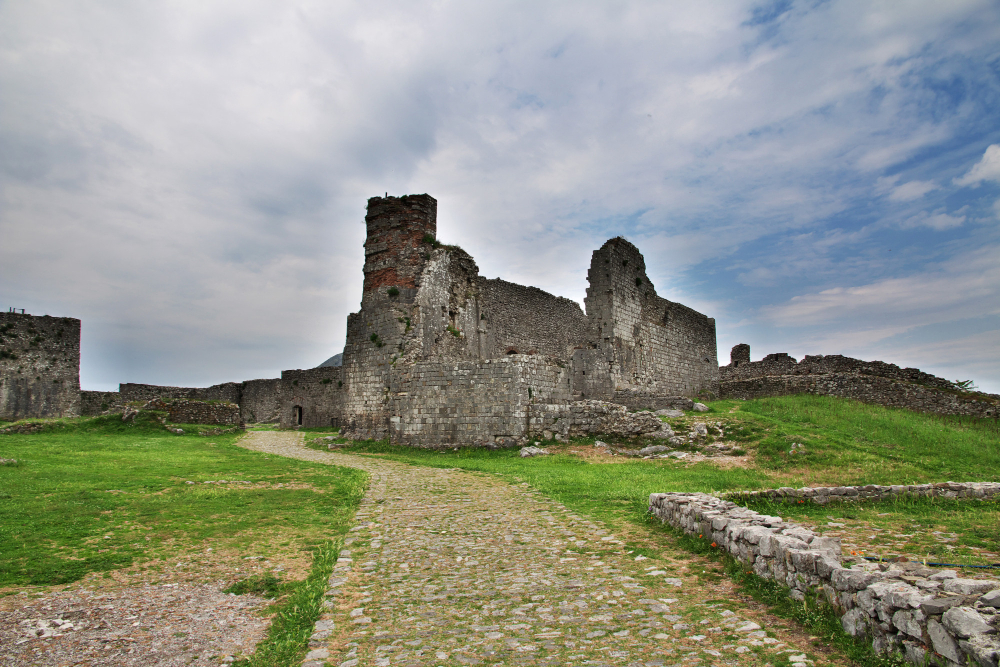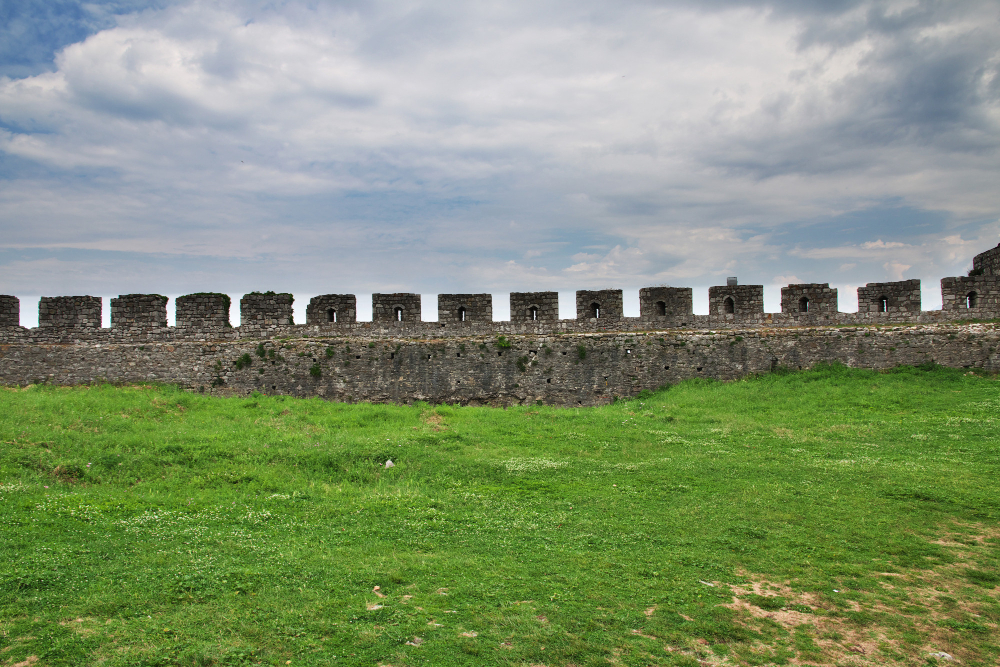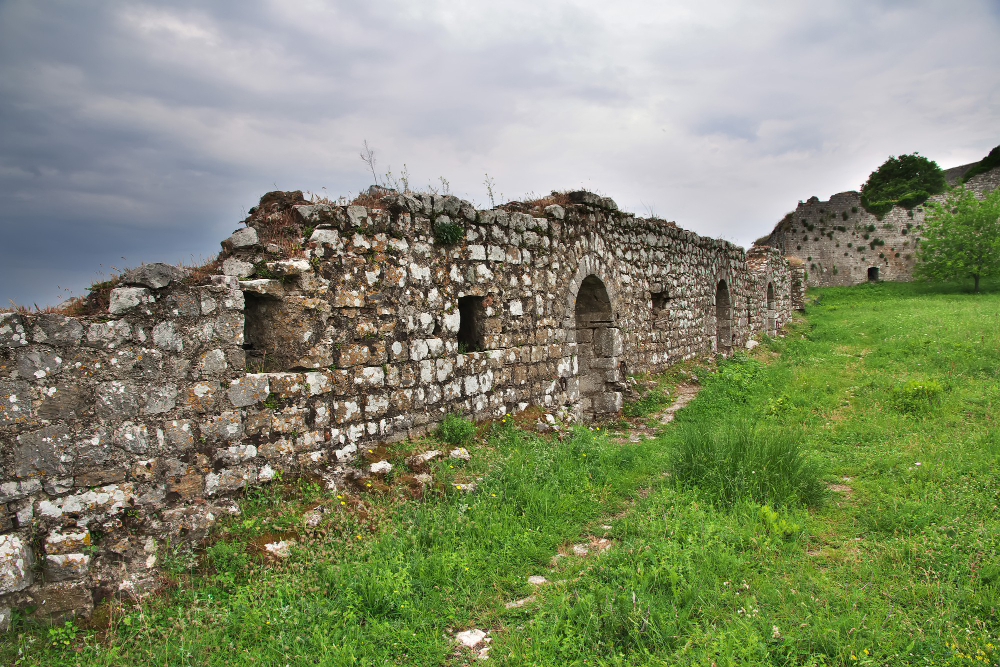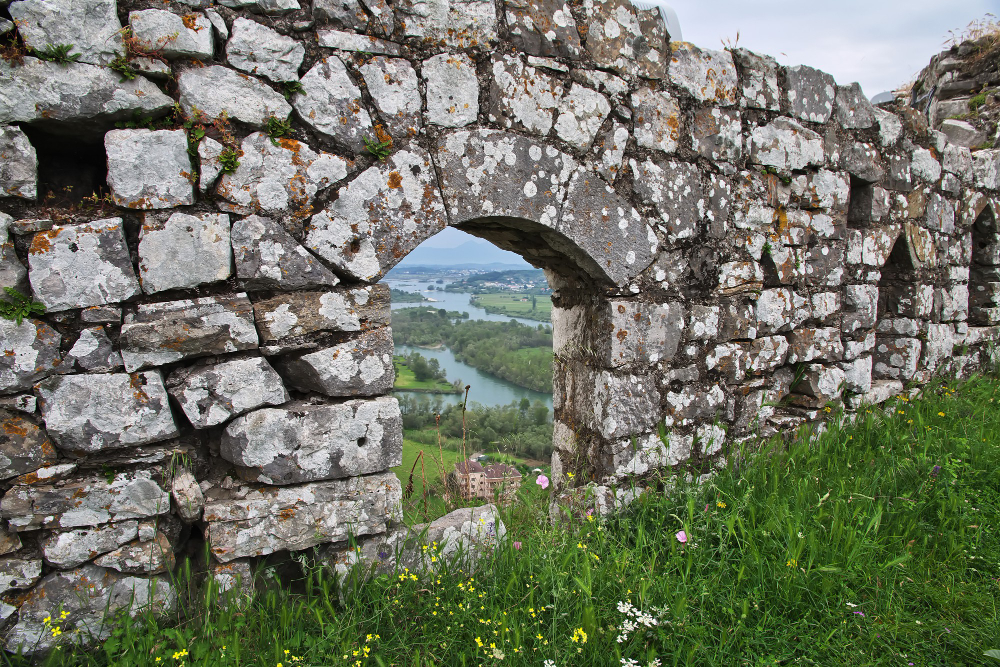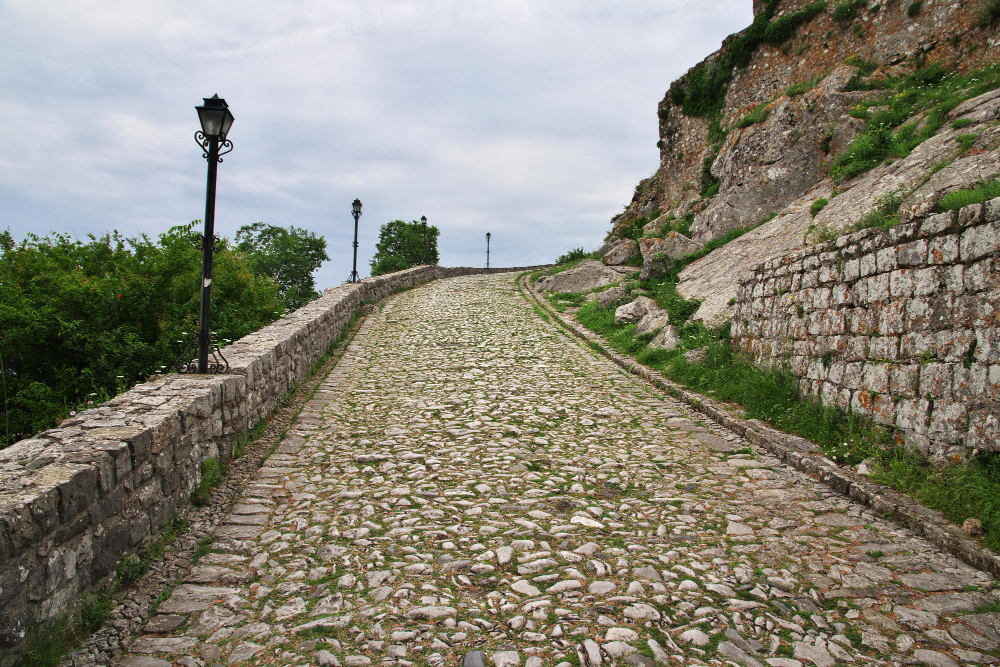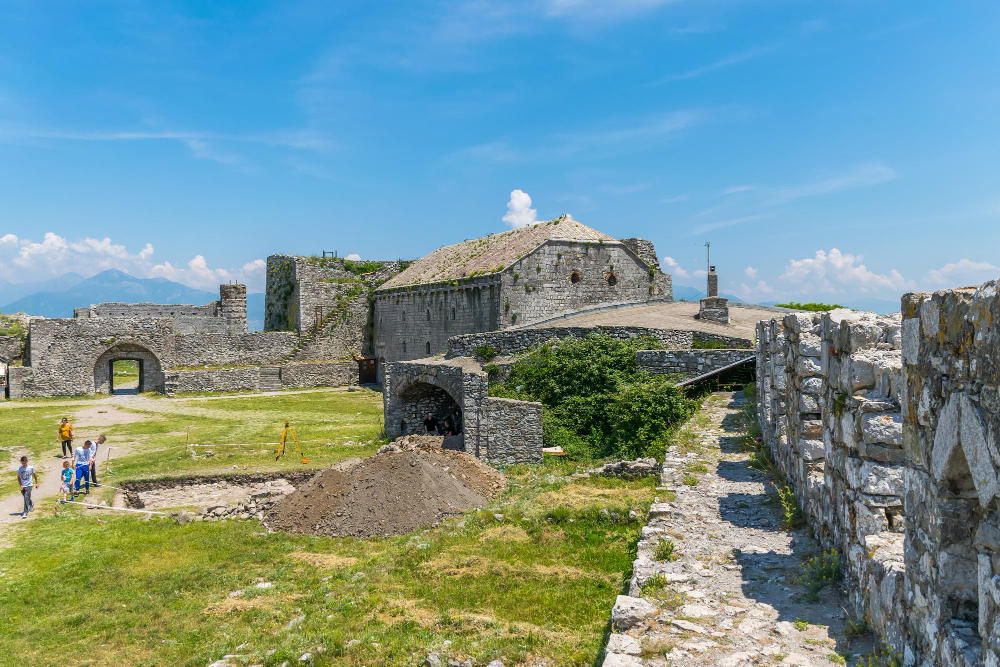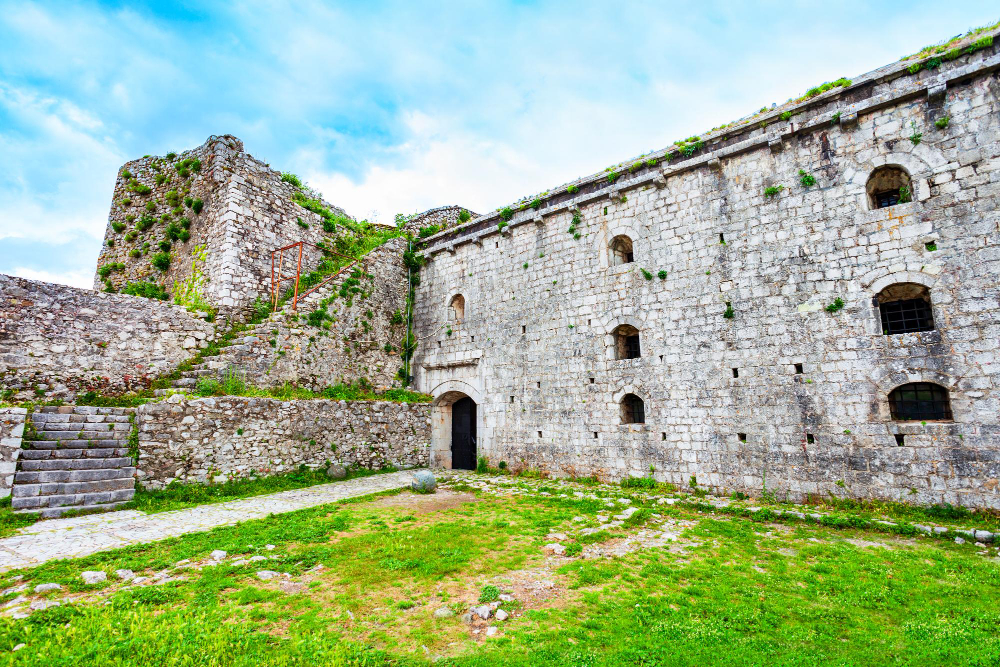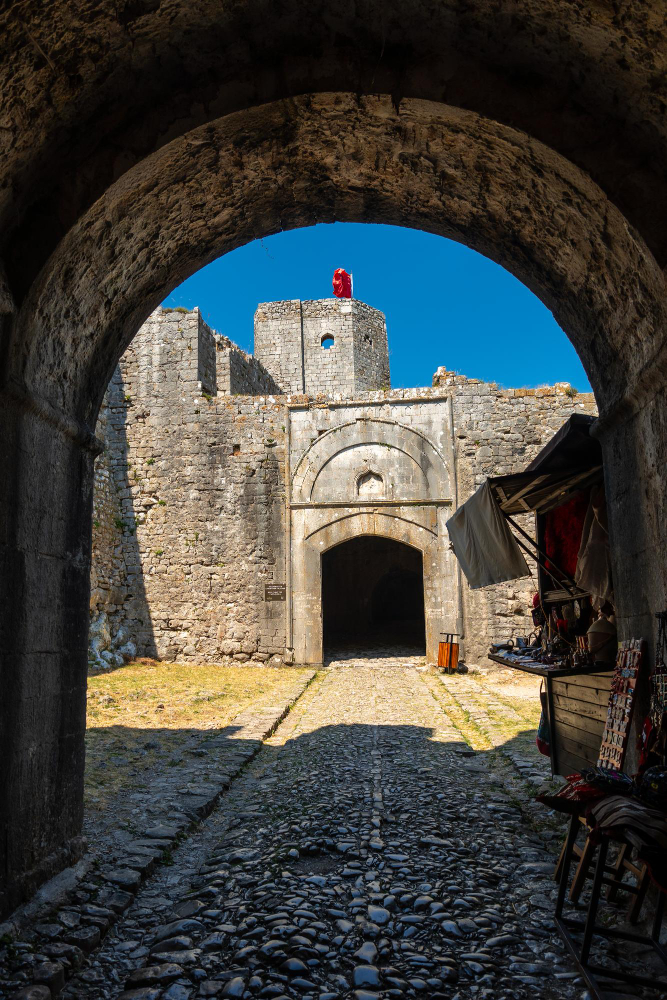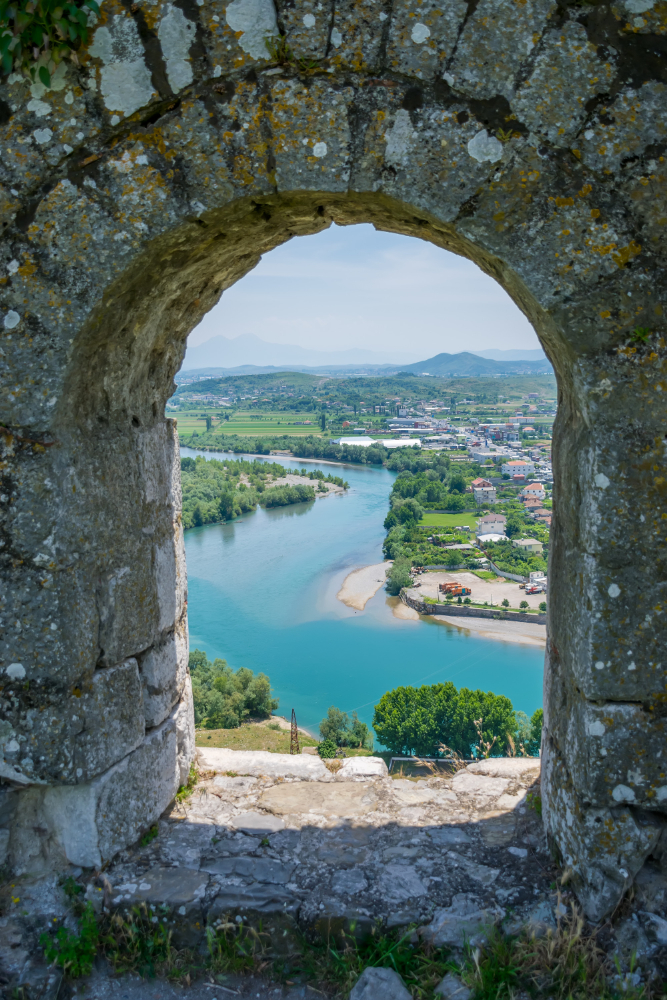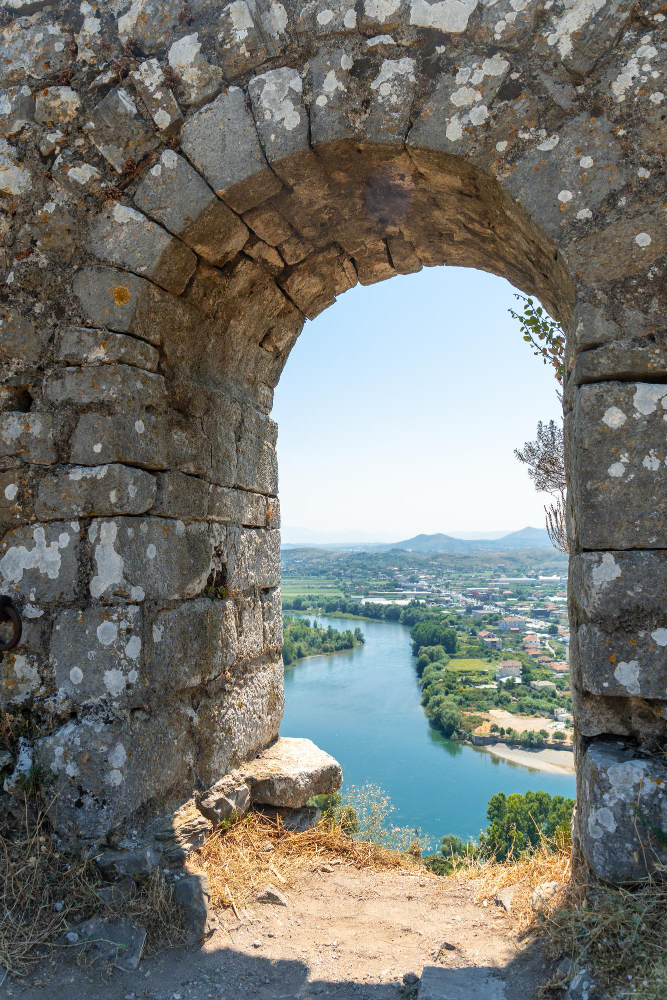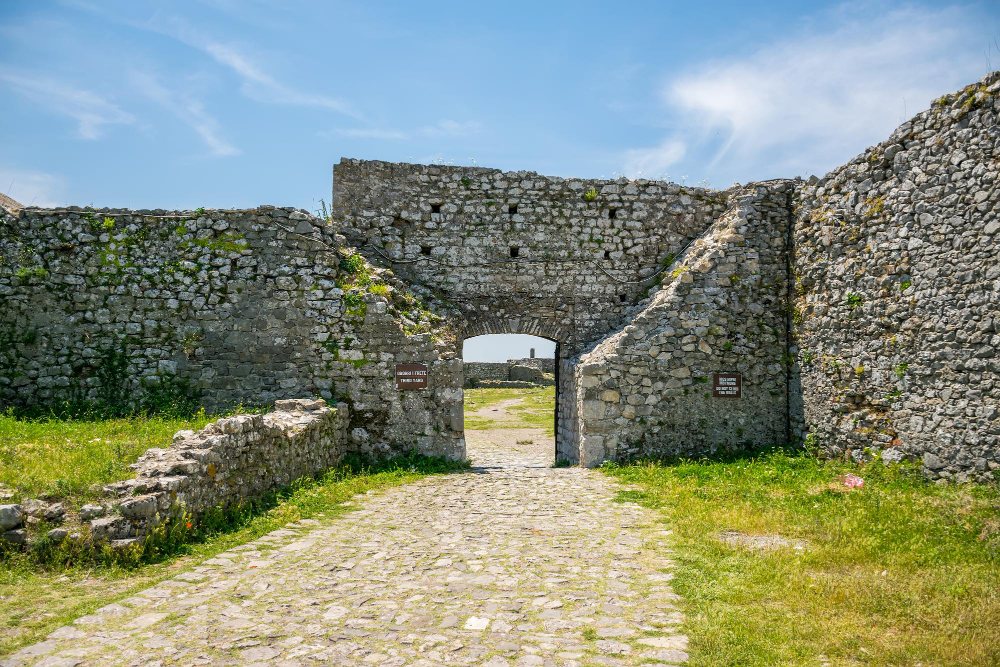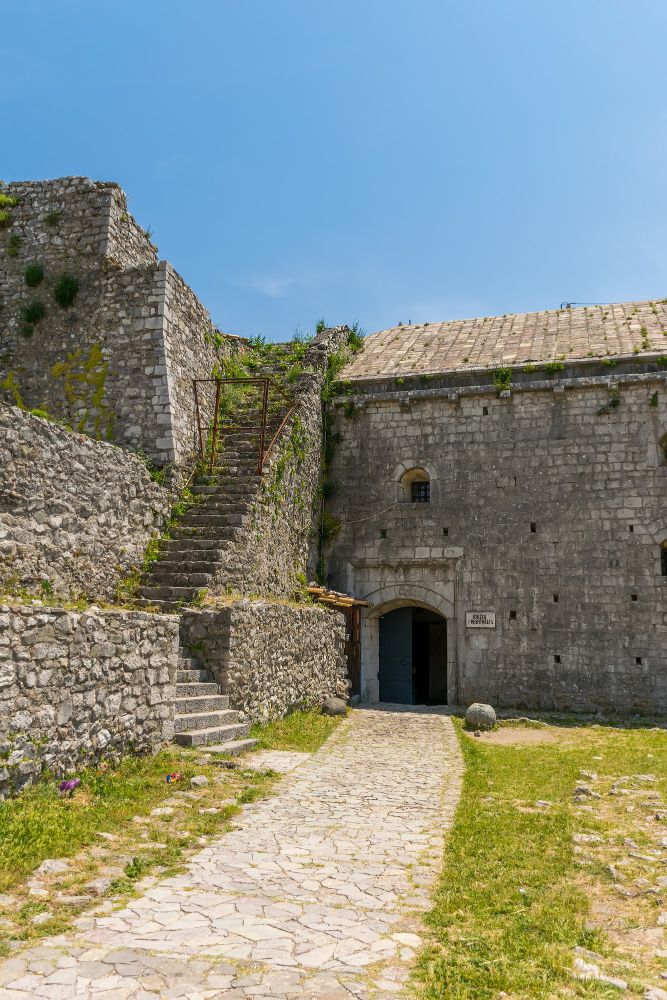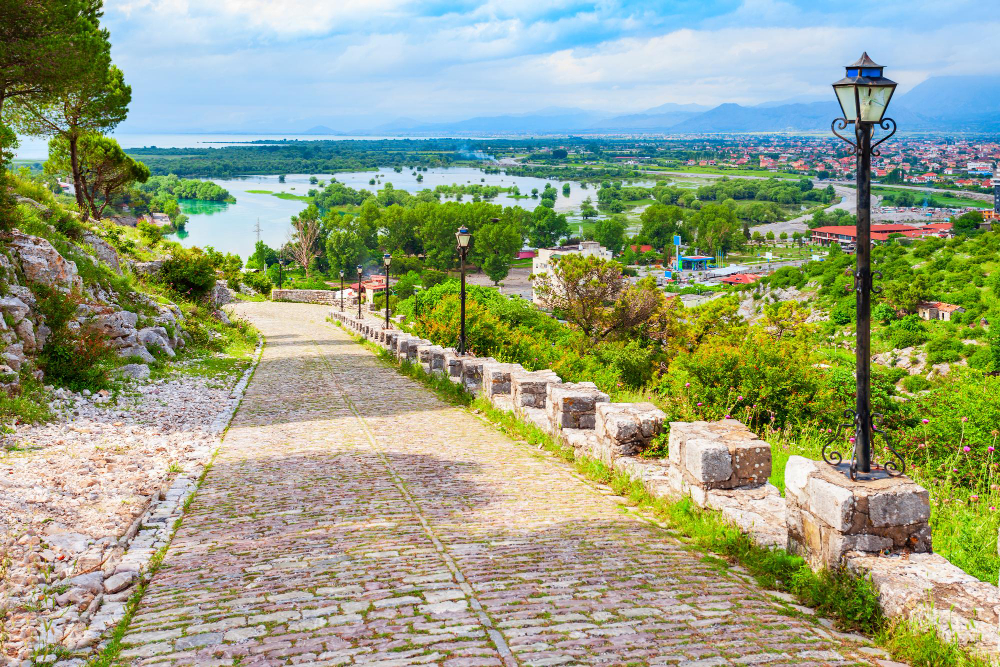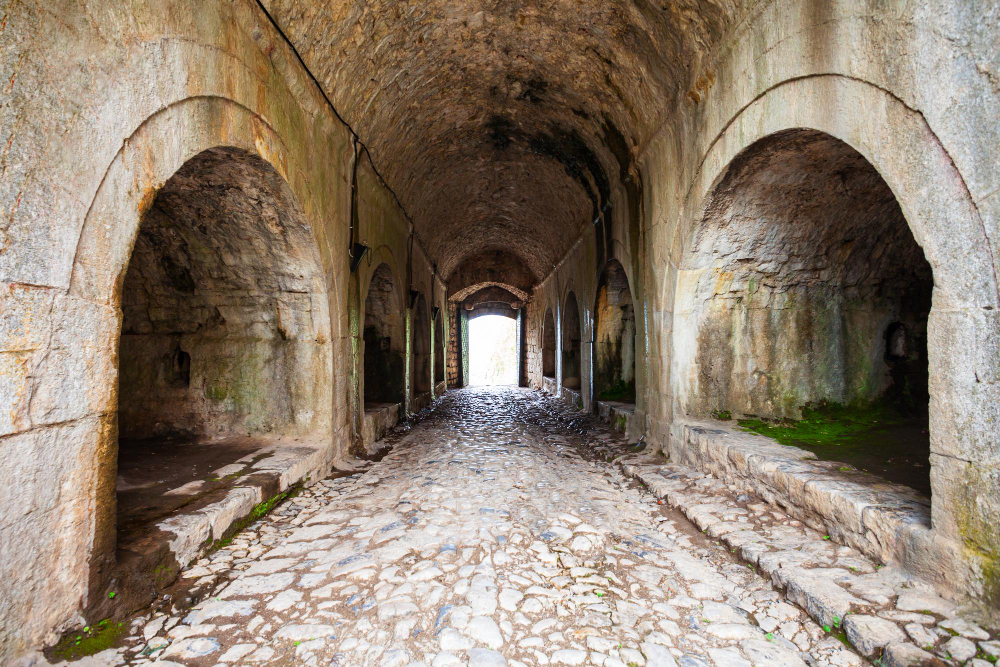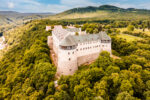

High above the city of Shkodra in north-western Albania stands the majestic Rozafa Castle (Albanian: Kalaja e Rozafës), a monument steeped not only in history but also in myths and legends. Perched on a rocky hill, 130 metres above sea level and surrounded by the rivers Drin and Buna, this castle stands as a silent witness to an eventful past stretching back to the Bronze Age. Yet it is not merely its historical significance that makes this structure so fascinating – it is, above all, the legend of Rozafa that has made this castle a symbol of self-sacrifice and courage.
A place steeped in history with ancient roots – The origins of Rozafa Castle stretch far back in time. Archaeological finds show that the hilly region was already inhabited in the Early Bronze Age. Yet the region truly came into its own in antiquity, when the Illyrian capital of Scodra flourished here under the rule of the Labeatae tribe. In the 4th and 3rd centuries BC, the first fortifications were built, which are regarded as evidence of the Illyrians’ quest for security and power. Scodra attained particular strategic and cultural significance under King Gentius, the last ruler of the Illyrian Kingdom. A new era began with the fateful Third Illyrian War in 168 BC, in which King Gentius was defeated by the Romans. Accounts by the Roman historian Livy vividly describe how the once-proud fortress fell to the Roman conquerors. The triumphal procession of the Roman general L. Anicius Gallus through Rome marked the end of an independent Illyrian kingdom.
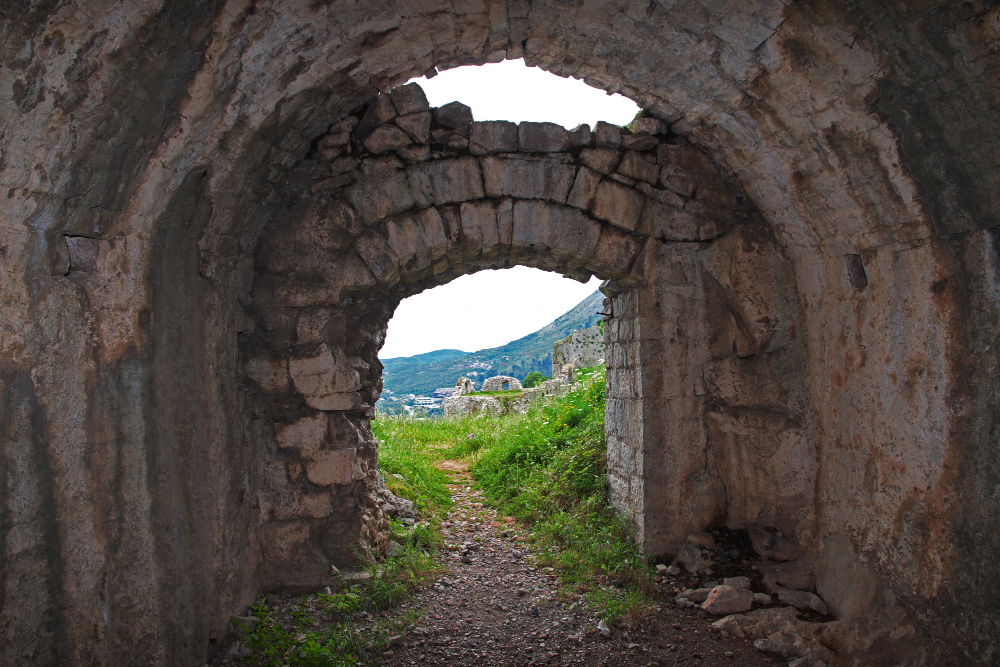
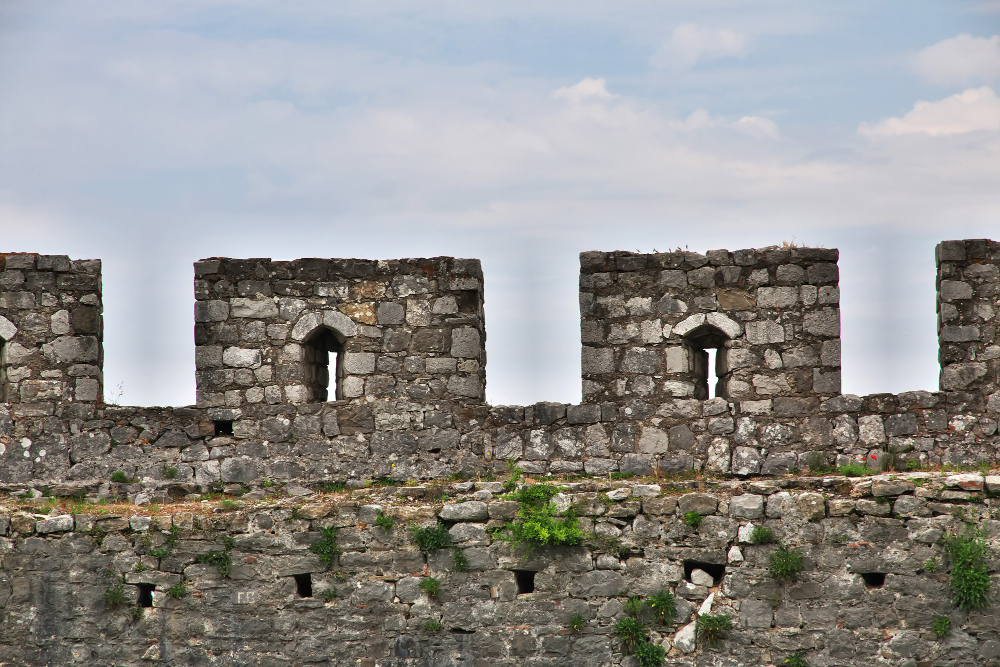
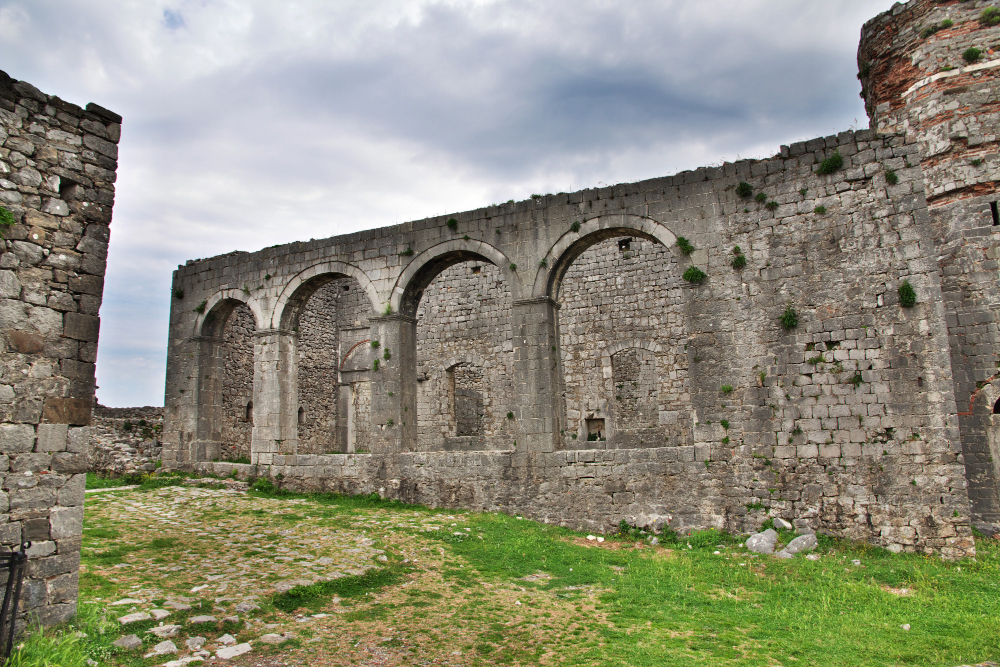
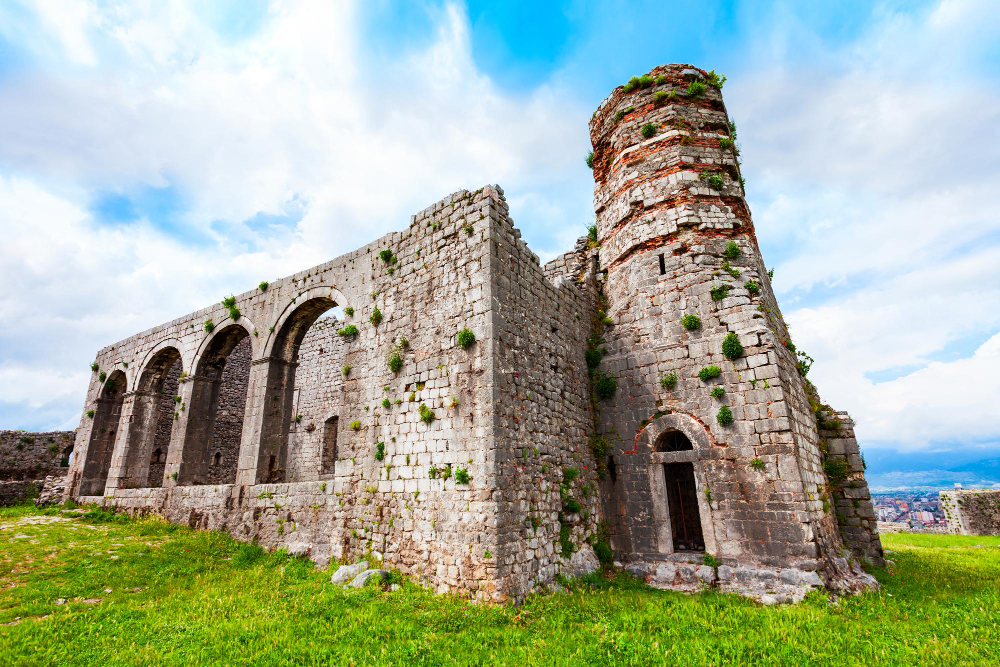
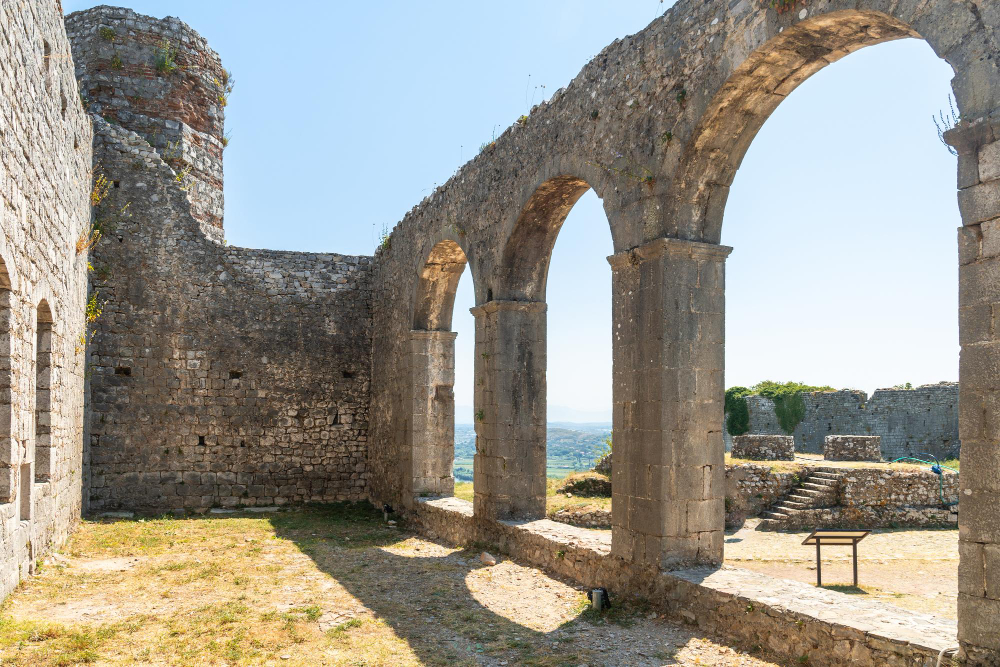
Venetian elegance and Ottoman power – However, the visible walls of the castle as we know them today date largely from the Venetian period. Over many centuries, this complex was the subject of fierce contention. Among the notable relics is the ruin of a 13th-century Catholic church, which was presumably dedicated to Saint Stephen. Following the Ottoman conquest, the church was converted into the Fatih Sultan Mehmet Mosque – a clear reflection of the shifting balance of power in this region. The castle was the scene of numerous sieges, including the famous Siege of Shkodra in 1478–79, when the Ottomans forcibly incorporated the region into their empire. The castle also played a significant role in the early 20th century, for example during the Balkan War of 1912–13. Today, together with its surroundings, it forms an archaeological conservation area that attracts both tourists and history enthusiasts.
The Legend of Rozafa: A Sacrifice for Eternity – The true fascination of Rozafa Castle, however, lies not solely in its architecture or history, but in the moving legend associated with its name. This tale, one of the best-known in Albanian folklore, is one of human sacrifice, unshakeable honour and profound pathos. According to the legend, three brothers decided to build a castle that would withstand the test of time. Yet every night, the walls they had erected during the day would collapse, and their labour seemed in vain. Eventually, the brothers met an old wise man who advised them to make an extraordinary sacrifice: they would have to wall up a living person inside the castle’s walls. The condition was that they must not reveal this secret to anyone, and that the woman who brought food to the building site the following day would be sacrificed. Whilst the two older brothers secretly told their wives of this plan, the youngest brother kept his word and said nothing. The next day, it was his wife, Rozafa, who brought the food, unaware of her impending fate. When she learnt what awaited her, she accepted her lot with remarkable devotion – though not without one final request: ‘When you wall me up, leave an opening for my right eye, my right hand, my right foot and my right breast. That way I can continue to watch over my newborn son, rock him, nurse him and comfort him. May my sacrifice strengthen the walls and ensure the castle stands forever.’ Rozafa was eventually walled in, and legend has it that the milk from her breast still flows through the castle walls to this day, visible as white lime stains seeping from the stones.
Myth and Reality: The Symbolism of the Rozafa Legend – The legend of Rozafa is not only a tale of self-sacrifice, but also a reflection of Albanian folk culture. Its themes – immolation (being walled up alive) and a mother’s love – are deeply rooted in the region’s spiritual tradition. Ethnologists see in this story a connection to the goddess of fertility in Illyrian mythology, who symbolises the cycle of life and death. An interesting aspect is the medical practice associated with the legend: women from the region scrape limescale deposits from the castle walls and mix them with water to increase milk production. This ritual bears witness to the unshakeable link between myth and everyday life. The legend finds parallels in other Balkan cultures and has spread widely through oral tradition. Particularly well-known is the Serbian version, ‘The Building of Skadar’, published in 1815 by Vuk Karadžić. In this version, the focus is on the members of the Mrnjavčević noble family. Such variations illustrate the universal appeal of this tale.
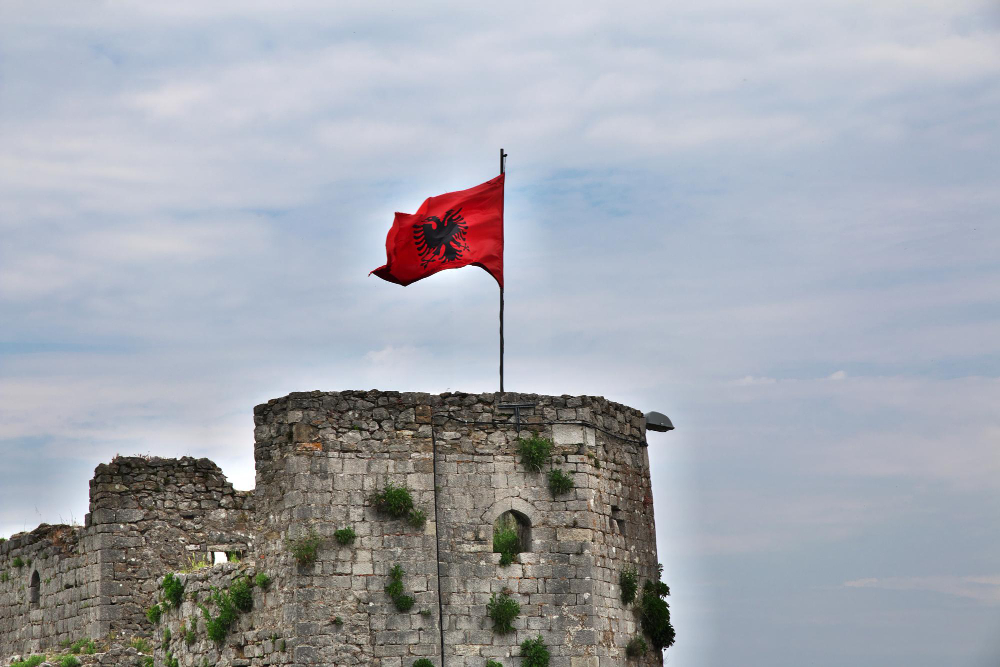
Rozafa Castle: A Magnet for Culture and History – Today, Rozafa Castle is not only a historically significant site but also a symbol of Albanian identity and pride. Visitors can wander through the ruins, soak up the atmosphere of times gone by and enjoy the breathtaking views over the city and the surrounding countryside. The small museum within the castle complements the experience with exhibitions that bring the history and legend to life. Particularly impressive is the sculpture of Rozafa, which protrudes halfway from the walls – a reminder of the sacrifice she is said to have made for the castle’s construction. This statue was created by the artist Skënder Kraja and is an integral part of the museum.
A legend that touches the heart – The story of Rozafa Castle is not only a testament to Albania’s rich past, but also an example of how myth and reality are intertwined. The legend of Rozafa touches the heart with its timeless message of love, sacrifice and immortality. It gives the castle a soul and makes it a cultural gem whose influence extends far beyond Albania’s borders. Anyone who visits Rozafa Castle not only travels through history but also immerses themselves in the fascinating world of Albanian myths – an experience that will remain unforgettable.