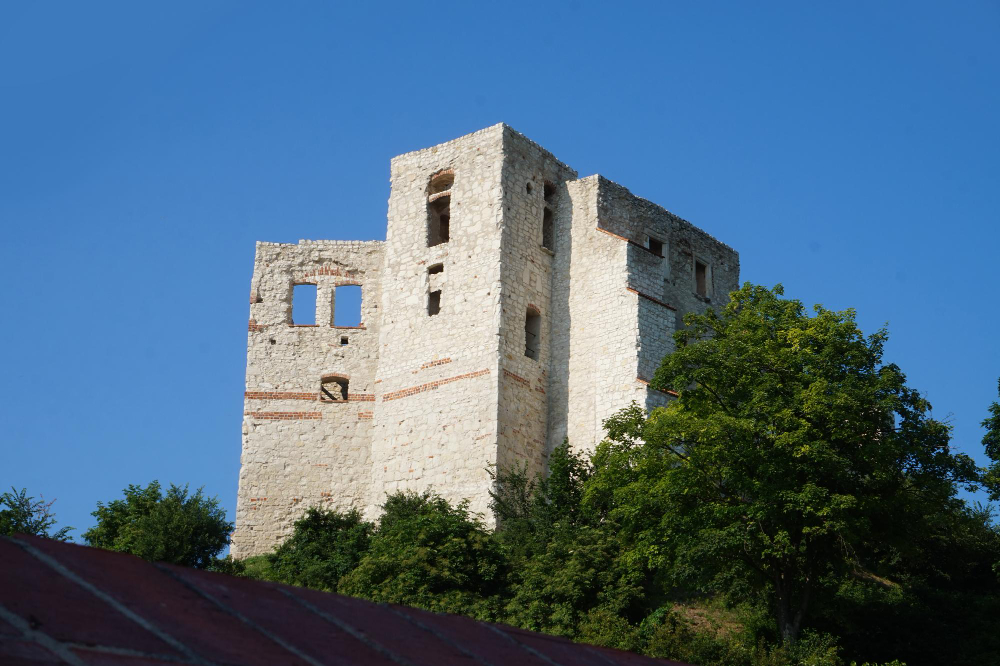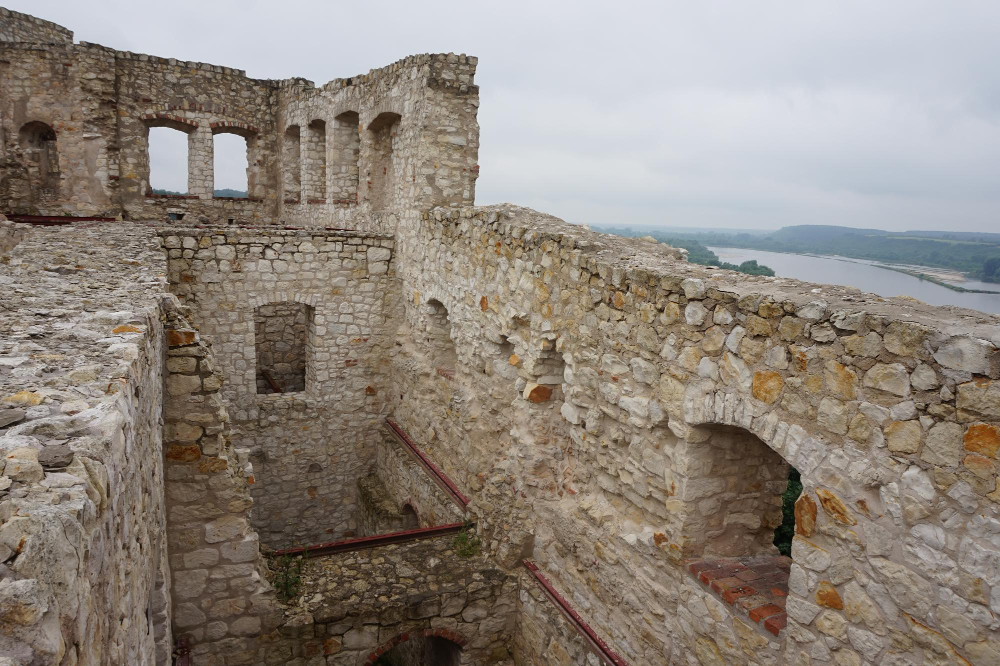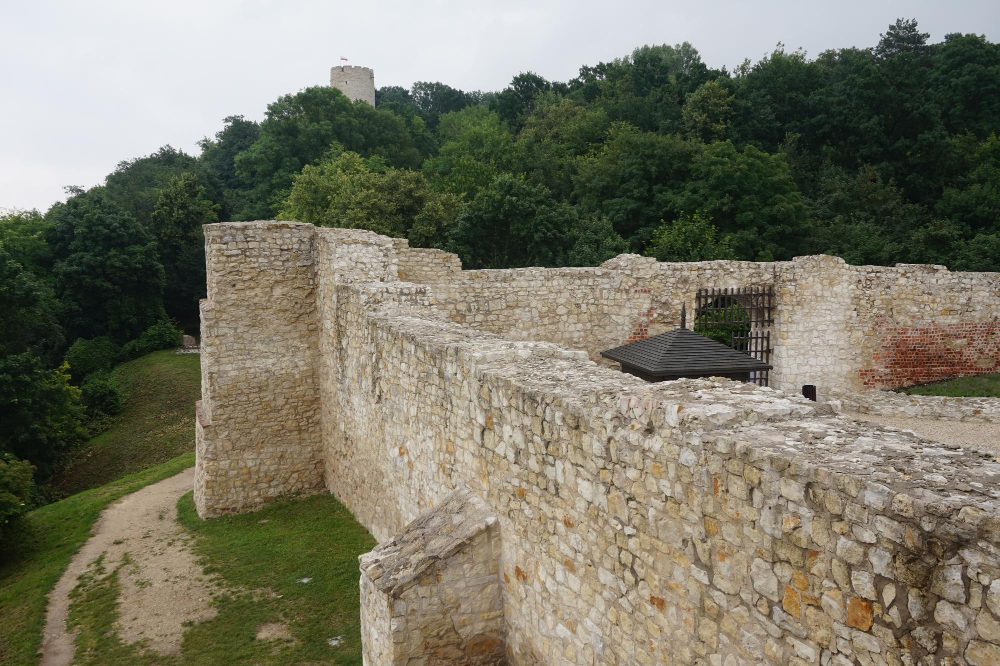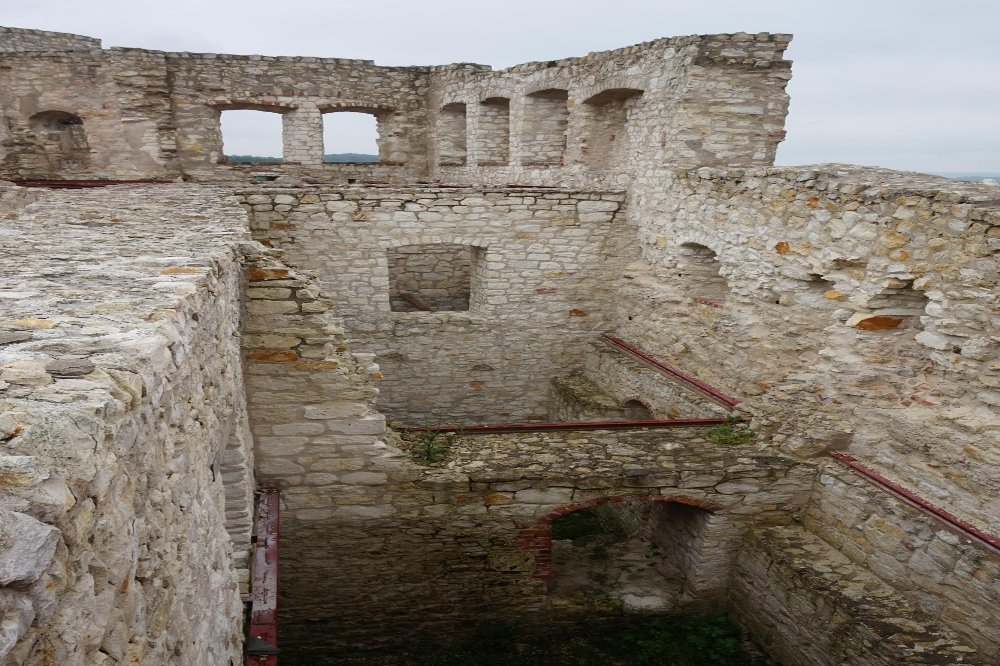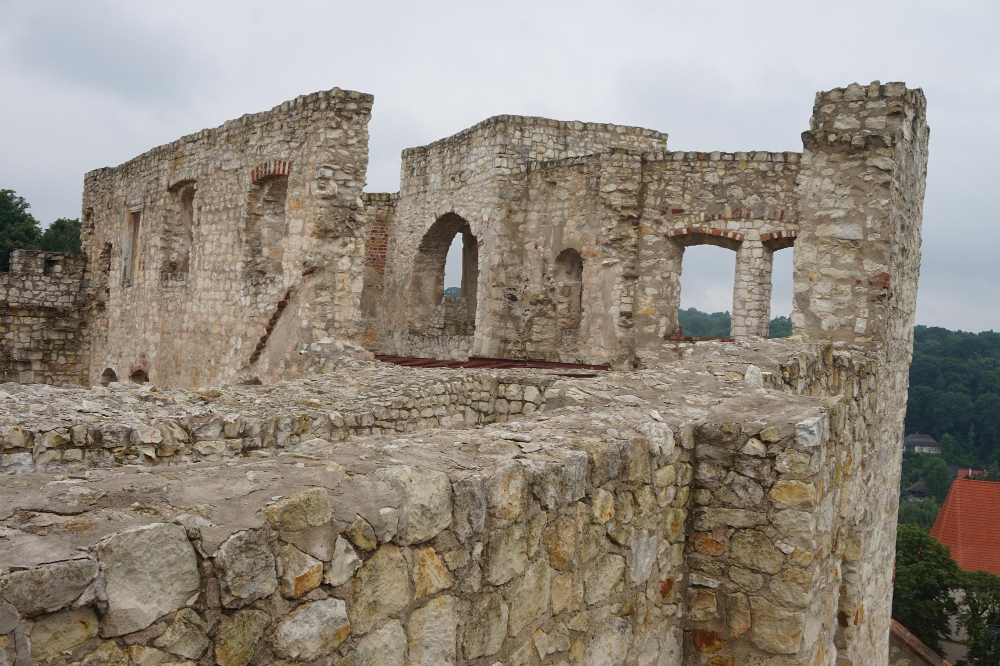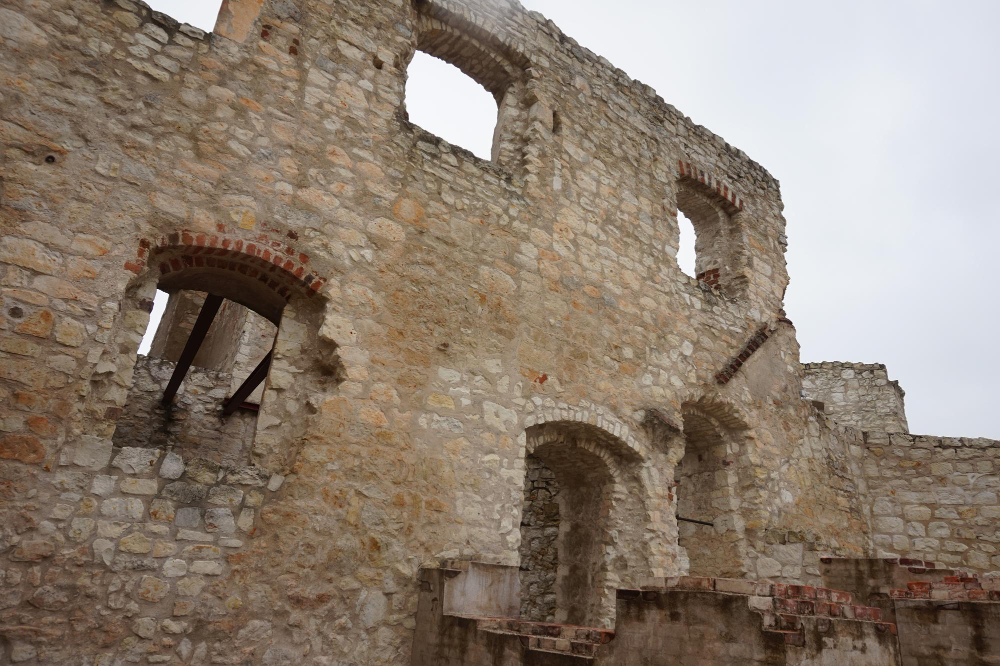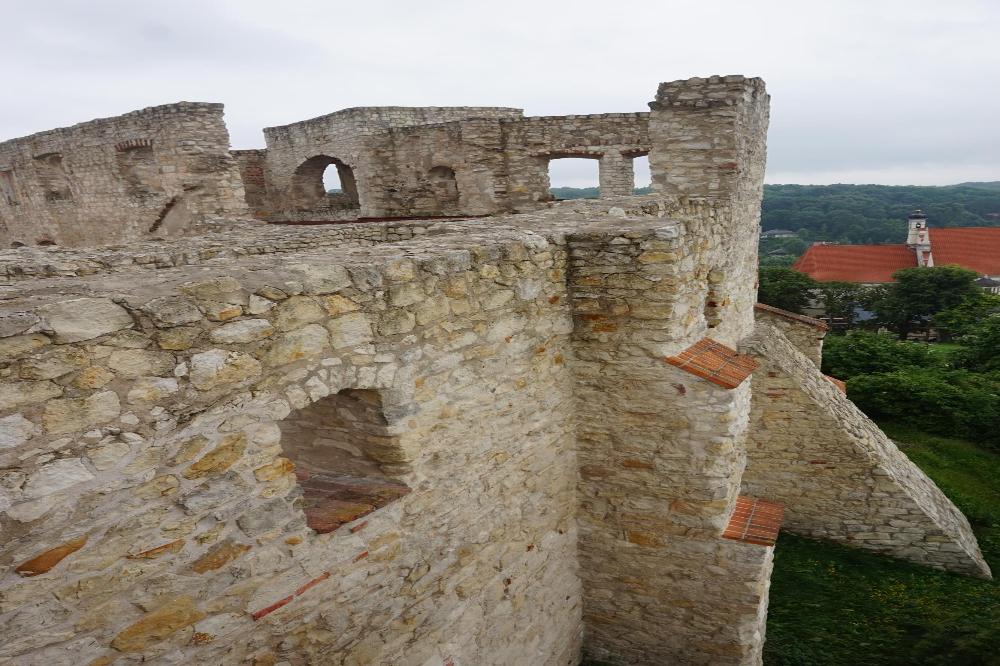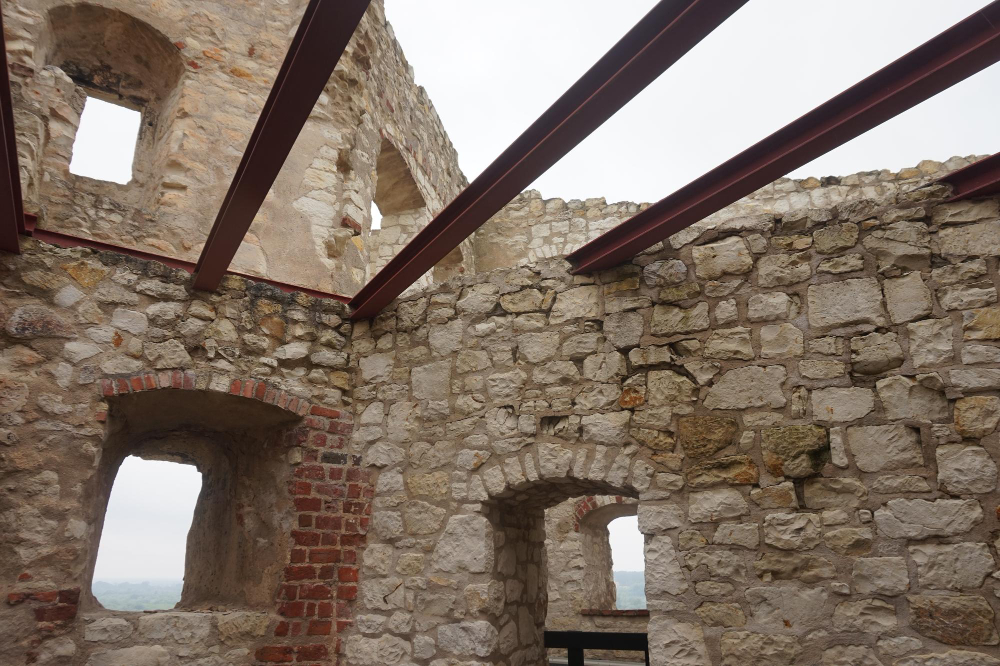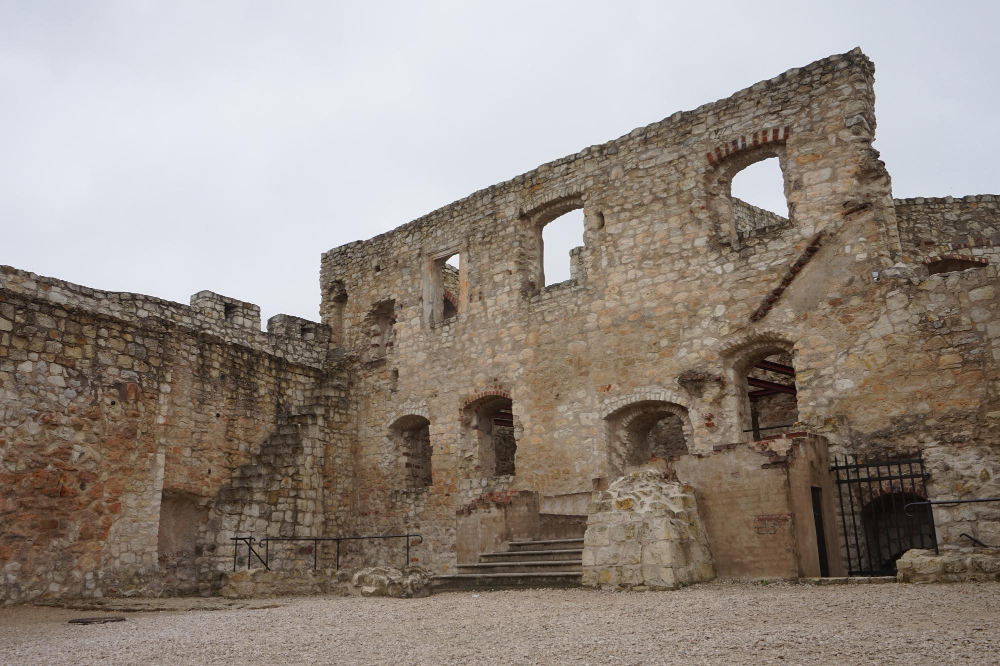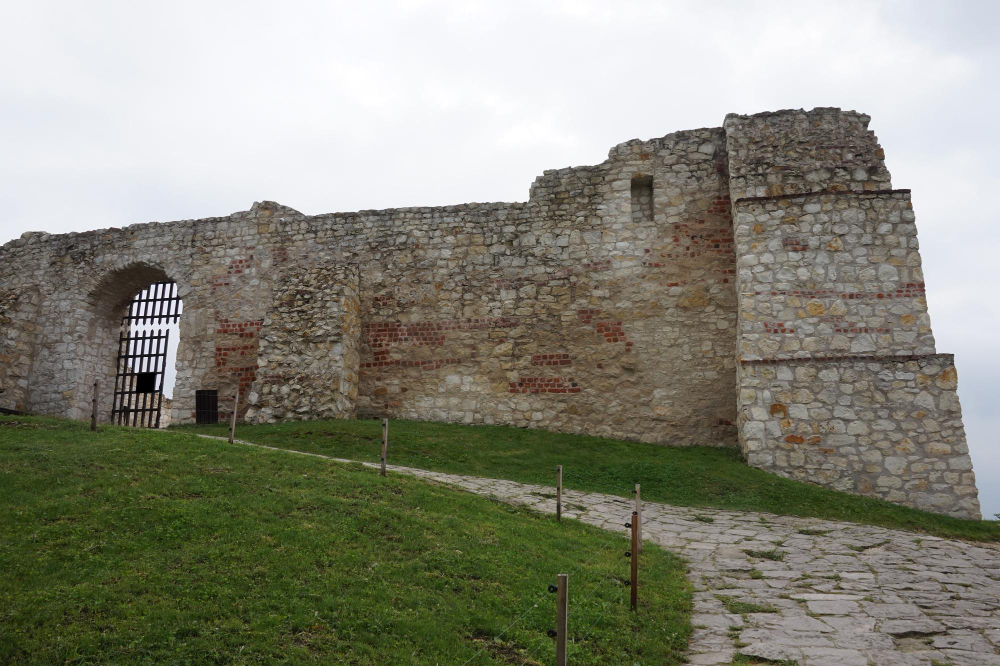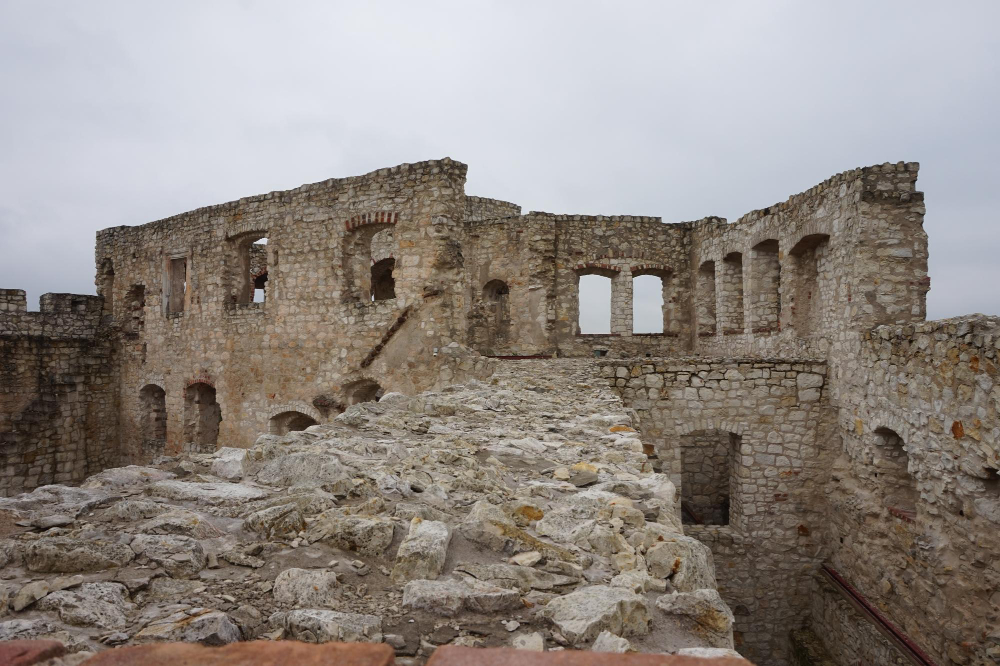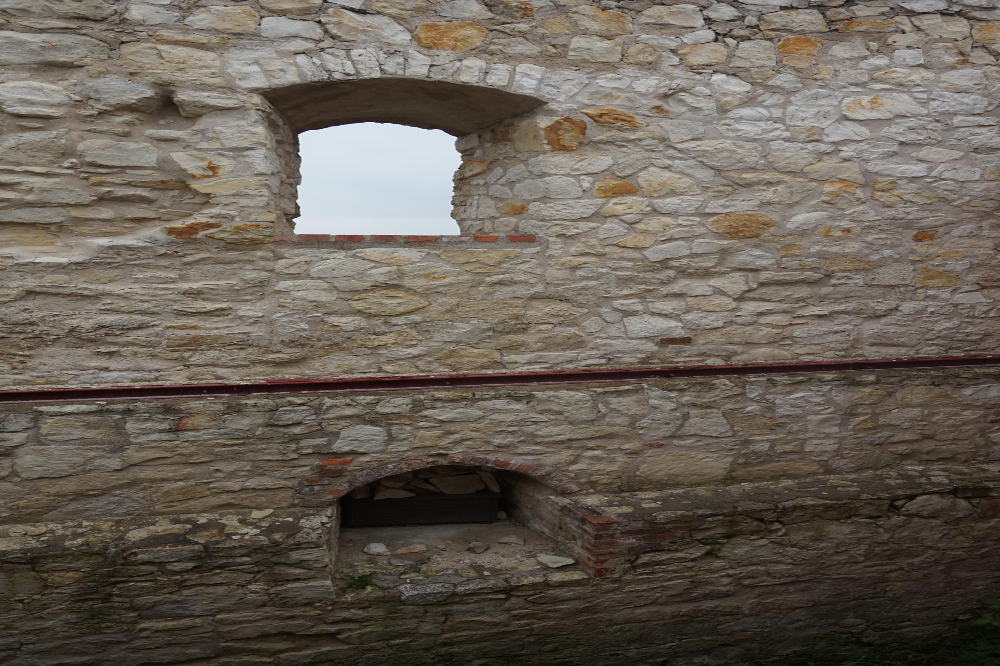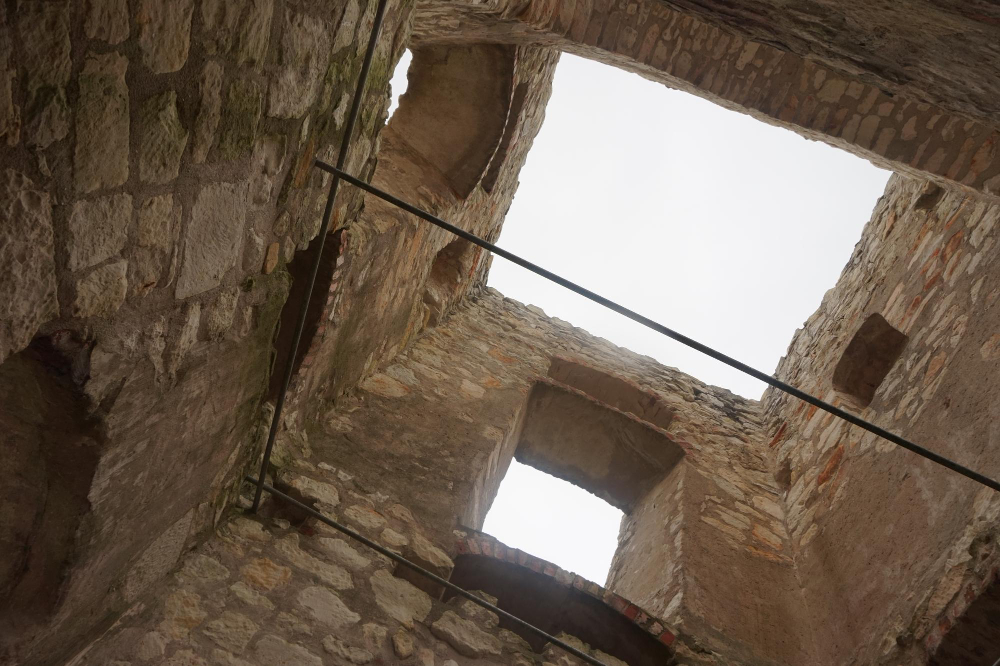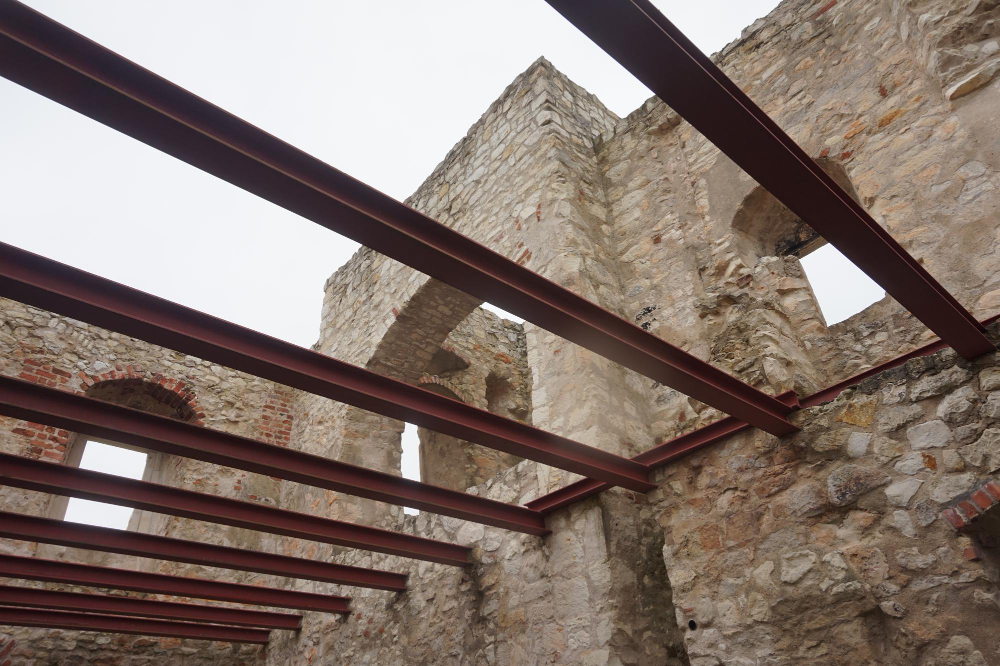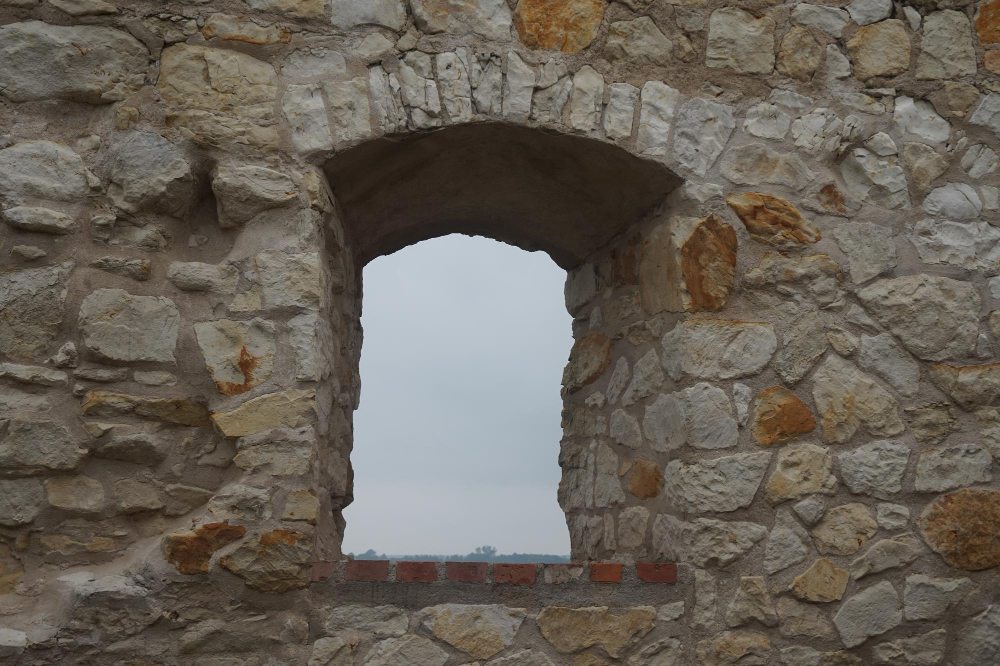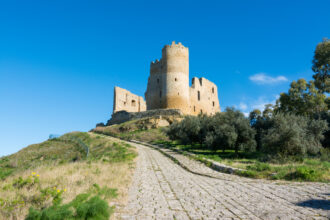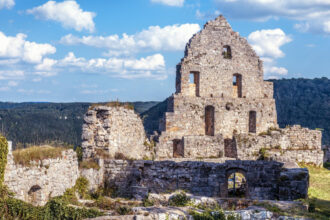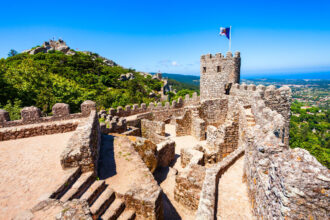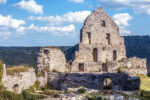

High up on the castle hill of Kazimierz Dolny, a picturesque little town in the Lublin region of Poland, stand impressive ruins that bear witness to times gone by. Dating from the 13th and 14th centuries, this complex of defensive structures is a place full of secrets and stories that captivate both the soul and the mind. Built of limestone, the castle was once an important centre for administration, trade and defence. Today, it attracts visitors with its historic charm and mystical aura.
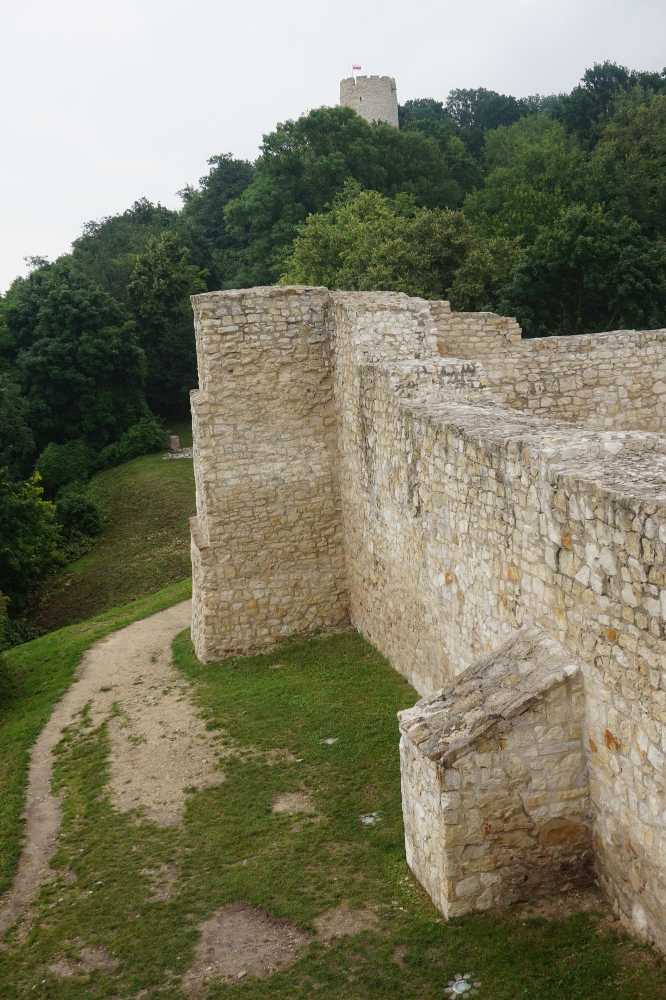
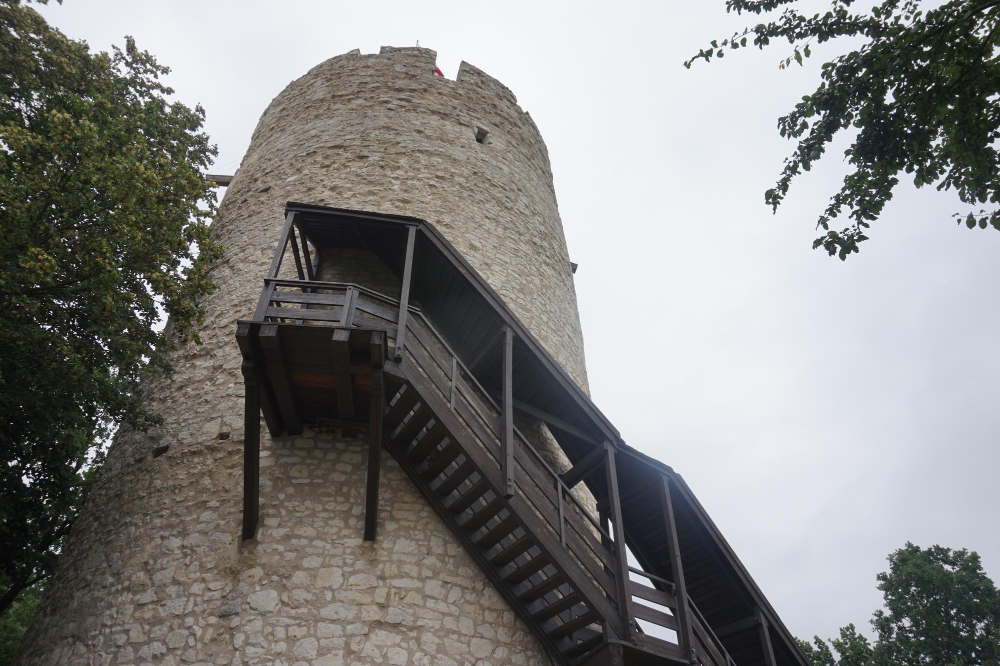
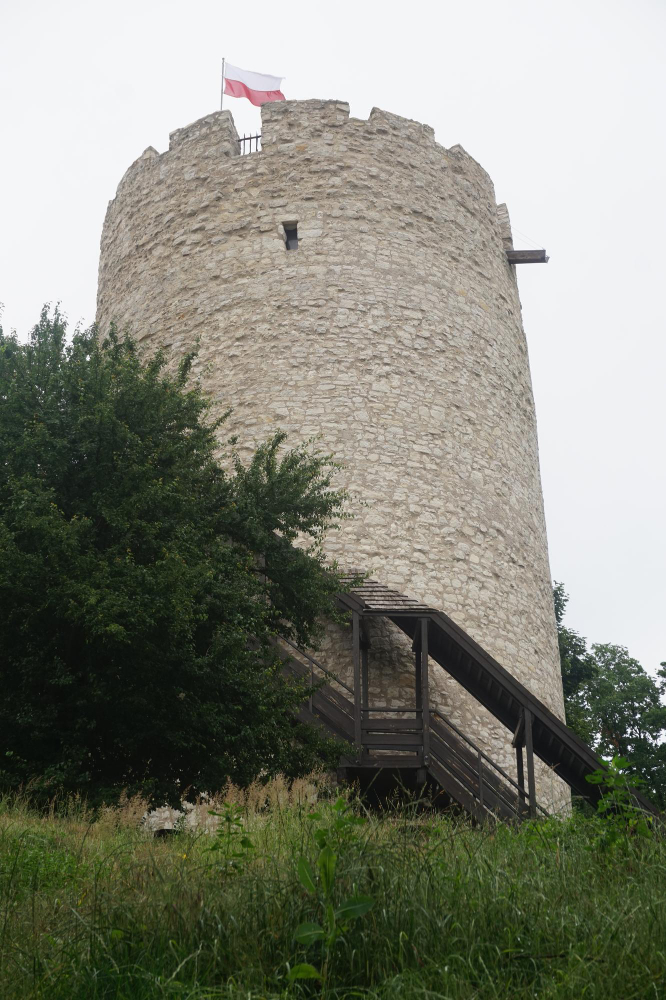
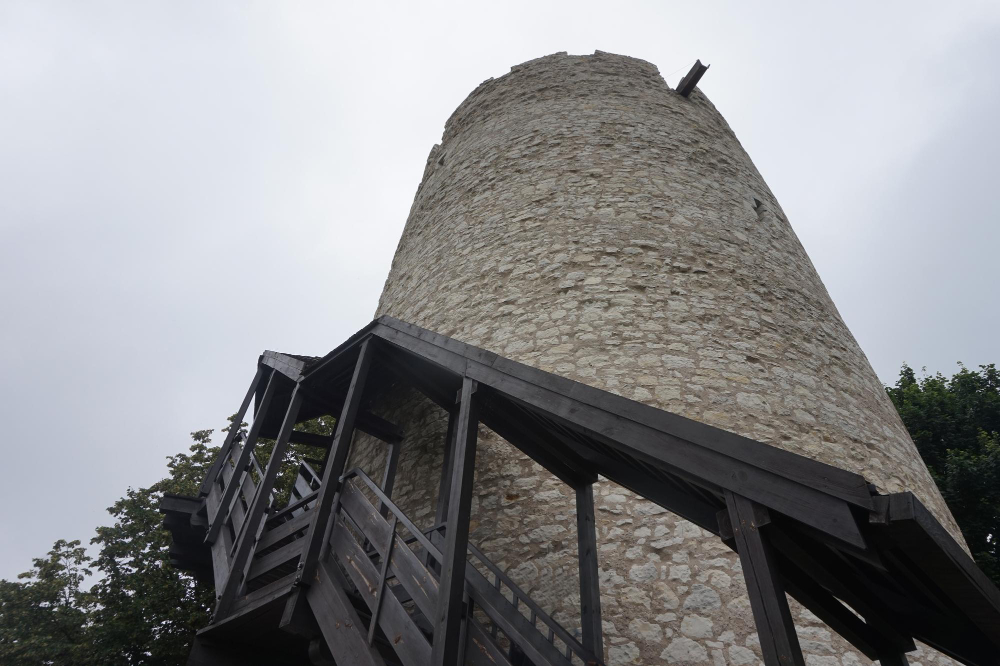
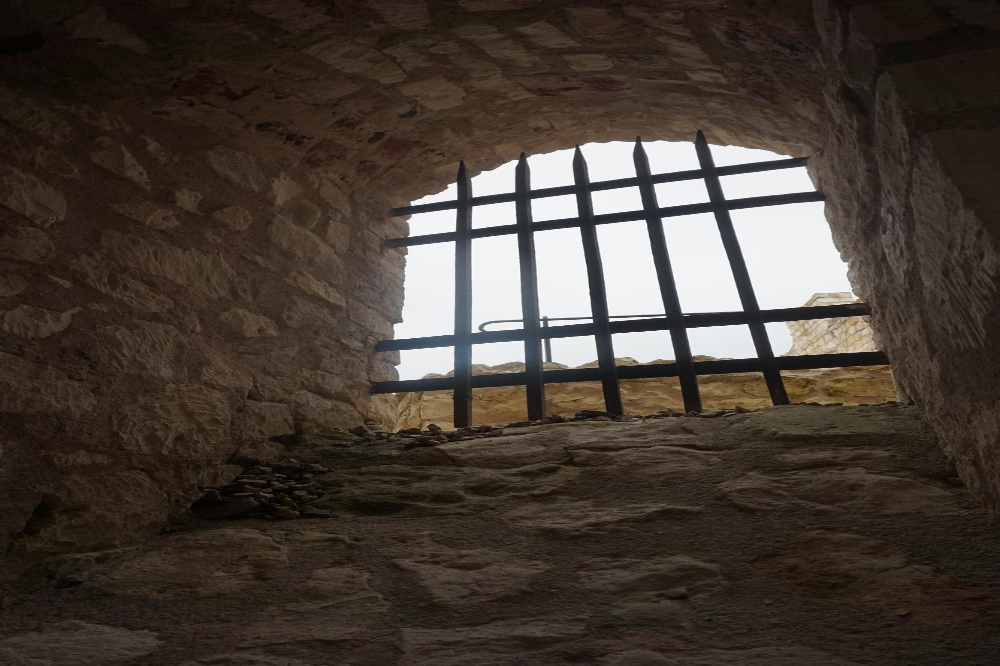
The Upper Castle – The ‘Bastion’ – The Upper Castle, also known as the ‘Bastion’ or ‘Łokietek’s Tower’, is one of the oldest parts of the complex and was built between the 13th and 14th centuries. The massive, round tower served as a defensive tower and was strategically positioned on a hill from which one could overlook the nearby Vistula and the so-called ‘Woyszyńska Ford’ – an important trade route. The bastion, which stands up to 20 metres high and has a circumference of 32.5 metres at the base, was characterised by impressively thick walls, which were 4.2 metres thick at the plinth and tapered to three metres towards the top. A particularly interesting aspect of this design is the location of the single entrance, situated six metres above ground level. This arrangement was presumably intended to make the tower even more inaccessible to attackers. The lower part of the tower also housed a dungeon, whose grim history likely harbours many secrets over the centuries. The exact function of the tower remains unclear to this day. Sources and historians speculate as to whether it might have served as a prison, a customs post, a treasury or even a river beacon. One particularly fascinating theory suggests that the bastion was later used as a signal fire inland: at night, a fire lit on the tower was intended to help boatmen find their way more easily along the Vistula.
The Lower Castle – A Testament to Royal Power – The lower part of the castle complex was built in the 14th century on the orders of King Casimir the Great, as reported by the chronicler Jan Długosz. It was an oval-shaped complex surrounded by massive walls. The two-metre-thick limestone walls were crowned with battlements, whilst inside there was a large courtyard, which was presumably lined with wooden buildings. In addition to its defensive function, the castle served primarily administrative purposes. It was a centre of power that enabled control over trade and economic activities in the region. Thanks to its location on the Vistula, Kazimierz Dolny developed into a thriving commercial centre, which significantly increased the strategic importance of the complex.
Extensions and alterations – changes over the centuries – In the 15th century, the castle came under the administration of the Grot family, who expanded it considerably. Under their leadership, new wings were added, including a two-storey residential building on the south side and a square, brick-built residential and defensive tower near the Vistula. In addition, a dry moat was constructed to provide further protection. Contemporary inventory lists bear witness to the architectural splendour and strategic sophistication of the complex. A decisive turning point in the castle’s history occurred in 1509, when King Sigismund I handed the complex over to the noble Firlej family. Mikołaj Firlej, an admirer of the Renaissance style, commissioned renowned architects such as Santi Gucci and Piotr Likiel to redesign the castle. As part of these alterations, the castle was given a magnificent attic and further ornamentation typical of the Italian Renaissance. In particular, the square tower bordering the Vistula was embellished with additional decorations and became a symbol of the cultural revival and the growing power of the Firlej family.
The Decline of the Castle – Wars and Destruction – However, the castle’s heyday was not to last. During the ‘Swedish invasion’ in 1655, the complex was captured and burnt down by the Swedes. A few years later, in 1657, the castle suffered another severe blow when troops of the Transylvanian Prince George II Rákóczi caused massive destruction. Thanks to the subsequent repair work, it was possible to restore at least some of the castle’s former splendour. The western parts of the buildings were rebuilt, and magnificent external staircases now led up to the castle courtyard. But the disasters were far from over. A devastating fire in 1663 destroyed not only large parts of the town of Kazimierz Dolny, but also the renovated castle complex. Ultimately, the political unrest of the 18th century – including the conflicts between Augustus the Strong and Stanisław Leszczyński – led to the castle’s final decline. Plans for its reconstruction failed, and by the beginning of the 19th century it was finally abandoned. In 1806, the Austrian authorities demolished parts of the ruins for safety reasons.
The Final Battle – The November Uprising – Kazimierz Dolny Castle was not only a centre of medieval power, but also the scene of historic battles. On 18 March 1831, during the November Uprising, a battalion under the command of Stanisław Krzesimowski defended the ruins against Russian troops. As a result of this action, the castle – which was then owned by the Czartoryski family – was confiscated and passed into the possession of the Kingdom of Poland.
The castle’s role today – A window into the past – After centuries of decay and neglect, the value of the ruins was recognised once again in the mid-20th century. From 1958 to 1960, archaeologists carried out extensive investigations to secure the remaining structures. The castle was subsequently preserved and opened to the public as a ‘permanent ruin’. Today, the ruins attract tourists from all over the world who are fascinated by the rich history and legends surrounding this place.
Legends and mysteries surrounding the castle – As well as its historical significance, numerous legends surround the castle. One of the best-known stories tells of a hidden treasure said to be buried deep within the castle complex. According to legend, the treasure belonged to King Kazimierz himself and has remained undiscovered to this day. Other tales speak of a ghost that wanders through the ruins at night – the ghost of a former inhabitant who is said to have met his tragic fate there.
A Monument to History – Kazimierz Dolny Castle is more than just a structure of stone and mortar; it is a living testament to Polish history and culture. Its evolution from a medieval fortress, through a Renaissance residence, to a ruin tells a captivating story of power, art, war and decay. Anyone visiting the ruins today can almost sense the splendour of the past and be inspired by the legends and stories that make this place so special.