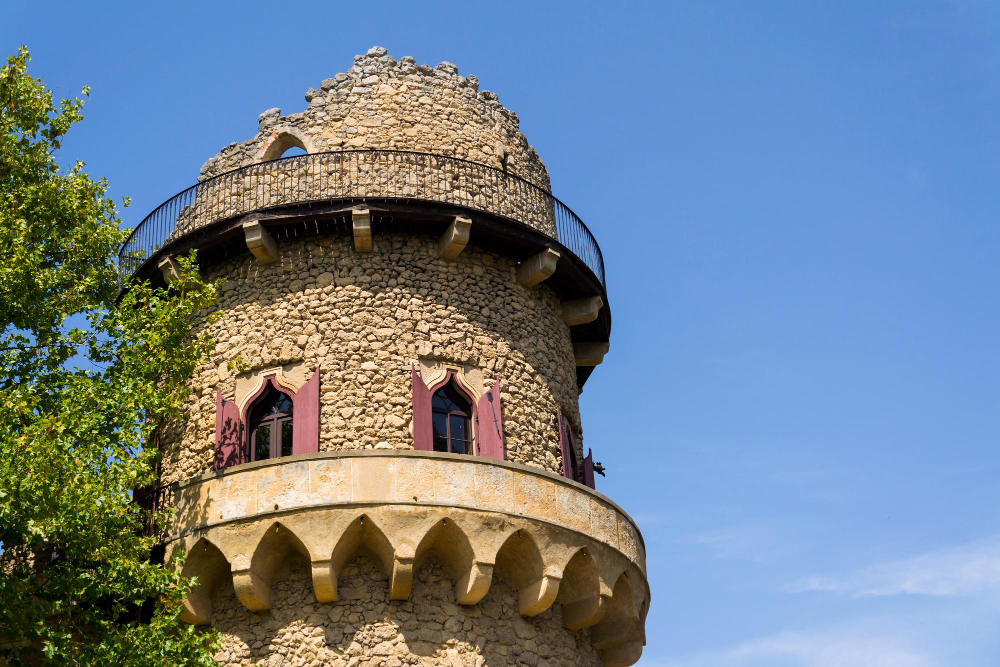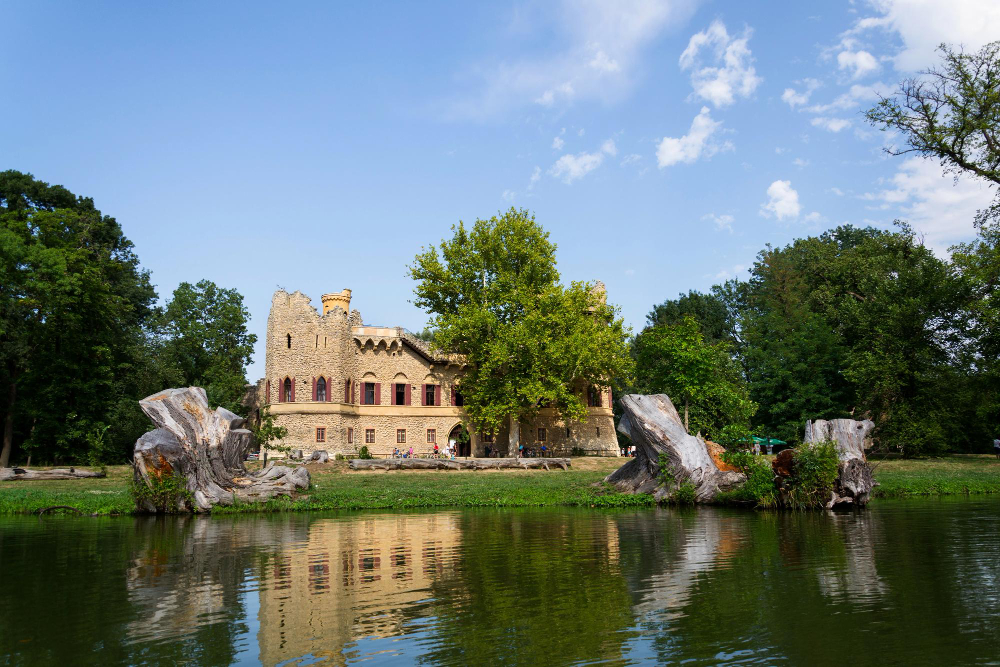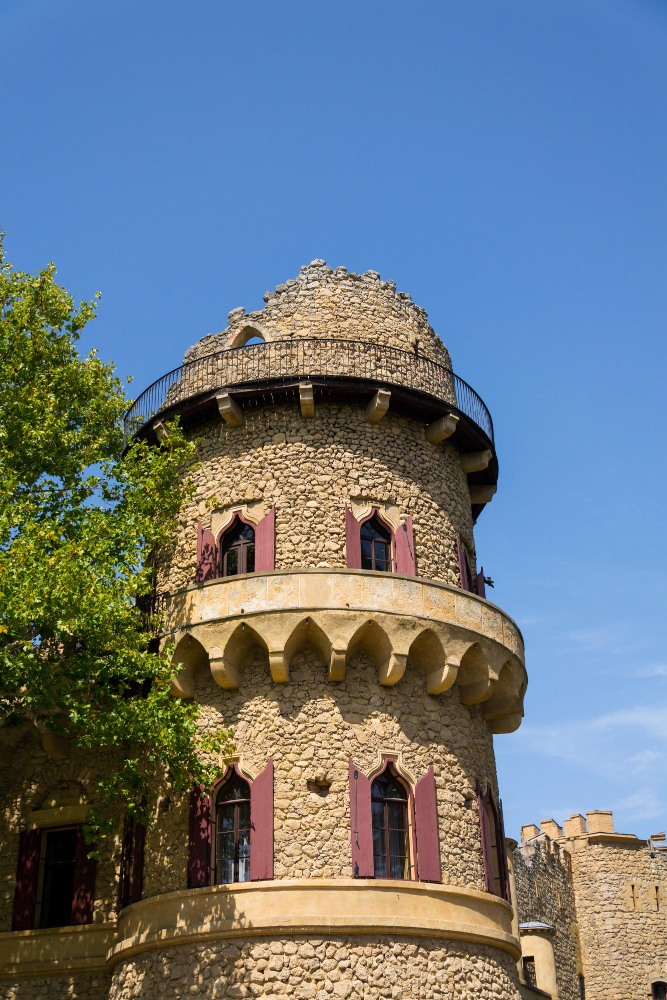

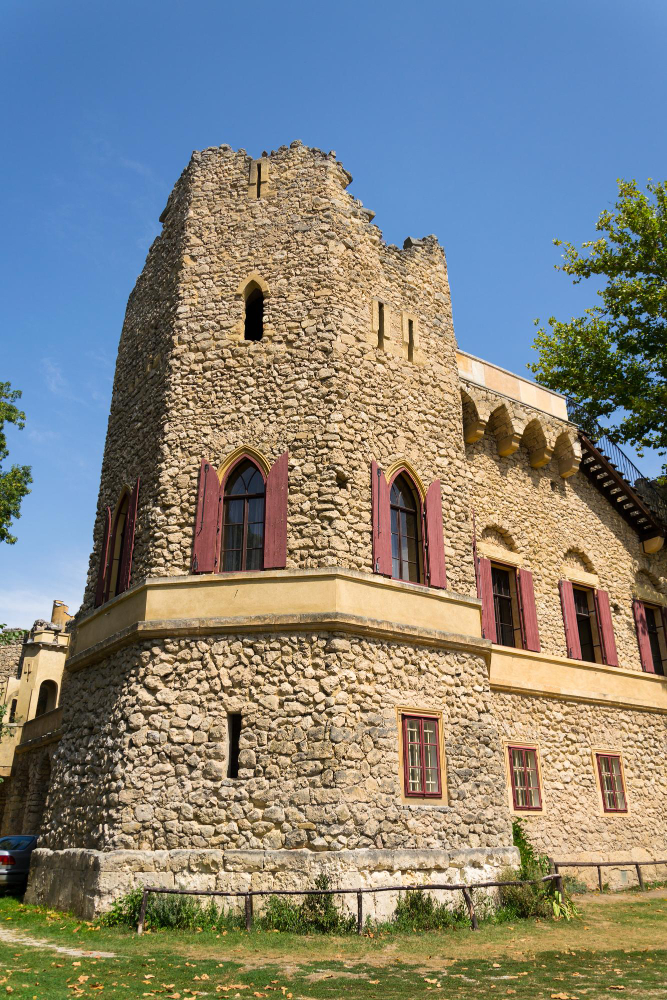
How an artificially constructed medieval castle has captured the heart of the South Saxon cultural landscape. Janův hrad – also known as Johannisburg or John’s Castle – may, at first glance, seem like the setting for a medieval legend. With its imposing walls, battlements and seemingly weathered façades, one could easily imagine that a grim knight once resided here, or that mystical ghost stories are woven into its history. Yet appearances can be deceiving: Janův hrad is not a genuine medieval castle, but a deliberately staged, artificial ruin from the early 19th century – a so-called ‘folly’. Despite its lack of historical authenticity, however, the site has a fascinating story to tell, one closely linked to the noble House of Liechtenstein.
A backdrop for hunting: the purpose behind the romance of the ruins – The idea of erecting artificial ruins to embellish the landscape or create a romantic atmosphere was widespread amongst the European nobility of the 18th and 19th centuries. In this context, the Princes of Liechtenstein commissioned the architect Josef Hardtmuth to build Janův hrad as an extension to their extensive estate in South Moravia. Hardtmuth, who, incidentally, also went down in history as the inventor of the modern pencil, designed the ruin between 1801 and 1808. The castle was intended to stand amidst the picturesque floodplain forests along the Thaya River and give the impression of a dilapidated fortress that had been built centuries earlier. This style was in keeping with the spirit of Romanticism, in which nostalgia and a longing for a supposedly idealised past were ever-present. Yet Janův hrad was more than just a decorative accessory. The building served as a hunting lodge, where the prince and his entourage would celebrate lavish feasts after extensive driven hunts in the surrounding forests. With its spacious halls, including a ballroom and numerous salons, the complex provided the perfect setting for social glamour and an aristocratic lifestyle. The building was used extensively, particularly during the warmer months, as its location in the damp floodplains meant it offered slightly cooler temperatures than the main residence in Lednice.
A prince who gave the castle its name – Janův hrad owes its name to the man in whose honour it was built: Prince Johann I of Liechtenstein (1760–1836). As a member of one of the wealthiest and most influential noble families in Central Europe, Johann I devoted himself not only to politics and diplomacy, but also to the promotion of art and architecture. During his reign, the Lednice-Valtice Cultural Landscape was created – one of the most impressive cultural landscapes in Europe, which is now a UNESCO World Heritage Site. Johann I was a typical representative of an era in which noble houses sought to outdo one another with magnificent buildings and artistically designed parks. The construction of Janův hrad was part of these endeavours. The aim was not so much to erect a functional castle as to create an aesthetic Gesamtkunstwerk that combined nature, architecture and leisure activities.
The Architecture: The Perfect Illusion of an Ancient Ruin – Josef Hardtmuth’s design for Janův hrad was deliberately conceived to convey the impression of a dilapidated structure from a bygone era. He drew inspiration from the romanticised notion of English castle ruins, which had come into fashion towards the end of the 18th century. With artificial cracks in the walls, asymmetrical towers and seemingly shattered windows, Hardtmuth succeeded in creating a perfect illusion. The building materials also played their part: the architect used limestone and brick, which further enhanced the impression of authenticity. To this day, the complex continues to fascinate with its attention to detail and the quality of its craftsmanship. The interiors, on the other hand, were anything but spartan. They reflected the luxury to which the Princes of Liechtenstein were accustomed. Whilst the exterior façade was deliberately designed to look old and weathered, the salons were furnished with fine furniture and stylish décor. In addition to the large ballroom, the castle also featured a chapel and several guest rooms.
Myth and Reality: Why Janův hrad is unique – Although Janův hrad cannot boast any genuine medieval ghost stories, the artificial ruin nevertheless has plenty of fascination and history to offer. It symbolises a decisive cultural shift in Europe, when art, architecture and the relationship with nature were deliberately geared towards evoking emotions and moods. Another detail makes Janův hrad something special: Whilst many other folies in Europe served mainly decorative purposes, this ‘ruin’ actually had a functional aspect too. It was a vibrant hub of social life and served as a meeting place for hunting parties.
Janův hrad today: a popular destination – Today, Johannisburg attracts numerous visitors from all over the world who are exploring the Lednice-Valtice region. The romantic ruin lies in the midst of a dense forest and, as it is situated off the main roads, can only be reached on foot, by bike or by horse-drawn carriage. This seclusion helps to preserve the site’s mysterious atmosphere. Visitors can explore the interior of the castle, which impresses with its high vaults, narrow passageways and antique-style details. During the summer months, cultural events such as concerts, theatre performances and themed exhibitions are held here regularly, highlighting the charm of the romantic setting. The surrounding area is also a paradise for walkers and nature lovers – the extensive floodplain forests and the nearby Theer are ideal for long walks and boat trips.
More than just a replica – Janův hrad may not be a genuine medieval castle, but it tells a fascinating story of artistic vision, historical change and a longing for an idealised past. The combination of a romantic setting, aristocratic splendour and an enchanting natural landscape makes it a unique place that captivates history buffs and nature lovers alike. Anyone visiting the Lednice-Valtice region should not miss the opportunity to stroll through the walls of these unusual ruins and immerse themselves in a time when fantasy and reality were artfully interwoven.