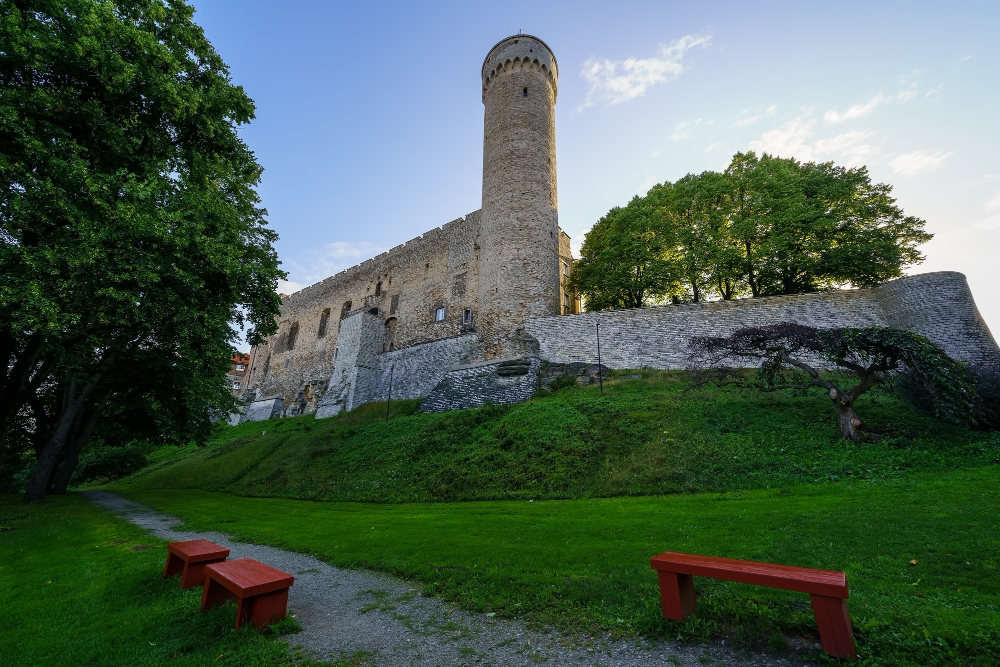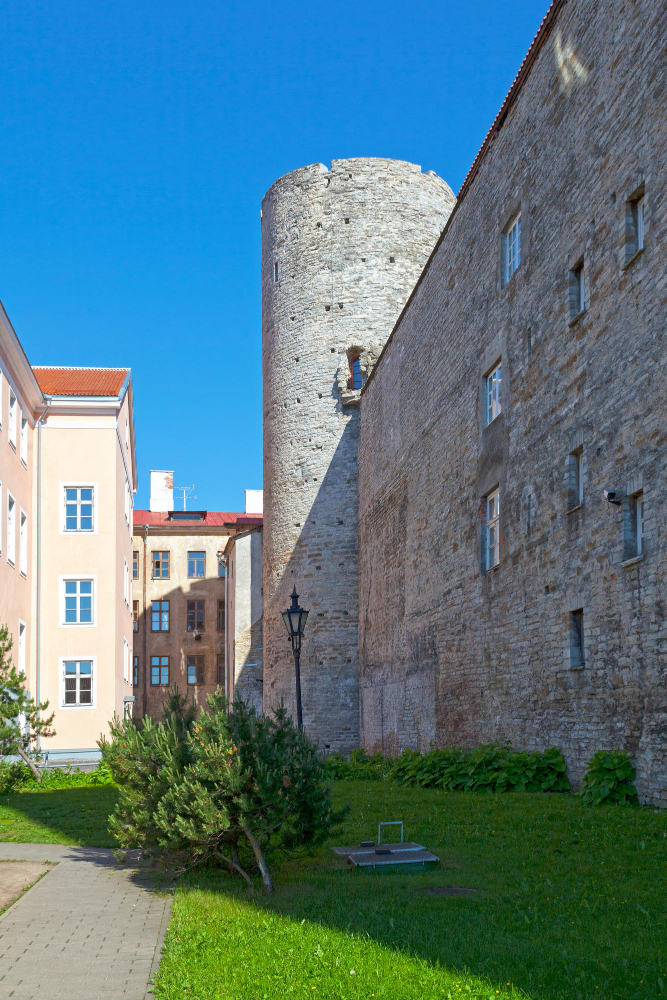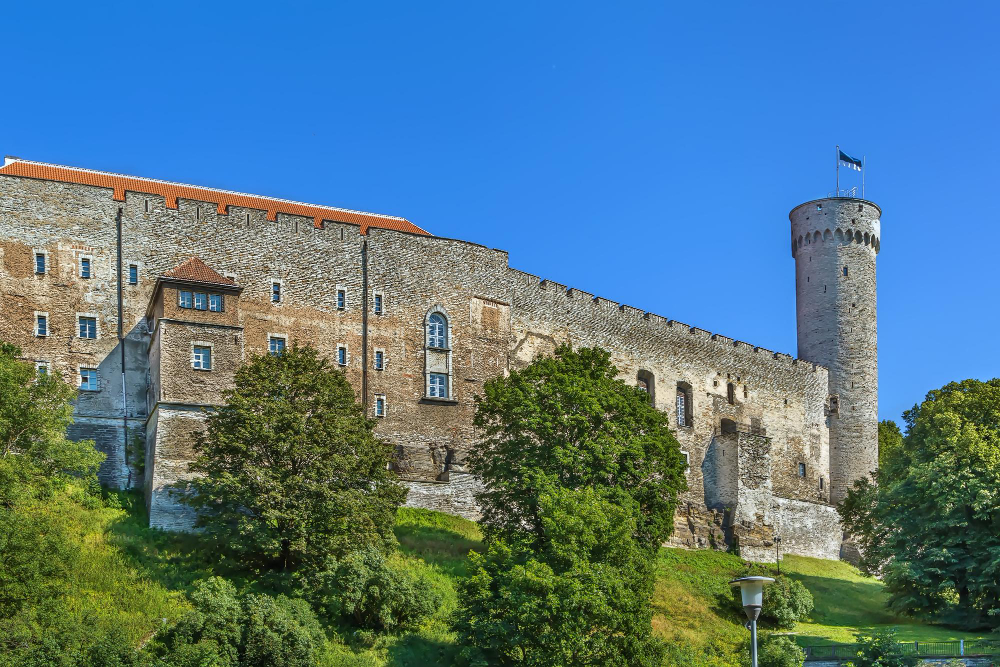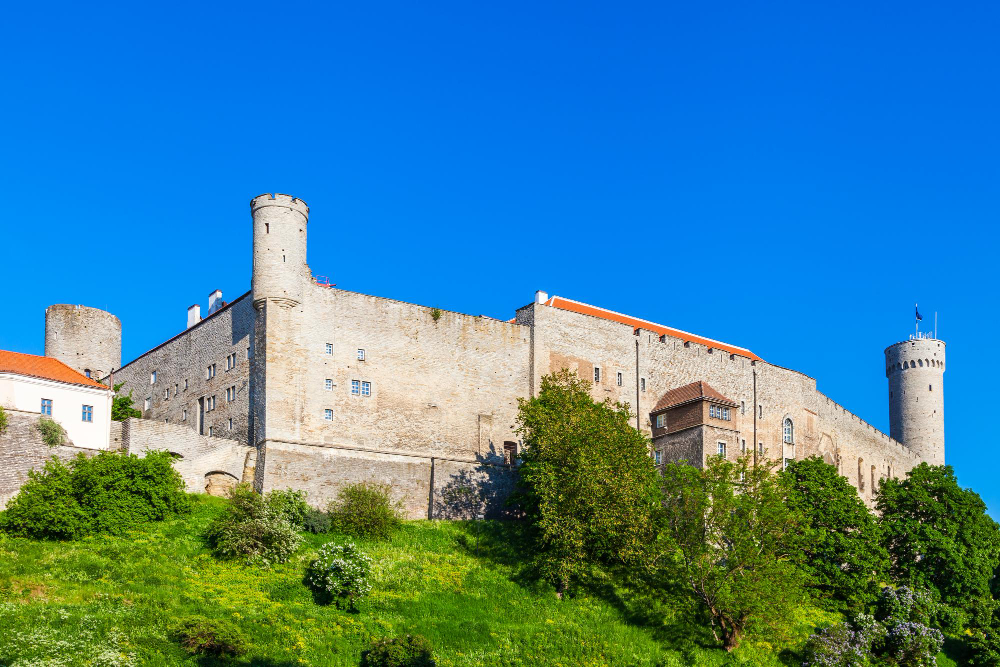

High above the winding streets of Tallinn, it stands majestically: Toompea, a castle on a hill whose history runs deep into the heart of Estonia. This historic building, known as Toompea Castle (Estonian: Toompea loss), is far more than just a medieval fortress on the hill of the same name in the centre of the Estonian capital. Today, it houses the Riigikogu, the Estonian Parliament, and symbolises the country’s political sovereignty and cultural identity. Yet Toompea’s history stretches far back – shaped by legends, wars, architectural changes and political upheavals.
From an ancient Estonian fortress to a Danish fortress – Archaeological finds confirm that the Toompea site has been used as a fortified settlement since the 9th century AD. Originally, it was an ancient Estonian fortress, a strategically important location that offered protection to the tribes living there. At the start of the 13th century, control of this area changed dramatically: in 1219, Danish crusaders led by King Waldemar II conquered the fortress. Historical sources report that the so-called Battle of Lindanise initially went badly for the Danes. However, according to one of the most striking legends, during the battle the famous Dannebrog, the Danish flag, sailed down from the sky – as a divine sign that significantly boosted the crusaders’ morale and ultimately led to victory. Contemporaries referred to this first stone fortress as ‘Castrum Danorum’, the ‘Danish fortress’. The modern name ‘Tallinn’ may be derived from the name used at the time, ‘taani linna’, which, ironically, also appears in an archaic form of the Estonian language. The origin of this name remains the subject of academic debate to this day, yet the connection between the fortress and the city is undisputed.
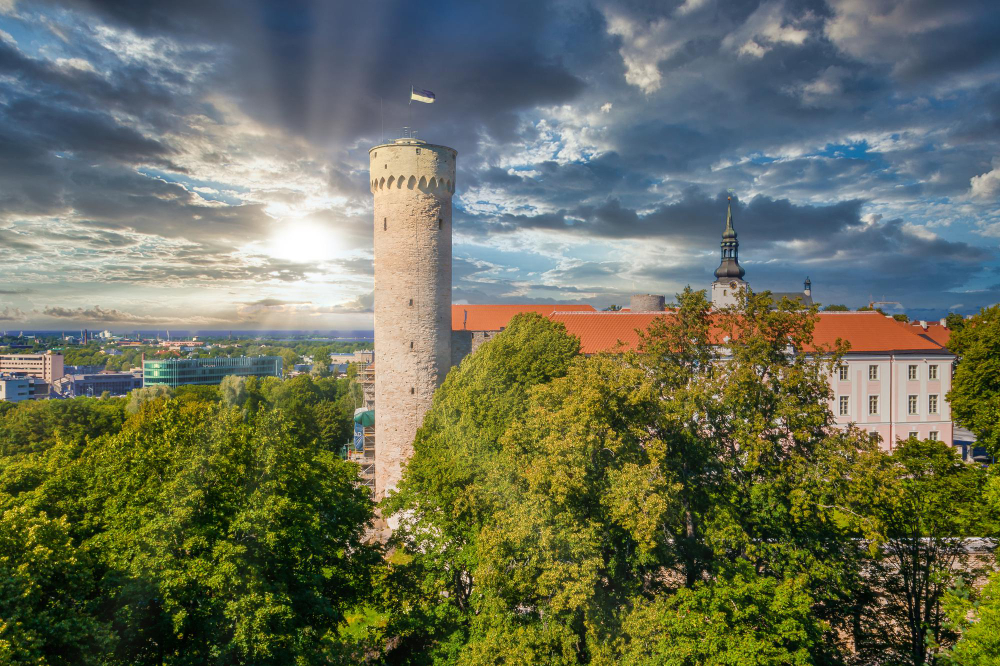
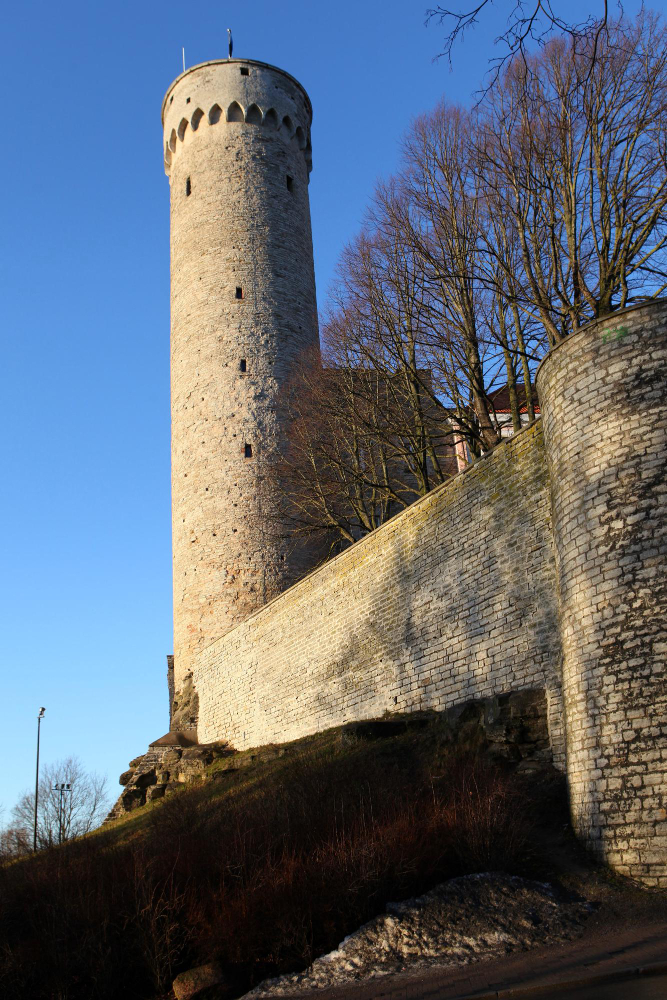
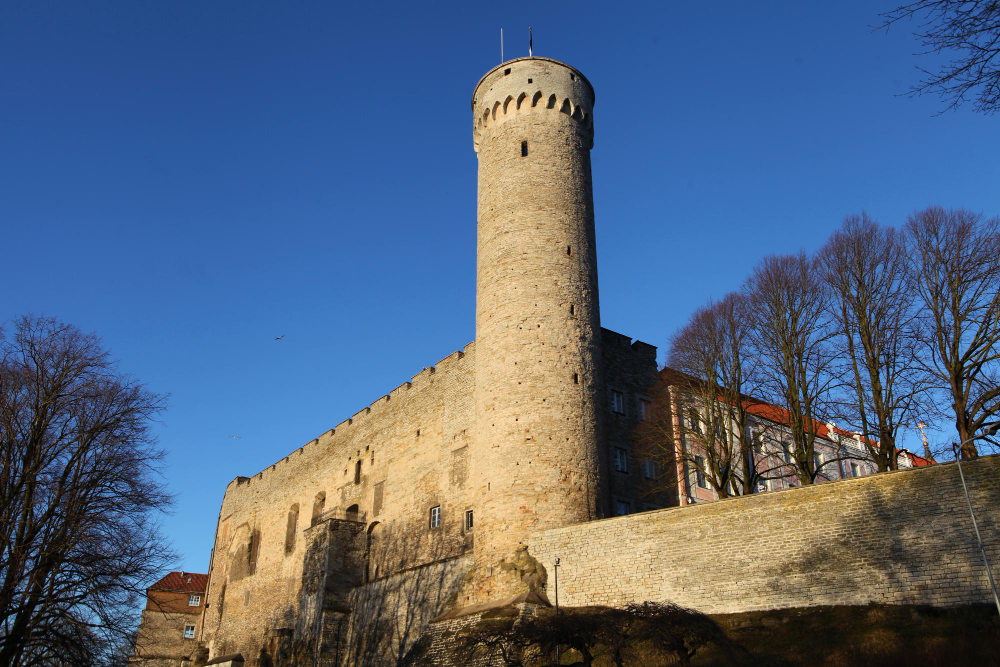
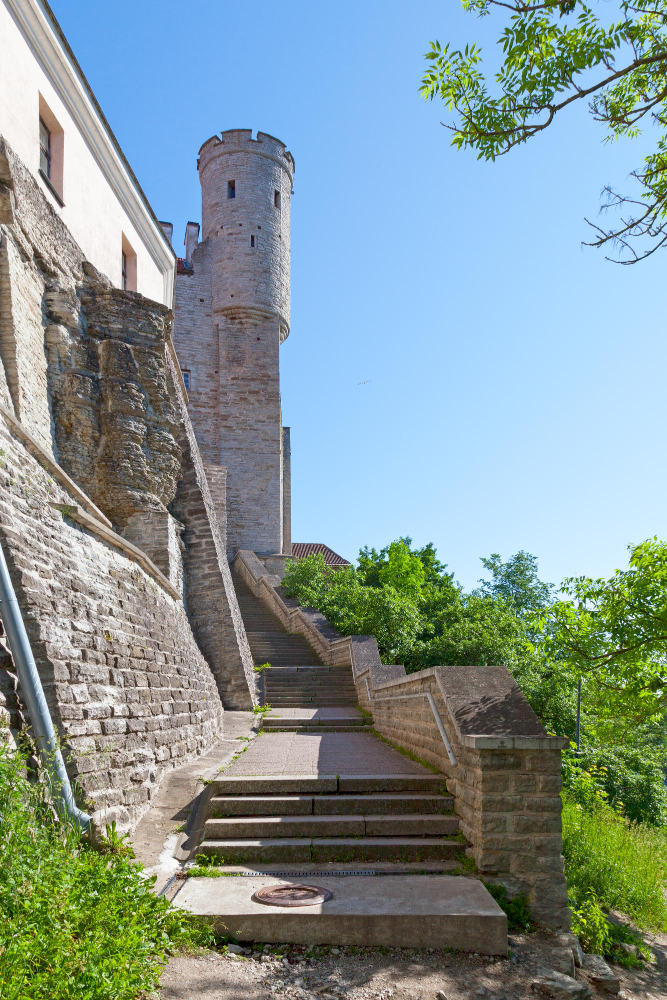
The Rule of the Brothers of the Sword and the Medieval Castle – Just a few years later, in 1227, the fortress fell into the hands of the Teutonic Order – or, more precisely, the Order of the Brothers of the Sword. This order of knights immediately began extensive renovations – transforming the complex into a mighty defensive castle, the foundations of which have largely survived to this day. In the meantime, the castle fell back under Danish control in 1237, before being sold definitively to the powerful Teutonic Order in 1346. For the rest of the Middle Ages, Toompea remained in the possession of this Order, which used the castle not only as a military fortress but also as a religious centre. The influence of the Order’s knights is particularly evident in the architecture. Toompea took on an almost monastic character, with a chapel, a meeting hall (chapter house) and dormitories for the knights. The striking towers, including those with telling names such as ‘Pilsticker’ (‘Arrow Sharpener’) and ‘Stür den Kerl’ (‘Repel the Enemy’), were erected during this period. Particularly noteworthy is the ‘Langer Hermann’ tower (known in Estonian as ‘Pikk Hermann’), which, at a height of 48 metres, became the landmark of the castle and of Tallinn as a whole. Today, the Estonian national flag is hoisted here every morning at sunrise and the national anthem is played, symbolising the site’s long tradition and its current patriotic significance.
Baroque Splendour and Political Changes – The 16th century brought massive upheavals, from which Toompea was not spared. As a result of the Reformation and numerous armed conflicts, the Teutonic Order lost almost all its possessions in Estonia. The region became caught up in the power struggle between Sweden, Poland and the expanding Russia, the Tsardom of Moscow. In 1561, northern Estonia came under Swedish rule, causing Toompea’s importance as a military fortress to gradually wane. Instead, it became the administrative and ceremonial centre of the Swedish colony, a status it retained in the centuries that followed. With the Great Northern War, Swedish rule came to an end in 1710, and the Tsarist Empire of Russia took its place. During this period, Toompea underwent extensive modernisation and expansion: Johann Schultz designed a new wing in the Baroque and Neoclassical styles, giving the fortress a palatial appearance. It housed the administration of the General Government of Estonia as well as the Governor-General’s residence. At the same time, a public park was created to the south-east of the castle, which still serves as a recreational area today.
The Parliament and the Cradle of Modern Democracy – With Estonia’s independence in 1918, Toompea took on an entirely new role: It became the seat of the Riigikogu, the newly founded Estonian Parliament. The building complex, which had once been a monastery and a castle, was given a modern makeover. Between 1920 and 1922, the architects Eugen Habermann and Herbert Johanson constructed the Parliament building, which is now of global significance. Whilst the exterior architecture has a traditional appearance and blends harmoniously into the historic setting, the interior surprises with its expressionist elements – a globally unique example of expressionist parliamentary architecture. However, this peaceful democratic era was brutally interrupted in the course of the 20th century: The Soviet occupation from 1940, followed by the German occupation during the Second World War and subsequently by Soviet rule once more, signalled the end of the democratically elected Riigikogu. Instead, the local Supreme Soviet – a body controlled by Moscow with no real power – held its sessions in the former parliament building.
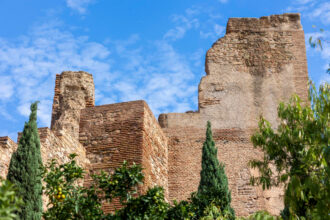
Toompea today: a memorial and a living symbol Since Estonia regained its independence in 1991, Toompea has once again become the heart of the country’s democratic politics. Alongside its political function, the castle is a significant symbol of Estonian national identity and cultural pride. The castle rock itself, with its red brick walls and numerous towers, bears witness to centuries of turbulent rule – from the valiant ancient Estonian tribes, through the Christian Crusaders and the Swedish era, to the Russian Empire and the modern era. The Estonian flag, hoisted daily at ‘Long Hermann’, impressively links the past and the present. Furthermore, the adjacent park invites locals and visitors alike to experience history at first hand.
Toompea Castle is far more than just a castle. It is a living history book, carved in stone, which tells of the countless destinies that have shaped Estonia. From the legends of the Danish Crusaders to today’s seat of democracy, the castle reflects something monumental: resilience, adaptability and the tireless will of a people to preserve their identity despite changing rulers. For visitors and locals alike, Toompea remains a striking testament to Estonia’s past and a symbol of hope for the future.