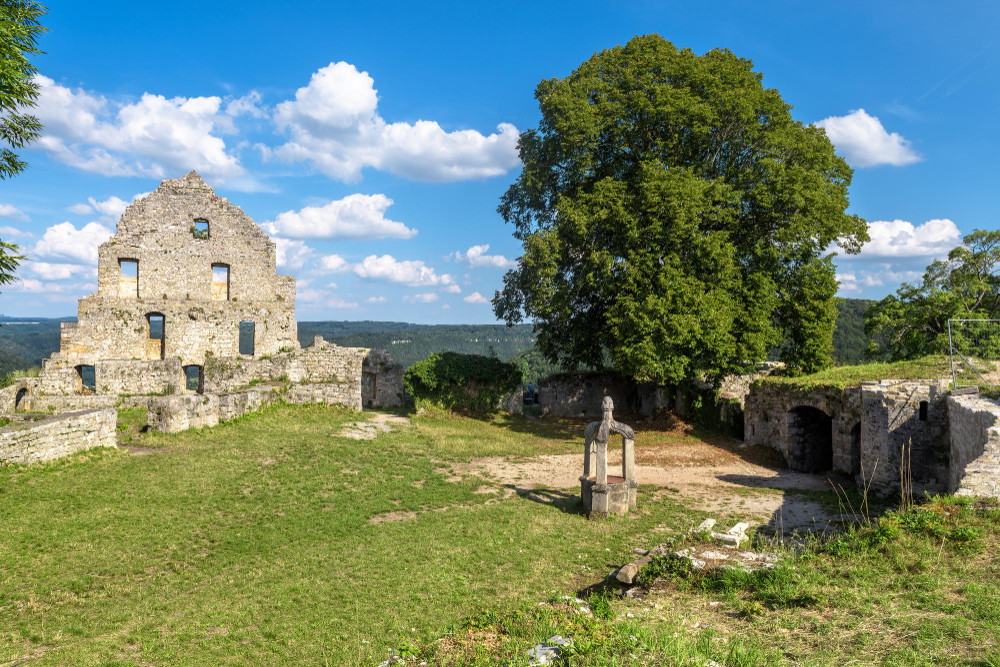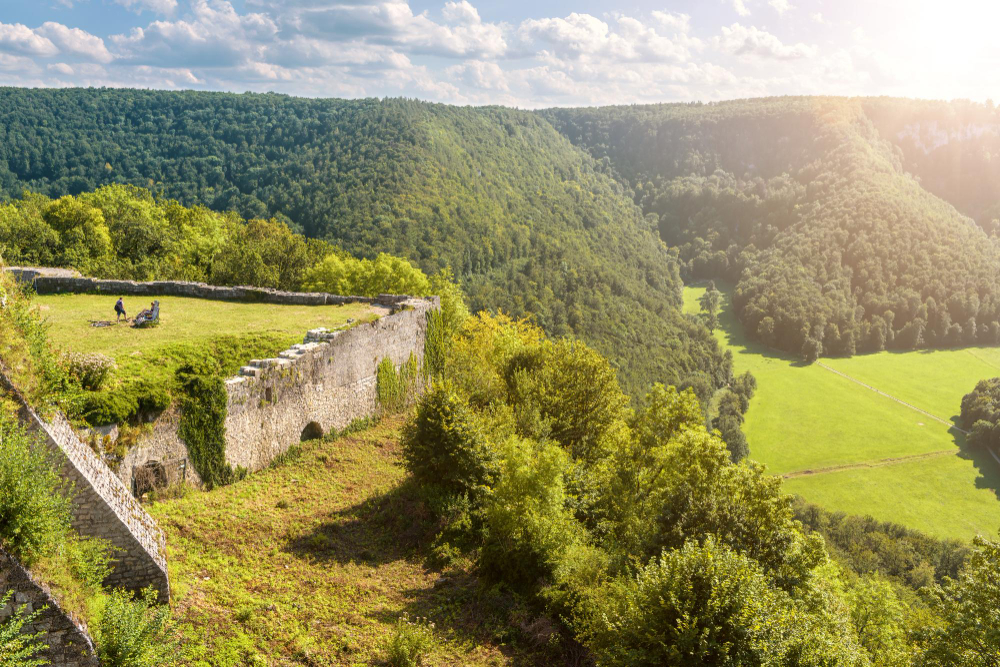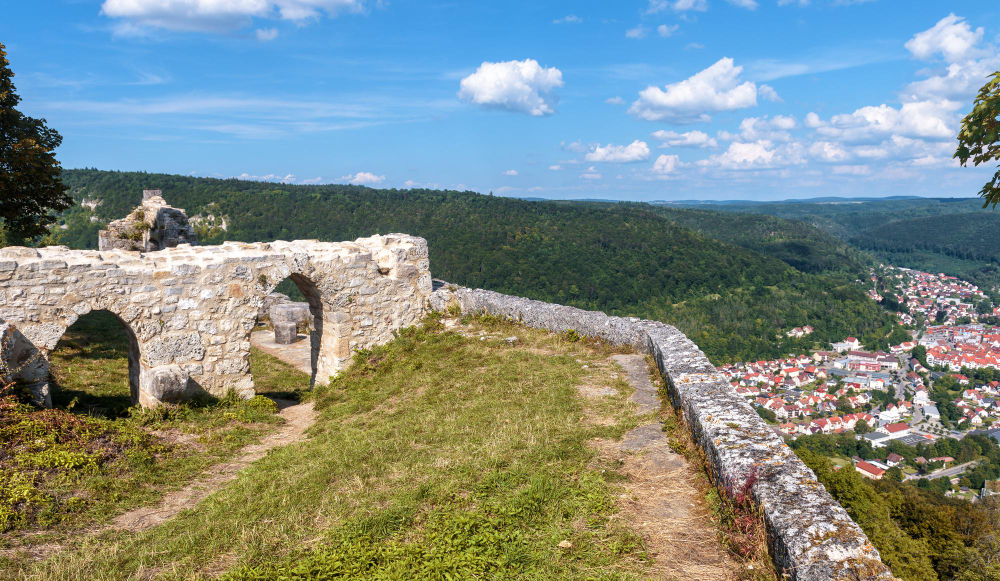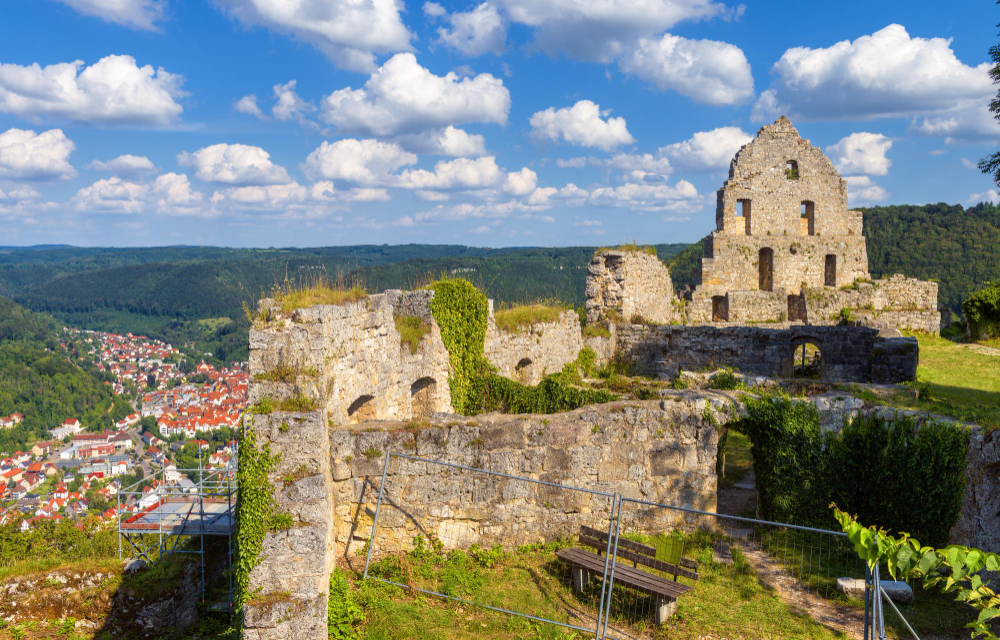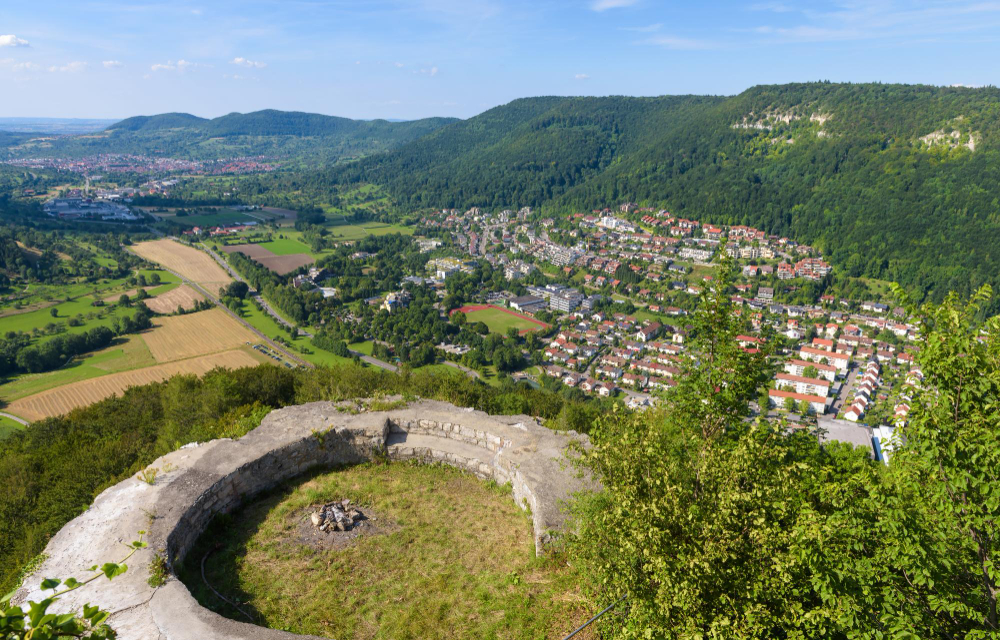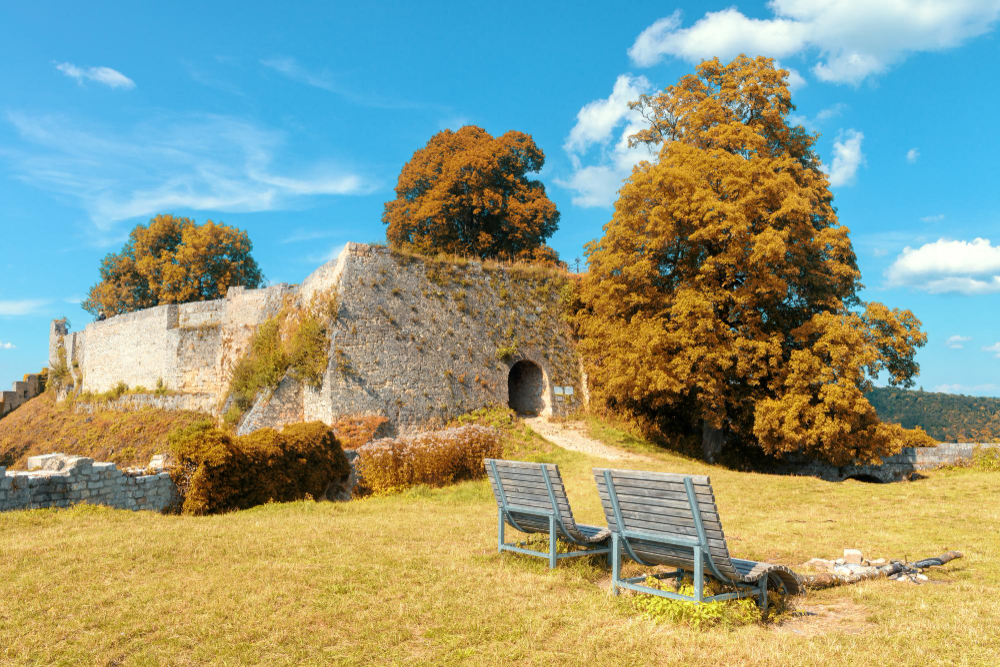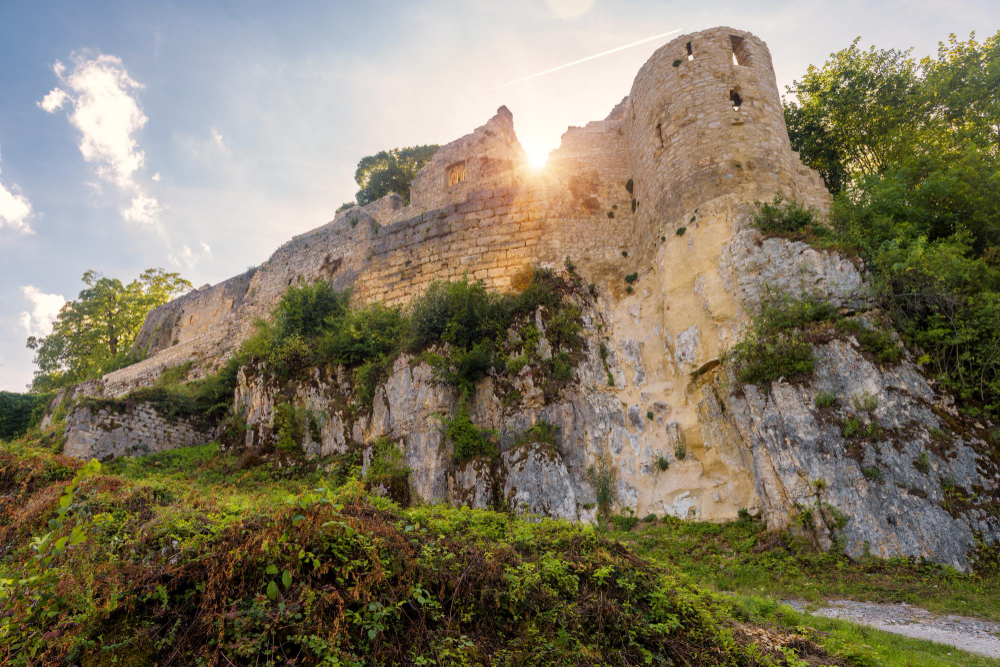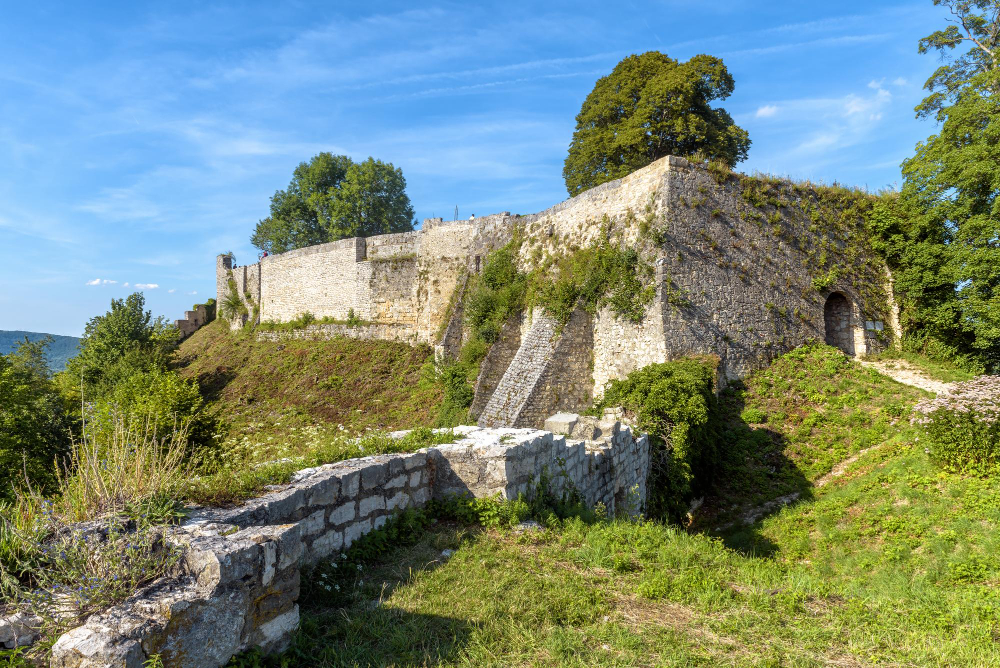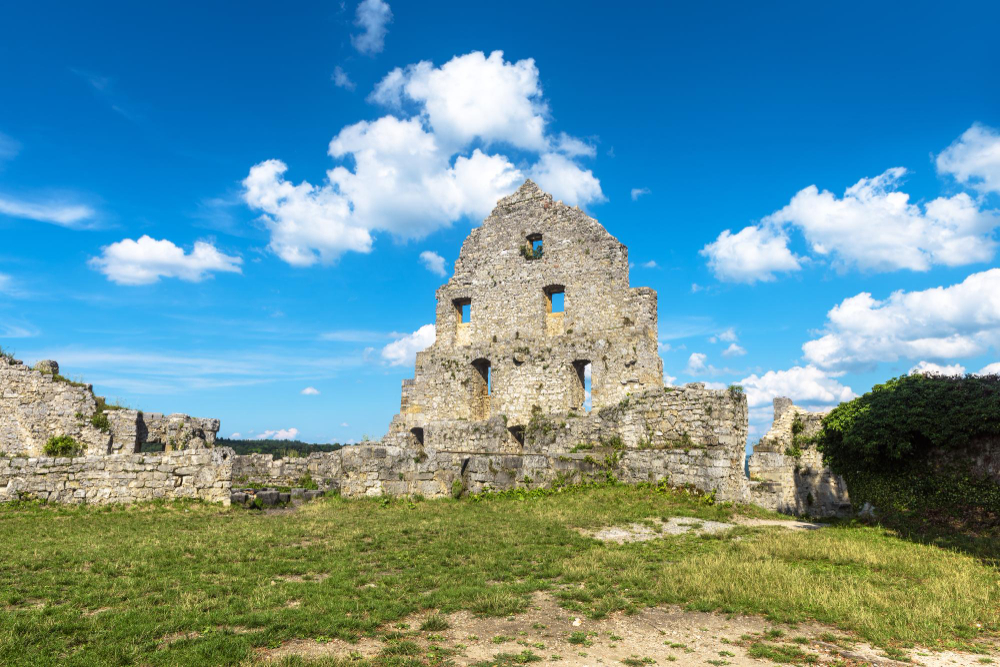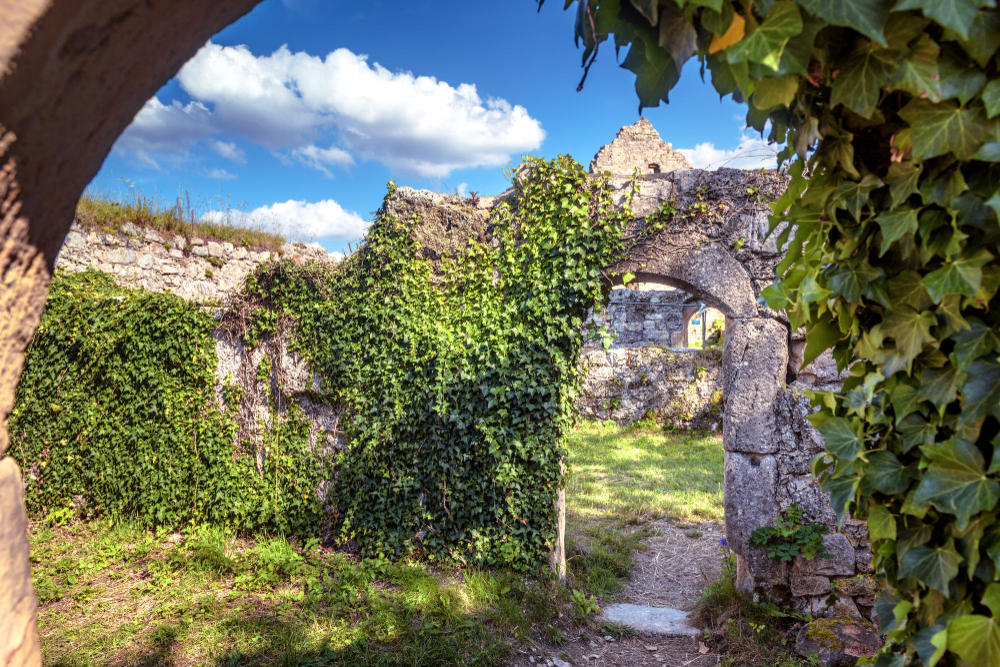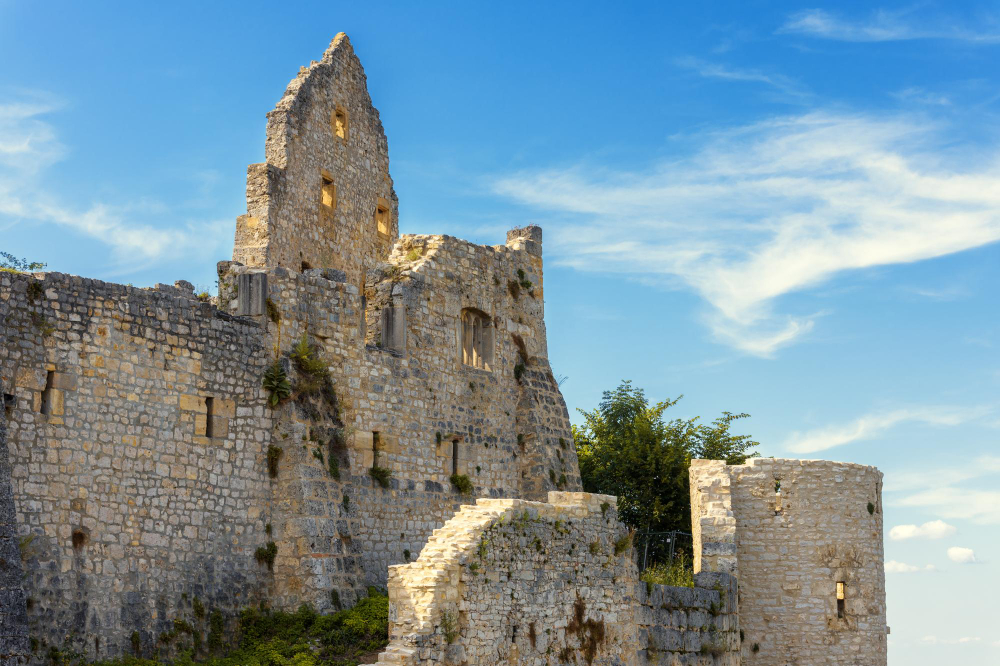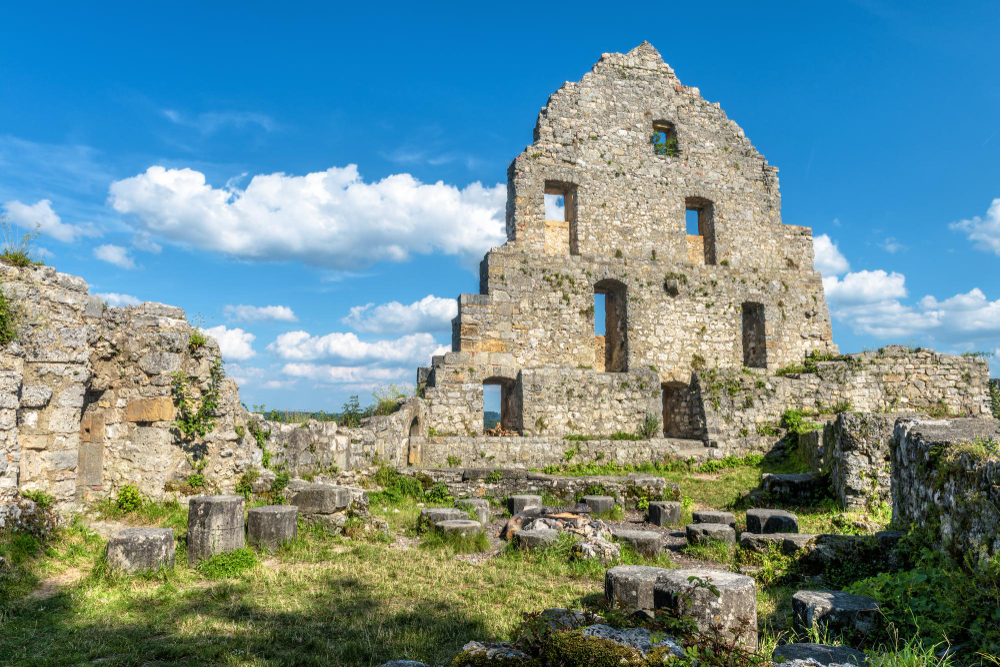

Some 40 kilometres south-east of Stuttgart, high above the picturesque town of Bad Urach in the district of Reutlingen, the impressive ruins of Hohenurach Castle stand at 692 metres above sea level. Once an impregnable hilltop castle, it captivates visitors today not only with its majestic setting some 250 metres above the Erm Valley, but also with its eventful history, fascinating legends and architectural features. The complex is one of the largest and most significant castles in southern Germany and is a popular destination offering spectacular views of the Swabian Alb.
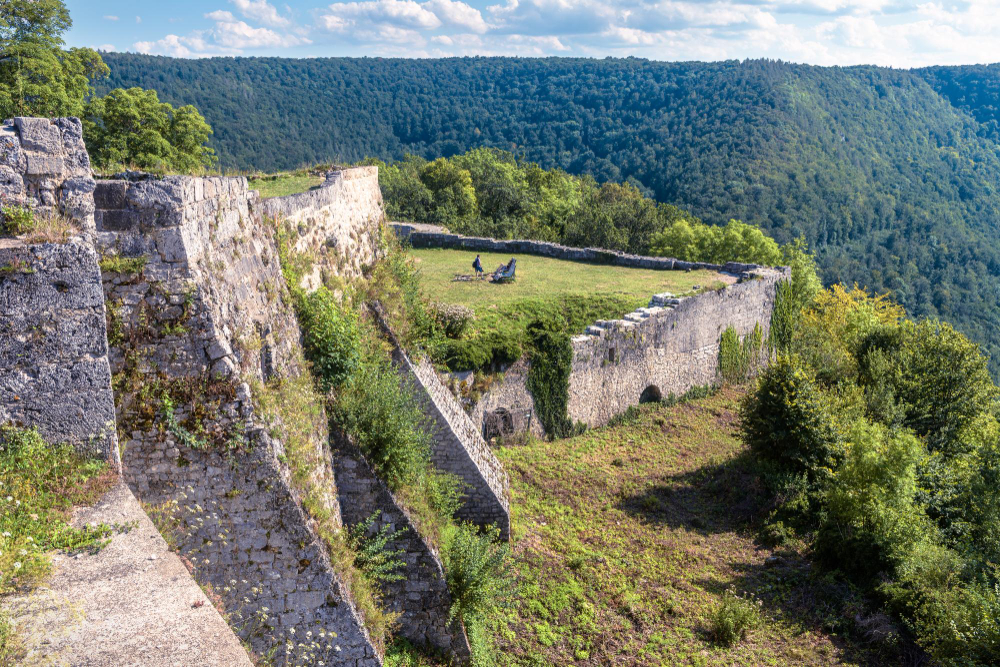
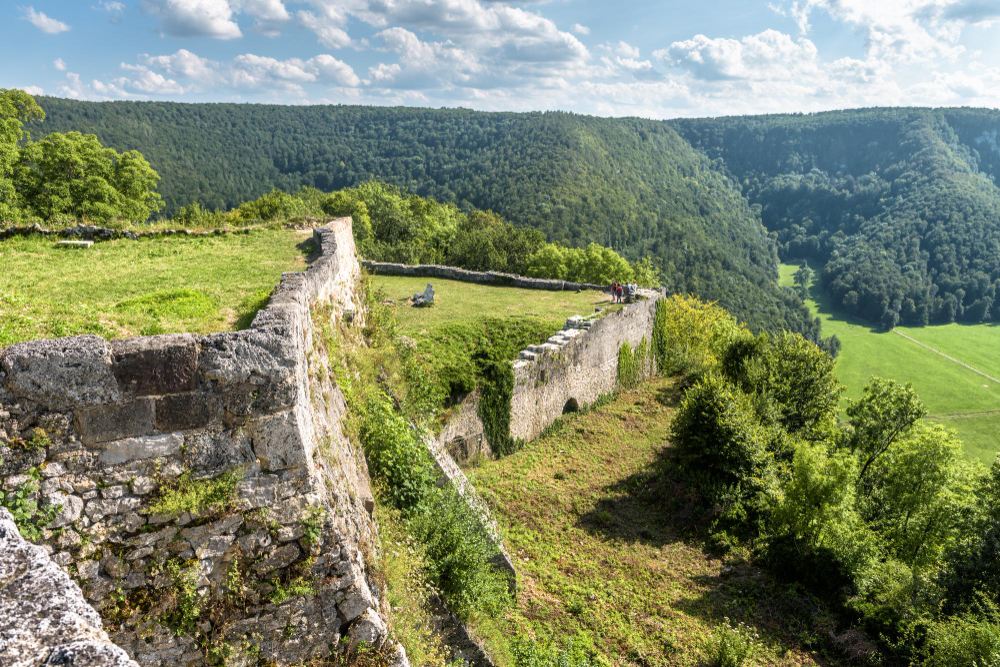
Geographical location and current condition – The castle stands on a rocky outcrop above Bad Urach, offering a strategically perfect view of the green Ermstal valley. Whilst the ruins themselves do not currently house any catering facilities, several restaurants at the foot of the hill and near the Urach Waterfall invite visitors to linger. Previous renovation and safety measures have helped to make the walls – some of which were once at risk of collapse – accessible to visitors. Since 2015, extensive restoration work and archaeological investigations have been taking place to ensure the preservation of the structure for future generations.
Origins and early history: From a count’s residence to a Württemberg stronghold – The construction of Hohenurach Castle dates back to the period between 1030 and 1050, initiated by the Counts of Urach, a noble family from the East Franconian region near Würzburg. Count Egino IV of Urach, married to Agnes of Zähringen, inherited the estate of the House of Zähringen. His son, Egino V, henceforth bore the title ‘Count of Urach’ and was Lord of Freiburg im Breisgau Castle. At that time, the castle served as the family’s symbolic seat and was first mentioned in historical records in the 13th century. In 1239, the castle was pledged to the Counts of Württemberg, who took full possession of it in 1265. From then on, under Württemberg rule, Hohenurach developed into an important political and military centre. In 1428, Count Ludwig I of Württemberg extensively rebuilt and expanded the castle, thereby strengthening its status as a residence and defensive stronghold. Following internal divisions within the Württemberg counties, it served at times as a residence for branches of the House before it once again lost its significance.
The Imprisonment of Heinrich of Württemberg: A Tragic Episode – One of the castle’s darkest yet most fascinating stories is the imprisonment of Heinrich of Württemberg. Portrayed as mentally ill, he was captured in 1490 by the ruling Duke Eberhard V, known as ‘Eberhard the Bearded’, and held captive at Hohenurach together with his family until his death in 1519. This period is shrouded in numerous legends about the life and suffering of Heinrich, who lived there in seclusion with his wife and children. In particular, his second-eldest son, George I of Württemberg-Mömpelgard, was born at Hohenurach – a sign that the castle was also a family home.
Expansion into a regional fortress: defence and sieges – With Württemberg’s rise to the status of a duchy, new defence strategies were required. Following the experiences of the Schmalkaldic War (1546–1547), Duke Ulrich recognised how inadequate the existing defence system, with its numerous hilltop castles, was. Although Hohenurach Castle was one of the strongest, it was forced to surrender at that time, causing a great stir. Consequently, between 1535 and 1555, Ulrich invested around 22,000 guilders to develop Hohenurach into one of seven regional fortresses. Thick walls, gun turrets, drawbridges and ingenious outer works ensured greater security. Nevertheless, the fortress was captured in 1547 during the Schmalkaldic War by imperial troops under the Duke of Alba. After fierce fighting, Duke Christoph invested considerable sums to restore the castle.
The dramatic siege during the Thirty Years’ War – Hohenurach faced one of its most intense trials during the Thirty Years’ War (1618–1648). Following the catastrophic defeat of the Protestant forces at Nördlingen in 1634, imperial troops advanced and laid siege to the castle for eight months. The Saxon Lieutenant-Colonel Gottfried Holtzmüller initially defended the complex resolutely with around 150 dragoons against a vastly superior imperial force under Walter Butler. Despite fierce resistance and daring sorties, the castle soon found itself in a desperate shortage of supplies. A spectacular supply expedition from the Imperial City of Ulm, led by Captain Martin Sperbitz, managed to support part of the besieged garrison, but the toll was immense. Holtzmüller lost his sight during a skirmish and was eventually forced to relinquish command. Hunger and exhaustion finally compelled the defenders to surrender on 24 July 1635. On the imperial side, there was a brief period of peaceful coexistence with the local population, but this soon descended into chaos and civil war. Under Count Otto Reichstruchsess von Friedberg-Scheer, conflicts over power and rights escalated, leading to raids, abductions and deaths, before peace was restored and the castle was returned to Württemberg in 1649.
Decline and later use – From the end of the 17th century, the castle began its slow decline. A lightning strike in 1694 destroyed parts of the powder tower, after which its military significance diminished and Hohenurach was increasingly used as a prison. In 1761, the fortress was abandoned, and large sections were demolished to provide building materials for the new Grafeneck Palace. The disused building materials were removed; even ironwork such as doors and cannons ended up in private hands. A serious mishap occurred during this process when stored ammunition exploded whilst being melted down, causing severe damage. As a result, the local population extracted stones from the ruins for decades, further accelerating the process of decay. It was not until the 19th century that Philipp Freiherr von Hügel, head of the Urach Forestry Office, took the initiative to clear and secure the heavily overgrown ruins, thereby laying the foundation for the site to become a tourist attraction.
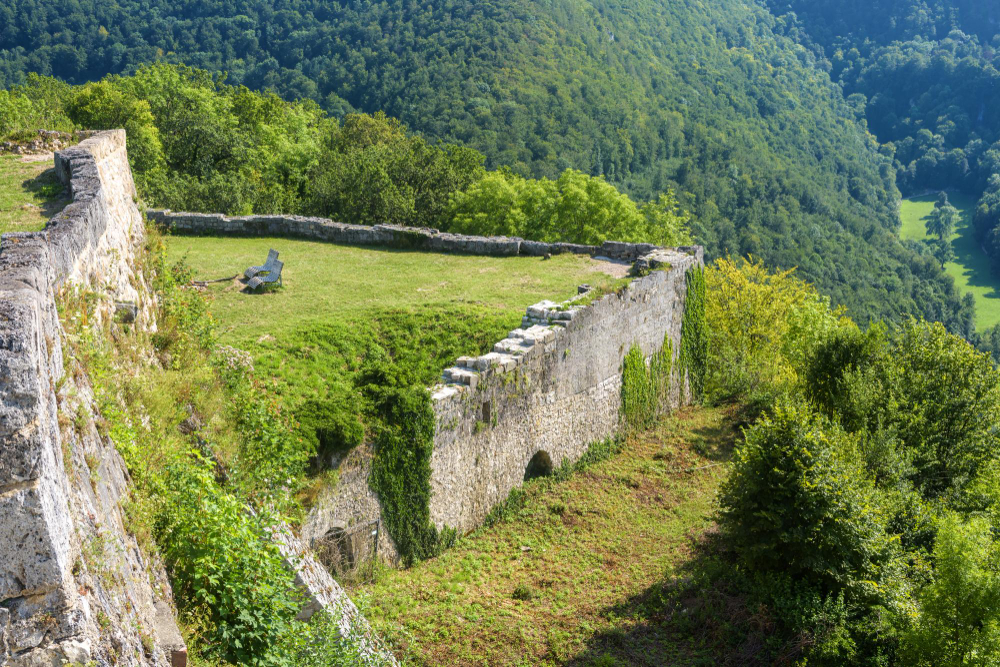
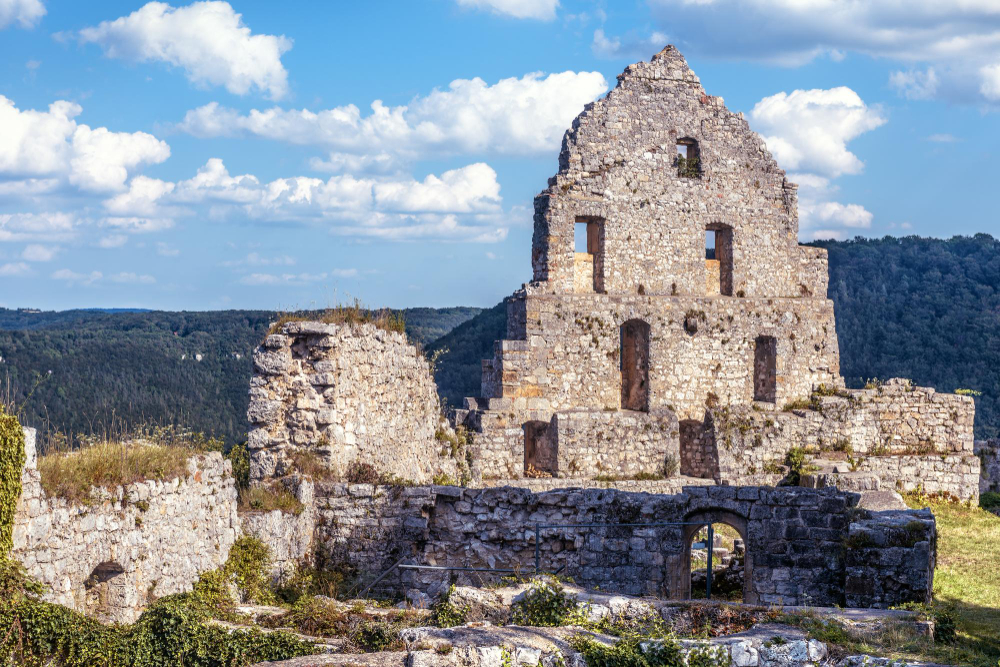
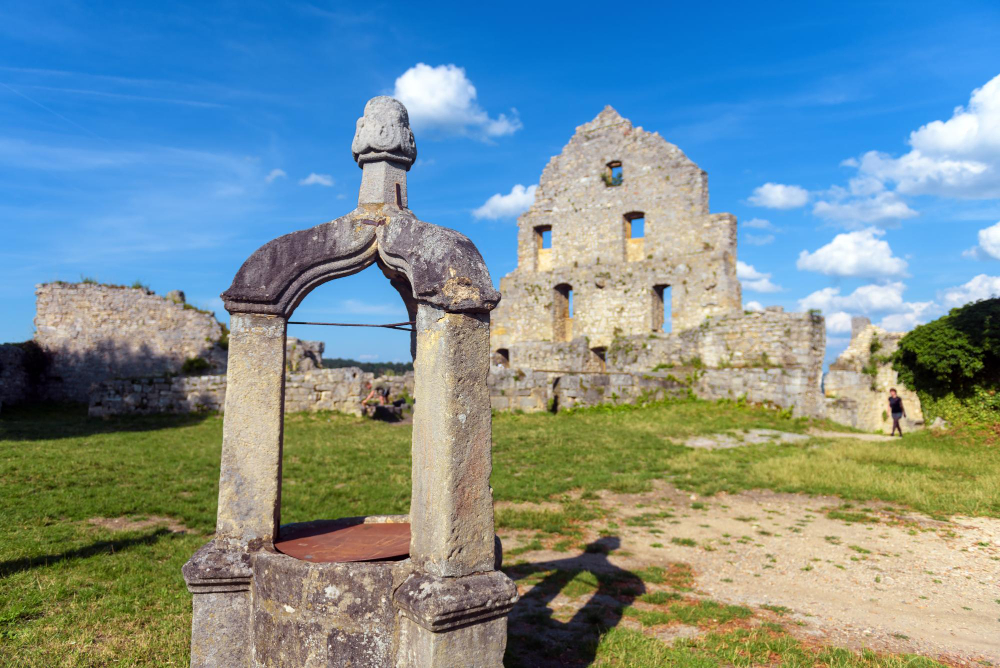
Architecture and structural features – The castle complex is shaped like an acute triangle with side lengths of approximately 280, 230 and 110 metres. It is one of the most imposing and extensive complexes in the region and is divided into three main areas in a terraced arrangement. The lower part of the castle complex housed the outer fortifications, featuring a triangular parapet and the chapel – now overgrown and barely accessible. The upper castle was the square-shaped stronghold with massive walls and the eponymous Upfinger Tower, which defended the main entrance. A sophisticated system comprising a moat, drawbridge and gates provided additional protection for the complex. The inner castle, the highest terrace, housed the actual palace with two main buildings, a well and a large powder tower. Surrounding it was a bailey with further gun towers, positioned at strategically important points such as the northern corner (Dettinger Tower). Some of these towers also served as dungeons. Over the years, parts of the walls became increasingly unstable. Due to frost and weathering, extensive stabilisation and restoration work has had to be carried out since 2011; this work is still ongoing and also involves archaeological research into the castle.
Famous Prisoners and Tragic Fates – Apart from Heinrich von Württemberg, there were other prominent prisoners at Hohenurach: the philologist and poet Nicodemus Frischlin was imprisoned for writing a polemic and died in 1590 during a failed escape attempt whilst trying to abseil down from the fortress wall. Matthäus Enzlin, a privy councillor of Württemberg, was initially sentenced to life imprisonment for corruption and abuse of office, but was later sentenced to death after attempting to buy his freedom by threatening to reveal state secrets. His execution took place publicly in 1613 in Urach’s market square.
A testament to Württemberg’s turbulent history – Today, Hohenurach Castle stands as a monumental ruin, bearing witness to the region’s eventful past and the scheming power struggles within the House of Württemberg. It tells of rise and fall, of sieges and political imprisonment, as well as of the adaptation of medieval fortifications to the challenges of the modern era. The imposing walls and towers convey an image of fortification and aristocratic rule, whilst the stories of its inhabitants bear witness to human suffering, hopes and tragedies. In the coming years, the castle will be further secured and researched through ongoing restoration work – a treasure for historians, archaeologists and visitors alike.