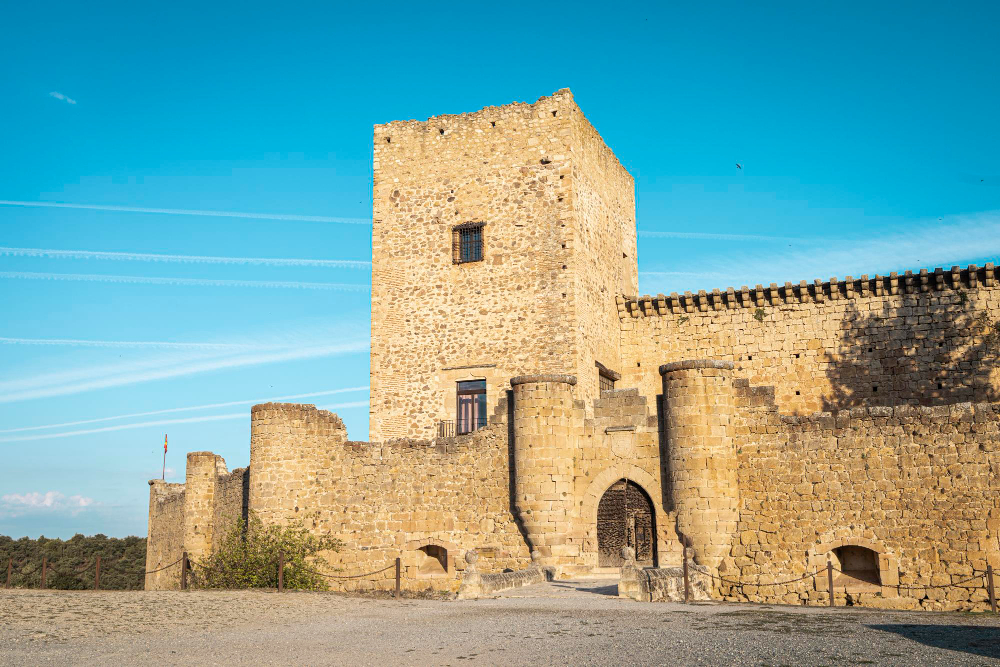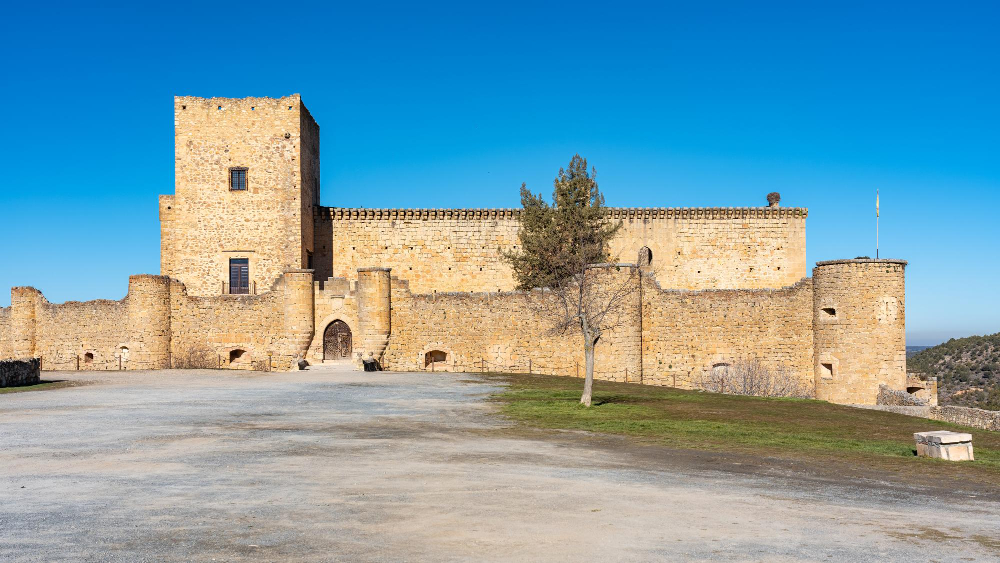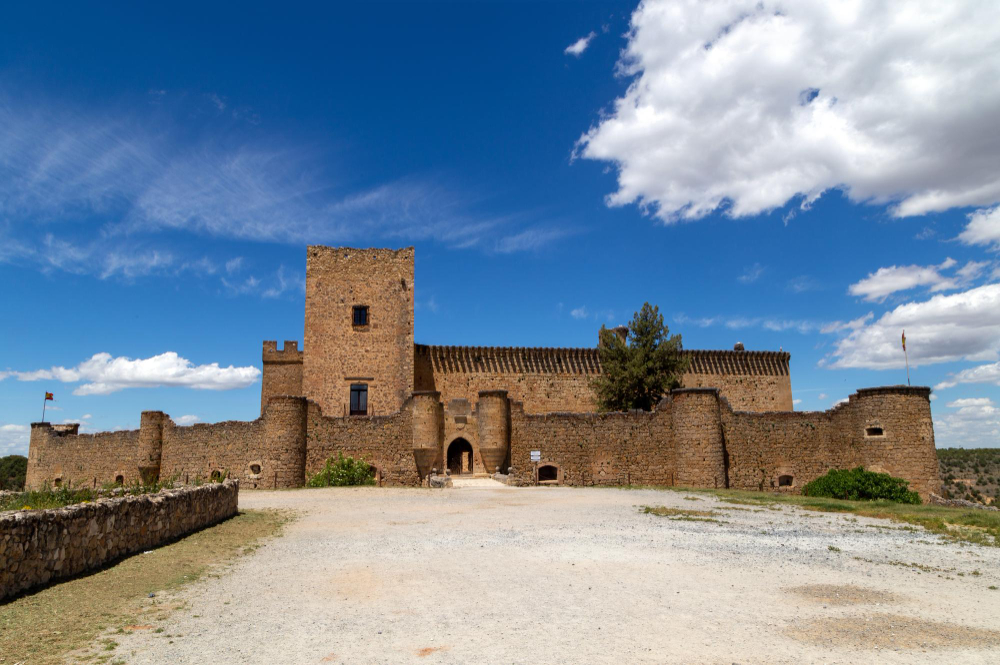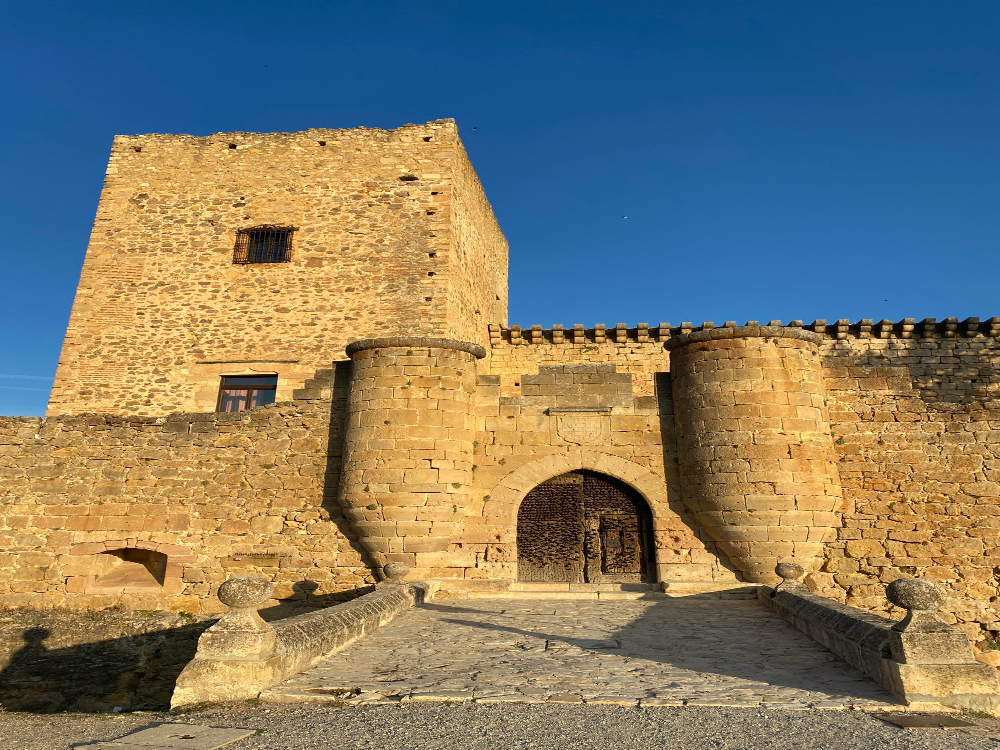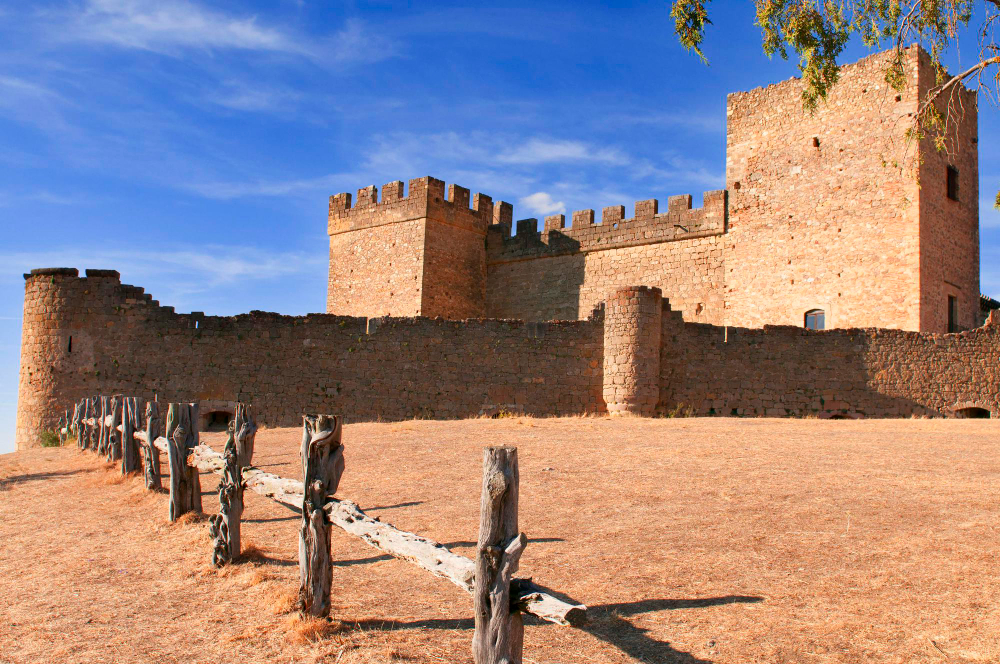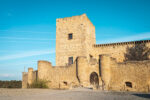

High above the narrow streets of the medieval-looking village of Pedraza stands a fortress that ranks among the most impressive historic buildings in the Spanish province of Segovia: the Castillo de Pedraza, often referred to as the Gran Castillo de Pedraza. The castle is situated on the north-western edge of the village, some 40 kilometres from Segovia, on a rocky outcrop in the Sierra de Guadarrama. Its location was no accident. Whoever controlled the castle controlled access to the settlement and could monitor the paths through the surrounding countryside. Today, Pedraza is known above all as an exceptionally well-preserved medieval village. Cobbled streets, stone palaces, a large Plaza Mayor and narrow passageways evoke the atmosphere of centuries past. Yet it is the castle that lends the village its true historical depth. Its walls tell of defence and noble rule, of alterations during the Renaissance, of a famous prisoner and, finally, of a painter who saved the crumbling structure from complete ruin in the 20th century.
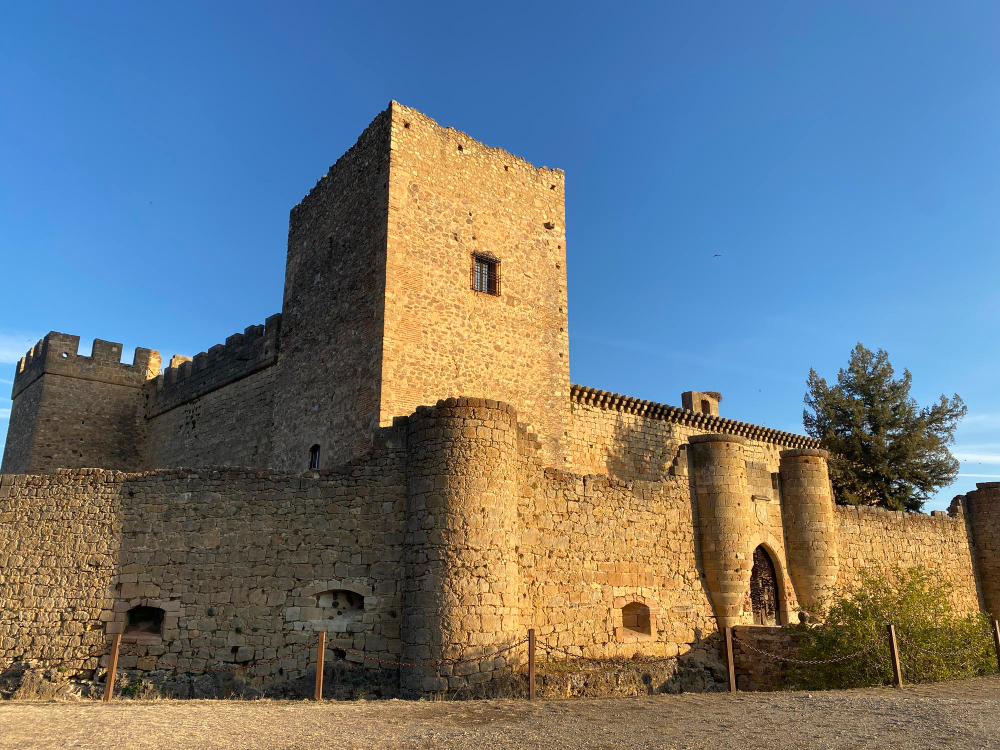
A strategic castle on the edge of the village – Pedraza lies on an elongated rocky ridge that drops steeply on several sides. This natural setting made the site a suitable location for a fortified settlement from an early stage. However, the present-day Castillo was not built in a single phase. As with many Spanish fortresses, older structures were altered, extended and adapted to new military and social requirements over the course of centuries. The visible castle dates back in large part to the 13th century. Its development is linked to the reorganisation and consolidation of Castile following the medieval conflicts on the Iberian Peninsula. At a time when sovereignty was secured not only through charters but also through fortified strongholds, a castle served as a military base, an administrative centre and a visible symbol of power. The Castillo stands at the end of Pedraza’s main axis and is connected to the village by a gate and fortified approaches. Its position reinforces the impression of a self-contained medieval complex: anyone entering the village was, in a sense, moving towards the fortress. The castle thus formed not only an outer defensive position but also the political centre of the local domain. The complex features thick walls, a large courtyard and a striking defensive tower. Particularly striking is the rectangular Torre del Homenaje, the castle’s main tower. Such towers fulfilled several functions: they served as lookout points, could be used as a last refuge in an emergency, and at the same time signalled the status of their owners. The fortress was therefore far more than a purely military structure. It was a stone symbol of aristocratic authority.
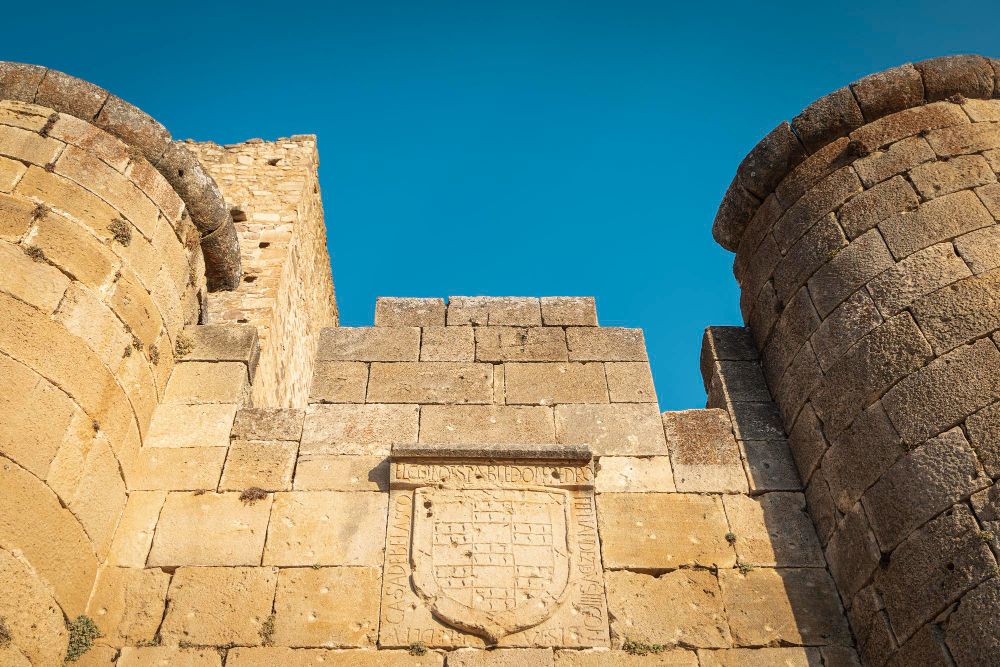
From medieval lords to the Velasco family – The castle’s history is closely linked to the Castilian nobility. Over the centuries, Pedraza changed hands several times. Its association with the influential Velasco family, which ranked among Castile’s most prominent noble houses in the late Middle Ages and early modern period, proved particularly significant. The Velascos held high offices in the kingdom and wielded far-reaching political influence. Under their rule over Pedraza, the castle was not only used for military purposes but was also increasingly transformed into a noble residence. Particularly in the 16th century, the complex underwent changes that reflected its transformation from a medieval defensive fortress into a stately residence befitting their status. This development can be observed in many Spanish castles. With the end of the major medieval border conflicts, some fortresses lost their original military significance. At the same time, noble families sought to make their residences more comfortable and impressive. In Pedraza, whilst the fortified features remained visible, the castle also became part of a way of life in which political standing, property and cultural aspirations were closely intertwined. The influence of the Velasco family also shaped the town itself. During this period, Pedraza acquired a number of buildings and urban structures that continue to define its historic appearance to this day. The Plaza Mayor, noble houses bearing coats of arms, the town walls and the castle therefore do not appear as separate attractions, but as components of a shared historic ensemble.
The Famous Prisoner: Royal Politics Behind Walls – One of the best-known episodes in the history of the Castillo de Pedraza is linked to Francis I of France. In 1525, following the Battle of Pavia, the French king was taken prisoner by Emperor Charles V. France’s defeat at the hands of the imperial-Spanish forces was a pivotal event in 16th-century European power politics. Following his capture, Francis I was held captive in Spain. Sources and local traditions also link the Castillo de Pedraza to his route into captivity. His imprisonment lasted until 1526, when he was released following the Treaty of Madrid. This was no ordinary imprisonment, but rather a highly political means of exerting pressure: the aim was to persuade the French monarch to make far-reaching concessions to Charles V. The memory of Francis I continues to lend Pedraza a European dimension to this day. The castle was not merely a setting for regional history, but was also caught up in the conflicts between the Habsburgs and the Valois, between the empire of Charles V and the French royal house. It is precisely such episodes that demonstrate how closely a small town in Castile could be linked to the major conflicts of its time. At the same time, caution is warranted when it comes to embellished castle legends. Historical fortresses have always attracted tales of secret passages, hidden treasures or dramatic captivity. For a serious examination of Pedraza, it is more important to distinguish between verifiable accounts and later embellishments. The documented political significance of the castle is already extraordinary enough – it needs no fabricated secrets.
Decline, Restoration and the Painter Ignacio Zuloaga – After centuries of aristocratic use, the castle gradually lost its importance. Many Spanish castles fell into disrepair in the 19th and early 20th centuries, as political structures, ownership patterns and ways of life underwent fundamental changes. Pedraza was also affected by this process. Without any permanent use, repairs were postponed, parts of the building fell into disrepair, and the former centre of power increasingly became a historical relic. The turning point came at the beginning of the 20th century thanks to the painter Ignacio Zuloaga. Born in 1870, the artist is regarded as one of the leading figures in Spanish painting of his time. Zuloaga was known for his expressive portraits, his depictions of rural Spain and his focus on Castilian landscapes. He was particularly fascinated by the rugged, history-steeped region of Castile – a region whose villages, people and architecture feature repeatedly in his work. Zuloaga acquired Pedraza Castle in 1926. His interest was not limited to the building as a private property. He saw the complex as a source of artistic inspiration and a piece of cultural heritage that needed to be preserved. The castle was restored and, at the same time, transformed into a space where art and history were brought together. Inside, it now houses the Museo Ignacio Zuloaga, which displays works by the artist as well as objects from his circle. These include items from the collection that reflect Zuloaga’s interest in Spanish art and historical culture. As a result, the castle has not merely remained a ruin or an open-air monument: it has become a museum and a testament to the preservation of historical monuments in the 20th century. Zuloaga’s intervention was of great significance to Pedraza. Without his initiative, the fortress might well have suffered far greater destruction. His commitment added a new dimension to the building’s long history: the former castle of the nobility became a place where the memory of Castilian history is intertwined with modern art.
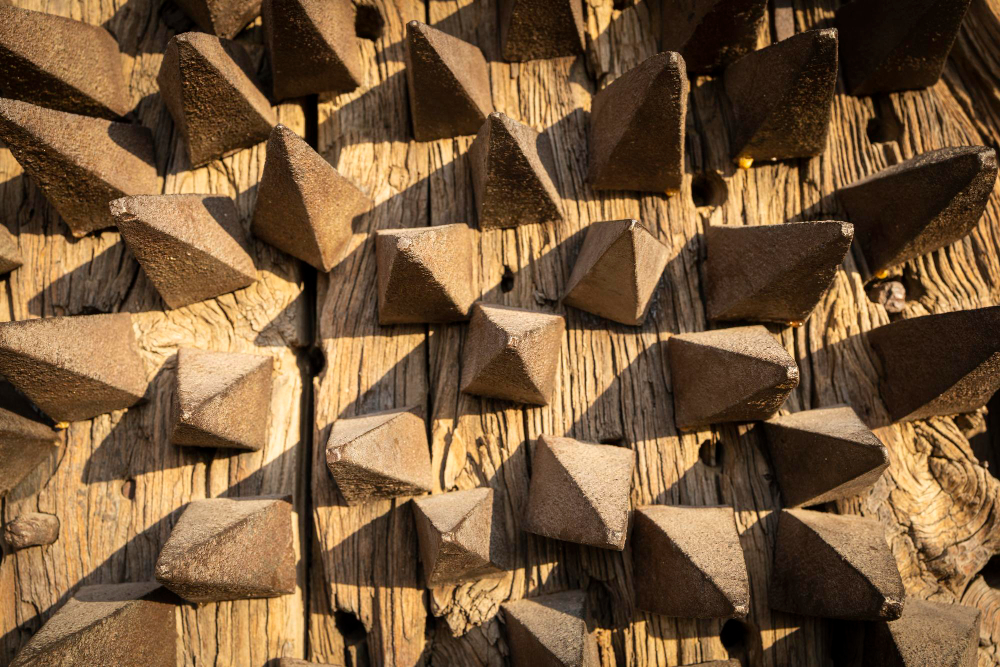
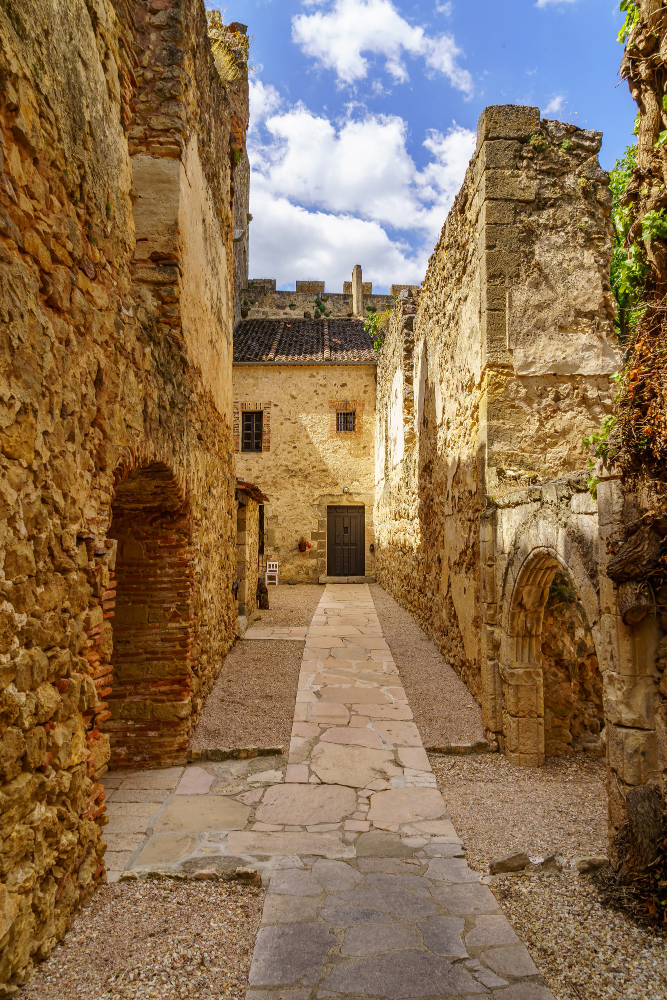
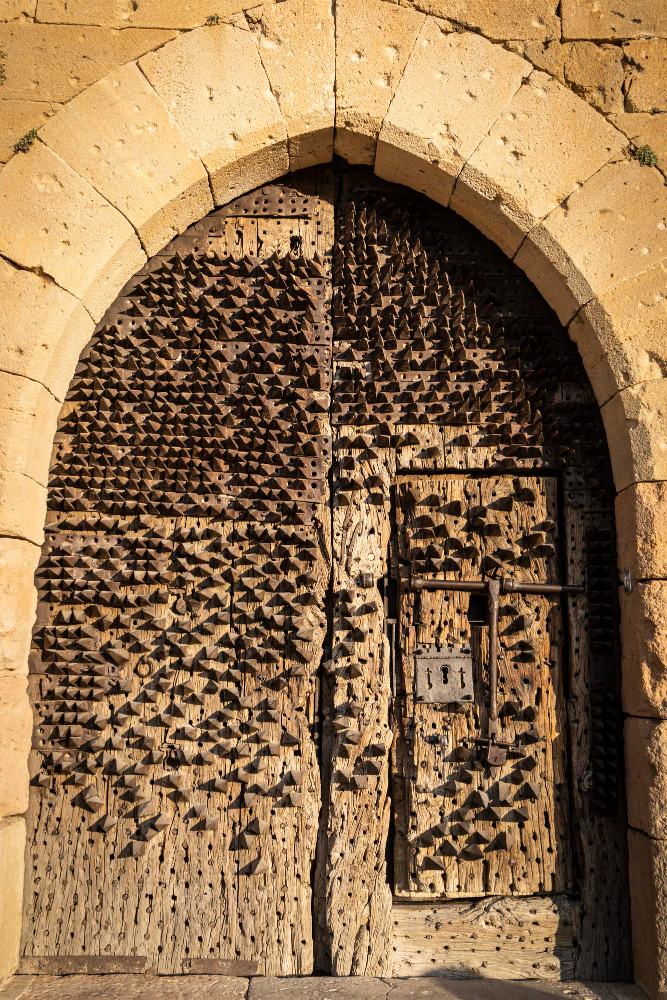
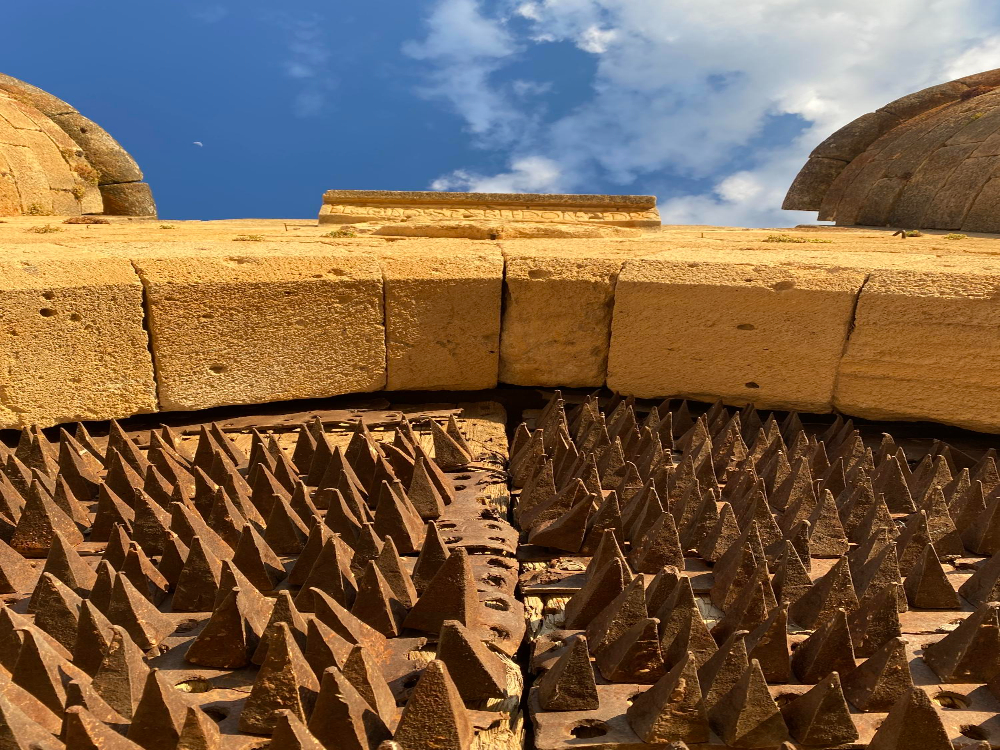
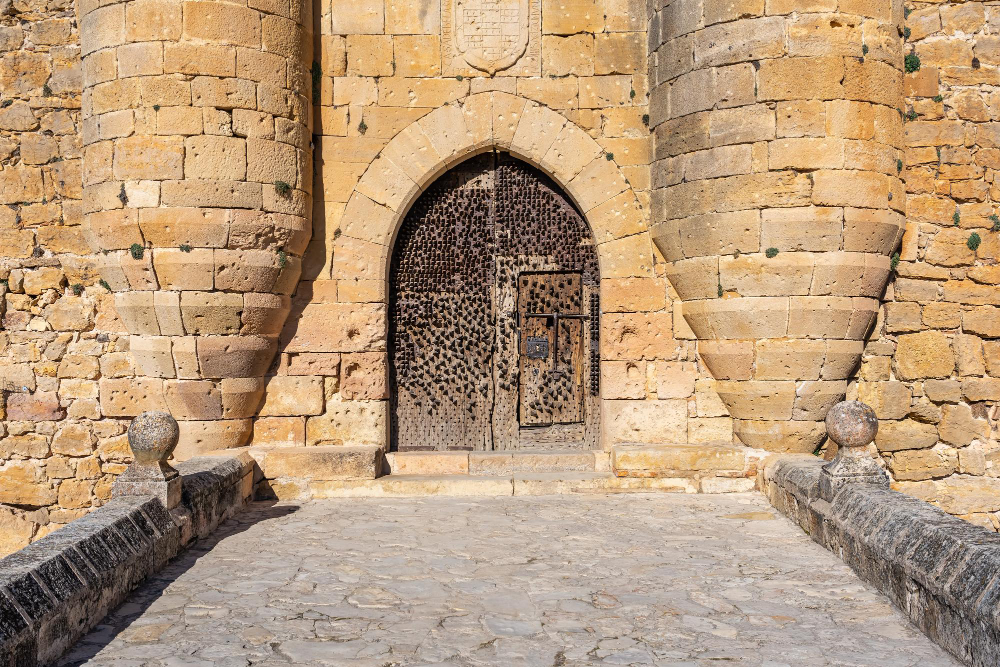
Architecture: Fortified, simple and impressive – The Castillo de Pedraza impresses less through exuberant splendour than through its clear, robust appearance. The walls are built of local stone and blend in with the landscape and the village houses. This harmony between the architecture and its surroundings is one of the most striking aspects of a visit: the castle does not appear as an isolated monument, but as a natural part of the rock on which it stands. The complex displays the typical features of a Castilian fortress. These include the massive outer walls, the limited access points and the tall main tower. Unlike the romanticised notions of fairytale castles, a castle such as Pedraza was designed not for elegance but for resilience. The architecture was intended to protect, deter and visibly reinforce the social order. From the elevated areas, the view opens out onto the countryside surrounding Pedraza. This vista immediately explains why the site was strategically attractive. The castle allowed for the observation of paths and valleys, whilst the natural topography offered the defenders additional advantages. Architecture and landscape are inextricably linked here.
Pedraza today: a monument, not merely a backdrop – Pedraza is now one of the best-known historic sites in Castile and León. The town has been designated a protected cultural heritage site and attracts visitors keen to experience its medieval atmosphere. This is precisely why it is important not to view the castle merely as a photogenic backdrop. Behind its walls lie centuries of social, political and cultural change. The Castillo de Pedraza tells the story of the medieval defence of a domain, the rise of great noble families, the dynastic conflicts of Europe and the later commitment to preserving historic architecture. It stands for a past that is not yet over: through the Ignacio Zuloaga Museum, the upkeep of the town’s appearance and the enduring interest of travellers, the castle remains part of the present. Visitors to Pedraza therefore do not encounter a fictional world of knights, but a real historical site. The walls bear witness to power and decay, to memory and rediscovery. It is precisely this blend that makes the Gran Castillo de Pedraza so fascinating: it is not a perfect backdrop, but a building that has visibly preserved its eventful history.