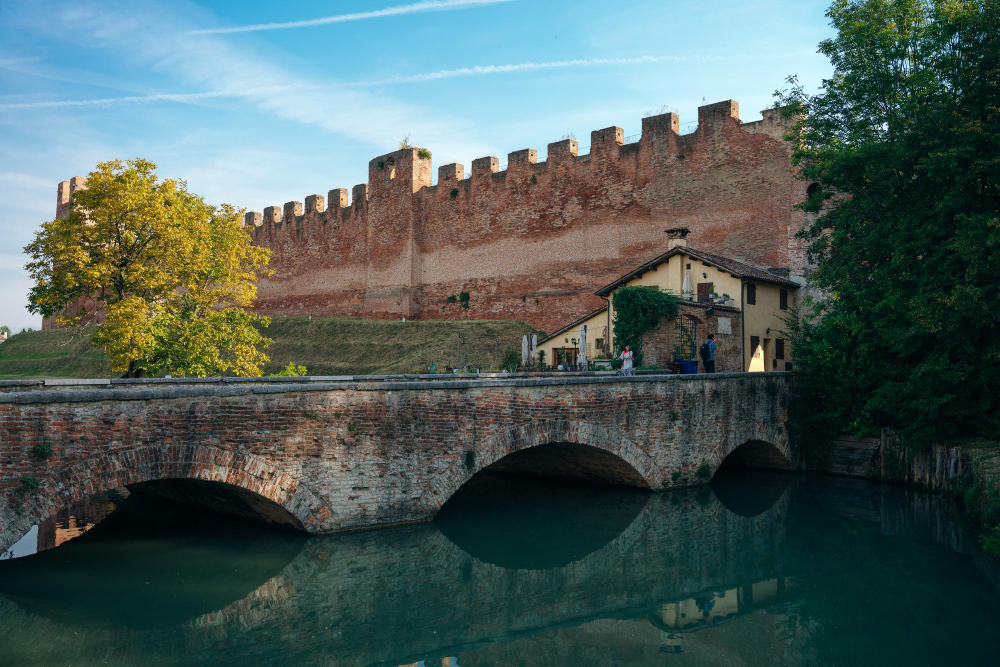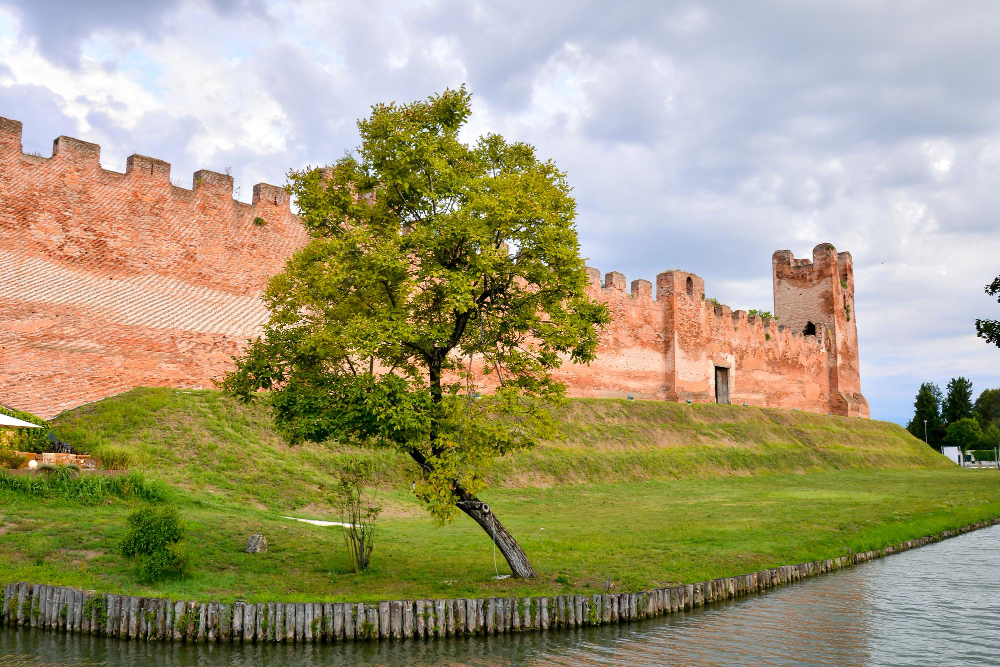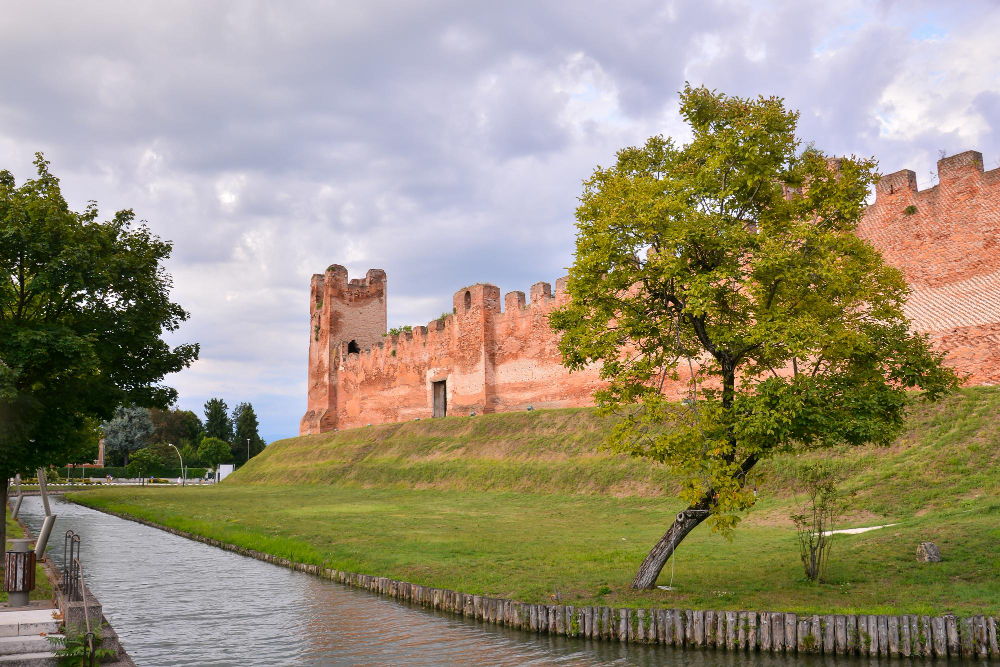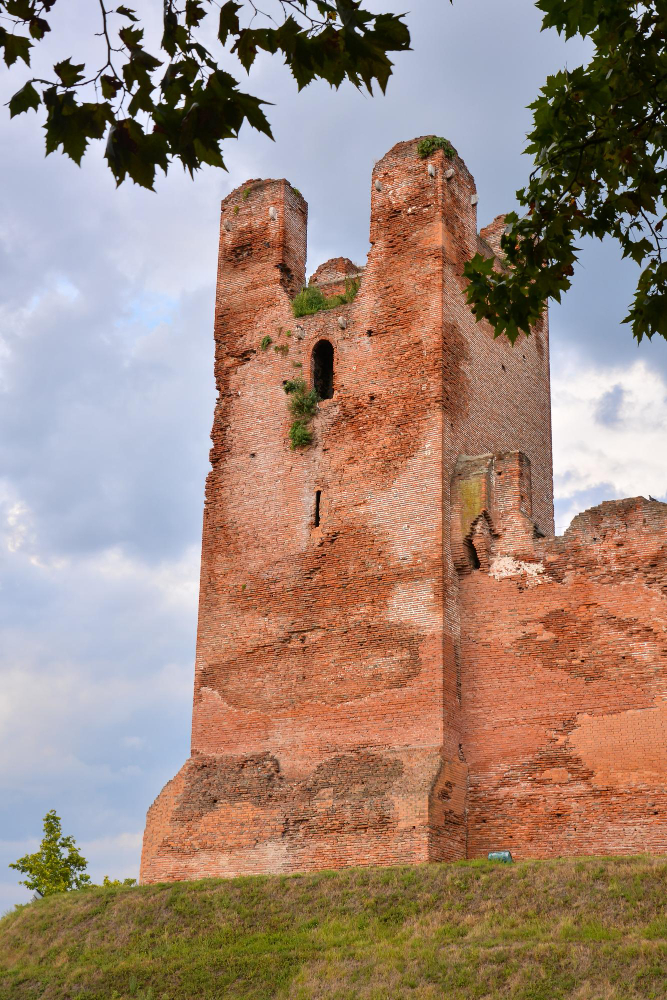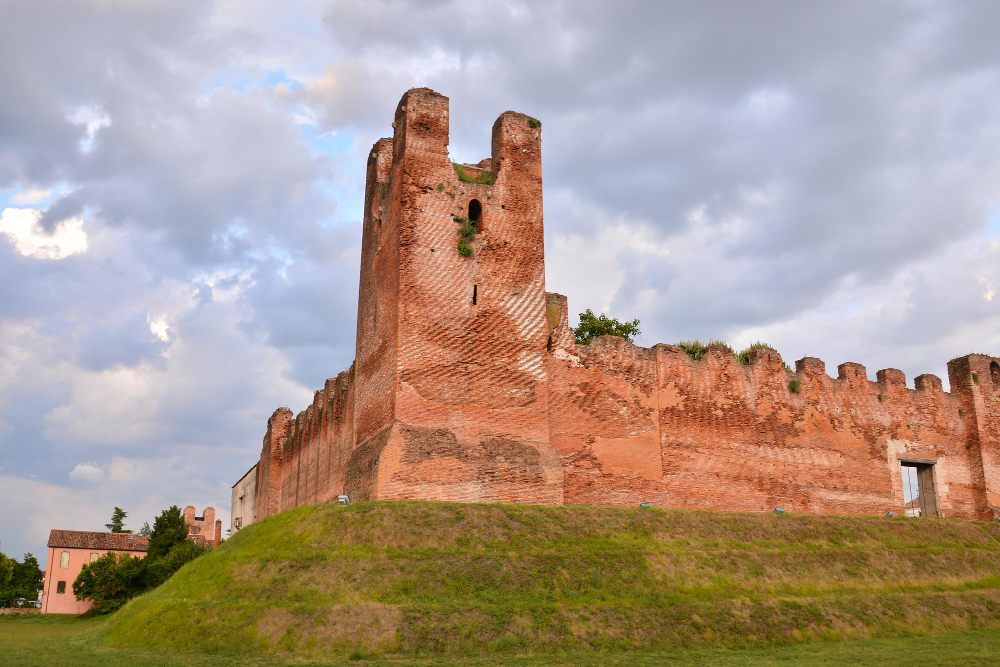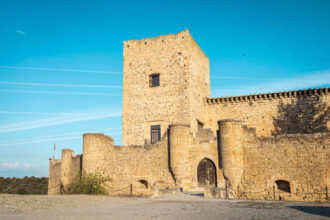

Anyone approaching Castelfranco Veneto from the Venetian plain can recognise the town’s distinctive silhouette from afar: an almost continuous ring of red-brick walls, punctuated by mighty towers and surrounded by a wide moat. The ‘Cittadella murata’, the walled town of Castelfranco Veneto, is one of the most impressive medieval fortifications in northern Italy. Unlike many old towns, which grew haphazardly over the centuries, Castelfranco was built according to a clear plan. The castle was not merely a residence for the nobility, but a strategic project of the municipality of Treviso – and at the same time a promise of security for settlers in a contested border region. Today, Castelfranco Veneto is best known as the birthplace of the Renaissance painter Giorgione. Yet its true historical significance lies within its walls: they tell of the rivalries between medieval communes, of changing rulers, of military architecture, and of stories that still revolve around secret passages, sieges and hidden treasures.
A fortress on the border of Treviso – Castelfranco was founded in the second half of the 12th century, a period of political tensions and local power struggles. Treviso sought to secure its north-western possessions against the expansionist ambitions of neighbouring cities and principalities, particularly Padua and Vicenza. The area lay along key transport routes across the Venetian Plain and was therefore of great military and economic importance. Around 1195, the commune of Treviso had a new fortified settlement built at this strategic location. It was intended as an outpost and border fortress. The name ‘Castelfranco’ refers to the special status of its first inhabitants: in a medieval context, ‘Franco’ did not denote nationality, but rather freedom or privileged status. People who settled within the new fortress were granted tax relief and other benefits. In this way, Treviso sought to encourage families to settle in the vulnerable border region and, if necessary, to defend it. The concept was as pragmatic as it was effective: an inhabited castle was easier to maintain in the long term than an isolated military outpost. Craftsmen, traders, farmers and their families ensured economic vitality, whilst the community, protected by the walls, simultaneously occupied a strategically important military position. Castelfranco was thus both a town and a fortress from the very beginning.
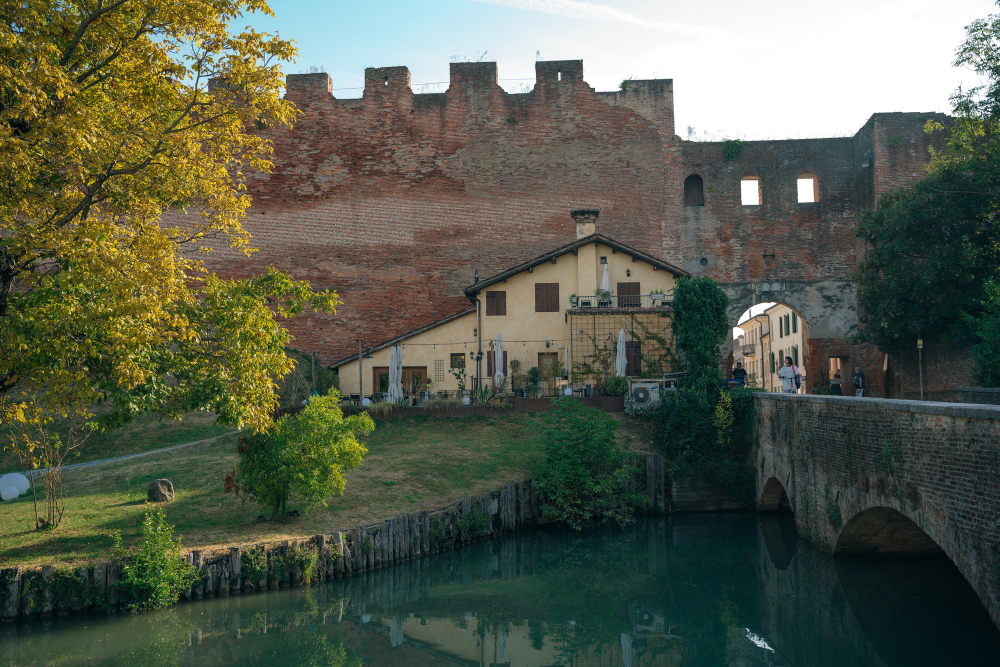
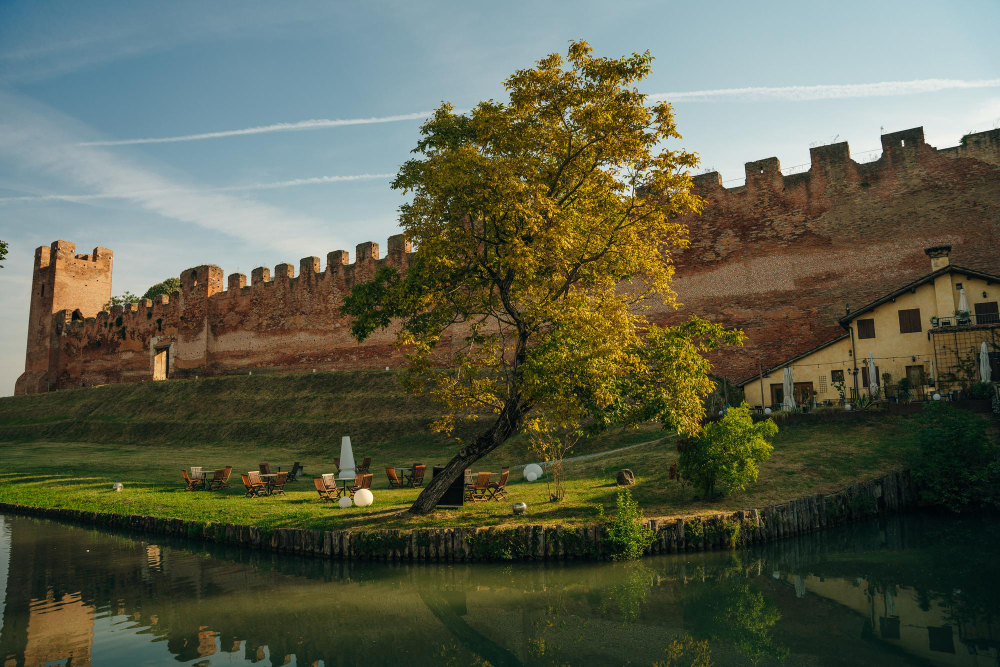
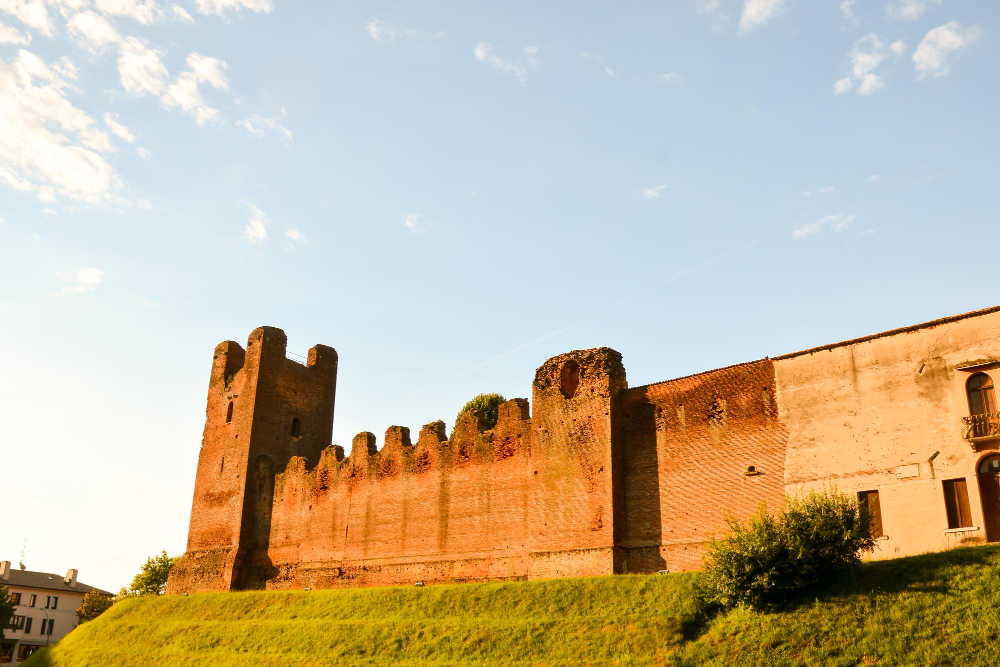
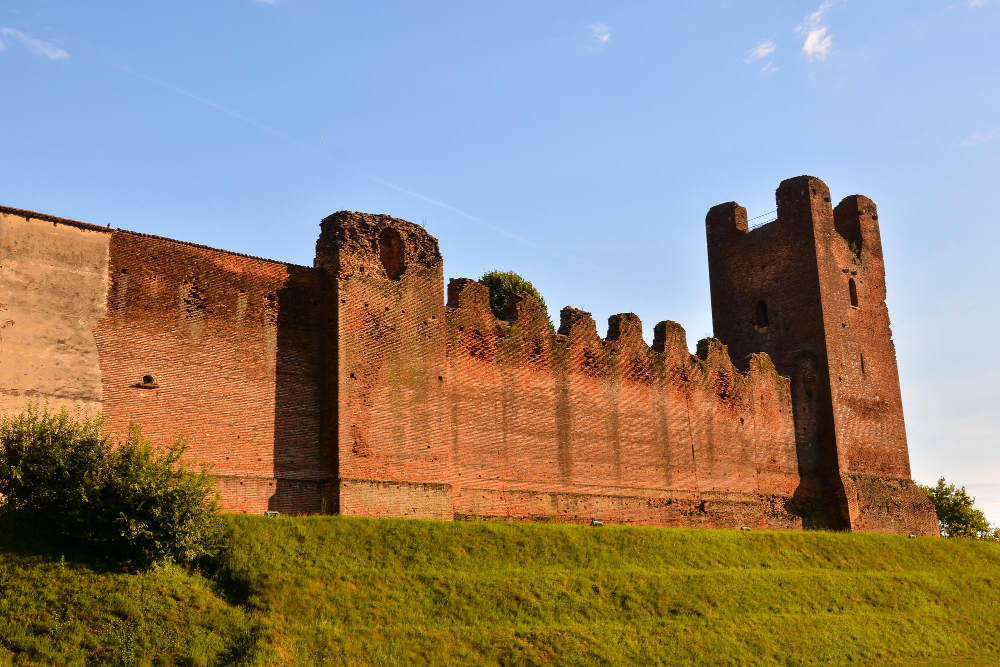
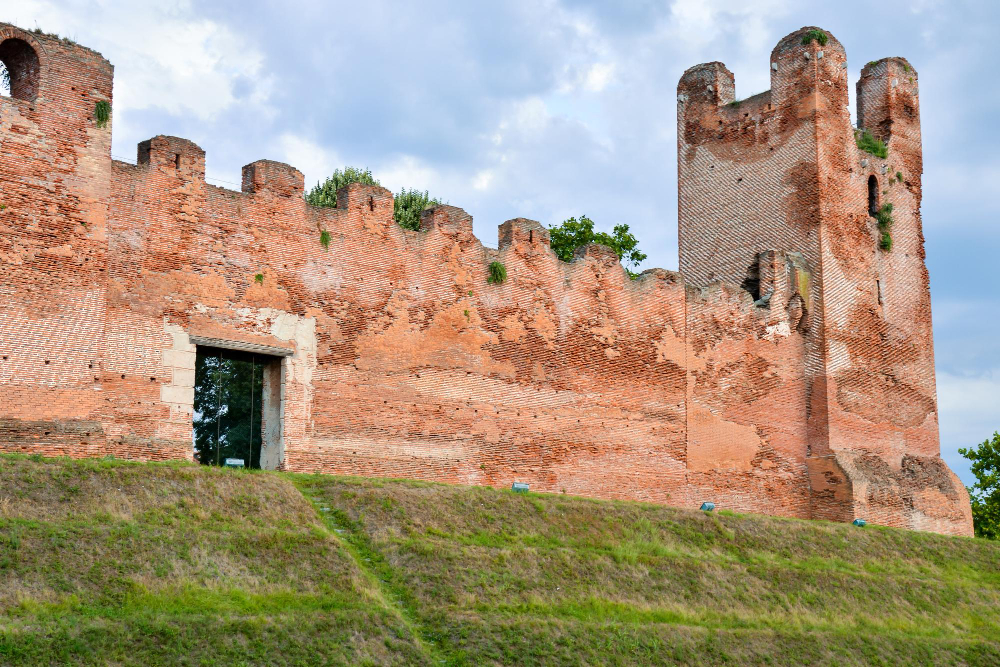
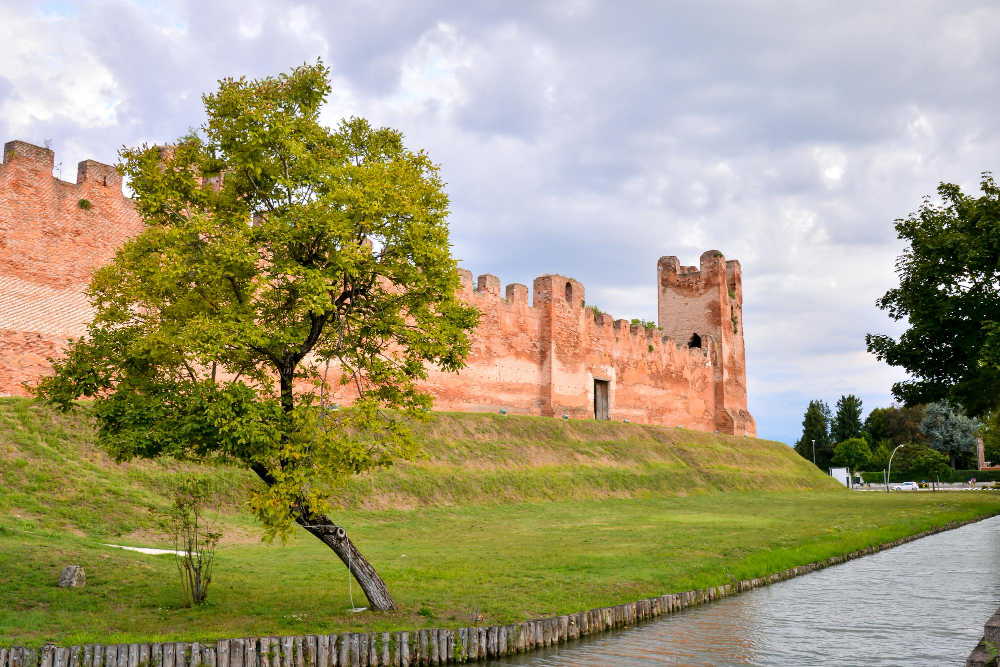
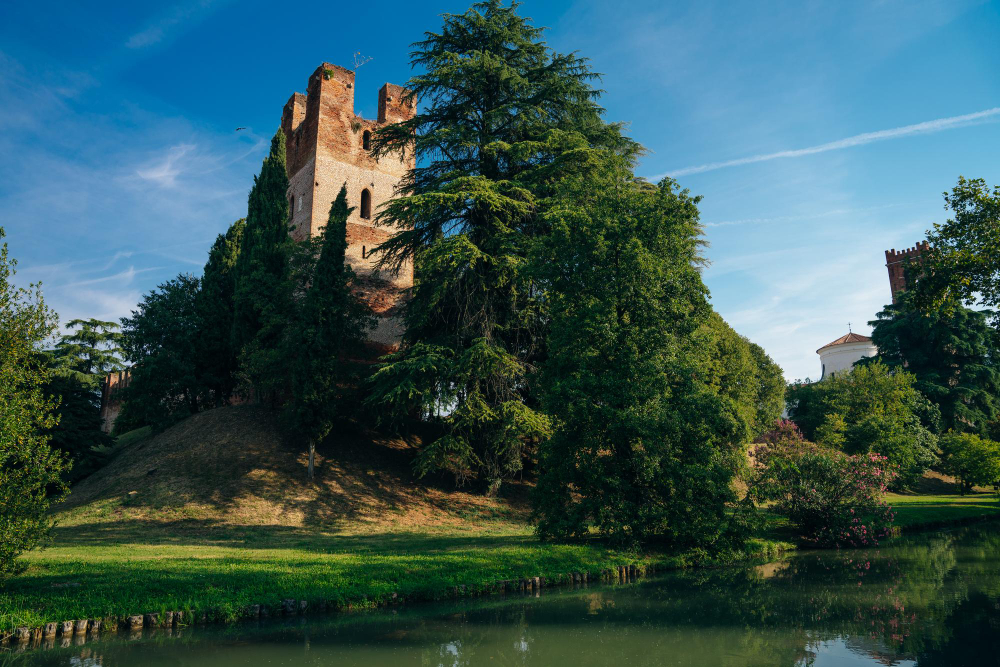
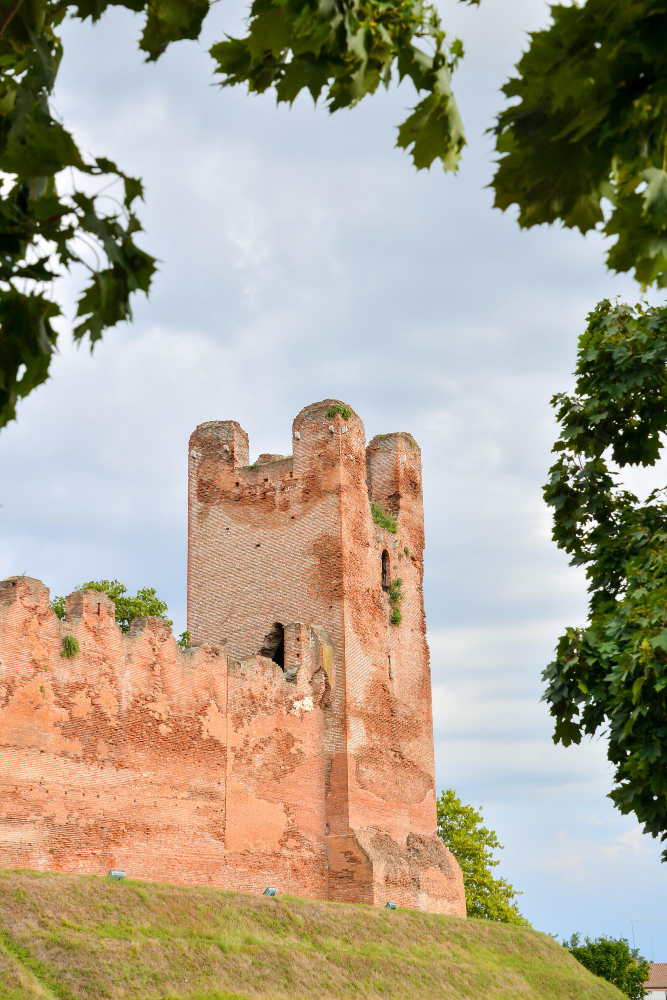
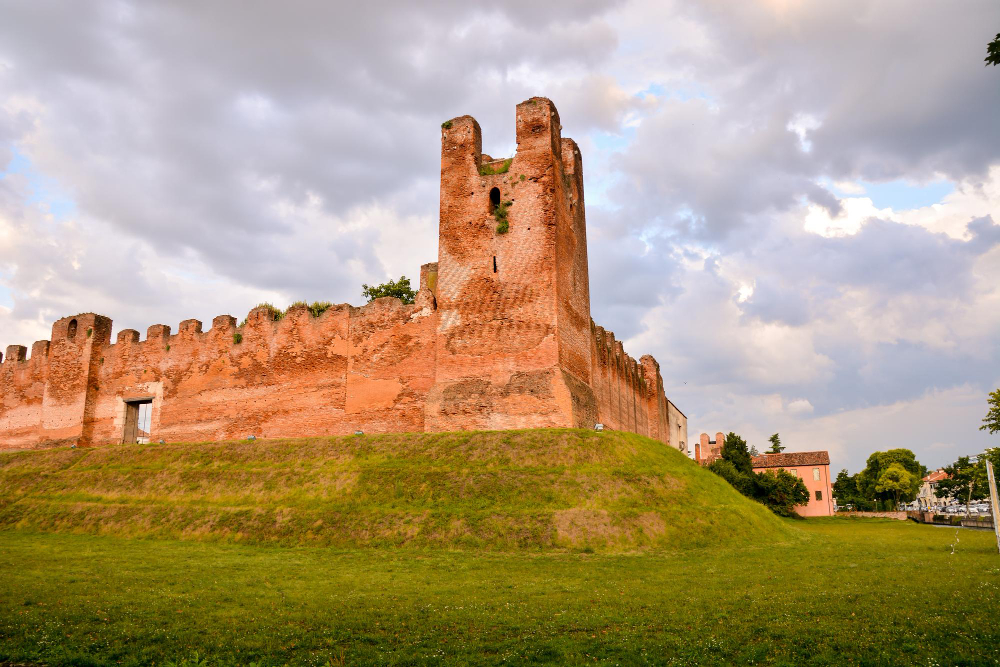
An almost regular ring of brick – The complex continues to impress today with its clear geometric structure. The city walls enclose an almost square area with a side length of approximately 230 metres. Their total perimeter measures around 900 metres. They were constructed primarily from bricks, a material that was readily available in the water-rich Po Valley and which shaped Venetian architecture for centuries. The walled ring is punctuated by several towers. Particularly striking are the four gate towers, which controlled access to the town. Two gates retain special significance to this day: the Porta Treviso in the east and the Porta Cittadella in the west. They mark the historic link between Castelfranco and the neighbouring towns and transport routes respectively. The gates were not merely passageways, but heavily fortified checkpoints. Anyone wishing to enter or leave had to pass through the town’s military and economic checkpoints. A moat ran in front of the walls, fed by nearby watercourses. In the flat landscape, such a moat provided crucial protection: it made attacks more difficult, prevented siege engines from advancing and reinforced the effectiveness of the high brick walls. The complex thus met the requirements of medieval defensive engineering without relying on the monumental scale of later Renaissance fortifications. The walls are not merely a backdrop, but remain an essential part of the townscape to this day. Restoration and conservation work have helped ensure that Castelfranco Veneto ranks among the most recognisable examples of a medieval walled town in the Veneto region. Whilst elsewhere fortifications have been demolished or fully integrated into modern development, the original concept of the complex remains immediately apparent here.
Between Treviso, Padua and Venice – The history of Castelfranco was by no means straightforward. As a border town, it repeatedly found itself within the sphere of influence of competing powers. After its foundation under Trevisan control, the area experienced the political upheavals that shaped the whole of northern Italy: conflicts between communes, the emergence of regional signorias and, finally, the expansion of the Republic of Venice onto the mainland. In the 14th century, Castelfranco came under the control of the da Carrara family of Padua. This rule was part of the decades-long struggle for control over the towns of the Terraferma, the Venetian mainland. Later, Castelfranco – like numerous other towns in the region – came under Venetian sovereignty. The Republic of Venice, long perceived primarily as a maritime power, had been systematically expanding its territory on the Italian mainland since the late Middle Ages. Under Venetian rule, the castle gradually lost its role as a vulnerable frontier outpost. However, this did not mean that it lost its significance. On the contrary: Castelfranco developed into a regional centre with markets, crafts and agriculture. The walls remained as a visible symbol of security and urban identity, whilst life both inside and outside the fortress became increasingly civilised. This development also explains the later addition of ‘Veneto’ to the town’s name. It serves to distinguish it from other places called Castelfranco and, at the same time, refers to the close historical, cultural and geographical ties to the Veneto region.
Giorgione and the cultural flourishing of a small town – The history of Castelfranco is not limited to towers and political boundaries. Around 1477 or 1478, Giorgio Barbarelli da Castelfranco was born here; he became famous under the name Giorgione. The painter is considered one of the most enigmatic and influential artists of the Venetian Renaissance. Although his life was short – he is thought to have died in 1510 – he had a decisive influence on the development of Venetian painting. Castelfranco Veneto Cathedral houses one of his most significant works: the so-called ‘Pala di Castelfranco’, an altarpiece depicting the Madonna on a high throne alongside Saints Liberale and Francis. The painting was probably created around 1502 and commissioned by the Costanzo family. It combines religious devotion with an unusually poetic visual language, making Castelfranco an important destination for art lovers from all over the world. The cathedral itself also symbolises the fusion of the town’s medieval layout with its later cultural development. It was built in the 18th century to a design by Francesco Maria Preti, long after the fortress was founded. Its neoclassical appearance deliberately contrasts with the medieval ramparts, demonstrating that Castelfranco is not a static backdrop, but a town that has evolved over the centuries.
Legends between the moat and the watchtowers – Where medieval walls stand, legends often arise. Castelfranco Veneto is no exception. Local folklore is rife with tales of underground passages said to have connected the castle to other places or buildings. Such stories are widespread in European fortified towns: secret escape routes, hidden cellars and lost treasures form an integral part of the folk tradition. However, there is no historical evidence to support the existence of extensive secret tunnels. The idea is nevertheless understandable. A fortress needed supplies, wells, storage rooms and protected routes; underground structures were therefore by no means unusual. Embellished stories could have emerged over generations from real architectural details and from the desire to imbue the past with mystery. Another narrative, more firmly rooted in history, concerns the origins of the town itself. The idea that Treviso lured people into an insecure borderland with the promise of freedom and tax privileges possesses, without exaggeration, a dramatic power of its own. For the first settlers, Castelfranco was not a romantic destination, but a place of both opportunities and risks: protection behind walls, yet also proximity to zones of conflict; economic benefits, but at the same time the expectation that they would sustain and defend the new community.
A living lesson in medieval urban planning – Castelfranco Veneto is not merely a museum town today. Everyday life unfolds both inside and outside the old city walls; shops and residential buildings fill the streets, squares and buildings. It is precisely this connection that makes the place so special: the medieval fortress is not separated from the town, but forms its historic centre. Visitors are well advised to take a stroll along the moat and the preserved walls before entering the centre through one of the city gates. From the outside, the military logic of the complex becomes apparent; inside, it becomes clear how what was originally a strictly fortified settlement transformed into an urban community. The route leads almost inevitably from the defensive structures to art: from the towers of the municipality of Treviso to the Giorgione altarpiece in the cathedral. The Cittadella of Castelfranco Veneto thus represents more than just medieval architecture. It bears witness to how political uncertainty could give rise to the founding of towns, how privileges were deliberately used to encourage settlement, and how a military outpost evolved into a place of cultural significance. Its walls preserve the memory of conflicts and rulers – but also of those people who, behind them, built a town that is still thriving today.