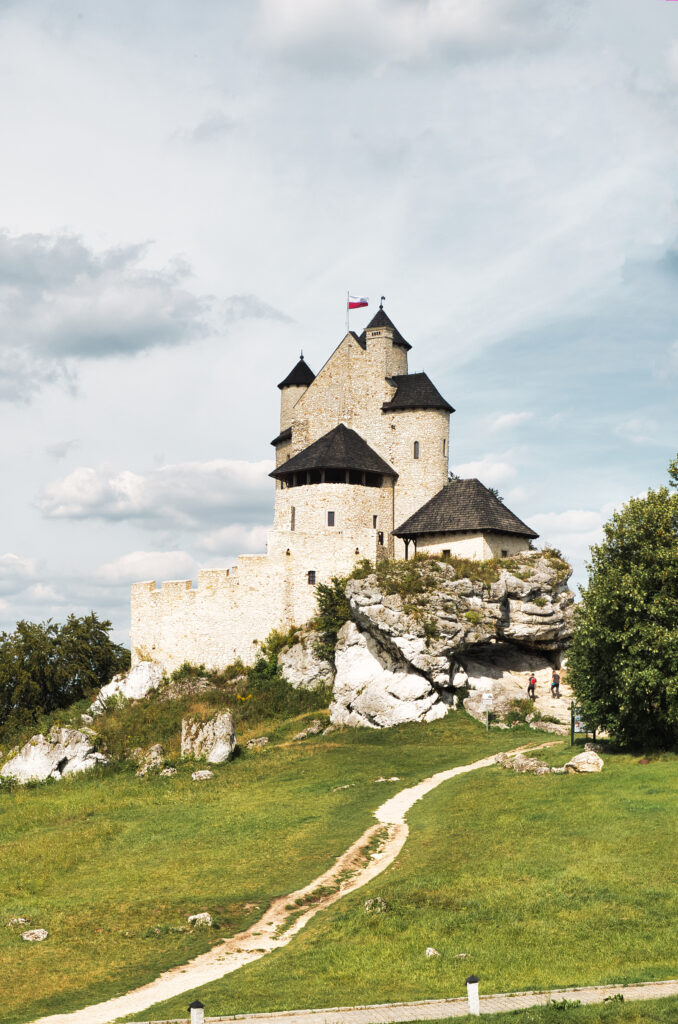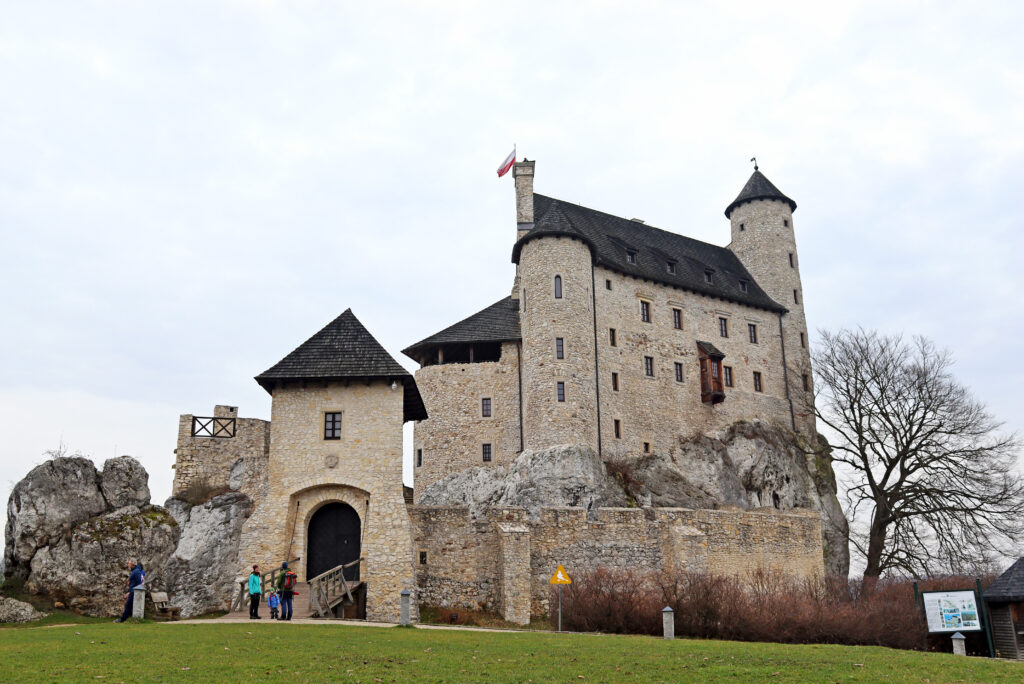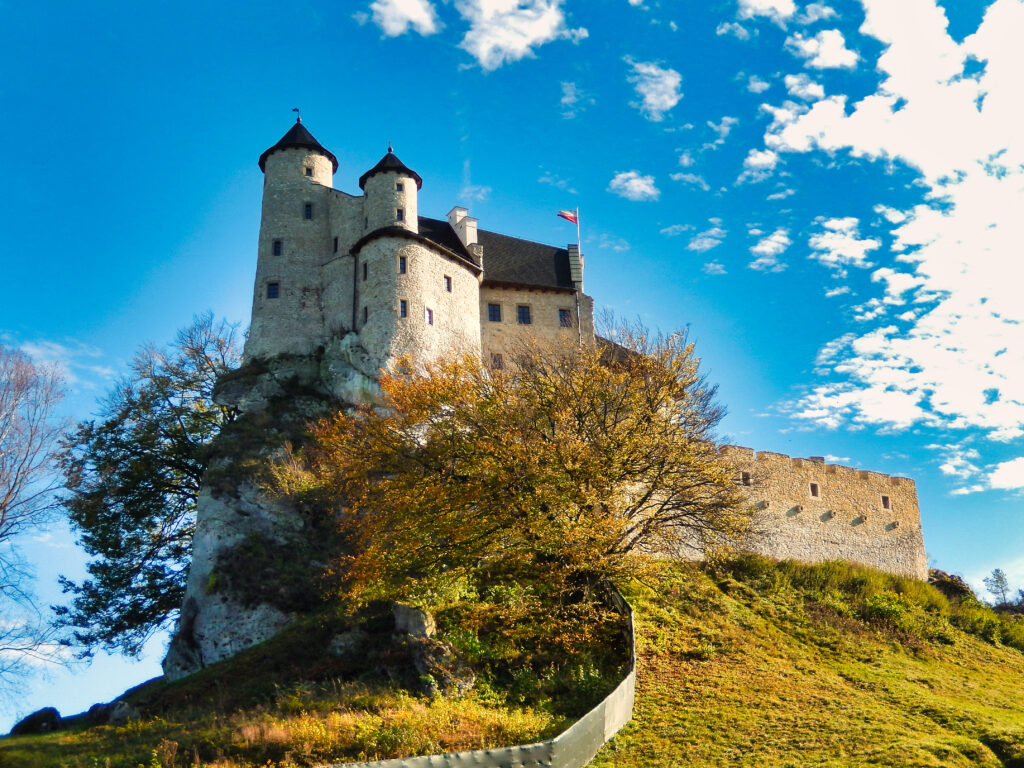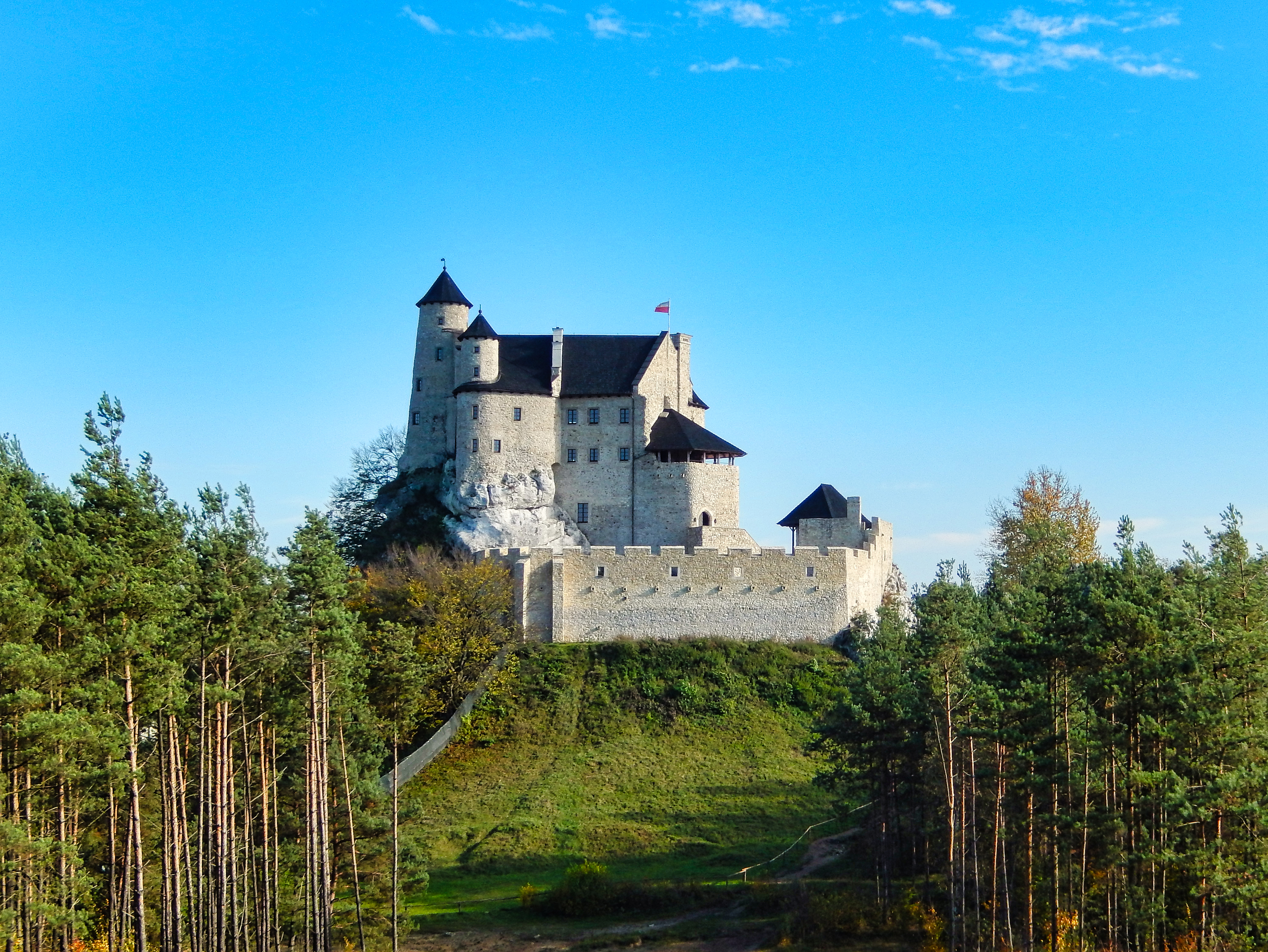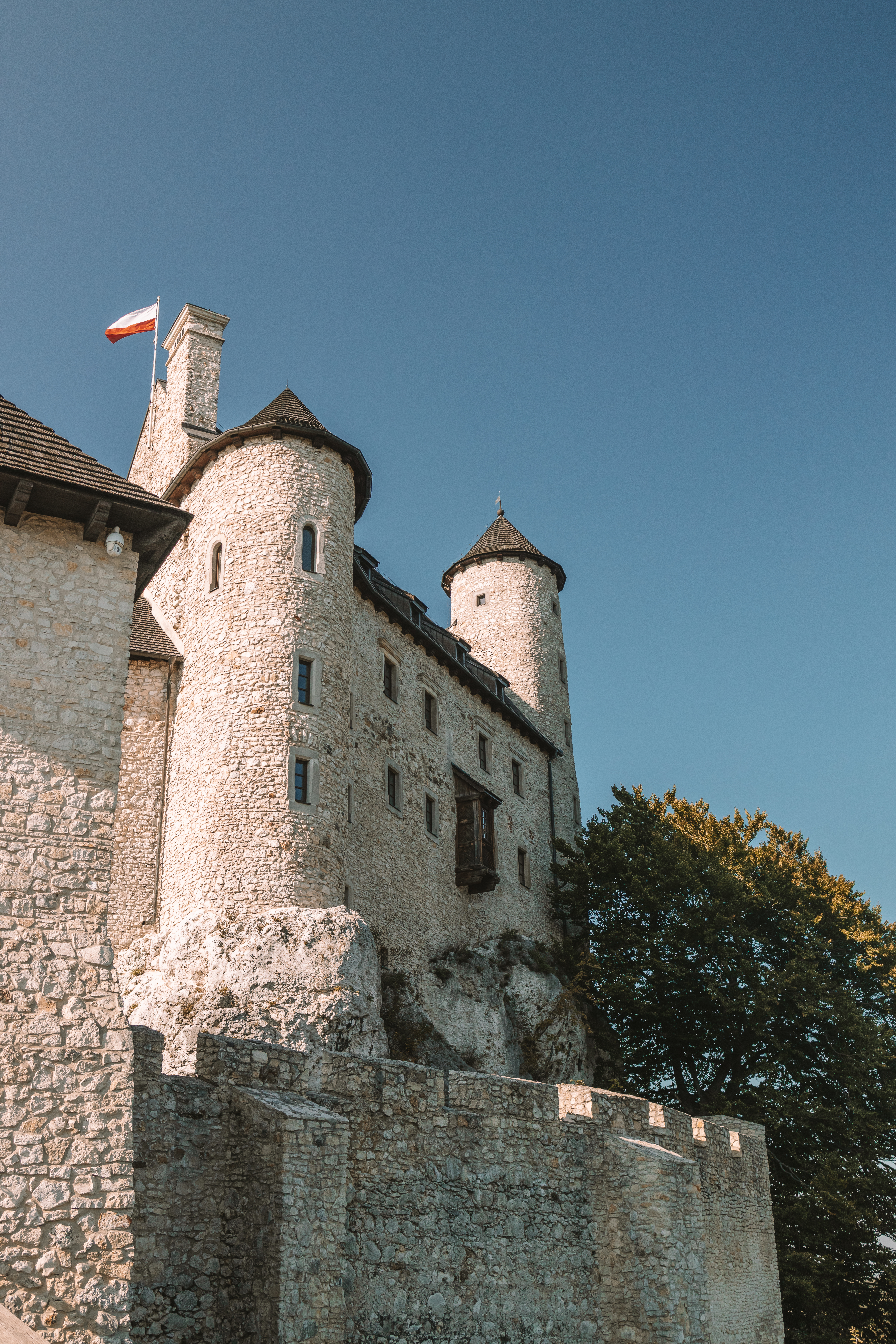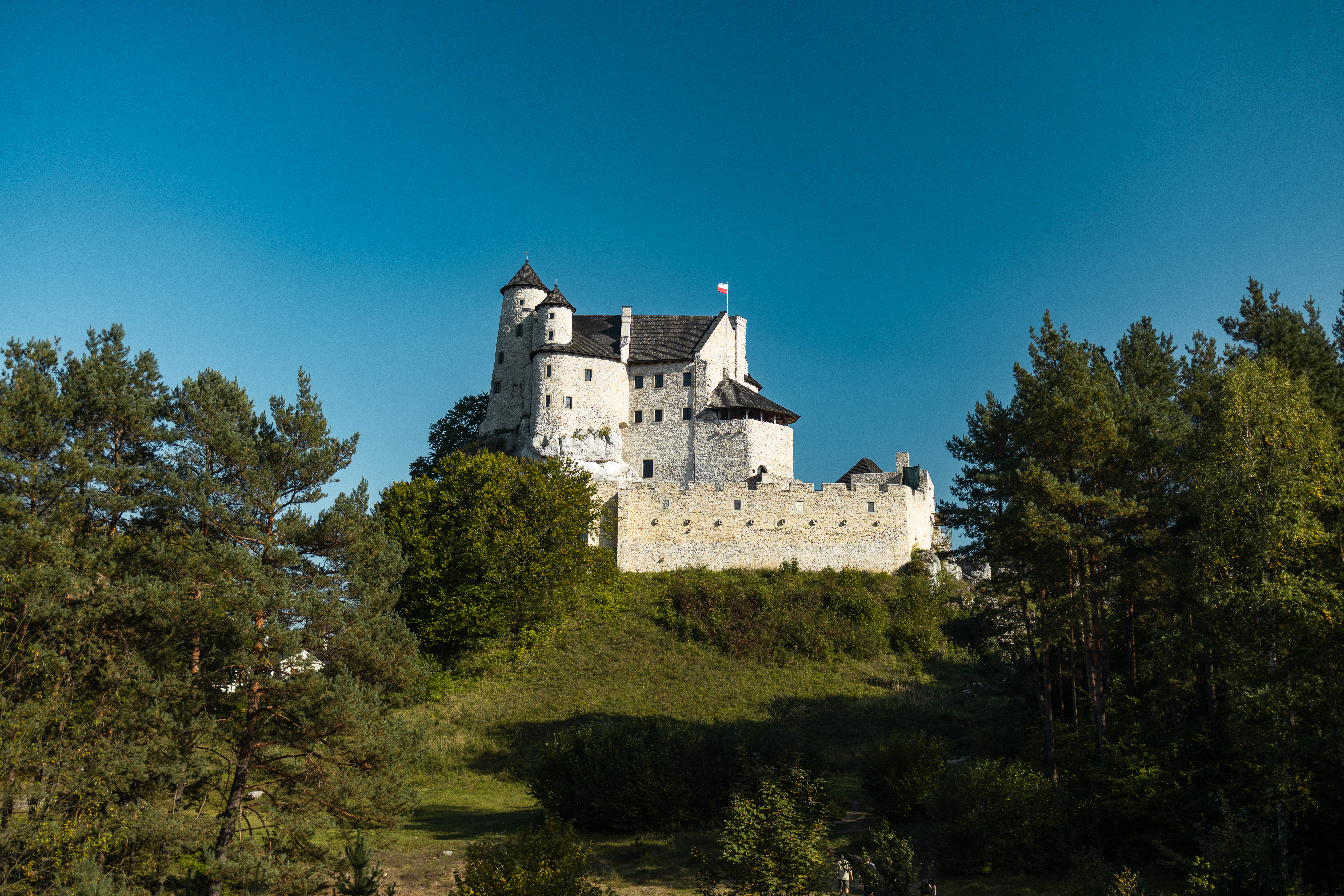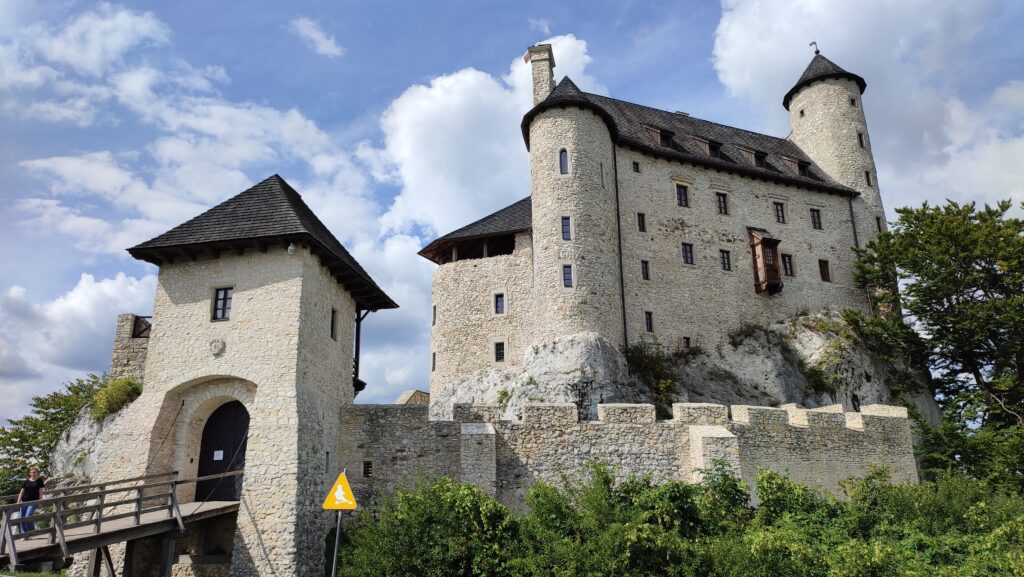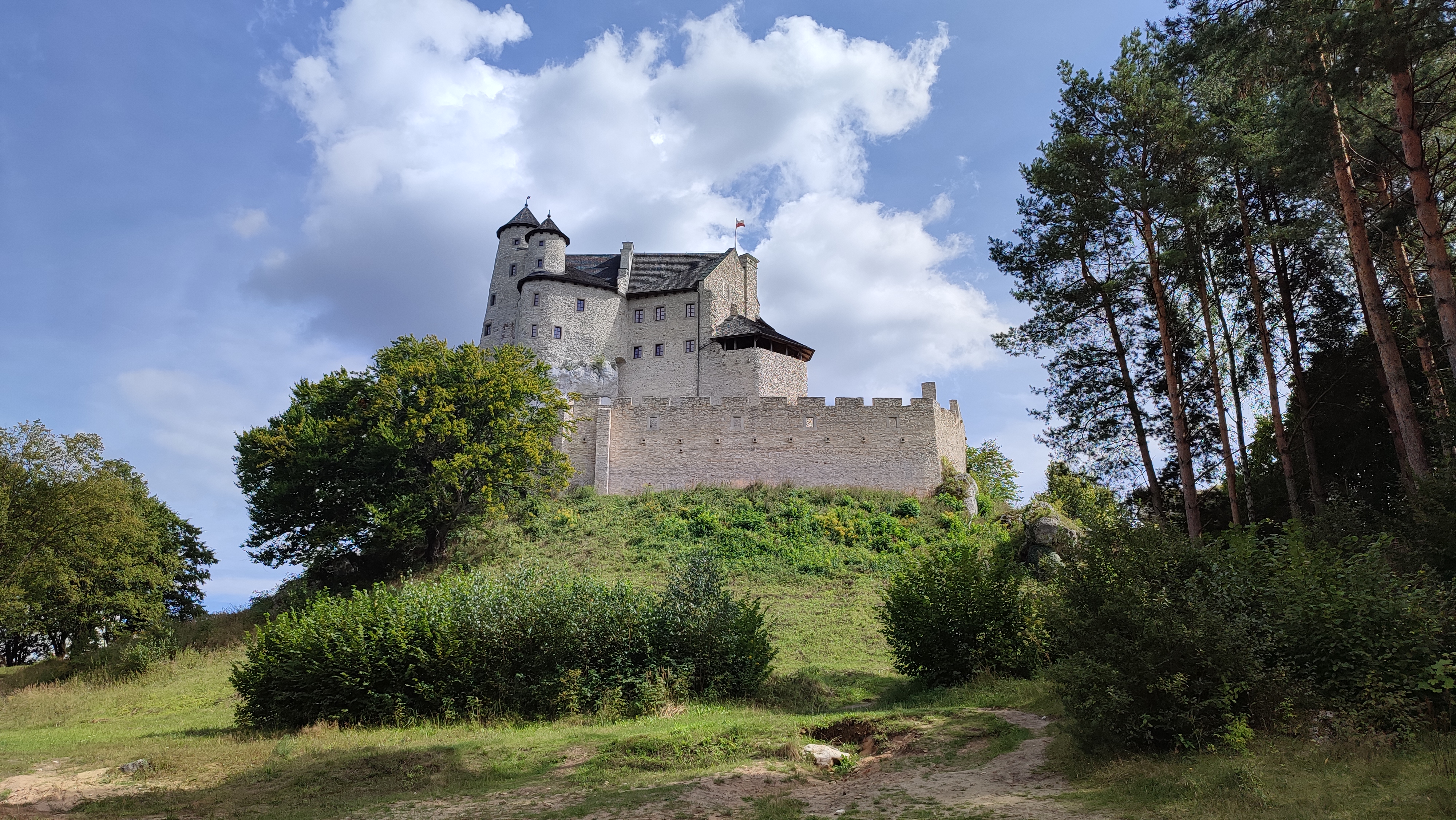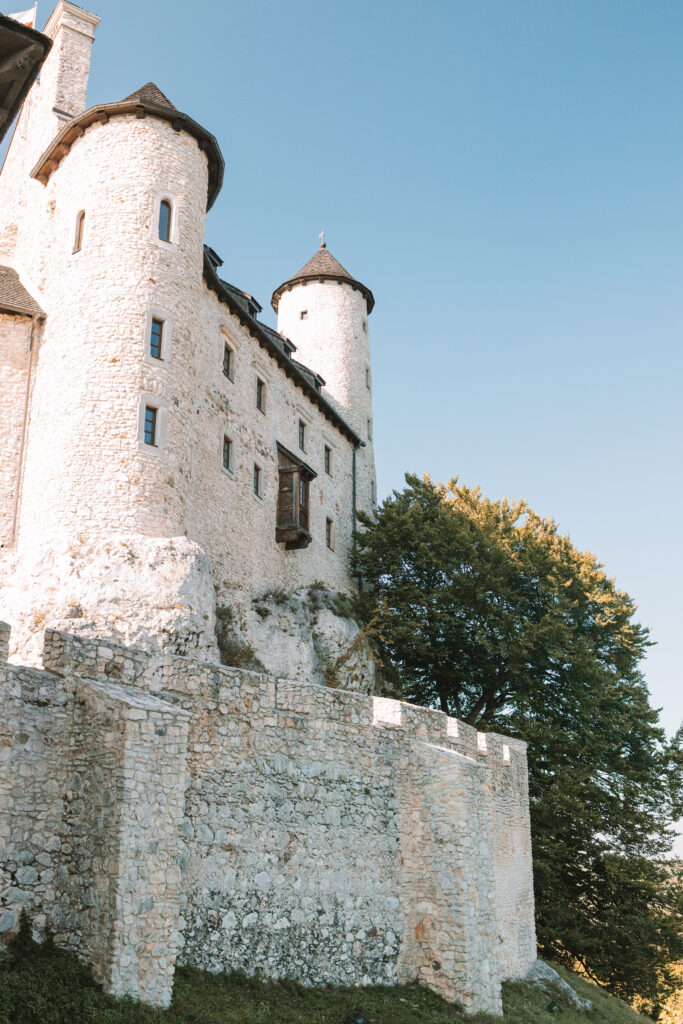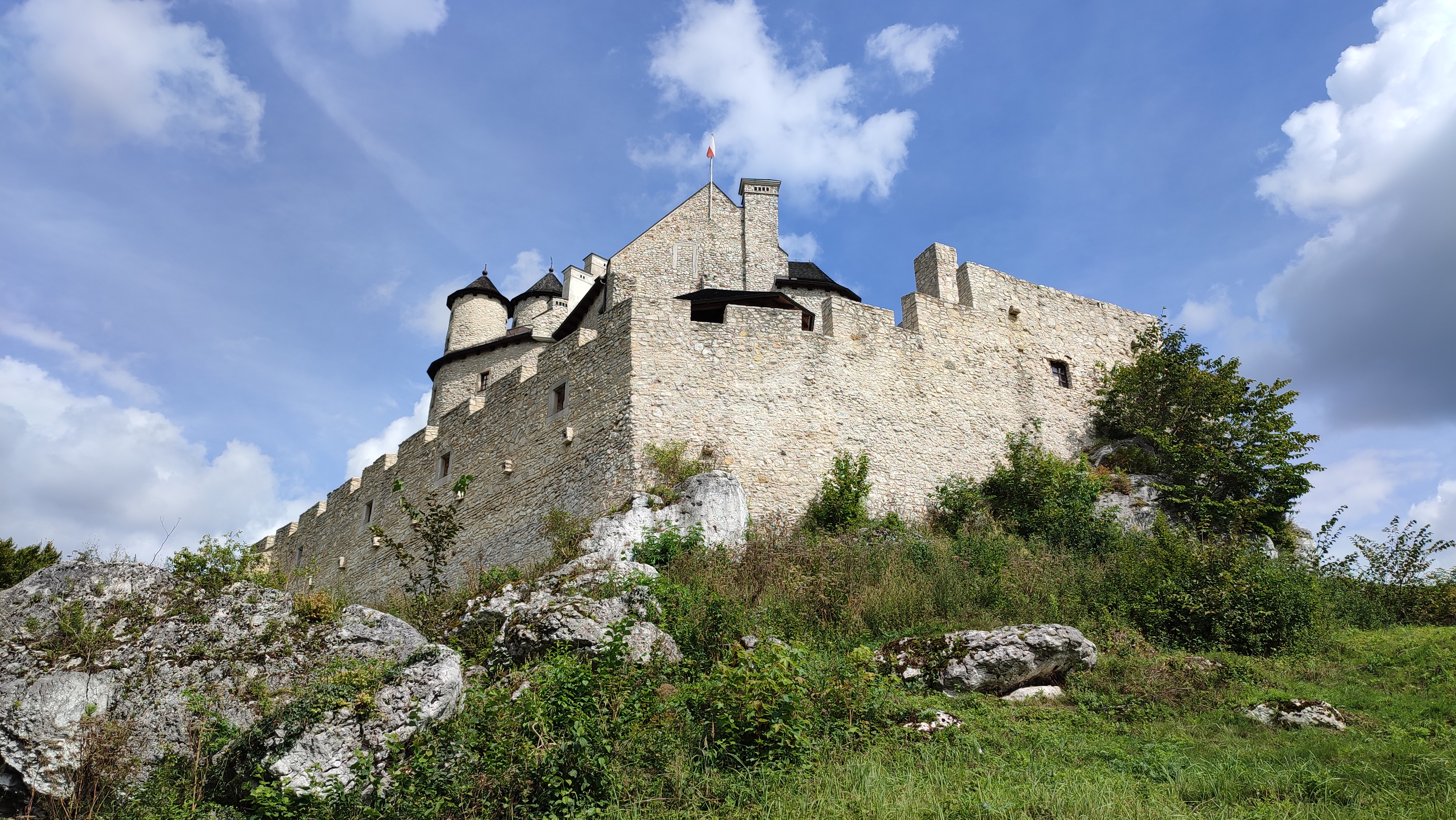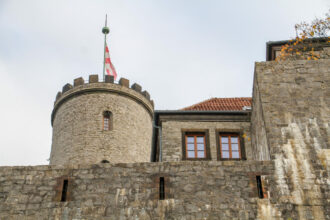

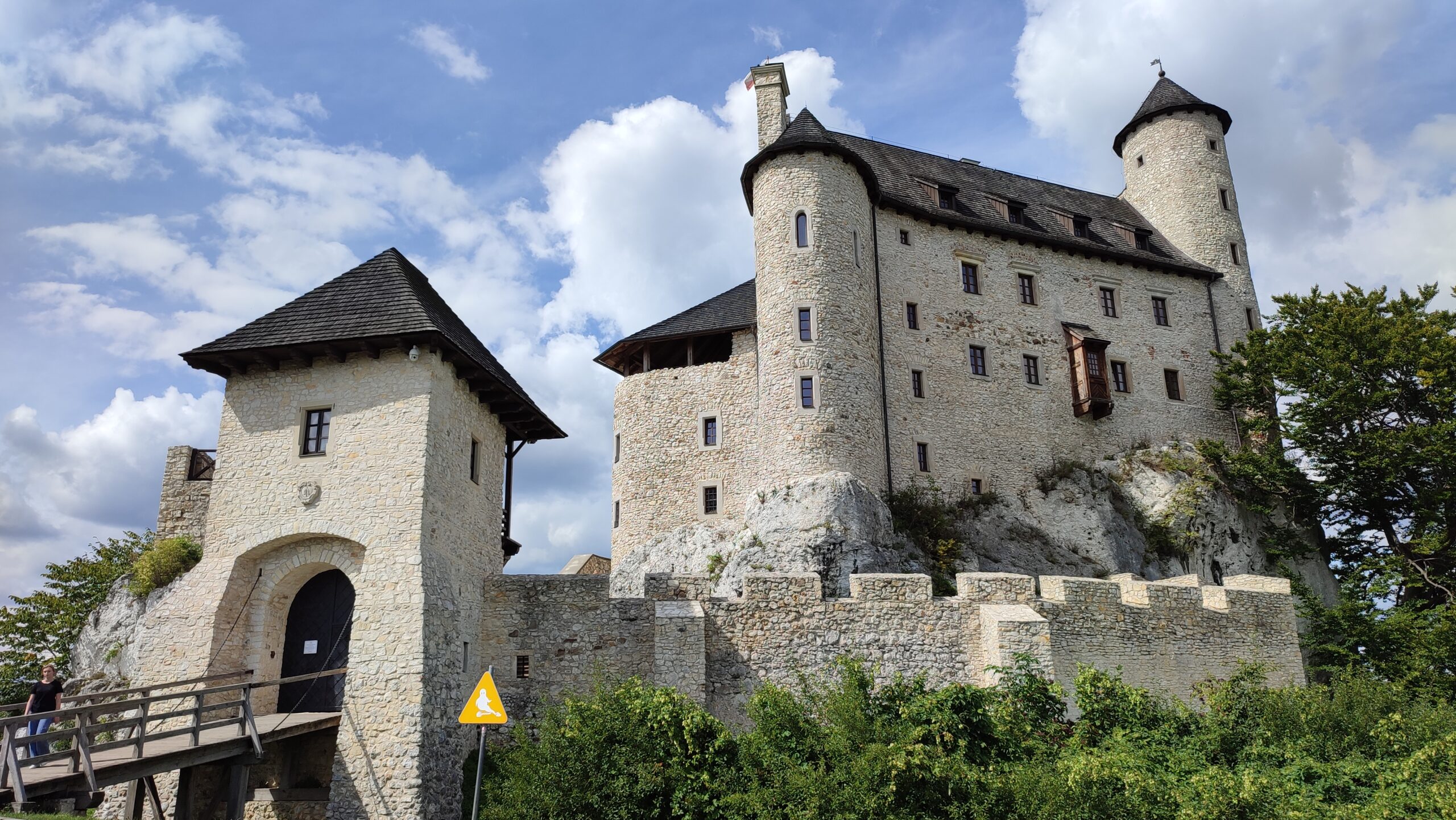
Nestled in the picturesque Kraków-Częstochowa Upland, the majestic Bobolice Castle stands as a testament to Poland’s turbulent history and enduring myths. This historic fortress, known in German as Burg Bublitz, weaves a narrative full of royal ambitions, legendary treasures and ghostly apparitions. Built in the 14th century as a fortress for the Kingdom of Poland, it now serves as both a haunting reminder of the past and a charming modern-day retreat.
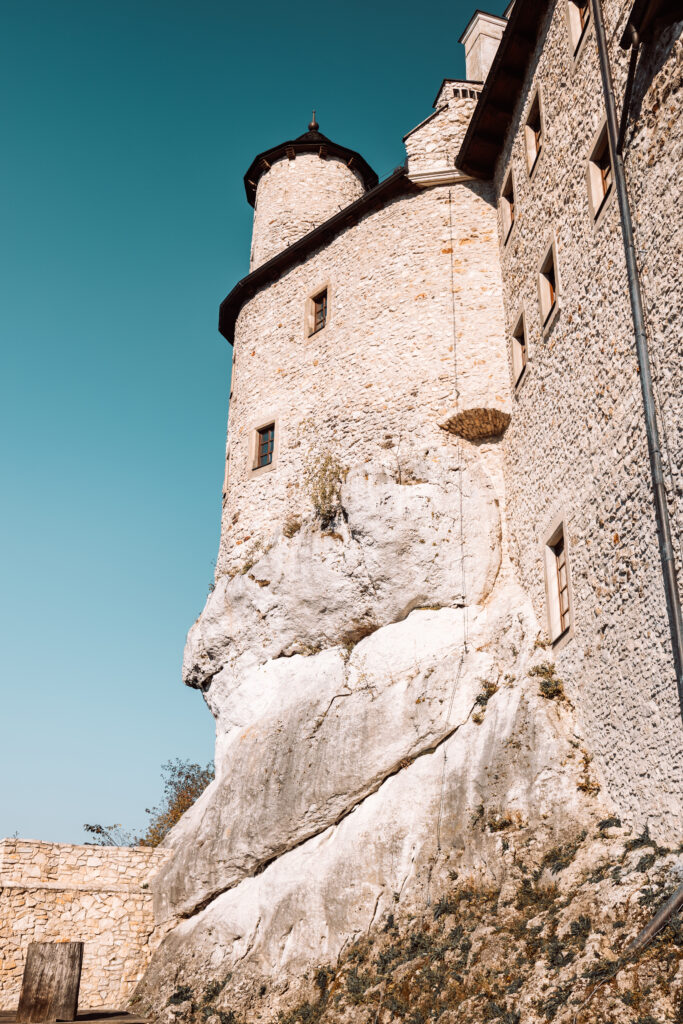
A fortress born of strategic necessity – Bobolice Castle was originally built between 1350 and 1352 by King Casimir III the Great and is part of a series of fortresses known as ‘Eagle’s Nests’. These castles were strategically positioned along the border between the Kingdom of Poland and the Holy Roman Empire to ward off invasions and consolidate Casimir’s rule. Situated on a limestone hill, the castle’s favourable location allowed for comprehensive surveillance of the surrounding countryside, providing an optimal defensive position.
Despite its robust construction, the castle quickly became a pawn in the political chess games of the European nobility.
In 1370, it was gifted by King Louis the Great to Władysław of Opole, reflecting the shifting loyalties and power dynamics of the time. However, this transfer marked the beginning of a more lawless chapter in its history, as it fell into the hands of robber knights notorious for their theft and banditry.
The history of the robber barons – The reputation of Bobolice Castle took a darker turn in the late 14th century when it became a refuge for renegade knights who opposed the crown. These so-called ‘robber barons’ used the castle’s strategic location to launch raids and extort protection money from passing merchants. However, this occupation by marauders did not last long, as King Władysław II Jagiełło recaptured the fortress in 1396 and its status as a royal bastion was restored.
The castle’s role changed again in the late 16th century when King Maximilian of Habsburg briefly occupied it during his quest for the Polish throne.
Despite his initial success, Polish troops led by Jan Zamoyski soon recaptured Bobolice for King Sigismund III Vasa. Each of these changes left its mark on the structure and soul of the fortress – scars left by battles and conflicts of occupation.
Myth, legend and the Swedish Deluge – Bobolice Castle is not only of historical significance, but also steeped in folklore that fires the imagination. Perhaps the most famous legend is that of a supposed treasure hidden deep within its walls. According to local tradition, the castle’s tunnels once contained such immense treasures that fortune seekers, driven by greed, ravaged the ancient stones in search of gold and jewels allegedly left behind by residents fleeing attacks or hiding their wealth from looters.
During the destructive period known as the Swedish Deluge, the castle suffered considerable damage in 1655 at the hands of Swedish troops led by Burchard Müller von der Lühne. They partially plundered and destroyed Bobolice, but interestingly, rumours of supernatural events began to haunt the region.
Ghost stories emerged, telling of ghostly knights and mysterious lights flickering in the ruins, which attracted curious onlookers and further enhanced the castle’s mystical aura.
Rediscovery and reconstruction – By the 19th century, Bobolice Castle lay largely in ruins, its former glory obscured by time and neglect. However, local legends persisted, with stories of treasure hunters occasionally unearthing remnants of the past.
The lure of undiscovered treasures led to numerous unauthorised excavations, which only accelerated the building’s decline.
In the 20th century, the castle was dismantled for its building materials, but it was not destined to be forgotten.
In 2011, a carefully planned reconstruction began with the aim of restoring Bobolice to its medieval splendour while incorporating modern amenities. Today, the castle serves as a hotel and restaurant, inviting visitors to travel back in time and immerse themselves in the myth and splendour of Poland’s royal past.
Modern reflections and cultural renaissance – Bobolice Castle has not only become a luxurious retreat, but also a cultural beacon. Its haunting beauty and historical significance have made it a popular filming location, including for the historical telenovela ‘Korona królów’ (The Crown of Kings), which recounts the glory and intrigue of Poland’s medieval monarchy. This blend of history and art offers visitors a vivid insight into the nation’s rich heritage.
In essence, Bobolice Castle embodies the indomitable spirit of Poland itself, which has survived periods of partition, conquest and liberation.
Its walls echo with the footsteps of kings and knights, its corridors filled with the whispers of untold stories. Even though only stone and mortar remain, they are imbued with a vitality that transcends time.
The eternal appeal of Bobolice – Today, Bobolice Castle is not just a relic of the past, but a living symbol of revival and cultural heritage. It welcomes travellers from all over the world, offering them the rare opportunity to explore an authentic piece of history while enjoying the comforts of modern hospitality. The castle’s appeal lies in its seamless blend of legend and modernity – a place where mythical knights could still ride beneath the moonlight, where treasures might lie hidden just beneath the surface, waiting to be discovered by those who can see beyond the veil of time.
In short, Bobolice Castle is more than just a building; it is a living narrative that weaves together the threads of Polish history, folklore and culture.
As visitors stroll through its halls, they are not just viewing history – they are becoming part of an ongoing saga that reflects the spirit of those who came before them and adding their own chapters to the story of Bobolice, the indomitable fortress of legends and lore.