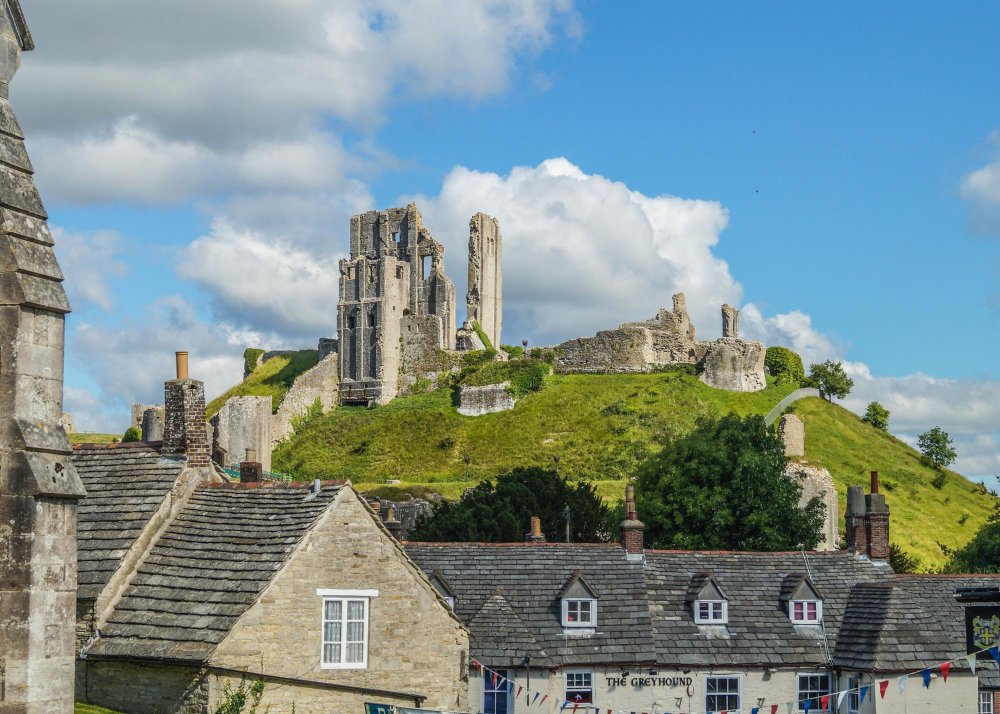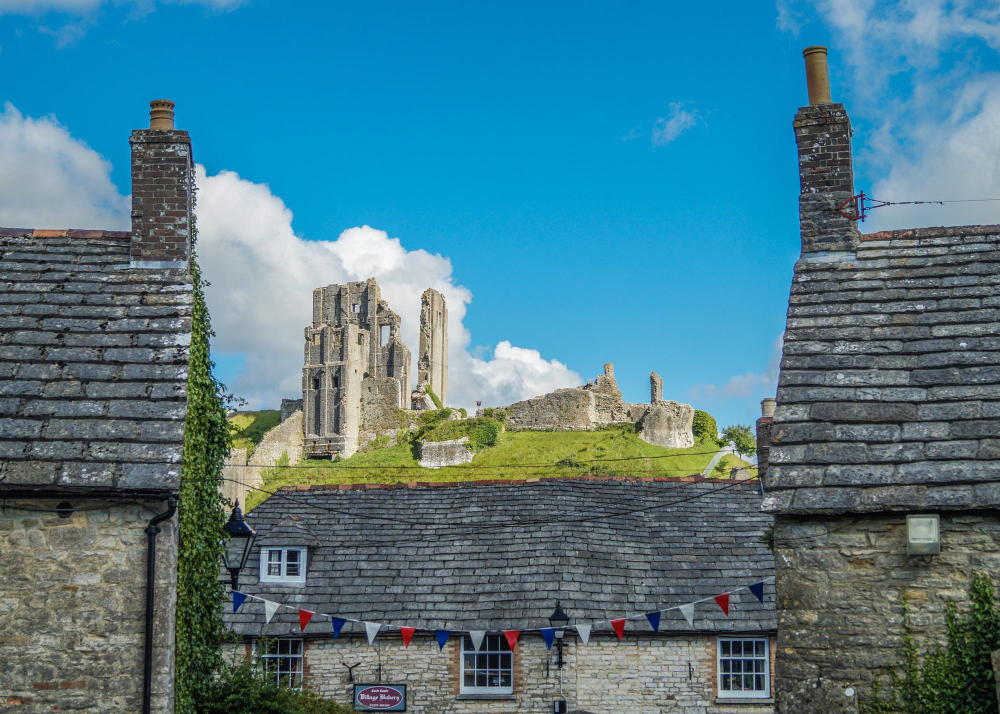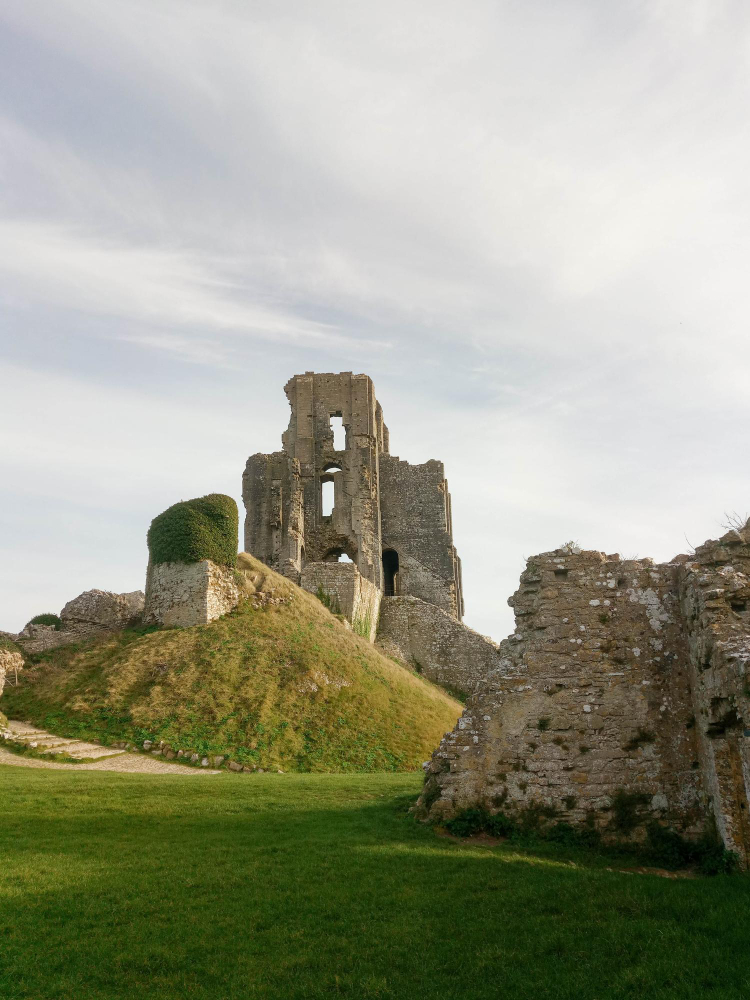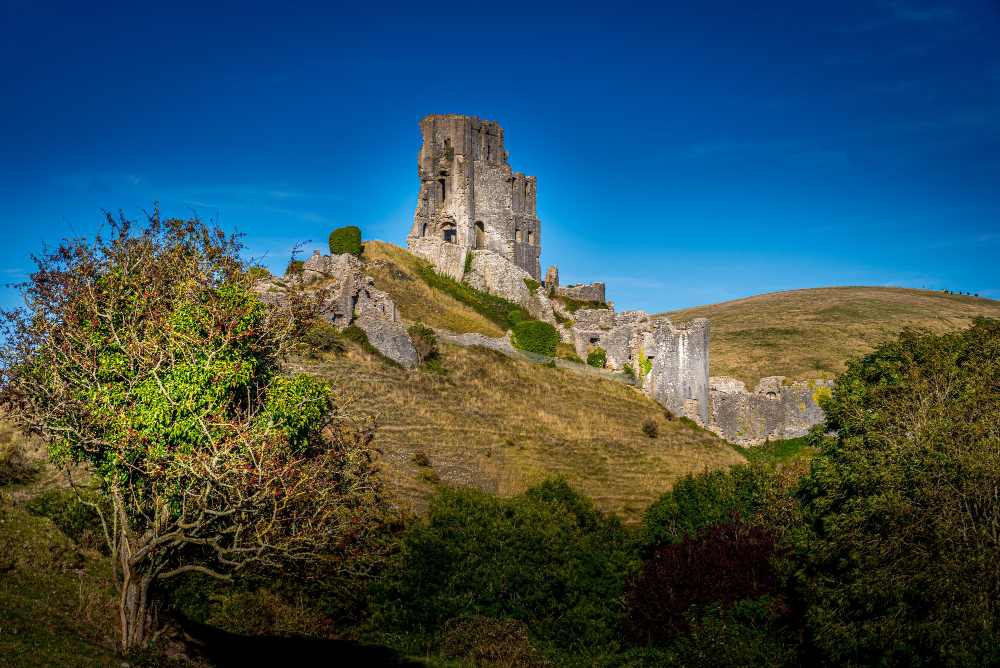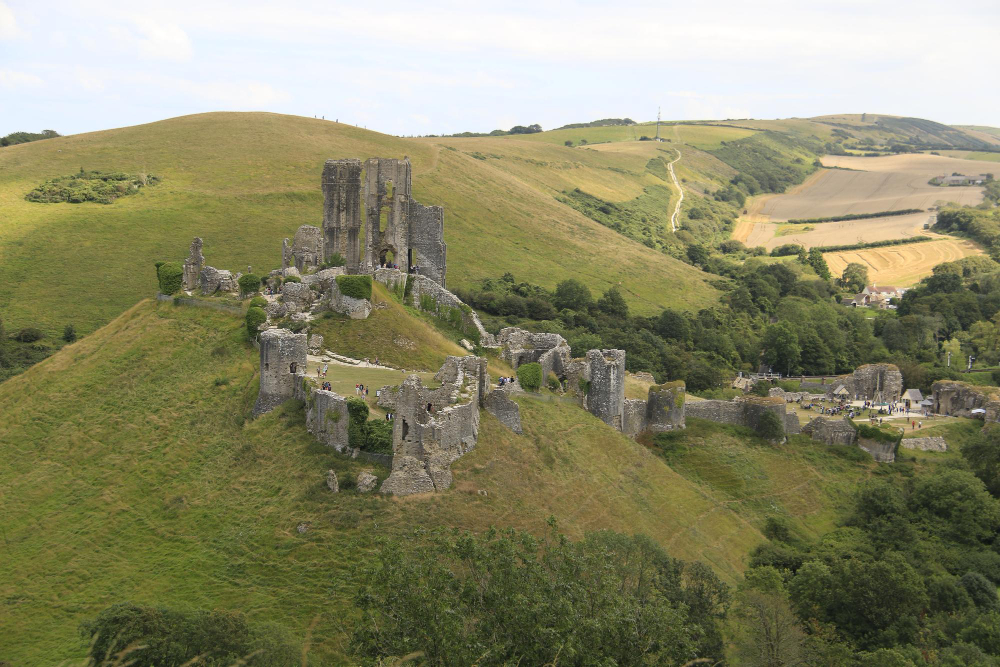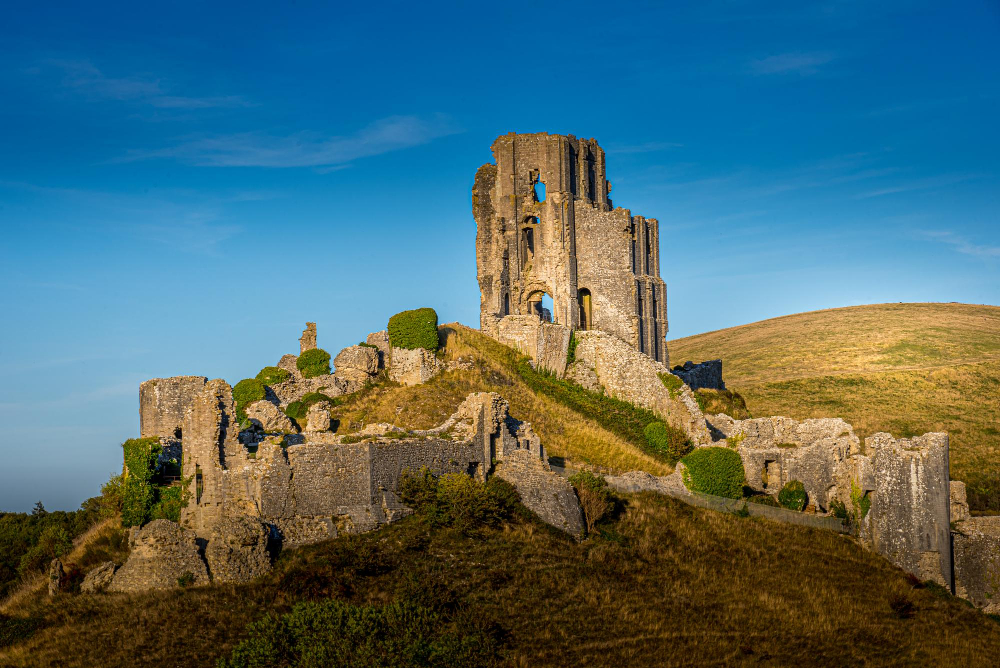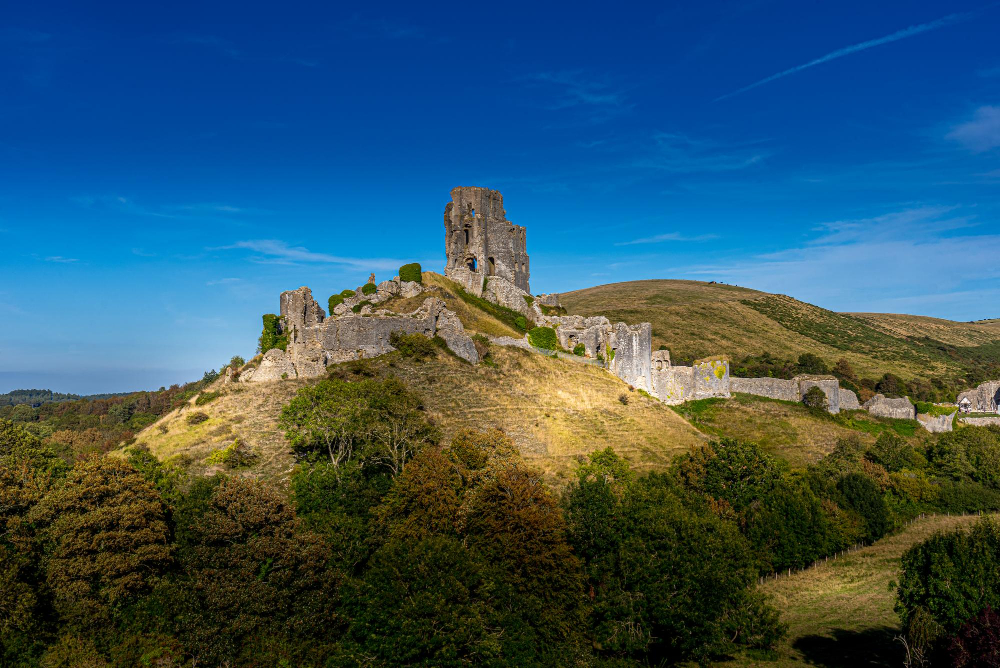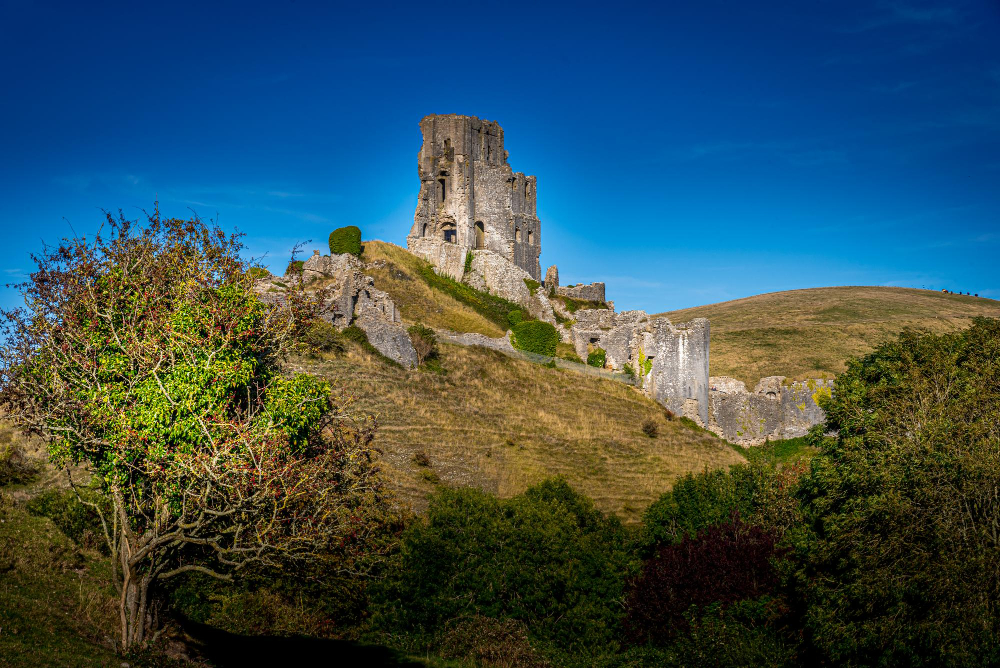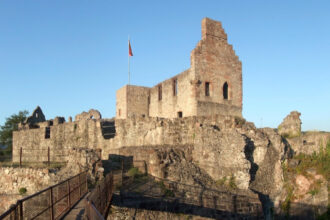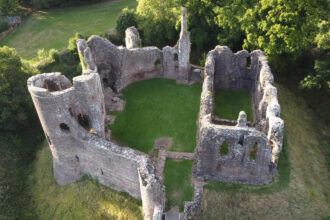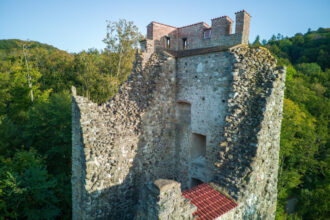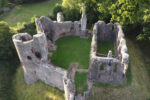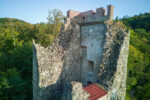

High above the picturesque village of Corfe on the Isle of Purbeck peninsula in Dorset stands an imposing ruin – Corfe Castle. The history of this medieval fortress, once built by William the Conqueror, takes us through centuries of power struggles, intrigue and heroic defensive battles. Today, the ruins are a popular destination that captivates visitors with its fascinating stories and architectural beauty.
The Beginnings: From the Norman Period to the Early Stone Castle – The history of Corfe Castle begins shortly after the Norman Conquest of England in 1066. William the Conqueror chose this strategically favourable location, a natural gap in the Purbeck Hills, to build a fortress. Whilst many castles of this period were built of timber and clay, William opted here to use stone in part – an indication of the high status of this structure. The name ‘Corfe’ is derived from the Old English word ‘ceorfan’, meaning ‘clearing’ or ‘breakthrough’, which aptly describes the geographical location. Even before the castle was built, the hill on which Corfe Castle stands was a place of significance. Historians believe that an Anglo-Saxon hall once stood here and that it may have been the scene of the murder of King Edward the Martyr in 978. This young king had intended to visit his stepmother Ælfthryth and his half-brother at court, but the bloody betrayal led to his death. This grim episode may have laid the foundation for the legends that emerged later.
A strong bulwark in uncertain times – Under King Henry I, the fortress was further expanded, resulting in a massive stone keep – a tower serving both residential and defensive purposes. Construction took over a decade and required the use of limestone from local quarries, as the chalk soil of the hill was unsuitable. Over the years, Corfe Castle has had various owners and has been reinforced on several occasions, particularly under King John and Henry III, who invested large sums during politically uncertain times to transform the castle into an impregnable fortress. During the reign of King John, Corfe Castle played a very special role as a prison for high-ranking prisoners. Duchess Eleanor of Brittany, who laid claim to the English throne, was imprisoned here until 1222. Yet not all prisoners remained behind the walls – according to legend, the French nobleman Savari de Mauléon outwitted his guards with alcohol-fuelled tricks and staged a spectacular escape.
Lady Mary Bankes’ unforgettable defence – One of the most famous episodes in the history of Corfe Castle took place during the English Civil War in the 17th century. Sir John Bankes, the castle’s owner, fought for King Charles I, whilst the castle was defended by his wife, Lady Mary Bankes. Two sieges took their toll on the castle and its defenders, yet Lady Mary displayed extraordinary courage. The first siege in 1643 ended in a triumphant victory for the Royalists, even though the garrison was vastly outnumbered. With only a few dozen defenders, the castle held out against an army of over 500 Parliamentarians. In 1645, however, during the second siege, the defenders were less successful. Betrayal from within their own ranks meant that the attacking Parliamentarians eventually gained control of the castle. Lady Mary and the survivors were allowed to leave the castle unharmed, but the fortress’s fate was sealed. On the orders of Parliament, Corfe Castle was ‘blasted up’ to prevent it from being used in future Royalist uprisings.
Decline and rebirth as a heritage site – After the Civil War, the castle lay in ruins and served as a welcome source of building materials for the villagers. Nevertheless, the ruins remained an impressive testament to the power and significance of medieval architecture. With the restoration of the monarchy in 1660, the Bankes family decided against rebuilding the ruined castle and instead focused on constructing their new residence, Kingston Lacy. It was not until centuries later that a movement to protect historic buildings emerged, and Corfe Castle increasingly came into focus. Today, the site is owned by the National Trust, which has carried out extensive restoration work to preserve the remaining structures. In 2008, following careful conservation work, the keep – the castle’s central tower – was opened to the public for the first time in centuries – a milestone that revived interest in the history of Corfe.
Legends and cultural influences – The gloomy tales surrounding Corfe Castle and its ruins have long inspired artists and authors. It is believed that Enid Blyton, the famous children’s author, modelled her fictional Kirrin Island with its mysterious castle on Corfe Castle. The picturesque setting has also served as the backdrop for films such as ‘Five on Treasure Island’ and ‘Bedknobs and Broomsticks’. Furthermore, legends continue to surround the castle itself. Some visitors report strange apparitions on the grounds – could it be the ghost of King Edward the Martyr, who still watches over the injustice of his death? Or is it the echo of the fearless Lady Mary, who once defended its walls?
A place that touches the soul – Today, the castle attracts hundreds of thousands of visitors every year who wish to experience history up close. The panoramic view of the surrounding hills and the charming village of Corfe is reason enough to make the journey to Dorset. Yet it is the blend of dramatic historical events, architectural mastery and mysterious legends that makes Corfe Castle one of England’s most fascinating destinations. The ruins may seem silent, but if you look and listen closely, you can hear the voices of the past – from the triumph of the Normans to the acts of treachery of the Civil War era. Corfe Castle is more than just a historical monument; it is a symbol of resilience and change, a place shaped by time yet preserved for eternity. Let yourself be enchanted by the magic of this extraordinary castle and follow in the footsteps of those who built, defended and loved it.