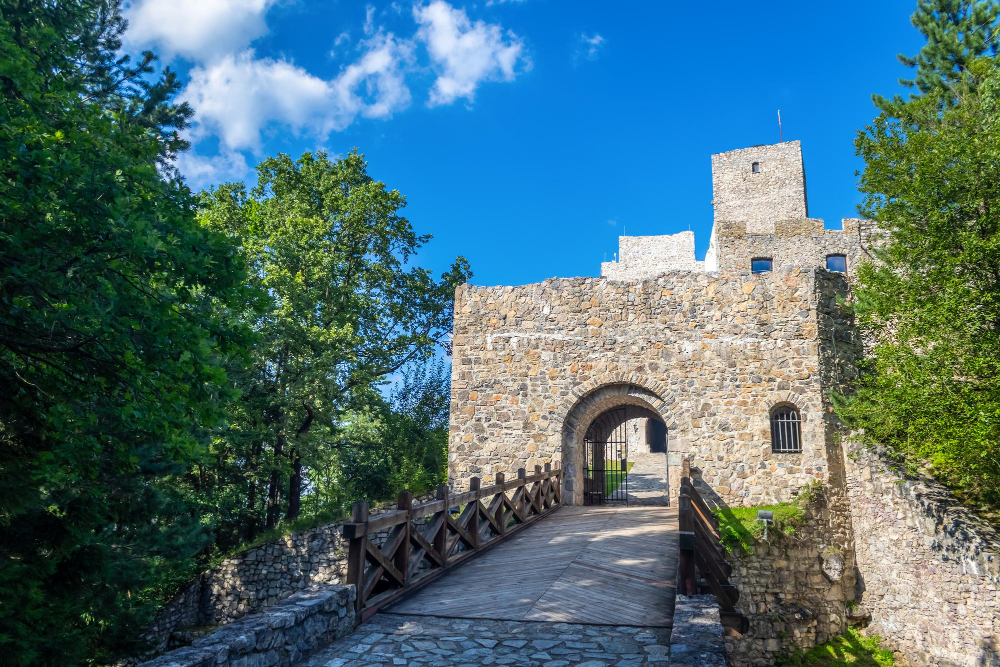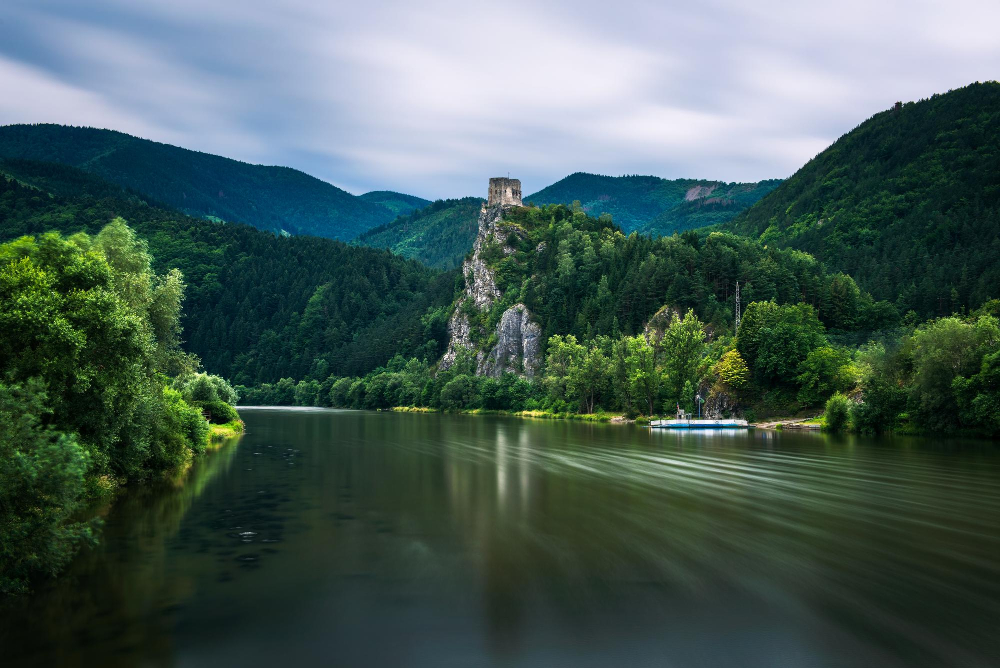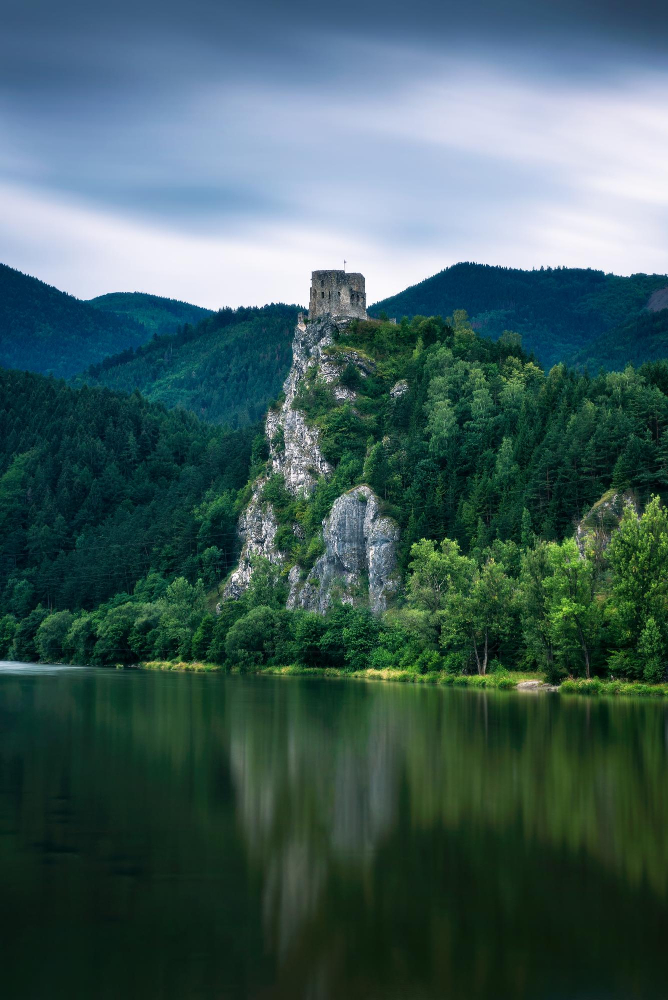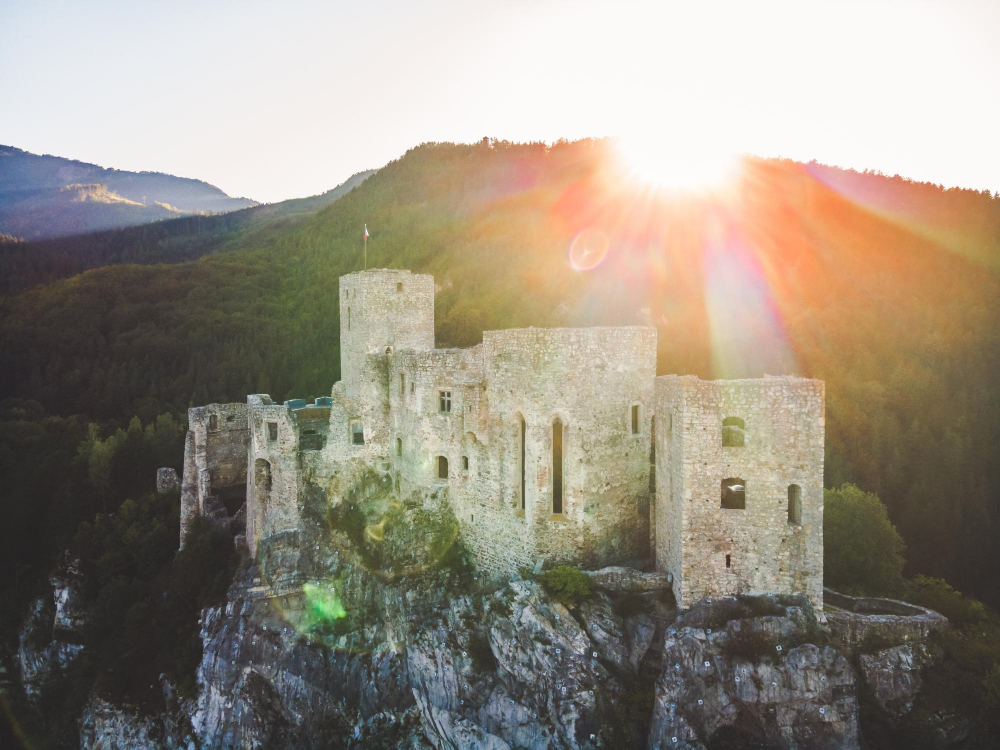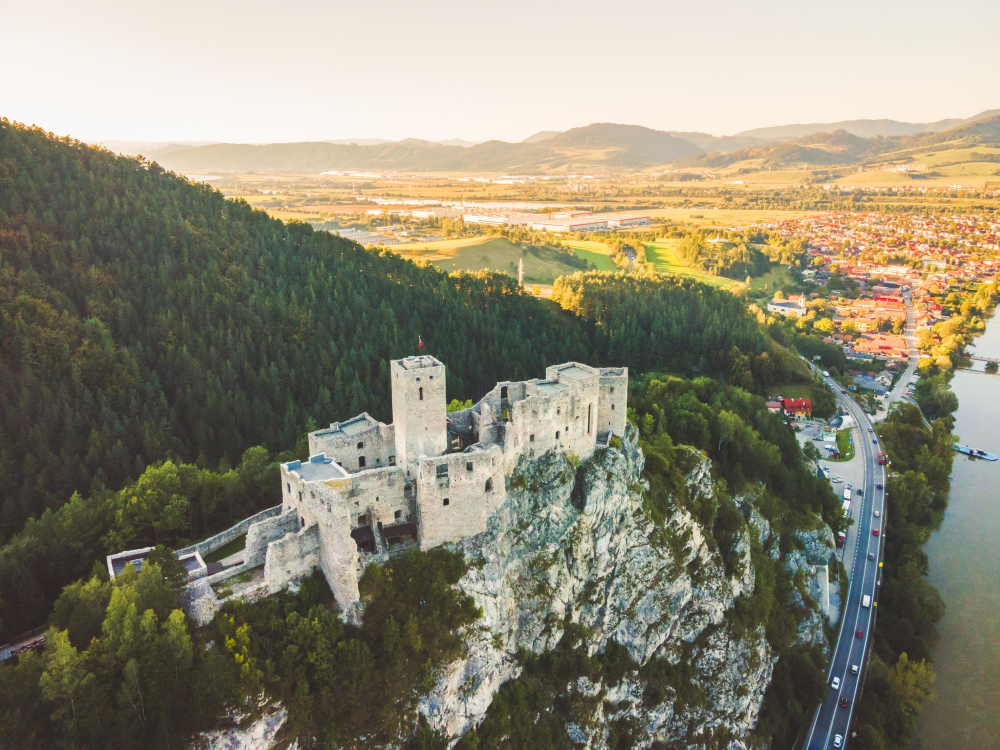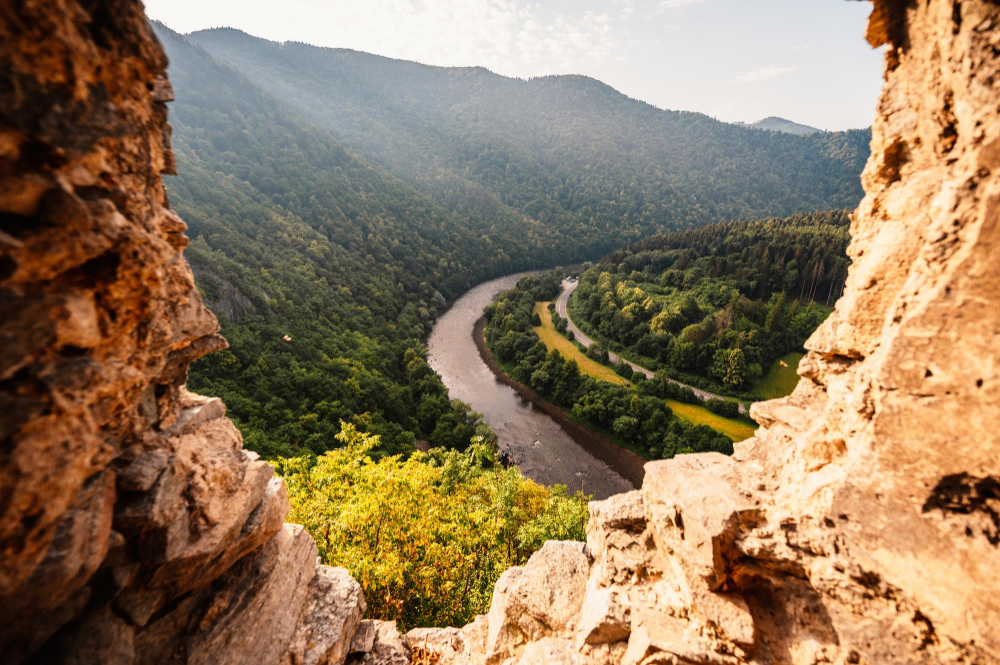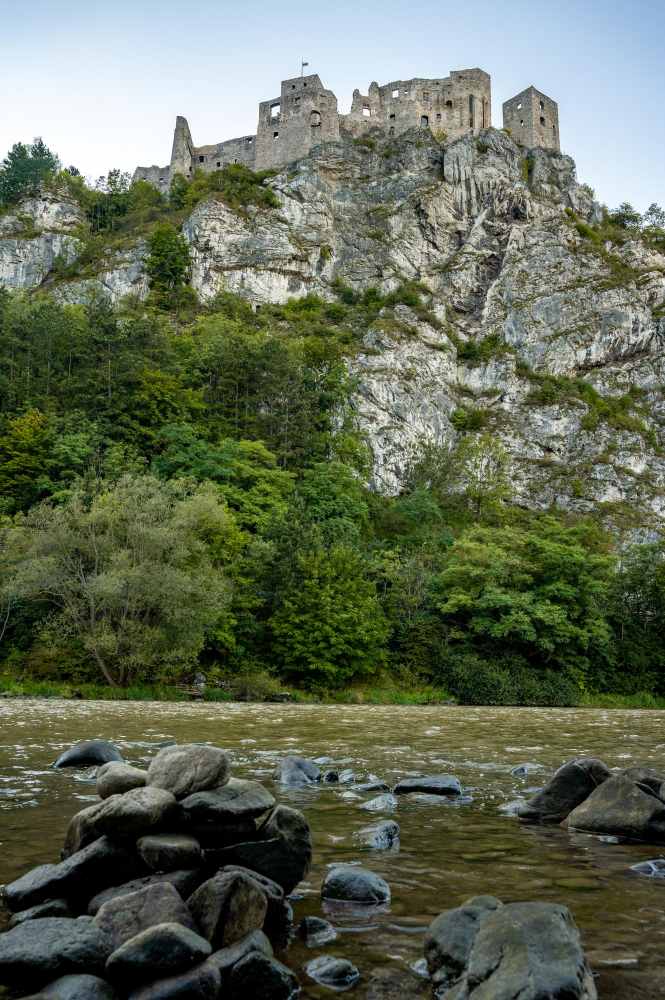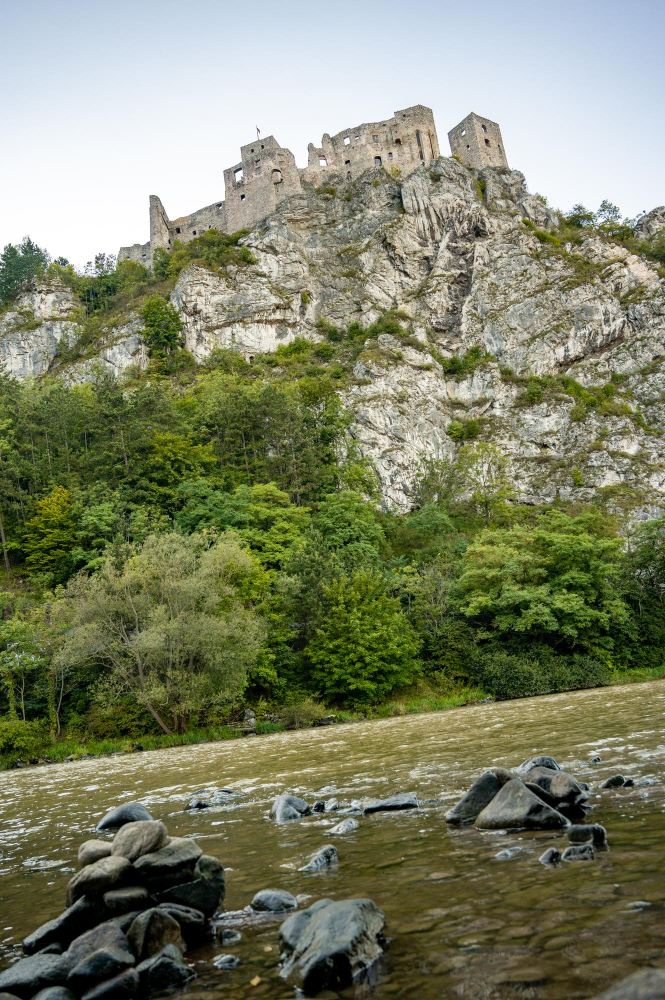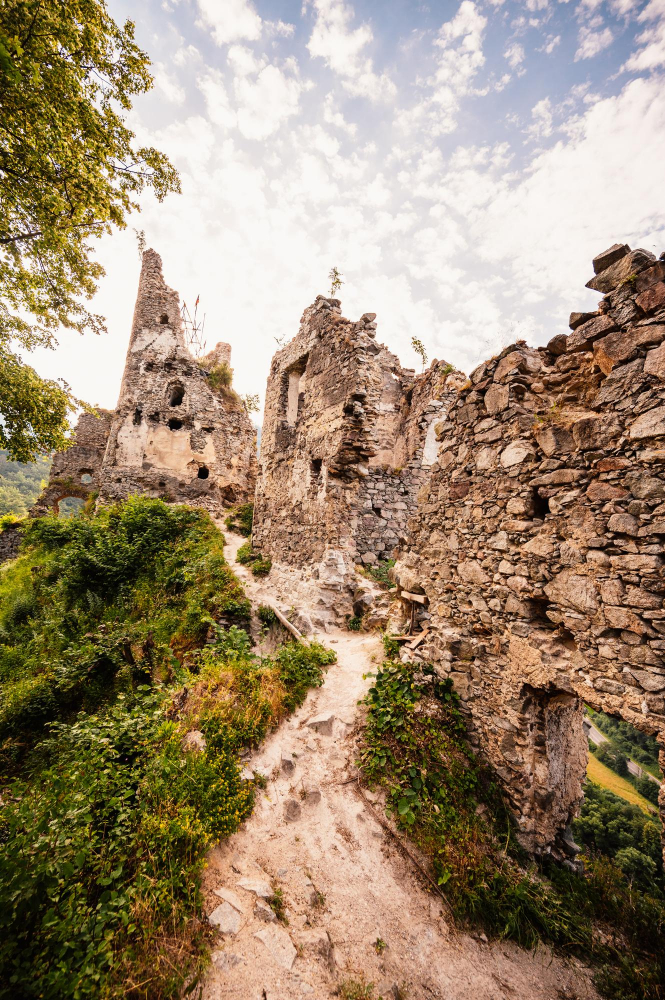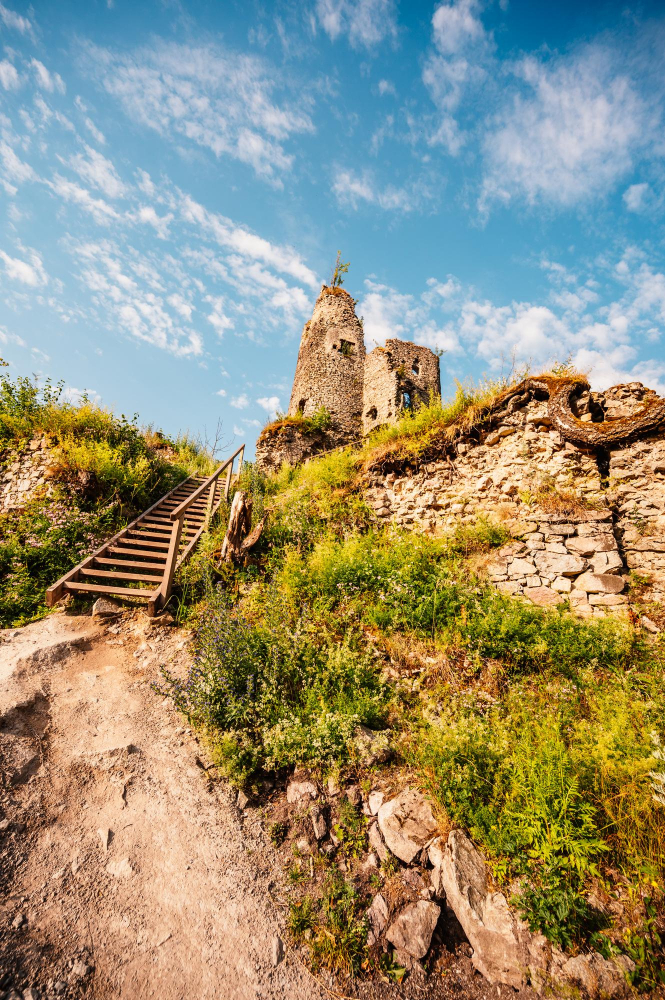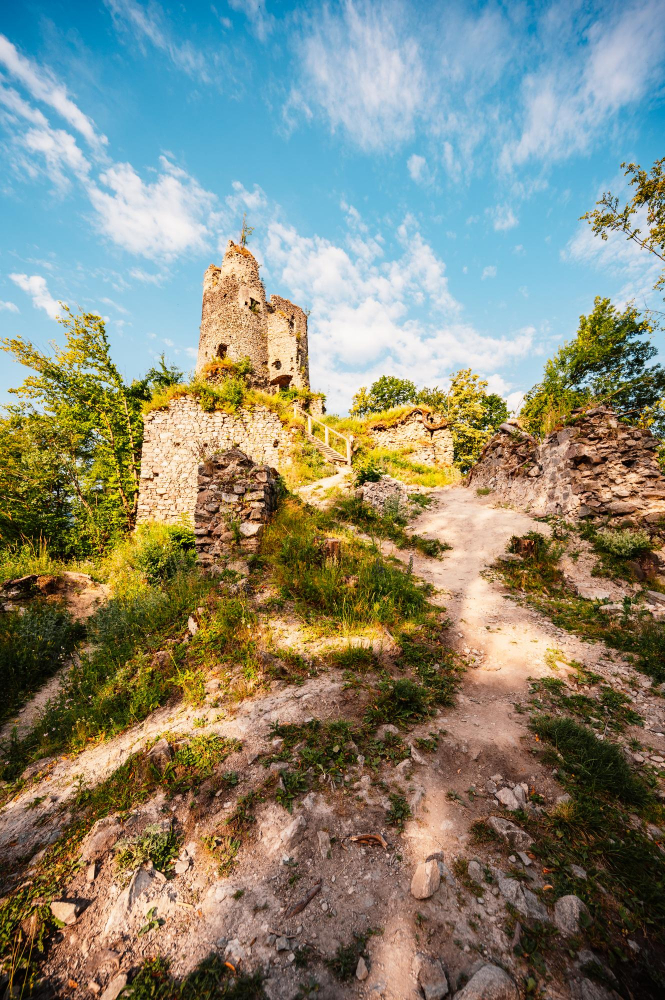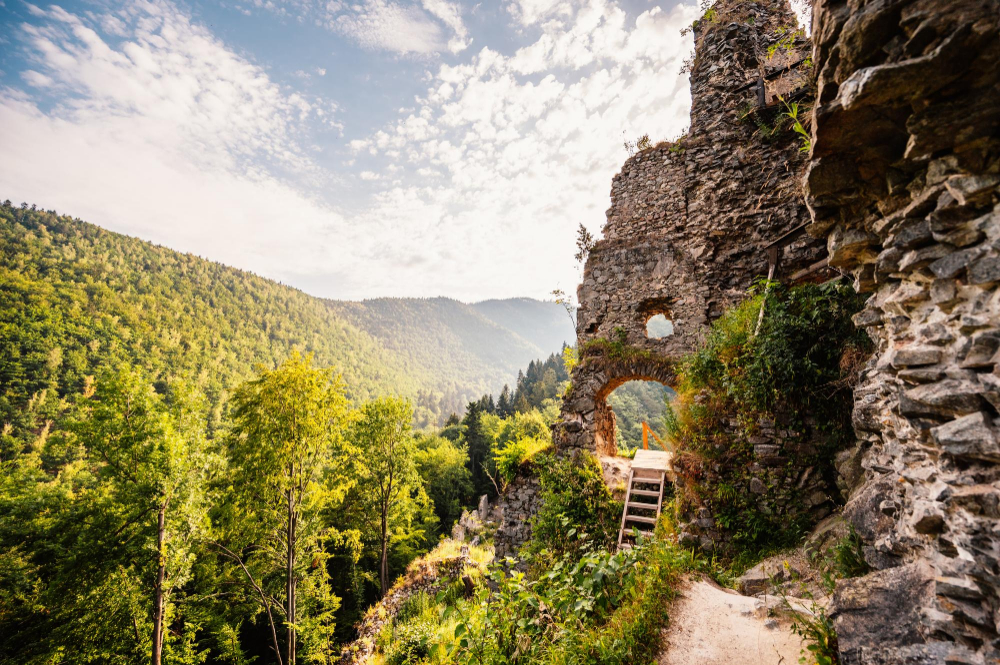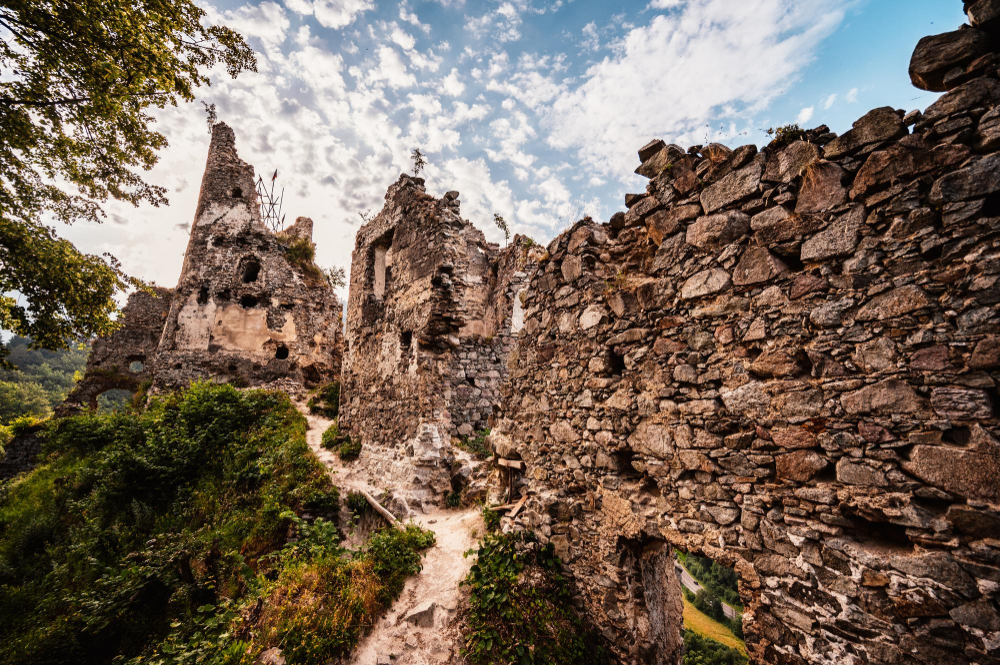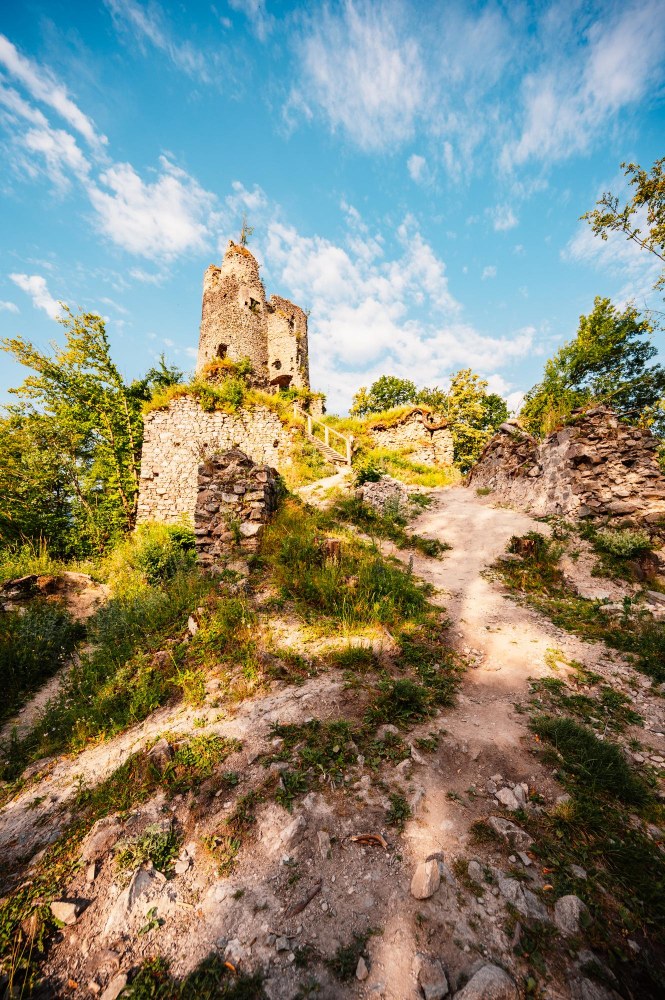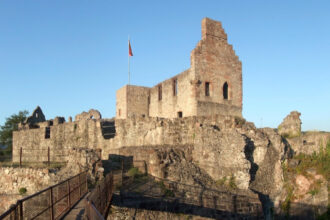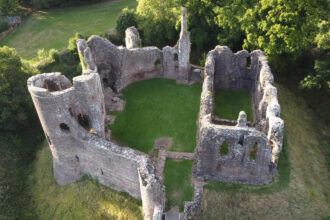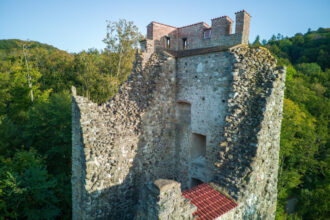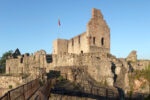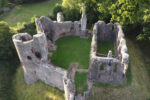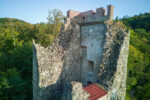

A majestic limestone cliff rising 103 metres above the Váh provides the perfect backdrop for a castle where history and legend intertwine: Strečno Castle. These medieval fortress ruins in northern Slovakia, situated about 12 km east of Žilina, fascinate visitors with their impressive architecture and eventful history. Together with the nearby Old Castle (“Starhrad”), they characterise the landscape of the Upper Váh and form part of Slovakia’s national cultural heritage. Yet behind the imposing walls lie stories of wars, intrigues and reconstruction.
The strategic location and earliest traces – Long before the construction of the present-day castle, the significance of the steep rock at the Strečno Pass was recognised. As early as the late Iron Age and the Roman period, the area was settled by the Púchov culture – an early testament to human presence at this strategically favourable location. The geographical position not only offered a view of the River Váh but also control over an important trade route that ran through the narrow valley. It seemed only a matter of time before a fortress was built here.
The Origins of Strečno Castle – The first documented mention of the stone castle dates from 1316. At that time, it served as a customs post where travellers had to pay a fee to cross the River Váh. Owned by Matthias III Csák, a small castle complex with a polygonal layout was initially built. This ‘small castle’ comprised a watchtower, a cistern, a courtyard and a small residential building. Access was via a bridge and a gate to the south. During the 14th century, additional fortifications and a bailey were constructed, further enhancing the castle’s defensive capabilities.
Heyday and Decline – In the 15th century, the castle underwent a significant expansion under Barbara of Cilli, the second wife of Emperor Sigismund of Luxembourg. A palace, a chapel and a well with an impressive depth of 88 metres were built. New towers and bastions ensured even greater defensive capabilities. Yet this golden age was short-lived. Changes of ownership in the 16th century led to neglect and decay. A turning point came only with Nikolaus and Franz Dersffy, who rebuilt and modernised the castle in the Renaissance style. Among other things, round and rectangular bastions were added, specifically designed to repel artillery attacks.
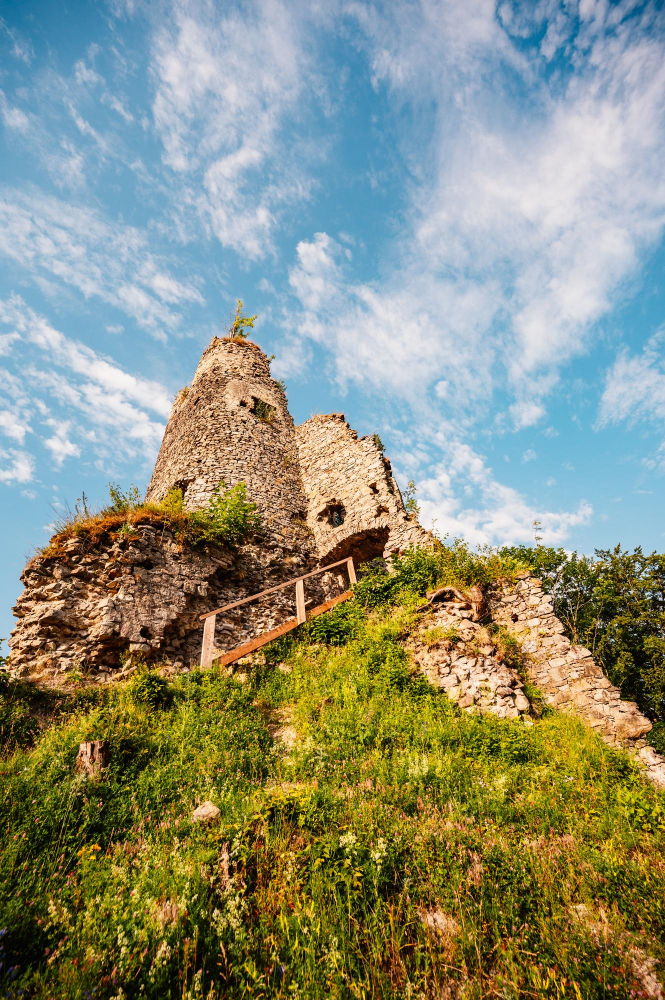
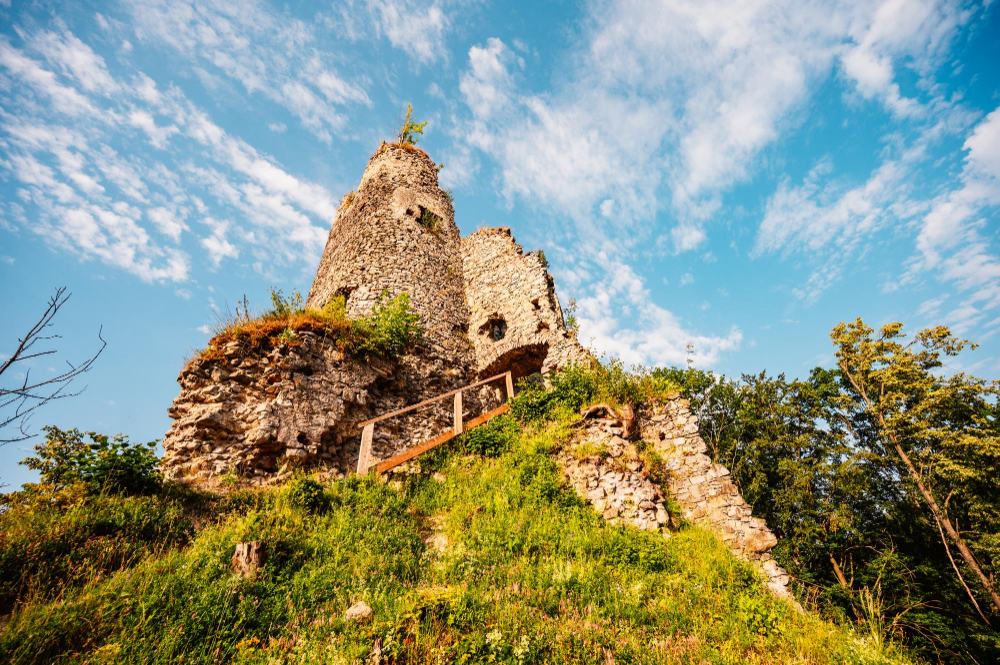
Baroque redesign and the dark years – In the 17th century, the castle acquired its Baroque appearance under Ferenc Wesselényi. Yet this period was marked by political instability: Wesselényi’s conspiracies against the Habsburgs led to his arrest in 1670 and the siege of the castle by imperial troops. Although the fortifications were considered extremely modern for their time, the pressure on the Habsburgs was so great that Emperor Leopold I ordered the castle’s destruction in 1698. Roofs and walls were demolished and the well filled in – a systematic measure to render the fortress permanently unusable. Following its destruction, Strečno fell into ruin and remained a mere shadow of its former self for over 350 years.
Reconstruction and Preservation – It was not until the 20th century that the castle returned to the public consciousness. Yet this attention was not always positive: a businessman named Samuel Hahn began demolishing the castle to use the materials for construction projects. However, the Catholic Church and local initiatives put a stop to his plans. During the Second World War, the castle played a decisive role in the fighting of the Slovak National Uprising, but was severely damaged by bombing raids. In the 1970s, the comprehensive restoration of the castle finally began – a project that lasted over two decades and was only completed in 1995. However, due to technical and financial challenges, the result was controversial: the use of concrete and modern materials significantly altered the romantic atmosphere of the ruins.
A look at the present – Today, Strečno Castle presents itself as a mixture of ruins and reconstructed structures. Although many historical elements have been restored, the original roofs are missing, giving the overall impression of a ‘living museum’. Visitors can admire the permanent exhibitions of the Žilina Regional Museum here whilst taking a journey through the fortress’s eventful past.
Architectural secrets
The Chapel – a place of contemplation – The chapel was built in the 15th century under Barbara of Cilli and bears witness to Gothic influences. Particularly noteworthy is the star vault, which has been partially reconstructed. Original Gothic windows let light into the room and create an impressive atmosphere. In the past, the chapel was accessible via wooden platforms, which have since been lost.
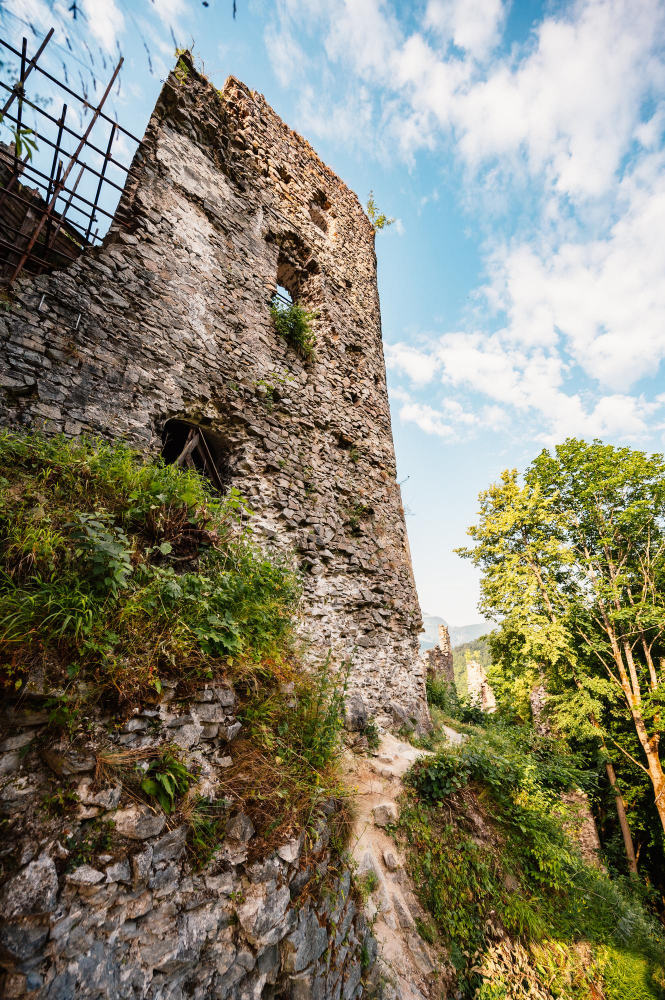
The Bergried – Guardian of Time – The main tower, also known as the Bergried, is the oldest surviving structure in the castle. With its square floor plan and height of several storeys, it served both as a watchtower and a defensive structure. Particularly noteworthy is the deep prison cell, which is accessible via a small opening at the foot of the tower.
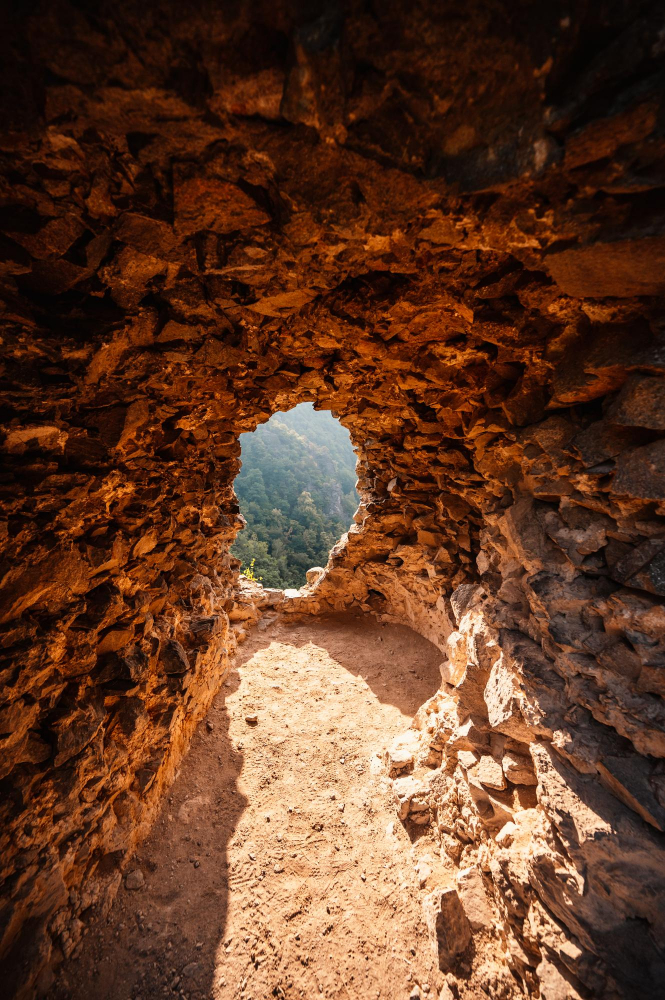
The Cistern – Life Without a Well – Before the 88-metre-deep well was built, a cistern ensured the castle’s water supply. Carved into the rock and sealed with clay, it was vital for survival during times of siege.
Myths and Legends – Every historic castle has its own stories, and Strečno is no exception. It is said that the ghosts of former owners still roam the castle’s halls. In particular, the tragedy of young Sophia, who lived at the castle and threw herself off the cliffs for the love of a knight, still echoes to this day. According to legend, she appears as a mourning shadow on particularly foggy days.
Strečno Castle is far more than just a building – it is a symbol of the resilience and fighting spirit of a region that has endured much over the centuries. From a thriving fortress to a ruin and on to its rebirth as a cultural centre, Strečno remains a fascinating destination for history buffs and adventure seekers alike. Whether for the breathtaking views or to immerse yourself in ancient tales, the castle is a place full of magic and inspiration.