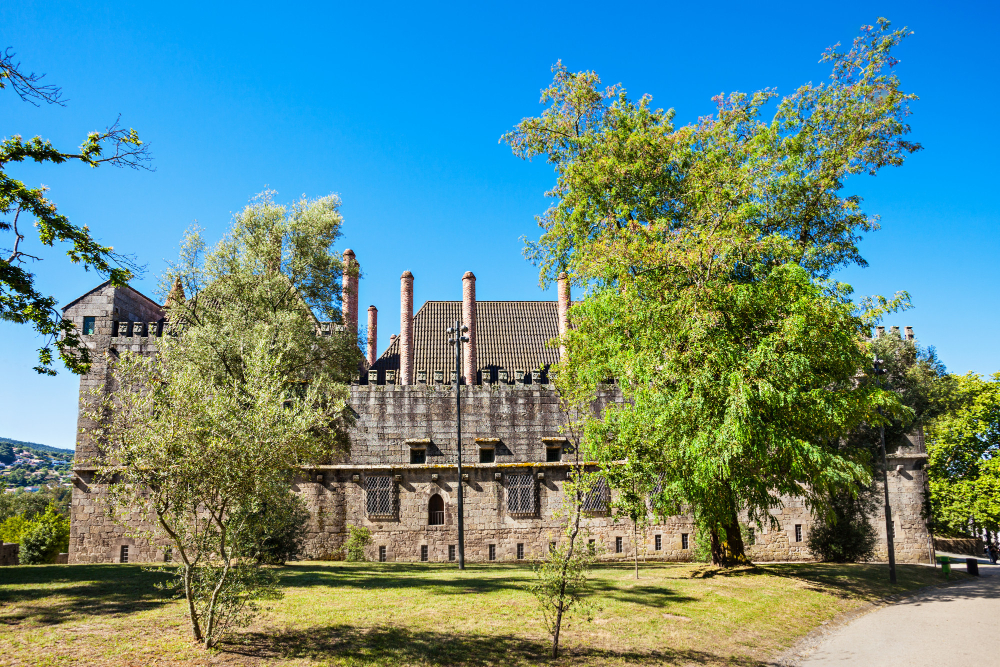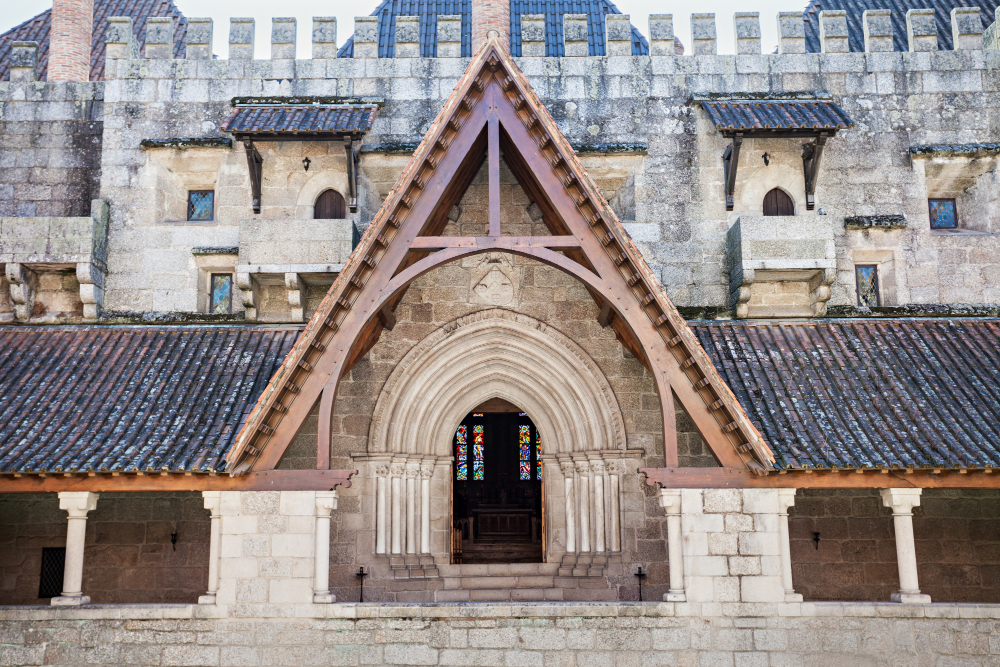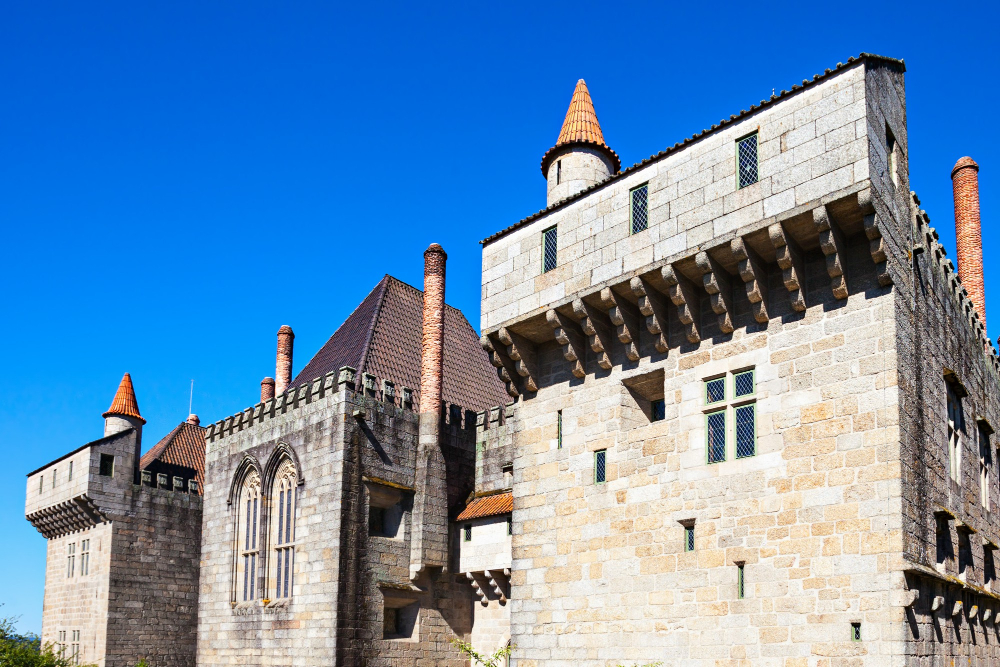

In the heart of the historic city of Guimarães, nestled in the picturesque landscape of northern Portugal, stands the imposing Palace of the Dukes of Braganza (Portuguese: Paço dos Duques de Bragança). This building, which impresses with both its magnificent architecture and its eventful history, is a symbol of the power and influence of one of Portugal’s most significant noble families. Yet it is not only its glorious past, but also the darker chapters of its decline and its controversial restoration that make it a fascinating place steeped in myths and stories.
The Origins of a Dynasty – The history of the palace begins in the early 15th century, more precisely around the year 1420. Afonso, Count of Barcelos and illegitimate son of King John I of Portugal, had it built upon his return from diplomatic travels. These journeys took him to the courts of France, Venice and Castile and apparently also influenced the architectural design of the palace. This building served as a magnificent residence for his second marriage to Constança de Noronha. Afonso was soon elevated to the first Duke of Braganza – a title that would make the family one of the most powerful in Portugal in the centuries that followed. The construction work dragged on for a long time, and even in 1442, when Regent Peter of Portugal visited the palace, the building was still not completed. After Afonso’s death in 1461, the palace began its slow decline. His widow continued to live there for some time, but subsequent generations of the family increasingly lost interest in the residence, particularly after the ducal seat had been moved to Vila Viçosa in the south.
Decline and Plunder – By the 16th century, the palace was virtually abandoned and fell into increasing disrepair. Furthermore, local events and political machinations contributed to the building being destroyed or repurposed. Stones from the palace were repeatedly used as building material – including for monasteries and other construction projects in the surrounding area. The former symbol of power and prosperity literally degenerated into a ‘personal quarry’ for the local population. A particularly grim chapter in the palace’s history unfolded during the reign of King John II. In order to curtail the power of the nobility and consolidate royal authority, the monarch had Fernando II, the second Duke of Braganza, arrested for high treason. Fernando’s property was confiscated, and he himself was executed in 1483. From then on, the palace in Guimarães remained in the hands of the Crown, but its significance dwindled to a minimum. Throughout the 17th century, the decline continued. Numerous reports and documents from this period describe the palace as unfinished and dilapidated. It was repeatedly affected by theft and alterations until it was finally used as military barracks in the early 19th century – a sad end for a former centre of courtly elegance.
From Decline to Rebirth – It was not until the beginning of the 20th century that the situation changed. With the growing national significance of Guimarães – known as the ‘Cradle of the Nation’ – the historical value of the palace also came to the fore. Under the Estado Novo regime of the Portuguese dictator António de Oliveira Salazar, it was decided to carry out a comprehensive restoration of the palace. This took place from 1937 onwards under the direction of the architect Rogério de Azevedo. However, the restoration was not without controversy. Critics complained that many of the architectural elements reflected an idealised notion of medieval architecture rather than realistic reconstructions of the original. Nevertheless, the palace was officially reopened in 1959 and has since served partly as a museum.
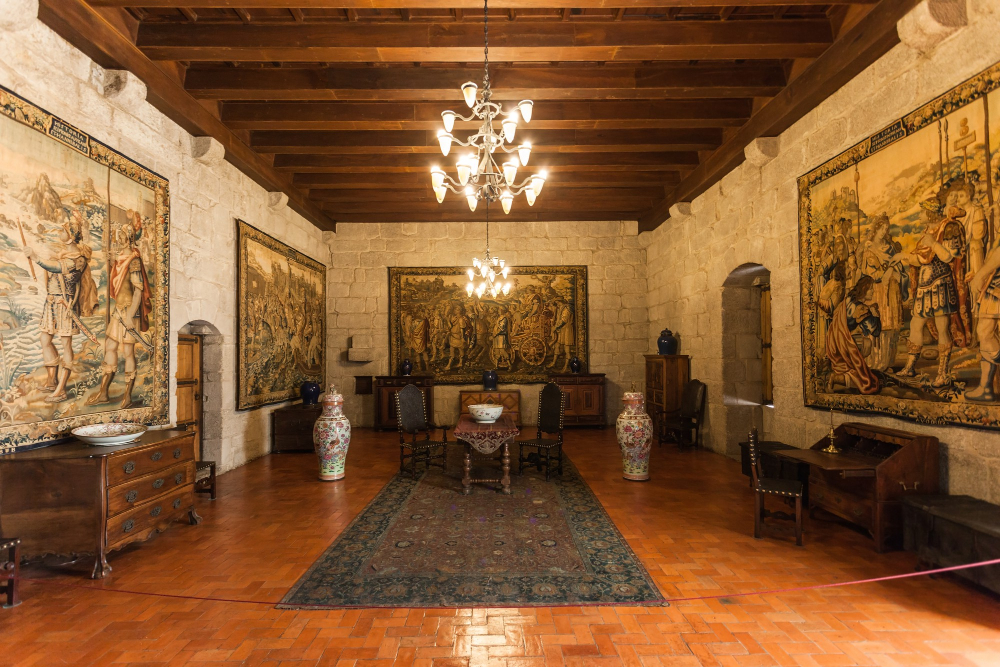
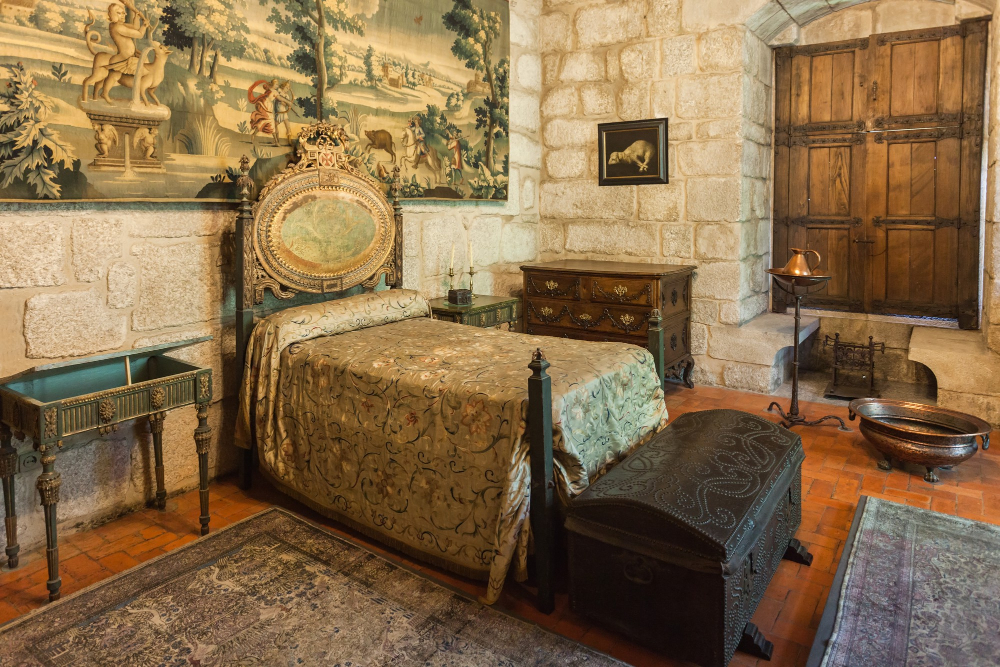
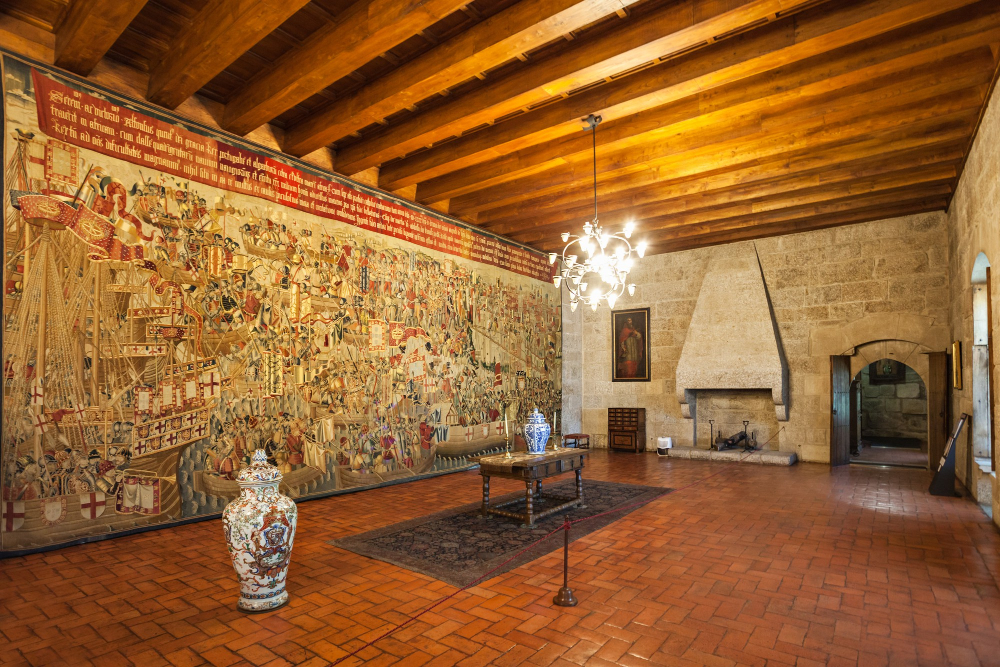
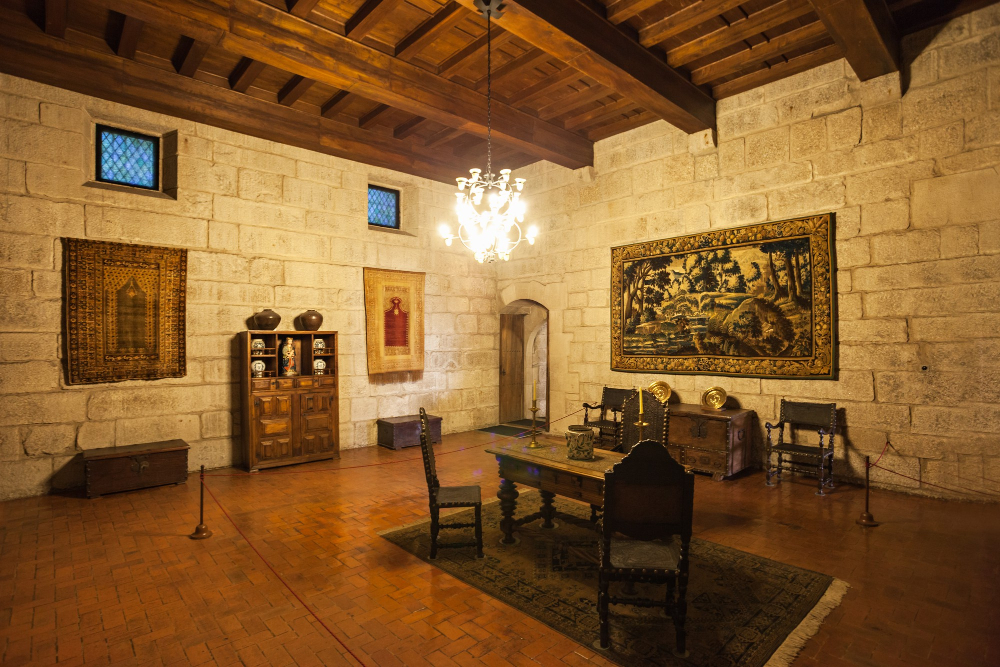
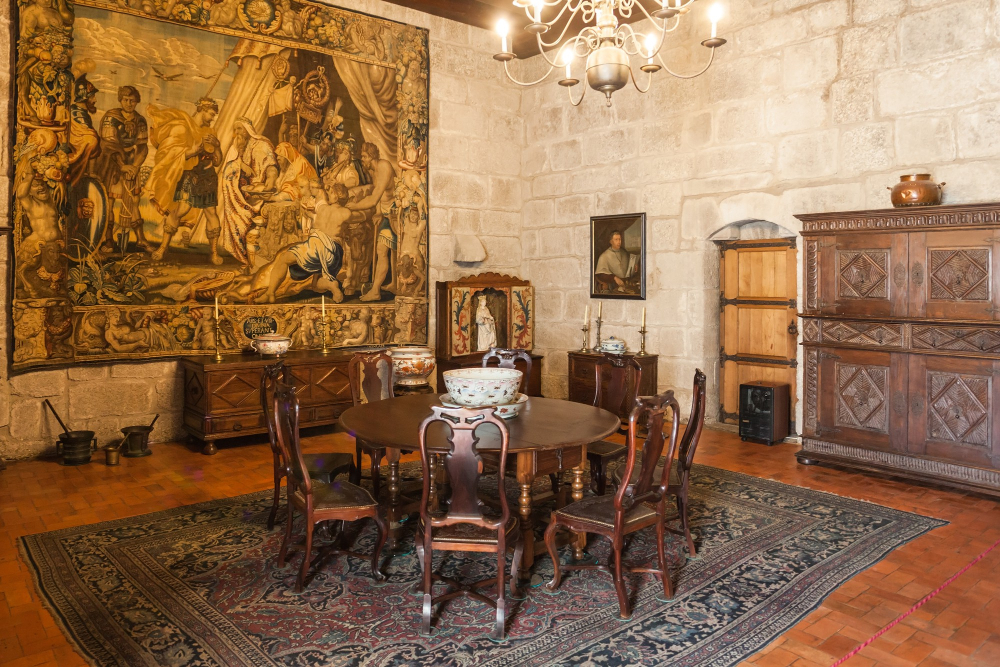
Current use and collections – Today, the palace houses an impressive collection of art objects that reflect the courtly culture of the 16th and 17th centuries. Highlights include the famous Pastrana tapestries, which depict the North African campaigns, as well as a collection of porcelain from the period of Portuguese trade with India. Paintings, furniture and precious stained-glass windows also lend the rooms a unique charm. Rooms such as the ‘Salão de Banquetes’ (Banquet Hall) and the ‘Salão dos Passos Perdidos’ (Hall of Lost Steps) are particularly impressive, their wooden ceilings reminiscent of the interior of a ship. Furthermore, part of the palace is reserved for the President of Portugal and other high-ranking political guests. This modern use stands in stark contrast to the building’s original function, yet underlines the complexity of its history.
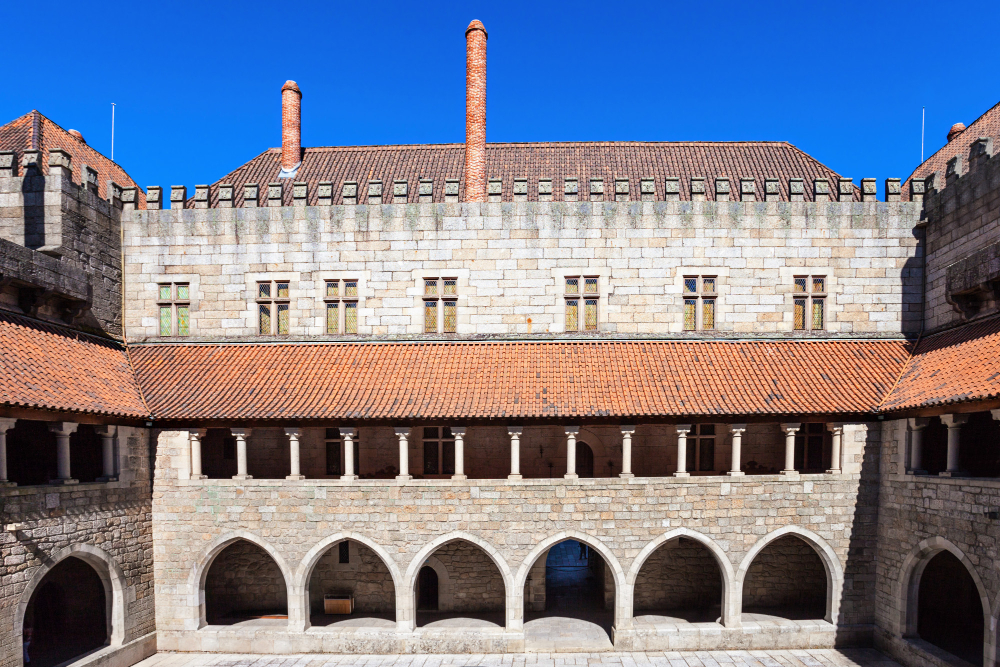
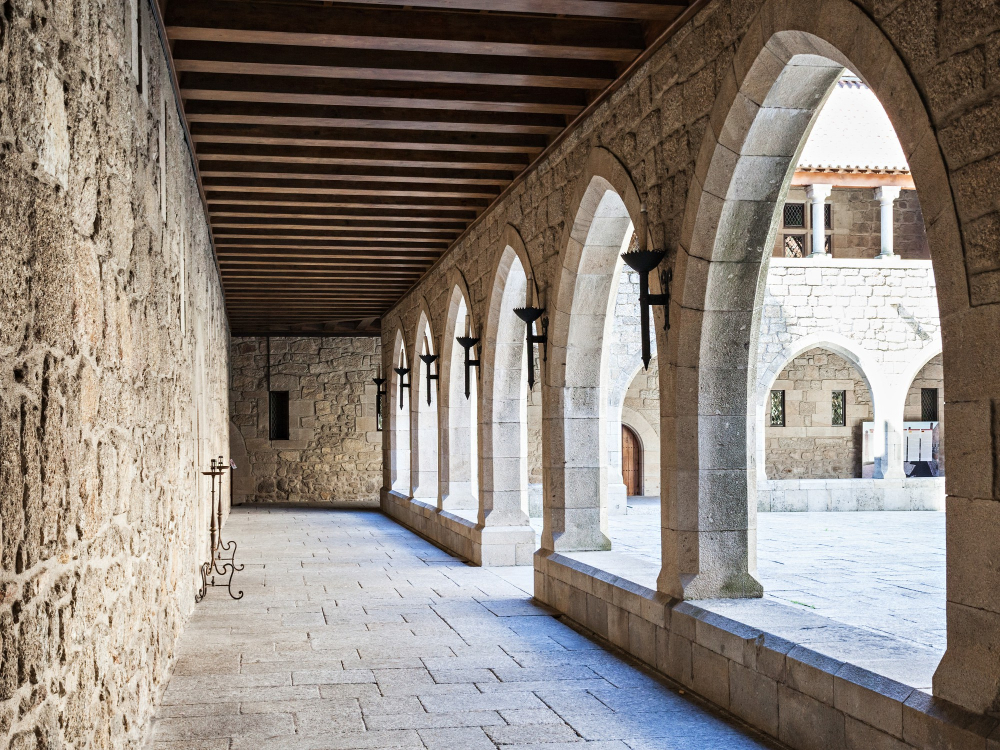
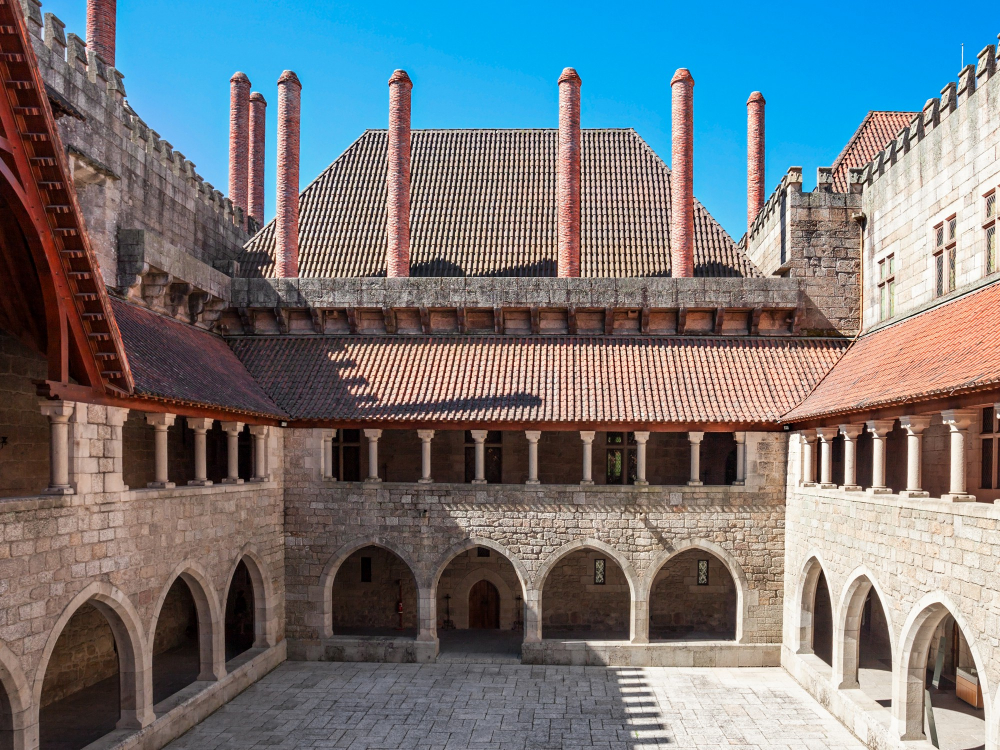
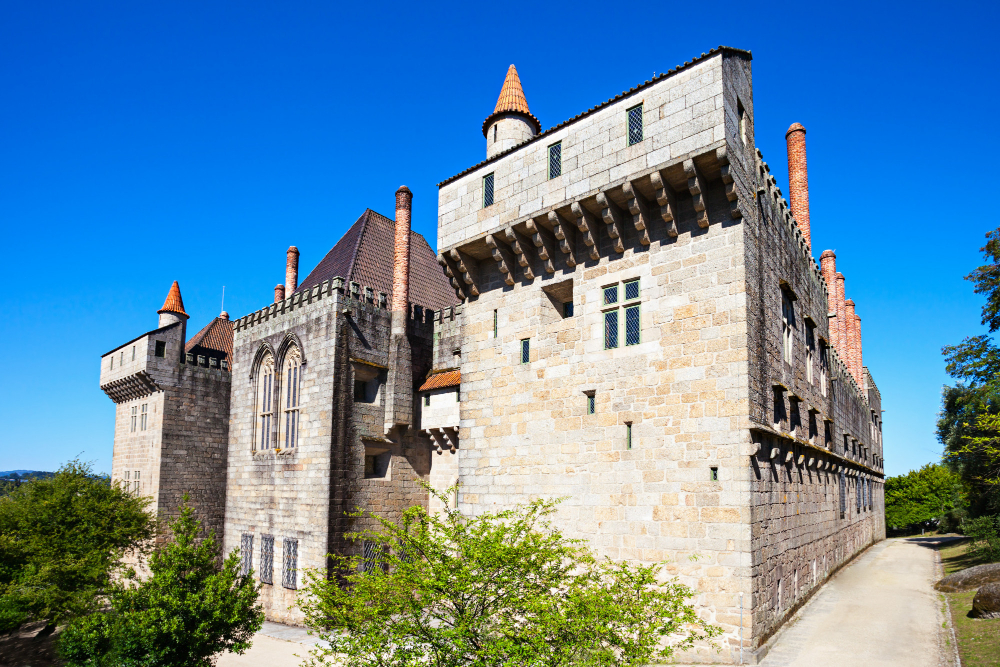
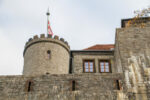
Architecture and Atmosphere – The palace’s architecture is as fascinating as its history. It is laid out around a central courtyard and framed by four massive towers. The simple granite façade is typical of late medieval architecture in Portugal, yet is also inspired by French models. Particularly striking are the richly decorated fireplaces and the Gothic round arches of the galleries that run around the courtyard. The contrast between the simple exterior and the decorative splendour within reflects the various functions the palace has fulfilled over the centuries. Once a lively centre of aristocratic life, later an abandoned ruin and finally a national monument – the palace has undergone many transformations.
A place full of secrets – The Palace of the Dukes of Braganza is far more than just a building; it is a living chronicle of Portuguese history. From its heyday as a symbol of aristocratic power, through its decline, to its controversial restoration, it tells a unique story of rise, fall and rebirth. Today, it attracts visitors from all over the world who are fascinated not only by its architecture but also by the stories and myths that lie dormant within its walls. A visit to the palace in Guimarães is a journey into the past – a journey through history that impressively demonstrates how closely history, art and architecture are intertwined, and the significance they can still hold today for a country’s cultural identity.