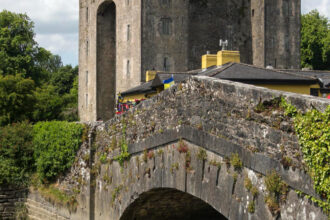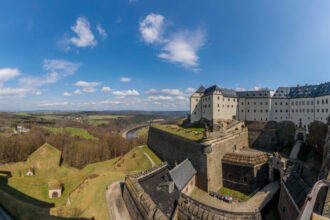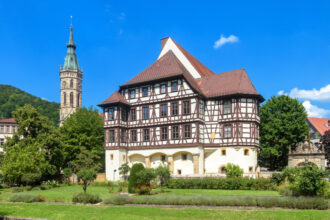

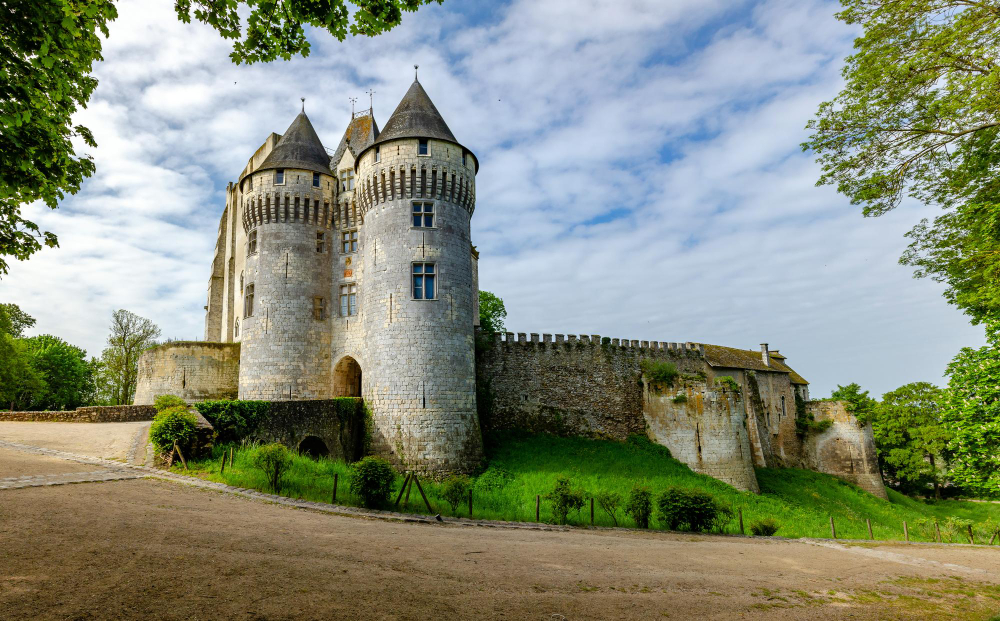
Château Saint-Jean, also known as the castle of the Counts of Perche, stands majestically overlooking the village of Nogent-le-Rotrou in the Centre-Val de Loire region. This impressive structure, built on a superbly preserved medieval motte, is not only a testament to High Medieval architecture but also a place steeped in legends and historical tales recounting intrigues, battles and cultural highlights. The castle has been officially listed as a historic monument since 1948 and was even granted the status of a fully listed monument in 1952 – a fitting recognition, given its long and eventful history.
A strategic location at a crossroads of history – Château Saint-Jean is perched on a hill overlooking the vast valleys of the Huisne and lies at a strategic crossroads between the regions of Île-de-France, Normandy and Maine. This location made the castle a crucial military and political hub for centuries. Its geographical position made it possible to monitor the border of the so-called ‘Marches du Perche’ – a border region between the Kingdom of France and the Duchy of Normandy, the latter of which later became part of the Kingdom of England. The castle was thus not only a guardian of local trade routes, but also a bulwark against external enemies.
Origins in the Early Middle Ages: From motte to stone structure – The oldest traces of fortifications at this site date back to antiquity and the Merovingian period. However, the actual history of Château Saint-Jean began shortly before the year 1000. In a time of uncertainty, marked by Viking raids and political unrest, the Perche region was strategically developed as a border area. In the year 960, under the leadership of Thibault the Deceiver, a powerful vassal of the French king, the first fortified settlement was established. The name ‘Nogent le Châtel’ referred at that time to the first wooden castle, built by Rotrou I, the region’s first ruler. From the 11th century onwards, the appearance of the castle changed fundamentally: Rotrou II had a stone keep built, which is now regarded as one of the oldest surviving examples of its kind in the whole of France. Standing 35 metres high, with a footprint of 17 by 24 metres and walls of impressive thickness, the keep offered both protection and an imposing display of power.
Extensions and the Turmoil of War in the High Middle Ages – Over the centuries, Château Saint-Jean was continuously extended and fortified. The building work reached new heights, particularly in the 12th century, whilst the Counts of Perche actively took part in the Crusades and brought back technical and architectural innovations from the East following their travels. Thus, the defences were supplemented by massive towers, a surrounding curtain wall and strategically placed buttresses. A particularly defining event was the loss and recapture of the castle during the Hundred Years’ War. Attacks by English troops, particularly in 1428 under the command of the Earl of Salisbury, caused severe damage. The keep was partially destroyed, and the interior went up in flames. Nevertheless, the region of Perche was successfully brought back under French control, making Château Saint-Jean a symbol of resilience.
Renaissance – A cultural and political centre – With the onset of the Renaissance, Château Saint-Jean underwent a period of transformation. Through inheritance and dynastic marriages, the château passed into the hands of various noble families and increasingly developed into a centre of cultural activity. Famous poets, such as those of the ‘Pléiade’, held literary gatherings here, and important local statutes, such as the ‘Coutumes du Grand Perche’, were ratified here. The castle’s architecture also adapted to the new spirit of the age. The entrance was fitted with an imposing gateway flanked by soaring towers, and a comfortable Renaissance-style residential wing was built. Particularly noteworthy is the elegant wood panelling inside the towers, which feature ornate parquet flooring.
A Place of Change: From Noble Residence to Emergency Shelter – The following centuries brought further changes, particularly in the wake of the French Revolution. The château was expropriated and declared national property. During this turbulent period, it even served as a prison for a time. Many of its original features were lost as a result of this change of use. In the 19th century, too, Château Saint-Jean was a symbol of change. Figures such as Victor Hugo visited the dilapidated château and documented both its beauty and its state of disrepair. Restoration work was carried out by various owners, though some alterations were criticised due to stylistic concerns.
Modern times: scarred by war, preserved as a museum – During the Second World War, the château suffered further damage from shelling. After the war, the town of Nogent-le-Rotrou acquired the property and began extensive restoration work. Today, Château Saint-Jean houses the ‘Musée de l’Histoire du Perche’, which presents the region’s rich history in detail. A stroll through the medieval courtyards and past the imposing towers offers visitors not only a touch of adventure, but also the opportunity to experience France’s cultural heritage at first hand. The architecture tells tales of battles and victories, of political upheavals and cultural flourishing.
A legend lives on – Even the name of the castle itself is particularly mysterious: Château Saint-Jean, named after Rotrou IV, who fell in 1191 during the siege of Acre as part of the Third Crusade. His courage and dedication are immortalised in the castle’s name, serving as a reminder that this structure is not merely a place built of stone, but a monument to the people who built, defended and loved it. Château Saint-Jean embodies the essence of European history – transcending borders, rich in stories and fascinating across generations. Even today, it continues to captivate historians, architects and tourists alike, and remains one of the most outstanding examples of medieval architecture in France.