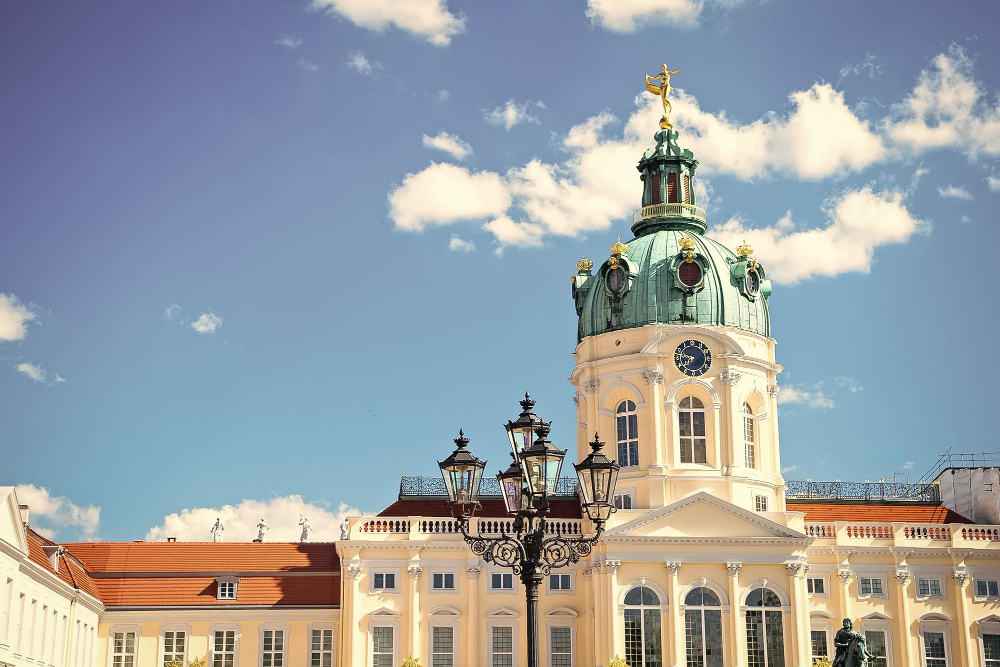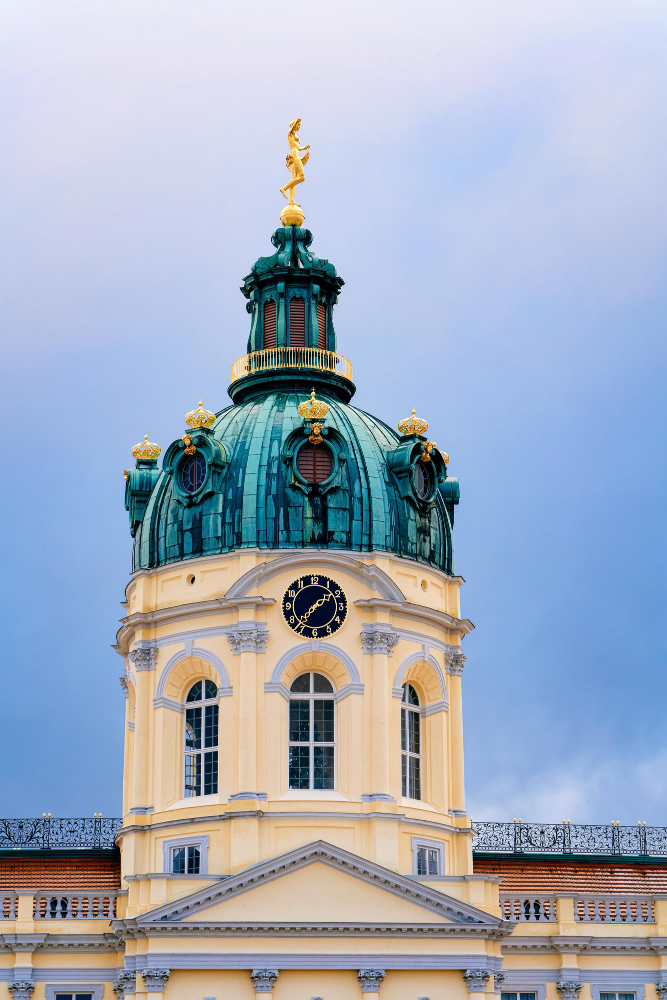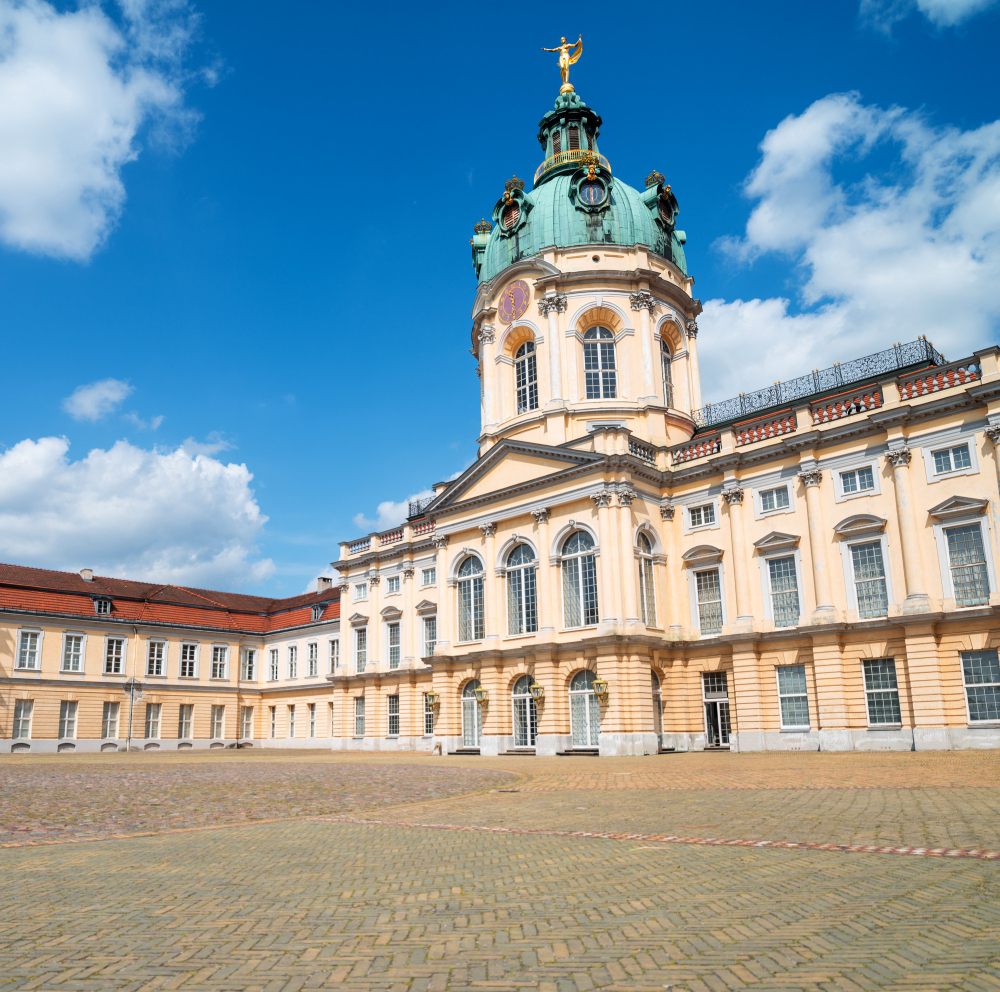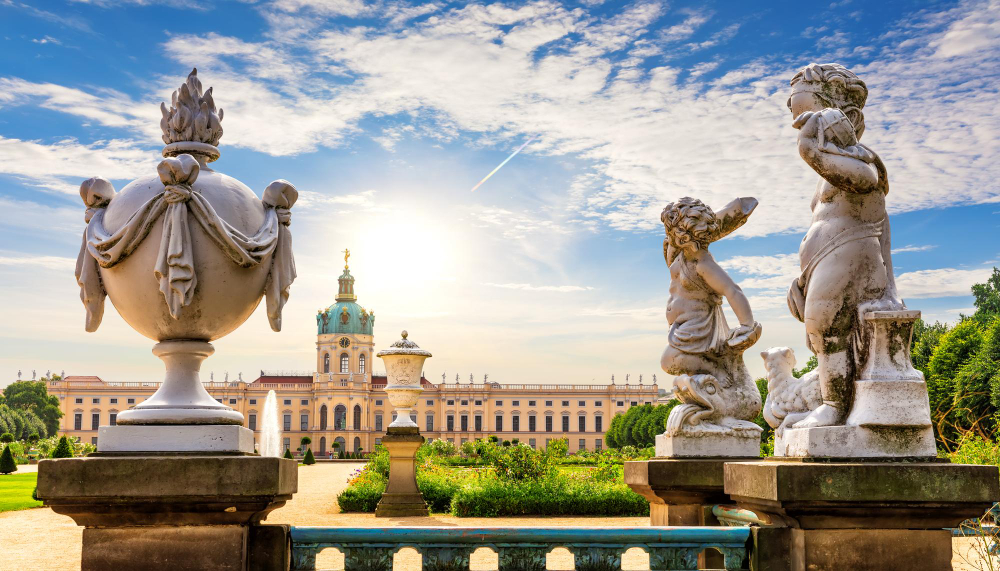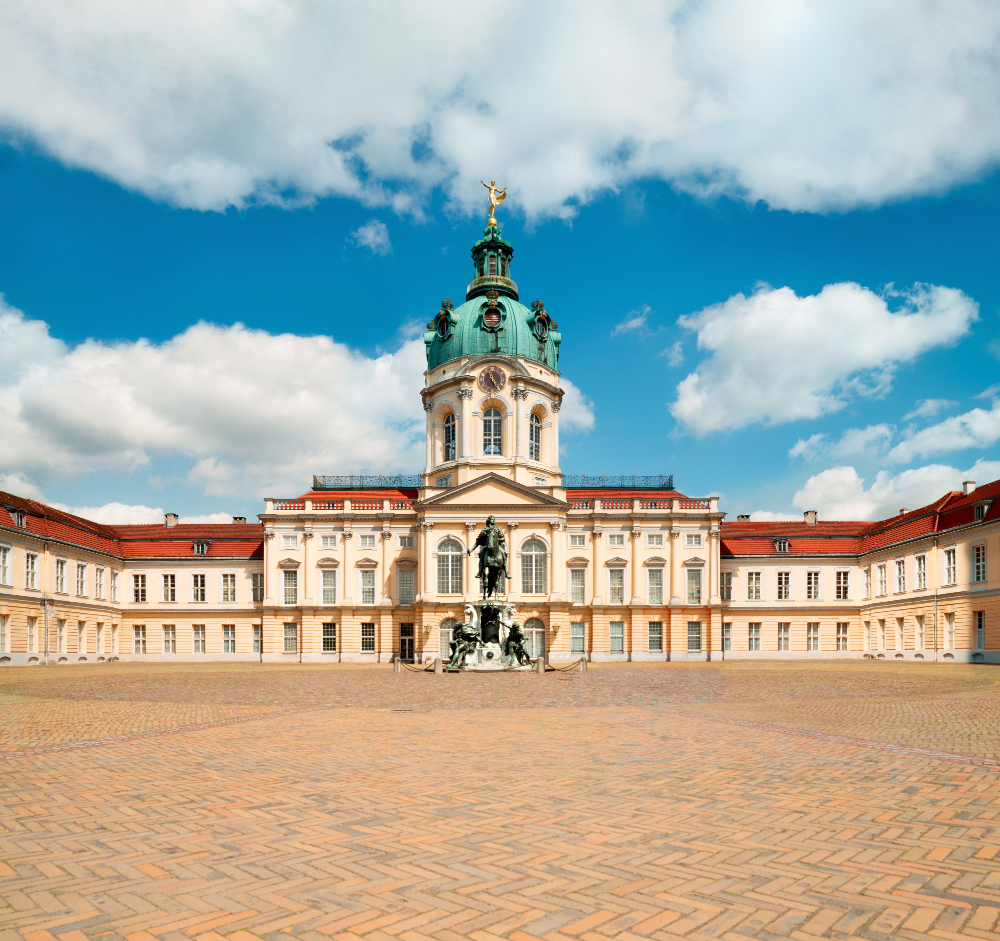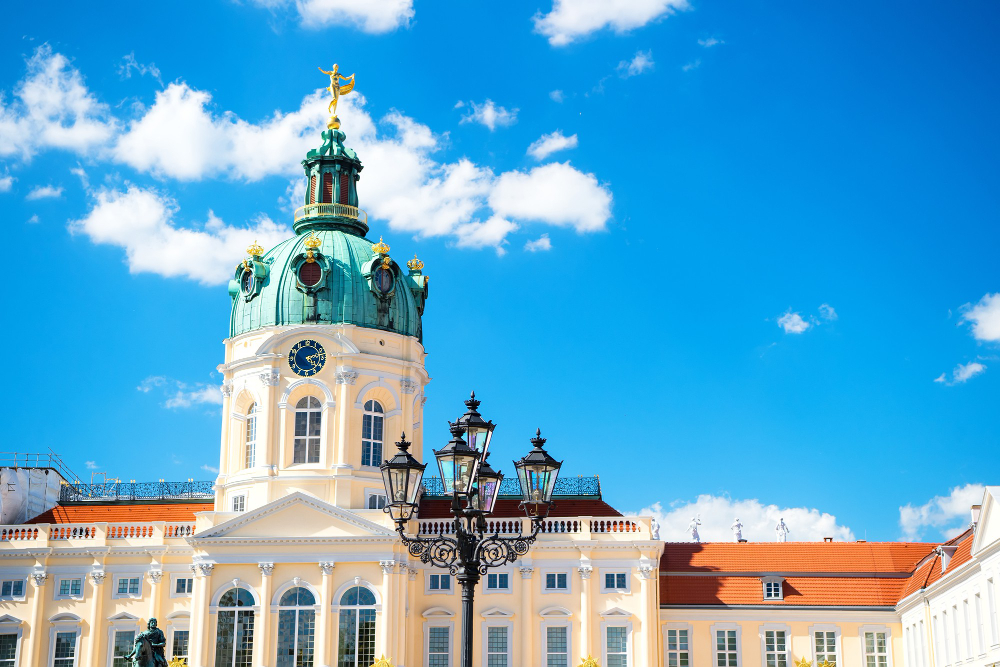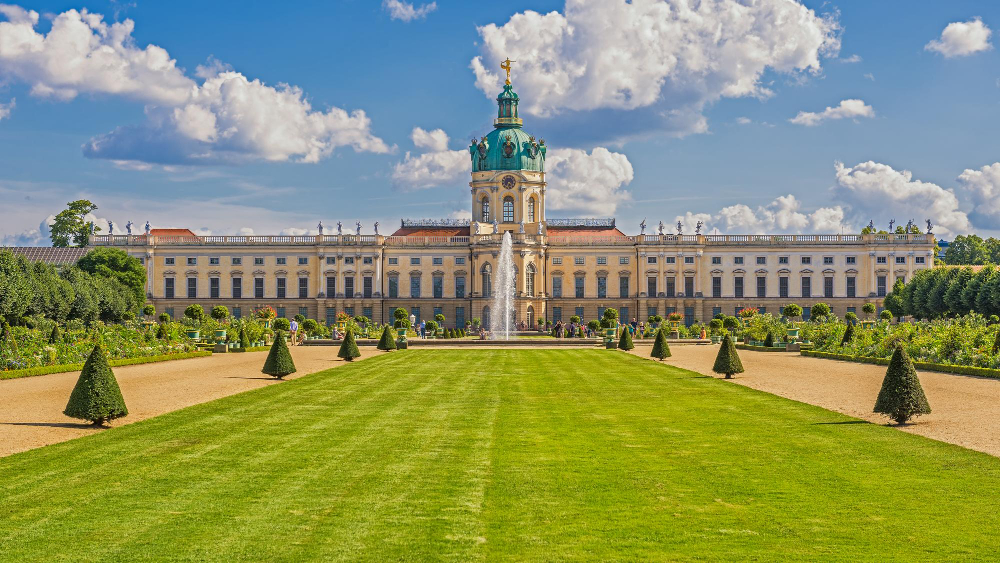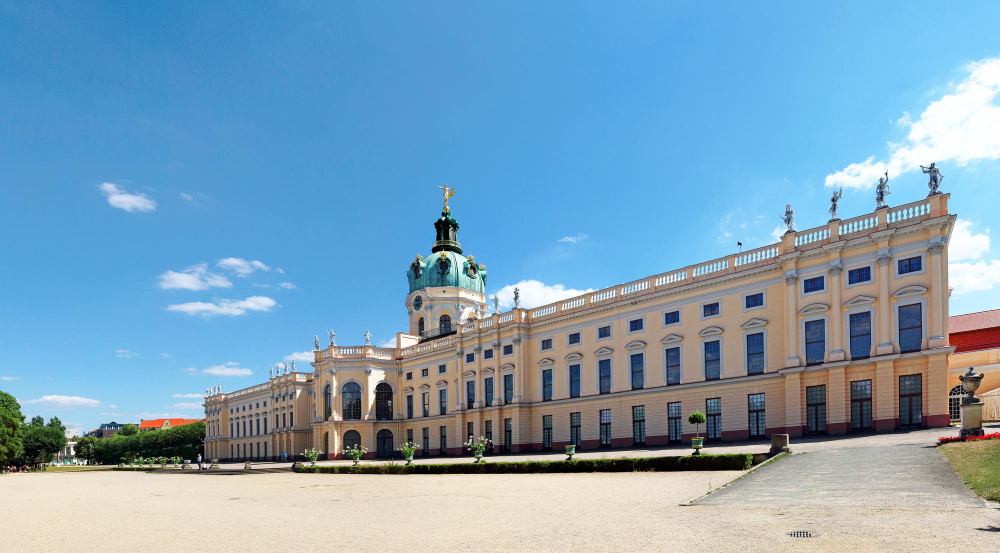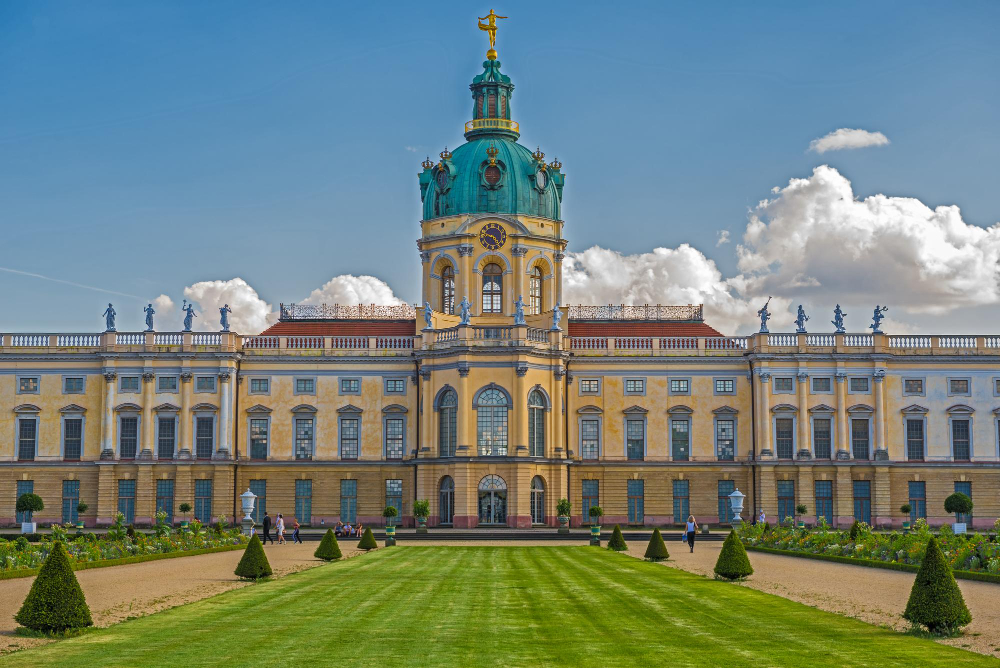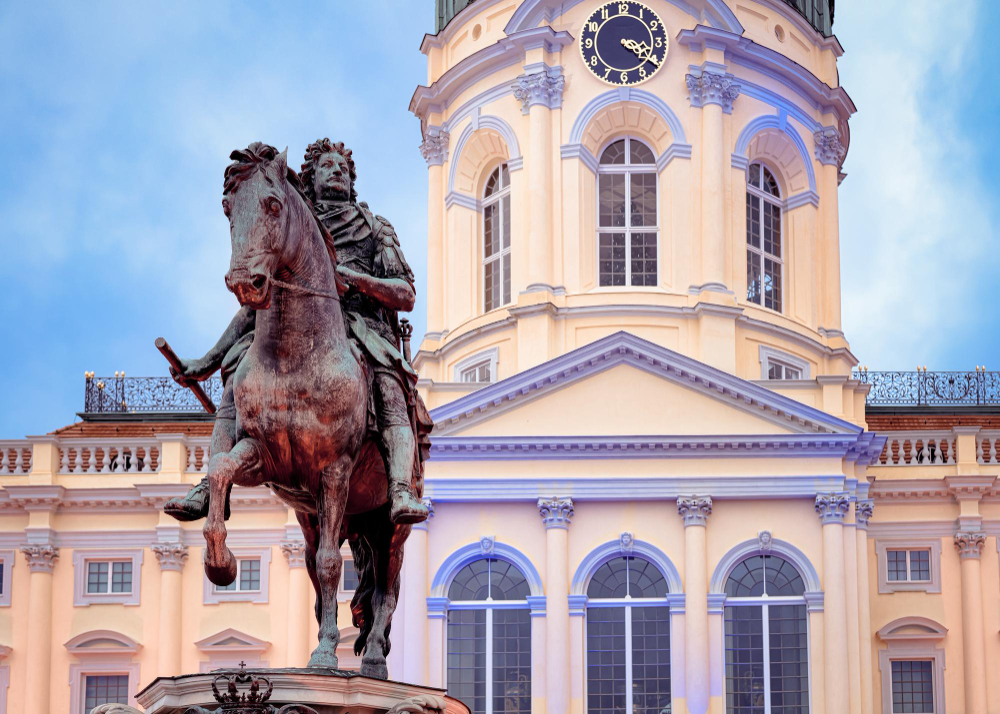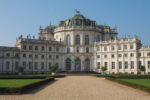

Charlottenburg Palace, nestled in Berlin’s Charlottenburg district, is more than just a magnificent stone building. It tells a vivid story of monarchs, architects, visionaries and the changing times. From its role as the summer residence of the Prussian kings to its current status as a museum and cultural centre – the palace remains a fascinating testament to German history and architecture.
The Beginnings: A Court of the Muses for Sophie Charlotte – In 1695, Elector Frederick III laid the foundation stone for what would later become Charlottenburg Palace, which was then still known as ‘Lietzenburg’. It was intended to serve as a summer residence for his wife, Sophie Charlotte, after she had given up her former retreat in Caputh. The first architect, Johann Arnold Nering, was entrusted with the building plans, but was unable to complete the project as he died that very same year. His successor, Martin Grünberg, continued the work and created what was initially a modest main building with two projecting wings. Sophie Charlotte was an extraordinary woman of her time – educated, an art lover and a passionate devotee of music and opera. With her ‘Musenhof’, a free-standing opera house near the original palace complex, she created a space for artistic expression and social gatherings. The palace was officially inaugurated on her husband’s birthday, 11 July 1699. Architecturally, Lietzenburg Palace was initially rather modest in design, but under the sculptor and architect Andreas Schlüter, the complex began to take on a new form. He added a low dome and, for the first time, designed the imposing ballroom on the upper floor, which later became known as the Belvedere.
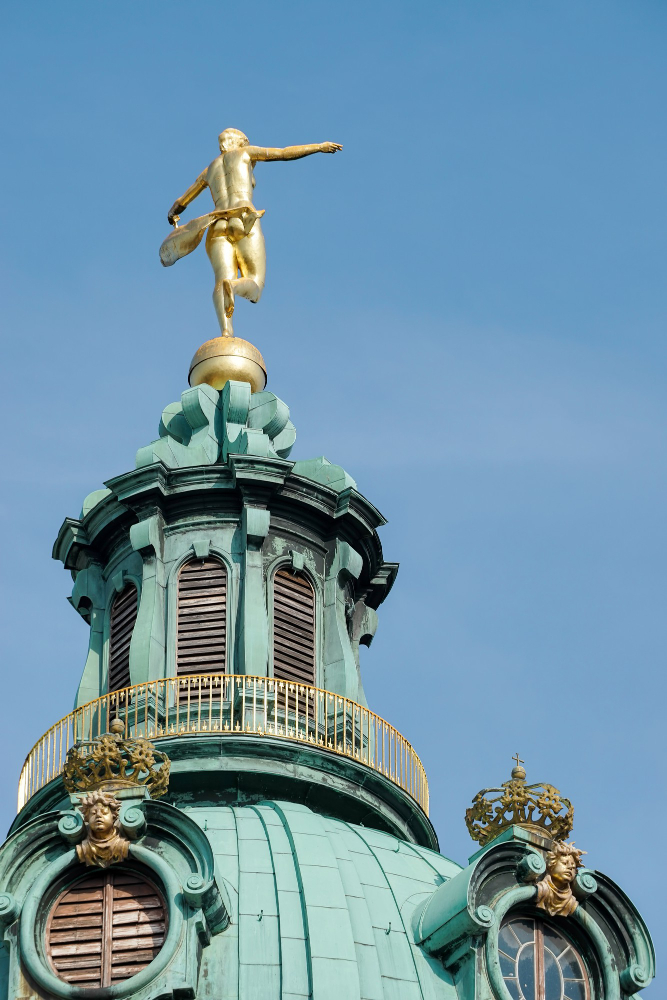
Sophie Charlotte’s legacy: the origins of Charlottenburg – Following the Queen’s early death in 1705, Frederick I named the palace and the adjacent settlement after her: Charlottenburg. The expansion of the palace was continued by Eosander von Göthe, who made a significant contribution between 1709 and 1712. A striking portico, a magnificent palace dome and a western orangery were the result of this phase of construction. Originally, further extensions were also planned on the east side, including a second orangery – a project that was, however, never realised. The Great Orangery served as a winter home for exotic plants, whilst during the summer months it was used as a magnificent venue for courtly festivities and events. At that time, the famous Amber Room was housed in the palace for a period; later, it was presented as a gift to the Russian Tsar Peter the Great and taken to Saint Petersburg, where it attained its legendary status as the ‘eighth wonder of the world’.
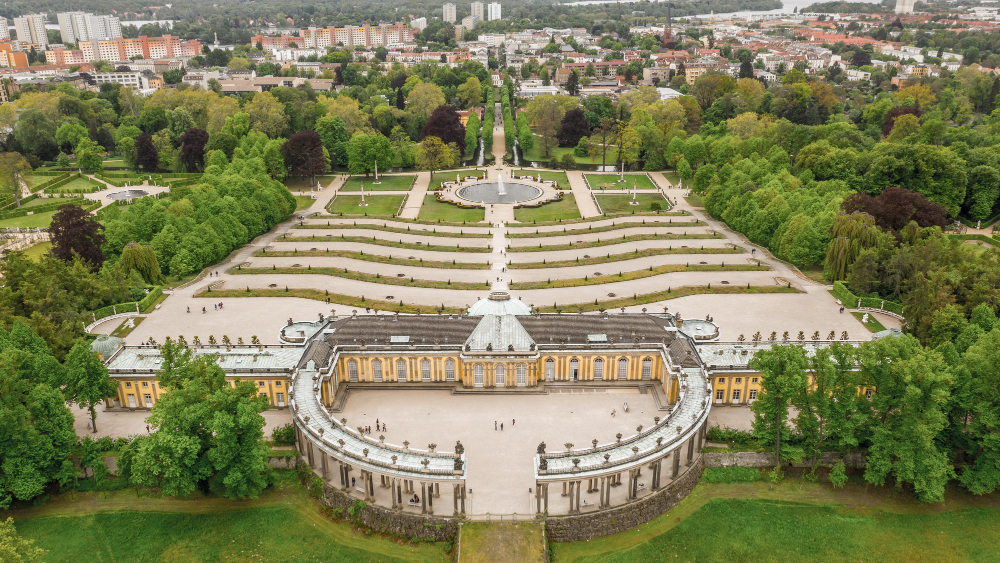
Times of Change: From Obscurity to the Residence of Frederick II – With the death of Frederick I in 1713, the palace lost its significance. Frederick William I, the ‘Soldier King’, who was known for his frugality, used Charlottenburg Palace only occasionally for ceremonial purposes. For example, the ‘Treaty of Charlottenburg’ was concluded here in 1725 with George I of England. Otherwise, the complex led a rather quiet existence – the opera house was even demolished to provide building materials for a school. Under Frederick II, later known as Frederick the Great, the tide turned once more. His cultural acumen and his love of the fine arts transformed Charlottenburg into a place of inspiration and contemplation. It was, however, only a temporary stop, as Frederick moved to Potsdam and had Sanssouci Palace built there, which he preferred. Nevertheless, under Frederick II, Charlottenburg was significantly expanded by Georg Wenzeslaus von Knobelsdorff: the so-called New Wing was built. This part of the palace is a prime example of Frederickan Rococo and housed magnificent rooms richly adorned with mythological ceiling paintings and elegant interior décor.
Frederick William II and the Theatre: A Cultural High Point – Under Frederick William II, the palace finally took on its present form. Particularly noteworthy was the construction of the Palace Theatre at the western end of the wing by Carl Gotthard Langhans – a stage that established itself as a major venue for German literature and the theatrical arts. From 1795 onwards, members of the public were even able to obtain free tickets, which represented a remarkable opening up of the royal cultural sphere. In addition to the construction of the theatre, further extensions were carried out, including a Small Orangery and stylish winter and summer apartments for the King himself. The palace gardens, on the other hand, were increasingly redesigned as an English landscape garden, influenced by the Romantic ideals of the time.
Destruction and Reconstruction: The Second World War and Margarete Kühn – The dark shadows of the Second World War did not spare Charlottenburg Palace. On the night of 23 November 1943, the complex was severely damaged by an air raid: the dome collapsed, large sections of the main building were burnt out, and valuable works of art were destroyed. After the war, the art historian Margarete Kühn devoted herself entirely to breathing new life into this architectural gem. From 1948 onwards, her efforts led to the gradual reconstruction of the palace, which was completed in 1957 with the restoration of the dome. Today, Charlottenburg Palace is not only an architectural monument but also a symbol of rebirth and the preservation of historical treasures.
A living museum and cultural centre – Ever since Charlottenburg Palace ceased to serve as a royal residence in 1888, it has functioned as a museum and exhibition venue. Today, visitors can explore exhibits from Prussian history – ranging from the crown regalia of Frederick I to the impressive Golden Gallery and 18th-century French masterpieces. The restored theatre building is also once again being used for cultural events. It hosts famous concerts, art exhibitions and even state banquets, including the farewell reception for US President Barack Obama in 2013.
The Palace Gardens: Nature and Architecture in Harmony – The Palace Gardens, which were once laid out in a strictly geometric Baroque style, have undergone numerous transformations. Under the guidance of landscape architects such as Siméon Godeau and Peter Joseph Lenné, the grounds were repeatedly reinterpreted – from formal parterres to informal English gardens. Today, the Palace Gardens offer not only a historic backdrop but also a place of relaxation. Joggers, walkers and families use them as a green retreat in the heart of the city. The Baroque character lives on in areas such as the Belvedere and the Mausoleum, whilst modern design elements round off the overall picture.
A monument of inestimable value – Charlottenburg Palace is more than just a building – it is a living testament to royal splendour and centuries of cultural development. Thanks to tireless restoration work and public commitment, it remains a place that tells the story of the past and helps shape the future. Whether as a museum, an event venue or an oasis of nature – the palace is and remains one of Berlin’s most precious jewels.