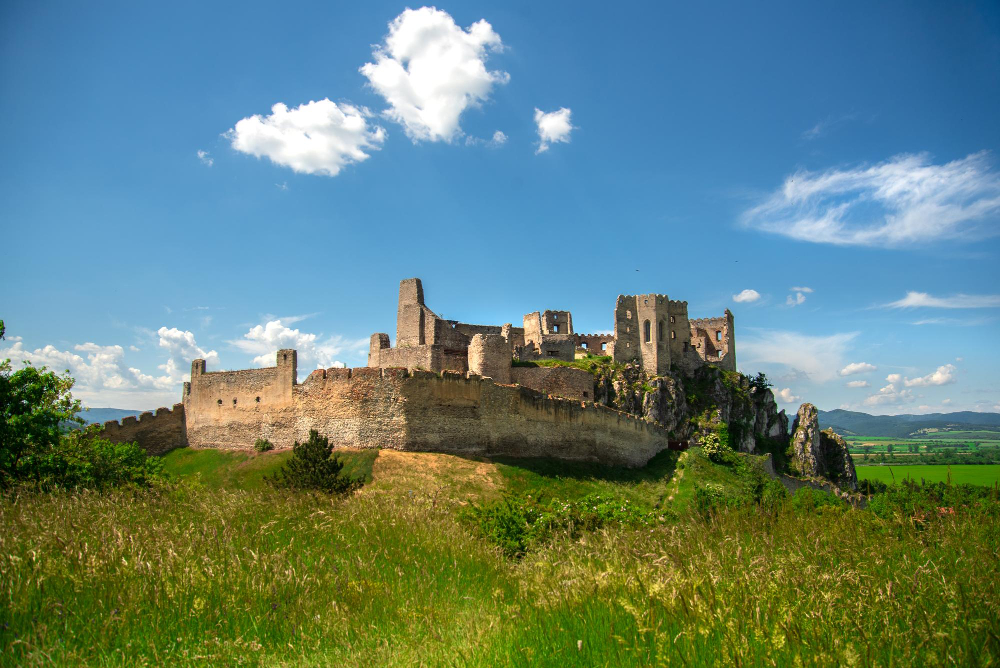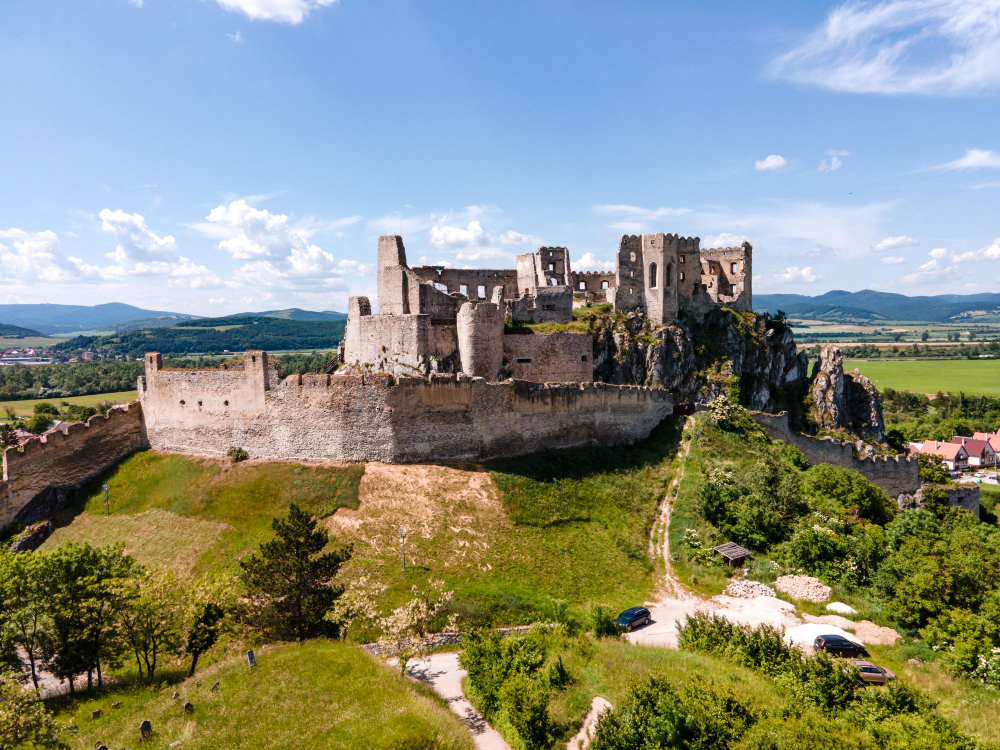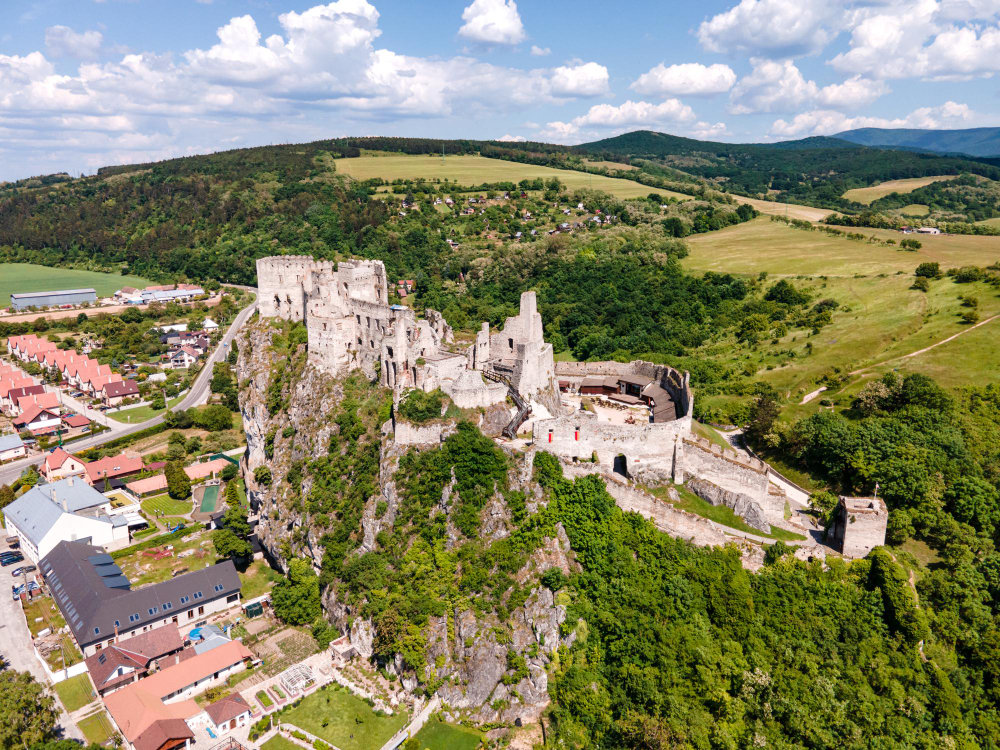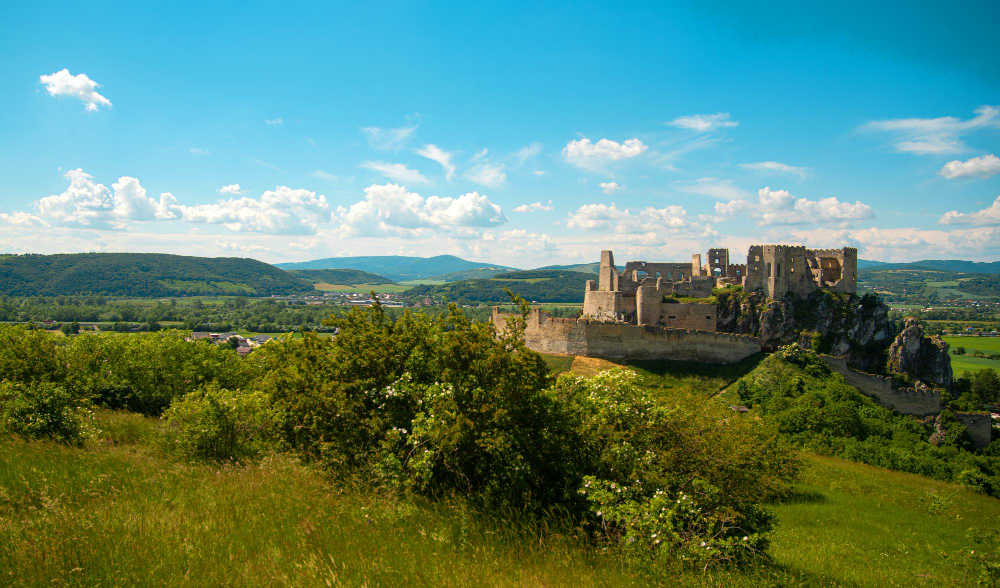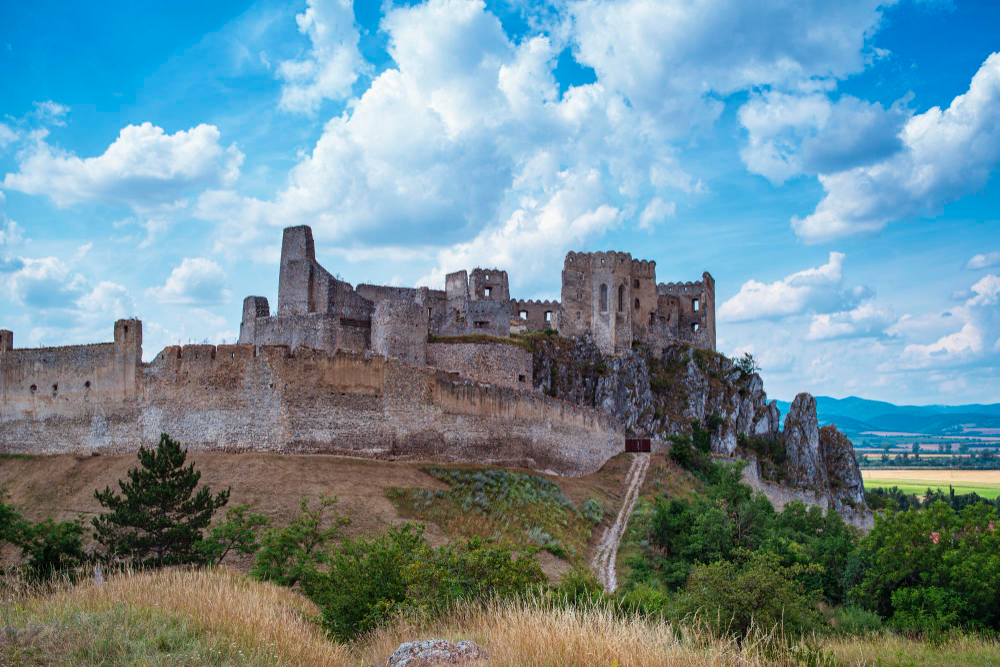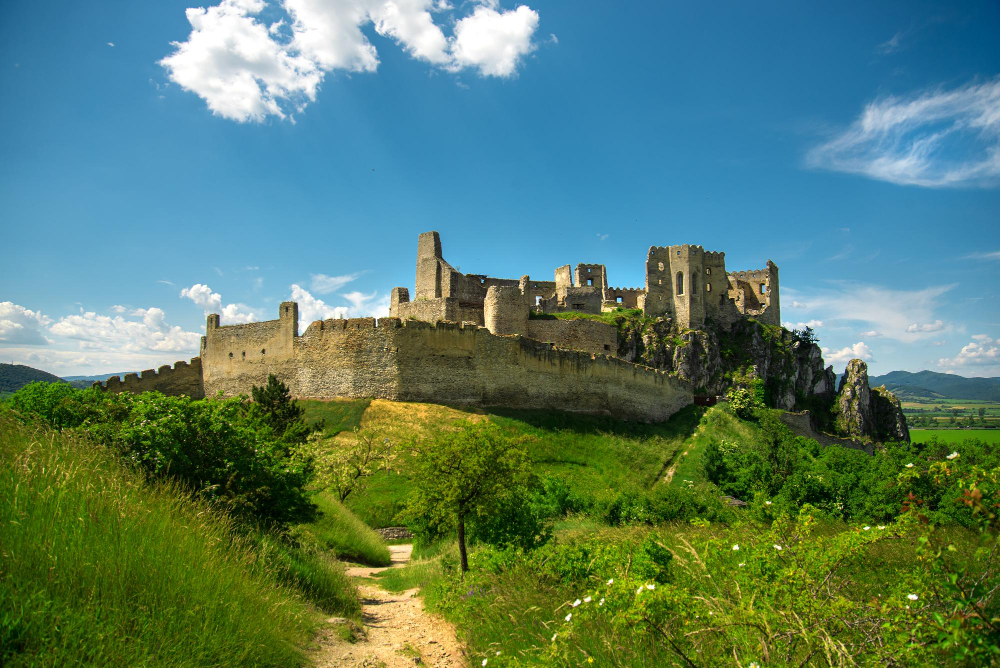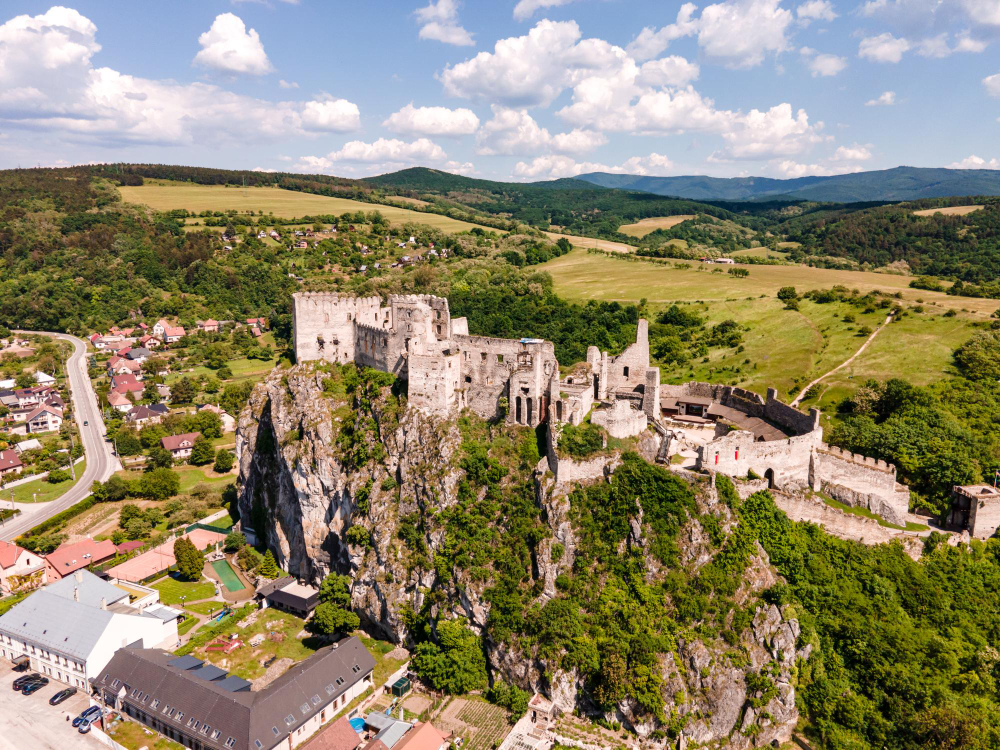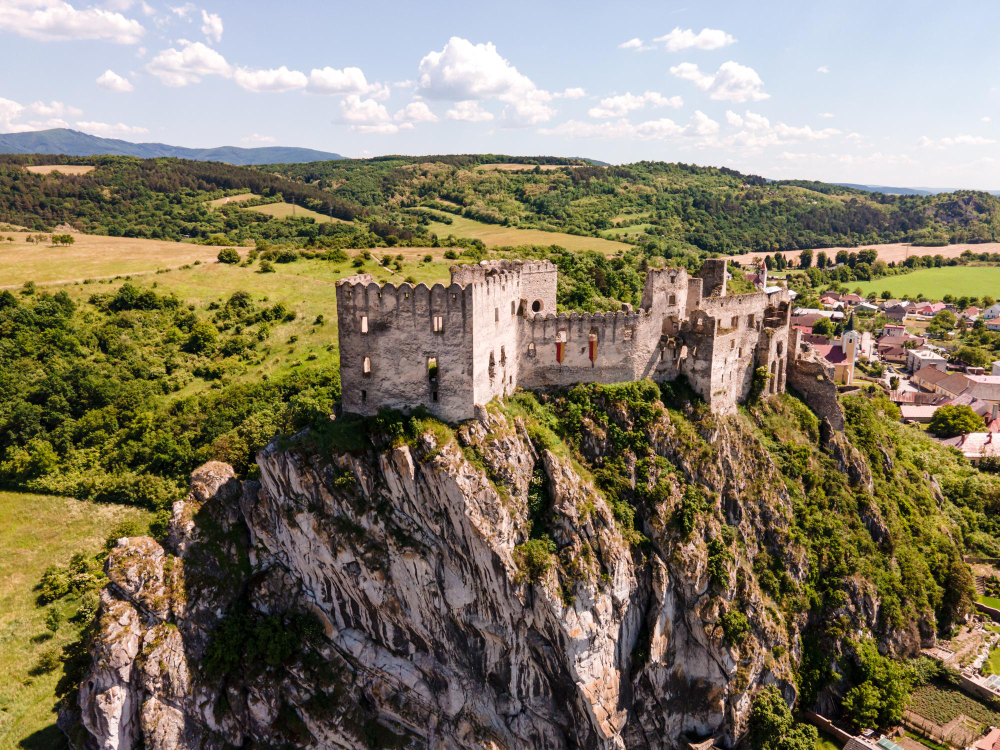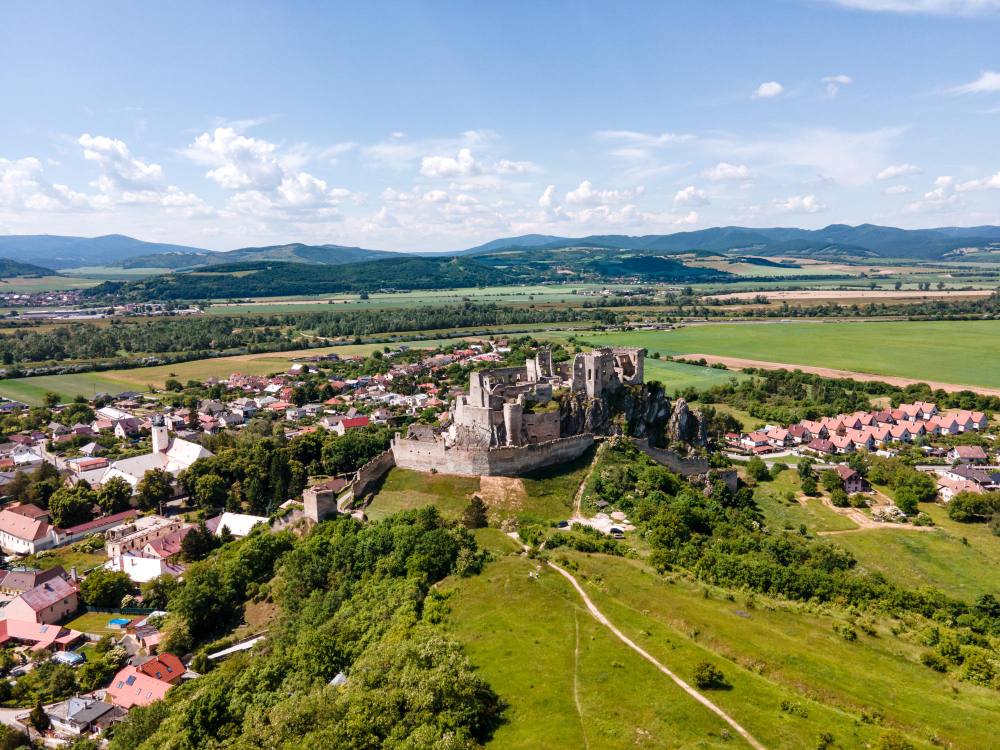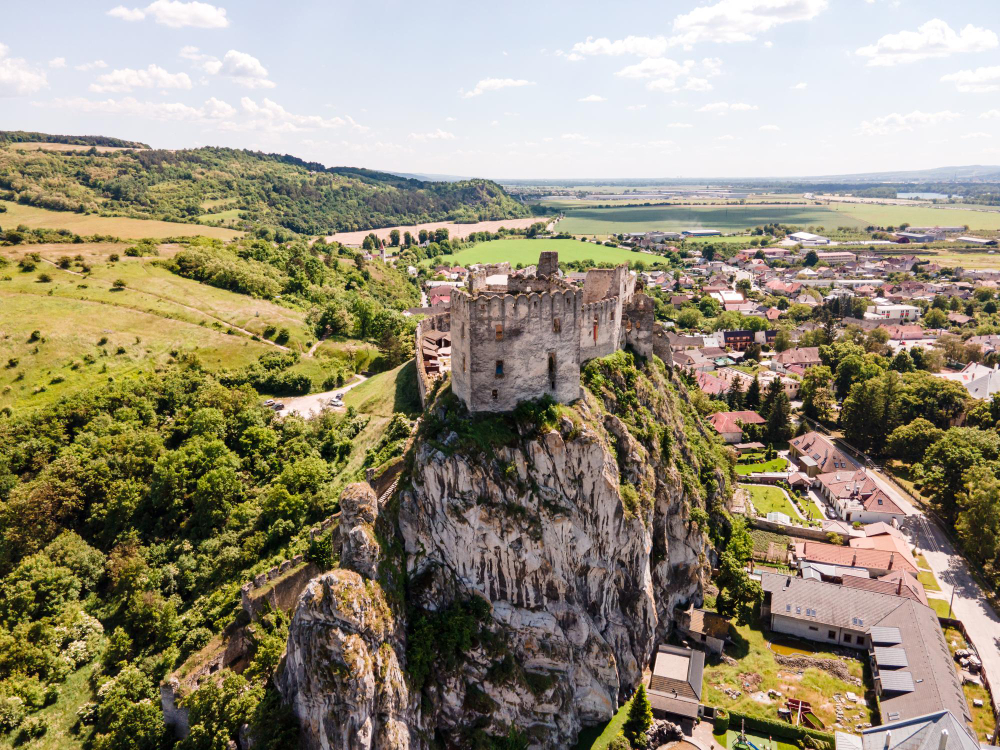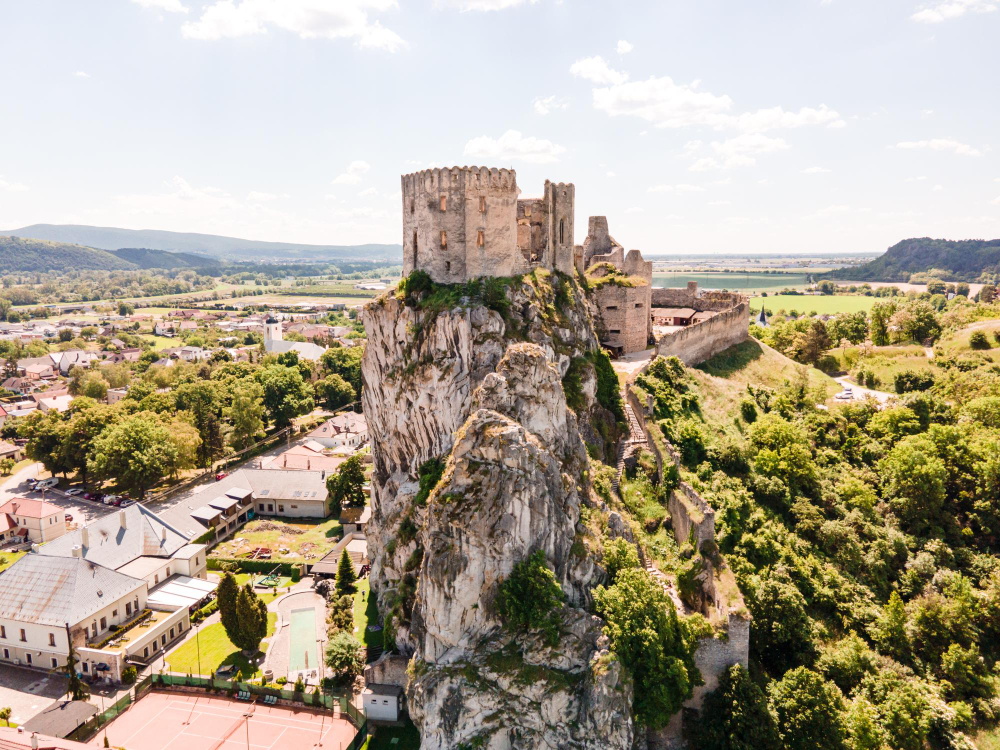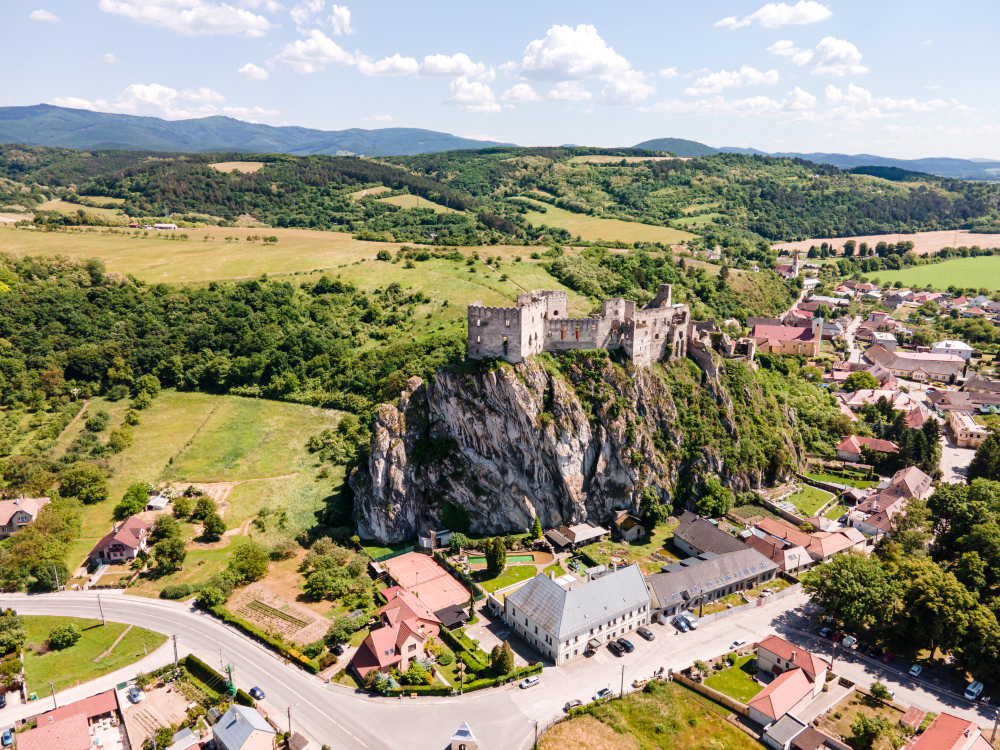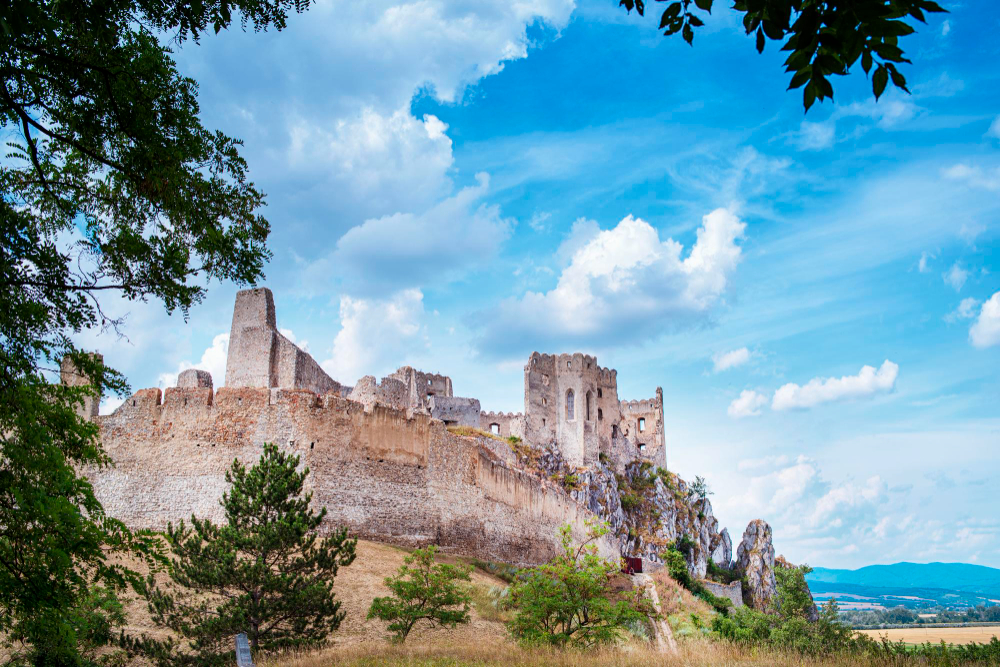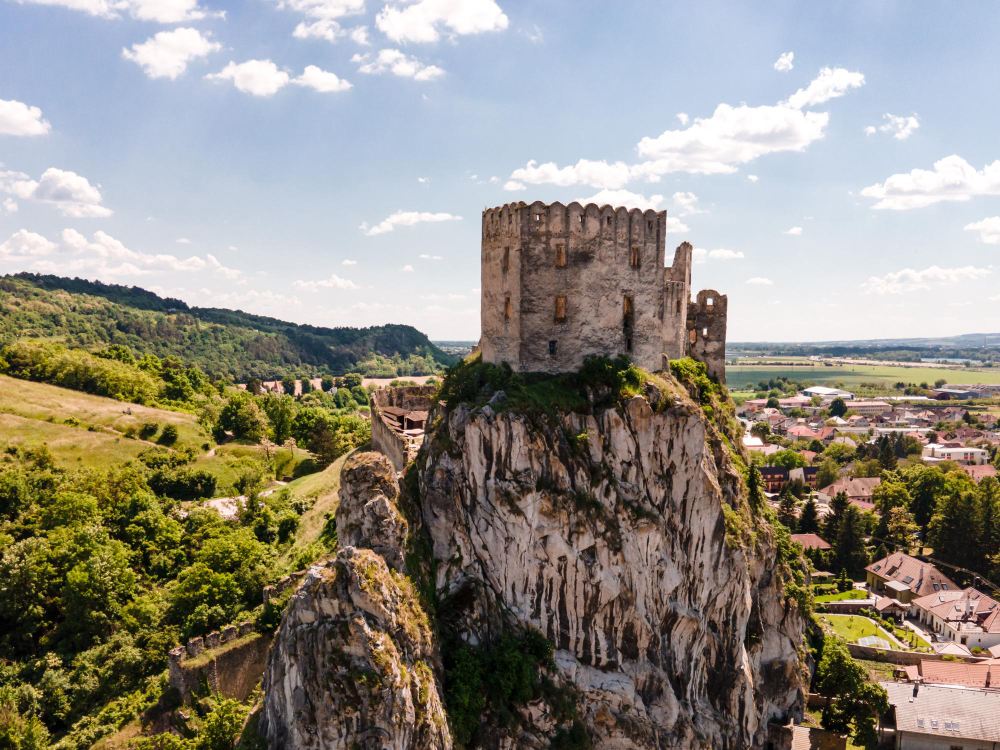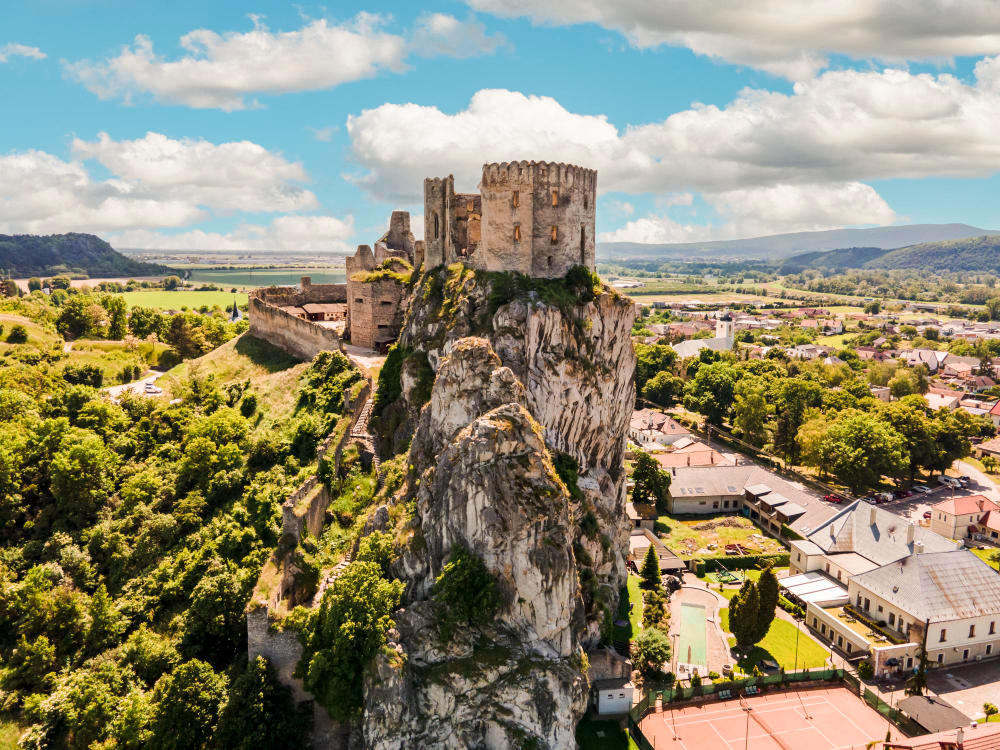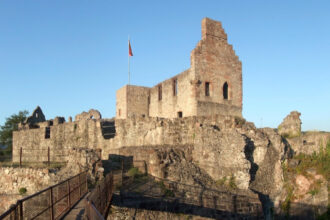

Western Slovakia is a region rich in history and culture, whose landscape is characterised by majestic castles and ruins. One of the most impressive of these castles is Beckov Castle, also known as ‘Beckovský hrad’. It towers high above the village of the same name on an imposing rock, and its striking silhouette catches the eye of visitors and locals alike. As a national cultural monument of Slovakia, the castle embodies a fascinating blend of historical events, architectural masterpieces and mysterious legends.
The Origins of Beckov Castle – A Journey into the Past – The first mention of the castle dates back to the year 1200, when it was described as ‘old’ in the Gesta Hungarorum – the chronicle of the Hungarian kings. This remark suggests that the castle’s origins are far older. Archaeological investigations suggest that the castle hill was already inhabited during the late La Tène period, around 450 BC. Later, during the Moravian Kingdom in the 9th century, a Slavic settlement existed here, which was eventually converted into a fortified complex. In 1208, the castle was first mentioned in a document as ‘castrum Blundix’. At that time, it was a strategically important border fortress of the Kingdom of Hungary, situated at the junction of the counties of Trenčín and Neutra and close to the border with Moravia. The original complex consisted of a square tower protected by ramparts, as well as a two-storey banquet hall and a residential building for the castle garrison.
The rise under Matthias Csák and the castle’s heyday – A turning point in the history of Beckov Castle occurred around the year 1300, when the powerful oligarch Matthias Csák took possession of the castle. Csák, often referred to as the ‘Lord of the Váh and the Tatras’, was one of the most feared feudal lords of his time and ruled over large parts of what is now north-western Hungary and Slovakia. Under his rule, the castle was further fortified to consolidate its status as a military stronghold. However, following Csák’s death in 1321, the castle experienced a period of political stagnation, as it was initially administered by castellans. The next significant owner of the castle was Miklós Bánffy, who received the complex in 1379 as a reward for his military service. Yet only a few years later, the castle passed into the hands of an extraordinary man: Stibor of Stiborice, a nobleman of Polish origin from the House of Ostoja. Stibor was one of King Sigismund of Luxembourg’s most important supporters and ranked among the most influential men in the Hungarian Kingdom. By the beginning of the 15th century, Stibor owned a total of 31 castles, but Beckov became the centre of his sphere of influence and his favourite residence.
The legend of Stibor and his love of art – Stibor’s influence was also reflected in the castle’s architectural development. He brought in artists and craftsmen from Bohemia, Poland, Germany and even Venice to transform the castle into a magnificent residential palace. The innovations included higher walls, a barbican (an outer defensive tower) and the extension of the upper great hall to include a knights’ hall and a chapel. The chapel in particular, whose portal bears the Stibor family coat of arms, was exquisitely designed. On the altar once stood a sculpture of the Black Madonna, a work of great cultural significance which is now kept in Koryčany in the Czech Republic. A well-known legend tells of Stibor’s deep attachment to Beckov Castle. It is said that he had a court jester who was always by his side. When the jester one day jokingly suggested that Stibor should give him the castle as a reward, Stibor replied with a laugh: ‘I would only give you the castle if you were to completely renovate it in a single night!’ The jester accepted the challenge and worked through the night, but was unable to complete the task. The next morning, Stibor told him that he would grant him another wish instead – a gesture of generosity that is still talked about in the region to this day.
The Decline and the Challenges during the Turkish Wars – Following the death of Stibor and, later, that of his son, the castle reverted to royal ownership. King Sigismund eventually gifted it to Pál Bánffy in 1437, shortly before his death. Over the following centuries, the Bánffy family played a key role in the castle’s development. In particular, following the devastating Battle of Mohács in 1526, in which the Hungarians suffered a bitter defeat at the hands of the Ottoman Turks, Beckov was expanded into a fortress. Cannon bastions and additional defences were erected to stem the growing threat of Turkish attacks. These measures proved successful. Although the castle was besieged by Turkish troops in 1599, the defenders managed to repel the attacks and hold the fortress. Nevertheless, the castle’s importance began to wane over time, particularly following the death of Kristof Bánffy in 1646. His female heirs, the daughters of the family, showed little interest in maintaining the castle, so it gradually fell into disrepair and was used exclusively as a prison and barracks.
A tragic end and the path to becoming a cultural monument – The final fate of Beckov Castle was sealed by a devastating fire in 1729, which destroyed large parts of the complex. Since then, the castle has stood empty and has lost its function. It was not until the second half of the 20th century that its cultural value was recognised. In 1970, Beckov was officially declared a national cultural monument, and extensive conservation work ensured that the ruins could be preserved for posterity.
A magnet for tourists and history enthusiasts – Today, Beckov Castle attracts numerous visitors from all over the world. In addition to its spectacular setting, it offers insights into the region’s eventful history and fascinates visitors with its impressive architectural remains. Of particular significance is its cultural heritage, which is brought to life through engaging guided tours, exhibitions and themed events. Beckov Castle remains a place where history and legends merge to create a unique experience. Its rocks tell tales of powerful nobles, brave defenders and an era in which art and architecture flourished. Anyone visiting the region should not miss the opportunity to discover this historical gem – a monument to the past and a testament to human creativity and resilience.