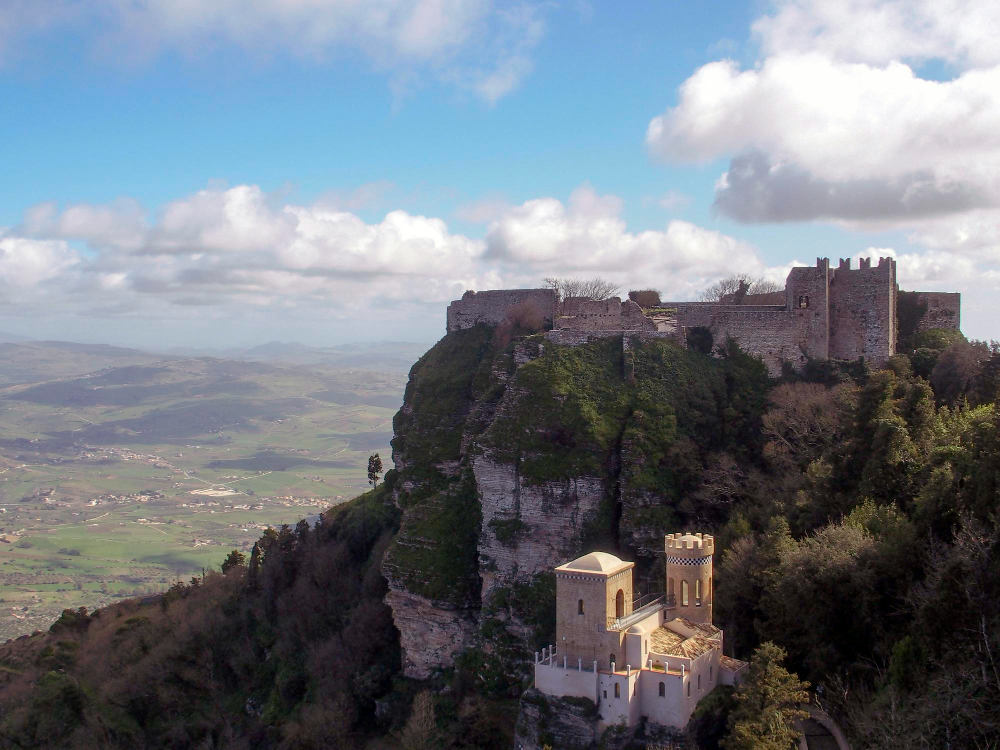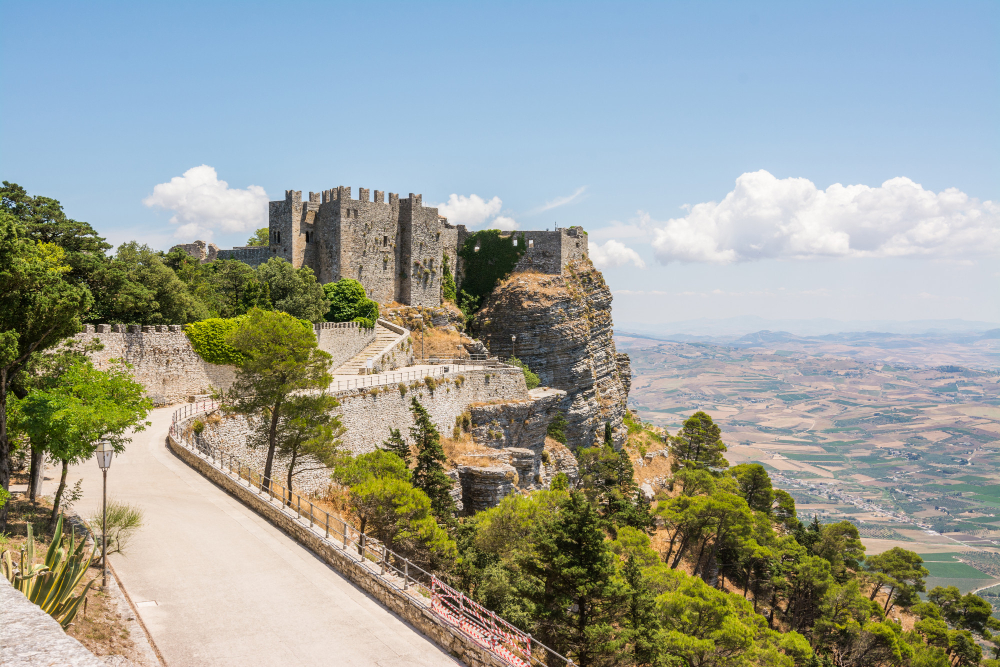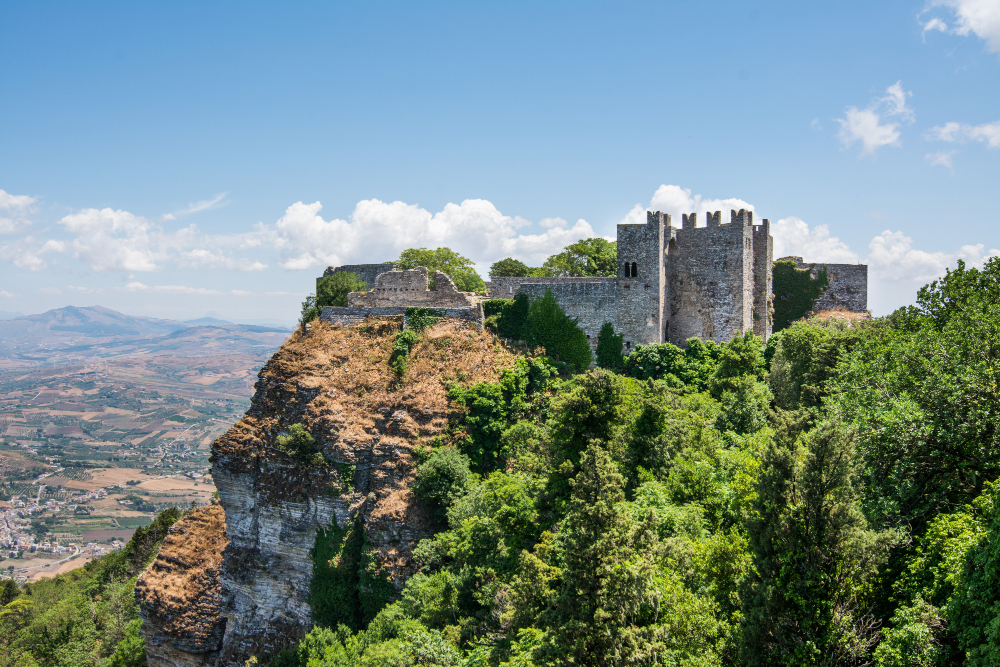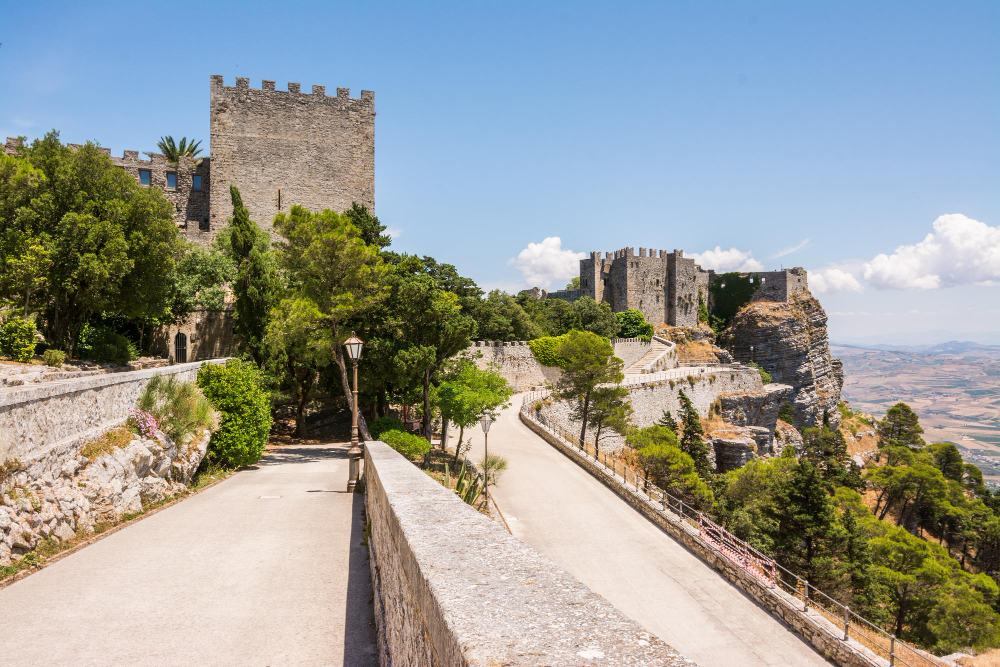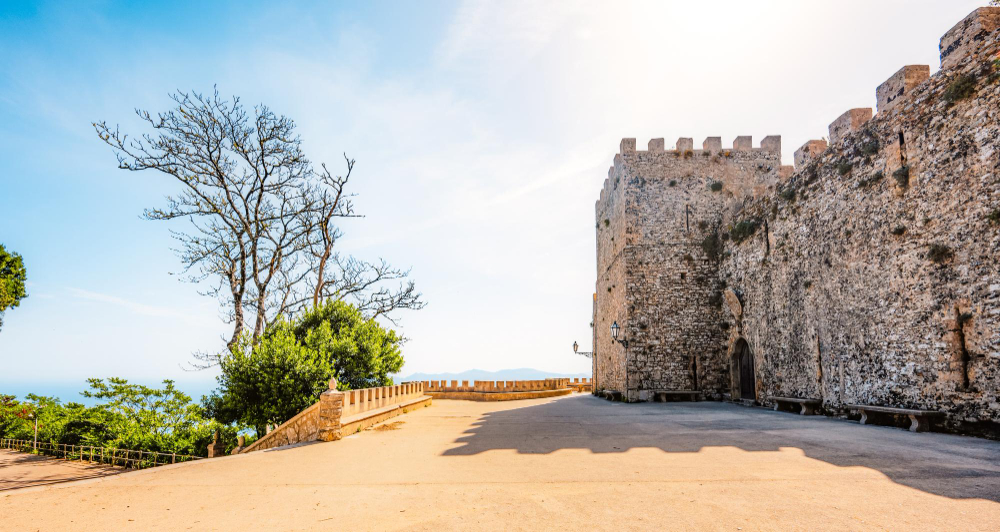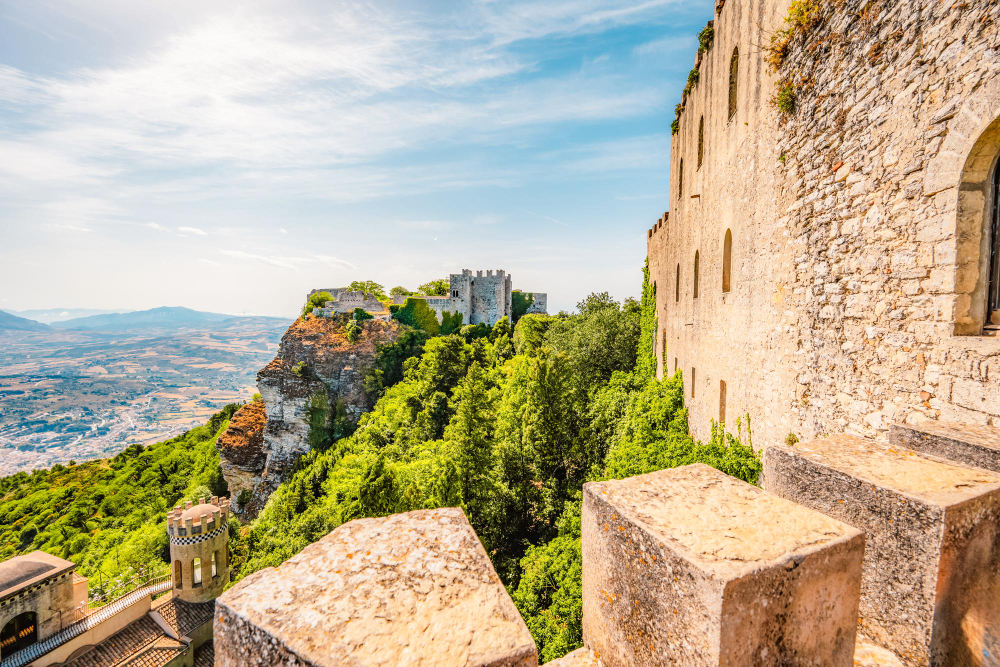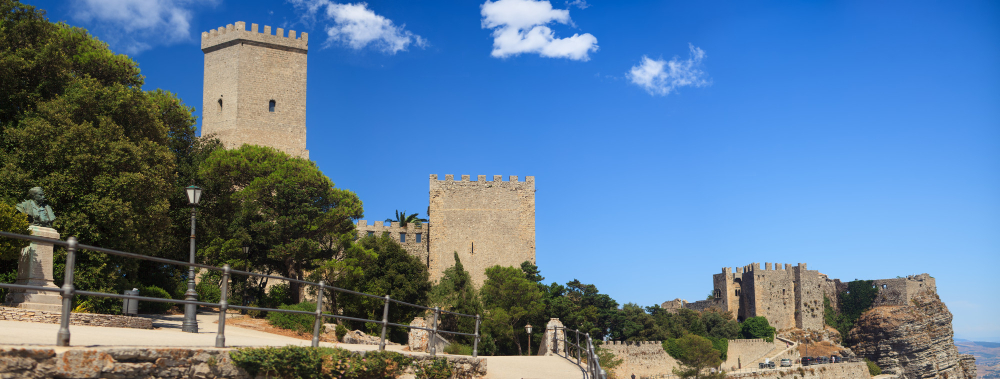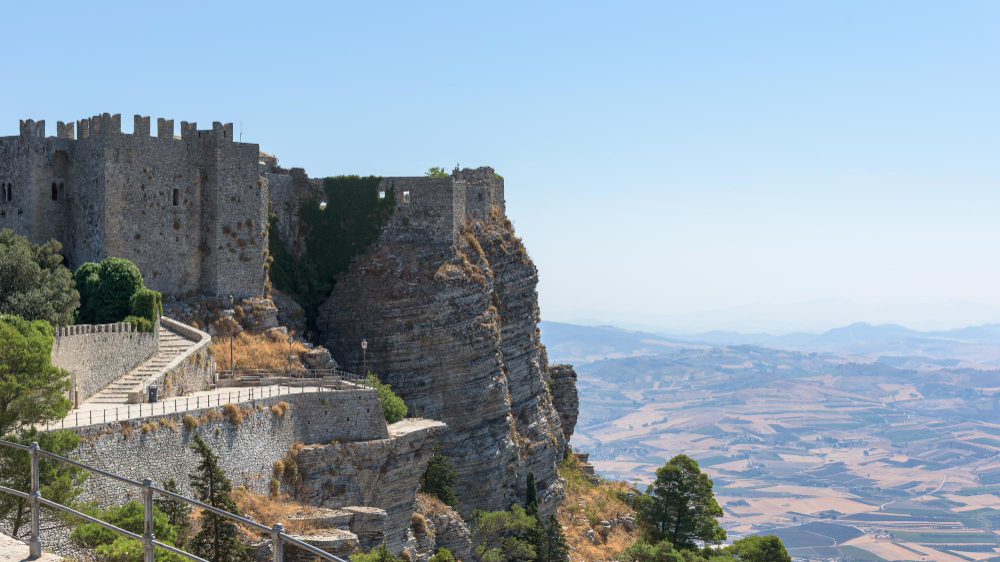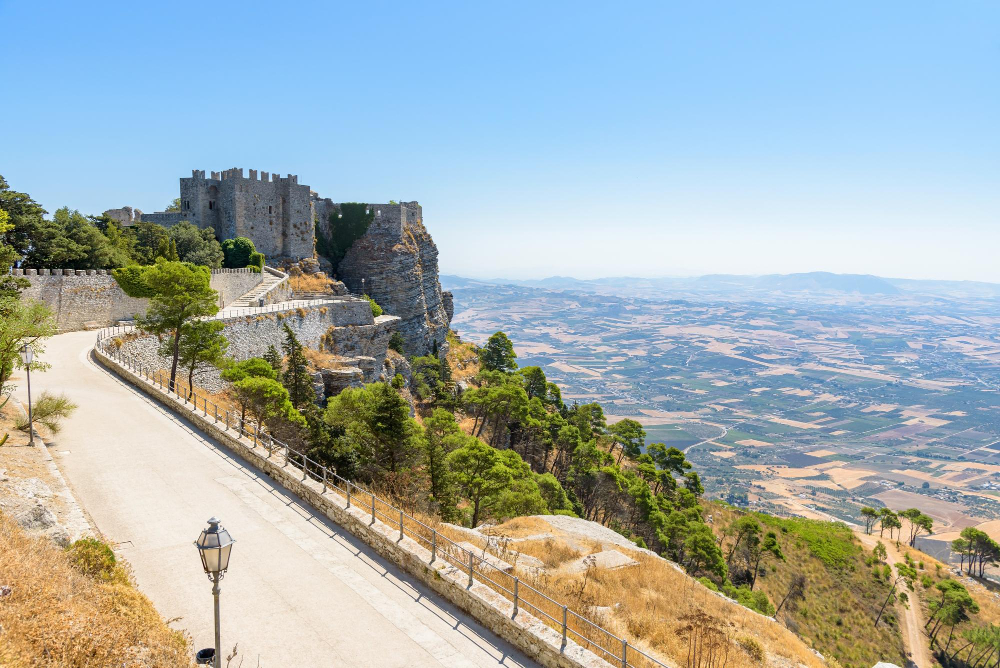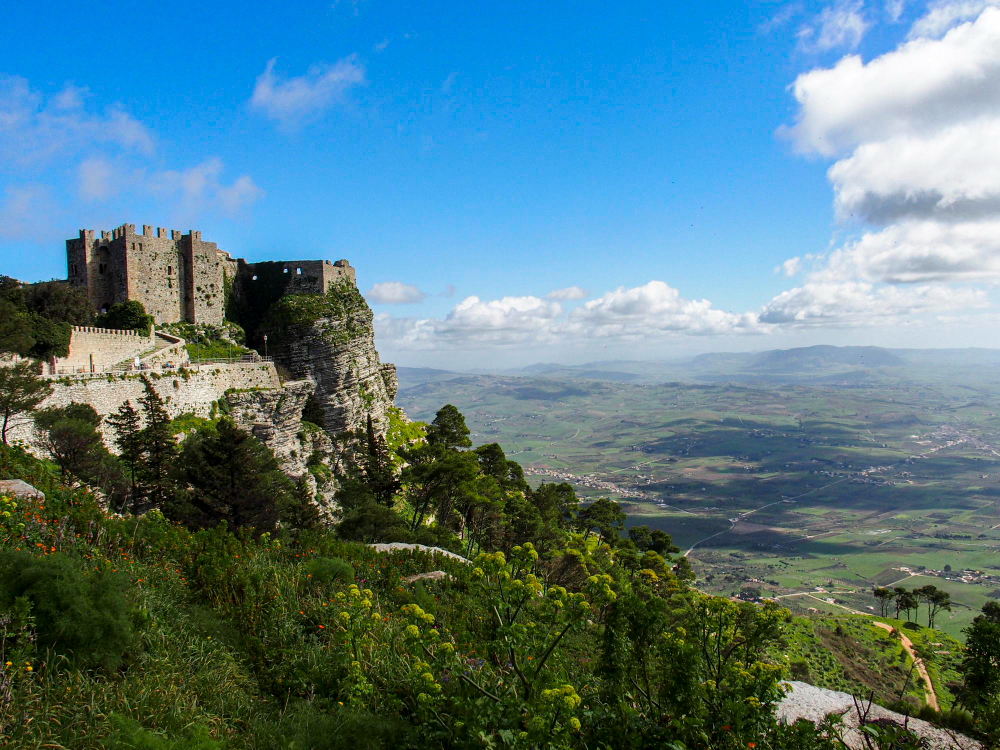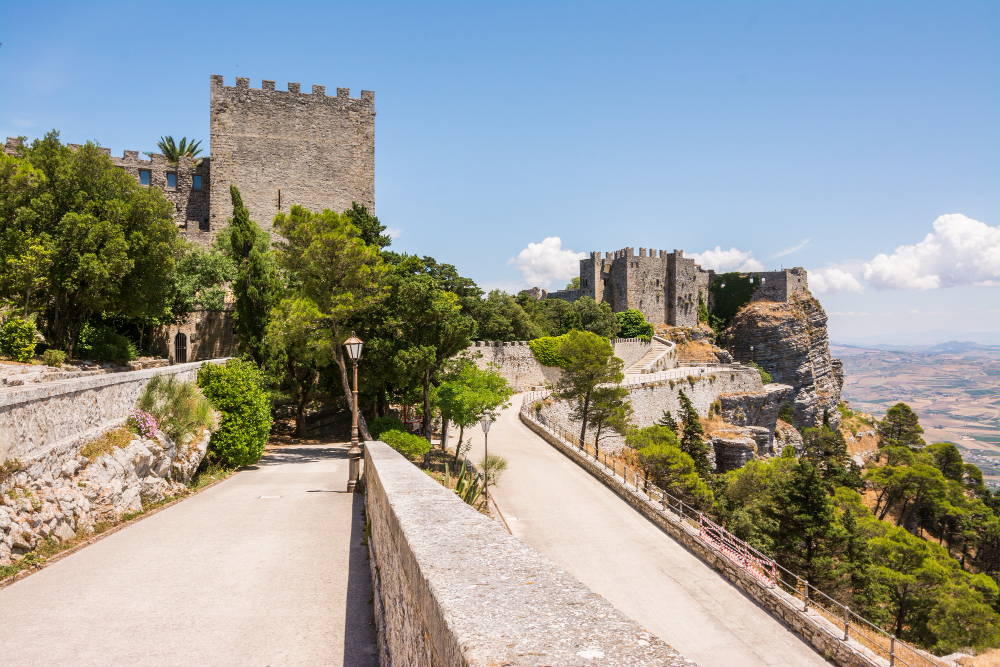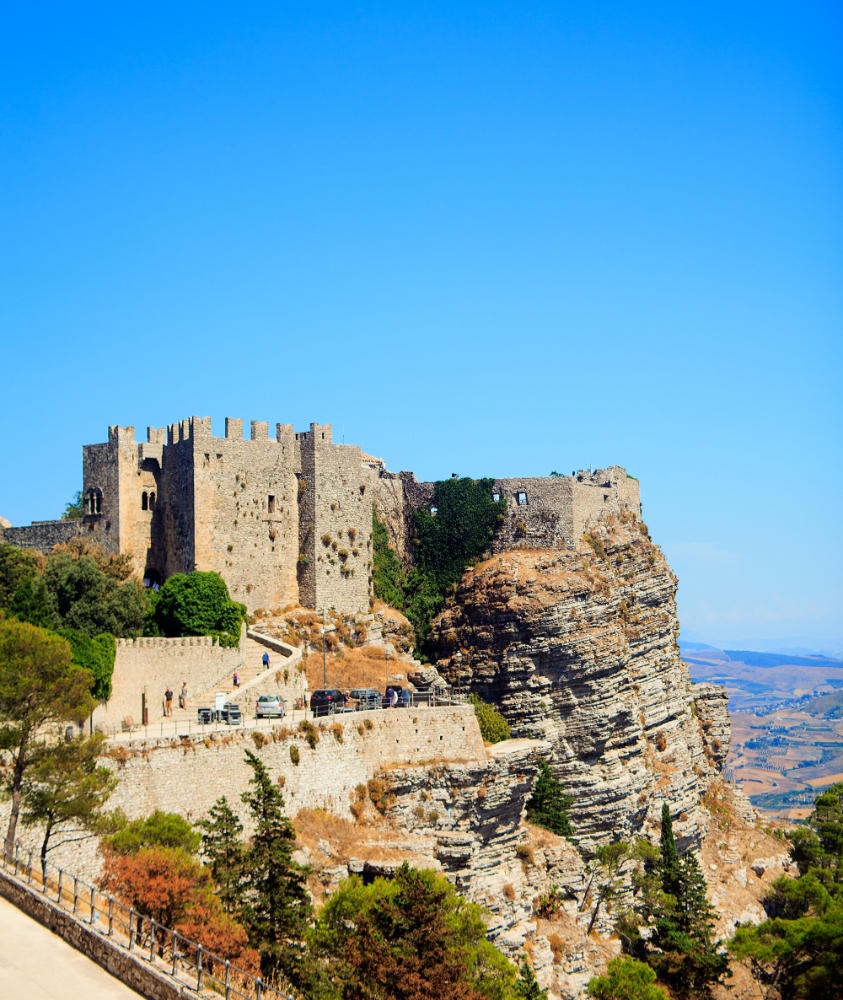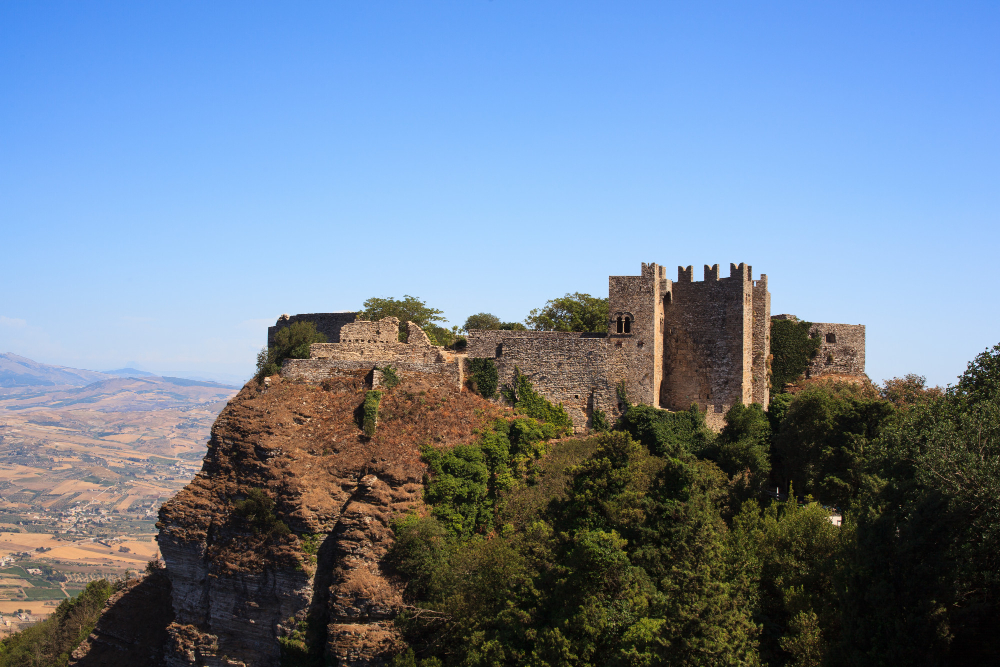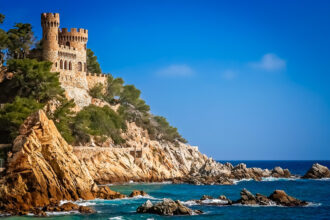

Perched on an isolated rock to the south-east of the summit of Monte Erice, in the province of Trapani in Sicily, stands the impressive Castle of Venus (Castello di Venere). This 12th-century Norman fortress is perched atop the ruins of a far older sanctuary, once consecrated by the Elimers, Phoenicians and Romans. The history of this site blends myth, cult and medieval power – a combination that continues to shape the castle’s charm and significance to this day.
From Goddess to Castle: The Sanctuary of Venus Ericina – The castle’s historical roots stretch back to antiquity, when the famous Temple of Venus Ericina stood on this site. The name ‘Venus Ericina’ refers to a local manifestation of the goddess of love and fertility, who was worshipped under various names over the centuries. Originally, it was the Phoenician goddess Astarte who was worshipped by the indigenous Elim – a people who lived in Sicily long before the Greek and Roman colonisation. The historian Diodorus Siculus reports that Erice, son of Bute and Aphrodite (Venus), had the temple built in honour of his mother and founded the town. This shows how deeply rooted the cult of the goddess already was in the local consciousness at that time. Later, other influences came into play: the Sikani, indigenous inhabitants of Sicily, lived in the high mountains and also honoured Venus Ericina. Liparo, son of Ausonius, is also said to have spread the cult throughout the Aeolian Islands. The temple served not only religious purposes but was also fortified, forming a sort of small town above what is now the town of Erice. This can be deduced from archaeological investigations and from historical accounts describing the site as a strategically important location that was also militarily secured. However, the temple was plundered on several occasions, including by Amilcar Barca, a Carthaginian general, which highlights the site’s political and military significance.
From temple to Norman fortress – By the Early Middle Ages, hardly anything remained of the original sanctuary. Nevertheless, the site retained its spiritual significance: a small church, Santa Maria della Neve, was built on the ruins, bearing witness to its continued religious use. The Normans, who conquered large parts of Sicily in the 11th and 12th centuries, recognised the strategic value of Monte Erice and built their own fortress here. This led to the construction of the imposing Castle of Venus, whose masonry consists in part of fragments from the ancient temple complex – a fascinating example of the reuse of historical building materials, known as ‘spolia’. The castle was connected by two separate towers with drawbridges, which enabled defence against attackers. It served as the ‘Piazza reale’ – the residence of the Aragonese viceroys and, later, the Habsburg rulers of Spain, right up until the 16th century. This underlines the political significance of the site during the Renaissance. During the reign of the Bourbons, the castle’s function changed to that of a prison. In the 19th century, the estate passed into municipal ownership and was eventually leased to Count Agostino Pepoli, who undertook to restore the nearby Torri del Balio. Archaeological excavations carried out in the 1930s by the researcher Cultrera unearthed numerous significant finds, which are now on display at the Museo Pepoli in Trapani.
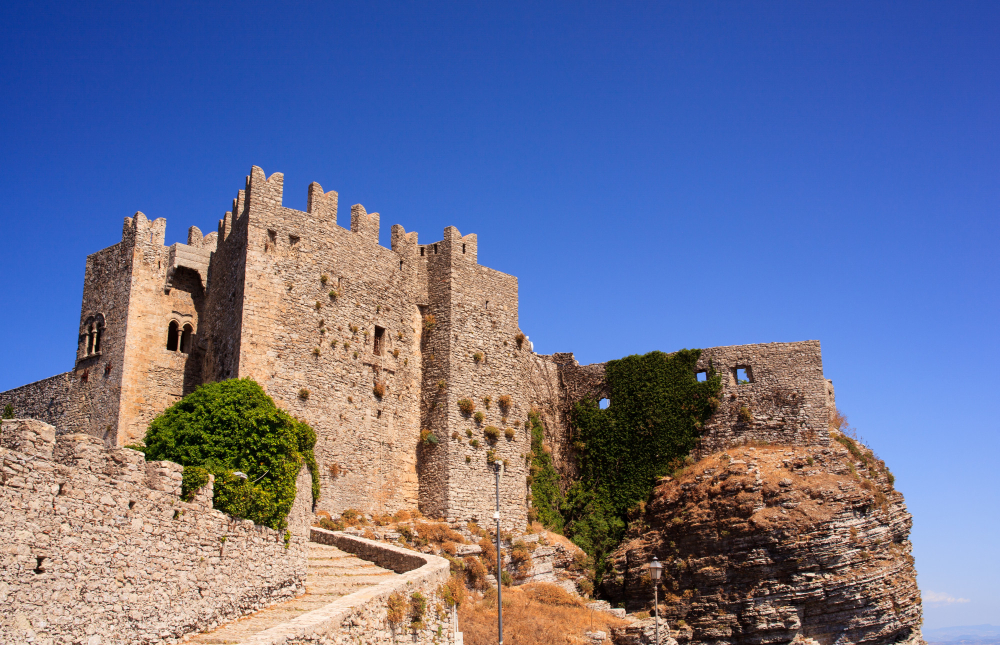
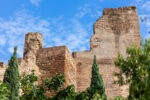
Architecture: A fortress steeped in history – Architecturally, the castle is closely adapted to the topography of Monte Erice: with their corners and projections, the walls follow the contours of the steep rocky summit exactly, thus providing natural protection. The main façade, with its characteristic Guelph battlements, faces west and emphasises the medieval fortifications of the complex. A particular highlight is the entrance, which once featured a drawbridge that has now been replaced by a stone staircase. A secret passage – an underground gallery – led out of the castle and probably served as an escape route or for covert supplies in the event of a siege. Such underground passages are typical of fortresses of that era; they bear witness to the sophistication of medieval military architecture and lend the castle a mystical aura. A distinctive feature on the northern rock face is a carefully constructed stone wall which, according to legend, is said to have been built by Daedalus, the legendary inventor and architect. In reality, it is a classical Roman wall-building technique known as opus rectum, in which precisely hewn stones are laid in horizontal courses. This construction bears witness to the craftsmanship of antiquity and serves as a reminder of how many eras converge in this place.
Legends and cultural significance – The Castle of Venus is more than just a historical monument: it is a living part of Sicilian culture and mythology. The cult of Venus Ericina has left a deep mark – the goddess symbolised fertility and love, two central aspects of human existence that have been celebrated since antiquity. Many legends surround Erice and the temple – such as the story that the goddess herself gave the place its name, or that magical powers lie dormant within the fortress walls. Although these stories are often romanticised, they fit well with the mysterious atmosphere of the place and attract visitors from all over the world.
A place where history comes alive – The Castle of Venus on Monte Erice is a fascinating example of the fusion of culture, religion and military architecture over millennia. From an ancient sanctuary to a Norman castle and later a residence and a prison, the complex tells the eventful history of Sicily. Thanks to skilful restoration work and archaeological research, this site is now open to the public and offers not only spectacular views of the surrounding countryside and the sea, but also a journey through time – from the mythical Venus Ericina to the reign of the medieval princes. The Castle of Venus remains an essential focal point for understanding Sicily’s turbulent history and cultural heritage – a symbol of the many cultures that have shaped this island, as well as a place full of mystery and beauty. Visitors to Erice will discover here how history comes to life and myth meets reality.