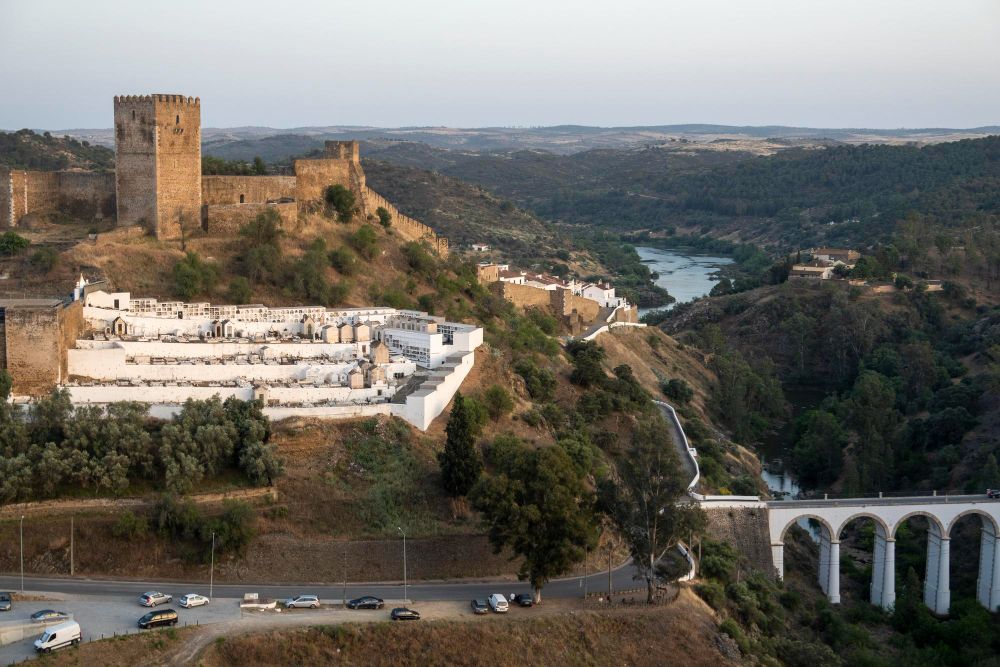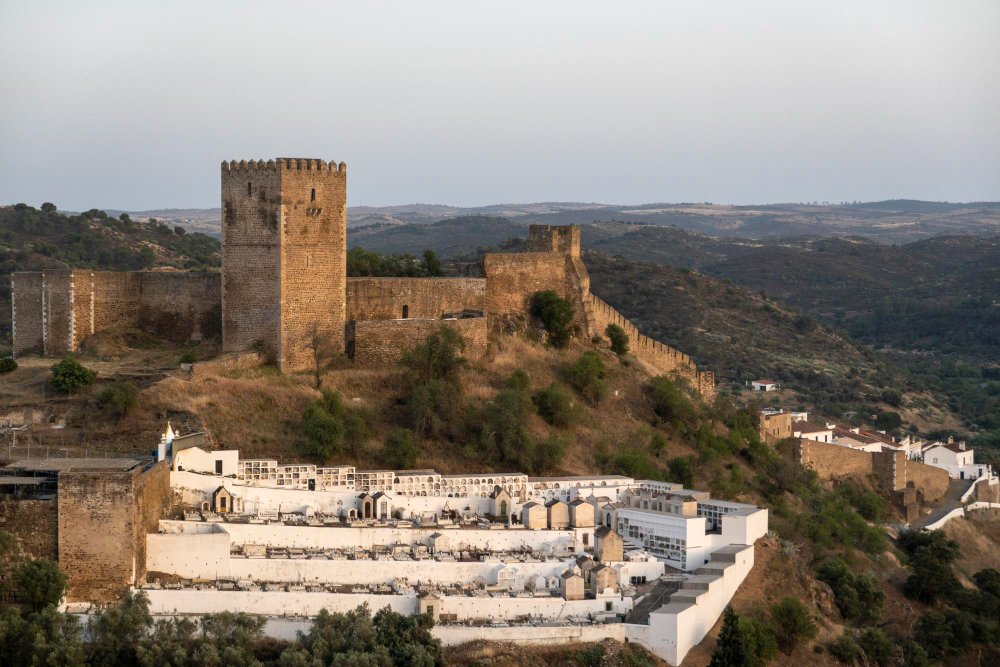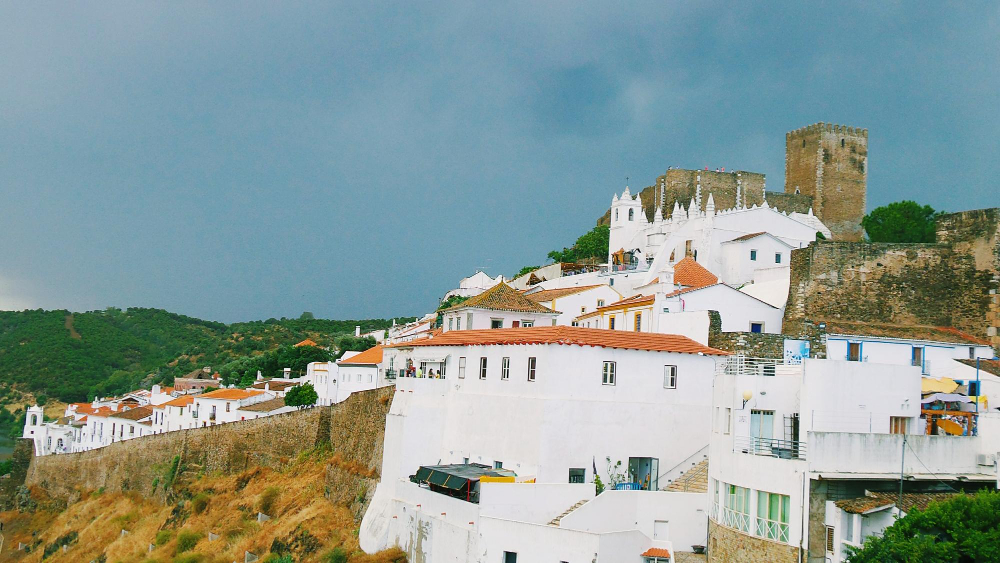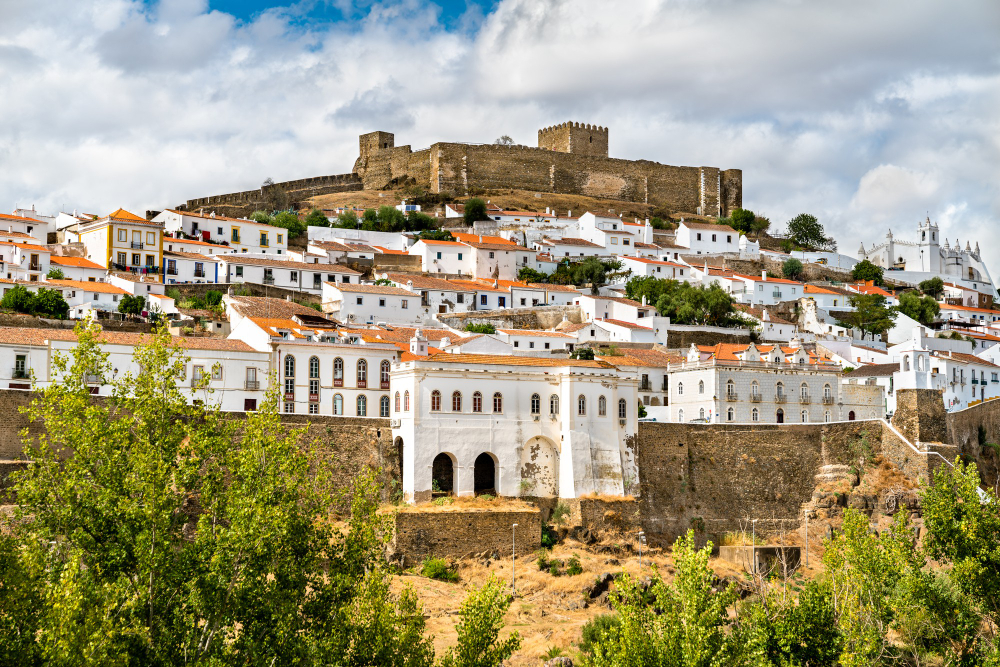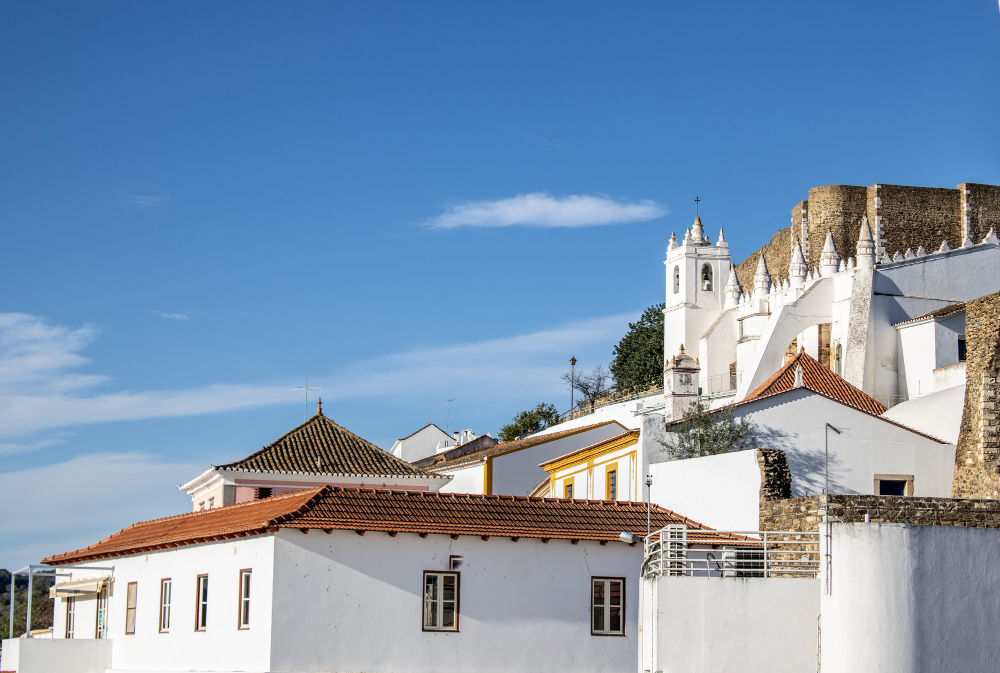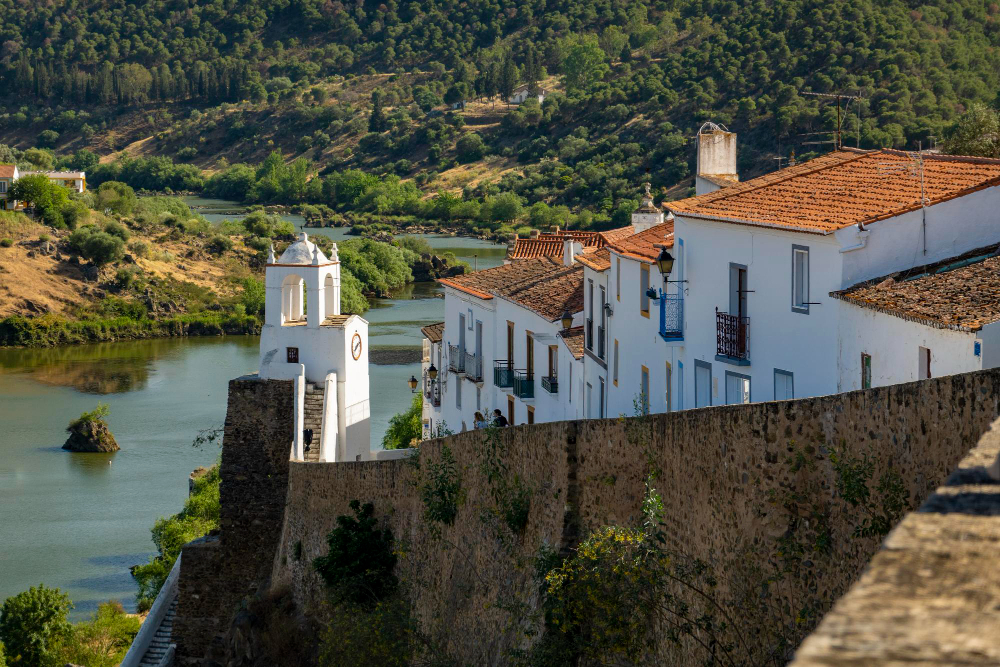

In the heart of the Alentejo region in southern Portugal, the medieval Mértola Castle stands perched on a rocky hill – an impressively well-preserved fortress that embodies more than two millennia of eventful history. Today, it not only dominates the townscape of Mértola but also stands as a living testament to the turbulent past of this border region between Portugal and Spain. A look at the history, architecture and cultural significance of this structure takes us deep into the era of the Phoenicians, Romans, Muslims and Christian orders of knights.
From Myrtilis to Mértola: Origins and Ancient Significance – The castle’s history begins long before the Middle Ages, as early as the 4th century BC, when the Phoenicians established the area as an important trading post known as Myrtilis (also known as ‘New Tyre’). This name evokes the famous Phoenician centre of Tyre in present-day Lebanon. Myrtilis was situated on a major trade route along the River Guadiana, which flows through the peninsula from north to south, and benefited from its location at the crossroads of land and water routes. Later, Carthaginian merchants further expanded this trade, turning the settlement into a bustling hub in the south of the Iberian Peninsula. During the Roman period, Myrtilis Julia – as Julius Caesar named the city around 44 BC – developed into an economic centre characterised in particular by mining and agriculture in the Baixo Alentejo region. The Romans fortified the town with a massive city wall, the outline of which is still visible today. The existence of these early fortifications is also confirmed by written sources, such as those of the Swabian Bishop Idácio from the 5th century, who reports on an already fortified settlement in this area.
Medieval Transformation: From Islamic Emirate to Christian Conquest – In the 8th century, as part of the Muslim expansion, the region fell to the Umayyads, who shortened the name of the ancient Myrtilis to Martula and established an Islamic emirate there. Under the rule of Ibn Qasi, a prominent local governor of the Taifa of Mértola in the 12th century, key defensive structures were renovated and expanded. Of particular note is the 12th-century ribat – a fortified monastery serving both religious and military purposes – which was situated at the southern tower of what was then the keep and underscores the Islamic presence. During the Almohad dynasty in the late 12th century, extensive repairs and new construction work were carried out on the city walls to strengthen defences against Christian attempts at reconquest. This included the construction of semicircular towers, amongst them the so-called Carocha Tower, whose cubic shape and domed ceiling are characteristic of the military architecture of that period. The decisive turning point came in 1238 with the conquest of the town by Sancho II as part of the Reconquista. This brought to an end almost five centuries of Islamic rule, and Mértola became part of the Christian Kingdom of Portugal.
The Age of the Military Orders and its Consolidation as a Border Fortress – Following the reconquest, between 1240 and 1316, Mértola became the seat of the powerful Military Order of Santiago – one of the most significant Christian orders of knights, which played a decisive role in securing and settling the newly acquired territories. The Order drove forward the expansion of the castle complex, as evidenced, amongst other things, by the construction of the keep in 1292. Above the main gate, an inscription commemorates João Fernandes, the Grand Master at the time, who commissioned the construction of the tower. In the 14th and 15th centuries, particularly following the Peace of Monção in 1386, which brought Mértola definitively under the rule of the Portuguese Crown, further improvements were made to the defences. These included the reinforcement of the walls, the addition of further towers and the construction of the castellan’s residence, which was attached to the keep. Although its importance as a military fortress gradually declined, Mértola remained part of the first line of defence along the border with Spain well into the 18th century.
Decline and Rediscovery – With Portugal’s rise as a maritime power and the opening up of new trade routes, Mértola increasingly lost its strategic and economic importance. By the 18th century, the castle had visibly fallen into disrepair, was eventually left unguarded, and no longer played a significant role in the national defence system. In the 19th century, the local economy focused primarily on mining, particularly the extraction of copper ore from the mines at Santo Domingo. It was not until the 20th century that the castle’s historical potential was rediscovered. After it was officially declared an ‘Imóvel de Interesse Público’ (cultural monument of public interest) in 1943, meticulous restoration work began. Although an earthquake in 1969 caused damage, extensive renovation work carried out under the supervision of the Instituto Português do Património Arquitetónico from the 1990s onwards ensured that the fortress now serves as a museum and cultural centre.
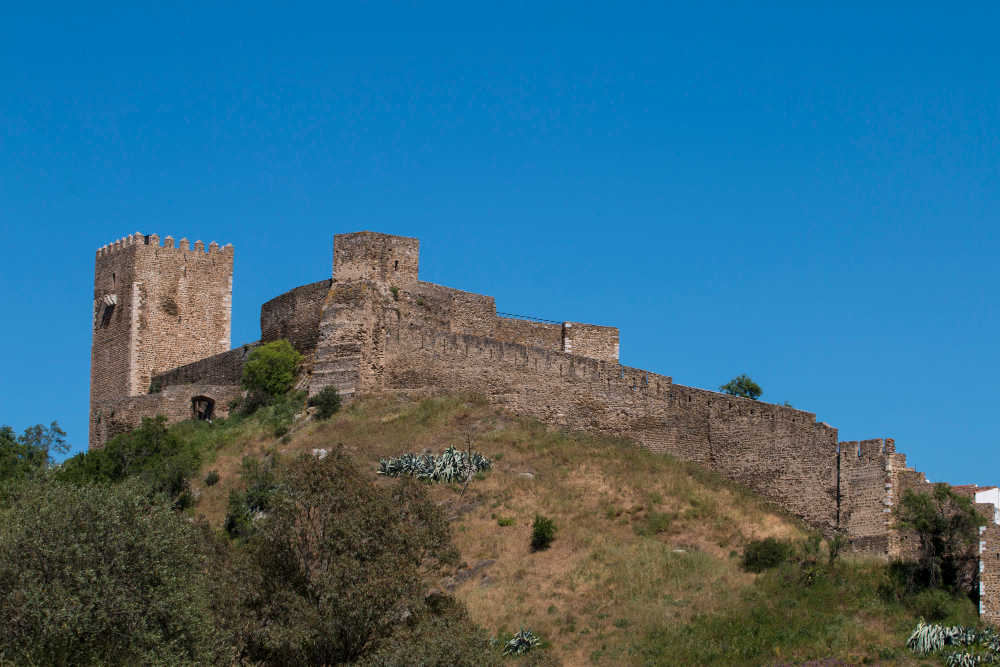
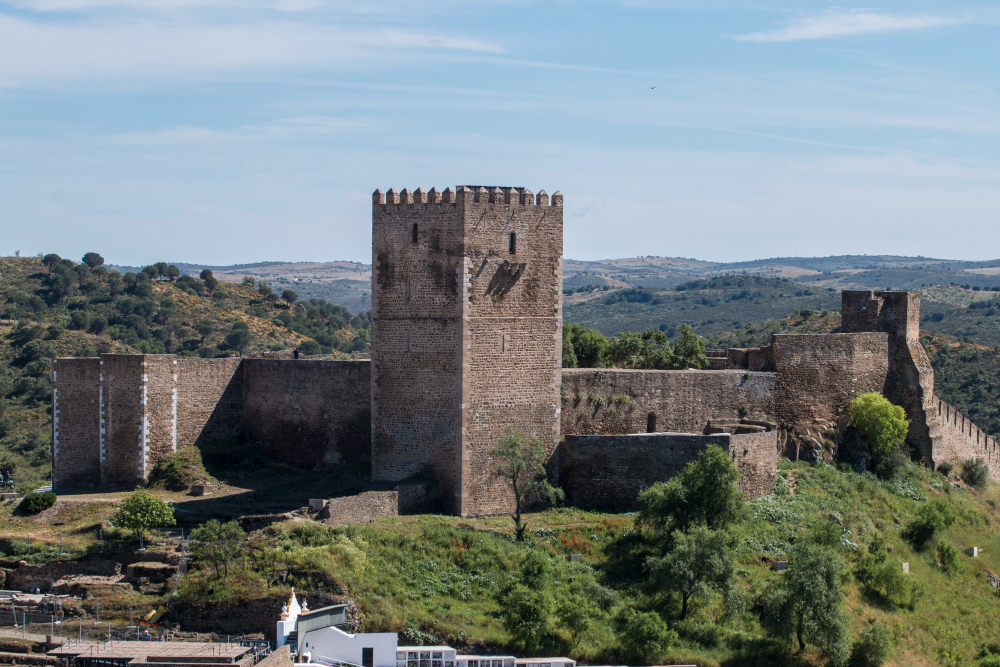
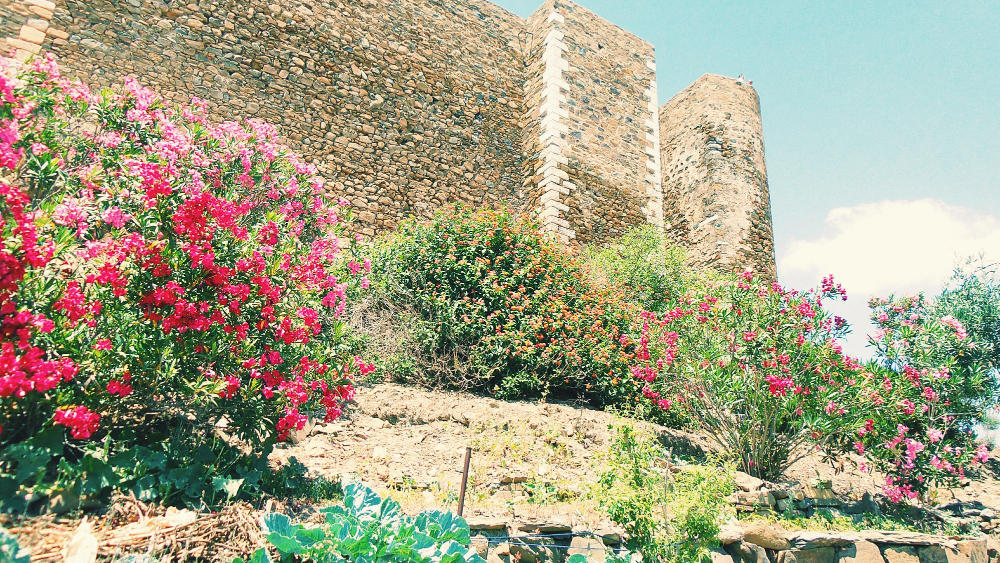
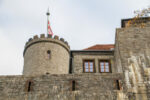
Architectural Features: A Blend of Cultures and Eras – Mértola Castle is a rectangular complex comprising a total of four towers, whose varied shapes and architectural styles reflect the diverse influences of its various rulers. The keep – the fortress’s central watchtower – stands an impressive 30 metres high and has two storeys. Its façade is adorned with delicate friezes and crowned by prism-shaped battlements, which were not only decorative but also served a defensive purpose. Inside are the armoury, with a cross-vaulted ceiling, and staircases leading to the upper storeys. Right next to the keep stands the white marble reliquary bearing the coat of arms of António Rodrigues Bravo, a high-ranking postal official of the city, which symbolises the social status of this fortress and its inhabitants. The Carocha Tower at the south-western corner is another architectural gem: a cubic tower with a hemispherical inner dome providing access to the defensive walls. The cistern in the castle courtyard, supported from within by arches, is an important indication of just how self-sufficient such a fortress must have been – particularly during times of siege. The defensive walls are largely still intact and form an almost rectangular protective ring around the old town. Of particular interest is the so-called ‘Traitors’ Gate’ (Porta dos Traidores) in the north-west, which once served as a secret escape route. The walls are flanked by several rectangular and semicircular towers, which reinforced the strategic defences.
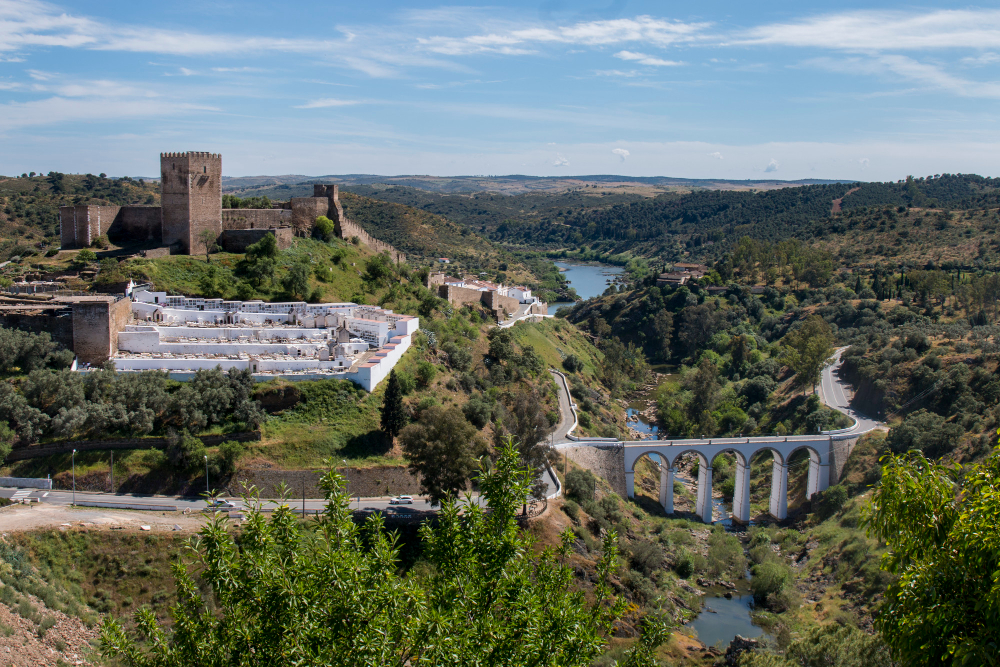
Cultural Heritage and Modern Significance – Today, Mértola Castle invites visitors on a journey through history. The conversion of the keep into a viewing tower offers spectacular panoramic views of the River Guadiana and the surrounding countryside. At the same time, the castle houses a museum with exhibitions on the Roman, Visigothic, Islamic and Christian periods of the town’s history. Particularly noteworthy is the collection of Islamic art – including ceramics, coins and jewellery – which ranks among the most significant of its kind in the whole of Portugal. With its harmonious blend of archaeological sites, religious monuments and historic buildings, Mértola is regarded as a jewel in the cultural landscape of the Alentejo. It impressively demonstrates how different cultures coexisted in one place over the centuries and shaped it.
A place where history comes to life – Mértola Castle is far more than just a medieval fortress. It is a reflection of the complex history of the Iberian Peninsula, a link between antiquity and modernity, between the Islamic and Christian worlds. The preservation of the site and ongoing research not only enable a deeper understanding of regional history but also invite visitors to explore the diverse cultural currents that continue to shape Europe to this day. For history buffs, architecture enthusiasts and travellers in search of authenticity, Mértola Castle is an unmissable stop on the map of Portugal – a place where bygone eras can still be felt and where stories of power, religion and cultural fusion are told.