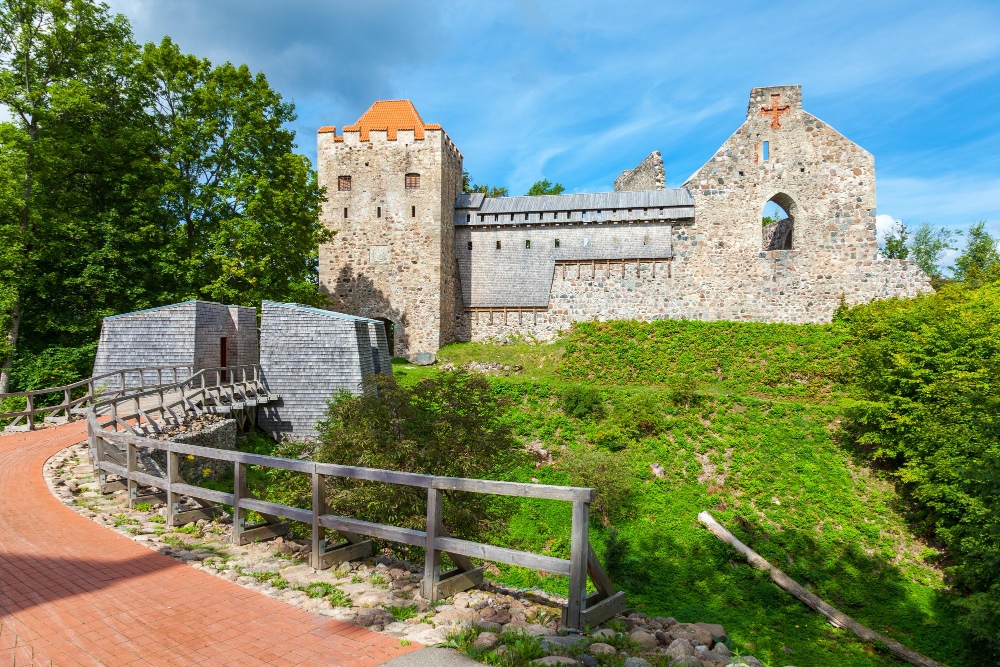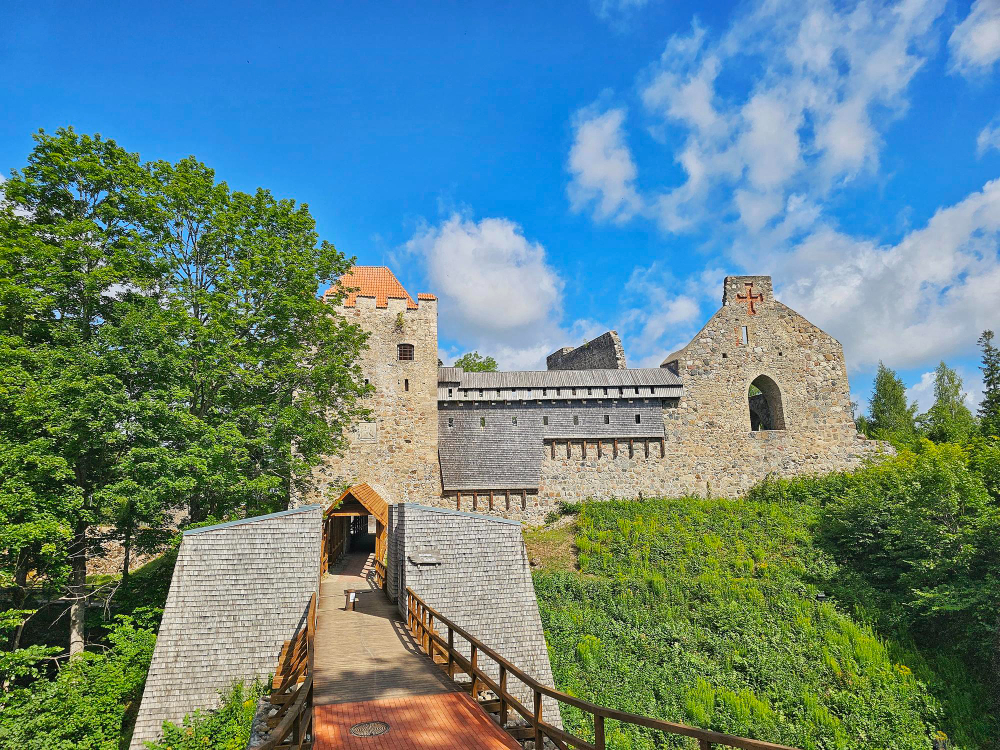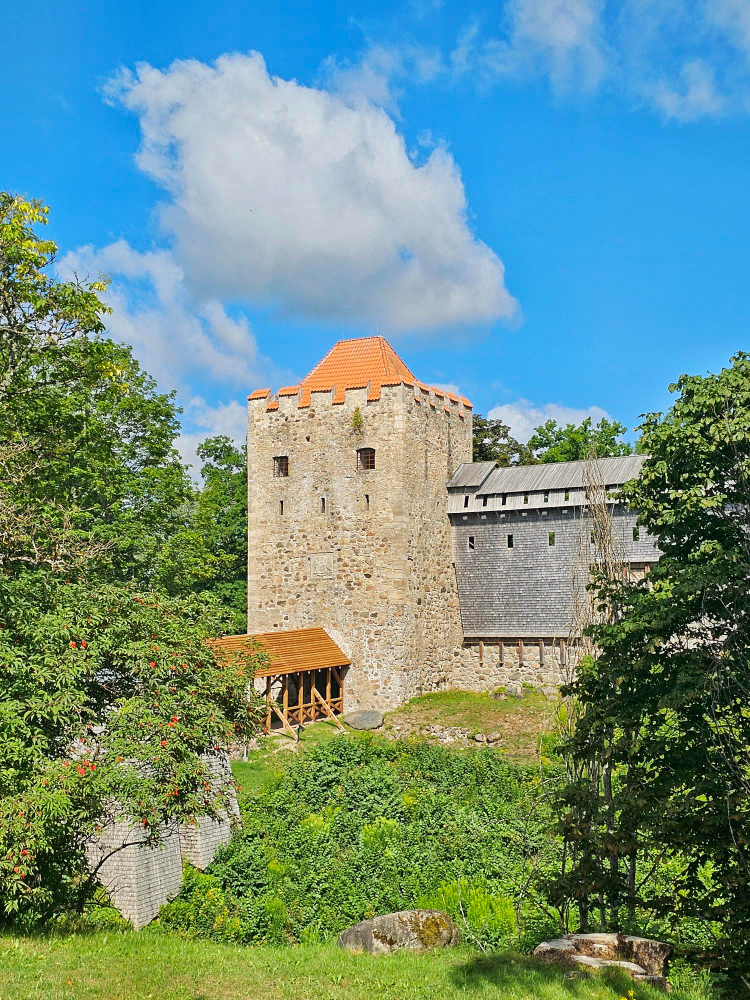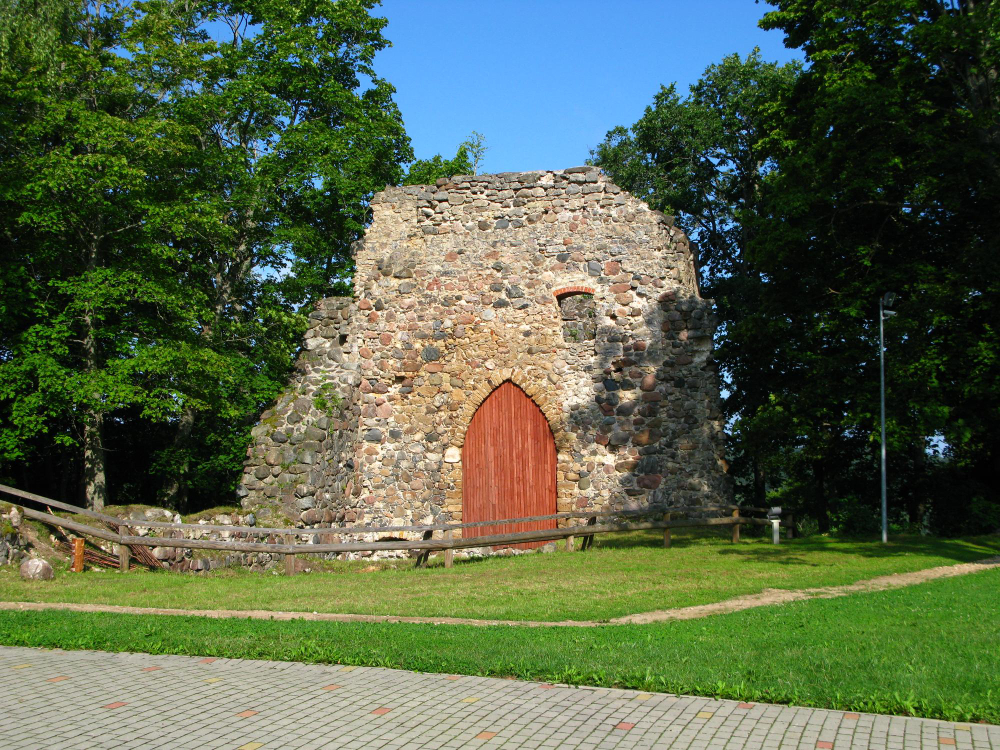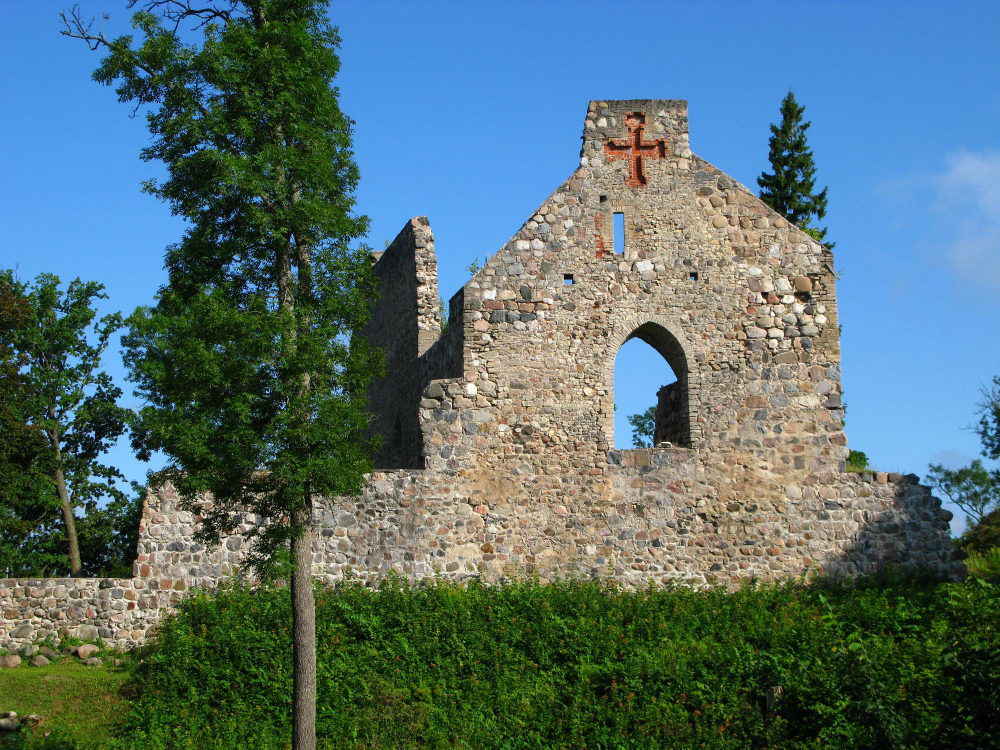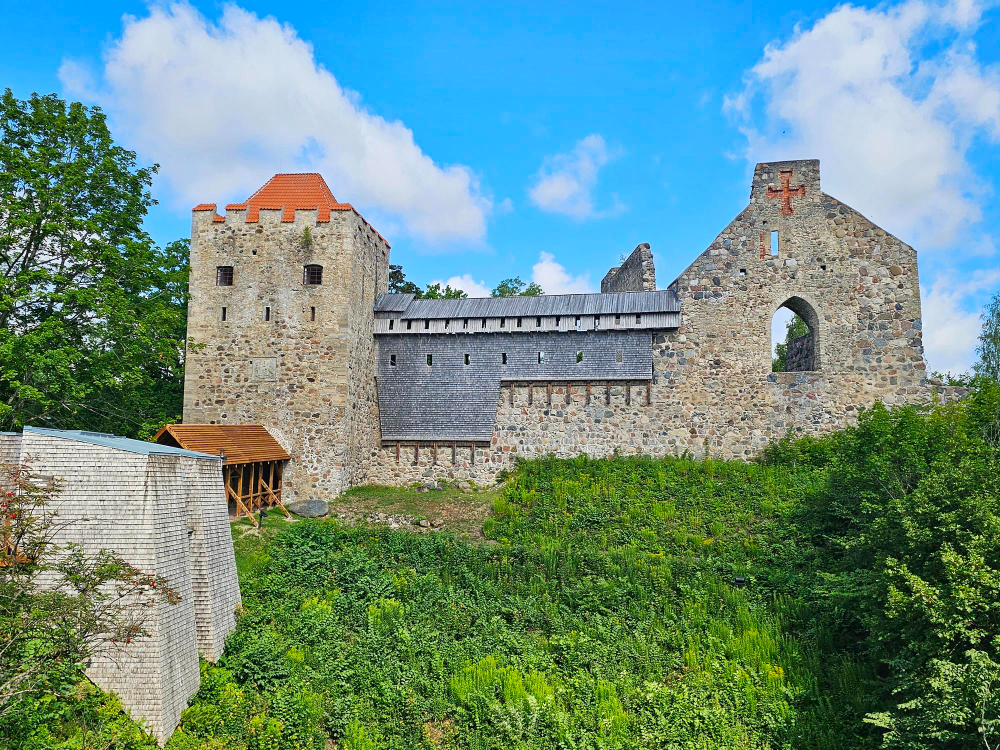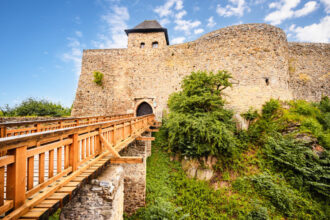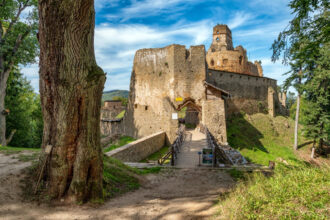

The castle ruins of Sigulda stand majestically on the edge of the Gauja Valley in the Vidzeme region of northern Latvia. The history of this medieval fortress is of great significance to Latvia’s cultural heritage and today attracts numerous visitors keen to immerse themselves in its vibrant past. With its eventful history, architectural features and numerous legends, the castle offers far more than just imposing walls – it tells the story of life, the struggles and the chequered fate of the Livonia region.
The Origins and Initial Function of Sigulda Castle – The medieval Sigulda Castle was first built in 1207 – initially as a so-called ‘castellum’, a Roman-inspired watchtower fortress. Its location was of great strategic importance: situated on a plateau with steep slopes overlooking the deeply incised Gauja Valley, the castle controlled the river routes of the Gauja and served as a defensive line against enemy attacks, particularly against the neighbouring bishop’s seat at Turaida on the other side of the river. Even in its early years, Sigulda was a key stronghold of the so-called Livonian Brothers of the Sword, a military religious order which, like the later famous Knights Hospitaller or Knights Templar, acted as ‘warrior monks’. These members of the Order, officially known as the ‘Militia Christi Livoniae’, wore a red sword on their white cloaks as a distinguishing mark. They were founded in 1202 under the patronage of Bishop Albert of Riga and were tasked with consolidating Christianity in the region of Livonia, conquering new territories and protecting them from attack. As part of a division of land between the Order and the bishop, the Order received the territory along the left bank of the Gauja River in 1207. Sigulda thus became part of a power struggle between ecclesiastical and military forces, with the construction of the castle also serving as a demonstration of power.
Sigulda in the Middle Ages: From Fortress to Residence – Originally conceived as a defensive tower, Sigulda gradually developed over the course of the 13th and 14th centuries into a larger convent castle – a complex comprising several buildings that housed a fortified community. In the late Middle Ages, more precisely from 1432 onwards, Sigulda became the seat of the Land Marshal of the Livonian Order – the second-highest-ranking officer after the Grand Master, who resided in Cēsis. The castle was thus a political and military centre that helped shape the region’s destiny for many years.
Destruction and Reconstruction in Times of War – The eventful history of Sigulda Castle can be traced in particular through the repeated damage it suffered and the subsequent reconstructions. During the Livonian War (1558–1583), the castle sustained considerable damage. In 1562, Sigulda came under the control of the Duchy of Livonia, and from 1566 onwards it served as the seat of the governor, Jan Hieronimowicz Chodkiewicz. The Poles carried out extensive repairs, but the castle was destroyed once again during the Polish–Swedish War. In the early 17th century, the Swedes took control of the region. In 1625, the Swedish king gifted the castle to his Privy Councillor Gabriel Gustafsson Oxenstierna, but following the nationwide confiscation of noble estates, the castle reverted to the state. Nevertheless, its status as a military stronghold became increasingly insignificant, and the castle eventually fell into disrepair during the Great Northern War (1700–1721).
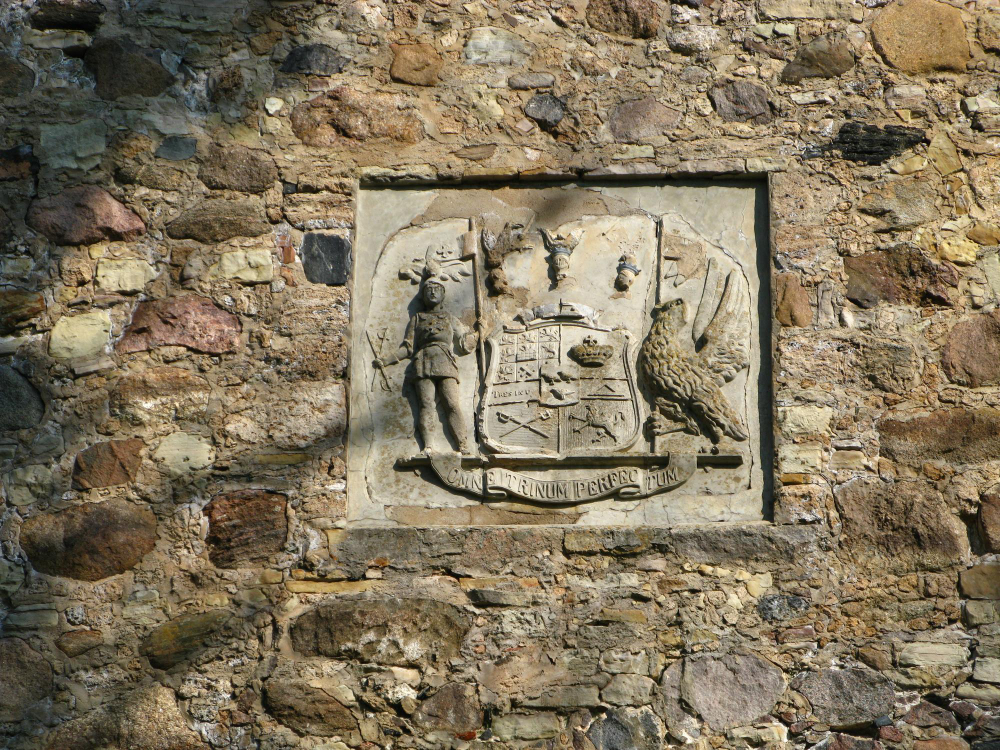
Sigulda as a romantic ruin and a legacy of the 19th century – In the 18th and 19th centuries, perceptions of the castle ruins changed fundamentally: Sigulda was now regarded primarily as a picturesque monument to the past. Private owners, such as the Governor of Livonia, Peter Lacy, and the von der Borch family, took over the site. They had parts of the ruins restored and adorned the castle courtyard with Gothic-style elements, which were very popular at the time. The gate, bearing the date 1867, still bears witness to these alterations today. Between 1878 and 1881, a modern castle was also built at the foot of the castle by the family of Prince Kropotkin, symbolising the fusion of history and modernity. This phase contributed to Sigulda being discovered as a tourist attraction and to a growing interest in the preservation of historical monuments.
Archaeological Findings and the Castle’s Construction – Archaeological research into Sigulda Castle provides a fascinating insight into medieval architecture and defensive strategies. The castle is situated on a natural plateau protected by three steep slopes. To the south, a deep moat was dug to further impede access. The use of different types of stone is striking: local stone formed the foundation, whilst dolomite and limestone were used for load-bearing walls and decorative elements. The original rectangular tower, dating from the early 13th century, was built with walls three metres thick. Unfortunately, only remnants of this remain, which were incorporated into later phases of construction. Later, between the 13th and 14th centuries, the main building was expanded into a cloistered castle complex – typical of the so-called ‘convent castles’, where religious orders lived and worked. The buildings had several storeys, including a chapel with Gothic windows and an armoury on the top floor. Adaptations to new weaponry were made in the 15th century, when the defensive walls were reinforced with loopholes and other defensive mechanisms. A larger outer bailey surrounded the main building, protected by further towers and fortifications. The main entrance led through a four-storey gatehouse with a drawbridge spanning the southern moat. This paints a picture of a highly organised, complex defensive structure that served both military and ceremonial purposes.
Modern restorations and use as a tourist attraction – During the 20th century, the castle ruins were repaired and reinforced on several occasions to make them safely accessible to visitors. Intensive archaeological research and renovation work took place, particularly from the 1960s onwards. New methods, such as photogrammetric surveys and detailed measurements, shed light on earlier construction phases and enabled a careful restoration. In the 2010s, the castle underwent extensive renovation with the help of European Union funding. In 2012, the historic walls reopened to the public. Today, visitors can climb the north tower and the main gate to enjoy a breathtaking view over the Gauja Valley and immerse themselves in the atmosphere of the Middle Ages.
Sigulda – a living monument to Latvian history – The ruins of Sigulda Castle symbolise the eventful history of Latvia and the entire Baltic region. From the medieval orders of knights through Polish and Swedish rule to its present-day role as a cultural heritage site, they reflect political upheavals and social changes. Careful research and restoration have made Sigulda a unique cultural monument that delights not only historians and archaeologists, but also tourists seeking a vivid insight into centuries past. Amidst mystical walls, legendary tales and the breathtaking natural backdrop of Gauja National Park, Sigulda remains a place where history comes to life.